Why Smart Factories Are Killing Traditional OEE Calculations
Overall Equipment Effectiveness (OEE) has long been the trusted KPI in assessing operational performance across production floors worldwide. However, as the wave of Industry 4.0 technologies, AI driven analytics, and real-time performance monitoring transform manufacturing, the traditional ways of calculating and leveraging OEE are being fundamentally challenged.
This article examines the limitations of old OEE practices, why they no longer capture true asset performance, and how modern, data-driven maintenance systems like MaintWiz CMMS redefine how industrial enterprises measure and optimize operational efficiency.
Understanding the Traditional OEE Paradigm
Traditional OEE is a composite metric based on three pillars — Availability, Performance, and Quality.
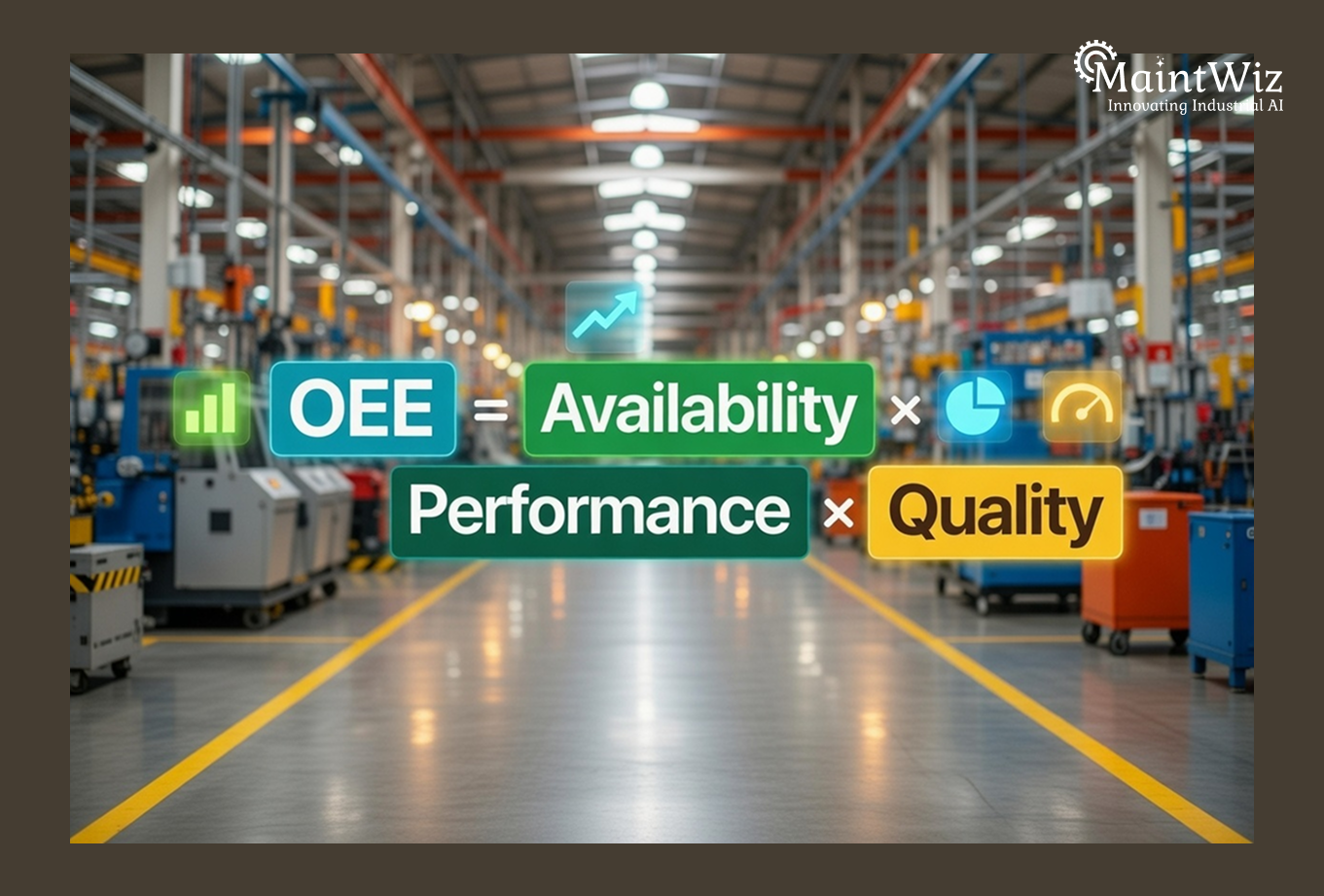
While deceptively simple to calculate, this metric has deep limitations in the context of modern smart factories.
- Availability Component: Represents uptime versus planned production time. Downtime events are accounted for after the fact, often with lagging data.
- Performance Measure: Compares actual output to ideal potential output. It rarely captures micro-stoppages or real performance variability in real time.
- Quality Metric: Evaluates outputs that meet quality standards. Traditional OEE lacks dynamic defect analytics tied to root causes.
Although OEE is simple — and that’s partly why it became so pervasive — its retrospective, batch-oriented calculation fails to leverage the rich, real-time data streams available in modern production environments.
Why Smart Factories Are Outgrowing Traditional OEE
Smart Factories integrate IoT sensors, Machine Learning, connected ERP systems, and advanced analytics to deliver unprecedented visibility into equipment health and process performance. In this environment, the traditional OEE calculation reveals several structural weaknesses:
- Latency in Insights: Standard OEE requires manual or delayed data entry, meaning critical losses are identified too late for optimal corrective action.
- Lack of Predictive Context: OEE reflects past performance without identifying imminent failures or degradation patterns.
- Siloed Data Sources: Traditional OEE calculations struggle to correlate information from PLCs, MES, CMMS, and ERP systems.
- Inability to Capture Complex Loss Drivers: Root causes of performance losses — like micro-stoppages, varying shift behavior, or quality drifts — often go undetected.
- Poor Decision Support: Simple OEE percentages don’t guide maintenance prioritization or strategic investment decisions.
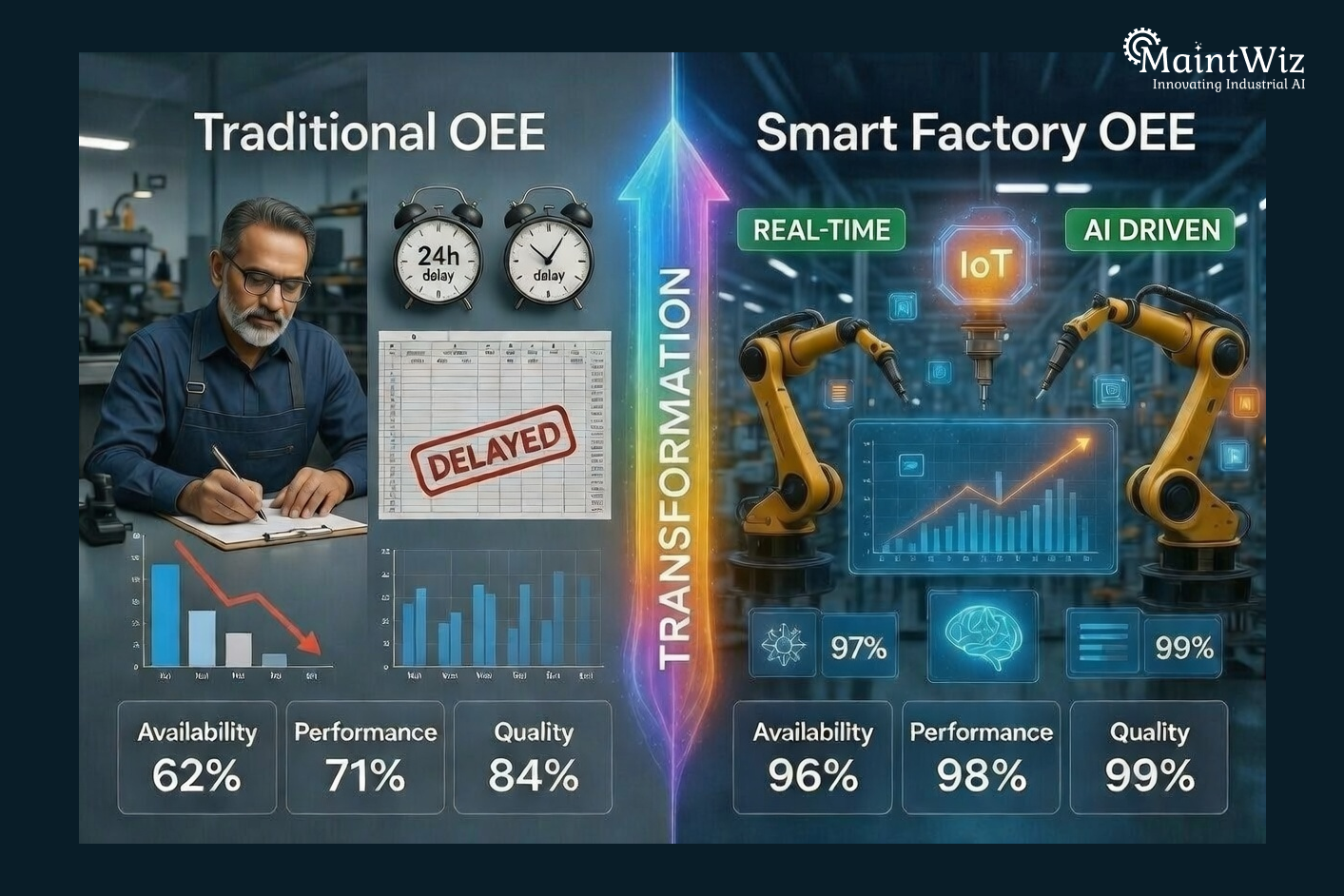
From Static Calculations to Real-Time Asset Intelligence
Smart Factories are leveraging analytics platforms that go far beyond OEE’s three simple ratios. The transition isn’t just about measuring performance; it’s about understanding why performance deviates and what actions will improve it.
Key Drivers of Next-Gen Performance Metrics
- Real-Time Monitoring: Connected sensors deliver continuous availability and performance data to analytics engines.
- AI-Enhanced Root Cause Analysis: Algorithms can automatically diagnose why equipment fails or underperforms and propose corrective actions.
- Predictive and Prescriptive Maintenance: Machine learning models forecast failures well before they occur, allowing maintenance teams to intervene proactively.
- Seamless ERP & CMMS Integration: Asset, maintenance, operational, and financial data are unified to provide comprehensive decision support.
- Dynamic KPI Dashboards: Smart dashboards visualize performance, quality and downtime patterns by asset, shift, line, or plant.
How AI Shifts the Focus from OEE Scores to Operational Outcomes
Rather than obsessing over a single OEE percentage, smart factories and modern maintenance leaders are pivoting toward holistic operational metrics driven by AI. These new measurements are actionable — not just descriptive.
AI-Enabled Performance Optimization
By applying machine learning and predictive analytics, factories can:
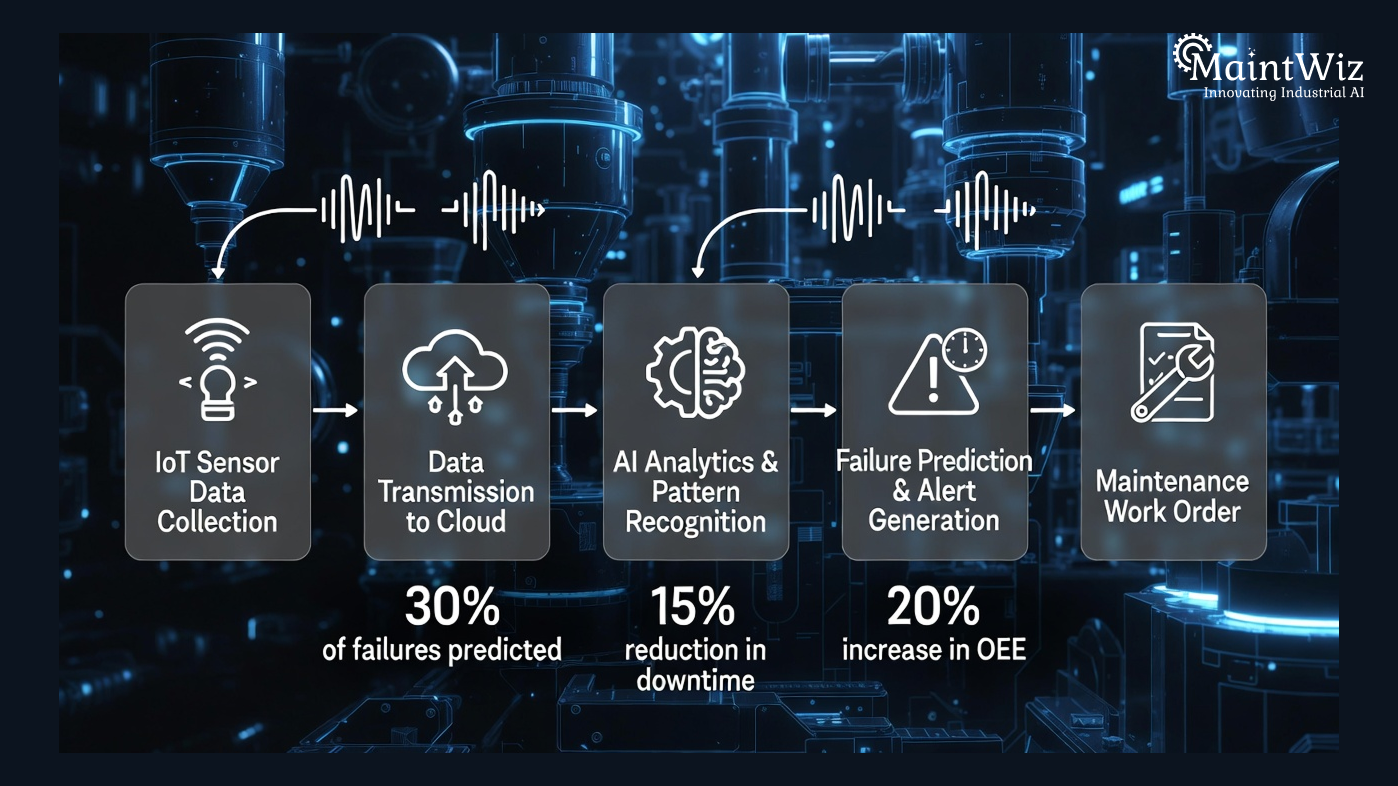
- Predict Failures Before They Occur: Real-time anomaly detection helps avoid unscheduled downtime.
- Optimize Asset Utilization: Smart scheduling based on predicted load and health improves throughput and uptime.
- Reduce Quality Losses: Trend detection and defect pattern recognition help identify systemic issues.
- Deliver Prescriptive Actions: Machine-suggested maintenance tasks can be prioritized based on expected operational impact.
Smart factories focus less on what happened and more on what should happen next to sustain continuous improvement — a fundamental shift from reactive to predictive operations.
Limitations of Traditional OEE in Industry 4.0
Despite its roots in lean manufacturing and TPM practices, traditional OEE metrics fall short in smart, connected factories for several reasons:
- Siloed Context:Legacy OEE doesn’t integrate deeply with digital ecosystems like ERP, MES, and predictive analytics platforms.
- Delayed Value:Classic calculations often depend on end-of-shift or end-of-day data, delaying corrective action.
- Superficial Insights:A single OEE percentage conceals the deeper insight required to discern complex loss patterns.
- No Forecasting Capability:Traditional OEE cannot predict future performance outcomes or equipment failure risks.
- Operator Bias: Manual input of downtime or performance reasons introduces subjectivity and errors.
From OEE to Asset Intelligence: The Modern Paradigm
Modern maintenance leaders position their organizations for sustainable excellence by adopting asset intelligence frameworks that encapsulate:
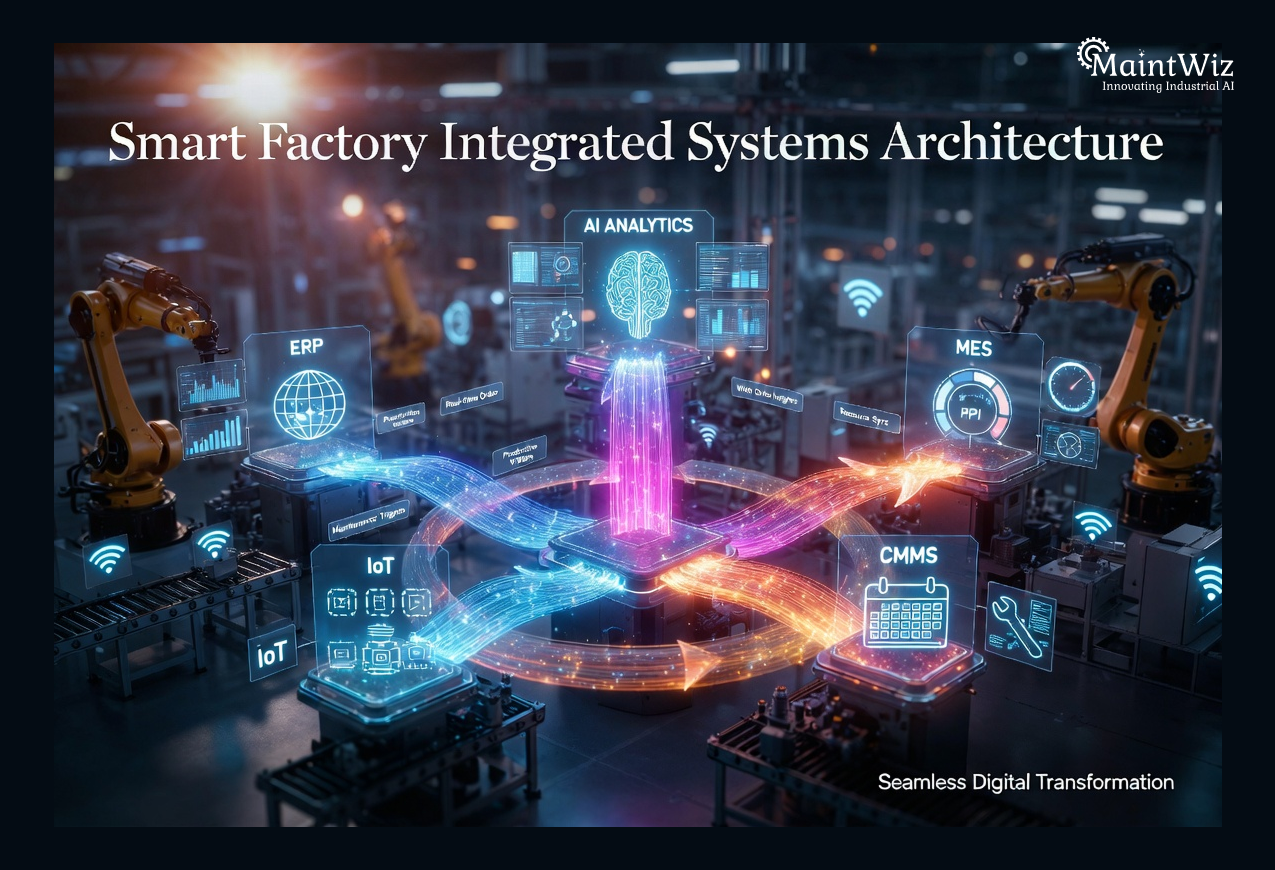
- Data Integration from IoT and ERP systems
- Predictive Failure Forecasting
- Prescriptive Maintenance Strategies
- Automated Root Cause Analysis
- Real-Time KPI Tracking & Visualization
The Role of AI-Powered CMMS in Redefining OEE and Maintenance Excellence
MaintWiz CMMS exemplifies how modern maintenance management systems transform traditional OEE practices into adaptive, real-time operational intelligence platforms, unlocking several key advantages:
- Real-Time OEE Tracking and Visualization: MaintWiz delivers live OEE metrics — not daily summaries — giving maintenance and operations teams immediate insights into performance issues.
- AI-Driven Root Cause and Prescriptive Analytics: The platform uses machine learning to diagnose inefficiencies and recommend corrective actions that maximize overall equipment effectiveness.
- Seamless Data Integration: MaintWiz connects with ERP systems like SAP, SCADA, PLCs, and IoT sensors to unify operational data streams.
- Predictive Maintenance and Condition Monitoring: AI predictive models forecast failure conditions, minimizing unscheduled downtime and resource wastage.
- Mobile-First Execution: Field teams get instant access to work orders, inspections, and KPIs through mobile interfaces, improving execution speed and data accuracy.
- Scalable Multi-Site Support: MaintWiz supports enterprise-wide OEE comparison and benchmarking across multiple plants.
- Interactive Dashboards and Scorecards: Customizable visuals help leadership track trends and measure the impact of maintenance strategies over time.
Conclusion: OEE Isn’t Dead — It’s Evolving
The story of OEE in industrial asset management isn’t one of obsolescence — it’s one of evolution. Traditional OEE calculations were instrumental in the early lean manufacturing era, but they are increasingly insufficient for the demands of smart, data-rich production systems. Today’s leaders require real-time, actionable performance intelligence coupled with predictive and prescriptive insights.
Platforms like MaintWiz CMMS enable this evolution — marrying the legacy value of OEE with the power of AI, IoT, and integrated data platforms to deliver a new breed of operational excellence metrics that drive true business outcomes.


Jai Balachandran is an industry expert with a proven track record in driving digital transformation and Industry 4.0 technologies. With a rich background in asset management, plant maintenance, connected systems, TPM and reliability initiatives, he brings unparalleled insight and delivery excellence to Plant Operations.