

Manufacturing Plant Maintenance Shutdowns
Optimizing Production Continuity Through Planned Downtime
In modern manufacturing, the most productive plants are not the ones that avoid shutdowns — they are the ones that master them. Whether in discrete manufacturing lines, batch process cells, or hybrid facilities, planned maintenance shutdowns are strategic levers that protect throughput, stabilize quality, and prevent costly unplanned failures.
A well-executed manufacturing plant shutdown transforms downtime into competitive advantage. Instead of firefighting breakdowns, high-performing plants use structured maintenance shutdown planning to renew assets, eliminate failure backlogs, and prepare equipment for the next production cycle. The result is higher OEE, fewer emergency repairs, and smoother production scheduling.
This guide provides a practical, operations-focused blueprint for shutdown excellence in discrete and batch manufacturing maintenance — combining modular job planning, resource coordination, and CMMS-driven execution.
Strategic Value of Planned Shutdowns in Manufacturing
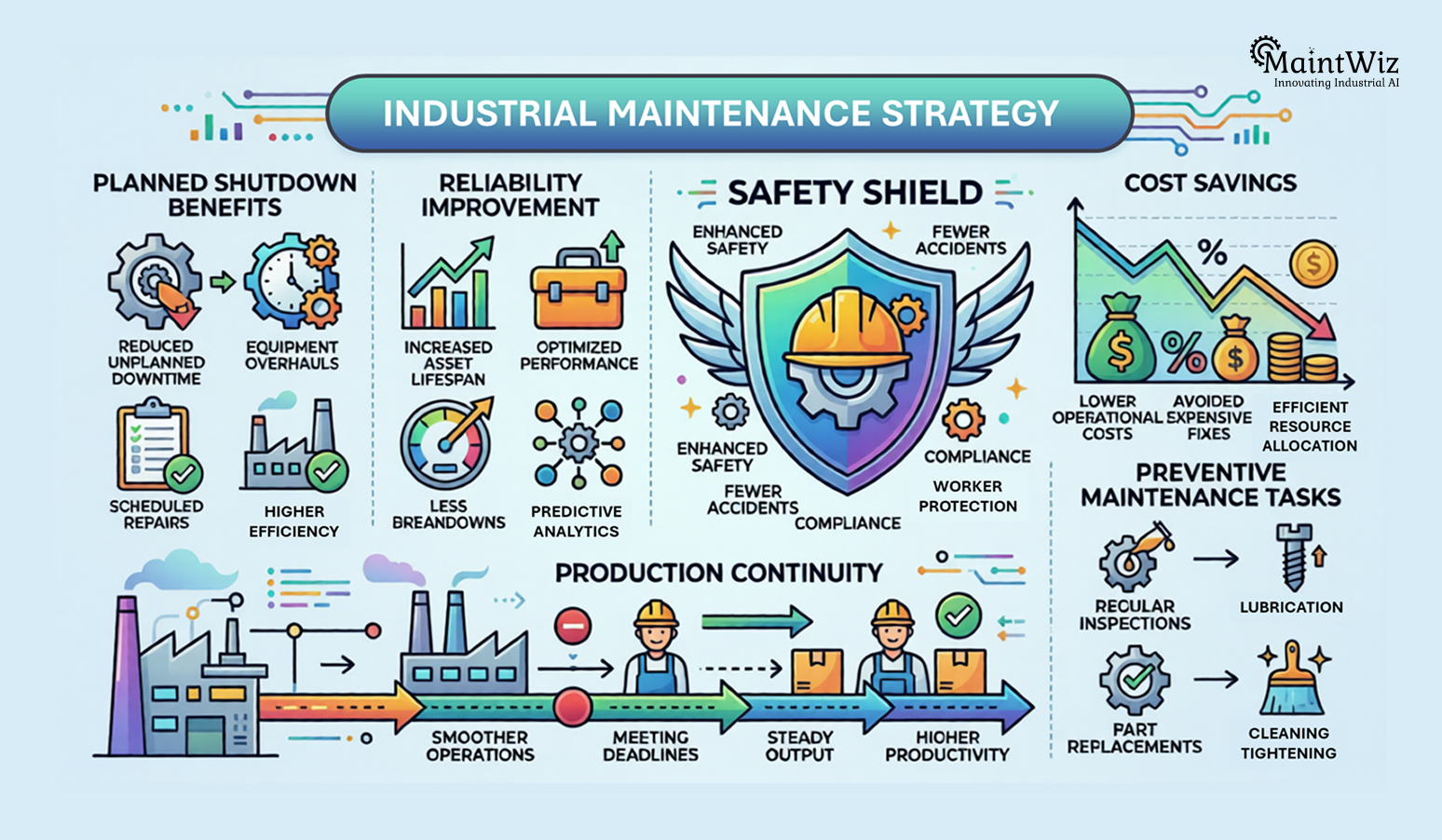
Planned shutdowns are not interruptions to productivity — they are investments in production continuity. When structured properly, they reset asset health and reduce the frequency and severity of unexpected breakdowns.
- Manufacturing Plant Shutdown Strategy Alignment – Shutdowns should align with production goals, customer demand cycles, and asset reliability strategies rather than being reactive calendar events.
- Preventive Maintenance Backlog Reduction – Planned downtime clears accumulated preventive and corrective tasks that would otherwise increase unplanned stoppage risk.
- Reliability-Centered Maintenance Execution – Shutdowns provide controlled windows to address failure modes identified through reliability analysis and condition monitoring insights.
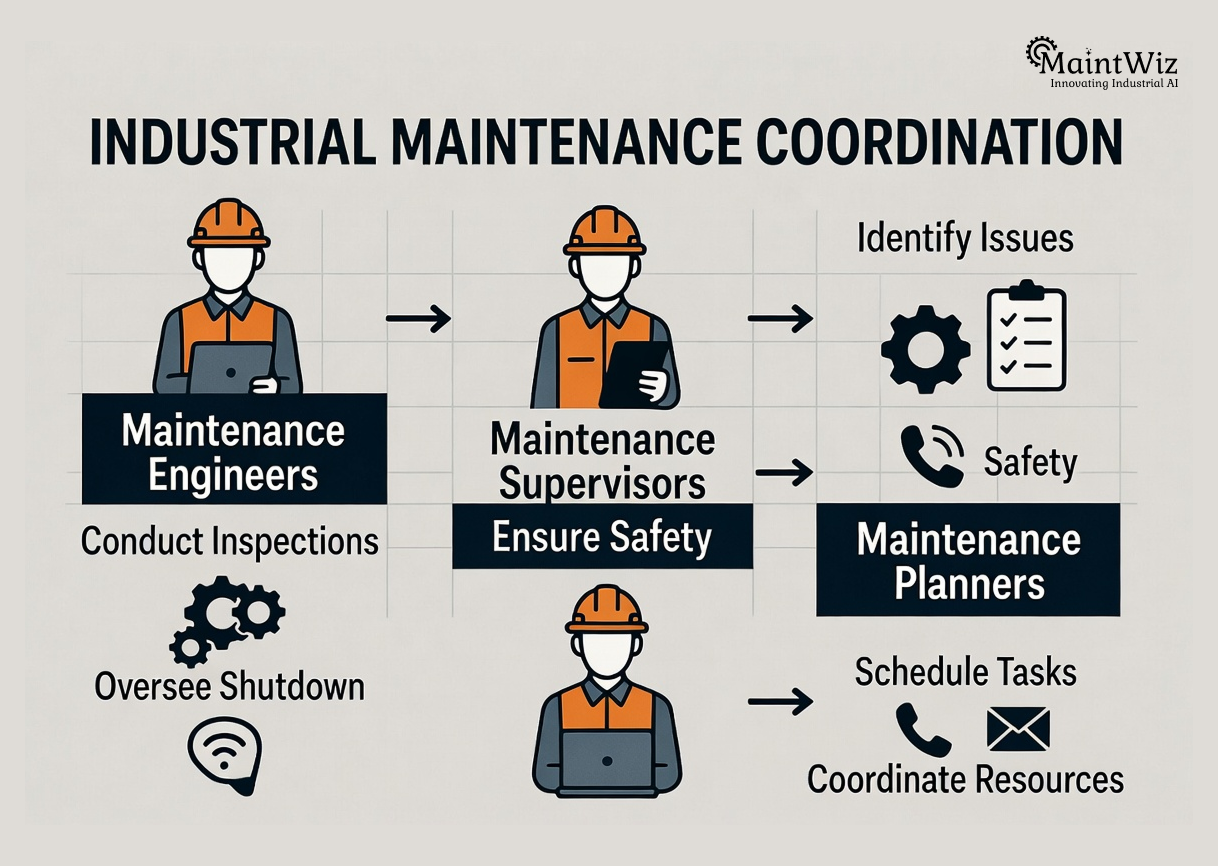
- Lifecycle Cost Optimization Through Shutdowns – Replacing worn components during planned windows reduces emergency repair costs and extends asset service life significantly.
- Safety Risk Reduction During Planned Maintenance – Structured shutdowns allow safe isolation, lockout, and controlled access conditions that are impossible during live production.
- Quality Stability After Maintenance Interventions – Equipment restored during shutdowns reduces process variability and improves product consistency in subsequent production runs.
Plants that treat shutdowns as strategic maintenance programs rather than tactical repairs consistently outperform peers on uptime and throughput.
Balancing Production Schedules and Maintenance Windows
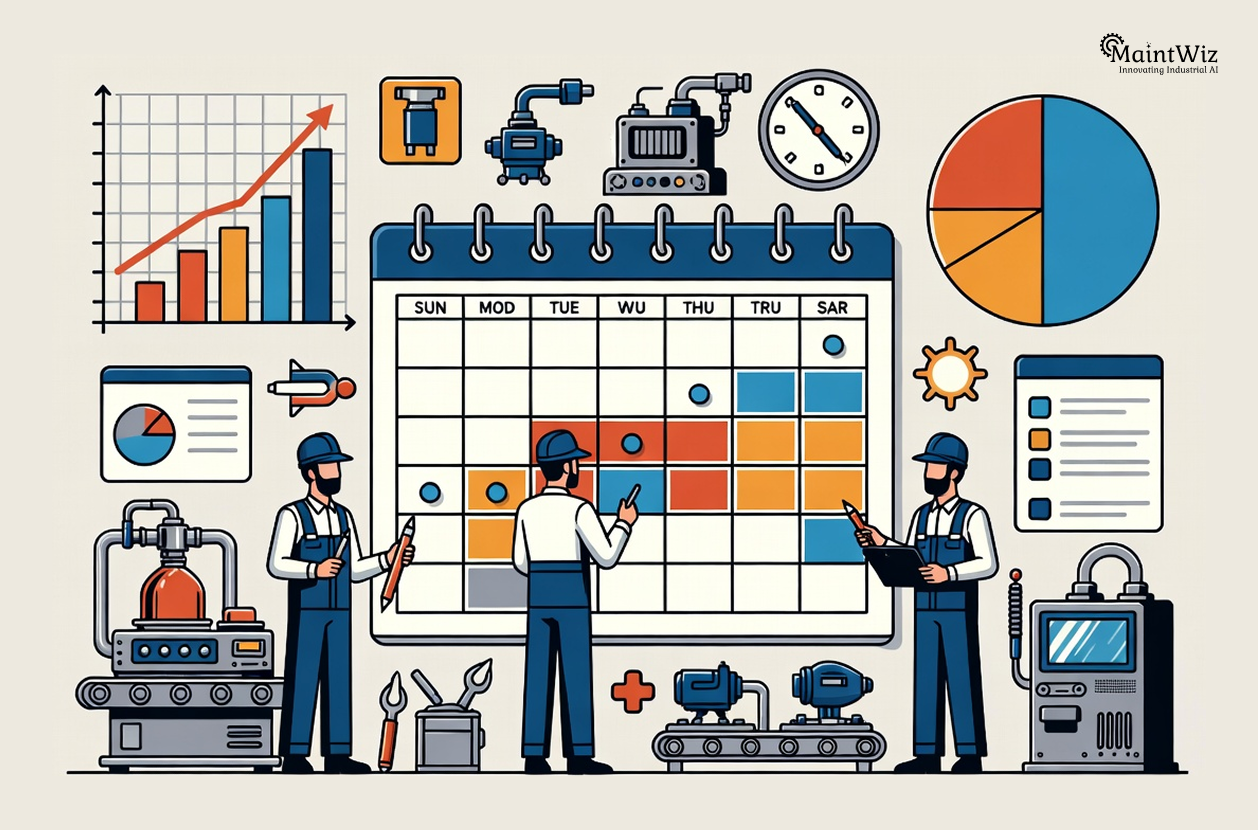
The central challenge in maintenance shutdown planning is balancing operational demands with asset care. Production teams seek maximum runtime; maintenance teams seek sufficient downtime. Excellence lies in structured compromise supported by data.
- Production-Maintenance Alignment Planning – Joint planning sessions ensure shutdown timing aligns with demand forecasts, seasonal slowdowns, or model changeovers.
- Critical Asset Downtime Prioritization – Assets with high failure impact or bottleneck roles receive priority within limited shutdown windows.
- Rolling Shutdown Planning Cycles – Instead of annual planning only, leading plants use quarterly or monthly rolling plans to adapt to market changes.
- Short-Interval Maintenance Windows – Micro-shutdowns between production shifts allow modular maintenance without full line stoppages.
- Changeover and Maintenance Integration – Combining product changeovers with maintenance tasks reduces duplicate downtime and improves line utilization.
- Data-Driven Downtime Justification – Historical breakdown data and failure trends support objective decisions on how long shutdowns must be.
When shutdown planning is data-driven rather than opinion-driven, plants avoid both over-maintenance and under-maintenance traps.
Inventory, Parts, and Resource Planning
Many shutdown overruns stem not from technical complexity but from poor logistics. Missing spares, unavailable tools, or untrained personnel turn short shutdowns into extended outages.
- Shutdown Spare Parts Forecasting – Historical work order data and failure trends help predict required spares and prevent last-minute procurement delays.
- Critical Spares Availability Assurance – High-risk components for bottleneck machines must be pre-positioned and verified before shutdown begins.
- Kitting for Maintenance Shutdown Jobs – Pre-assembled job kits with parts, tools, and instructions reduce technician travel time and execution delays.
- Vendor and Contractor Coordination – External specialists for controls, robotics, or CNC systems must be scheduled early to avoid availability conflicts.
- Skill-Based Workforce Scheduling – Matching technician competencies to complex tasks prevents rework and shortens task durations.
- Tool and Equipment Readiness Checks – Lifting devices, calibration tools, and safety equipment must be inspected prior to shutdown to avoid work stoppages.
Shutdown efficiency is often determined before the first wrench turns — in the warehouse, planning office, and contractor coordination meetings.
Modular Work Execution for Fast Turnaround
Speed without chaos defines high-performing discrete manufacturing maintenance shutdowns. Modular planning breaks large shutdowns into manageable, parallel task packages.
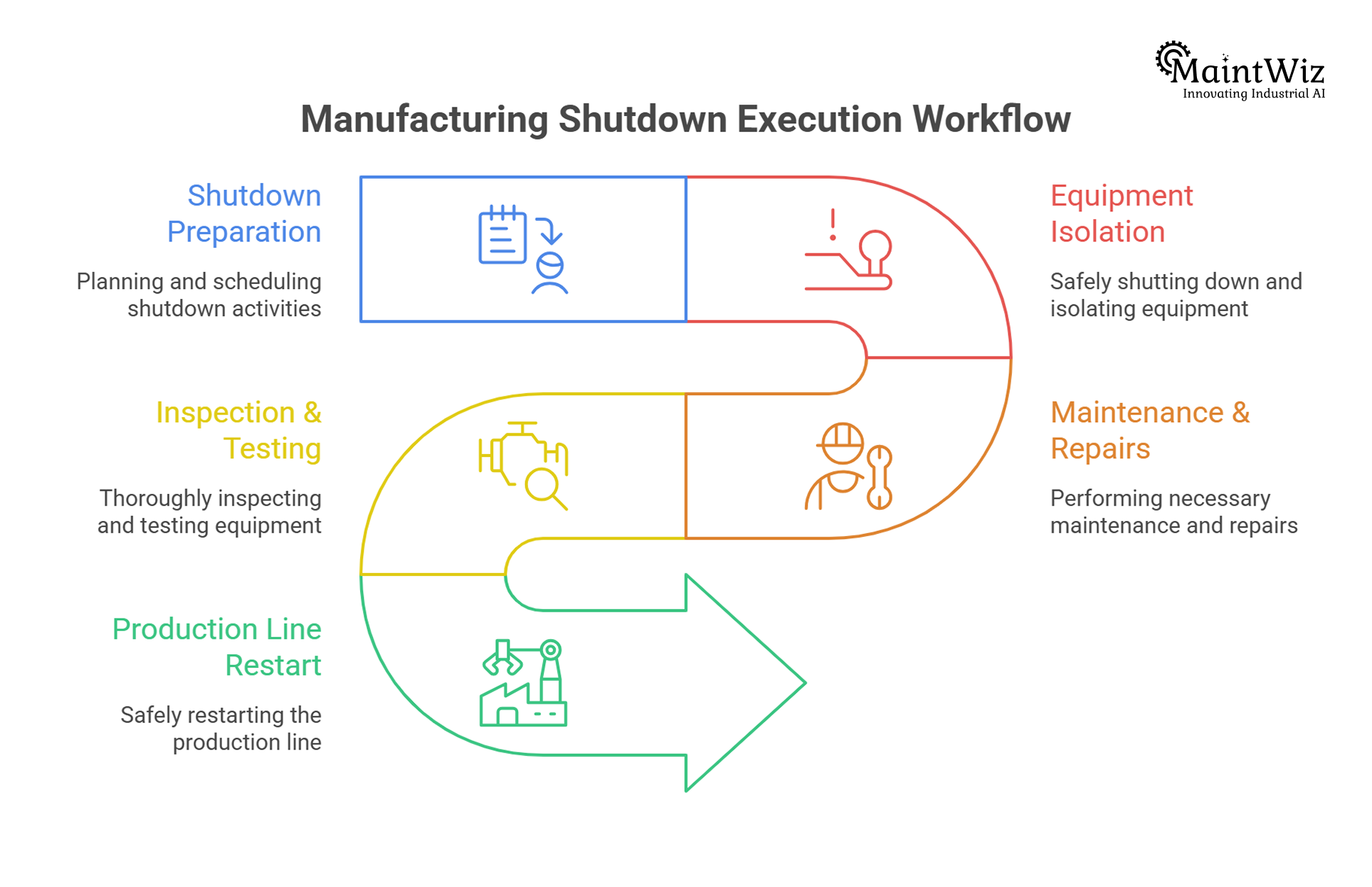
- Modular Maintenance Job Planning – Work is divided into independent modules that can be executed simultaneously without task interference.
- Standard Job Plans for Repetitive Tasks – Frequently performed shutdown jobs are standardized with predefined labor, tools, and time estimates.
- Parallel Workfront Coordination – Multiple crews work in different zones with clear boundaries, preventing congestion and safety conflicts.
- Critical Path Task Identification – Tasks that dictate restart timing are highlighted and monitored closely to prevent schedule slippage.
- Short-Interval Control During Shutdown – Supervisors track progress in short cycles, resolving delays before they cascade into larger overruns.
- Post-Task Quality Verification – Immediate inspection and testing after each module prevent late-stage discoveries that delay restart.
Modular shutdown execution enables plants to compress downtime while maintaining control, quality, and safety.
Role of CMMS in Real-Time Shutdown Coordination
Spreadsheets and whiteboards cannot manage the complexity of modern manufacturing plant shutdowns. A robust CMMS provides visibility, control, and documentation across the entire shutdown lifecycle.
- Centralized Shutdown Work Order Management – All shutdown tasks are planned, scheduled, and tracked in a unified system for full visibility.
- Real-Time Maintenance Progress Tracking – Supervisors monitor job completion status, delays, and emerging issues as work progresses.
- Labor and Resource Allocation Visibility – CMMS tools display technician assignments and workload balance to prevent bottlenecks.
- Spare Parts Reservation and Tracking – Inventory linked to work orders ensures required parts are available when jobs start.
- Mobile Maintenance Execution Support – Technicians access work instructions, drawings, and history directly at the equipment location.
- Shutdown KPI Dashboards – Management can track schedule adherence, backlog clearance, and downtime performance in real time.
Digital coordination transforms shutdowns from reactive events into controlled, data-driven operations.
Success Metrics: Measuring Shutdown Performance
Effective shutdowns deliver measurable improvements in reliability and production performance. The right metrics help organizations learn and improve each cycle.
- Reduction in Unplanned Downtime Post-Shutdown – Comparing breakdown frequency before and after shutdown demonstrates the reliability impact of planned maintenance.
- Overall Equipment Effectiveness Improvement – OEE gains reflect better availability and performance after comprehensive shutdown interventions.
- Schedule Adherence During Shutdown – Percentage of tasks completed within planned timelines shows planning and execution effectiveness.
- Maintenance Backlog Reduction Rate – Clearing overdue work orders during shutdown reduces future operational risk exposure.
- Mean Time Between Failures Increase – Extended MTBF after shutdown confirms that root causes were addressed rather than temporarily patched.
- Throughput Stability After Restart – Consistent production rates post-shutdown indicate successful calibration, alignment, and equipment tuning.
Metrics convert shutdowns from necessary disruptions into performance improvement programs with quantifiable business value.
Why MaintWiz CMMS Is Built for Manufacturing Shutdown Excellence
MaintWiz CMMS supports manufacturers in planning and executing complex shutdowns with structured workflows, asset visibility, and performance analytics. Its capabilities align closely with the needs of discrete and batch manufacturing environments.
- Comprehensive Work Order Lifecycle Management – MaintWiz helps plan, assign, track, and close shutdown tasks with clear accountability and documentation.
- Asset-Centric Maintenance Histories – Each machine’s service history supports better shutdown scoping and identification of recurring failure patterns.
- Integrated Spare Parts and Inventory Tracking – Maintenance planning is supported by visibility into stock levels and part usage trends.
- Mobile-Enabled Maintenance Execution – Field technicians can update task progress and capture observations directly from the shop floor.
- KPI and Performance Analytics Dashboards – Decision-makers gain insight into downtime trends, backlog levels, and shutdown effectiveness.
- Scalable Across Multi-Plant Operations – Standardized processes and centralized reporting support consistent shutdown practices across facilities.

Planned downtime does not have to mean lost productivity. With the right planning discipline and a capable CMMS foundation, manufacturing shutdowns become catalysts for higher reliability and sustained throughput.
Explore how MaintWiz can strengthen your maintenance shutdown planning and execution. Transform downtime into a strategic advantage for your manufacturing operations.

Company
Download App