





Data-Driven Maintenance: Why You Don’t Have


a Maintenance Problem — You Have a Data Problem

Introduction: The Problem Most Plants Misdiagnose

Most industrial plants believe their biggest challenge is maintenance.
Unplanned downtime continues to disrupt production.
Equipment failures appear unpredictable.
Maintenance teams are constantly firefighting.
So organizations respond logically:
They invest in better maintenance strategies, deploy CMMS platforms, install sensors, and explore predictive maintenance.
Yet the results rarely match expectations.
Downtime persists.
Costs continue to rise.
Efficiency improvements stall.
This raises a critical question:

What if the problem isn’t maintenance at all?

What if the real issue is the lack of data-driven maintenance?
Because in today’s industrial landscape, maintenance success is no longer determined by effort—it is determined by data quality, accuracy, and usability.

What Is Data-Driven Maintenance?

Data-driven maintenance is a strategy where maintenance decisions are based on accurate, structured, and actionable data rather than assumptions or reactive responses.

It integrates:

  • Maintenance data management
  • Industrial data analytics
  • Predictive maintenance data
  • Asset performance insights

Unlike traditional approaches, it enables organizations to:

  • Predict failures before they occur
  • Optimize maintenance schedules
  • Improve asset reliability
  • Reduce downtime costs

In simple terms:

Better data leads to better maintenance decisions.

Why Most Plants Fail at Data-Driven Maintenance

Despite investing in tools, many plants fail to achieve true data-driven maintenance.

The reason is not technology.

It is poor maintenance data quality.

Common Data Problems in Industrial Maintenance

  • Inconsistent failure codes
  • Missing or incomplete work order data
  • Poor CMMS data accuracy
  • Lack of standardized asset hierarchy
  • Unstructured technician inputs

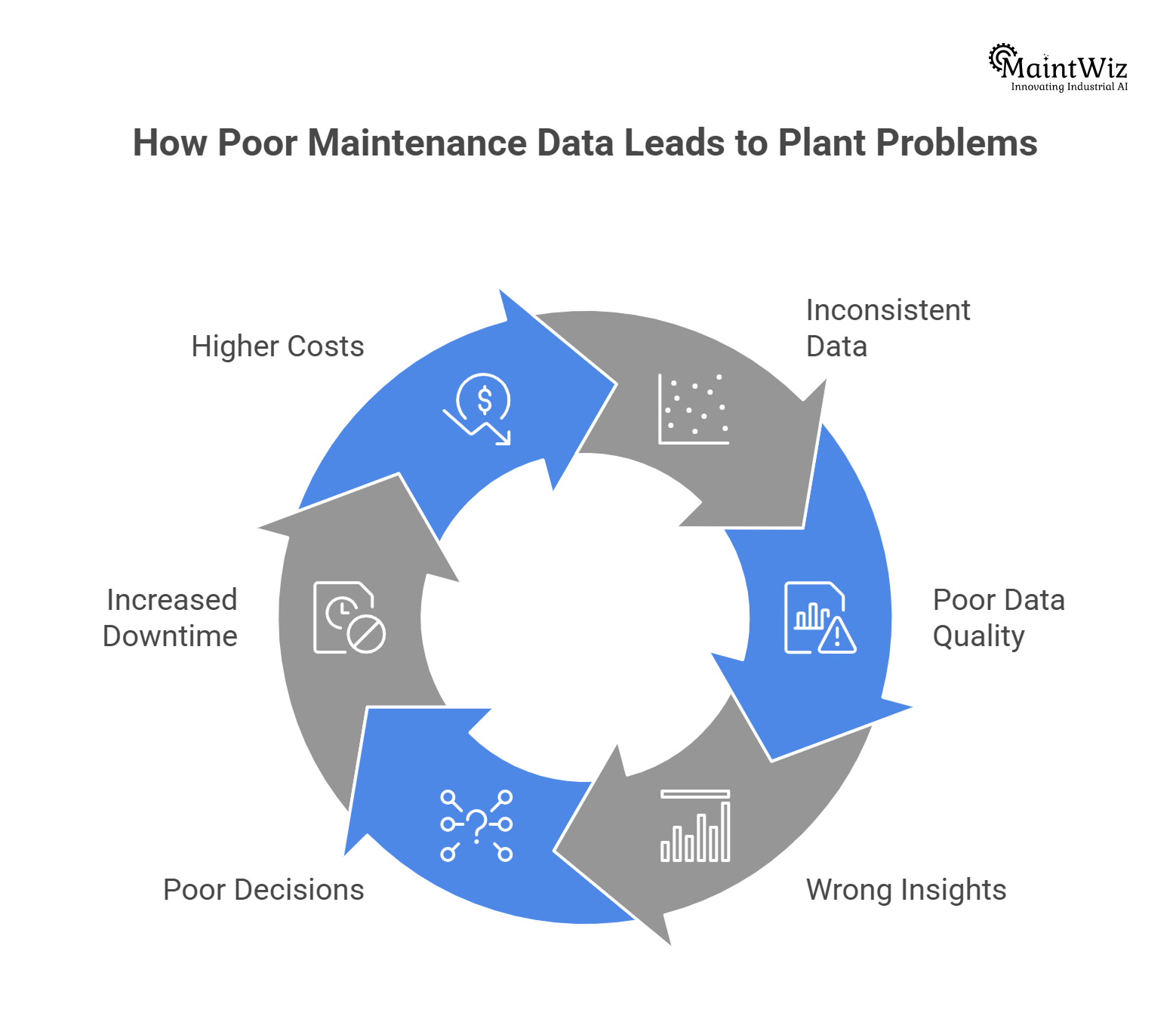
These issues lead to unreliable insights and flawed decision-making.

maintenance data problems leading to downtime flowchart

The Hidden Cost of Poor Maintenance Data

Most organizations track downtime cost.

Very few track the cost of bad data.

But poor data leads to:

  • Incorrect root cause analysis
  • Repeated equipment failures
  • Inefficient maintenance planning
  • Increased labor costs
  • Wrong capital investment decisions

This creates a compounding effect where small data errors lead to significant financial losses over time.

Data-Driven Maintenance vs Traditional Maintenance

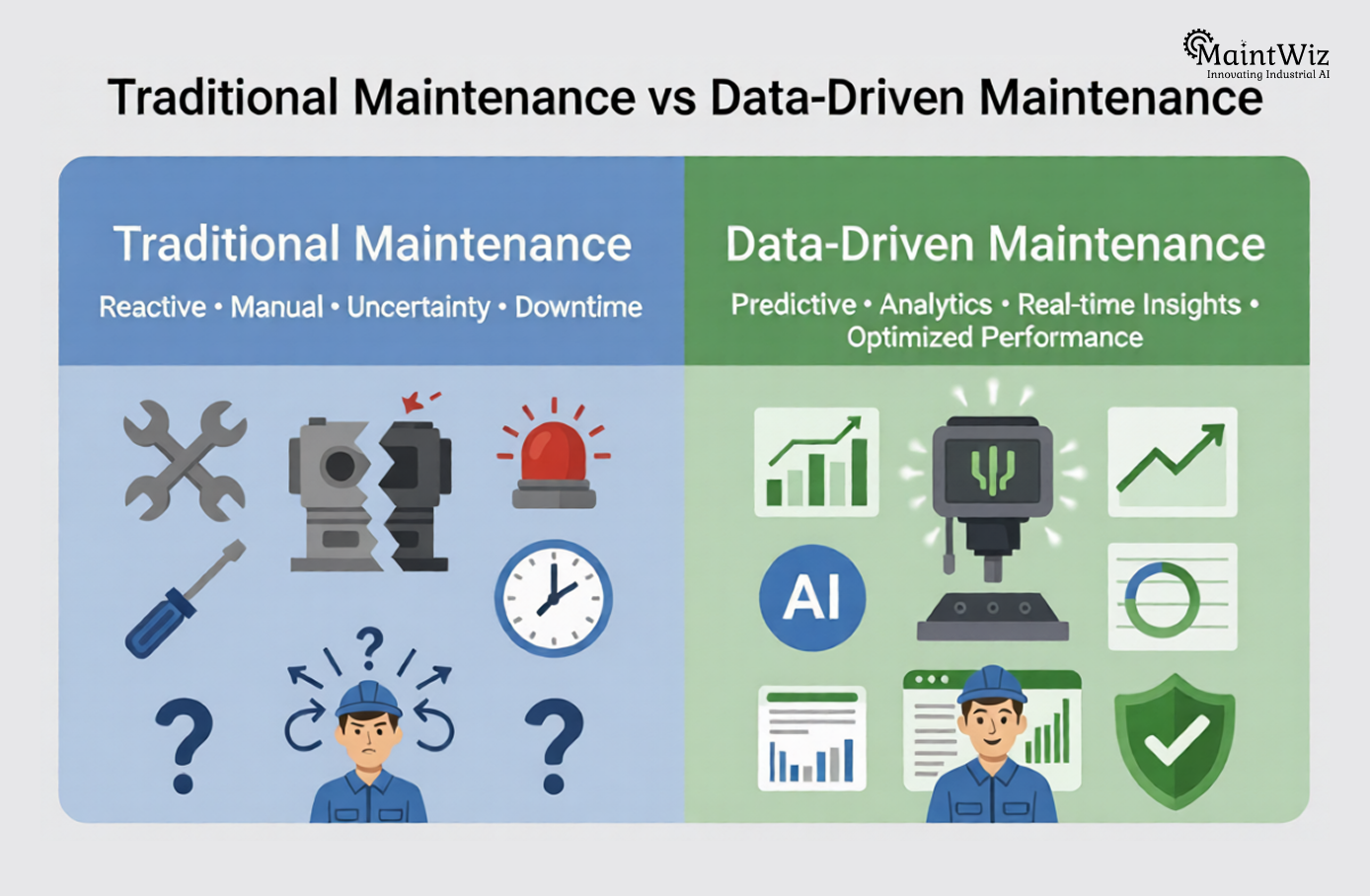
traditional vs data driven maintenance comparison chart

Traditional Maintenance Approach

  • Reactive or schedule-based
  • Dependent on experience
  • Limited visibility into asset health
  • High uncertainty

Data-Driven Maintenance Approach

  • Based on real-time data insights
  • Uses predictive maintenance analytics
  • Improves decision accuracy
  • Reduces downtime and cost

The shift is clear:

From activity-based maintenance → to intelligence-driven maintenance

How to Build a Data-Driven Maintenance Strategy

Implementing data-driven maintenance requires a structured approach.

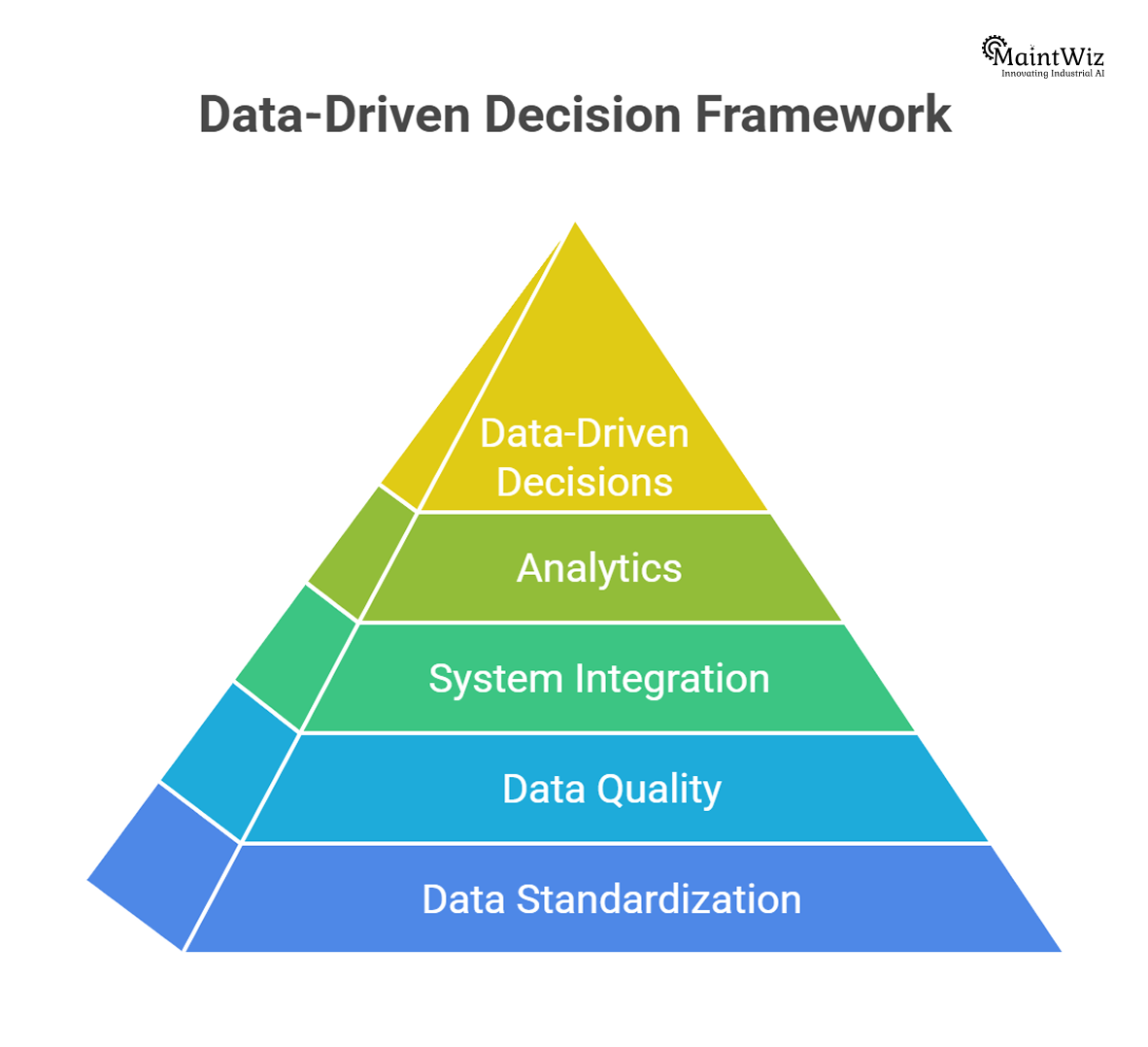
Step 1: Standardize Maintenance Data

  • Define clear failure codes
  • Use consistent naming conventions
  • Create structured data entry formats

Step 2: Improve Data Quality

  • Validate data at entry points
  • Train teams on accurate data capture
  • Eliminate duplicate or incorrect records

Step 3: Integrate Systems

  • Connect CMMS with IoT sensors
  • Enable real-time data flow
  • Ensure cross-functional visibility

Step 4: Use Maintenance Analytics

Step 5: Drive Data-Based Decisions

  • Replace assumptions with insights
  • Use data for planning and scheduling
  • Continuously refine strategies
data driven maintenance implementation framework steps

Role of Predictive Maintenance Data in Modern Plants

Predictive maintenance relies heavily on data quality.

Without accurate data:

  • Machine learning models fail
  • Predictions become unreliable
  • Maintenance decisions lose credibility

Key data sources include:

  • Sensor data (temperature, vibration, pressure)
  • Historical failure data
  • Work order history
  • Asset usage patterns

To succeed, organizations must ensure:

Clean data → Reliable predictions → Better outcomes

Industrial Data Analytics: Turning Data into Action

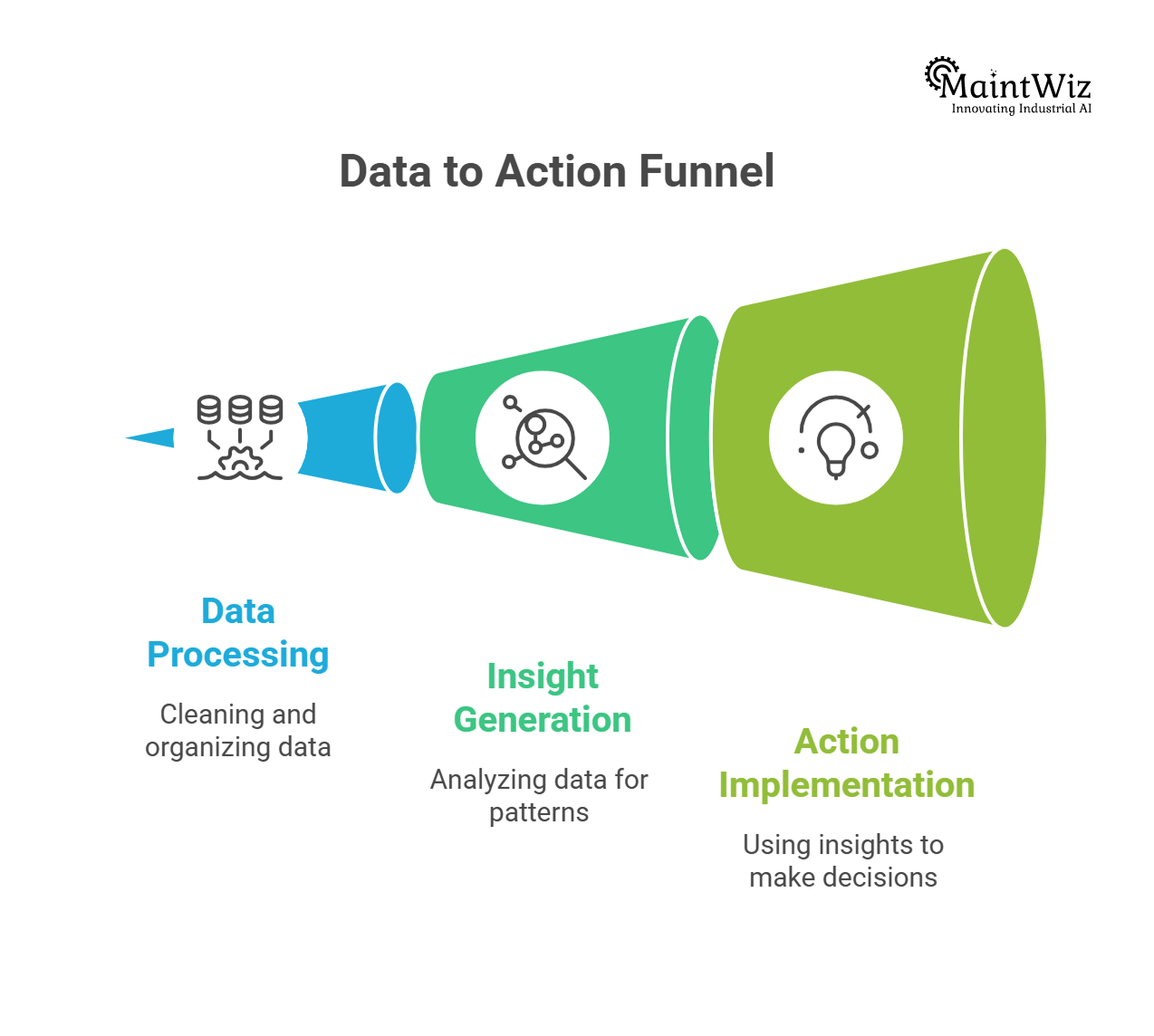
industrial data analytics pipeline from data to action

Collecting data is not enough.

Organizations must convert data into insights through industrial data analytics.

This involves:

  • Trend analysis
  • Failure pattern identification
  • Predictive modeling
  • Performance benchmarking

The goal is to move from:

Data → Information → Insight → Action

Why CMMS Data Accuracy Is Critical

A CMMS system is only as effective as the data it contains.

Poor CMMS data accuracy leads to:

  • Incorrect maintenance planning
  • Misleading KPIs
  • Inefficient workflows

Best practices include:

  • Mandatory data fields
  • Structured work order closure
  • Regular data audits

Integration with asset monitoring systems

MaintWiz CMMS: Enabling Data-Driven Maintenance

A robust CMMS platform plays a critical role in enabling data-driven maintenance.

MaintWiz CMMS supports this transformation by:

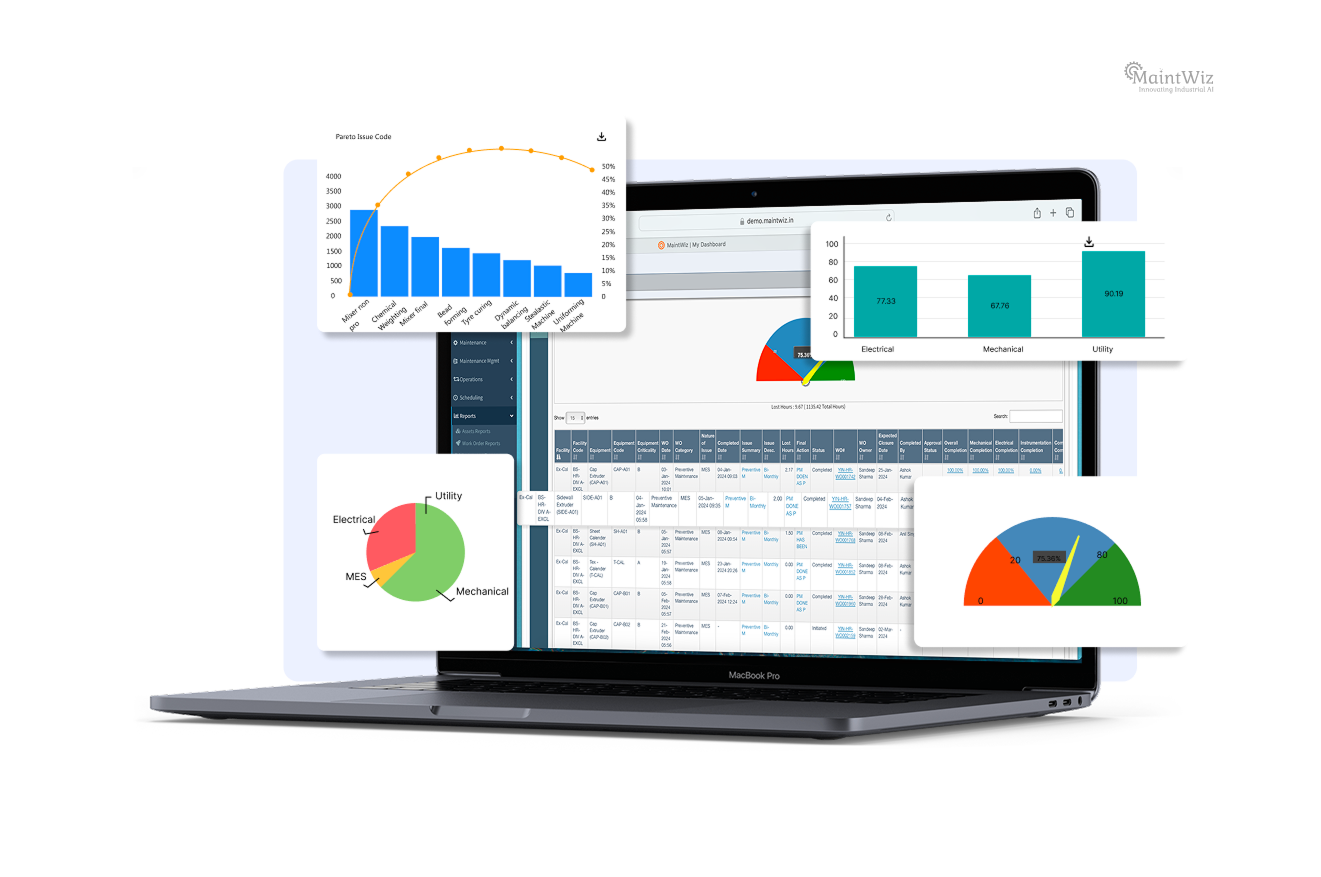
Laptop displaying a CMMS dashboard with multiple overlaid analytics charts, including Pareto analysis, bar charts, pie charts, and performance gauges for electrical, mechanical, and utility maintenance.
  1. Asset Reliability Management
  • Centralized asset data
  • Complete maintenance history
  • Real-time performance tracking
  1. Predictive Maintenance Enablement
  • Integration with IoT sensors
  • Advanced analytics capabilities
  • Early failure detection
  1. Maintenance Planning & Scheduling
  1. Data-Driven Decision Making
  • Actionable dashboards
  • KPI tracking
  • Insight-driven planning
  1. 90-Day Execution Readiness

MaintWiz enables rapid deployment of data-driven maintenance frameworks, allowing plants to:

  • Clean and standardize data
  • Implement structured workflows
  • Start generating insights within 90 days

This ensures faster ROI and measurable performance improvements.

Benefits of Data-Driven Maintenance

Organizations adopting data-driven maintenance experience:

  • Reduced unplanned downtime
  • Improved asset reliability
  • Lower maintenance costs
  • Better resource utilization
  • Increased operational efficiency

Real-World Impact: What Changes in the Plant

When data-driven maintenance is implemented effectively:

  • Technicians spend less time firefighting
  • Maintenance becomes proactive
  • Failures are predictable
  • Decision-making becomes faster and more accurate

Most importantly:

Maintenance transforms from a cost center into a strategic advantage.

impact of data driven maintenance in industrial plants

Common Challenges in Implementing Data-Driven Maintenance

  • Resistance to change
  • Lack of data discipline
  • Poor system integration
  • Inadequate training
  • Legacy processes

Overcoming these challenges requires:

  • Leadership commitment
  • Clear processes
  • Continuous improvement

Future of Maintenance: Data as the Core Asset

The future of industrial maintenance is not tool-driven.

It is data-driven.

Organizations that invest in:

  • Data quality
  • Data governance
  • Data analytics

will lead in:

  • Reliability
  • Efficiency

Profitability

Conclusion: Fix the Data Before Fixing Maintenance

Most plants think they have a maintenance problem.

They don’t.

They have a data problem disguised as a maintenance problem.

Until data becomes reliable, structured, and actionable:

  • Maintenance strategies will underperform
  • Technology investments will fail to deliver ROI
  • Operational inefficiencies will persist

The solution is clear:

Fix your data—and your maintenance will follow.

FAQ Section

What is data-driven maintenance?

Data-driven maintenance uses accurate data and analytics to optimize maintenance decisions and improve asset reliability.

Why does predictive maintenance fail?

Predictive maintenance often fails due to poor data quality, inconsistent data, and lack of proper analytics.

How can I improve maintenance data accuracy?

Standardize data entry, train teams, validate inputs, and use structured CMMS workflows.

What is the role of CMMS in data-driven maintenance?

CMMS systems manage maintenance data, enabling better planning, tracking, and analytics.

What are the benefits of data-driven maintenance?

Reduced downtime, improved reliability, lower costs, and better decision-making.

jai

Jai Balachandran is an industry expert with a proven track record in driving digital transformation and Industry 4.0 technologies. With a rich background in asset management, plant maintenance, connected systems, TPM and reliability initiatives, he brings unparalleled insight and delivery excellence to Plant Operations.