



Maintenance productivity is one of the most misunderstood challenges in industrial operations.
Walk into any plant, and you will hear the same concerns:
At first glance, it appears to be a capacity issue.
But despite increasing team size, deploying CMMS systems, and improving planning, most plants still struggle with low output and high downtime.
This raises a critical question:
Because the real issue is not workload.
It is maintenance productivity—how effectively work is executed, prioritized, and delivered.
Maintenance productivity refers to how efficiently maintenance resources (people, tools, time) are utilized to deliver maximum value.
It is not about how much work is done.
It is about:
In simple terms:
Maintenance productivity = Output (value) ÷ Input (effort)
Despite technological advancements, many plants struggle with low maintenance productivity due to systemic inefficiencies.
Key Causes:
These issues create an environment where teams are active—but not effective.
One of the biggest misconceptions in maintenance is:
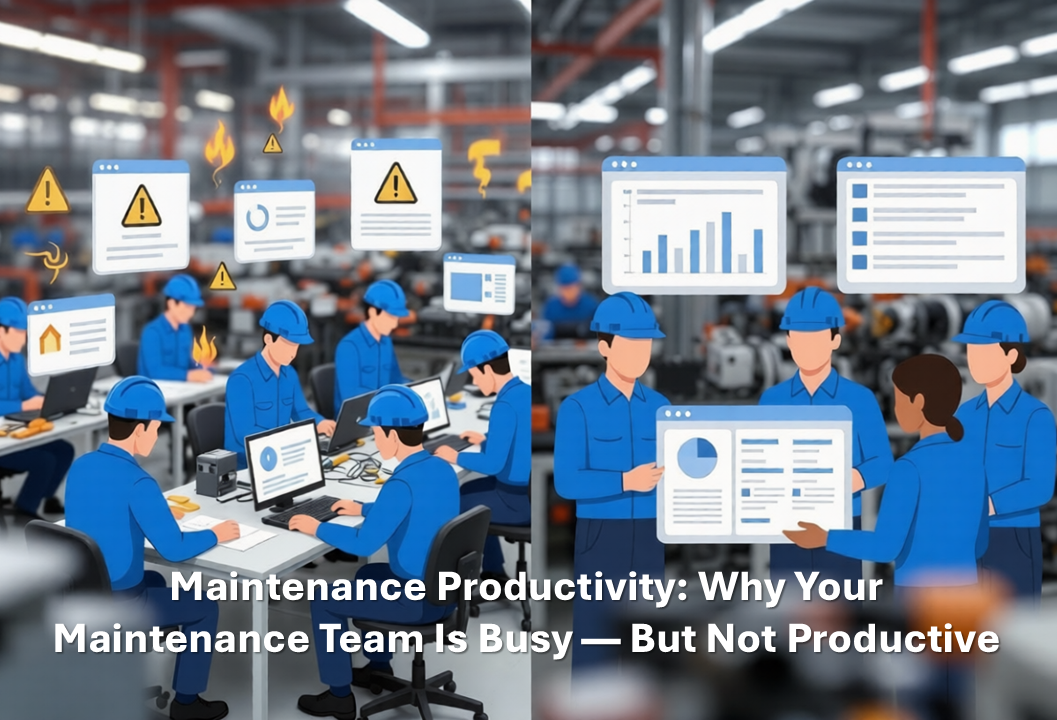
Busy teams are productive teams.
This is not true.
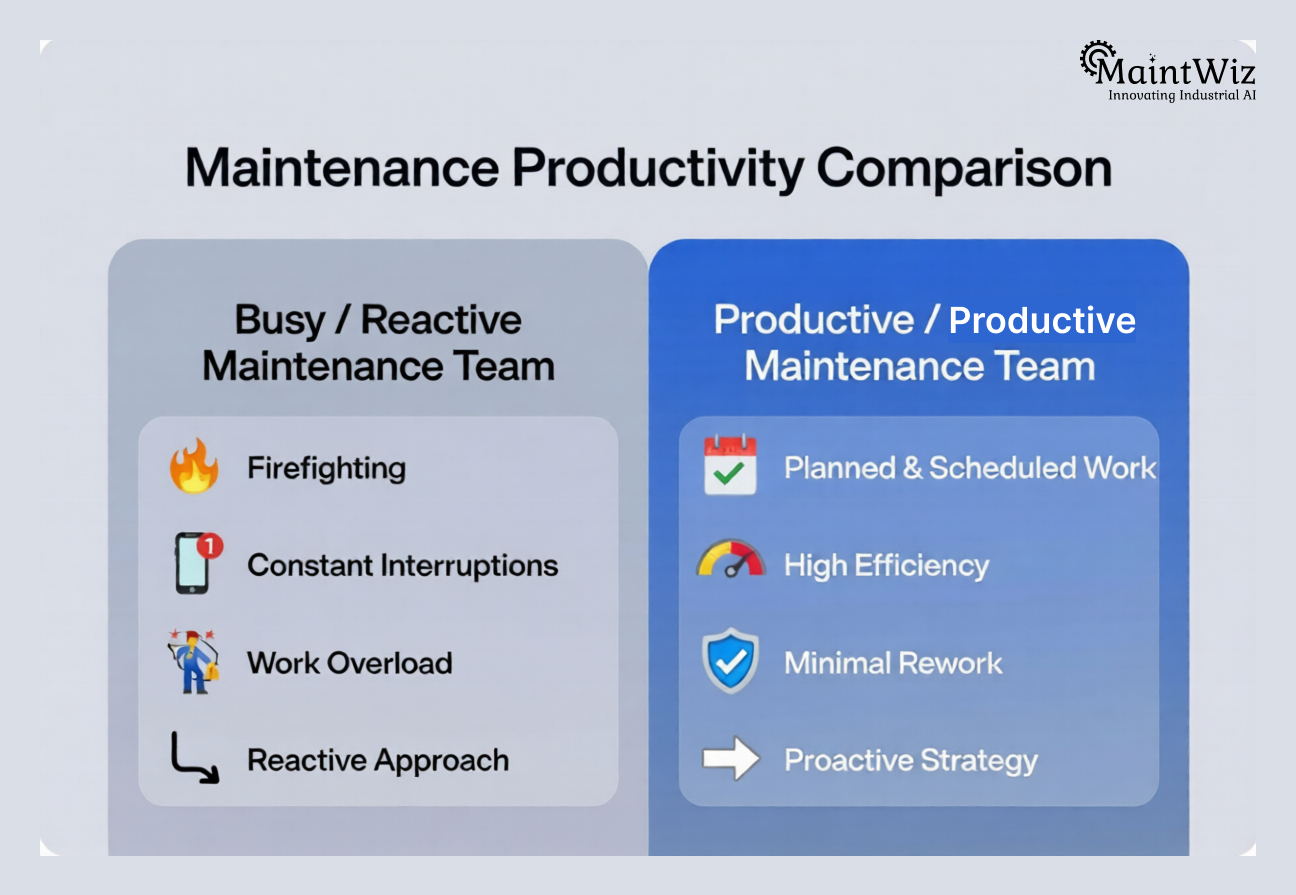
What “Busy” Looks Like:
What “Productive” Looks Like:
Predictable outcomes
The gap between these two defines your maintenance productivity level.
Work Order Overload: The Silent Killer
Work order management systems often become repositories—not decision tools.
Common issues include:
This leads to:
How to Fix It
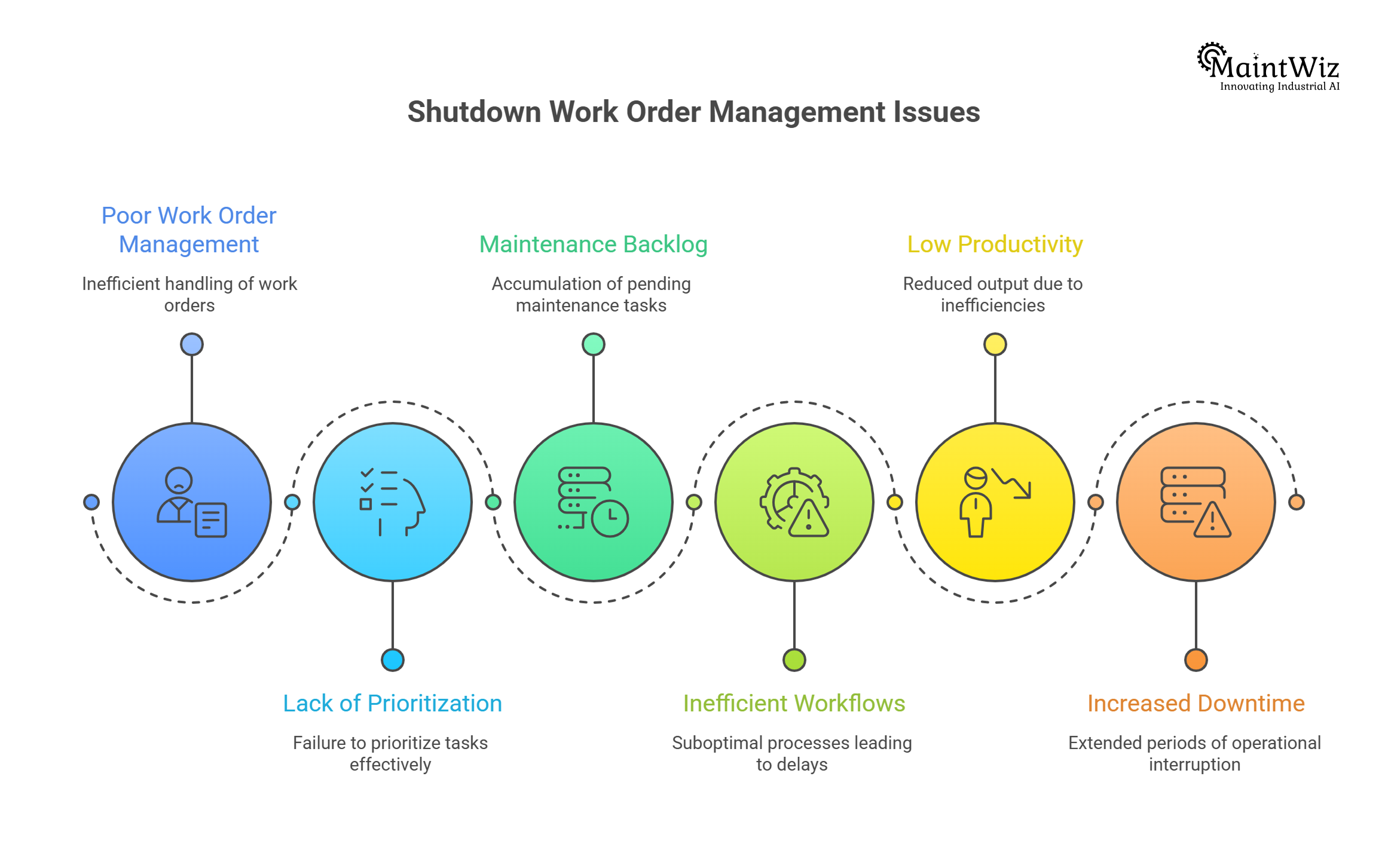
A growing maintenance backlog is a clear indicator of low productivity.
Why Backlogs Grow:
Impact on Plant Efficiency:
Best Practices to Reduce Backlog:
Monitor backlog KPIs regularly
Improving technician efficiency is essential for boosting maintenance productivity.
Where Time Is Lost:
How to Improve Efficiency:
Most plants operate in a reactive mode.
Firefighting Culture:
Planned Maintenance Culture:
The shift from reactive to planned maintenance significantly improves maintenance productivity.
Workforce optimization focuses on maximizing output without increasing headcount.
Key Strategies:
Outcome:
Data plays a critical role in improving maintenance productivity.
Key Data Points:
How to Use Data:
A modern CMMS platform is essential for improving maintenance productivity.
MaintWiz CMMS enables this transformation through:
MaintWiz enables rapid deployment of productivity improvements:
This delivers measurable improvements in maintenance productivity within 90 days.
To improve productivity, you must measure it effectively.
Essential KPIs:
Planned vs unplanned work ratio
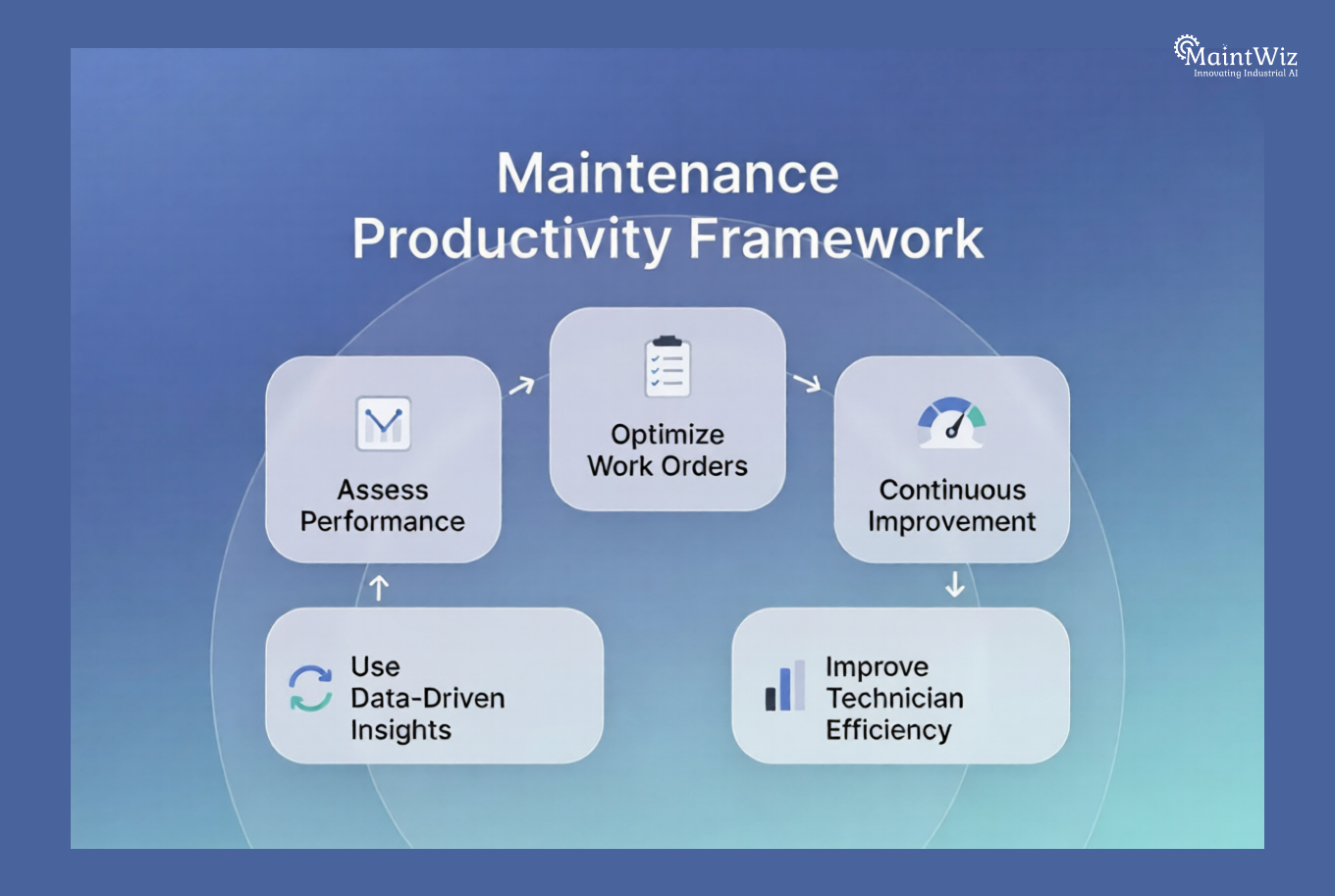
Step 1: Assess Current Performance
Step 2: Optimize Work Order Management
Step 3: Improve Technician Efficiency
Step 4: Implement Data-Driven Decisions
Step 5: Continuously Improve
Organizations that focus on maintenance productivity achieve:
Increased plant efficiency
Most plants believe they need more resources.
But the real need is better utilization.
Your maintenance team is not underperforming because they lack effort.
They are underperforming because the system is inefficient.
Improving maintenance productivity is not about doing more work.
It is about doing the right work—efficiently.
What is maintenance productivity?
Maintenance productivity measures how efficiently maintenance work is performed to deliver maximum value.
How can maintenance productivity be improved?
By optimizing work order management, improving technician efficiency, and using data-driven insights.
Why is my maintenance team busy but not productive?
Due to poor prioritization, inefficient workflows, and excessive administrative tasks.
What is the role of CMMS in maintenance productivity?
CMMS improves planning, tracking, and execution, leading to better productivity.
How does maintenance backlog affect productivity?
A large backlog reduces efficiency, increases downtime, and impacts asset reliability.

Jai Balachandran is an industry expert with a proven track record in driving digital transformation and Industry 4.0 technologies. With a rich background in asset management, plant maintenance, connected systems, TPM and reliability initiatives, he brings unparalleled insight and delivery excellence to Plant Operations.

Company