




7 Proven Strategies to Reduce Maintenance Cost Without Risk

Maintenance cost reduction is often pursued with the wrong premise—that lowering spend inherently introduces risk. In reality, the opposite is true. The most mature industrial organizations don’t reduce maintenance cost by cutting activity; they reduce it by engineering precision into maintenance execution.

A strategic approach to maintenance cost reduction focuses on eliminating inefficiencies, optimizing asset performance, and aligning maintenance with business outcomes. When done correctly, it simultaneously lowers cost, improves reliability, and increases operational resilience.

This blog outlines seven proven strategies that enable organizations to reduce maintenance costs without compromising asset health, safety, or uptime.

Rethinking Maintenance Cost Reduction: From Cost Cutting to Cost Engineering

Before diving into the strategies, it is critical to understand a fundamental shift.

Traditional cost reduction approaches focus on:

  • Reducing maintenance frequency
  • Cutting labor or spare parts
  • Delaying maintenance activities

These approaches often lead to:

  • Increased breakdowns
  • Higher long-term costs
  • Reduced asset lifespan
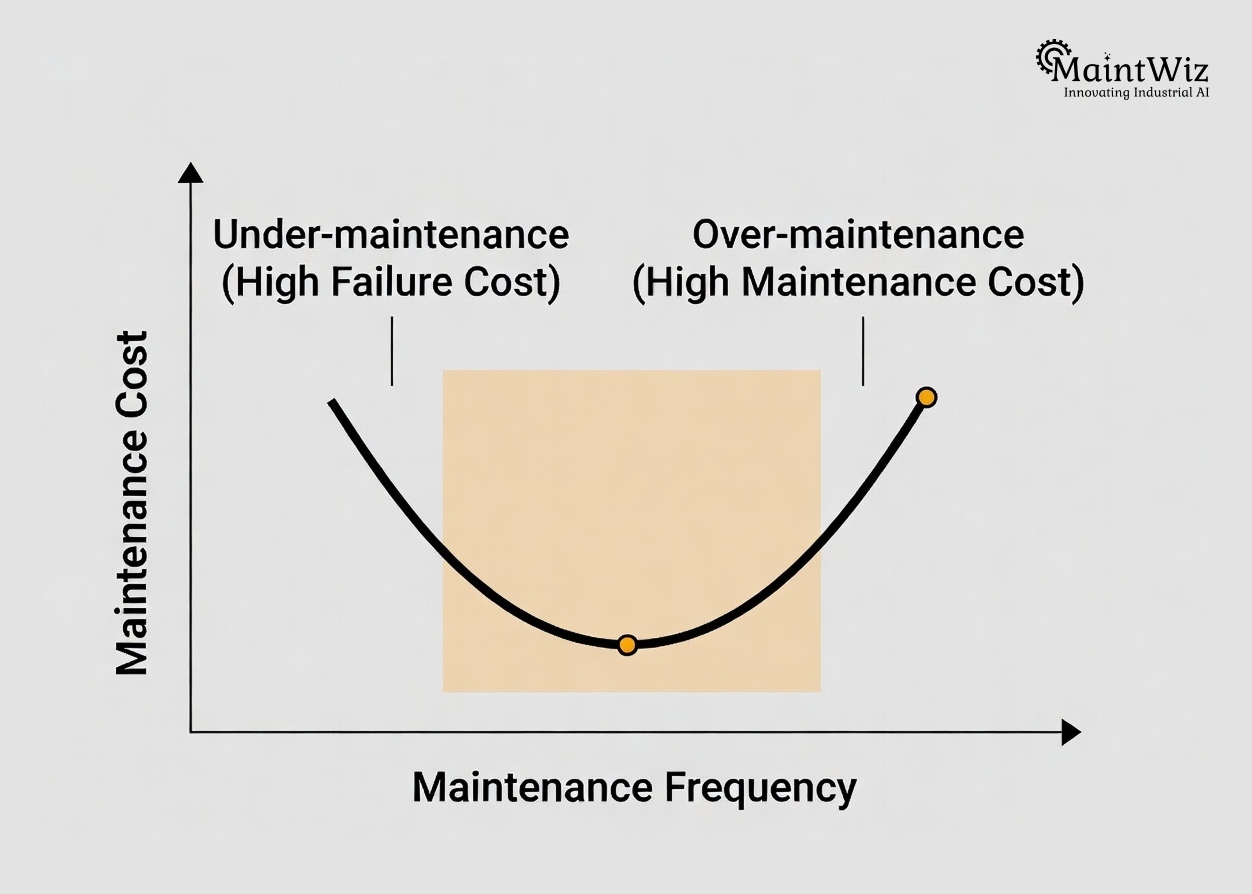
maintenance cost curve showing optimal balance between over and under maintenance

Modern maintenance leaders adopt a different approach:

  • Optimize maintenance, don’t minimize it
  • Invest in intelligence, not volume
  • Focus on lifecycle cost, not immediate expense

The objective is not to spend less—it is to spend right.

Strategy 1: Shift from Reactive to Preventive Maintenance

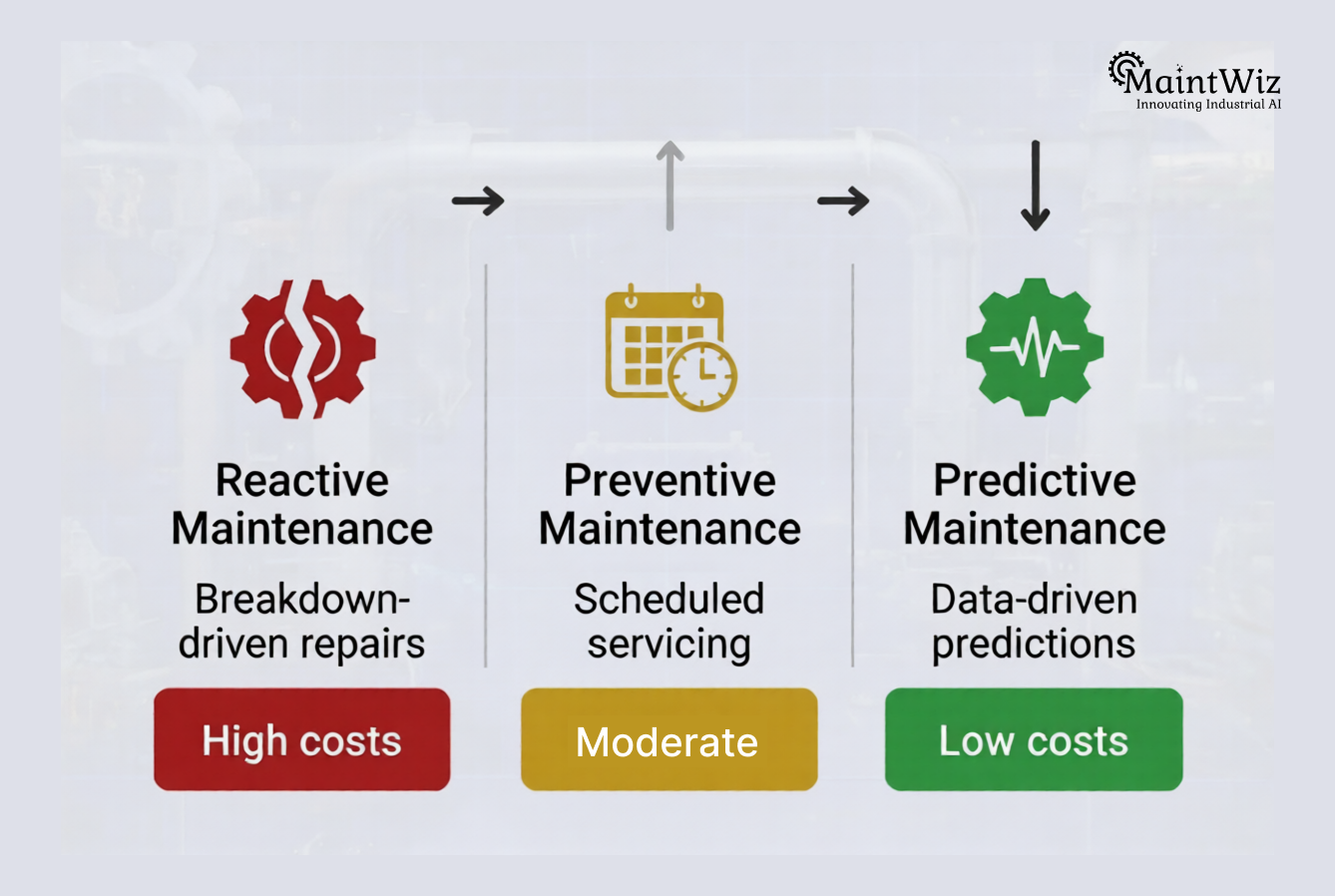
comparison of reactive preventive and predictive maintenance cost efficiency

Why is reactive maintenance expensive?

Reactive maintenance leads to:

Every unplanned failure introduces variability and cost escalation.

How does preventive maintenance reduce maintenance costs?

Preventive maintenance enables:

  • Planned interventions
  • Reduced failure frequency
  • Lower repair costs

Best practices for preventive maintenance cost optimization

  • Identify high-failure assets
  • Define optimal maintenance intervals
  • Avoid over-maintenance through data analysis

The goal is balance—too little maintenance increases failures; too much increases cost.

Strategy 2: Implement Predictive Maintenance for High-Value Assets

What is predictive maintenance and how does it reduce cost?

Predictive maintenance uses real-time data to determine:

  • When maintenance is needed
  • Which components are at risk

This eliminates unnecessary maintenance while preventing failures.

Where should predictive maintenance be applied?

Focus on:

  • Critical assets
  • High-cost failure equipment
  • Production bottlenecks

Cost impact of predictive maintenance

Organizations typically achieve:

  • 20–30% reduction in maintenance costs
  • Significant downtime reduction
  • Extended asset life

Predictive maintenance transforms maintenance from time-based to condition-based execution.

Strategy 3: Optimize Work Order Management System Efficiency

How does a work order management system impact maintenance cost?

An inefficient system leads to:

  • Duplicate work orders
  • Poor scheduling
  • Idle technician time

A well-optimized work order management system ensures:

  • Accurate task allocation
  • Reduced administrative overhead
  • Improved execution efficiency
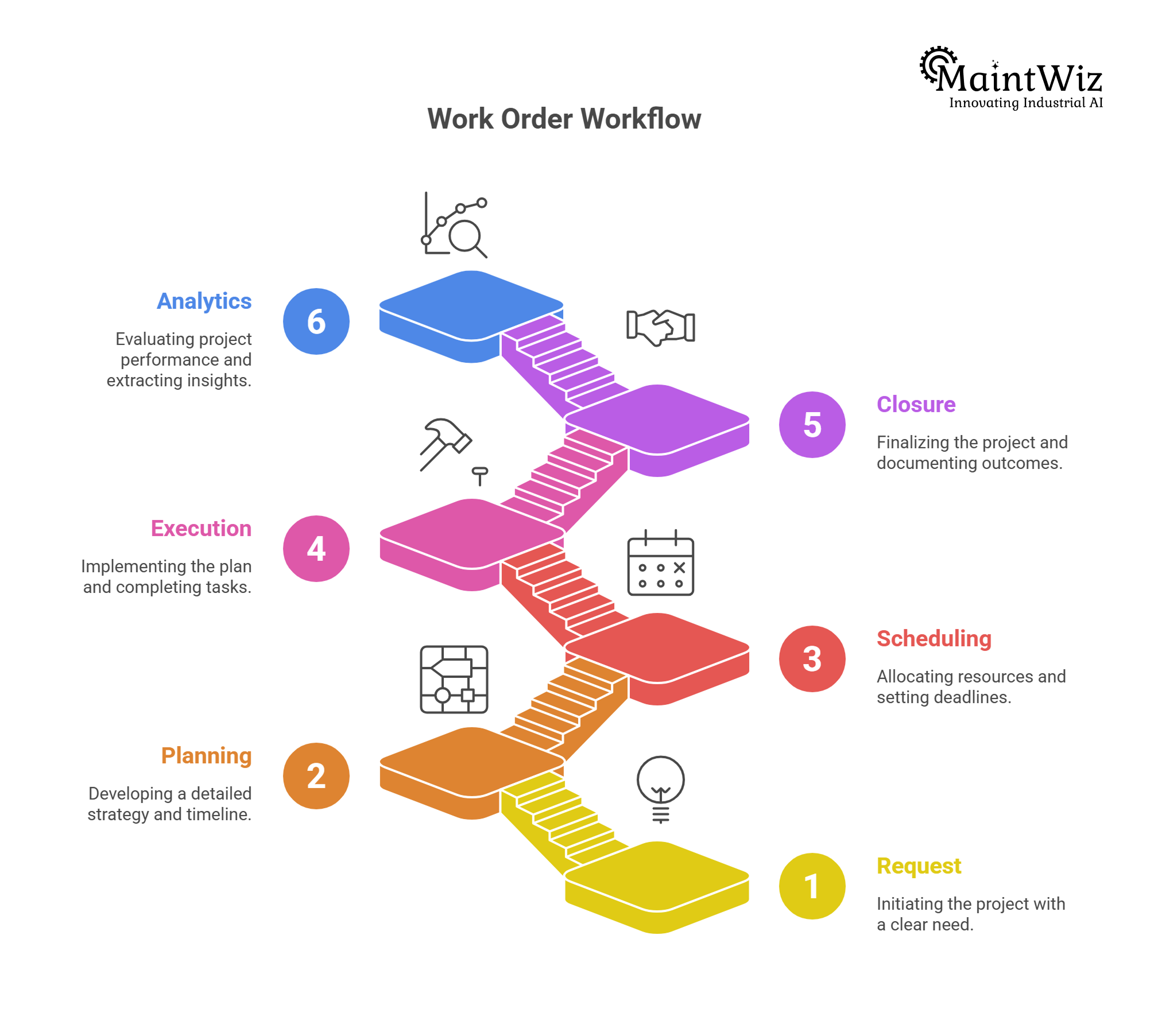
work order management system workflow improving maintenance efficiency

Key optimization levers

Cost reduction outcomes

  • Lower planning effort
  • Higher technician productivity
  • Faster work order completion

Efficiency in execution directly translates to cost savings.

Strategy 4: Improve Spare Parts and Inventory Management

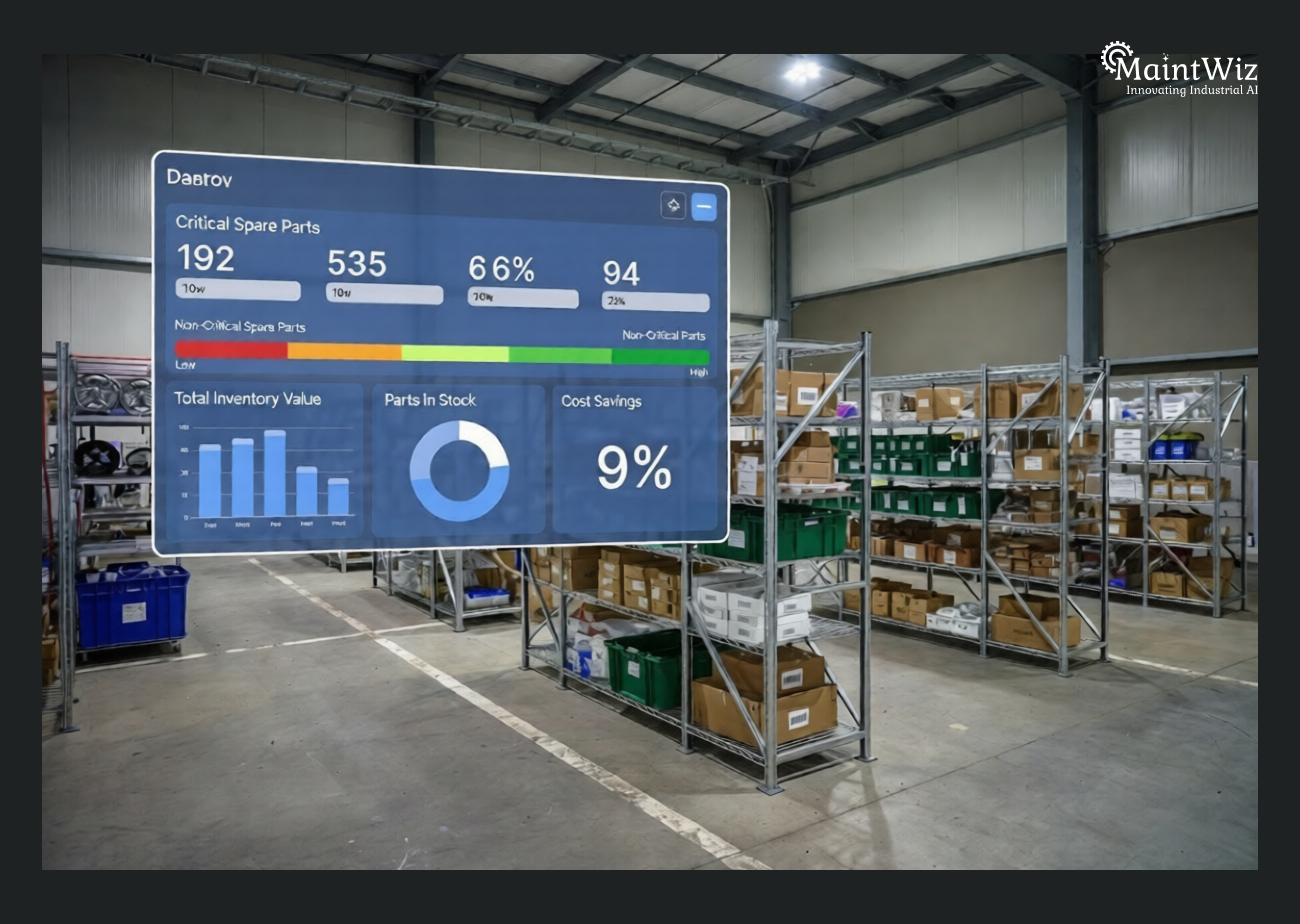
spare parts inventory optimization reducing maintenance cost

Why does poor inventory management increase maintenance cost?

Common issues include:

  • Overstocking (high carrying cost)
  • Stockouts (downtime risk)
  • Obsolete inventory

How to optimize maintenance inventory?

  • Classify spare parts by criticality
  • Use consumption-based forecasting
  • Integrate inventory with maintenance planning

Impact on cost reduction

  • Reduced inventory holding cost
  • Improved availability of critical parts
  • Lower emergency procurement expenses

Inventory optimization ensures capital is not locked unnecessarily while maintaining reliability.

Strategy 5: Enhance Technician Productivity and Utilization

What drives low technician productivity?

  • Poor scheduling
  • Travel inefficiencies
  • Rework due to lack of standardization
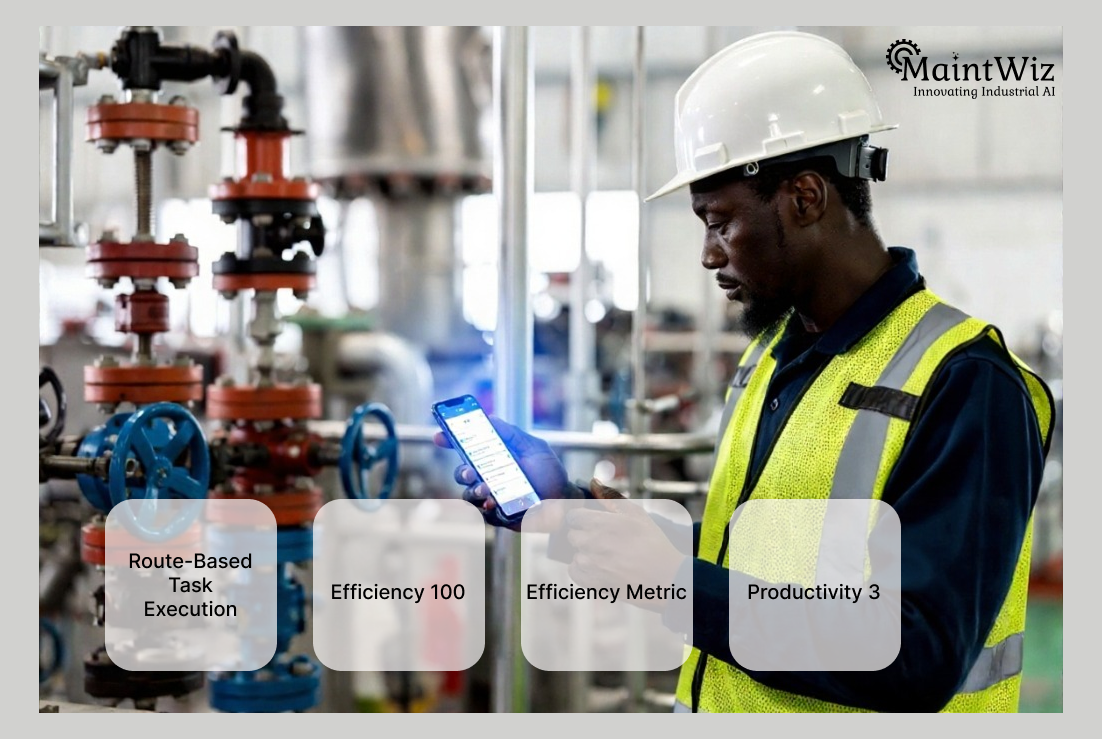
technician productivity improvement using mobile CMMS

How to improve technician efficiency?

  • Implement route-based scheduling
  • Use mobile CMMS for real-time updates
  • Standardize work procedures

Cost benefits

  • More work completed per shift
  • Reduced overtime
  • Faster issue resolution

Labor is one of the largest maintenance cost components—optimizing it yields immediate gains.

Strategy 6: Use Data-Driven Maintenance Analytics

Why is data critical for maintenance cost reduction?

Without data:

  • Decisions are reactive
  • Inefficiencies remain hidden
  • Optimization is impossible
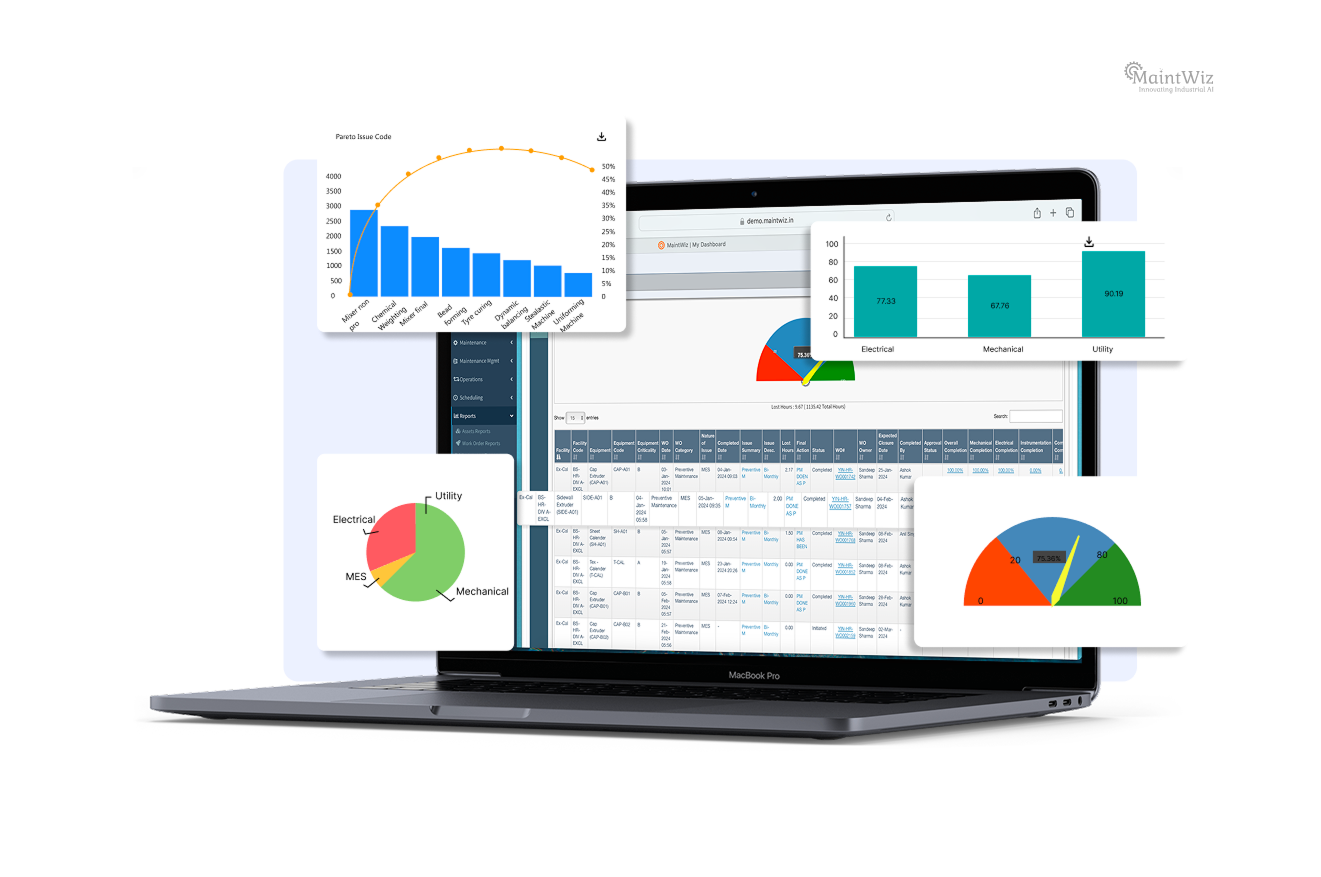
Laptop displaying a CMMS dashboard with multiple overlaid analytics charts, including Pareto analysis, bar charts, pie charts, and performance gauges for electrical, mechanical, and utility maintenance.

What analytics should be tracked?

  • Mean Time to Repair (MTTR)
  • Mean Time Between Failures (MTBF)
  • Maintenance cost per asset
  • Work order backlog

How analytics reduce cost

  • Identify high-cost assets
  • Optimize maintenance frequency
  • Detect recurring issues

Data transforms maintenance from experience-driven to evidence-driven decision-making.

Strategy 7: Standardize Maintenance Processes and Workflows

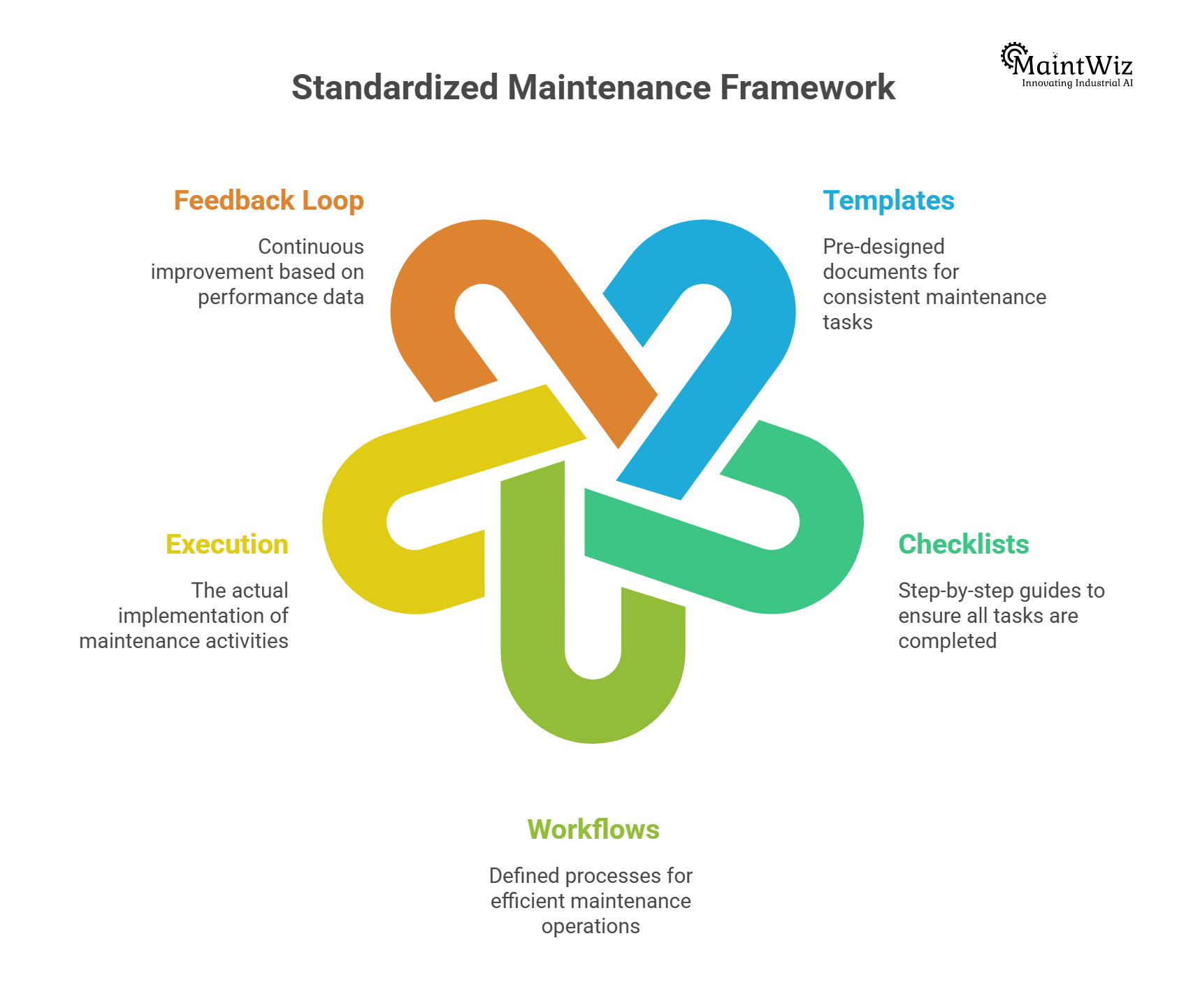
standardized maintenance workflow framework for cost reduction

Why is standardization important?

Lack of standardization leads to:

  • Inconsistent execution
  • Increased errors
  • Higher rework

What should be standardized?

  • Work order templates
  • Inspection checklists
  • Maintenance procedures

Cost impact

  • Reduced variability
  • Improved execution speed
  • Lower training costs

Standardization ensures predictability, which is the foundation of cost control.

How MaintWiz CMMS Enables Maintenance Cost Reduction at Scale

Achieving sustainable maintenance cost reduction requires more than strategy—it requires a system that operationalizes these strategies consistently. MaintWiz CMMS is designed to enable this transformation.

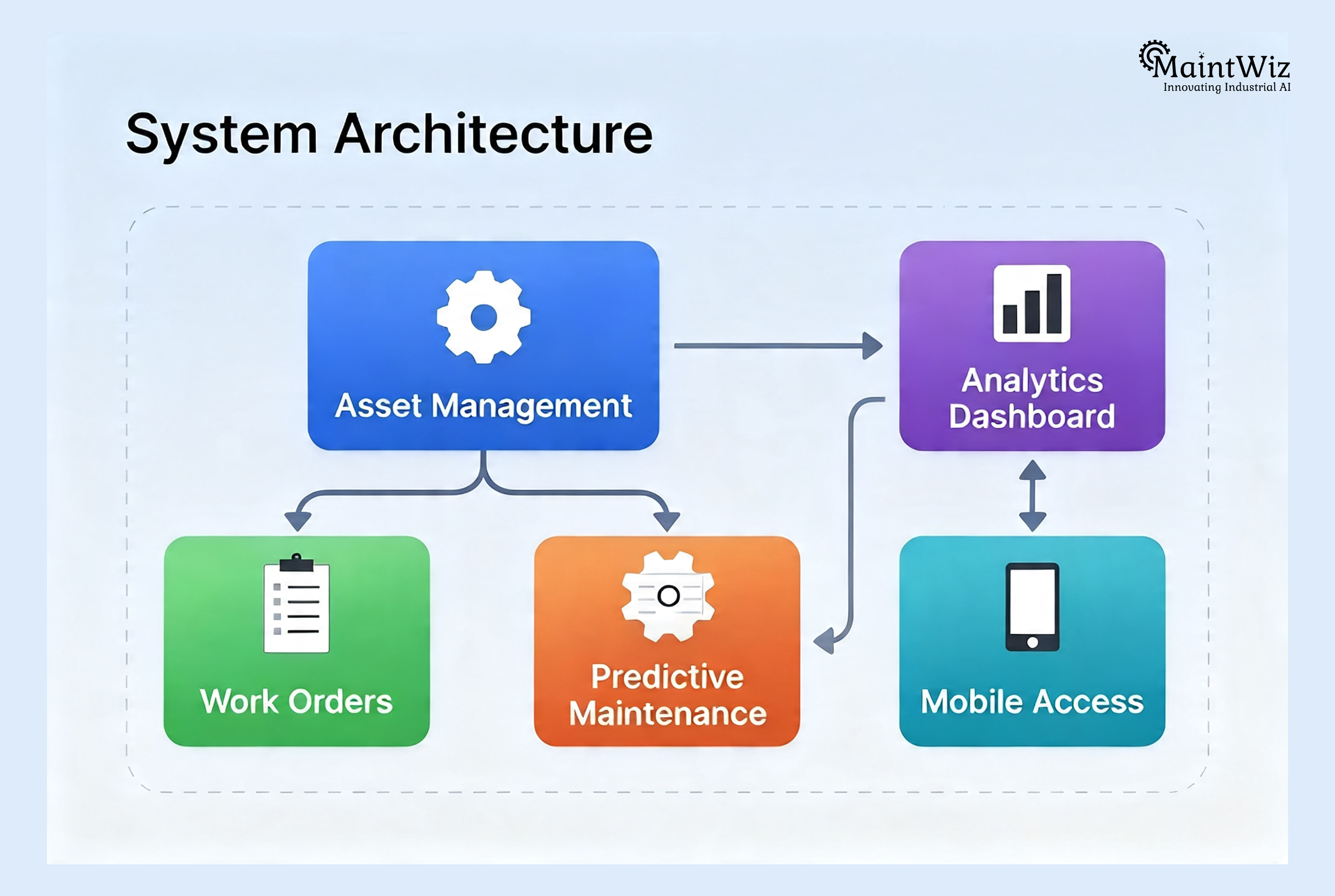
MaintWiz CMMS system for maintenance cost reduction and analytics

Asset Reliability and Cost Optimization

MaintWiz structures maintenance around:

  • Asset hierarchy and criticality
  • Preventive and predictive maintenance workflows
  • Standardized execution frameworks

This ensures maintenance efforts are aligned with asset importance and cost impact.

Predictive Maintenance Integration

MaintWiz enables:

  • Condition-based monitoring
  • Automated alerts and work orders
  • Early failure detection

This reduces unnecessary maintenance while preventing costly breakdowns.

Planning and Scheduling Efficiency

With capabilities such as:

  • Automated work order generation
  • Multi-asset work order management
  • Dynamic scheduling

MaintWiz significantly reduces planning effort and improves technician utilization.

Advanced Analytics for Cost Control

MaintWiz provides:

  • Real-time dashboards
  • Cost tracking by asset and activity
  • Performance benchmarking

This enables continuous optimization of maintenance strategies.

90-Day Execution Impact

Organizations implementing MaintWiz can achieve within 90 days:

  • Reduced work order backlog
  • Improved maintenance efficiency
  • Measurable cost savings

The platform acts as a catalyst for rapid, scalable transformation.

Common Mistakes in Maintenance Cost Reduction

Even well-intentioned initiatives can fail if executed incorrectly.

Cutting Maintenance Instead of Optimizing It

This leads to:

  • Increased failures
  • Higher long-term costs

Ignoring Asset Criticality

Not all assets require the same level of maintenance.

Lack of Integration

Disconnected systems result in:

  • Poor visibility
  • Inefficient execution

No Performance Tracking

Without KPIs, cost reduction efforts cannot be measured or sustained.

KPIs to Track Maintenance Cost Reduction Success

To ensure effectiveness, organizations must monitor:

  • Maintenance cost per asset
  • Maintenance cost as % of asset value
  • Planned vs unplanned maintenance ratio
  • MTTR and MTBF
  • Work order efficiency
  • Technician utilization

These metrics provide a clear view of both cost and performance.

The Future of Maintenance Cost Reduction

The next phase of maintenance evolution will be defined by:

  • AI-driven maintenance planning
  • Autonomous scheduling
  • Predictive and prescriptive analytics
  • Digital twins

In this landscape, maintenance cost reduction will not be a periodic initiative—it will be a continuous, system-driven outcome.

future of maintenance cost reduction using AI and predictive analytics

Conclusion

Maintenance cost reduction is not about doing less—it is about doing better, smarter, and more precisely.

Organizations that adopt a structured approach—combining preventive, predictive, operational efficiency, and analytics—can achieve:

  • Lower costs
  • Higher reliability
  • Improved operational performance

The competitive advantage lies in transforming maintenance from a cost center into a strategic value driver.

FAQs

How can maintenance cost be reduced without increasing risk?

By optimizing maintenance strategies, using predictive maintenance, and improving efficiency rather than cutting essential activities.

What is the most effective way to reduce maintenance costs?

Combining preventive and predictive maintenance with efficient work order management and data analytics.

How does predictive maintenance reduce maintenance cost?

It prevents failures and eliminates unnecessary maintenance activities, reducing both downtime and cost.

What role does CMMS play in maintenance cost reduction?

CMMS improves planning, execution, tracking, and analytics, enabling data-driven cost optimization.

What KPIs should be tracked for maintenance cost reduction?

MTTR, MTBF, maintenance cost per asset, backlog, and technician productivity.

jai

Jai Balachandran is an industry expert with a proven track record in driving digital transformation and Industry 4.0 technologies. With a rich background in asset management, plant maintenance, connected systems, TPM and reliability initiatives, he brings unparalleled insight and delivery excellence to Plant Operations.