

Predictive Maintenance vs Preventive Maintenance: The Real
Cost Analysis Leaders Miss in 2026

In 2026, the conversation around maintenance strategy has fundamentally shifted. What was once an operational decision is now a board-level discussion tied directly to EBITDA, asset productivity, and competitive positioning.
Yet despite this shift, many organizations still approach the comparison of predictive maintenance vs preventive maintenance through a dangerously narrow lens—focusing only on visible costs like labor, spare parts, and downtime.
This is where most leaders get it wrong.
The real cost analysis is not about what you spend—it is about how effectively your maintenance strategy enables better decisions, reduces variability, and optimizes asset performance over time.
This article provides a rigorous, field-tested breakdown of predictive maintenance vs preventive maintenance, with a focus on true cost structures, hidden inefficiencies, and measurable ROI outcomes.
Predictive Maintenance vs Preventive Maintenance: A Strategic Cost Perspective
At a surface level, preventive maintenance appears cost-effective because it introduces structure and reduces unexpected failures. Predictive maintenance, on the other hand, is often perceived as expensive due to its reliance on sensors, analytics, and digital infrastructure.
But this comparison is fundamentally flawed.
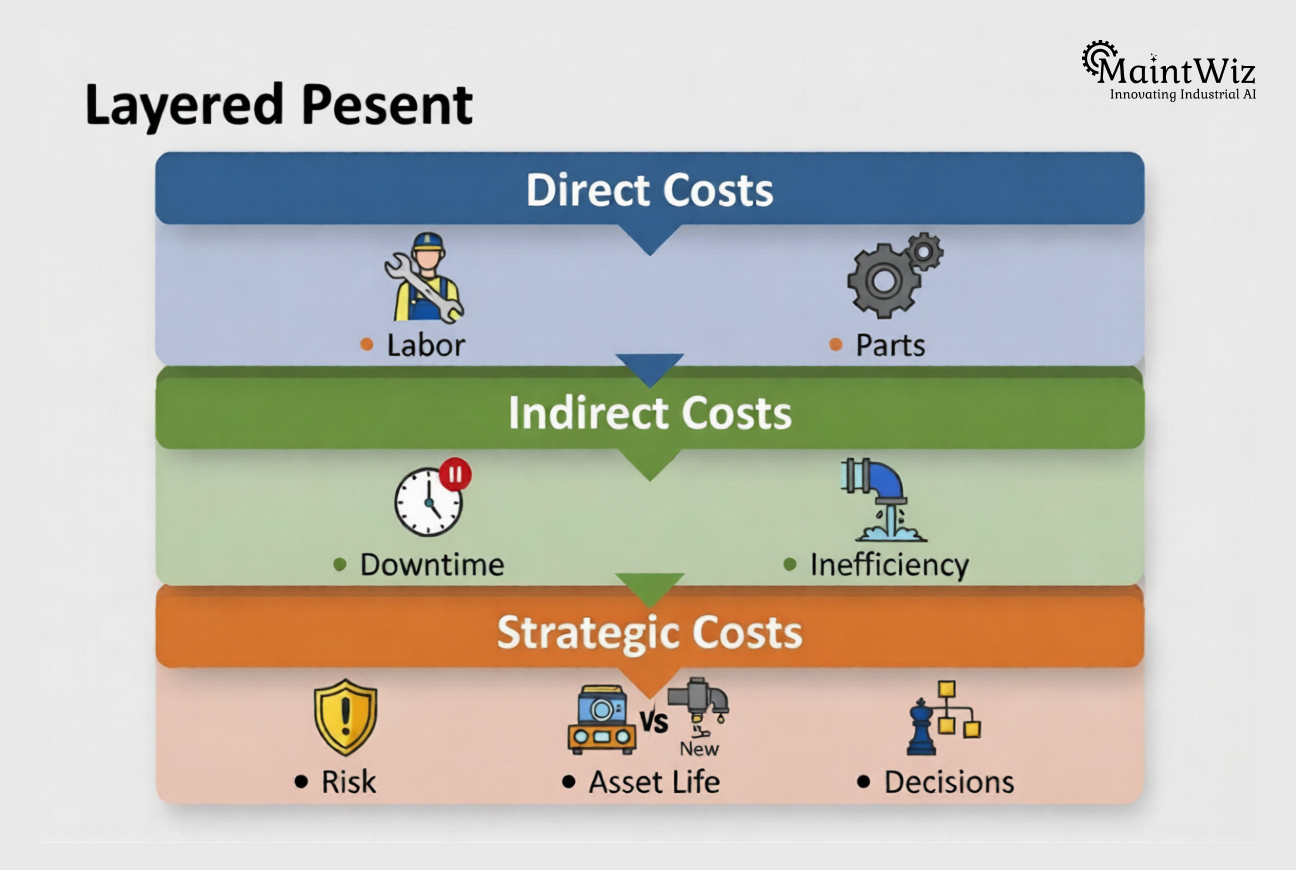
The real evaluation must be done across three layers:
Direct costs include labor, spare parts, and scheduled downtime. Indirect costs include production losses, inefficiencies, and wasted effort. Strategic costs—often ignored—include decision quality, asset lifespan, and operational risk.
When viewed through this lens, predictive maintenance vs preventive maintenance becomes less about expense and more about economic impact.
What Preventive Maintenance Really Costs
Preventive maintenance operates on a time-based or usage-based schedule. It assumes that assets degrade in predictable patterns and that periodic intervention prevents failure.
In practice, this assumption creates systemic inefficiencies.

Organizations performing preventive maintenance often replace components that still have usable life. This leads to over-maintenance, where labor and materials are consumed without generating additional value. Planned downtime, while controlled, still disrupts production. Over time, this creates a cycle of inefficiency masked as discipline.
Another hidden cost is inventory. Preventive maintenance requires predictable stocking of spare parts, often leading to excess inventory carrying costs and obsolescence.
Preventive maintenance does reduce catastrophic failures. However, it does not optimize maintenance timing. It simply standardizes it.
Predictive Maintenance: Cost, Complexity, and Real ROI
Predictive maintenance fundamentally changes how maintenance decisions are made. Instead of relying on schedules, it uses real-time asset data, condition monitoring, and analytics to determine when intervention is actually needed.
This introduces an upfront investment in sensors, data infrastructure, and analytics capabilities. It also requires organizational change—new workflows, new skills, and tighter integration between maintenance and operations.
However, the payoff is not incremental—it is exponential.
Predictive maintenance reduces unplanned downtime by identifying failures before they occur. It eliminates unnecessary maintenance by aligning intervention with actual asset condition. It extends asset lifespan by preventing both overuse and premature replacement.
But the most important—and often overlooked—benefit is decision quality.
Predictive maintenance does not just tell you when something will fail. It enables you to decide when to act, how to act, and what the economic impact of that decision will be.
That is where true ROI is created.

The Hidden Cost Gap: Where Preventive Maintenance Falls Short
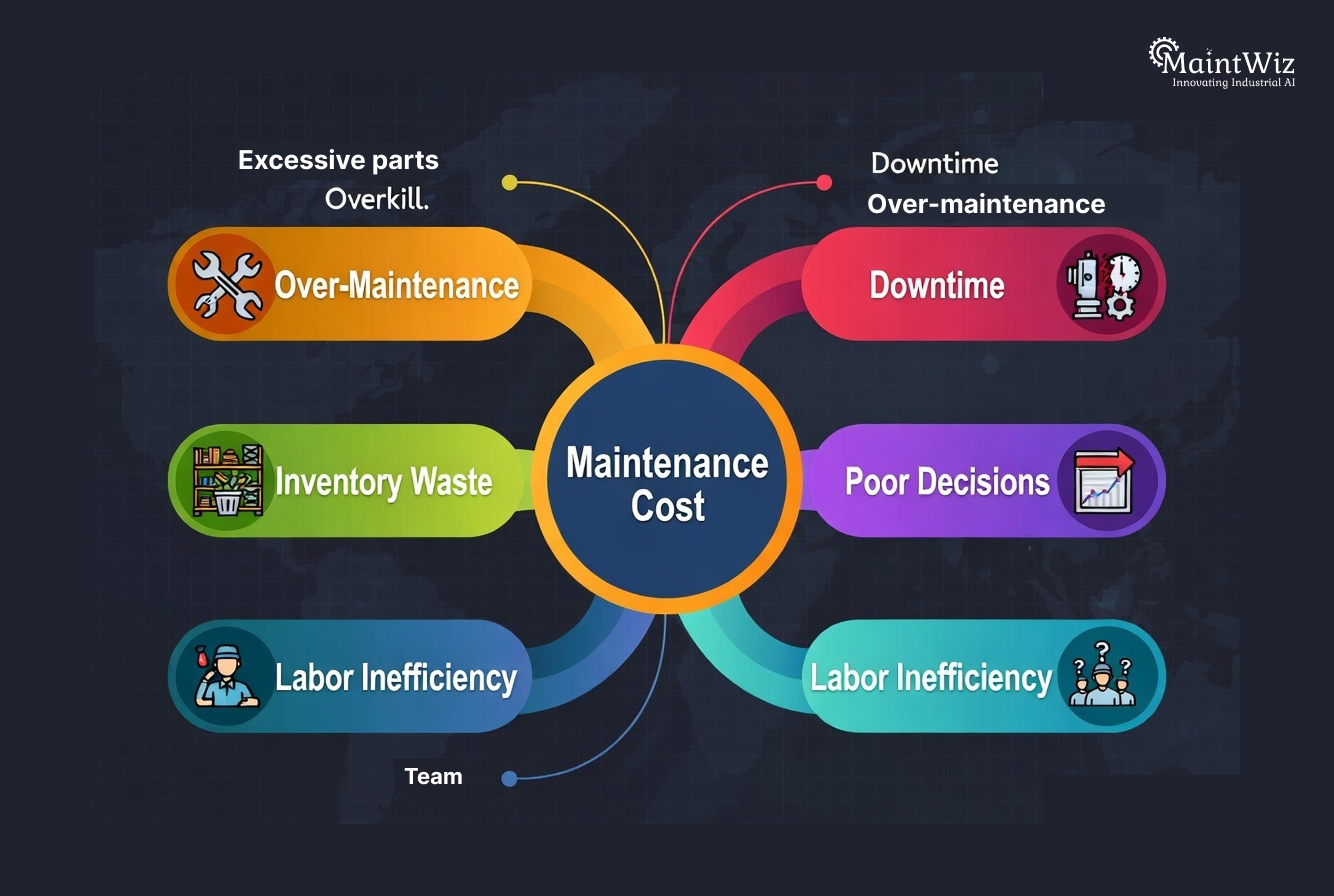
The gap between predictive maintenance vs preventive maintenance becomes clear when you examine hidden costs.
Over-maintenance is the most obvious. Components replaced too early represent wasted capital. Labor spent on unnecessary tasks reduces workforce productivity. Scheduled downtime interrupts production even when assets are healthy.
Under-maintenance is the opposite problem. Despite regular schedules, preventive maintenance cannot eliminate unexpected failures. When failures occur between cycles, the cost is significantly higher due to unplanned downtime and emergency response.
Then there is the cost of poor decision-making. Preventive maintenance operates on assumptions, not real-time insights. This leads to suboptimal timing, misallocated resources, and inconsistent performance.
Finally, there is variability. Preventive maintenance does not eliminate variability in asset performance. It simply attempts to manage it. Predictive maintenance, by contrast, actively reduces variability through data-driven intervention.
Condition-Based Maintenance: The Transitional Strategy
Condition-based maintenance (CBM) is often positioned as a middle ground between preventive and predictive maintenance. It uses real-time data to trigger maintenance when certain thresholds are exceeded.
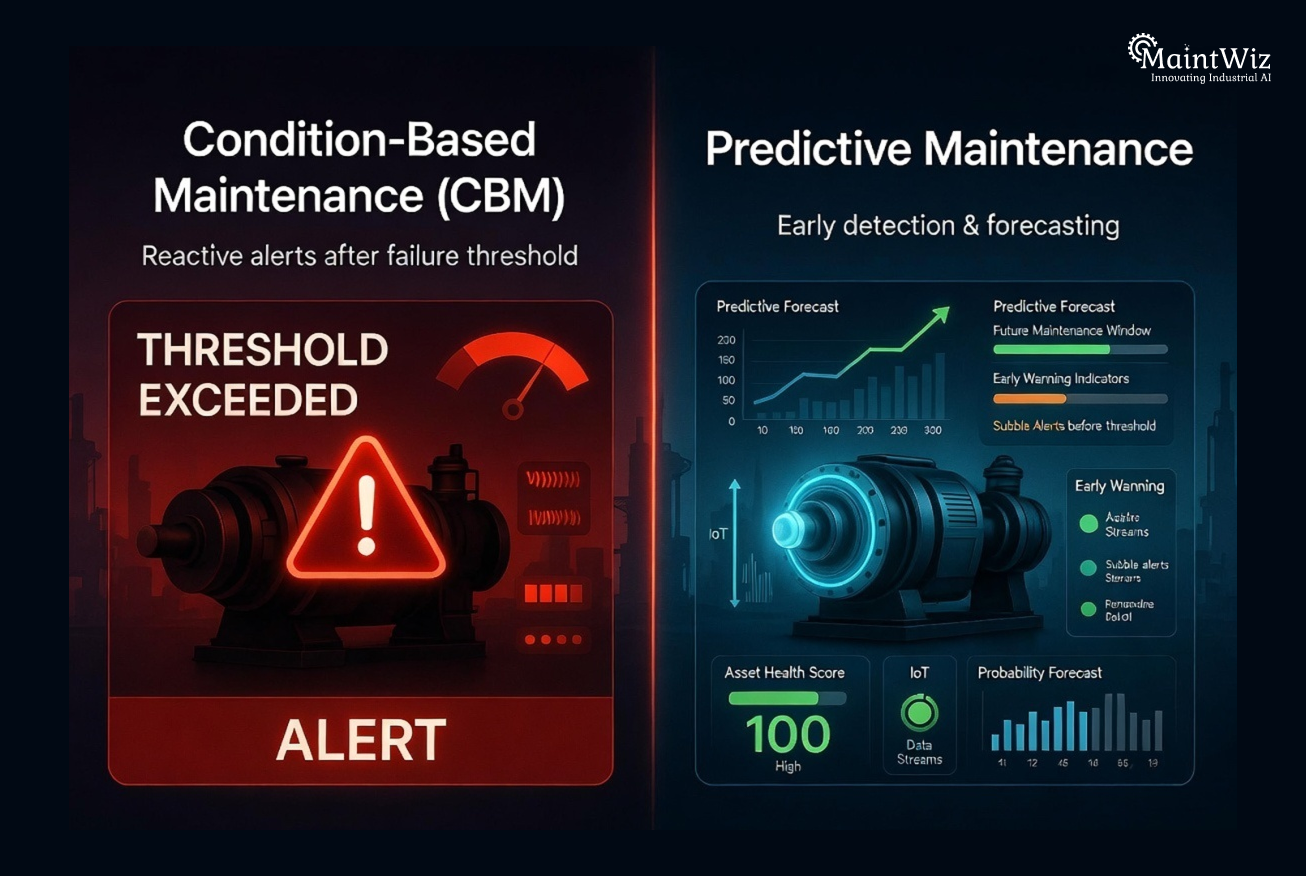
While this is an improvement over time-based scheduling, it is still reactive in nature. CBM identifies when a problem exists but does not predict when it will occur.
This limits its ability to optimize decisions.
CBM reduces unnecessary maintenance compared to preventive approaches, but it does not fully eliminate inefficiencies. It also lacks the advanced analytics required to model failure patterns, optimize timing, and quantify economic impact.
In essence, CBM is a stepping stone—but not the destination.
Real Cost Analysis: Predictive vs Preventive Maintenance
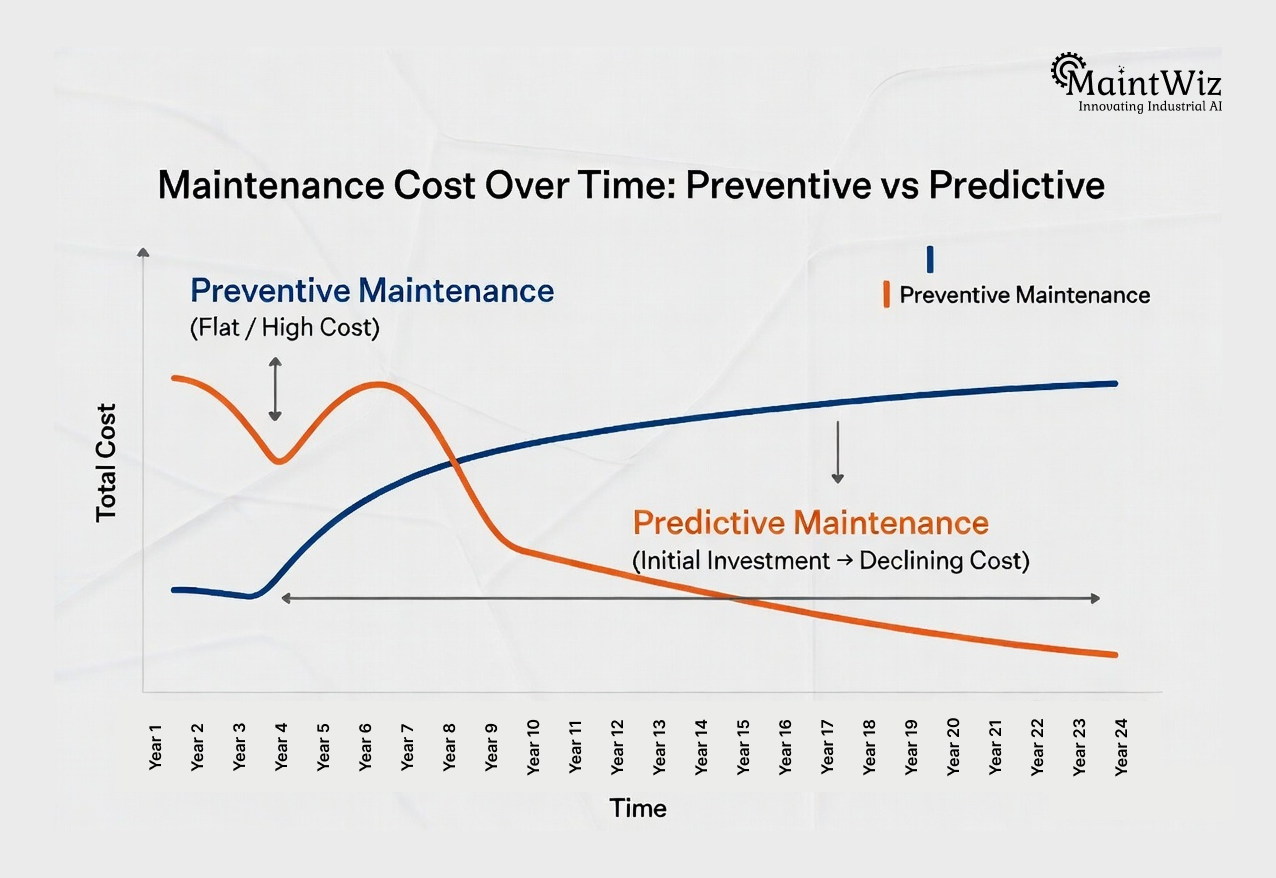
A true comparison must move beyond surface-level metrics.
Preventive maintenance typically shows lower upfront costs but higher long-term inefficiencies. Predictive maintenance shows higher initial investment but significantly lower total cost of ownership.
The difference lies in how each strategy handles uncertainty.
Preventive maintenance manages uncertainty through repetition. Predictive maintenance reduces uncertainty through intelligence.
This distinction has direct financial implications:
- Maintenance costs decrease due to optimized interventions
- Downtime costs decrease due to failure prevention
- Inventory costs decrease due to demand alignment
- Asset lifecycle costs decrease due to extended usability
When aggregated, these benefits outweigh the initial investment in predictive systems.
Why Most Predictive Maintenance Initiatives Fail
Despite its advantages, many predictive maintenance initiatives fail to deliver ROI.

The reason is not technology—it is execution.
Organizations often focus on data collection without integrating insights into workflows. They invest in analytics without aligning maintenance teams to act on predictions. They treat predictive maintenance as a tool rather than a transformation.
Without integration into planning, scheduling, and execution, predictive insights remain unused.
The result is a system that generates data—but not value.
The 90-Day Transition Framework to Predictive Maintenance
Successful organizations do not attempt large-scale transformation overnight. They execute in focused, measurable phases.
In the first 30 days, they identify critical assets and establish baseline metrics. This includes failure frequency, downtime impact, and maintenance costs.
In the next 30 days, they deploy condition monitoring on high-impact assets and begin collecting data.
In the final 30 days, they introduce predictive models, integrate insights into workflows, and begin measuring outcomes.
This structured approach ensures early wins, builds organizational confidence, and accelerates ROI realization.
How MaintWiz CMMS Enables Predictive Maintenance at Scale
Execution is where most strategies fail—and where platforms like MaintWiz CMMS become critical.
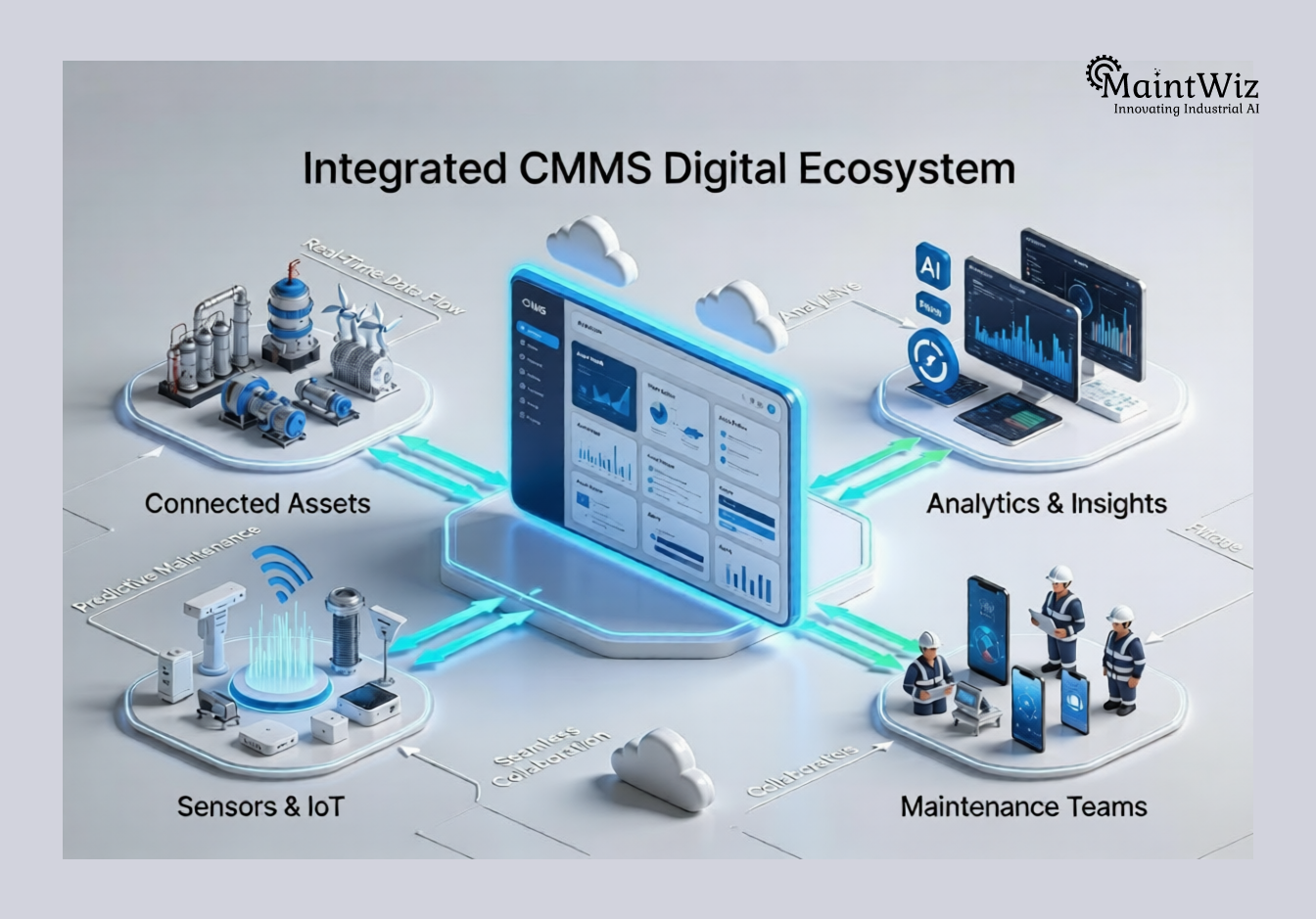
MaintWiz acts as the operational backbone that connects asset data, predictive insights, and maintenance execution.
It enables centralized asset intelligence, allowing organizations to track performance, monitor condition, and analyze historical trends. It integrates predictive analytics directly into maintenance workflows, ensuring that insights translate into action.
Planning and scheduling capabilities ensure that maintenance activities are aligned with production priorities and resource availability. Advanced analytics provide visibility into KPIs, cost structures, and ROI metrics.
Most importantly, MaintWiz enables rapid execution.
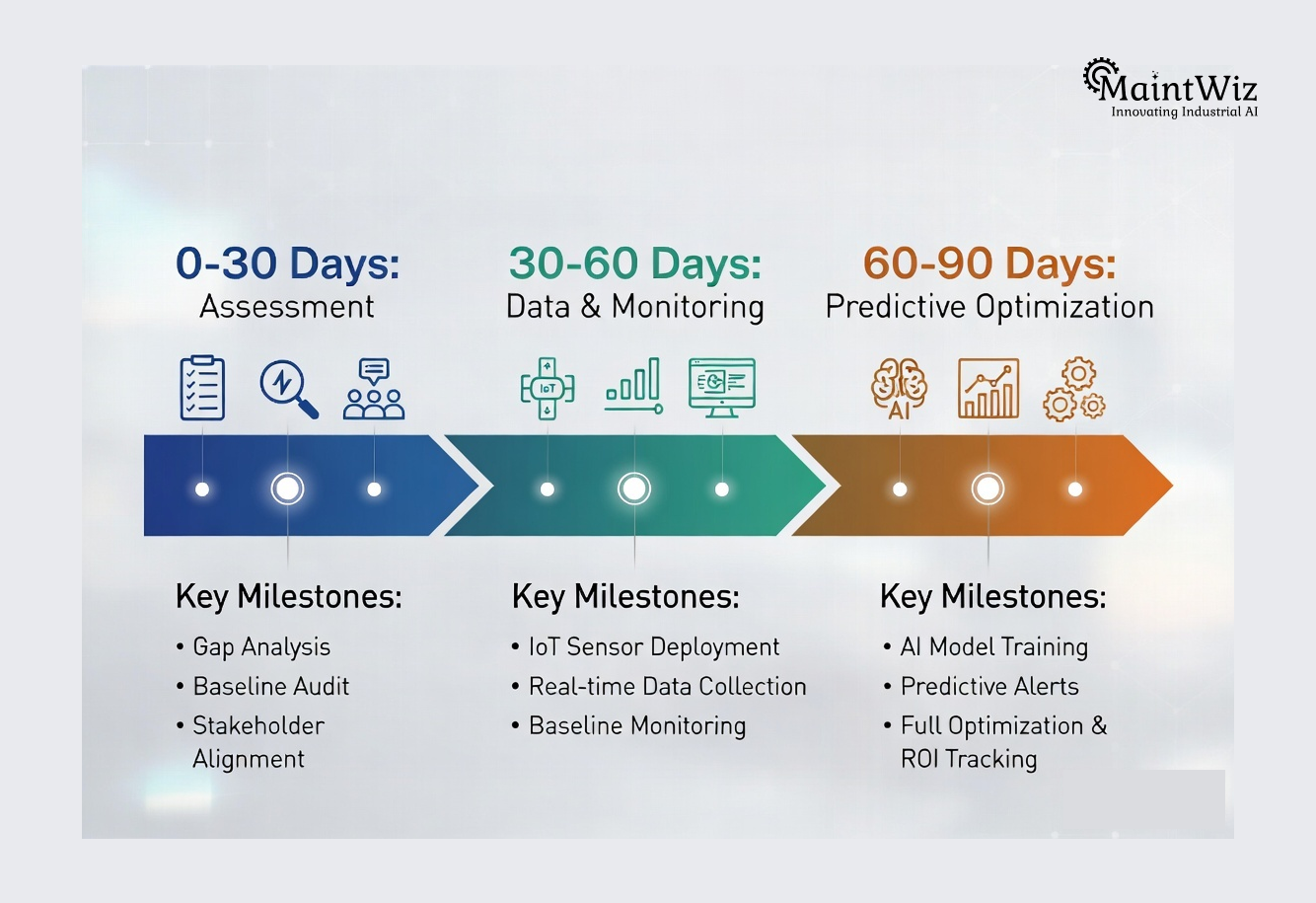
Organizations can deploy predictive maintenance capabilities within a 90-day window, moving from reactive operations to data-driven decision-making without disrupting existing systems.
This is not just a technology upgrade—it is an operational transformation.
The Strategic Shift: From Cost Reduction to Value Optimization
The most important takeaway from this comparison is that maintenance is no longer about reducing cost—it is about optimizing value.
Predictive maintenance shifts the focus from:
Cost control to performance optimization
Scheduled activity to intelligent intervention
Operational efficiency to strategic impact
Organizations that embrace this shift gain a significant competitive advantage. They reduce variability, improve reliability, and unlock new levels of operational performance.
Conclusion: The Future of Maintenance Is Decision Intelligence
The debate between predictive maintenance vs preventive maintenance is not about choosing one over the other. It is about understanding which strategy delivers the highest value for each asset, under specific operating conditions.
In 2026, the winners will not be those who maintain assets the most—but those who make the best maintenance decisions.
Predictive maintenance is not just a method. It is a capability.
And in a world where margins are tight and competition is high, that capability defines the difference between operational excellence and operational mediocrity.
FAQs
What is the main difference between predictive maintenance and preventive maintenance?
Predictive maintenance uses real-time data and analytics to predict failures, while preventive maintenance relies on fixed schedules.
Is predictive maintenance more cost-effective than preventive maintenance?
Yes, when evaluated over the full asset lifecycle, predictive maintenance delivers lower total cost of ownership and higher ROI.
Where does condition-based maintenance fit in?
CBM is an intermediate strategy that uses real-time data but lacks predictive analytics for optimization.
How long does it take to implement predictive maintenance?
With the right platform and approach, organizations can begin seeing results within 90 days.
What industries benefit most from predictive maintenance?
Manufacturing, energy, utilities, oil and gas, and heavy asset industries benefit significantly.


Jai Balachandran is an industry expert with a proven track record in driving digital transformation and Industry 4.0 technologies. With a rich background in asset management, plant maintenance, connected systems, TPM and reliability initiatives, he brings unparalleled insight and delivery excellence to Plant Operations.
Company
Download App