Water & Wastewater Treatment Plant Outages
Maintaining Public Infrastructure While Minimizing Service Disruption
Every water and wastewater utility faces the stark reality: unplanned outages cost reputation, compliance, and public health. For executive and operational leaders in municipal utilities, industrial water systems, and environmental services, mastering outage planning isn’t just operational—it’s strategic. This article delivers a deeply practical framework for planning, executing, and optimizing treatment plant shutdowns with minimal service disruption, full regulatory compliance, and asset reliability leadership.
1. Why Scheduled Maintenance Is Critical in Water & Wastewater Treatment
Plants
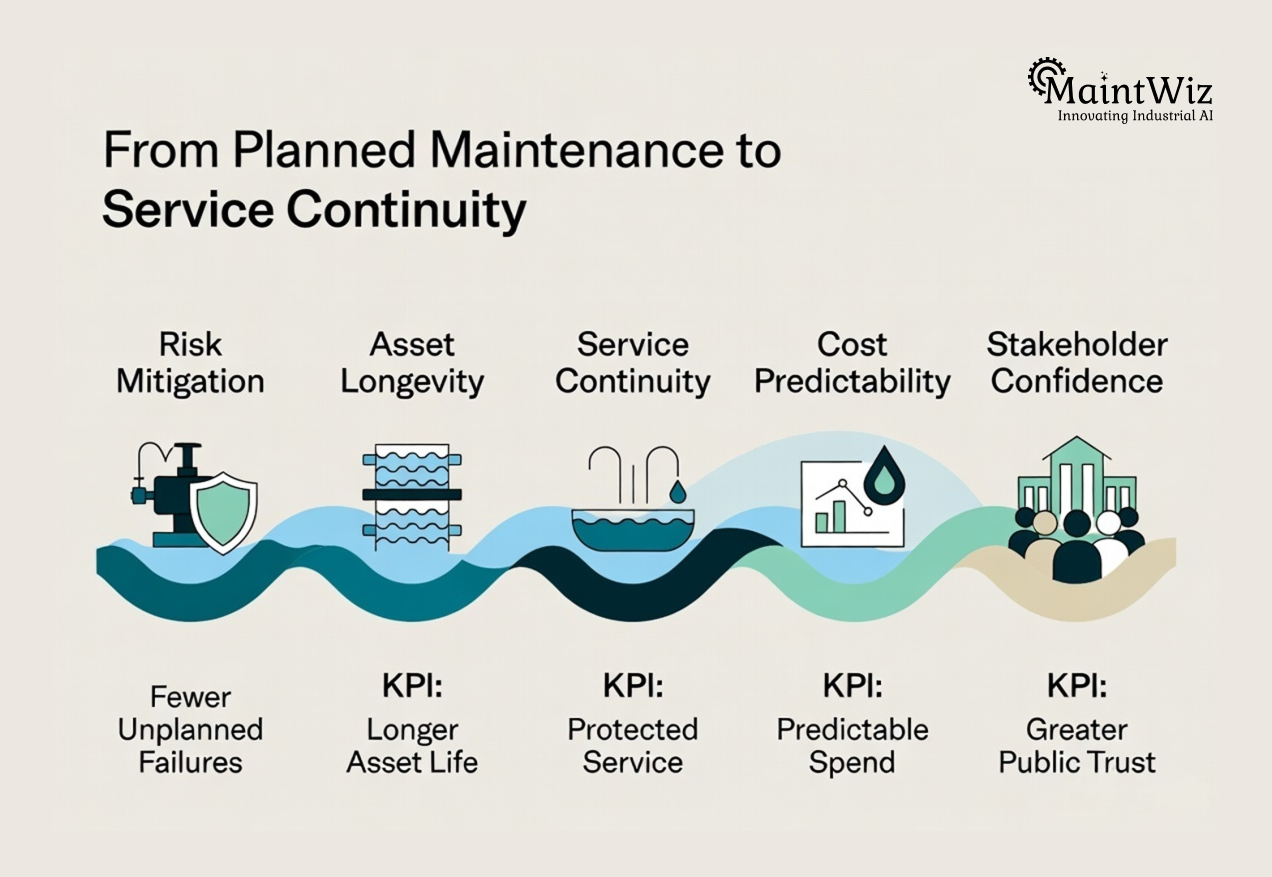
Outages in water and wastewater systems are not just technical events—they are public service crises. Scheduled maintenance transforms reactive firefighting into proactive service assurance.
- Water Infrastructure Failure Risk Mitigation – Scheduled interventions reduce the likelihood of unplanned failures that threaten public health and environmental discharge standards.
- Asset Longevity Optimization – Proactive lifecycle care for pumps, filters, and dosing systems extends service life and lowers total cost of ownership.
- Service Continuity Assurance – Predictive scheduling ensures utility shutdowns are coordinated to avoid community disruption and compliance breach penalties.
- Cost Predictability & Budget Alignment – Planned maintenance stabilizes spend and avoids high emergency repair costs.
- Stakeholder Confidence & Transparency – Demonstrable planning builds trust with municipal authorities and regulators.
Water treatment facilities operate 24/7 under strict compliance constraints. Unlike industrial plants where temporary production loss is contained internally, utility downtime impacts entire communities and ecosystems. Scheduled maintenance shifts outage management from emergency response to controlled operations.
2. Phased Shutdown Planning and Redundancy Management
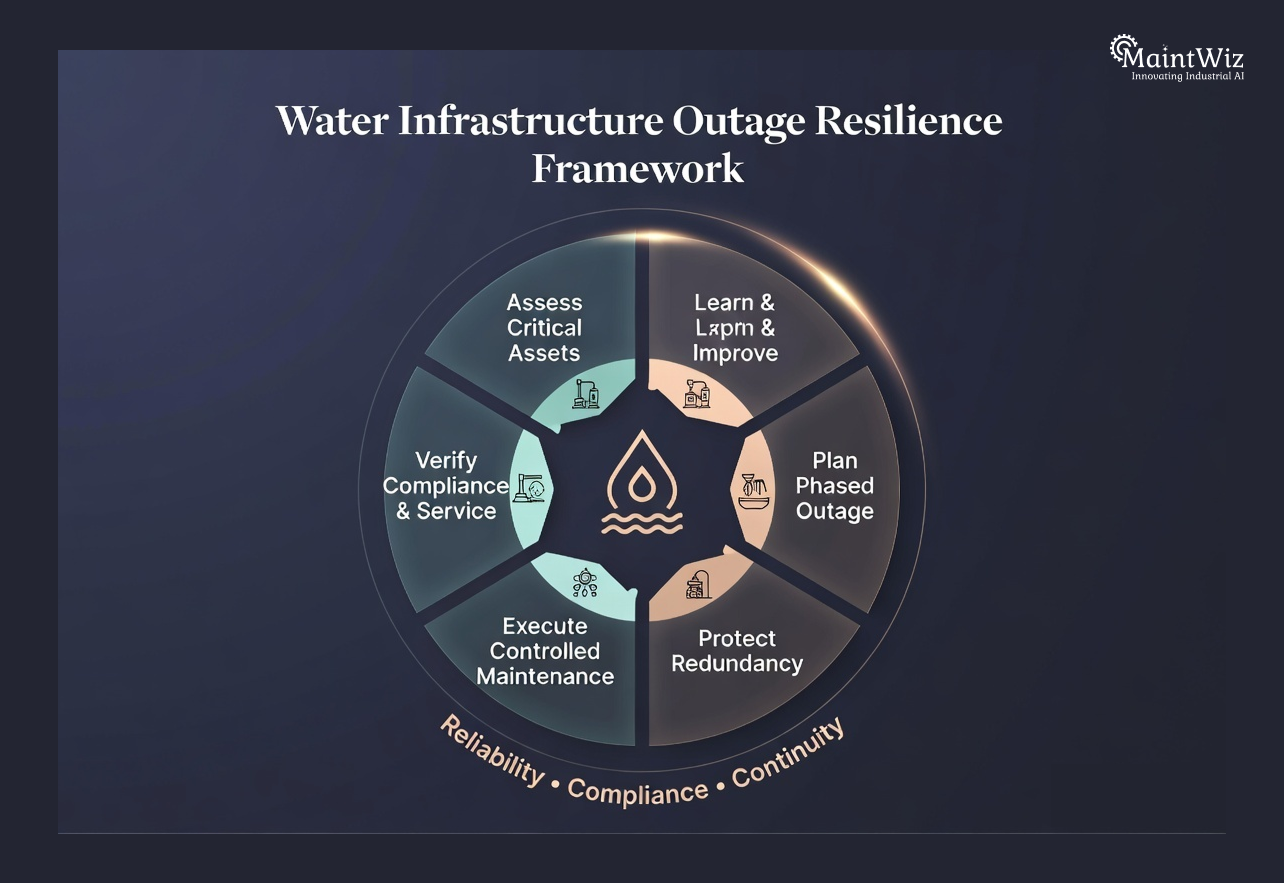
Outage planning in water and wastewater treatment plants is a multi-dimensional operational discipline involving phased shutdowns, risk modeling, and redundancy schemes that guarantee potable water delivery and regulatory discharge adherence even during maintenance windows.
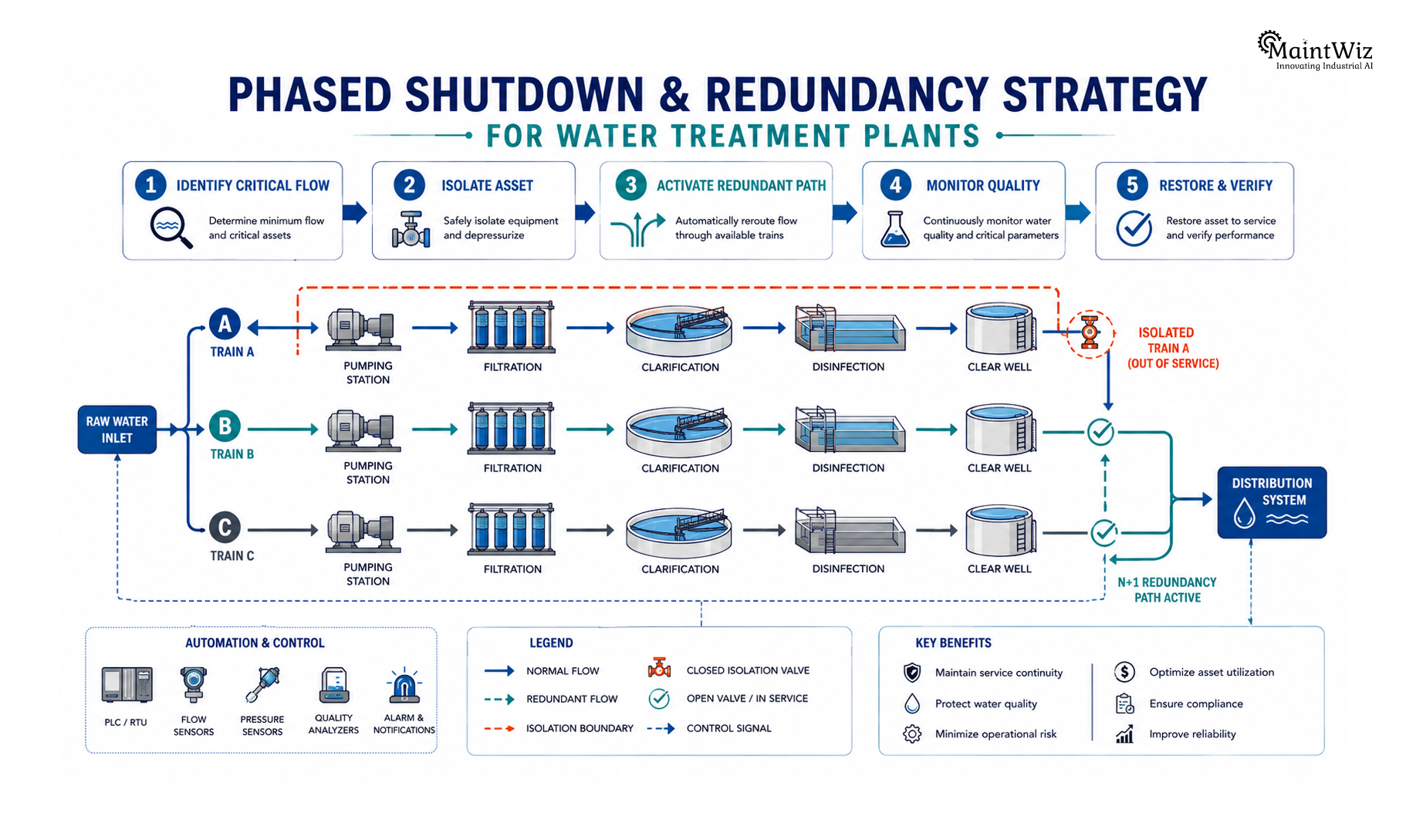
Executive Summary: Effective outage planning is granular, resilient, and based on smart redundancy. Comprehensive mapping of asset interdependencies and contingency pathways is essential.
- Shutdown Risk Assessment Framework – Identify critical flows, failure modes, and dependencies to prioritize outage phases.
- Redundancy Blueprint & Failover Planning – Design N+1 systems for core assets like pumps and filters to sustain throughput during maintenance.
- Phased Component Isolation Strategy – Segment the plant into zones to limit impact footprint during shutoffs.
- Cross-Functional Outage Runbooks – Create stepwise, role-anchored procedures for technicians, operators, and engineers.
- Real-Time Monitoring & Switching Controls – Leverage SCADA integration for instant transition between primary and redundant pathways.
For utilities, redundancy isn’t a luxury—it’s mission-critical. Unlike batch-manufacturing shutdowns, water systems deliver continuous flow. Planning must incorporate sequenced isolation, real-time process sensing, and automated switching to avert quality violations or service interruptions.
3. Regulatory Compliance and Environmental Reporting
Outages intersect deeply with environmental law, public health codes, and water discharge quality criteria. Regulatory compliance isn’t a checkbox—it’s an operational cornerstone.
Executive Summary: A comprehensive outage must synchronize asset work with monitoring, documentation, and reporting obligations to satisfy regulators and protect ecological receptors.
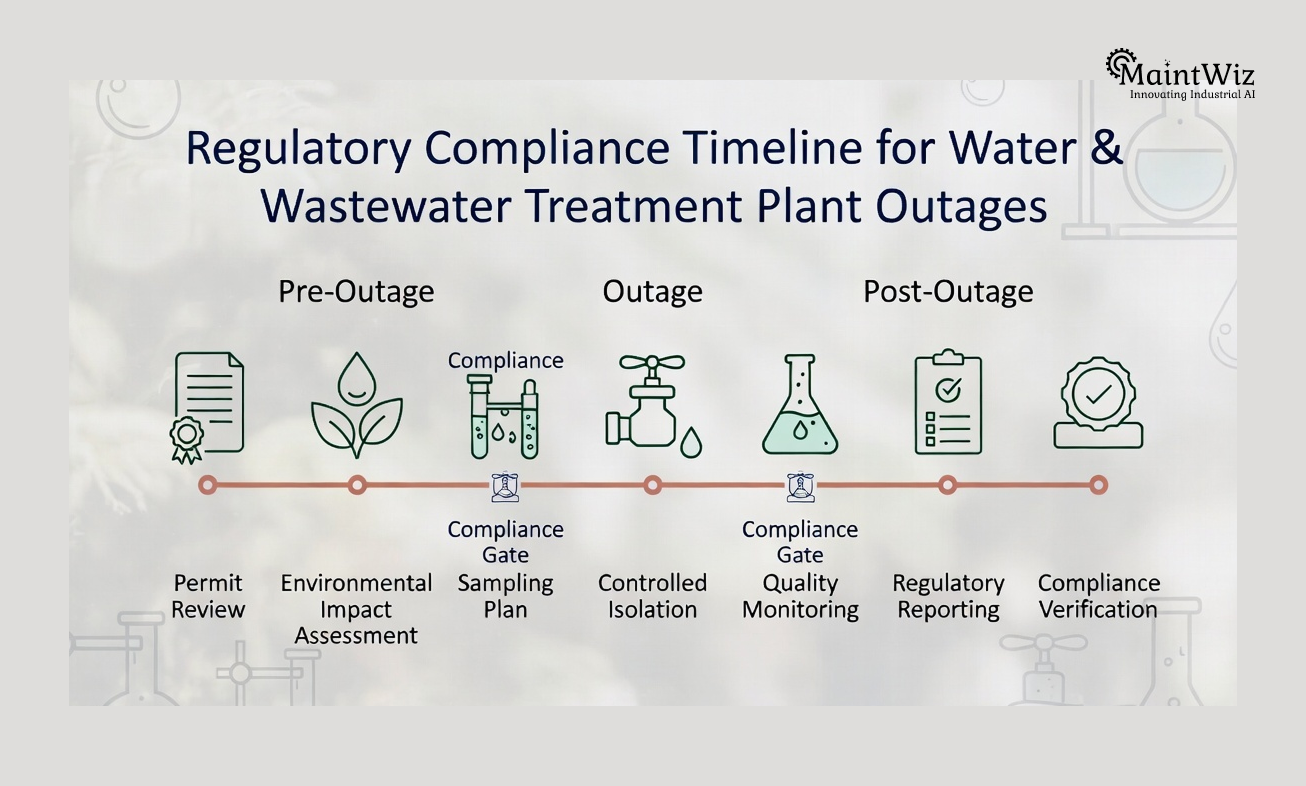
- Permit Mapping & Compliance Calendars – Catalog applicable discharge permits, thresholds, and reporting windows before planning work.
- Environmental Impact Scoping – Assess how each outage phase influences effluent quality and resource recovery streams.
- Quality Assurance Protocols – Embed sampling schedules and analytics checkpoints into shutdown workflows.
- Regulatory Reporting Dashboards – Standardize data feeds to regulators before, during, and after maintenance events.
- Compliance Incident Response Plans – Predefine actions for threshold exceedances to minimize fines and reputational harm.
Compliance tangles technical rigor with legal accountability. Utilities must operationalize regulatory requirements into their maintenance plans—ensuring not just work completion, but documented conformity with environmental statutes and public health safeguards.
4. Coordination with Municipal Authorities
Utility shutdowns are not insular. They ripple into municipal services, emergency response, and public communication channels. Strategic coordination is both a planning discipline and a service delivery mandate.
Executive Summary: Outage events must be co-owned with local governments, public works departments, and community stakeholders to align expectations and minimize citizen impact.
- Cross-Agency Outage Governance – Assign shared leadership roles and communication liaisons across agencies.
- Public Communication Templates – Pre-authorized messaging reduces misinformation and clarifies service windows.
- Emergency Services Alignment – Synchronize outage times with fire, health, and sanitation services to maintain readiness.
- Customer Impact Modeling – Forecast service deviations and plan mitigation like temporary supply boosters.
- Feedback Loop Mechanisms – Post-outage reviews with municipal partners drive continuous improvement.
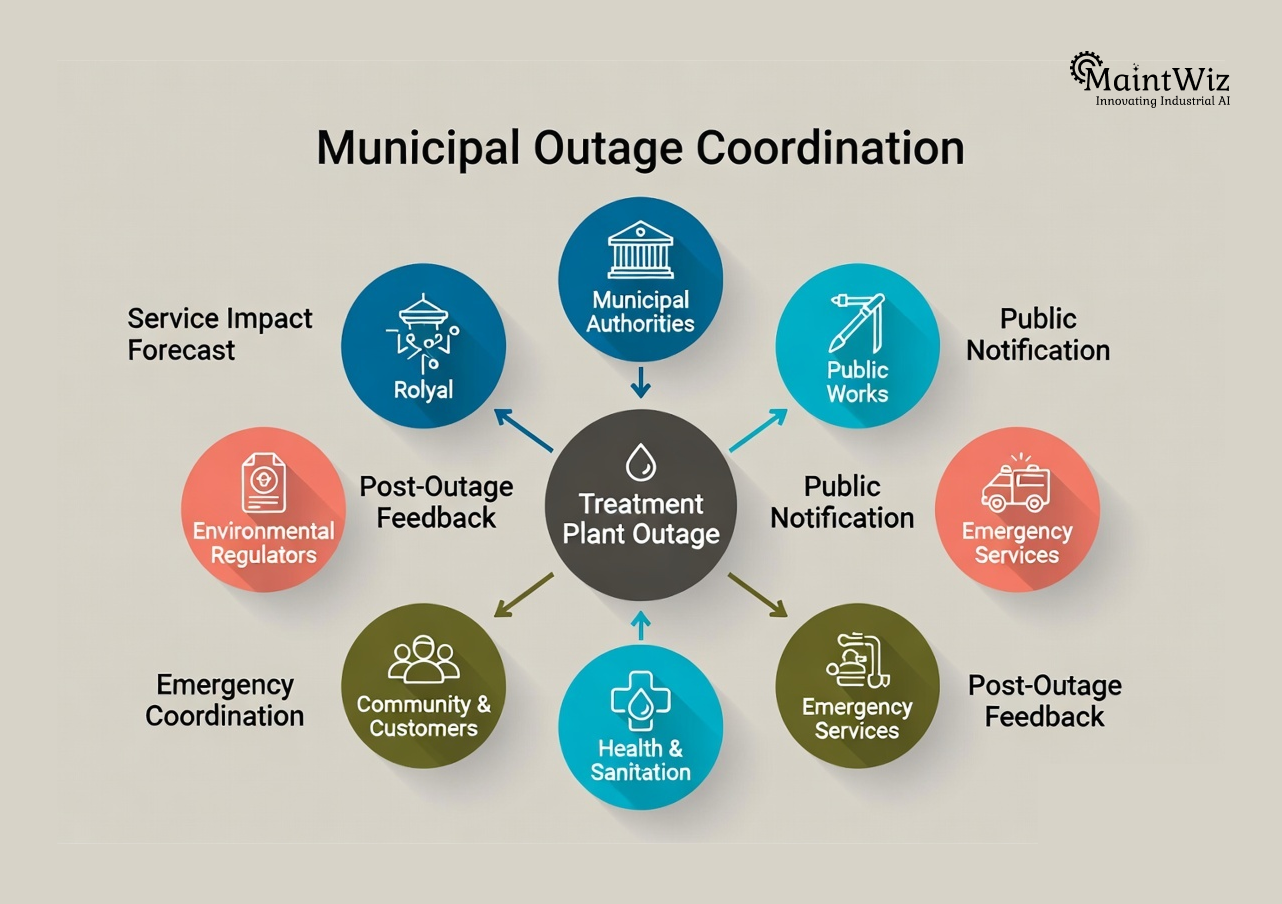
Municipal authorities are not bystanders; they are co-stewards of service continuity. See outages not as internal tasks but as shared civic events needing transparent governance and responsive public communication.
5. CMMS Integration: Workflow Scheduling, Asset History & Reporting
CMMS platforms anchor outage planning into disciplined execution. For complex assets like pumps, chemical dosing systems, and filtration trains, CMMS-driven maintenance and reporting unlocks consistency, accountability, and data-driven decisions.
Executive Summary: Modern CMMS transforms outage plans from spreadsheets into governed workflows, informed by real-time asset states, historical patterns, and compliance-ready logs.
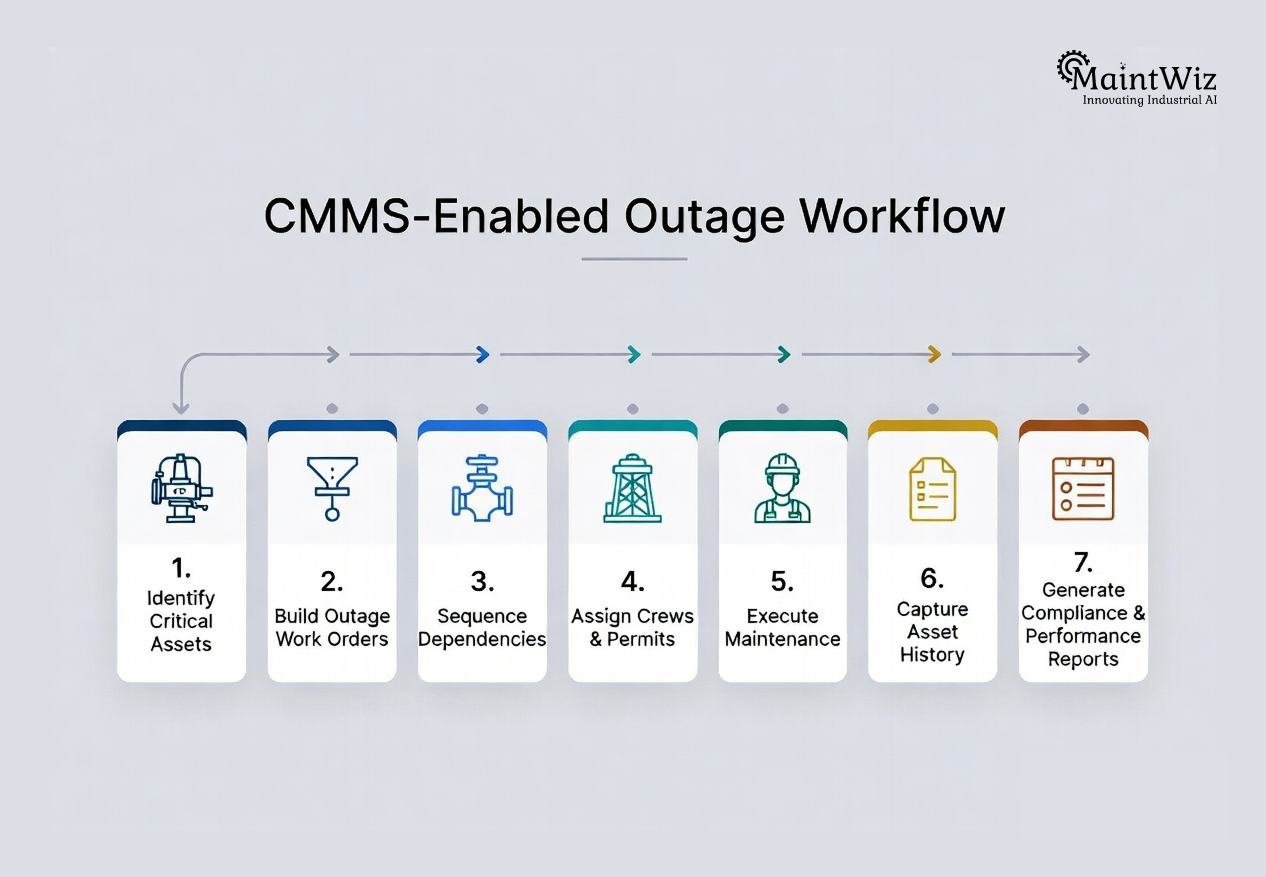
- Outage Work Order Sequencing – Automatically schedule dependent tasks with ensured resource, permit, and safety clearance alignment.
- Asset Failure History Analytics – Use historical fault patterns to refine outage timing and prevent repeated failures.
- Predictive Maintenance Triggers – Integrate condition-monitoring data to trigger maintenance before outages escalate.
- Regulatory Documentation Automation – Link sampling results and work outcomes to compliance reports in one platform.
- Resource & Crew Optimization – Allocate technicians by skillset and availability to maximize productivity and minimize downtime.
A capable CMMS is more than a scheduling tool; it is the operational nerve center. It ensures outage-related workflows are visible, auditable, and optimized for regulatory and service performance outcomes.
6. Key Performance Indicators for Outage Success
Measuring outage performance anchors continuous improvement. Set KPIs that reflect service resilience, compliance, and asset reliability—moving beyond task completion to sustained performance outcomes.
- Service Continuity Index – Percent uptime maintained during scheduled maintenance windows.
- Regulatory Adherence Rate – Compliance with discharge limits and reporting criteria during outages.
- Asset Uptime Ratio – Post-outage availability of critical water treatment assets.
- Maintenance Cycle Predictability – Variance between planned and actual outage durations.
- Cost Performance Efficiency – Budget variance for outage-related work versus planned spend.
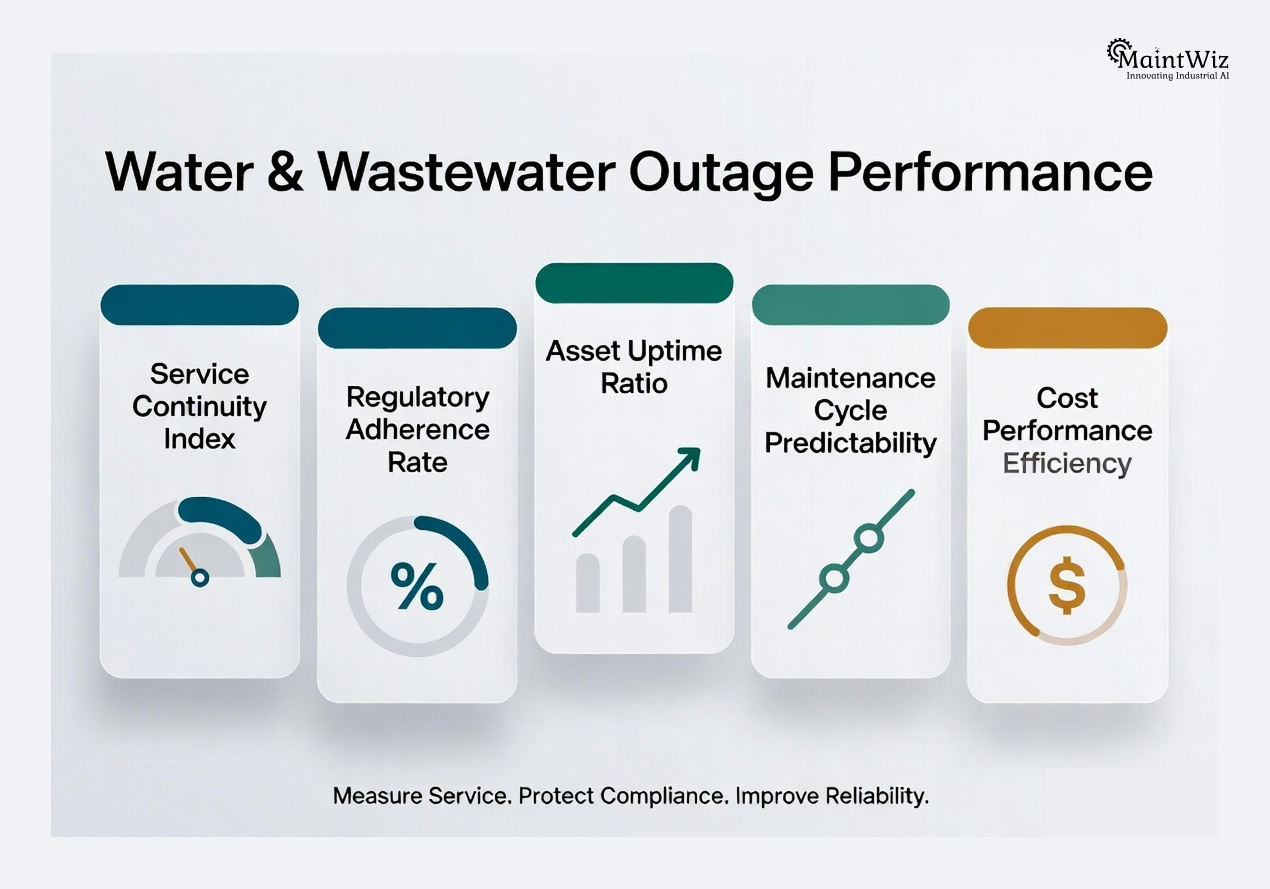
KPIs translate managerial intent into measurable performance. For water systems, these indicators guide prioritization and validate investments in redundancy, automation, and workforce capability.
Why MaintWiz CMMS Excels for Water & Wastewater Treatment Plant
Outages
MaintWiz CMMS is purpose-built to help utilities and industrial water systems orchestrate outage plans with precision and reliability. Its core strengths align directly with the deep requirements of water and wastewater maintenance excellence.
- Intelligent Work Order Orchestration – MaintWiz’s configurable workflows ensure shutdown tasks are sequenced with asset dependencies, skills, and compliance checkpoints in mind.
- Deep Asset History & Diagnostics – Through rich asset profiles and historical analytics, utilities predict failure modes and optimize outage timing.
- Regulatory Reporting Integration – Maintain audit-ready logs and link environmental sampling to work outcomes without manual consolidation.
- Real-Time Mobile Workforce Coordination – Technicians receive outage tasks with context, safety steps, and resource lists directly in the field.
- Redundancy & Risk Planning Support – MaintWiz supports tagging of redundant systems and facilitates planning around failover schedules and contingency pathways.
- Performance Dashboards & KPIs – Visualize service continuity, compliance rates, and asset uptime for leadership and regulatory reporting.
Compared to generic maintenance tools, MaintWiz bridges strategic planning with field execution—empowering utilities to move from reactive maintenance to resilient service operations. Its alignment with regulatory and operational goals makes it uniquely suited for water & wastewater outage success.
Take the next step: Request a demo to see how MaintWiz can strengthen your utility’s outage planning, compliance reporting, and asset reliability.

Company
Download App