Digital Twins in Plant Maintenance: A Practical Guide for
Indian Manufacturers
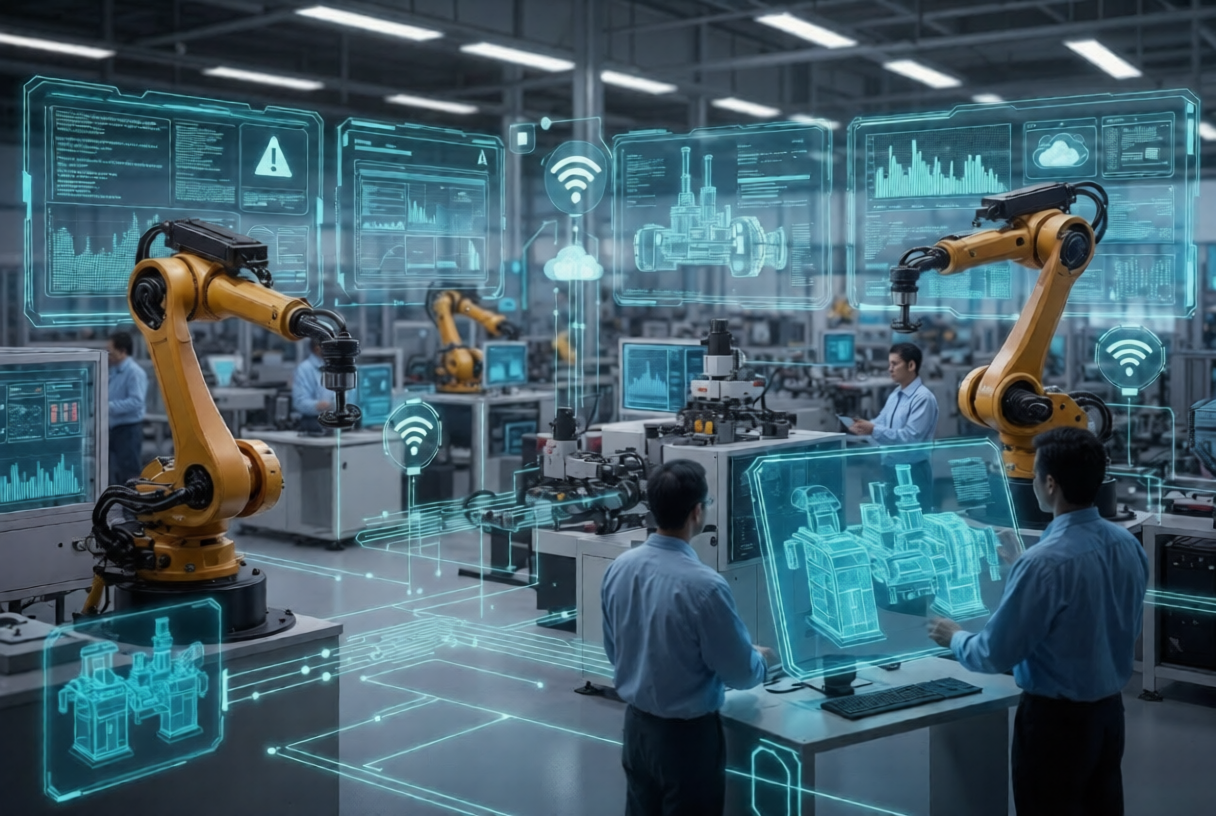
Modern manufacturing is entering a new era where operational excellence is no longer driven solely by preventive maintenance schedules or reactive troubleshooting. Instead, the most competitive organizations are making decisions based on continuously updated digital representations of their physical assets. This is where digital twin plant maintenance is transforming industrial operations.
For Indian manufacturers, the convergence of Industry 4.0, Industrial IoT (IIoT), Artificial Intelligence (AI), cloud computing, and modern CMMS platforms presents an unprecedented opportunity to improve equipment reliability, reduce downtime, and maximize asset performance. Yet many organizations still view digital twins as futuristic technology reserved for multinational enterprises with unlimited budgets.
The reality is very different.
Digital twins have become practical, scalable, and increasingly accessible for manufacturers of all sizes. Whether operating a cement plant, automotive facility, pharmaceutical factory, steel mill, food processing unit, chemical plant, textile manufacturing facility, or power generation plant, organizations can leverage digital twins to improve maintenance planning, optimize asset health, and make faster, data-driven decisions.
This practical guide explores how digital twins are changing plant maintenance, why they matter for Indian manufacturers, and how organizations can successfully implement them as part of their Industry 4.0 transformation journey.
What is Digital Twin Plant Maintenance?
A digital twin is a real-time virtual representation of a physical asset, machine, production line, or entire manufacturing plant. Unlike traditional 3D models or engineering drawings, a digital twin continuously receives operational data from sensors, PLCs, SCADA systems, historians, ERP platforms, and CMMS software.
This creates a living digital model that mirrors actual operating conditions.
Instead of simply knowing what happened yesterday, maintenance teams gain visibility into:
- Current equipment condition
- Performance degradation
- Failure probability
- Remaining useful life
- Energy consumption
- Maintenance history
- Spare parts utilization
- Production impact
The result is a maintenance strategy driven by continuous intelligence rather than assumptions.
Why Digital Twins Matter for Indian Manufacturing
India’s manufacturing sector is rapidly embracing Industry 4.0 initiatives through government programs such as Make in India and increasing investment in factory automation.
However, many plants still struggle with familiar operational challenges:
- Unexpected equipment failures
- High maintenance costs
- Aging infrastructure
- Manual inspection processes
- Limited visibility into asset health
- Production losses caused by downtime
- Increasing compliance requirements
Traditional preventive maintenance alone cannot address these challenges because maintenance schedules are often calendar-based rather than condition-based.
Digital twins bridge this gap by enabling maintenance decisions based on actual equipment behaviour.
For Indian manufacturers operating under cost pressure and increasing global competition, this represents a significant competitive advantage.
How Digital Twin Manufacturing Works
A digital twin combines multiple technology layers into one integrated maintenance ecosystem.
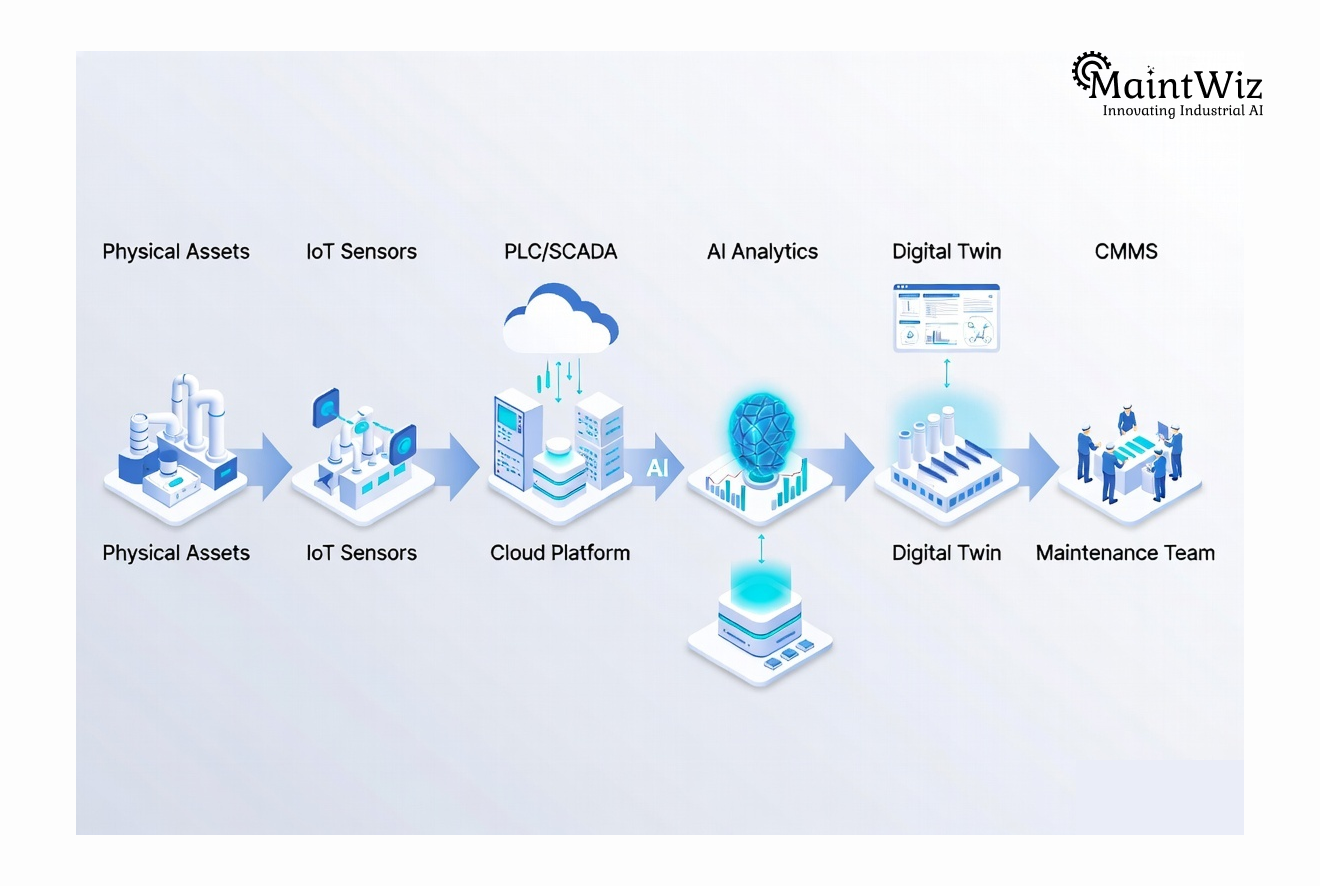
The process typically includes:
Physical Assets
Industrial equipment including pumps, motors, compressors, conveyors, turbines, gearboxes, chillers, boilers, and production machinery.
Data Collection
IoT sensors continuously monitor:
- Temperature
- Vibration
- Pressure
- Flow
- Current
- Voltage
- RPM
- Oil condition
- Humidity
- Energy consumption
Data Integration
Operational data flows into:
- SCADA
- PLC
- MES
- ERP
- CMMS
- Cloud platforms
Analytics Engine
Artificial Intelligence and machine learning models analyse patterns to detect anomalies, estimate failure probability, and predict future performance.
Digital Twin Visualization
Maintenance engineers interact with an intelligent virtual representation of every critical asset.
Instead of reacting to failures, they understand exactly what is happening inside each machine.
Key Benefits of Digital Twin Plant Maintenance
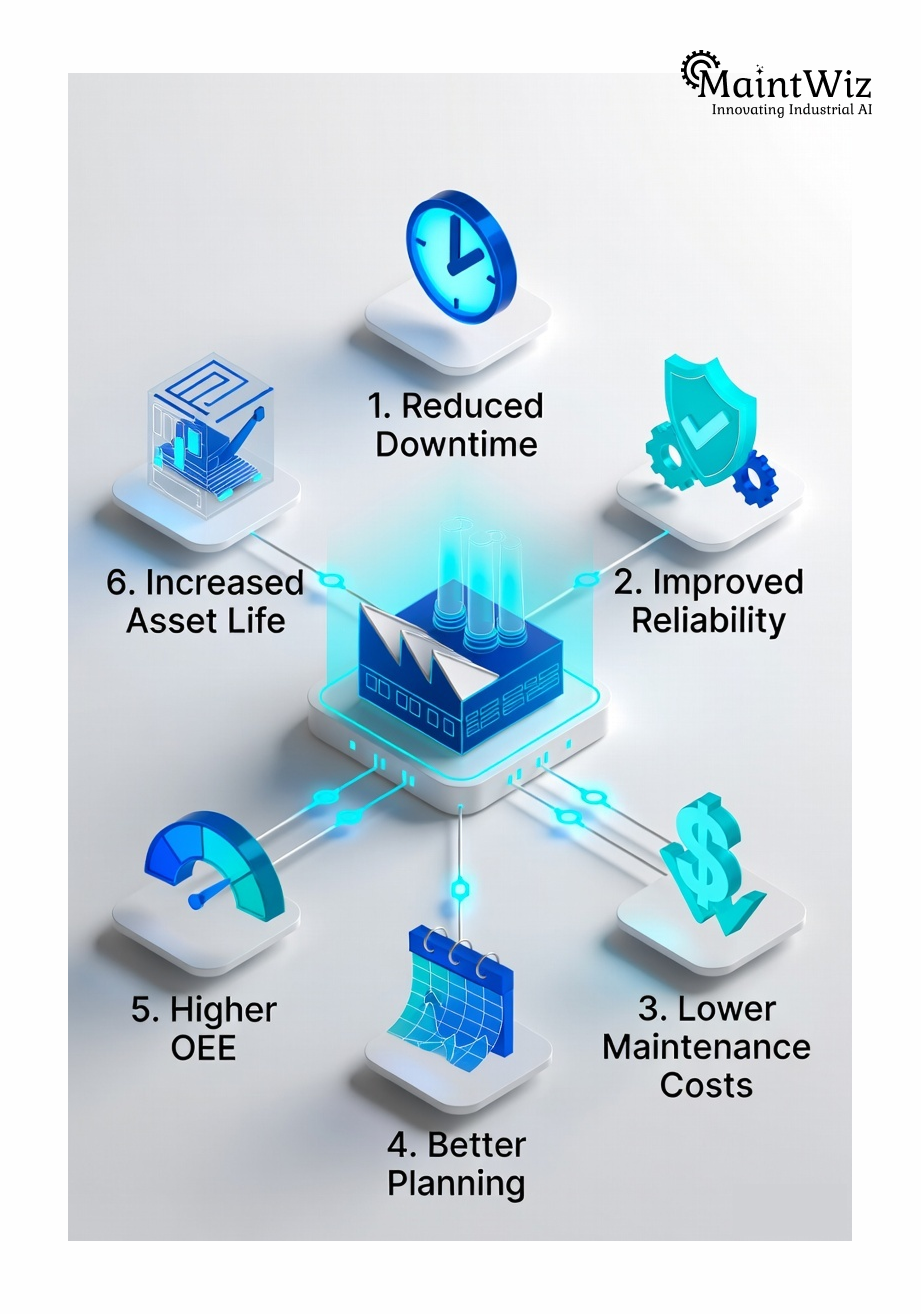
Reduced Unplanned Downtime
Unexpected failures often create cascading production losses.
Digital twins continuously monitor equipment behaviour, allowing maintenance teams to identify abnormalities before they become breakdowns.
Instead of emergency shutdowns, repairs can be scheduled during planned maintenance windows.
Improved Asset Reliability
Digital twins provide continuous asset health monitoring.
Maintenance decisions become based on equipment condition rather than assumptions or fixed maintenance intervals.
This significantly improves equipment reliability while reducing unnecessary maintenance activities.
Better Maintenance Planning
Maintenance planners gain accurate insights into:
- Asset criticality
- Remaining useful life
- Work order priorities
- Spare part requirements
- Labour allocation
Planning becomes proactive rather than reactive.
Lower Maintenance Costs
Organizations often spend considerable resources replacing components that still have useful life remaining.
Digital twins enable condition-based maintenance, reducing unnecessary replacement while preventing catastrophic failures.
This optimizes maintenance budgets without increasing operational risk.
Enhanced Decision Making
Instead of relying on spreadsheets and disconnected maintenance records, plant managers receive real-time dashboards showing:
- Asset health
- Failure risk
- Production impact
- Maintenance backlog
- OEE performance
- Energy efficiency
Decision-making becomes faster and more accurate.
Digital Twin vs Traditional Preventive Maintenance
Traditional preventive maintenance relies on predefined schedules.
For example:
- Replace bearings every six months
- Service pumps every quarter
- Inspect motors monthly
While effective in many situations, this approach often results in:
- Over-maintenance
- Under-maintenance
- Unnecessary downtime
- Increased maintenance cost
Digital twins shift maintenance toward actual equipment condition.
Instead of asking:
“When should we service this machine?”
The question becomes:
“What does this machine actually need today?”
This shift represents one of the biggest advances in modern maintenance strategy.
Digital Twins and Predictive Maintenance
Predictive maintenance is one of the strongest applications of digital twins.
By combining sensor data with AI algorithms, organizations can detect early warning signs such as:
- Increasing vibration
- Bearing wear
- Lubrication degradation
- Electrical imbalance
- Temperature anomalies
- Hydraulic leakage
- Shaft misalignment
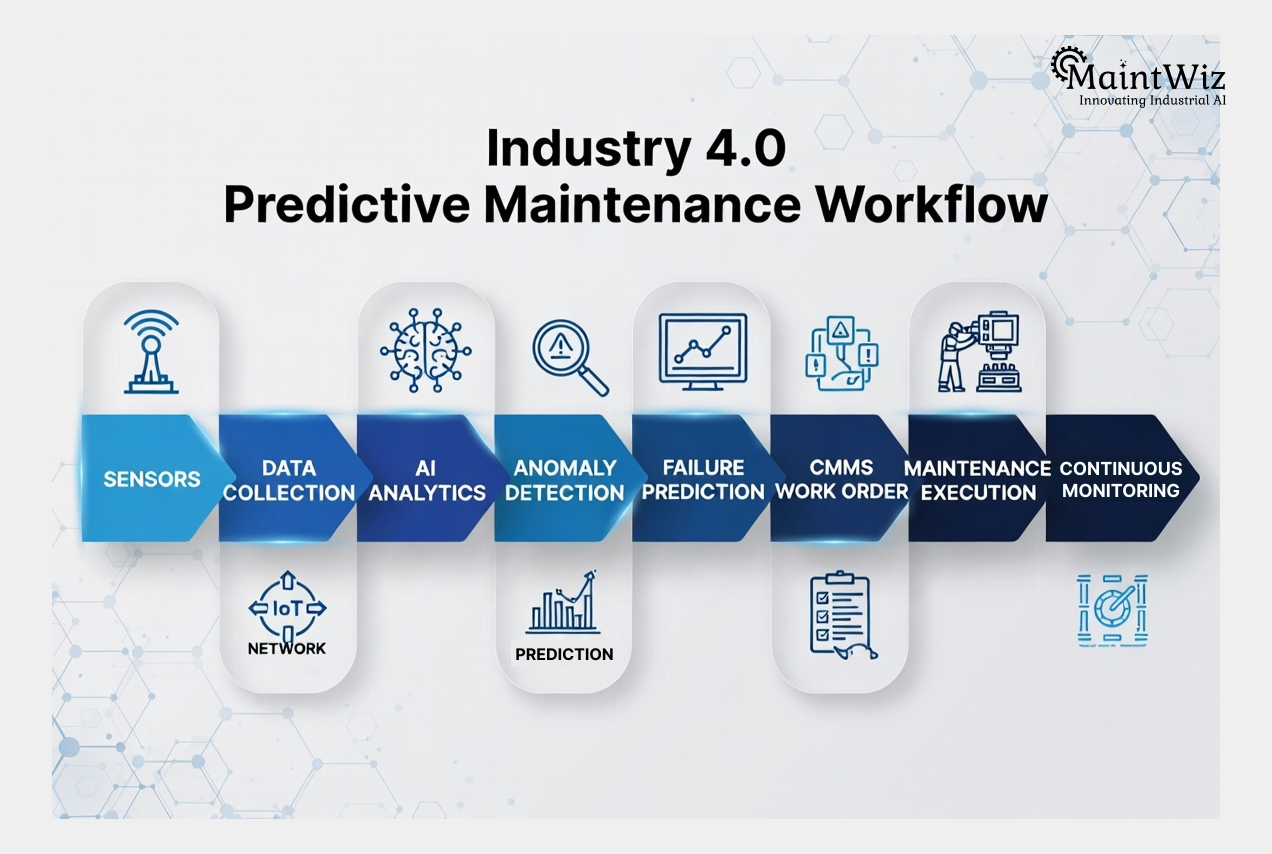
Rather than waiting for alarms or failures, maintenance teams receive predictive recommendations days or weeks in advance.
This improves maintenance efficiency while protecting production continuity.
The Role of Digital Twin CMMS
A digital twin becomes significantly more valuable when integrated with a modern CMMS.
A digital twin CMMS connects real-time asset intelligence with maintenance execution.
Instead of manually creating work orders, maintenance actions can be triggered automatically based on asset conditions.
The integration enables:
- Automated work order generation
- Condition-based inspections
- Maintenance scheduling
- Spare parts planning
- Technician assignment
- Maintenance history tracking
- Asset lifecycle management
- KPI reporting
This closes the gap between asset monitoring and maintenance execution.
Industry 4.0 Digital Twin Applications
Digital twins are now supporting maintenance across numerous industries.
Automotive Manufacturing
- Robotic cell monitoring
- Assembly line optimization
- Predictive maintenance
Cement Plants
- Kiln monitoring
- Conveyor reliability
- Crusher performance
Pharmaceutical Manufacturing
- HVAC validation
- Utility reliability
- GMP compliance
Food & Beverage
- Cold storage monitoring
- Packaging line optimization
- Hygiene equipment maintenance
Power Generation
- Turbine monitoring
- Transformer health
- Boiler optimization
Chemical Manufacturing
- Pump reliability
- Heat exchanger monitoring
- Corrosion prediction
Each industry benefits from greater asset visibility and improved maintenance planning.
Common Challenges During Digital Twin Implementation
Despite the benefits, organizations often encounter implementation challenges.
Common obstacles include:
- Poor asset data quality
- Legacy equipment without sensors
- Disconnected maintenance systems
- Limited digital skills
- Resistance to organizational change
- Cybersecurity concerns
- Unclear ROI expectations
Successful projects begin with a focused pilot rather than attempting enterprise-wide deployment immediately.
A Practical 90-Day Digital Twin Roadmap
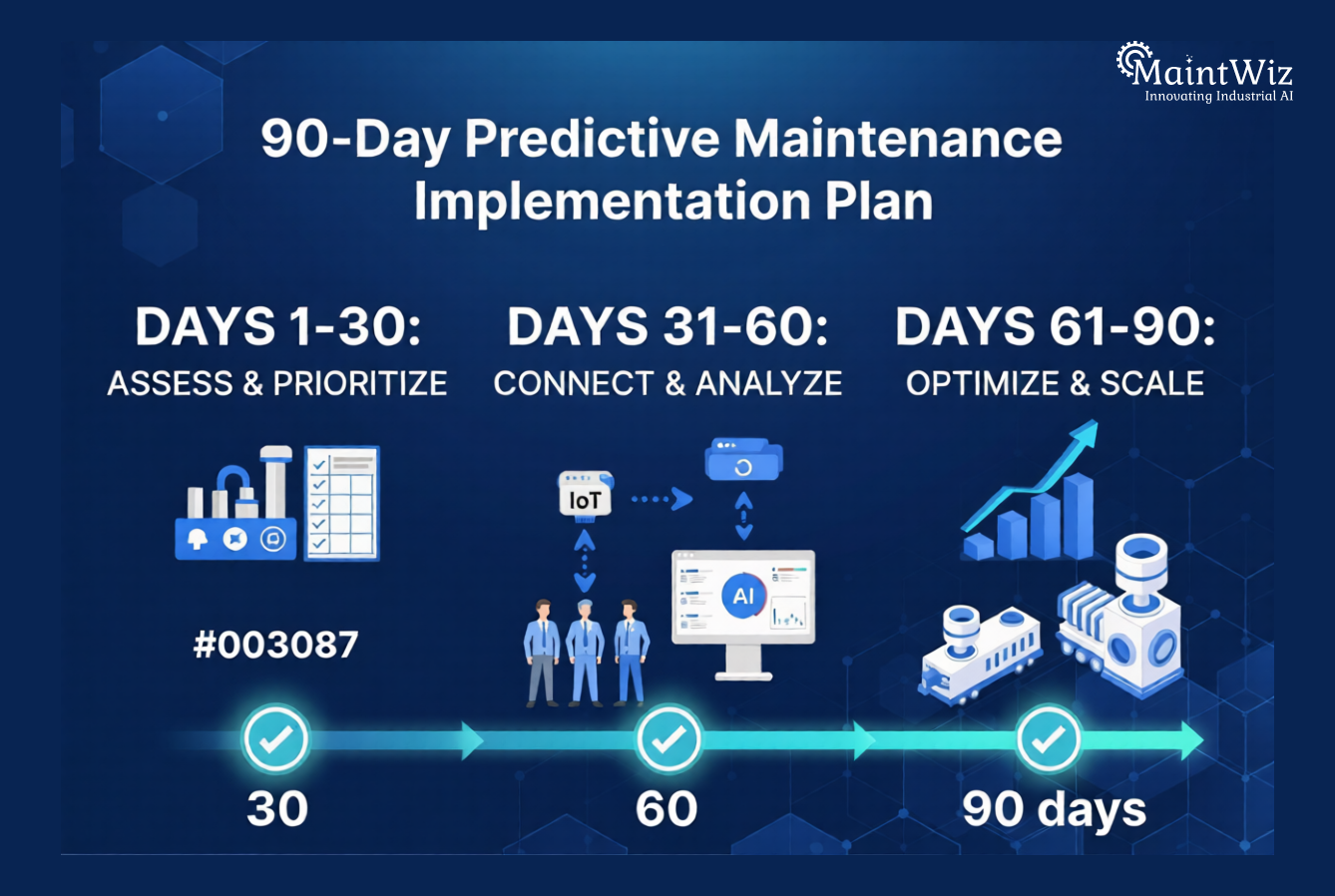
Phase 1 (Days 1–30): Assess and Prioritize
- Identify critical assets
- Evaluate maintenance history
- Review failure patterns
- Define business objectives
- Establish baseline KPIs
Phase 2 (Days 31–60): Connect and Analyze
- Deploy IoT sensors
- Integrate CMMS
- Build digital asset models
- Configure dashboards
- Begin predictive analytics
Phase 3 (Days 61–90): Optimize and Scale
- Automate work orders
- Refine maintenance strategies
- Measure ROI
- Expand to additional production lines
- Train maintenance teams
This phased approach minimizes risk while delivering measurable business value quickly.
How MaintWiz CMMS Supports Digital Twin Maintenance
Digital twins require more than visualization—they require structured maintenance execution.
MaintWiz CMMS acts as the operational backbone by connecting asset intelligence with maintenance workflows.
It enables organizations to:
- Centralize complete asset information
- Digitize preventive and predictive maintenance schedules
- Generate automated work orders from condition-based triggers
- Monitor equipment health through integrated dashboards
- Improve maintenance planning and scheduling
- Track technician productivity
- Manage spare parts inventory
- Analyze maintenance KPIs and asset performance
- Support reliability-centered maintenance initiatives
Within a structured 90-day implementation program, MaintWiz helps organizations transition from reactive maintenance to predictive, data-driven asset management while providing the visibility required for continuous improvement.
Rather than replacing existing operational systems, MaintWiz complements Industry 4.0 initiatives by connecting maintenance execution with real-time operational intelligence.
The Future of Digital Twins in Indian Manufacturing
The next generation of digital twins will combine AI, machine learning, edge computing, augmented reality, and autonomous maintenance.
Future capabilities will include:
- Self-learning maintenance models
- AI-generated maintenance recommendations
- Autonomous inspection robots
- Real-time energy optimization
- Digital commissioning
- Sustainability analytics
- Carbon footprint monitoring
- Enterprise-wide digital asset ecosystems
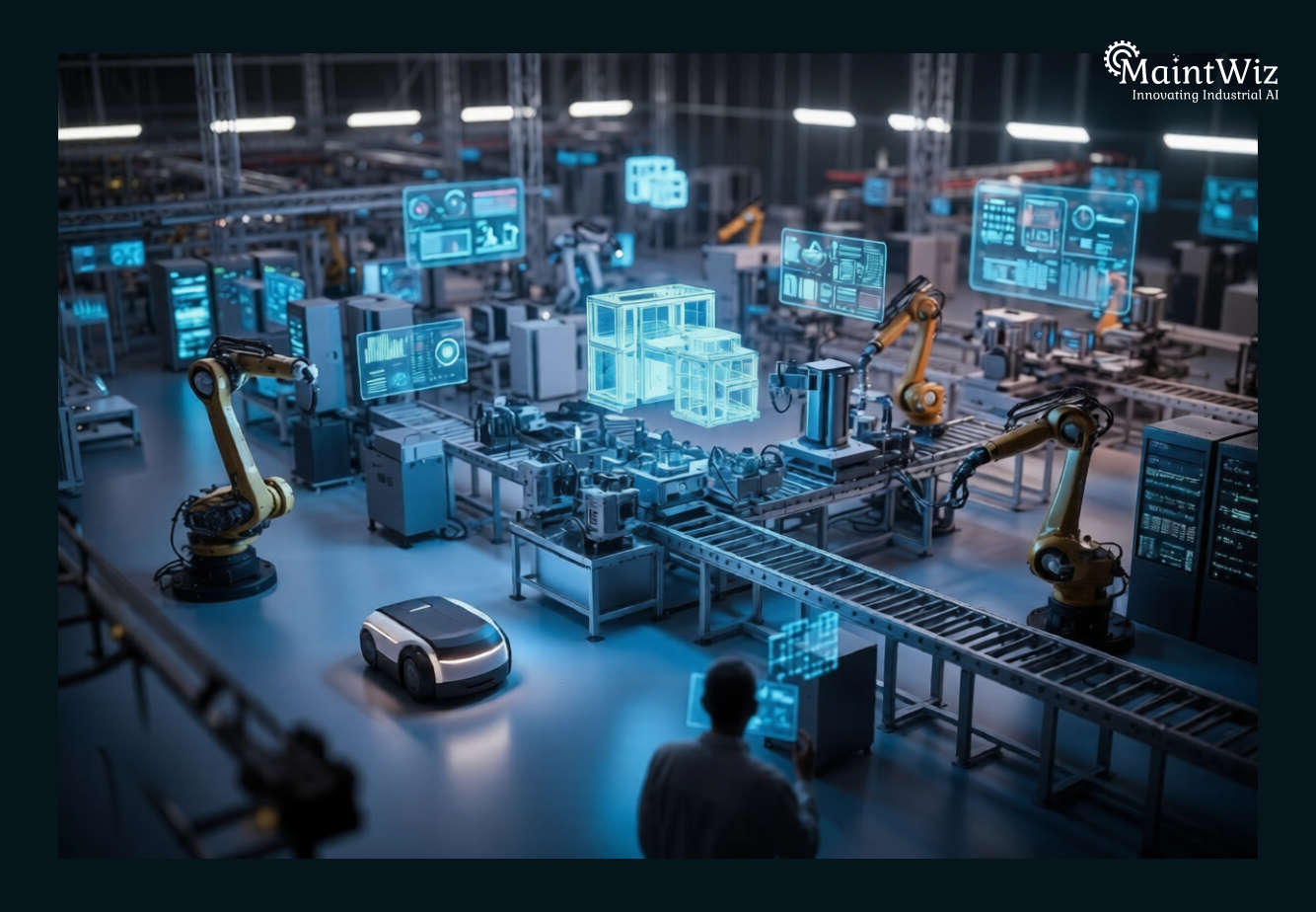
As these technologies mature, digital twins will become a standard component of every smart manufacturing strategy rather than a competitive differentiator.
Conclusion
Digital twins represent far more than a visualization technology—they redefine how maintenance organizations understand, monitor, and optimize industrial assets. For Indian manufacturers pursuing Industry 4.0, adopting digital twin plant maintenance offers a practical path toward higher reliability, lower maintenance costs, improved asset utilization, and greater operational resilience.
The most successful implementations start with a clear business objective, integrate real-time operational data with a modern CMMS, and expand incrementally based on measurable outcomes. Organizations that invest today in digital twins and predictive maintenance capabilities will be better positioned to compete in an increasingly digital manufacturing landscape.
Whether your goal is reducing unplanned downtime, improving Overall Equipment Effectiveness (OEE), or extending asset life, digital twins provide the intelligence needed to transform maintenance from a cost center into a strategic business advantage.


Jai Balachandran is an industry expert with a proven track record in driving digital transformation and Industry 4.0 technologies. With a rich background in asset management, plant maintenance, connected systems, TPM and reliability initiatives, he brings unparalleled insight and delivery excellence to Plant Operations.
Company
Download App