Lockout/Tagout Is Not the Problem — Blind Compliance Is
Why Industrial Safety Is Failing Despite Perfect Compliance Scores
Across industrial plants worldwide, Lockout/Tagout (LOTO) procedures are followed religiously. Audit scores look healthy. Documentation is pristine. Checklists are completed. Yet incidents, near misses, unplanned downtime, and catastrophic failures continue to occur.
This contradiction reveals an uncomfortable truth: the problem is not Lockout/Tagout — the problem is blind compliance.
Blind compliance happens when organizations prioritize procedural completion over risk understanding, documentation over insight, and audits over outcomes. In such environments, LOTO becomes a ritual — not a risk-mitigation strategy. This article challenges conventional thinking and explains why intelligent, AI-driven maintenance systems are essential to transform safety compliance into operational resilience.
Understanding Blind Compliance in Lockout/Tagout Programs
What Blind Compliance Really Means in Industrial Maintenance
Blind compliance occurs when safety procedures are followed mechanically, without contextual awareness, operational intelligence, or feedback loops. While regulations are technically met, the intent of those regulations — protecting people and assets — is diluted.
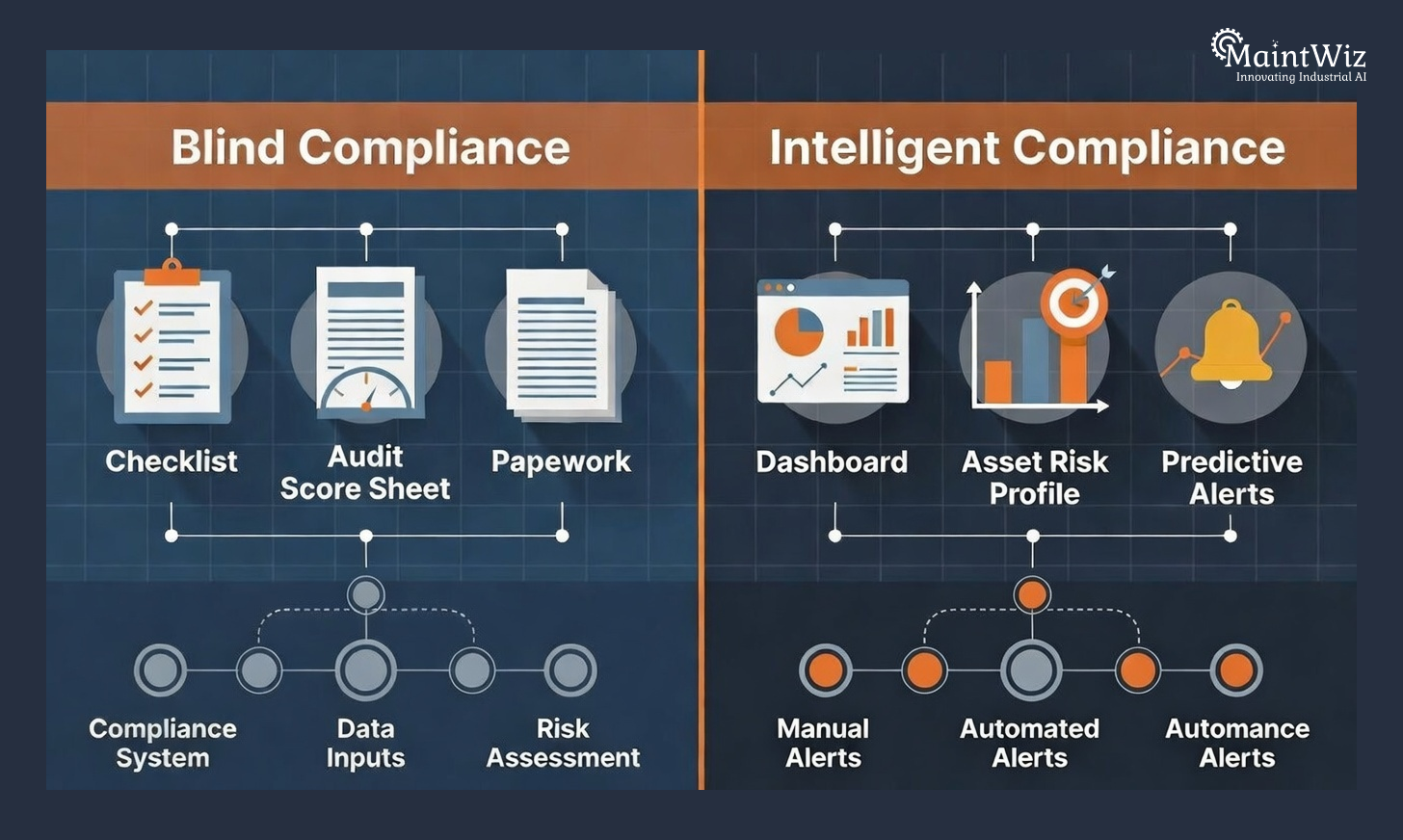
Key Characteristics of Blind Compliance
- Checklist-Driven Safety Execution
Blind compliance reduces LOTO to a sequence of boxes to tick. Technicians focus on completing forms rather than understanding the specific hazards of the asset, its failure history, or current operating condition. Over time, compliance becomes administrative labor, not active risk control. - Compliance Metrics Replace Safety Outcomes
Organizations begin measuring success through audit scores, number of permits issued, or forms completed. These metrics say nothing about whether risks were reduced, hazards identified, or failures prevented. The result is a false sense of safety reinforced by numbers. - Disconnected Safety and Maintenance Data
LOTO documentation often lives in isolation from maintenance history, asset condition, and failure analytics. Without integration, safety teams cannot see patterns, recurring hazards, or correlations between compliance events and equipment failures. - Procedural Obedience Without Situational Awareness
Workers follow instructions because they are required to, not because they understand the operational context. This undermines judgment, discourages critical thinking, and increases reliance on procedures that may not reflect real-world conditions.
Why Lockout/Tagout Itself Is Not the Enemy
The Original Purpose of Lockout/Tagout
LOTO was designed to prevent the uncontrolled release of hazardous energy during maintenance and servicing. Its purpose is risk elimination, not paperwork generation. When implemented intelligently, it remains one of the most powerful safety controls in industrial environments.
Where LOTO Goes Wrong in Practice
- Static Procedures in Dynamic Environments
Industrial assets age, operating conditions change, and failure modes evolve. Static LOTO procedures rarely reflect these dynamics. Blind compliance assumes yesterday’s hazards are identical to today’s, which is rarely true in complex systems. - One-Size-Fits-All Application
The same LOTO procedure is often applied across similar assets without considering usage patterns, maintenance history, or known vulnerabilities. This homogenization ignores asset-specific risks and reduces procedural effectiveness. - No Feedback Loop from Incidents or Near Misses
When LOTO data is not analyzed alongside incidents and near misses, organizations miss opportunities to improve procedures. Blind compliance treats each event as isolated rather than part of a system.
The Hidden Cost of Blind Compliance
Why Blind Compliance Damages Reliability and Performance
Blind compliance does not merely fail to improve safety — it actively undermines reliability, productivity, and asset longevity.
Operational Consequences
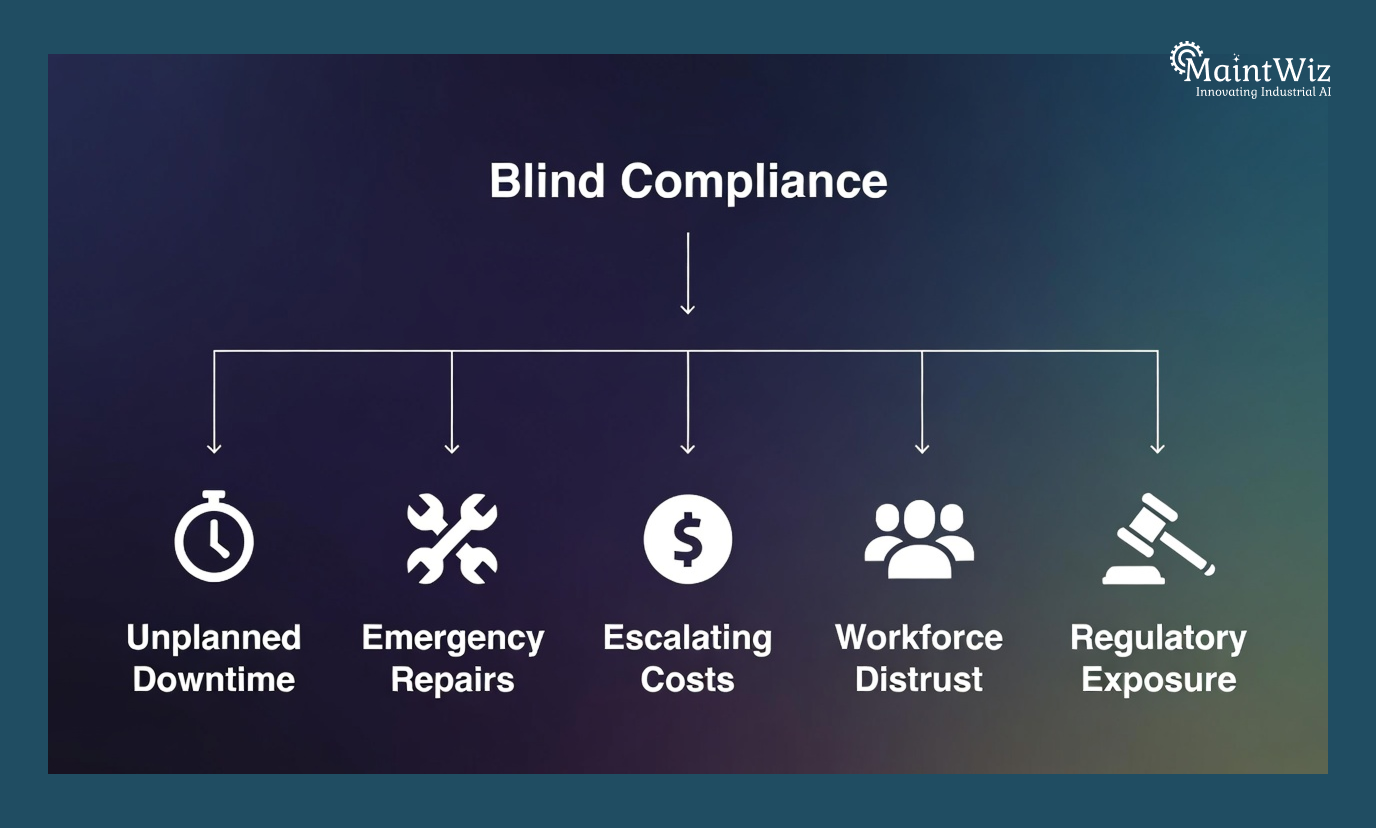
- Increased Unplanned Downtime
When LOTO is disconnected from asset condition and failure trends, maintenance remains reactive. Assets fail unexpectedly because compliance data was never used to predict or prevent breakdowns.
2. Escalating Maintenance Costs
Emergency repairs, overtime labor, expedited spare parts, and production losses accumulate. Blind compliance shifts resources toward firefighting rather than planned, value-creating maintenance.
3. Erosion of Workforce Trust
Technicians recognize when procedures are disconnected from reality. Over time, they lose trust in systems that prioritize documentation over practical safety, increasing the likelihood of workarounds and rule-bending.
4. Regulatory Vulnerability Despite Compliance
Ironically, organizations practicing blind compliance remain exposed. In the event of a serious incident, regulators examine whether procedures were effective, not just followed. Documentation alone offers limited protection.
From Procedural Compliance to Intelligent Compliance
What Intelligent Compliance Looks Like
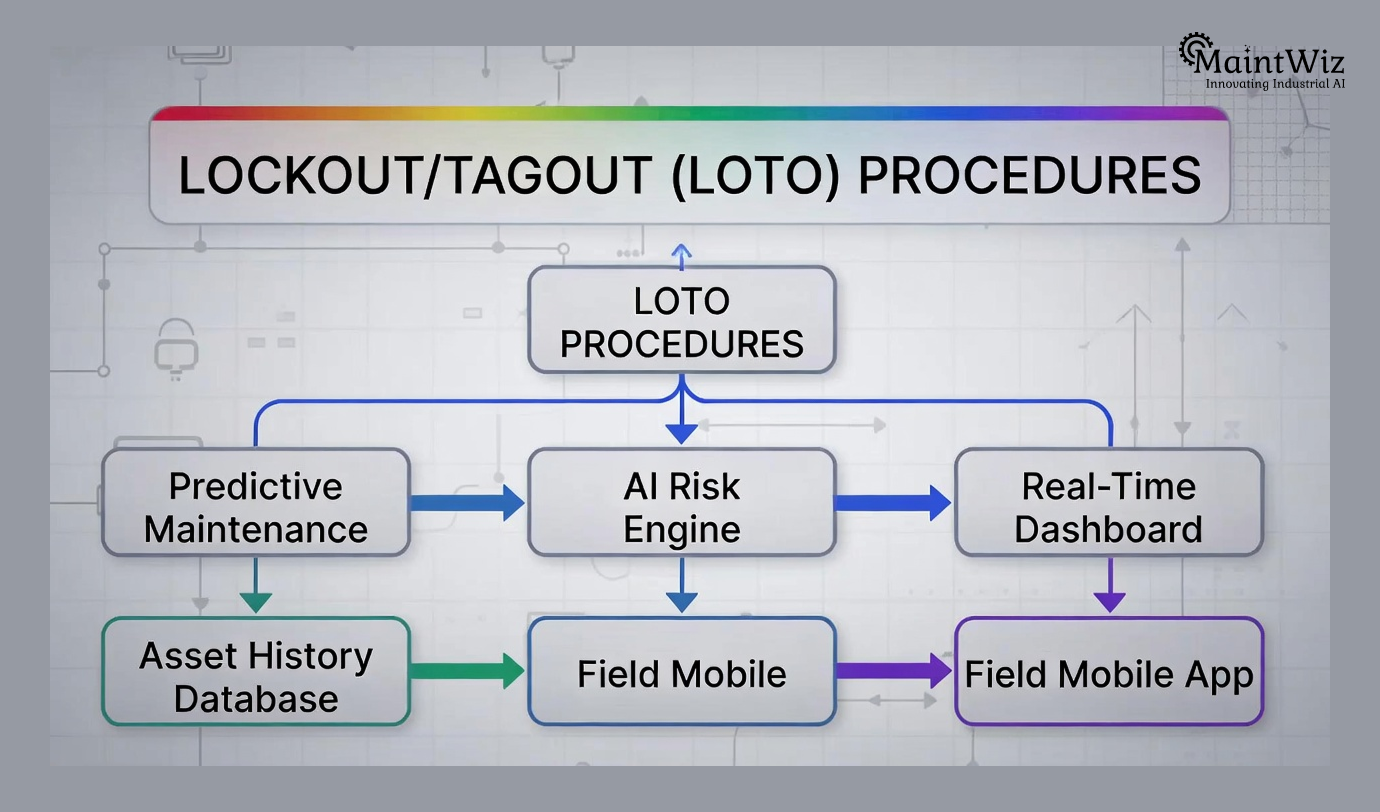
Intelligent compliance integrates safety procedures like LOTO with real-time asset data, maintenance history, and predictive analytics. It focuses on risk anticipation rather than post-event explanation.
Core Principles of Intelligent Compliance
- Contextual Risk Awareness
Intelligent systems provide technicians with asset-specific risk profiles, failure history, and current operating conditions before executing LOTO. Compliance becomes informed decision-making, not blind execution. - Dynamic Procedure Adaptation
Procedures evolve based on data. If an asset shows abnormal vibration, temperature, or failure frequency, safety controls adjust accordingly. This ensures LOTO remains relevant and effective. - Integrated Safety and Maintenance Intelligence
Compliance records feed directly into maintenance analytics. Patterns across work orders, failures, and LOTO events reveal systemic risks that static audits cannot detect. - Continuous Learning and Improvement
Intelligent compliance systems learn from every event. Near misses, deviations, and anomalies are analyzed, enabling organizations to refine procedures proactively.
Why Legacy CMMS Platforms Reinforce Blind Compliance
The Structural Limitations of Traditional Systems
Most legacy CMMS platforms were designed to log work orders — not to generate intelligence. As a result, they unintentionally reinforce blind compliance behaviors.
Key Limitations
- Manual Data Entry and Retrospective Reporting
Data is often entered after work is completed, eliminating the possibility of real-time intervention. Compliance becomes historical documentation rather than live risk management. - Siloed Functional Modules
Safety, maintenance, and asset management operate as separate modules with minimal integration. This fragmentation prevents holistic insight into risk and performance. - Lack of Predictive and Prescriptive Analytics
Traditional CMMS tools report what happened. They do not explain why it happened or what will happen next. Without AI, compliance remains backward-looking. - Poor Field-Level User Experience
Complex interfaces discourage meaningful engagement by technicians. When systems are difficult to use, compliance becomes superficial by necessity.
The Role of AI in Eliminating Blind Compliance
How AI Transforms Safety and Maintenance
Artificial intelligence enables a shift from static rules to adaptive intelligence. In maintenance and safety, AI turns compliance data into predictive insight.
AI Capabilities That Matter
- Predictive Risk Modeling
AI analyzes historical failures, condition data, and work patterns to identify emerging hazards. This allows organizations to intervene before LOTO situations escalate into incidents. - Anomaly Detection in Asset Behavior
Machine learning detects deviations that humans miss. These anomalies often precede failures and safety events, making AI a powerful early-warning system. - Intelligent Workflow Orchestration
AI can prioritize work orders, recommend safety controls, and guide technicians through context-aware procedures, reducing cognitive load and human error. - Knowledge Retention and Transfer
AI captures institutional knowledge embedded in work history and technician actions, preventing critical insights from being lost when experienced workers retire.
Why MaintWiz CMMS Enables Intelligent Compliance
Moving Beyond Traditional CMMS Limitations
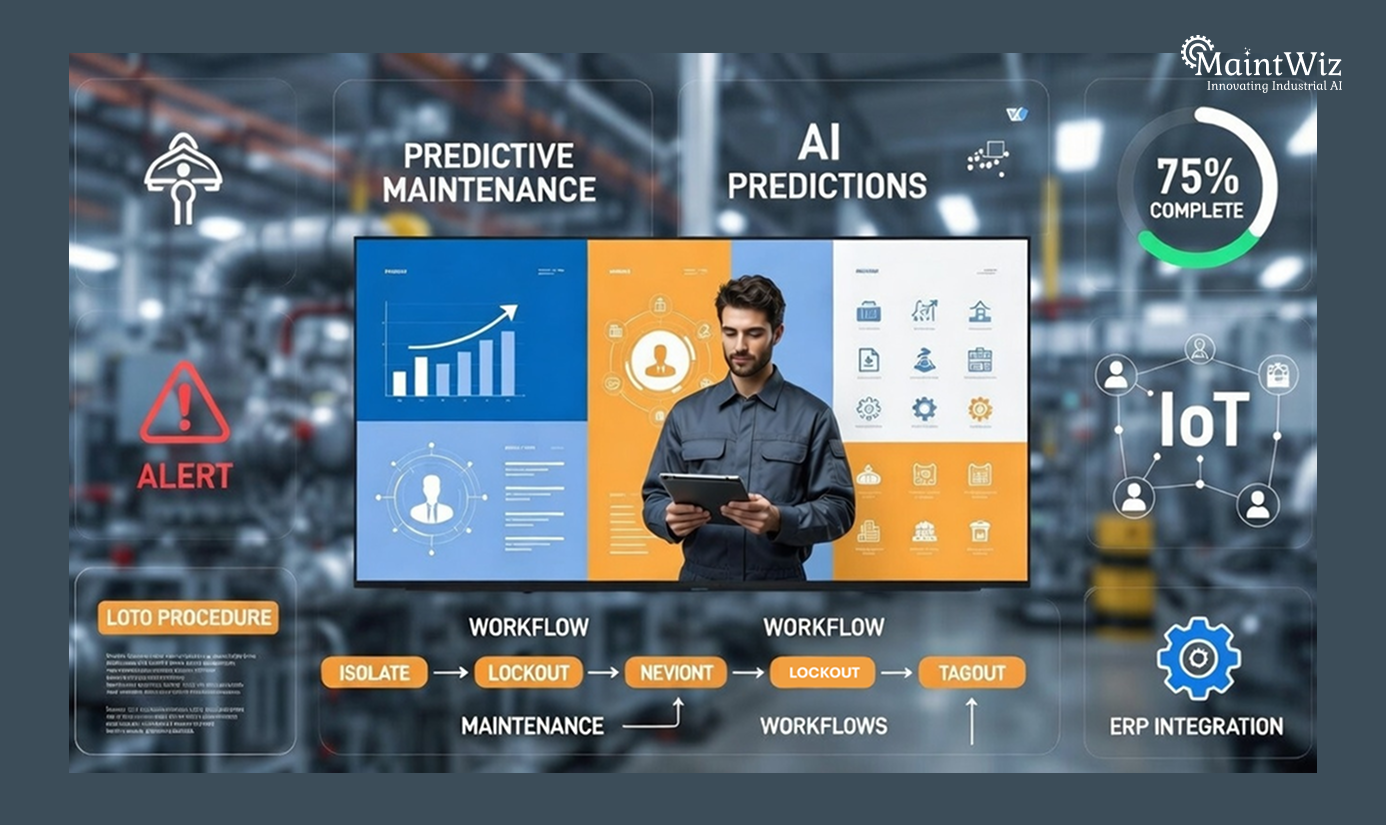
MaintWiz CMMS is designed specifically to overcome the structural flaws that cause blind compliance. It unifies safety, maintenance, asset performance, and AI-driven analytics into a single intelligent platform.
What Differentiates MaintWiz
- AI-Driven Predictive Maintenance Intelligence
MaintWiz uses advanced analytics to forecast failures and risk conditions. LOTO activities are informed by predictive insights, ensuring safety procedures align with real asset behavior. - Integrated Safety and Maintenance Workflows
Lockout/Tagout records are not isolated documents. They are connected to work orders, asset history, and performance data, enabling true risk-based compliance. - Real-Time Visibility Across Assets and Risks
Dashboards provide plant leaders with a unified view of safety exposure, maintenance health, and operational risk, enabling proactive decision-making. - Mobile-First Execution for Field Teams
Technicians receive contextual guidance, historical insights, and safety instructions at the point of work, reducing reliance on memory and paper-based procedures. - Scalable Architecture for Enterprise Asset Management
MaintWiz integrates with ERP systems, IoT platforms, and enterprise workflows, ensuring intelligent compliance scales across plants and geographies.
How to Transition from Blind Compliance to Intelligent Compliance
A Practical Roadmap for Industrial Leaders
Transitioning does not require abandoning LOTO — it requires elevating it.
Key Steps
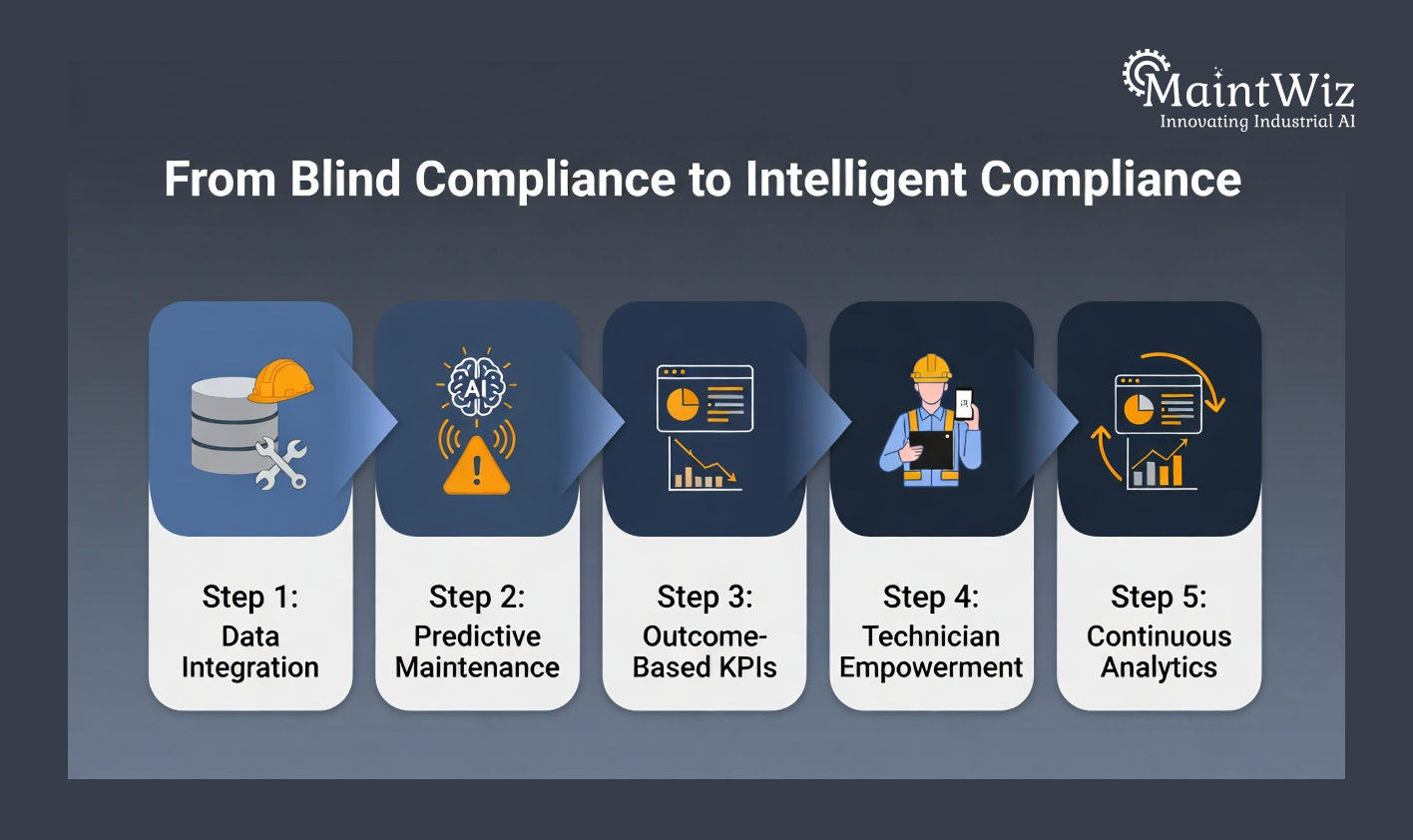
- Unify Safety and Maintenance Data Sources
Break down silos between compliance records and asset performance data to enable holistic risk analysis. - Adopt Predictive Maintenance Capabilities
Use AI to identify leading indicators of failure and hazard exposure. - Redesign KPIs Around Outcomes, Not Activities
Measure reductions in incidents, downtime, and risk — not just forms completed. - Empower Technicians with Contextual Intelligence
Equip field teams with mobile tools that explain the why, not just the what. - Continuously Improve Through Analytics
Treat every LOTO event as a data point in an evolving safety and reliability strategy.
Conclusion: Compliance Is Necessary — Intelligence Is Essential
Lockout/Tagout is not broken. Blind compliance is.
In an era of complex assets, aging infrastructure, and rising operational risk, procedural obedience is no longer enough. Organizations must move from compliance as a checkbox to compliance as a strategic capability.
MaintWiz CMMS enables this transformation — turning safety data into intelligence, maintenance into foresight, and compliance into confidence. The future of industrial safety and reliability belongs to organizations that stop complying blindly and start thinking intelligently.


Jai Balachandran is an industry expert with a proven track record in driving digital transformation and Industry 4.0 technologies. With a rich background in asset management, plant maintenance, connected systems, TPM and reliability initiatives, he brings unparalleled insight and delivery excellence to Plant Operations.