Most Plants Treat TPM as a Checklist — and Why They Fail

In too many manufacturing plants and industrial facilities, Total Productive Maintenance (TPM) has devolved from a strategic system of asset reliability into a simple set of checkboxes to complete. This shift fundamentally undermines the purpose of TPM — driving proactive maintenance, continuous improvement, and operational excellence.
This article dives into why most TPM programs fail, the hidden costs of checklist-style implementation, and how modern tools like AI-enabled CMMS platforms (specifically MaintWiz CMMS) help turn TPM into a value-driven maintenance engine that delivers real business impact.
What Total Productive Maintenance (TPM) Is — and Isn’t
Overview:
To fix TPM, we must first see how it was intended versus how it’s typically practiced today. TPM is not just a long list of tasks to tick off — it’s a philosophy for ensuring assets operate at their peak through shared responsibility, continual learning, and preventative thinking.
Foundational Intent of TPM:
- Total: Everyone involved — operators, engineers, maintenance teams, and leaders.
- Productive: Focus on maximizing the productivity and availability of assets.
- Maintenance: Not just fixing machines — preventing failures before they occur.
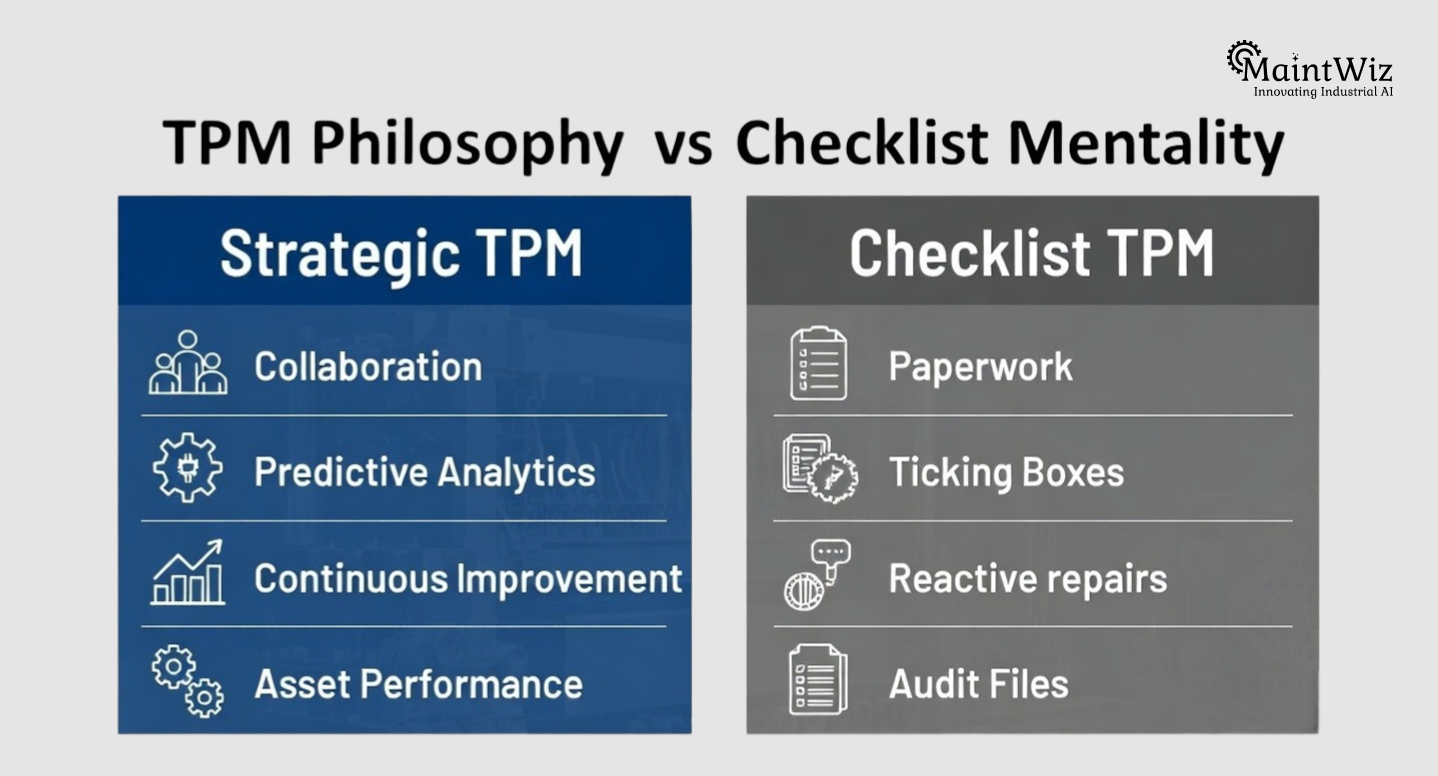
In practice, however, many plants mistake TPM for compliance paperwork rather than insight-driven improvement.
Why Plants Treat TPM as a Checklist
Overview:
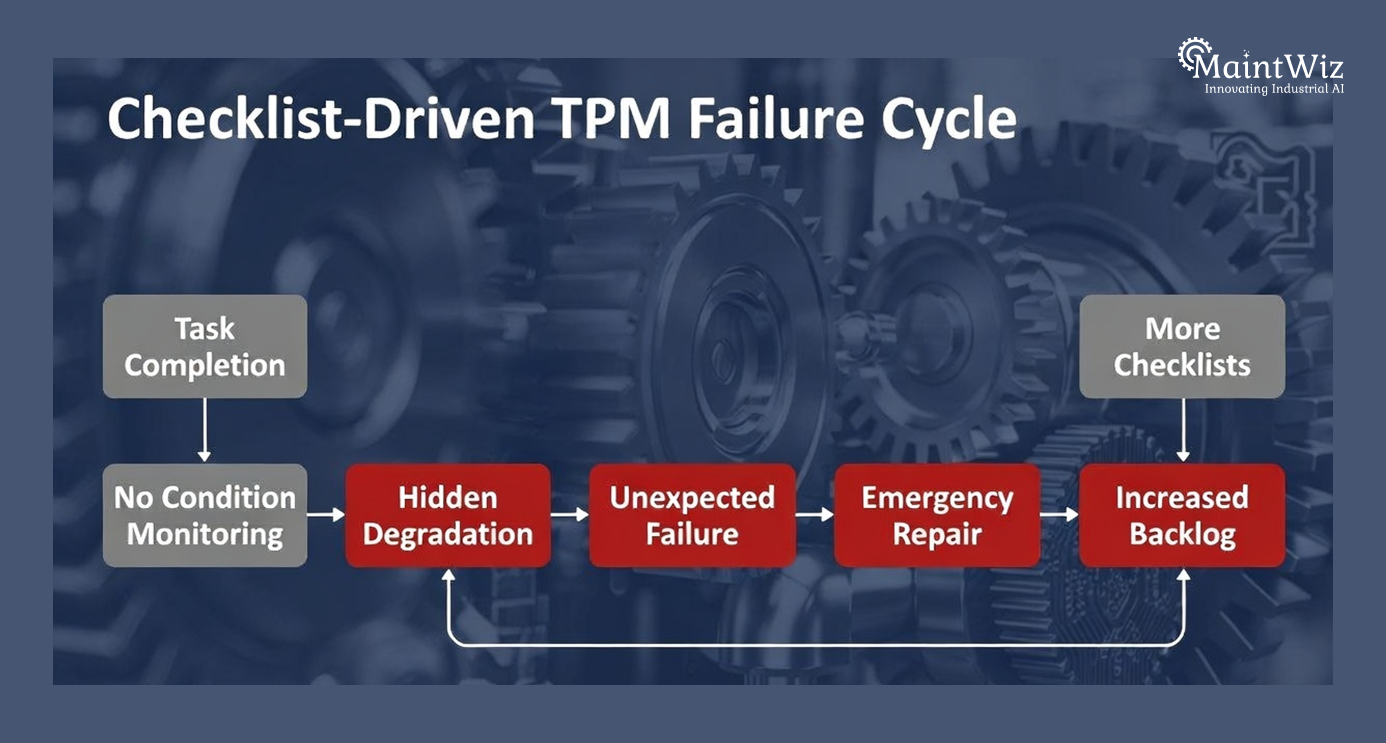
Many organizations fall into the trap of treating TPM as a compliance exercise, not a performance accelerator. This leads to activities that look good on paper but deliver little real impact.
- Checklist Mentality Over Insight Mentality
When TPM becomes about finishing tasks, the focus shifts away from understanding why issues occur and how to prevent them.
- Task Completion Bias: Teams chase closed tasks, not resolved issues.
- Superficial Visibility: Reports show compliance, not asset health.
- Reactive Mindset: Maintenance becomes reactionary rather than proactive.
- TPM Schedules Without Strategy
Many plants define TPM activities with rigid schedules, but fail to integrate maintenance strategy with actual equipment behavior.
- Calendar-based triggers: Activities occur at intervals, not based on real need.
- Lack of condition awareness: No monitoring of equipment performance between checks.
- Administrative Overload
TPM paperwork — including forms, audits, and checklists — can overwhelm operators and maintenance planners.
- Documentation burden: Teams spend more time recording work than improving outcomes.
- Audits replace action: Plants become audit-ready but not failure-free.
- Disconnected Systems
When maintenance tracking is scattered across spreadsheets, notebooks, and silos, TPM loses cohesion.
- Lack of single source of truth: Asset data is fragmented and inconsistent.
- Poor communication: Insights don’t flow effectively between teams.
The Hidden Costs of Checklist-Driven TPM
Overview:
Executing TPM as a checklist might feel structured, but it masks deeper problems that quietly erode reliability and profitability.
- Unplanned Downtime Remains High
Without predictive insights and condition-based actions, minor equipment issues escalate into major breakdowns.
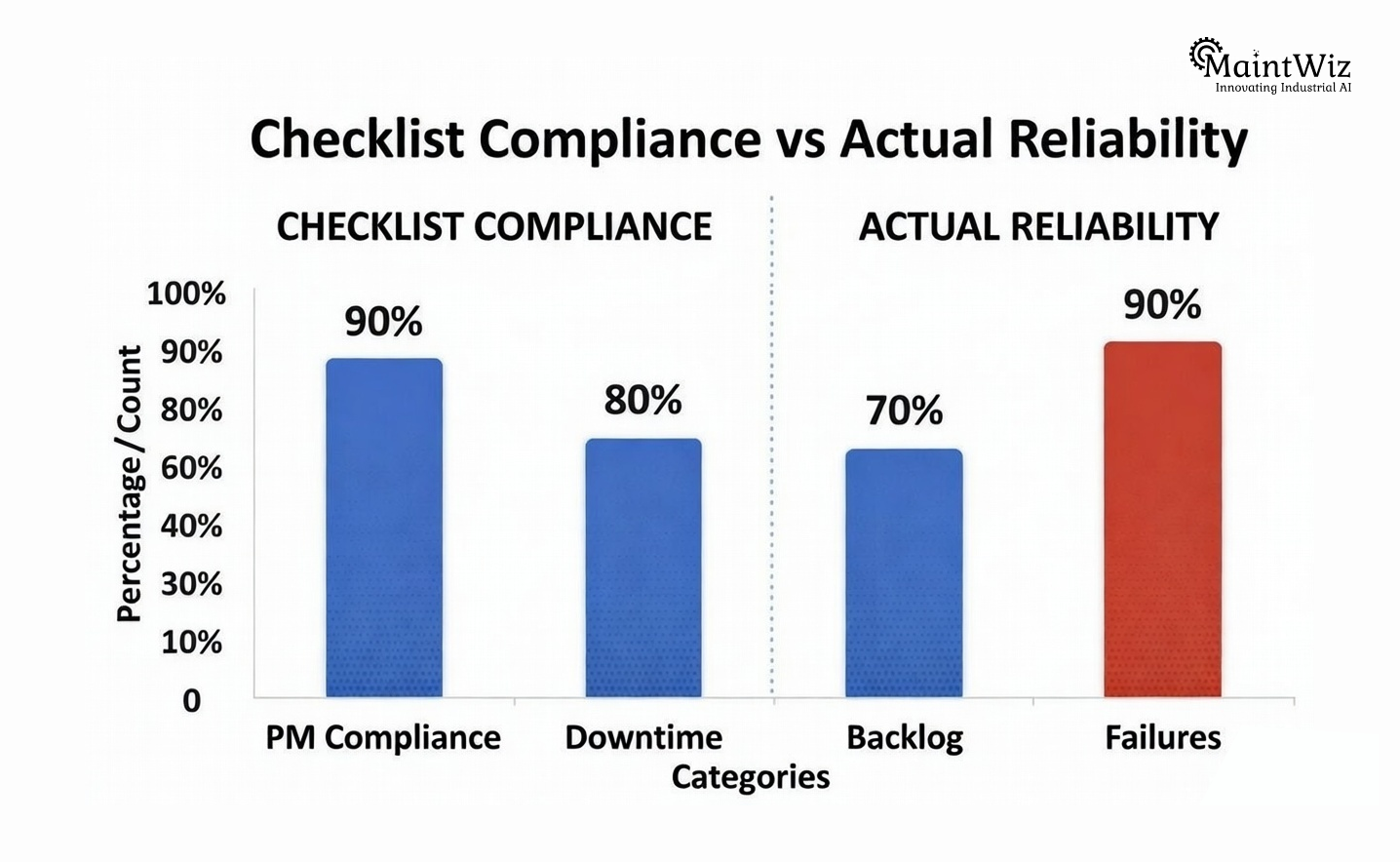
- Unexpected failures: Checklist compliance doesn’t guarantee equipment reliability.
- Lost production: Downtime hits schedules, deadlines, and customer commitments.
- Maintenance Backlogs Grow
Tasks that should prevent failures instead pile up as outstanding actions — each adding risk.
- Task overflow: Technicians chase overdue work instead of fixing root causes.
- Prioritization gap: No effective method to rank what truly matters.
- Misaligned KPIs
When performance metrics are based on number of tasks completed, they fail to reflect actual operational effectiveness.
- Activity vs. Outcome: Completion metrics don’t equate to improved asset life or uptime.
- False confidence: Leaders see green dashboards while real issues persist.
- Skill Underutilization
Technicians become clerks of compliance forms rather than strategic problem solvers.
- Lost expertise: Valuable technical knowledge is spent on paperwork.
- Low engagement: Teams feel disconnected from value creation.
What Good TPM Looks Like — Beyond Checklists
Overview:
World-class TPM shifts from checklist execution to outcome optimization. The most successful TPM programs integrate data, predictive intelligence, and cross-functional accountability.
- Data-Driven Decision Making
Every maintenance or process decision should be backed by accurate, real-time data.
- Condition monitoring: Sensors and analytics track real equipment behavior.
- Trend analysis: Historical patterns reveal early signs of degradation.
- Predictive and Condition-Based Maintenance
Reacting to failures or adhering to fixed schedules is no longer enough.
- Predict potential faults: Predictive tools foresee issues before they occur.
- Reduce waste: Tasks are triggered by need, not arbitrary timelines.
- Cross-Functional Collaboration
TPM gains traction when everyone — from operators to senior leaders — shares responsibility.
- Ownership culture: Operators participate in routine checks with meaningful context.
- Maintenance collaboration: Planners, analysts and technicians work with shared goals.
- Continuous Improvement (Kaizen)
Rather than repeating the same checks, teams experiment, learn, and refine maintenance practices.
- Identify loss drivers: Focused efforts reduce the 16 major production losses.
- Feedback loop: Insights from execution feed strategy adjustments.
The Role of Digital Transformation in TPM
Overview:
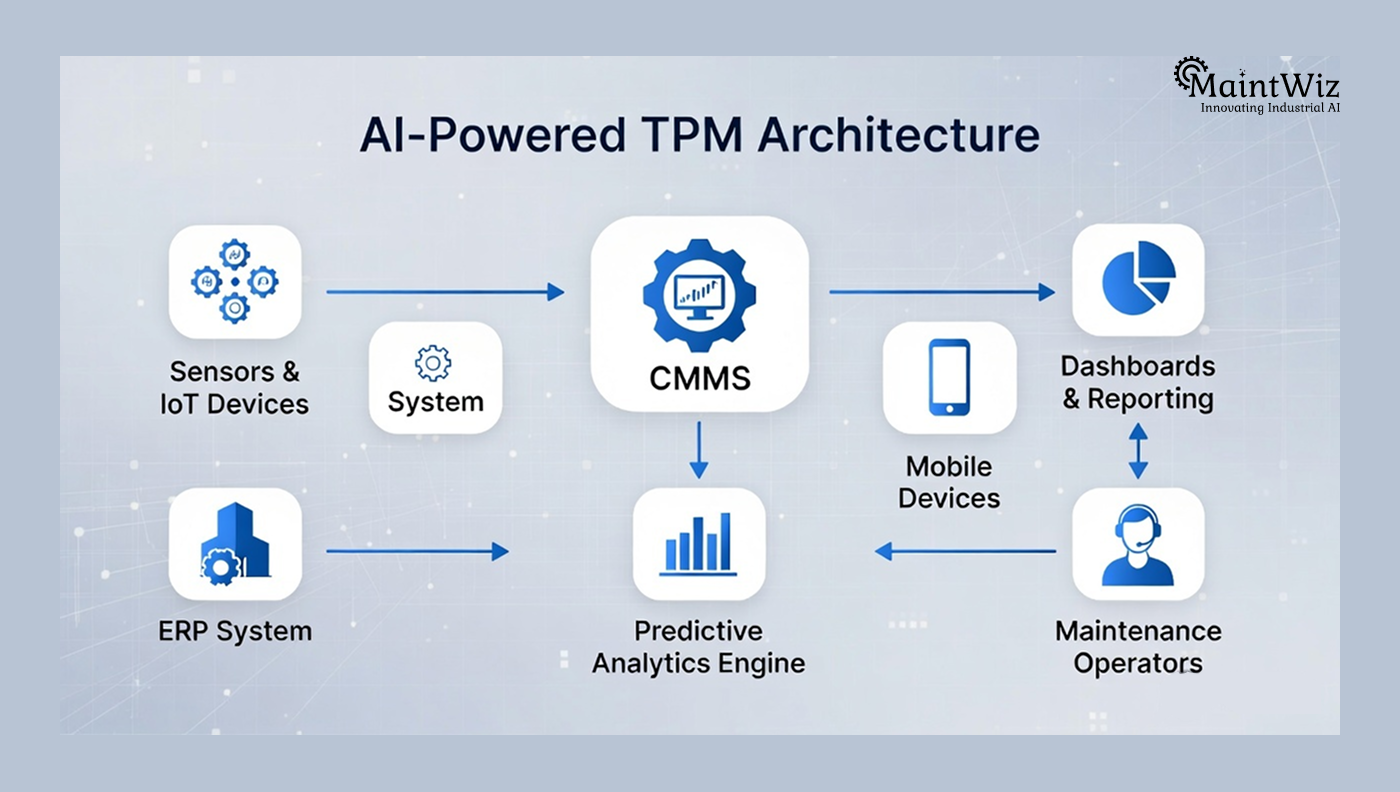
Digital tools don’t replace TPM thinking — they elevate it. Modern plants harness integrated systems that unify asset data, workflows, and predictive insights.
- Centralized Work Order Management
A single platform tracks asset history, schedules, and execution status seamlessly.
- Real-time updates: Field teams update tasks instantly from mobile apps.
- Context-rich work orders: Technicians understand not just tasks, but asset conditions.
- AI-Driven Predictive Maintenance
AI engines process real-time sensor data and historical trends to forecast failures with high accuracy.
- Advanced analytics: Algorithms detect patterns humans might miss.
- Actionable alerts: Teams act on predictive insights rather than reactive signals.
- Asset Intelligence and Performance Dashboards
Interactive KPIs and asset health visuals highlight what matters most.
- Custom monitoring: Select views for operations, maintenance, and leadership.
- Trend insights: Dashboards track performance over time for continuous improvement.
- ERP and OT System Integration
Systems talk to each other — unifying planning, production, and maintenance.
- Seamless data flow: No more manual data re-entry or misaligned records.
- Holistic view: Leaders see maintenance and operational performance in sync.
Blueprint for a High-Performance TPM Implementation
Overview:
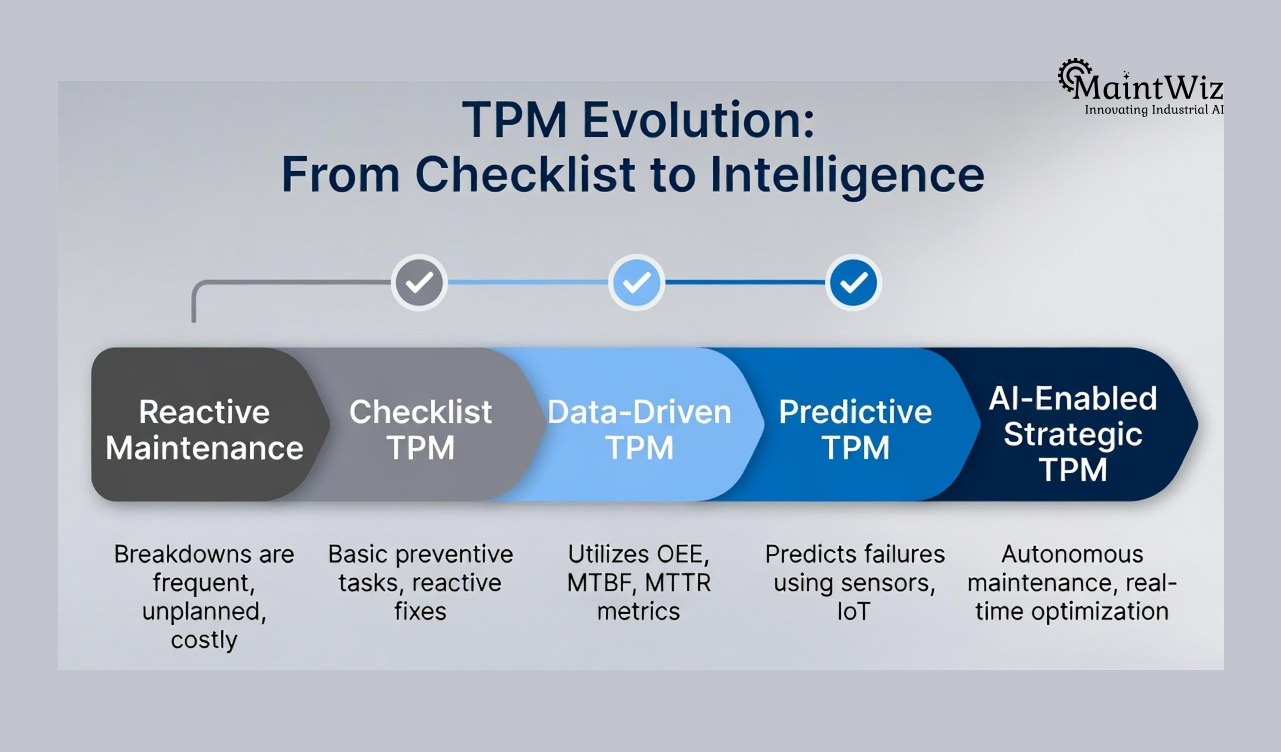
Transforming TPM from checklist compliance to excellence requires strategic planning, cultural commitment, and the right technology.
- Define Clear Reliability Goals
Start with business outcomes — not task lists.
- Asset uptime targets: Align TPM goals with production commitments.
- Failure reduction metrics: Set measurable benchmarks for key assets.
- Map Maintenance Activities to Value
Every task should link to reducing failures, improving OEE, or lowering costs.
- Value-based PM: Prioritize based on impact, not frequency.
- Task rationalization: Eliminate unnecessary actions that clutter workflows.
- Leverage Predictive Analytics
Use AI to trigger maintenance only when needed.
- Dynamic planning: Update schedules based on real asset behavior.
- Reduced downtime: Predicted issues get addressed before they disrupt production.
- Empower Maintenance and Operations Teams
Equip teams with insights — not manual checklists.
- Mobile tools: Technicians access instructions and history on the go.
- Skill development: Continuous training for predictive and condition-based techniques.
Why MaintWiz CMMS Is the Strategic TPM Enabler
Overview:
If your plant’s TPM effort feels like compliance theater, the missing piece isn’t more checklists — it’s intelligence, integration, and insight. MaintWiz CMMS is an AI-powered platform built to transform maintenance from reactive tasks to strategic outcomes — the exact capability modern TPM demands.
- Comprehensive Asset Tracking and Lifecycle Management
MaintWiz captures every asset’s maintenance history, performance data, and condition metrics — creating a reliable single source of truth for TPM.
- Real asset insight: Visual dashboards show performance trends.
- Historical context: Past failures and fixes inform better decisions.
- AI-Powered Predictive Maintenance
Built-in advanced analytics identify subtle early signs of failure — preventing breakdowns before a single task even starts.
- Failure mode analysis: Predictive alerts sharpen maintenance focus.
- Optimal intervention: Teams act based on real conditions, not calendar dates.
- Unified Maintenance Planning & Scheduling
MaintWiz’s centralized platform brings all planned, preventive, and corrective actions into one organized schedule.
- Task prioritization: Work orders reflect asset criticality and maintenance urgency.
- Condition Monitoring and Real-Time Alerts
With sensors and IoT integration, MaintWiz goes beyond checklists to flag issues while parts are still healthy.
- Continuous visibility: Asset conditions update dynamically.
- Advanced TPM Support Tools
The platform includes functionality for autonomous maintenance, focused improvement, 5S, root cause analysis, and TPM audit reporting — all within context, not just forms.
- Structured improvement: Capture insights and track TPM outcomes.
- Mobile-First Execution
Field teams access work orders, instructions, and alerts anytime, anywhere — removing the disconnect between planning and execution.
- On-the-go updates: Instant status changes and evidence uploads.
- Seamless Integration With ERP & OT Systems
MaintWiz bridges operational technology (OT) and enterprise systems, ensuring TPM performance connects with broader business systems.
- Unified ecosystem: Maintenance doesn’t exist in isolation.
In a landscape where TPM execution too often falters, MaintWiz CMMS stands out as the technology backbone that elevates TPM into a performance driver — seamlessly linking strategy, execution, and outcomes.
Conclusion: Redefining TPM From Checklists to Strategic Value
Treating TPM as a checklist may look structured, but it fails to deliver the reliability, uptime, and asset performance that modern plants demand. To transform maintenance into a sustainable competitive advantage, organizations must:
- Shift from task compliance to data-informed decisions
- Embed predictive and condition-based maintenance
- Equip teams with real-time insights and intelligent workflows
- Use platforms like MaintWiz CMMS to unify strategy with execution
Modern TPM isn’t about more check marks — it’s about less downtime, improved reliability, and continuous improvement backed by data. That’s how the world’s most reliable plants operate — and how yours can, too.