Table of Contents
ToggleIntroduction to OEE and Downtime
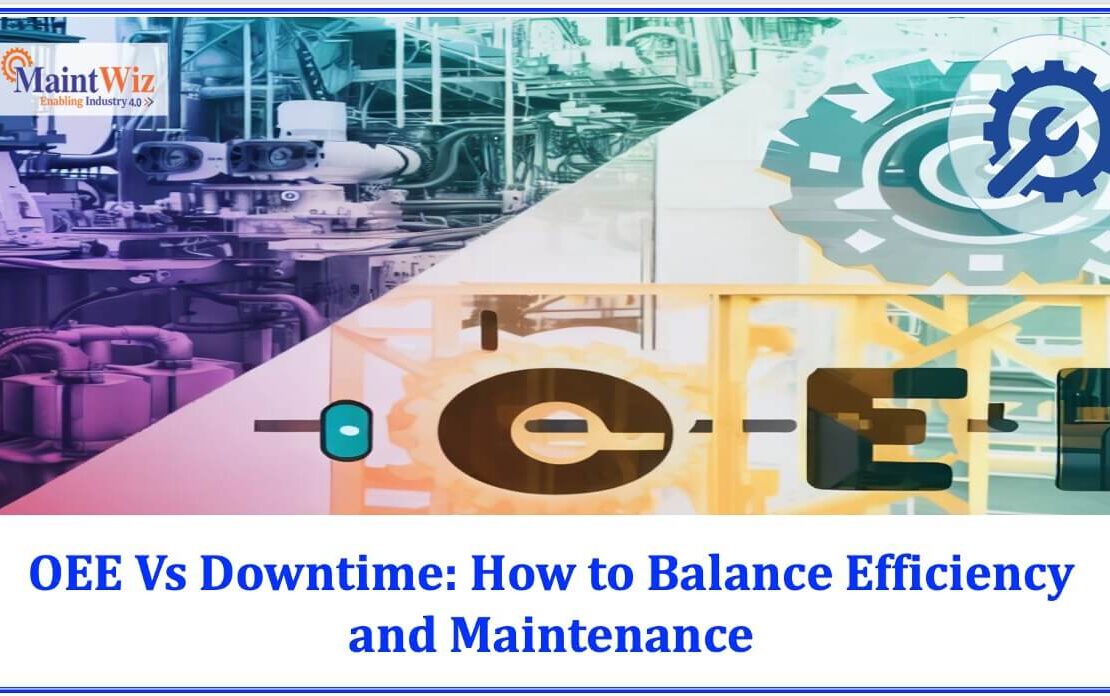
Efficiency and maintenance are two crucial factors in the manufacturing industry. Balancing them effectively is key to success. In this article, we will delve into the concepts of Overall Equipment Effectiveness (OEE) and Downtime and explore how they are interconnected. We will also discuss the role of MaintWiz CMMS in optimizing these aspects of manufacturing.
Understanding Overall Equipment Effectiveness (OEE)
Overall Equipment Effectiveness (OEE) is a critical metric in manufacturing that measures the efficiency of equipment and production processes. It takes into account three key components:
- Availability: The percentage of time the equipment is available for production.
- Performance: The speed at which the equipment operates compared to its optimal speed.
- Quality: The rate of production that meets the quality standards.
OEE is calculated by multiplying these three factors. The higher the OEE, the more efficient the production process.
Benefits of High OEE in Manufacturing
- Increased productivity and output
- Cost savings through efficient resource utilization
- Enhanced equipment reliability and longevity
Exploring the Concept of Downtime
Downtime refers to the periods when equipment or machinery is not operational. It can be categorized into planned and unplanned downtime.
Types of Downtime
- Planned Downtime: Scheduled maintenance or downtime for maintenance activities.
- Unplanned Downtime: Unexpected stoppages due to equipment failures or other issues.
The Significance of Balancing Efficiency and Maintenance
Efficiency and maintenance are interconnected in manufacturing. While high OEE signifies efficiency, excessive downtime can hinder it. Striking the right balance is crucial for optimal performance.
OEE: The Key to Efficiency
Now, let’s delve deeper into OEE and understand why it matters in manufacturing.
What Is OEE, and How Is It Calculated?
OEE is calculated using the formula:
OEE = Availability x Performance x Quality
Why OEE Matters in Manufacturing
OEE matters because it directly impacts several aspects of manufacturing:
- Efficiency and productivity
- Resource utilization
- Product quality and customer satisfaction
Downtime: The Enemy of Efficiency
Downtime is the antithesis of efficiency in manufacturing. Let’s explore how downtime can disrupt operations and affect OEE.
Causes of Downtime
Downtime can be caused by various factors:
- Equipment breakdowns
- Tooling changes
- Material shortages
- Operator errors
The Cost of Downtime in Manufacturing
The financial impact of downtime can be significant. Calculating the cost of downtime is essential for understanding its implications.
The OEE-Downtime Relationship
Downtime and OEE are closely related. Downtime directly affects the availability component of OEE. Let’s explore this relationship further.
Identifying Downtime Factors That Impact Efficiency
Some downtime factors have a more substantial impact on efficiency than others. Identifying and addressing these factors is crucial for improving OEE.
Real-Life Examples of OEE and Downtime Scenarios
Let’s look at real-life scenarios to understand how OEE and downtime play out in manufacturing.
Strategies for Balancing OEE and Downtime
Now that we understand the importance of OEE and the challenges posed by downtime, let’s explore strategies for achieving the right balance.
The Role of Preventive Maintenance
Preventive maintenance involves scheduled inspections and maintenance activities to prevent unplanned downtime.
Predictive Maintenance: Anticipating Downtime
Predictive maintenance uses data and analytics to predict when equipment is likely to fail, allowing for proactive maintenance.
Lean and Six Sigma Principles for Efficiency Improvement
Lean and Six Sigma methodologies focus on process optimization and waste reduction, contributing to higher OEE.
Tools and Technologies for OEE Improvement
Several tools and technologies can help improve OEE:
- CMMS and EAM systems for monitoring OEE
- IoT and real-time data for downtime reduction
- Advanced analytics and machine learning for efficiency enhancement
Measuring Success: KPIs and Benchmarking
Measuring progress is essential to ensure that the strategies implemented are effective. Key Performance Indicators (KPIs) and benchmarking play a crucial role in this process.
Key Performance Indicators (KPIs) for OEE and Downtime
Tracking specific KPIs related to OEE and downtime helps in gauging performance.
Benchmarking OEE and Downtime Practices
Comparing your manufacturing processes with industry benchmarks can provide valuable insights for improvement.
Tracking Progress in Balancing Efficiency and Maintenance
Regularly monitoring progress ensures that your efforts to balance OEE and downtime are on the right track.
The Benefits of Achieving the Right Balance
When you successfully balance OEE and downtime, your manufacturing operations reap numerous benefits:
Increased Productivity and Output
- Maximized production capacity
- Shorter production cycles
Cost Savings and Resource Optimization
- Reduced maintenance costs
- Optimized resource allocation
Enhanced Equipment Reliability and Longevity
- Extended equipment lifespan
- Lower risk of breakdowns
Challenges and Pitfalls in Balancing OEE and Downtime
While striving for balance, manufacturers may encounter various challenges and pitfalls that need to be addressed.
Overcoming Resistance to Change
Implementing new strategies and technologies often faces resistance from employees accustomed to existing processes.
Data Security and Privacy Concerns
As manufacturing becomes more data-driven, ensuring data security and privacy is paramount.
Common Mistakes to Avoid
Recognizing and avoiding common mistakes in balancing OEE and downtime is crucial for success.
Future Trends in OEE and Downtime Management
The landscape of manufacturing is continually evolving. Let’s explore some future trends that will impact OEE and downtime management.
Industry 4.0 and Smart Manufacturing
The fourth industrial revolution, Industry 4.0, is ushering in smart manufacturing, where data and automation drive efficiency.
AI and Predictive Analytics Advancements
Artificial intelligence and predictive analytics will become even more sophisticated in predicting downtime and optimizing OEE.
Sustainable Practices in Manufacturing Efficiency
Sustainability will play a more prominent role as manufacturers aim to reduce waste and energy consumption.
Conclusion
In conclusion, achieving the right balance between Overall Equipment Effectiveness (OEE) and Downtime is critical for success in the manufacturing industry. MaintWiz CMMS offers a comprehensive solution to optimize efficiency and maintenance, ensuring that your manufacturing operations run smoothly and cost-effectively.
Key Takeaways:
- Efficiency and maintenance are intertwined in manufacturing.
- OEE measures efficiency and is influenced by downtime.
- Strategies like preventive maintenance and advanced analytics can improve OEE.
- KPIs and benchmarking help track progress.
- Balancing OEE and downtime leads to increased productivity and cost savings.
- Manufacturers must address challenges like resistance to change and data security.
- Future trends include smart manufacturing and sustainable practices.
Are you ready to take your manufacturing operations to the next level? Contact MaintWiz today and embark on a journey towards efficiency and excellence!
Contact MaintWiz for a consultation on optimizing your manufacturing processes.
Learn more about how MaintWiz CMMS can benefit your manufacturing operations.

Jai Balachandran is an industry expert with a proven track record in driving digital transformation and Industry 4.0 technologies. With a rich background in asset management, plant maintenance, connected systems, TPM and reliability initiatives, he brings unparalleled insight and delivery excellence to Plant Operations.