

Predictive Maintenance ROI: What Leaders Get Wrong

Introduction: The Illusion of ROI in Predictive Maintenance

Predictive maintenance ROI is one of the most cited—and most misunderstood—metrics in industrial operations. Leaders invest in sensors, analytics platforms, and AI models expecting clear financial returns. Yet, many organizations struggle to quantify value beyond anecdotal success stories or isolated downtime reductions.

The problem is not predictive maintenance itself.
The problem is how ROI is defined, measured, and operationalized.

Most organizations evaluate predictive maintenance using traditional cost-avoidance models, focusing on prevented failures or reduced downtime. While directionally correct, this approach is incomplete. It captures visible benefits, but ignores systemic value creation.

In reality, predictive maintenance ROI is not a single metric.
It is a multi-dimensional economic outcome shaped by decisions, behaviors, and system-level optimization.

Why Predictive Maintenance ROI Is Misunderstood

The Over-Simplification of ROI Calculation

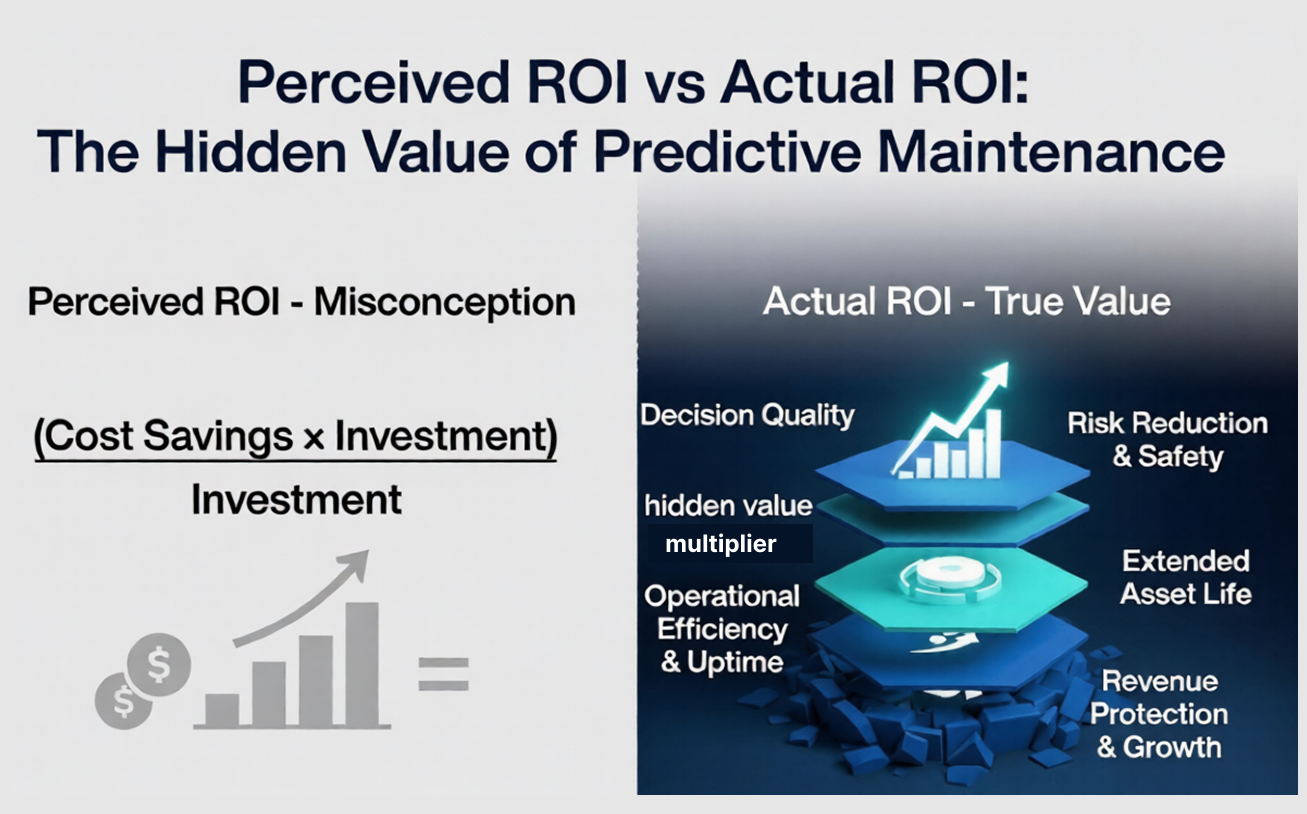
Many organizations reduce ROI to a basic formula:

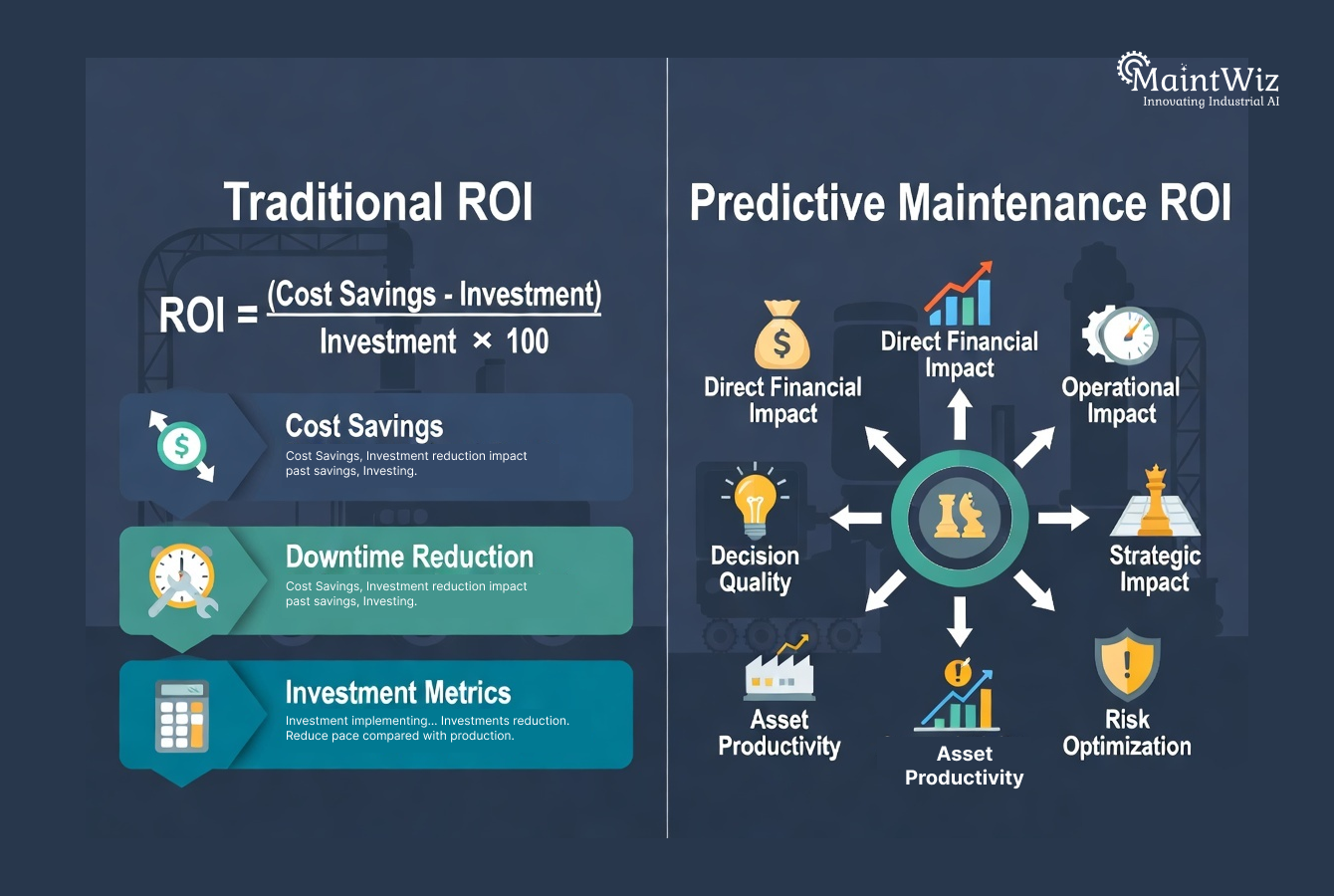
ROI = (Cost Savings – Investment) / Investment

This works in static environments.
But maintenance is not static—it is dynamic, probabilistic, and interconnected.

This simplification leads to flawed conclusions because it:

  • Assumes linear cause-effect relationships
  • Ignores indirect financial impact
  • Fails to capture decision quality improvements

The “Downtime Reduction” Trap

Downtime reduction is often treated as the primary indicator of success. However:

  • Not all downtime is equally expensive
  • Some downtime is strategically optimal
  • Eliminating downtime can increase overall cost

This creates a dangerous bias:
Organizations optimize for uptime instead of profitability.

Activity vs Outcome Confusion

Predictive maintenance implementations often measure:

  • Number of alerts generated
  • Number of interventions executed
  • Sensor coverage

These are activity metrics, not value metrics.

ROI is not created by detecting issues.
It is created by making better decisions about those issues.

What True Predictive Maintenance ROI Actually Means

Predictive maintenance ROI must be reframed as:

The measurable improvement in economic performance driven by better maintenance decisions.

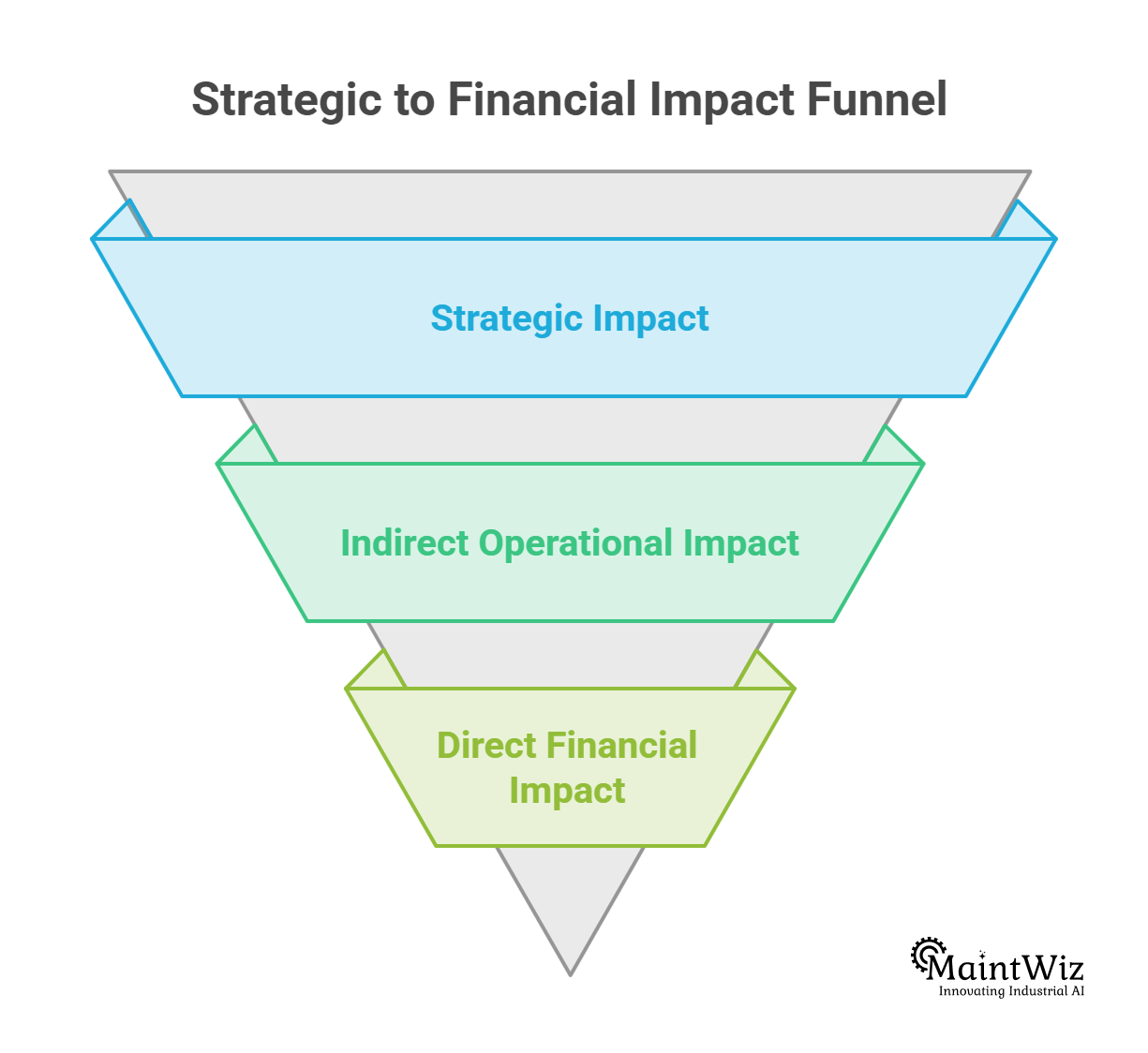
This includes three layers of value:

1. Direct Financial Impact

  • Reduced unplanned downtime
  • Lower maintenance costs
  • Extended asset life

2. Indirect Operational Impact

  • Improved production stability
  • Reduced variability in output
  • Better resource utilization

3. Strategic Impact

  • Improved capital allocation
  • Higher asset productivity
  • Enhanced decision-making capability

Most organizations measure only the first layer.
Leaders who capture all three unlock exponential value.

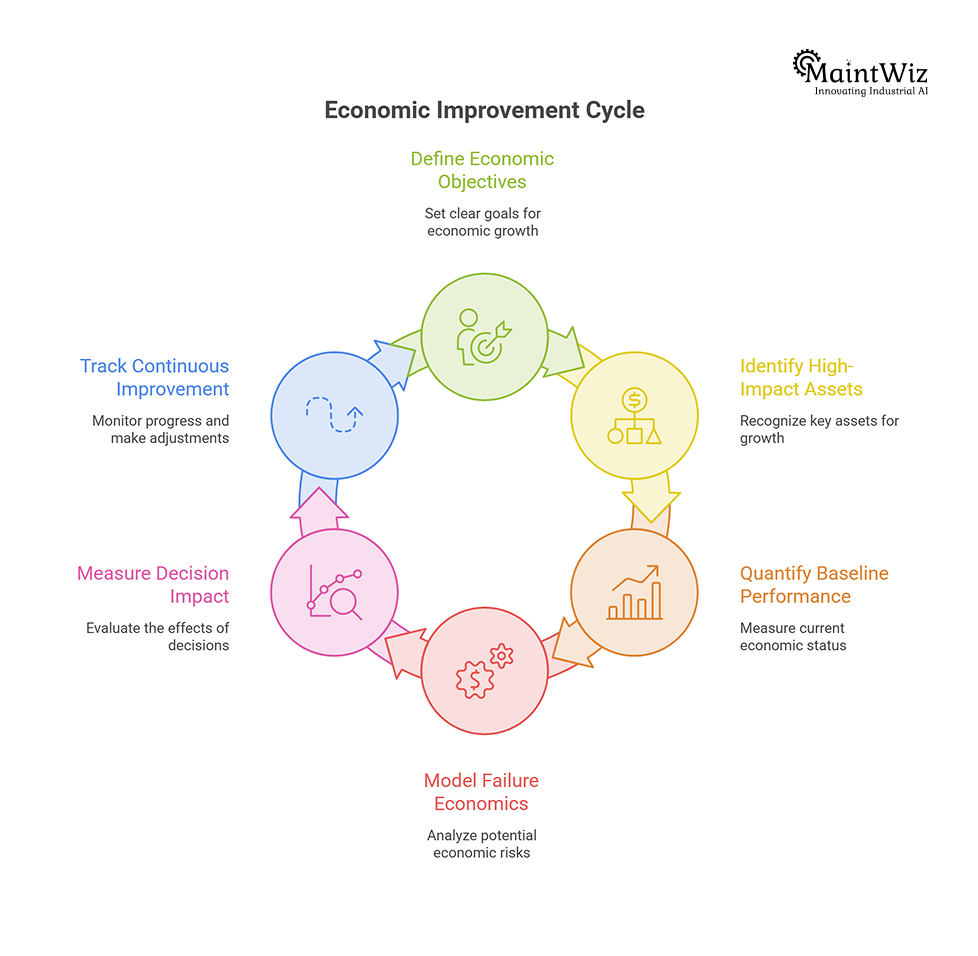
The Predictive Maintenance ROI Framework

To measure ROI effectively, organizations need a structured framework that connects data to decisions and decisions to outcomes.

Step 1: Define Economic Objectives

Before deploying predictive maintenance, define what success looks like:

  • Reduce cost per unit of production
  • Improve asset utilization
  • Optimize maintenance spend

Without clear objectives, ROI becomes subjective.

Step 2: Identify High-Impact Assets

Not all assets contribute equally to ROI.

Focus on:

  • Bottleneck equipment
  • High-cost failure assets
  • Safety-critical systems

ROI is concentrated—not distributed.

Step 3: Quantify Baseline Performance

Establish current state metrics:

  • Mean Time Between Failures (MTBF)
  • Mean Time To Repair (MTTR)
  • Maintenance cost per asset
  • Downtime cost per hour

Without a baseline, ROI cannot be validated.

Step 4: Model Failure Economics

Every failure has an economic signature:

  • Production loss
  • Labor cost
  • Spare parts consumption
  • Secondary damage

Predictive maintenance ROI depends on understanding failure economics, not just failure frequency.

Step 5: Measure Decision Impact

This is where most organizations fail.

Instead of asking:
Did we prevent failure?

Ask:

  • Did we intervene at the right time?
  • Did we avoid unnecessary maintenance?
  • Did we optimize cost-risk tradeoffs?

ROI is driven by decision quality, not detection accuracy.

Step 6: Track Continuous Improvement

Predictive maintenance is not a one-time gain. It is a learning system.

Track:

  • Reduction in false positives
  • Improvement in intervention timing
  • Cost savings over time

ROI compounds as the system learns.

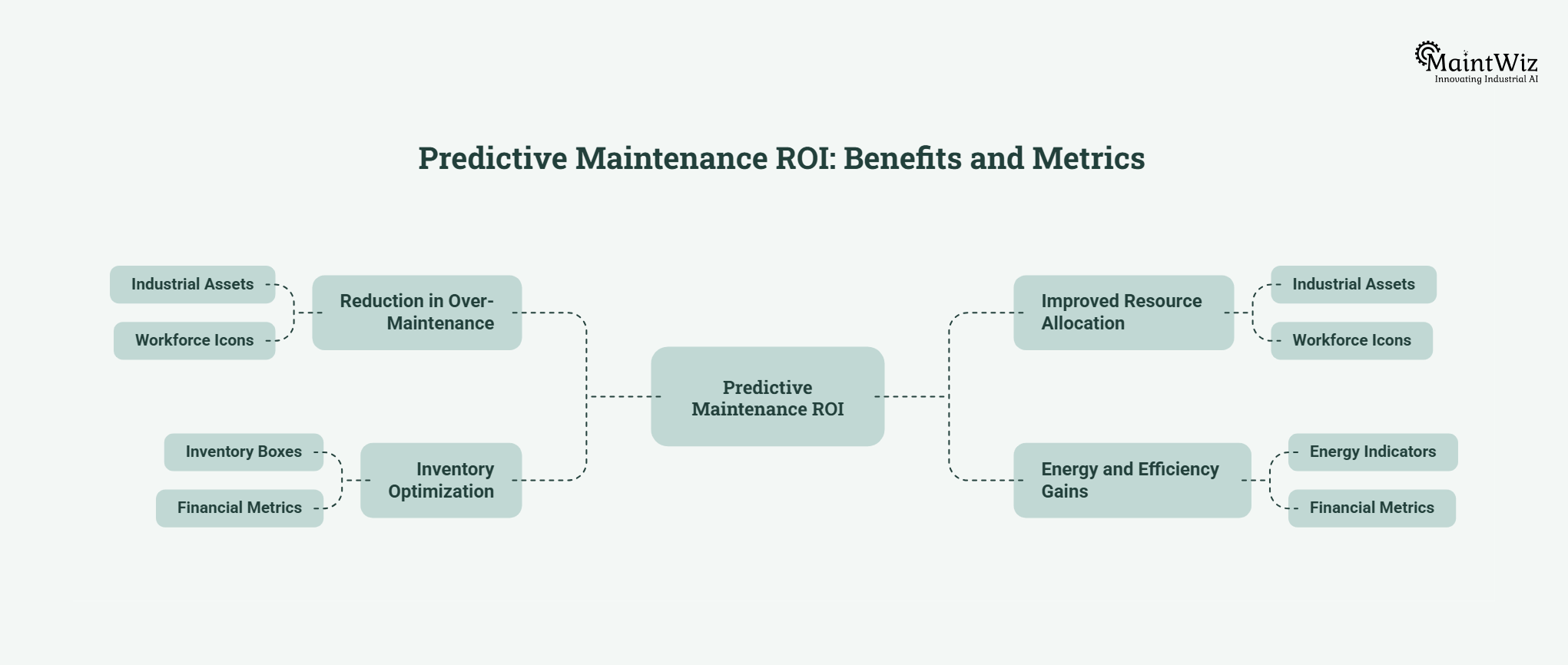
Hidden Drivers of Predictive Maintenance ROI

Reduction in Over-Maintenance

Traditional preventive maintenance often leads to unnecessary interventions.

Predictive maintenance eliminates:

  • Premature part replacements
  • Redundant inspections
  • Excess labor allocation

Improved Resource Allocation

Maintenance teams can focus on:

  • High-risk assets
  • High-impact interventions

This increases productivity without increasing headcount.

Inventory Optimization

Predictive insights enable:

  • Better spare parts planning
  • Reduced inventory holding cost
  • Lower stockout risk

Energy and Efficiency Gains

Well-maintained assets:

  • Consume less energy
  • Operate at optimal efficiency

These gains are often ignored in ROI calculations.

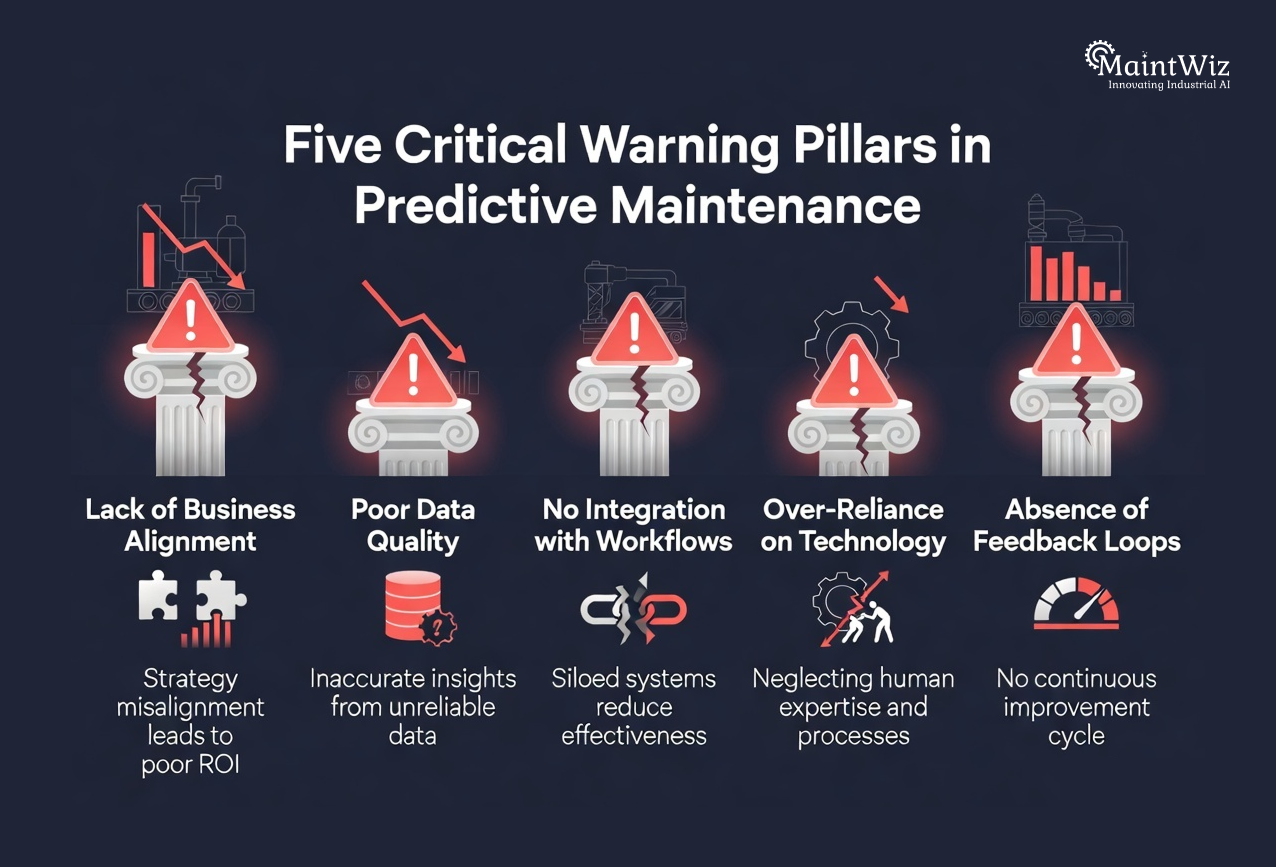
Why Many Predictive Maintenance Initiatives Fail to Deliver ROI

Lack of Business Alignment

Projects start with technology, not outcomes.

Poor Data Quality

Inaccurate or inconsistent data reduces model effectiveness.

No Integration with Workflows

Insights are generated—but not acted upon.

Over-Reliance on Technology

Tools are expected to solve problems without process change.

Absence of Feedback Loops

Without learning mechanisms, systems stagnate.

MaintWiz CMMS: Turning Predictive Insights into Measurable ROI

Predictive maintenance ROI is not realized through analytics alone.
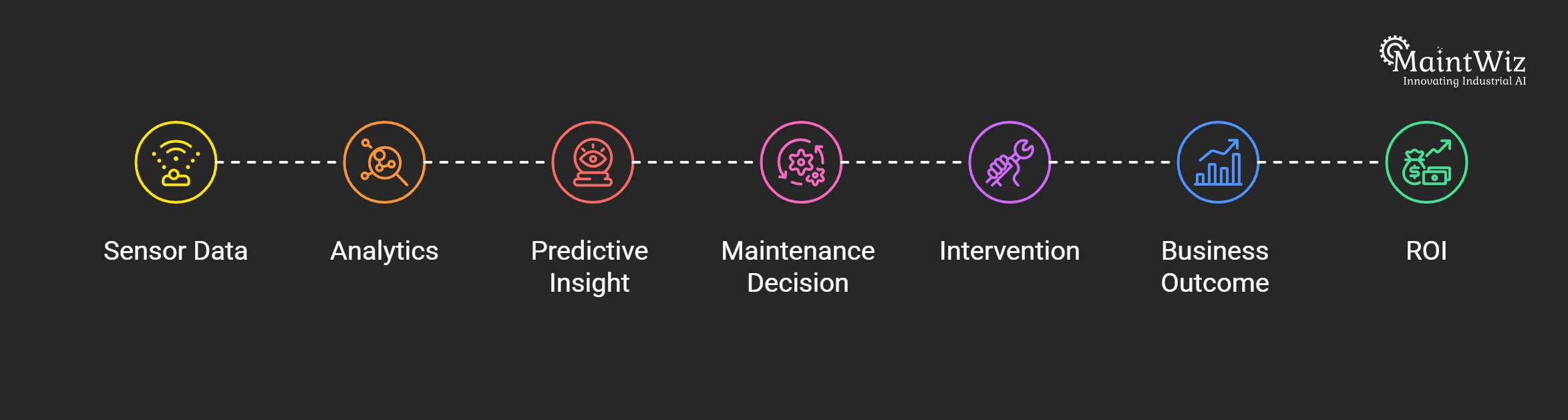
It requires a system that connects data → decisions → execution → outcomes.

MaintWiz CMMS is designed to enable this integration.

Data-Driven Asset Intelligence

MaintWiz consolidates asset data, failure history, and condition signals into a unified platform—creating a reliable foundation for predictive analytics.

Integrated Predictive Maintenance Workflows

Instead of generating isolated alerts, MaintWiz embeds predictive insights directly into maintenance workflows, ensuring that recommendations translate into action.

Decision-Centric Maintenance Planning

The platform aligns maintenance schedules with:

  • Asset criticality
  • Risk levels
  • Economic impact

This ensures interventions are both timely and financially justified.

Real-Time Visibility and Analytics

Dashboards provide:

  • Asset health insights
  • Cost-performance tracking
  • ROI visibility across assets

90-Day Execution Impact

Within a structured 90-day implementation cycle, organizations can:

  • Establish baseline performance metrics
  • Deploy predictive monitoring on critical assets
  • Improve intervention accuracy
  • Begin realizing measurable cost savings

MaintWiz does not just improve maintenance execution.
It improves the economics of maintenance decisions.

Rethinking ROI: From Cost Savings to Value Creation

The biggest mistake leaders make is treating ROI as a cost-reduction metric.

Predictive maintenance ROI is fundamentally about:

  • Maximizing asset value
  • Optimizing decision timing
  • Balancing cost and risk

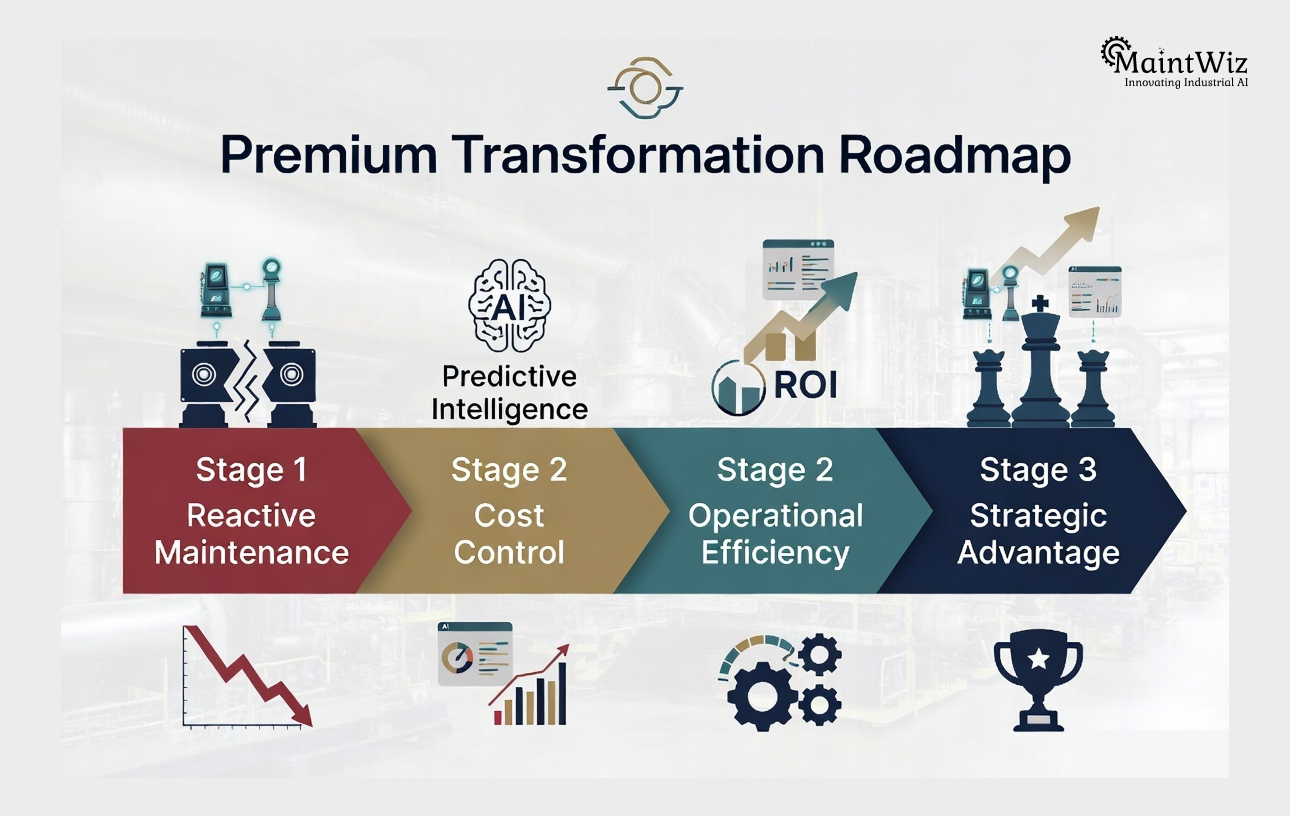
Organizations that understand this shift move from:

  • Reactive maintenance → Predictive intelligence
  • Cost control → Value optimization
  • Operational efficiency → Strategic advantage

The Leadership Perspective

Predictive maintenance is not a technology initiative.
It is a decision transformation initiative.

Leaders must ask:

  • Are we measuring the right outcomes?
  • Are we optimizing decisions or just tracking activity?
  • Are we aligning maintenance with financial performance?

The answers determine whether predictive maintenance becomes:

  • A reporting tool
  • Or a competitive advantage

Conclusion

Predictive maintenance ROI is not elusive.
It is simply misdefined.

When organizations shift from measuring activity to decision impact, ROI becomes visible, measurable, and scalable.

The question is no longer:
What is the ROI of predictive maintenance?

It is:
Are we using predictive maintenance to make economically better decisions?

That distinction defines whether investment in predictive technologies generates incremental improvement—or transformational value.

FAQs

How do you calculate predictive maintenance ROI?

Predictive maintenance ROI is calculated by comparing cost savings from reduced downtime and maintenance with the investment in predictive technologies.

What are the main benefits of predictive maintenance?

Reduced downtime, lower maintenance costs, improved asset life, and better operational efficiency.

Why is predictive maintenance ROI hard to measure?

Because it involves indirect benefits like improved decision-making, resource optimization, and reduced variability.

Is predictive maintenance better than preventive maintenance?

Yes, as it relies on real-time data and condition monitoring rather than fixed schedules.

How long does it take to see ROI from predictive maintenance?

Typically within 3–6 months for initial gains, with long-term value compounding over time.