

Why 73% of Manufacturers Are Switching to AI-Powered


CMMS in 2026 (And What It Means for You)

Introduction: The Shift No One Can Ignore

AI-powered CMMS 2026 is no longer a future concept—it’s an operational necessity. Across industries, manufacturers are facing mounting pressure: rising downtime costs, aging assets, workforce shortages, and increasing expectations for efficiency and reliability.

Traditional maintenance systems are struggling to keep pace with these demands.

That’s why 73% of manufacturers are transitioning toward AI maintenance software and smart maintenance platforms. This shift is not driven by trends—it’s driven by results: reduced downtime, improved asset performance, and smarter decision-making.

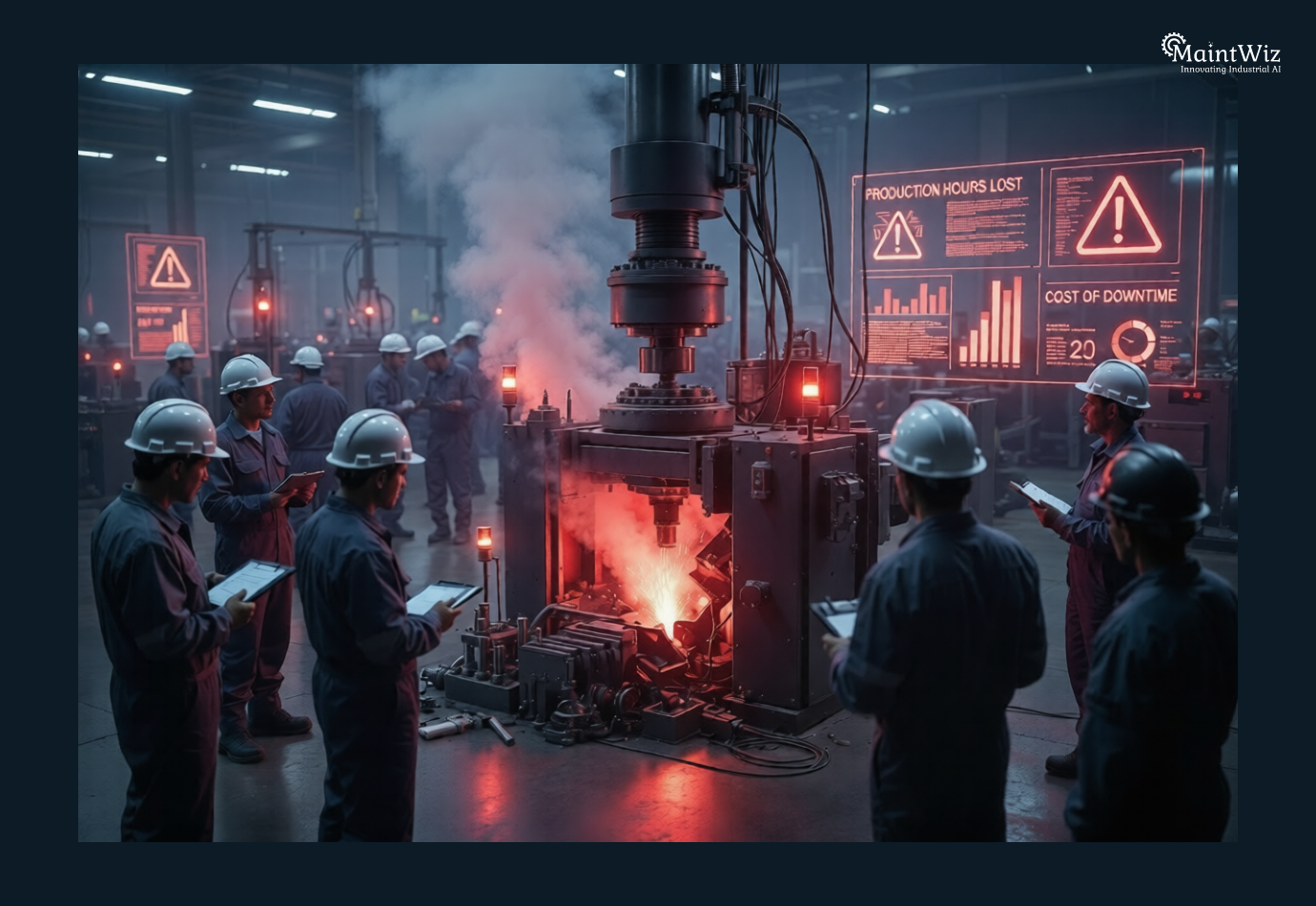
Factory machine breakdown showing downtime impact and maintenance challenges in manufacturing

In this article, we’ll break down:

  • Why this shift is happening now
  • What AI-powered CMMS actually delivers
  • What it means for your operations
  • How to start implementing it

What Is AI-Powered CMMS?

AI-powered CMMS (Computerized Maintenance Management System) integrates artificial intelligence into maintenance workflows to enable predictive, prescriptive, and data-driven decisions.

Key Capabilities of CMMS Artificial Intelligence

  • Predictive failure detection using machine learning
  • Automated work order prioritization
  • Real-time asset condition monitoring
  • Intelligent spare parts forecasting
  • Root cause analysis from historical data

Unlike traditional CMMS systems that rely on schedules, AI-driven platforms continuously learn and optimize.

Why 73% of Manufacturers Are Switching to AI Maintenance Software

Downtime Is Becoming Financially Unsustainable

Unplanned downtime can cost thousands to millions per hour depending on the industry. AI-powered CMMS helps predict failures before they occur, enabling proactive maintenance.

Preventive Maintenance Is No Longer Enough

Time-based maintenance often leads to:

  • Over-maintenance (wasted effort)
  • Under-maintenance (unexpected breakdowns)

AI replaces fixed schedules with condition-based decisions.

Data Is Finally Being Utilized

Most plants collect massive data but fail to use it effectively.

AI transforms:

  • Sensor data → insights
  • Historical logs → predictions
  • Maintenance data → optimization

Workforce Challenges Are Increasing

With skilled technicians retiring, AI helps by:

  • Automating diagnostics
  • Recommending actions
  • Reducing reliance on tribal knowledge

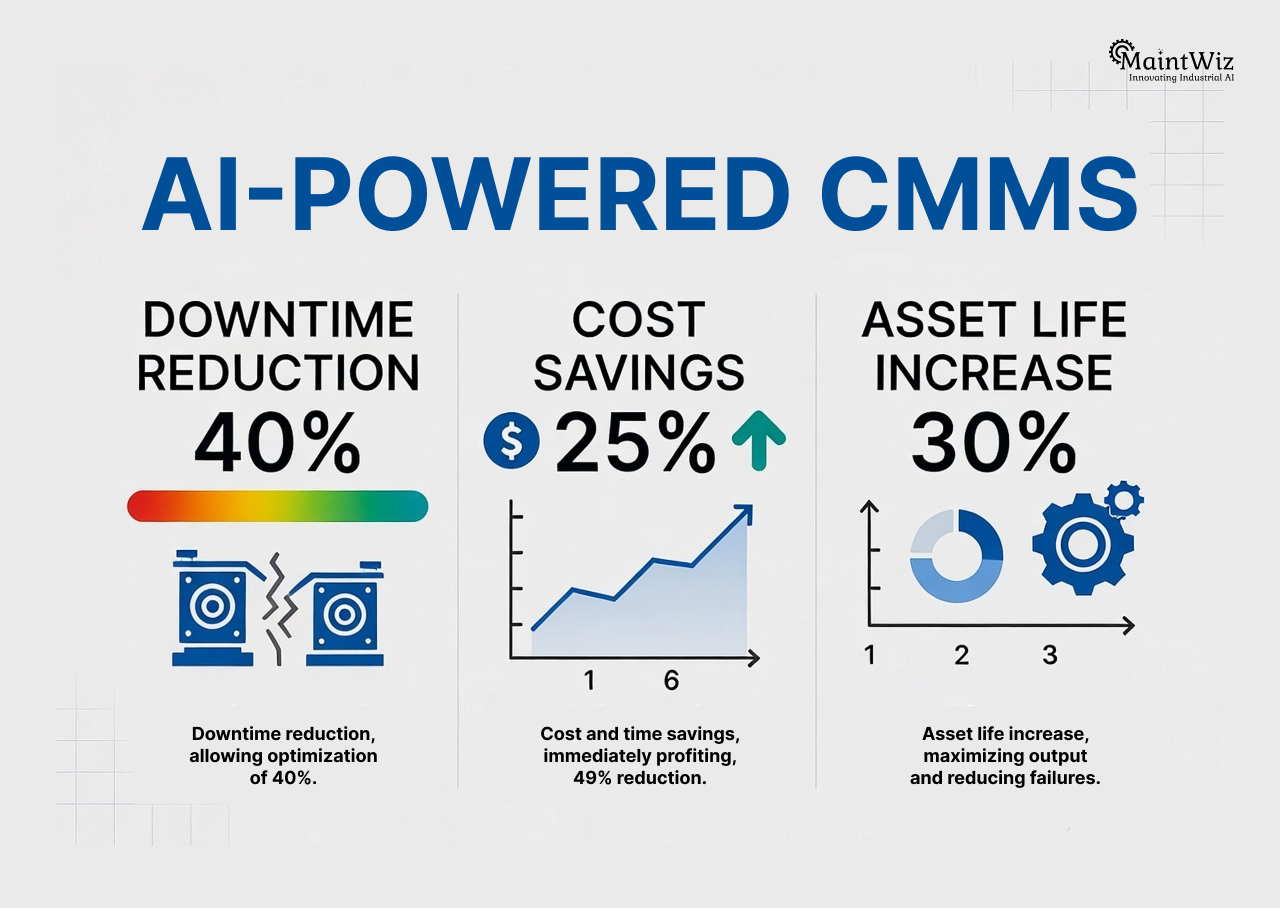
ROI Is Now Proven

Organizations adopting AI-driven maintenance report:

  • 20–40% reduction in downtime
  • 10–25% lower maintenance costs
  • 15–30% improvement in asset life
Infographic showing ROI benefits of AI-powered CMMS including reduced downtime and cost savings

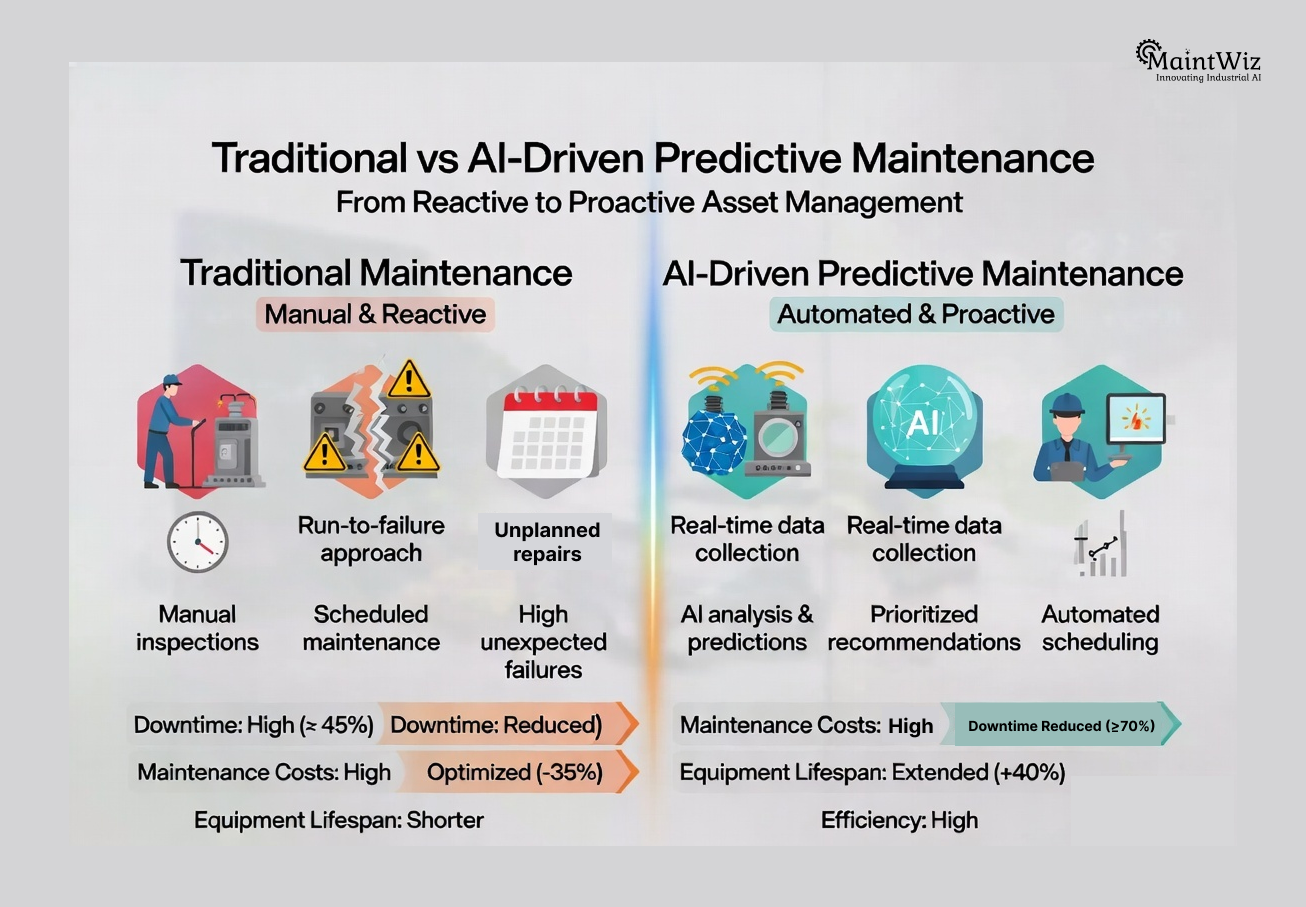
Traditional CMMS vs AI-Powered CMMS

Comparison between traditional maintenance systems and AI-powered predictive maintenance platforms

Traditional Systems

  • Reactive or time-based
  • Manual processes
  • Limited insights
  • Static workflows

AI-Driven Systems

  • Predictive and prescriptive
  • Automated analysis
  • Real-time insights
  • Adaptive workflows

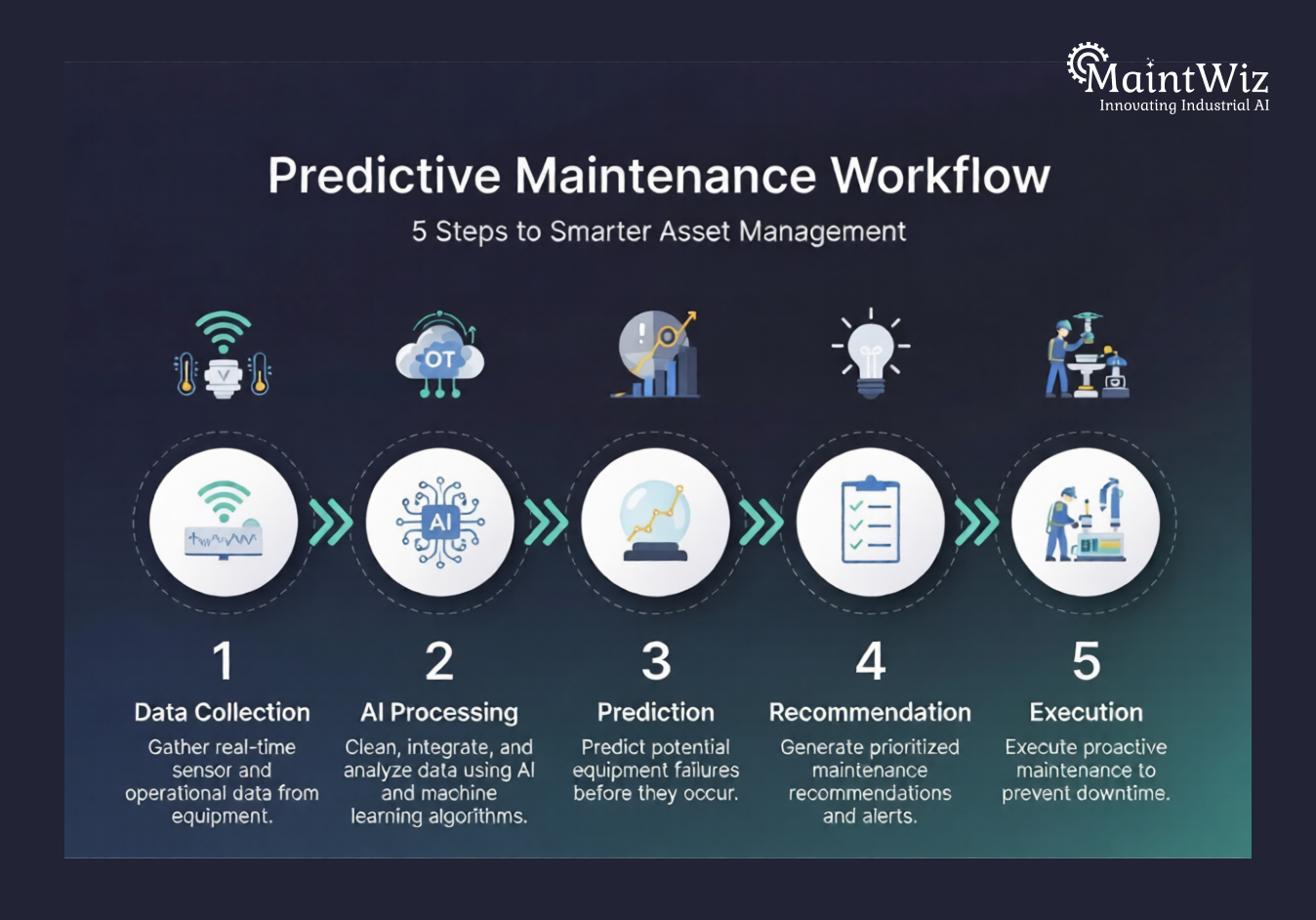
How AI-Powered CMMS Works

Step 1: Data Collectio
IoT sensors and CMMS systems collect real-time and historical data.

Step 2: Data Processing
AI algorithms analyze patterns and detect anomalies.

Step 3: Prediction
The system forecasts failures and estimates asset life.

Step 4: Recommendation
It suggests optimal maintenance actions and priorities.

Step 5: Execution
Work orders are scheduled and resources optimized automatically.

Workflow diagram showing how AI-powered CMMS predicts failures and optimizes maintenance processes

What This Means for Maintenance Leaders

Shift from Reactive to Predictive

Maintenance becomes proactive instead of reactive.

From Cost Center to Value Driver

Maintenance now contributes directly to profitability and efficiency.

From Experience-Based to Data-Driven Decisions

Decisions are based on analytics rather than intuition.

Where AI Maintenance Delivers Maximum Value

  • High-value assets (turbines, compressors, CNC machines)
  • Process industries (oil & gas, chemicals, power)
  • Asset-heavy manufacturing (automotive, steel, cement)

Common Misconceptions About AI Maintenance Software

“AI Is Too Complex”

Modern platforms are user-friendly and easier to deploy.

“We Don’t Have Enough Data”

Most plants already have sufficient usable data.

“It’s Too Expensive”

Downtime costs are far higher than AI investment.

90-Day AI CMMS Implementation Roadmap

Phase 1: Assessment (0–30 Days)

  • Identify critical assets
  • Define KPIs
  • Evaluate current systems

Phase 2: Deployment (30–60 Days)

  • Integrate IoT and CMMS
  • Configure AI models
  • Train teams

Phase 3: Optimization (60–90 Days)

  • Improve predictions
  • Automate workflows
  • Track performance

How MaintWiz CMMS Supports This Transformation

MaintWiz CMMS bridges the gap between traditional and AI-driven maintenance.

Predictive Maintenance

Forecasts failures and enables condition-based actions.

Smart Planning

Automates scheduling and prioritization.

Advanced Analytics

Provides real-time insights and performance tracking.

Asset Reliability

Improves uptime and extends equipment life.

Why MaintWiz Fits a 90-Day Sprint

  • Fast deployment
  • Pre-built AI capabilities
  • Easy integration
  • User-friendly dashboards

This makes it ideal for organizations seeking quick ROI.

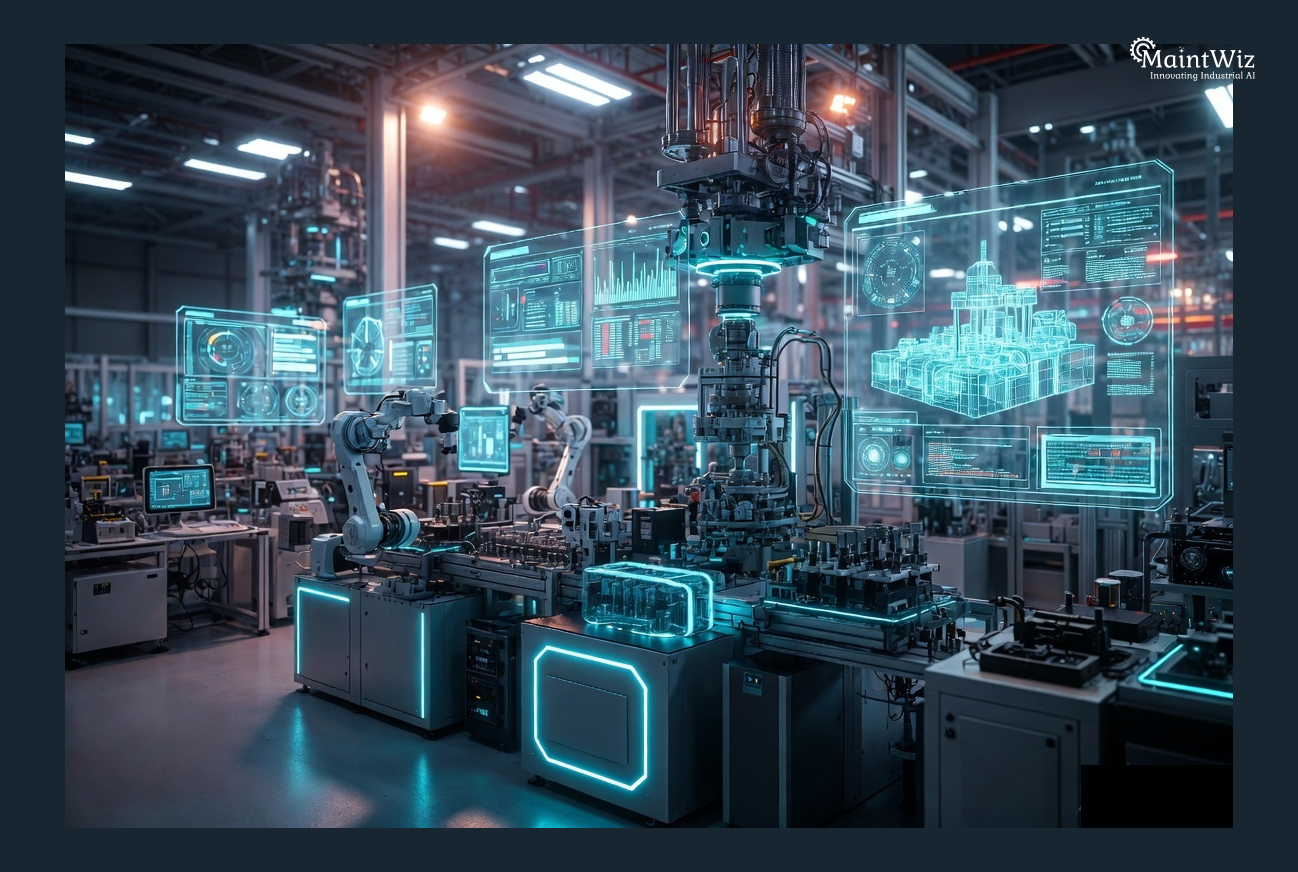
The Future of Smart Maintenance Platforms

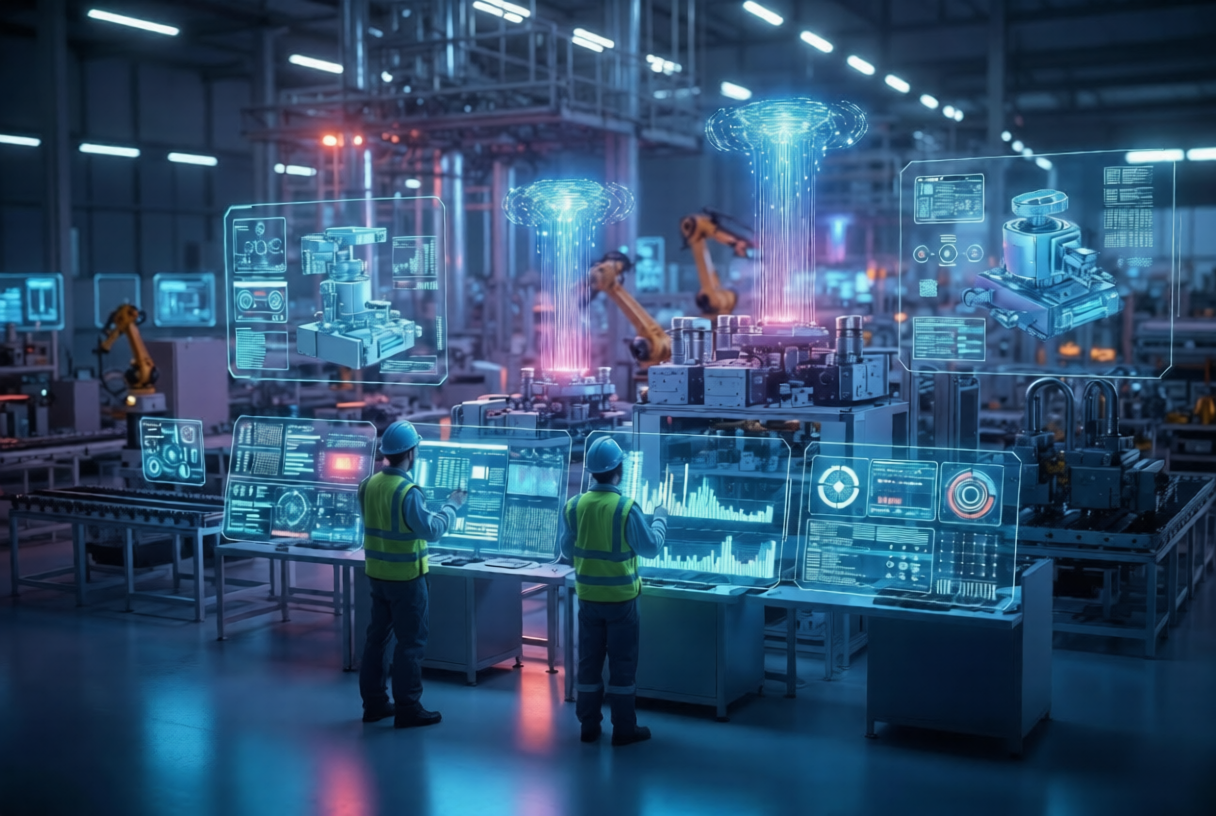
Futuristic smart factory with AI, digital twins, and automated maintenance systems

By 2026 and beyond, AI-powered CMMS will evolve into:

  • Autonomous maintenance systems
  • Self-healing assets
  • Digital twins integration
  • Enterprise-wide optimization platforms

Early adopters will gain:

  • Competitive advantage
  • Higher efficiency
  • Lower operational costs

Conclusion

The transition to AI-powered CMMS 2026 is inevitable.

Organizations that delay adoption risk:

  • Higher downtime
  • Increased costs
  • Reduced competitiveness

Those who act now will:

  • Improve reliability
  • Optimize operations
  • Drive long-term growth

The real question is not if you should adopt AI-powered CMMS—
It’s how fast you can implement it.

FAQs

What is AI-powered CMMS?

A system that uses AI to predict failures and optimize maintenance.

How does AI improve maintenance?

By analyzing data to predict issues and recommend actions.

Is AI maintenance suitable for small plants?

Yes, modern solutions are scalable.

What industries benefit most?

Manufacturing, oil & gas, power, and asset-intensive sectors.

How long does implementation take?

Typically 60–90 days.

jai

Jai Balachandran is an industry expert with a proven track record in driving digital transformation and Industry 4.0 technologies. With a rich background in asset management, plant maintenance, connected systems, TPM and reliability initiatives, he brings unparalleled insight and delivery excellence to Plant Operations.