

Cement Plant Shutdown Planning
Precision Maintenance for High-Temperature, Abrasive Operations
A cement plant shutdown is not just a maintenance event — it is a high-stakes operational reset where reliability, safety, and financial performance converge. Kilns running at extreme temperatures, crushers processing abrasive raw materials, and grinding mills operating under relentless mechanical stress create one of the most punishing industrial environments in manufacturing. When production stops, every hour carries significant opportunity cost, making shutdown excellence a strategic capability rather than a routine activity.
World-class cement producers treat shutdown planning as a discipline that blends engineering rigor, logistics precision, workforce orchestration, and digital coordination. This article explores how leading plants execute kiln maintenance, grinding mill shutdowns, refractory relining, and dust control interventions with surgical precision — and how a modern CMMS platform underpins every stage of planning and execution.
Maintenance Challenges in Cement Production
Cement manufacturing assets operate in extreme thermal, mechanical, and environmental conditions. These stressors make shutdown maintenance both unavoidable and technically demanding.
- High-Temperature Kiln Stress Cycles: Repeated heating and cooling cycles accelerate refractory degradation, shell ovality, and tyre creep, demanding periodic precision inspections and relining.
- Abrasive Raw Material Handling Wear: Crushers, chutes, and feeders erode rapidly from limestone and clinker abrasiveness, increasing the risk of sudden failures during peak production.
- Grinding Mill Mechanical Fatigue: Ball and vertical roller mills endure heavy vibration, lubrication challenges, and liner wear, requiring tightly controlled shutdown servicing windows.
- Dust-Intensive Operating Environment: Fine cement dust infiltrates bearings, motors, and electrical panels, complicating condition monitoring and increasing maintenance frequency.
- Heavy Rotating Equipment Alignment Sensitivity: Kiln girth gears, pinions, and trunnion bearings demand micrometer-level alignment, making shutdown precision critical to avoid post-restart failures.
- Confined Space and Elevated Work Risks: Kiln interiors, preheater towers, and silos create complex safety scenarios requiring meticulous shutdown safety planning and permit coordination.
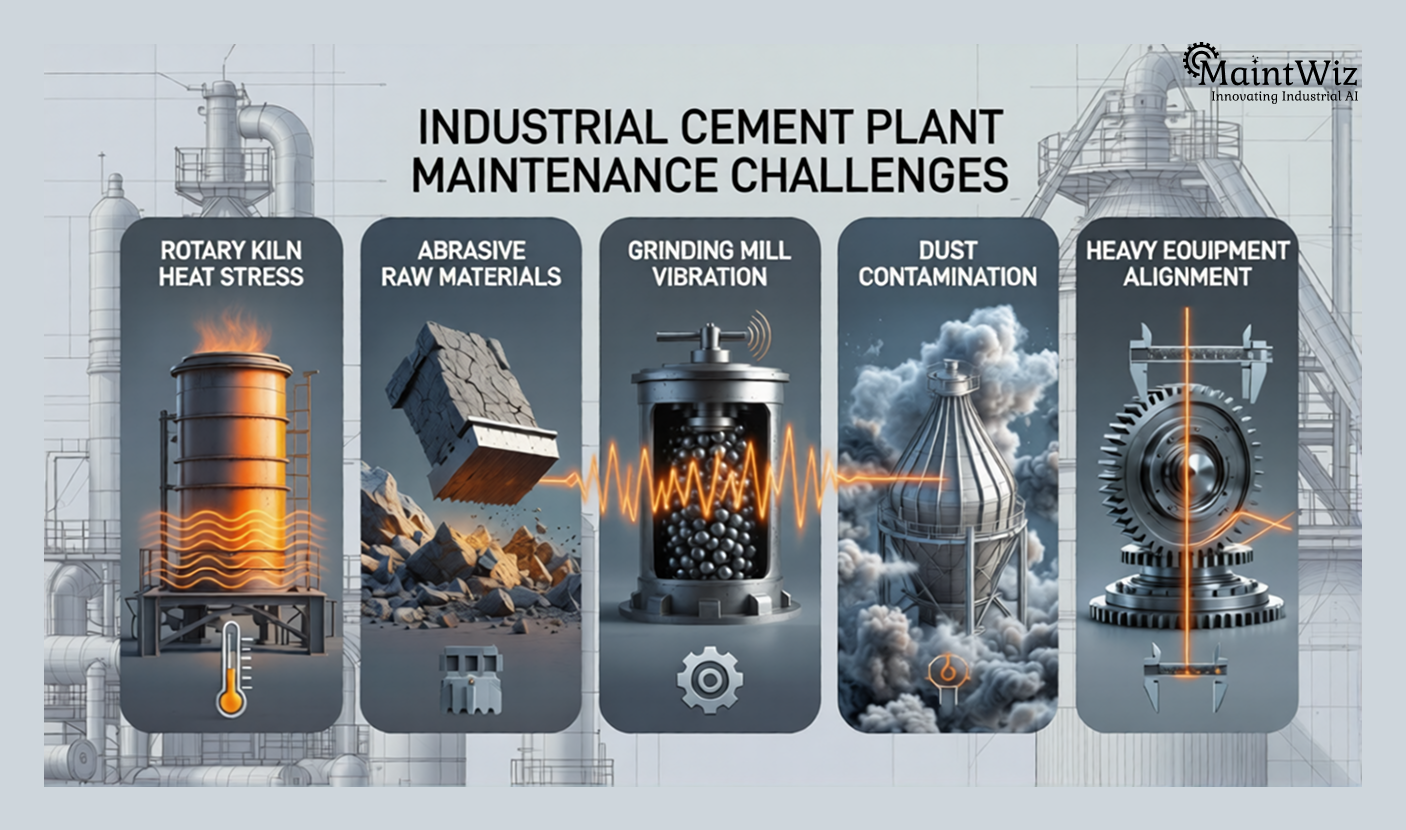
Because of these conditions, a cement plant shutdown is rarely limited to simple replacements. It becomes a coordinated intervention across mechanical, structural, refractory, electrical, and environmental systems.
Primary Shutdown Drivers in Cement Plants
Shutdown scope is typically anchored around a few high-risk, high-value maintenance drivers. Identifying and sequencing these drivers defines the critical path.
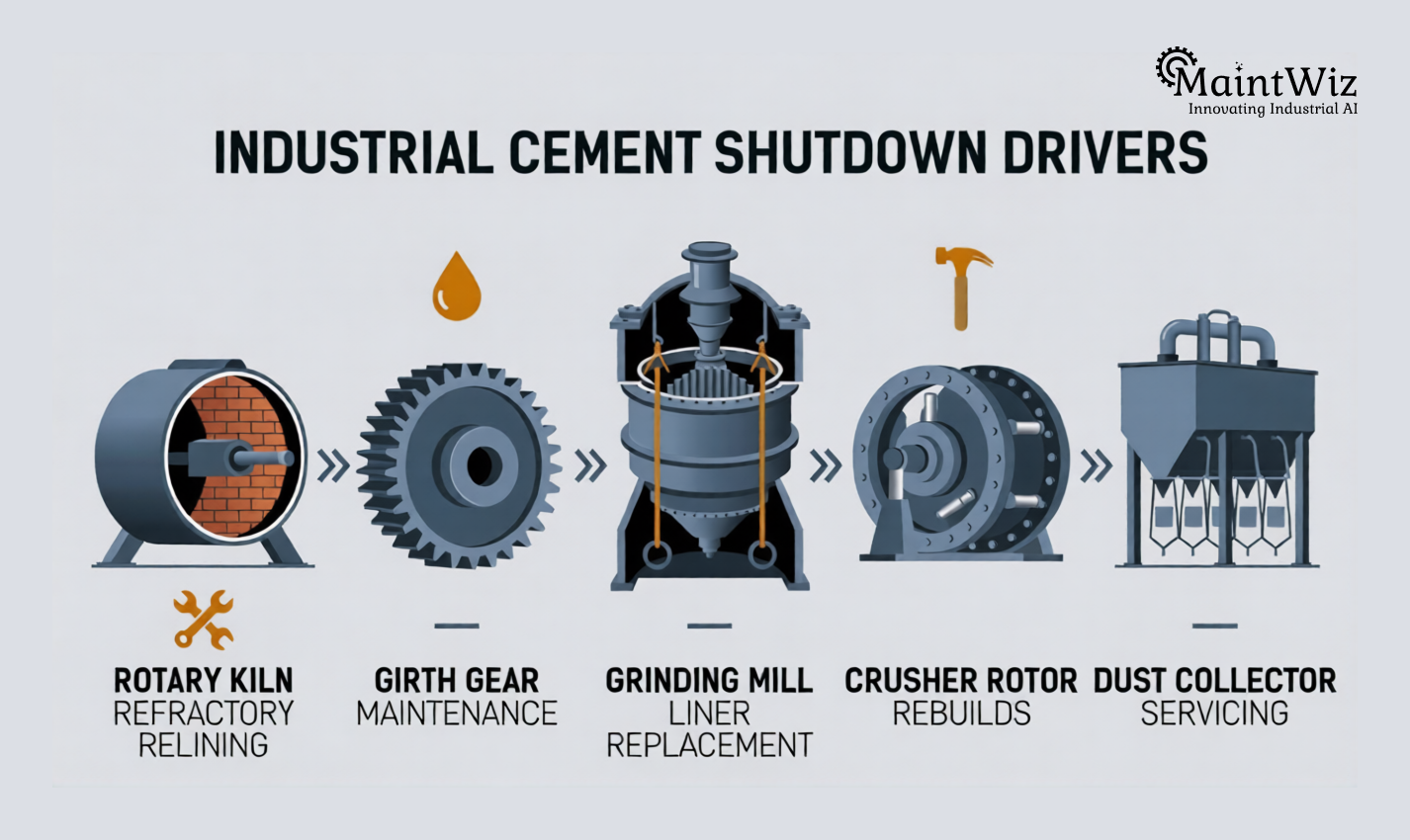
- Refractory Relining of Rotary Kilns: Worn refractory bricks compromise thermal efficiency and shell protection, making relining a major shutdown driver requiring specialized crews and curing time.
- Kiln Tyre and Support Roller Maintenance: Tyre migration, roller skewing, and bearing wear demand precision machining and alignment to prevent shell distortion and vibration.
- Girth Gear and Pinion Overhaul: Gear tooth wear, backlash variation, and lubrication failures can lead to catastrophic downtime if not addressed during planned kiln maintenance shutdowns.
- Grinding Mill Liner Replacement: Mill liners degrade under constant impact, requiring coordinated shutdown execution with lifting plans, confined space entry, and torque verification.
- Crusher Rotor and Liner Rebuilds: Impact and hammer crushers experience rapid wear, making rotor balancing and liner replacement essential for stable post-shutdown performance.
- Baghouse and Dust Collector Servicing: Filter bag replacement, fan inspections, and duct cleaning ensure environmental compliance and safe working conditions after restart.
Each of these activities carries long task durations and specialized resource needs, meaning schedule optimization and dependency management are vital.
Logistics and Crane Management for Heavy Equipment Shutdowns
Cement plant shutdowns involve lifting and transporting some of the heaviest components found in industrial facilities. Logistics failures often become the largest source of schedule overruns.
- Heavy Lift Planning for Kiln Components: Tyres, support rollers, and girth gear segments require engineered lift studies to ensure crane capacity, rigging safety, and swing radius clearance.
- Grinding Mill Re-Liner Handling Logistics: Liner plates and diaphragms demand safe removal sequencing, staging space, and specialized handling tools to avoid delays and injuries.
- Crane Utilization Optimization: Shared crane resources must be scheduled carefully to prevent idle crews waiting on lifting windows during critical shutdown hours.
- Access Route and Laydown Area Planning: Clear transport paths and protected laydown areas reduce congestion, prevent component damage, and support efficient installation workflows.
- Vendor and Contractor Coordination Windows: External specialists for refractory, alignment, and gearbox services must be synchronized precisely with crane and access availability.
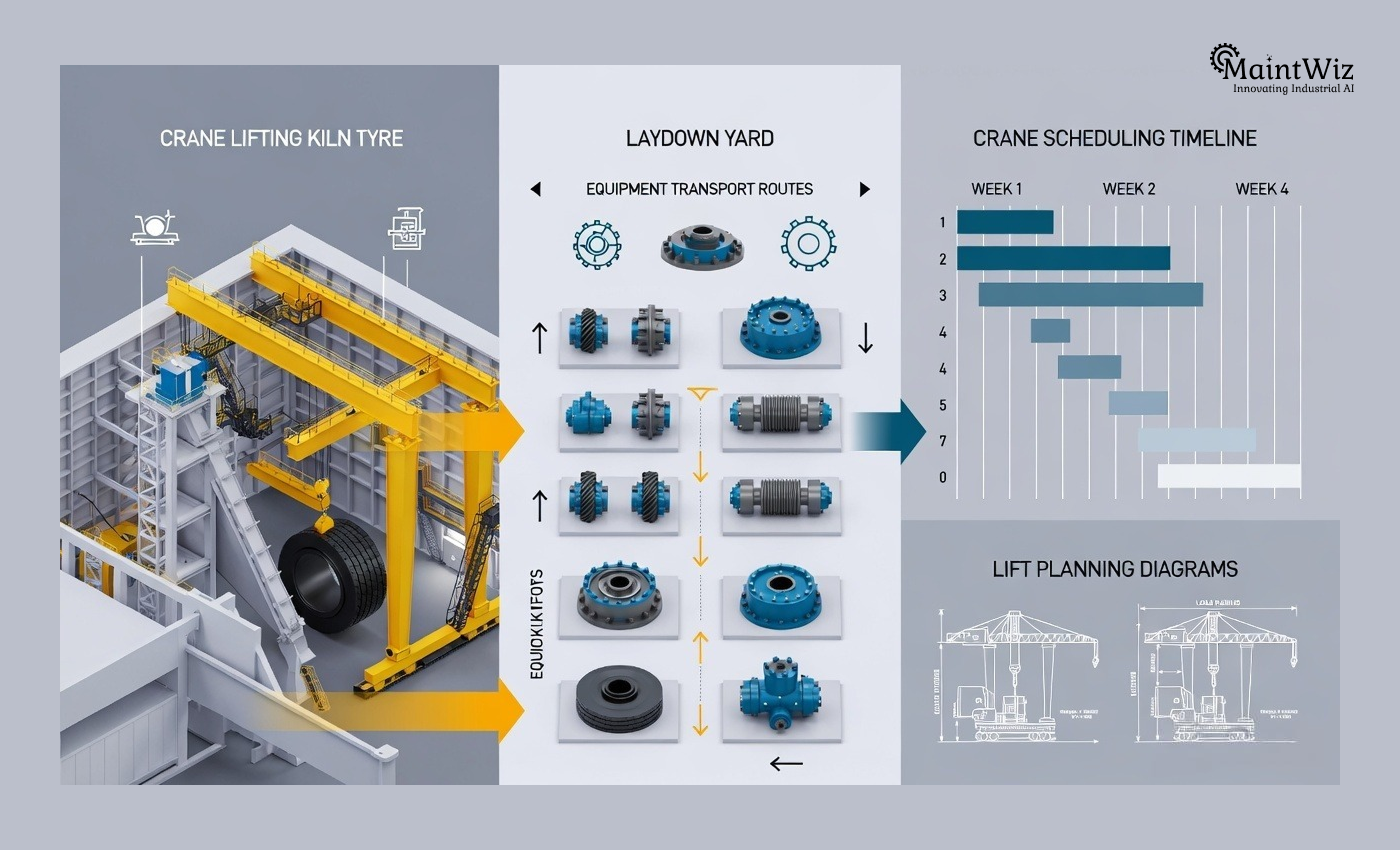
Leading plants develop 3D lift simulations and logistics maps well before shutdown start, treating crane time as a premium resource to be optimized, not improvised.
Parts Staging and Long-Lead Shutdown Planning
Material readiness is a defining factor in cement plant shutdown success. Missing a single custom bearing or refractory shipment can derail the entire schedule.
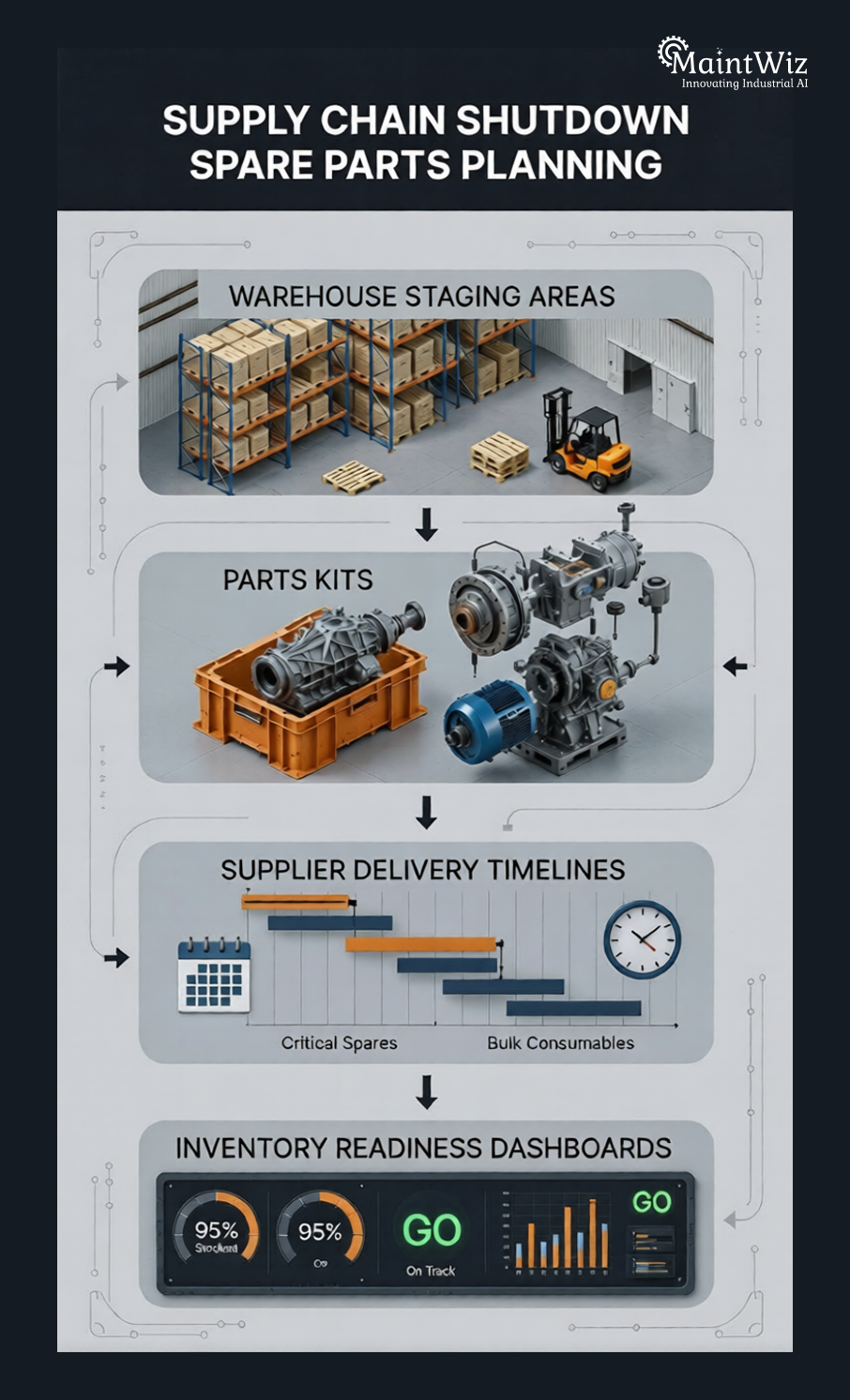
- Long-Lead Refractory Procurement Planning: Specialized kiln bricks and castables often have extended manufacturing times, requiring early ordering aligned to shutdown windows.
- Critical Spare Parts Kitting for Shutdown Tasks: Pre-assembled kits for mills, crushers, and conveyors ensure technicians have complete materials at the job site.
- Strategic Shutdown Inventory Buffering: Safety stock policies for high-failure components reduce risk of last-minute procurement delays during execution.
- Supplier SLA and Delivery Risk Management: Performance agreements and milestone tracking reduce uncertainty around delivery of critical shutdown materials.
- On-Site Staging and Preservation Controls: Proper storage conditions prevent contamination, corrosion, and damage to precision components awaiting installation.
Shutdown parts planning is not a warehouse function alone — it is a cross-functional planning discipline integrated into the overall STO schedule.
CMMS Role in Cement Plant Shutdown Planning
A modern CMMS platform transforms shutdown planning from spreadsheet coordination into a structured, data-driven process with full lifecycle traceability.
- Centralized Cement Plant Shutdown Schedule: A single digital master schedule links all shutdown work orders, dependencies, milestones, and resource assignments.
- Standardized Work Pack Development: Digital work packs include procedures, safety steps, drawings, tools, and spare parts, ensuring consistent execution quality.
- Asset History-Driven Scope Definition: Historical failure data guides which components require intervention, preventing both over-maintenance and missed risks.
- Permit-to-Work and Safety Integration: Confined space permits, LOTO steps, and risk assessments are embedded directly into shutdown work orders.
- Real-Time Shutdown Progress Tracking: Supervisors monitor task completion, delays, and emerging bottlenecks through live dashboards and mobile updates.
- Post-Shutdown Performance Analytics: Captured data supports RCA, interval optimization, and future shutdown duration reduction strategies.
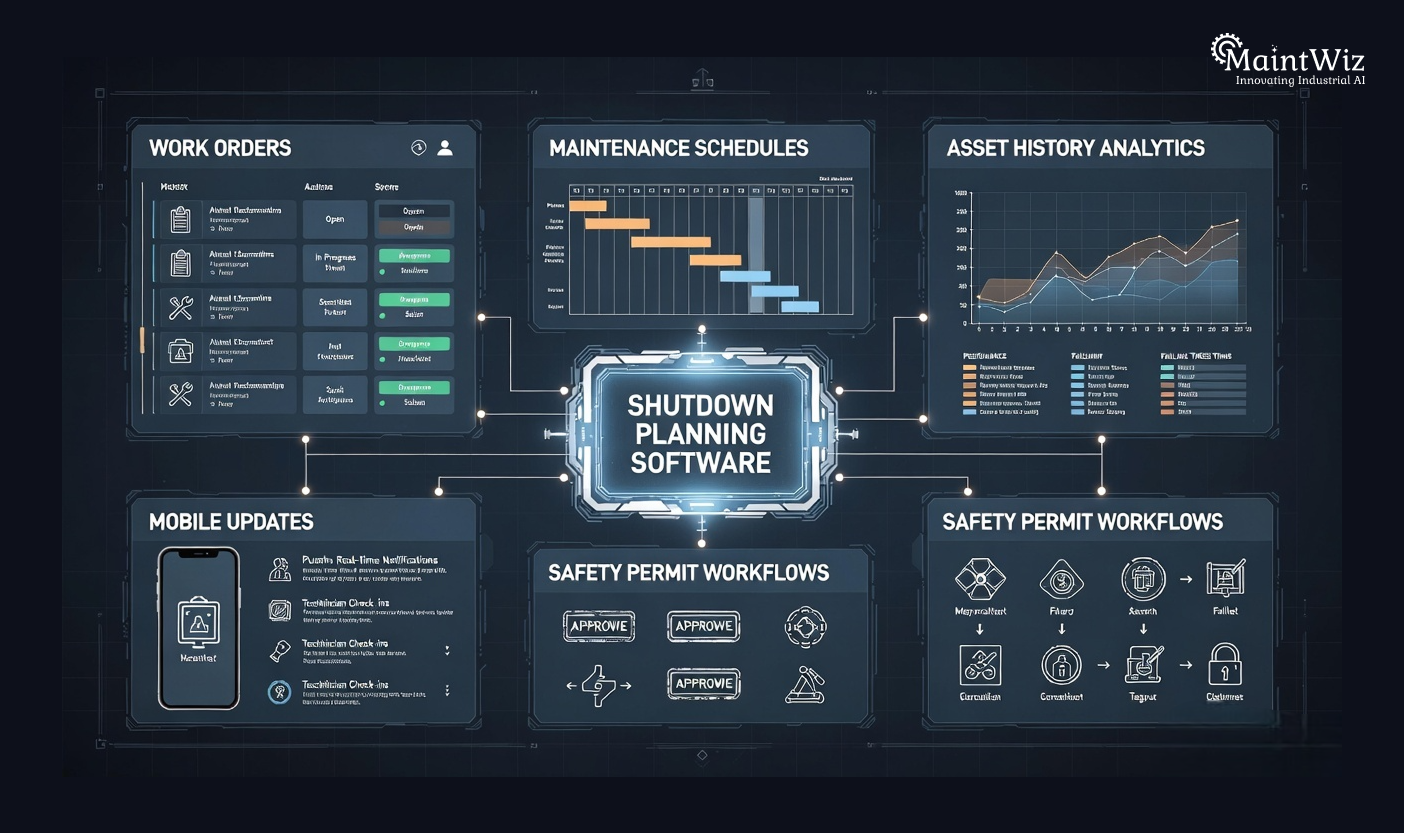
Without CMMS integration, shutdown coordination becomes reactive and fragmented. With it, planners gain visibility, control, and predictive insight.
Common Cement Shutdown Planning Failures
Even experienced plants encounter avoidable shutdown overruns. Understanding typical failure patterns helps build more resilient plans.
- Underestimating Refractory Cooling and Curing Time: Inadequate allowances for heat-up and cool-down cycles often delay kiln restart schedules.
- Inadequate Heavy Lift Sequencing: Crane conflicts and access congestion frequently create cascading delays across parallel work fronts.
- Poor Integration Between Maintenance and Operations: Misaligned isolation timing and system handovers lead to unsafe conditions and schedule slips.
- Incomplete Shutdown Scope Definition: Missing inspection findings or condition data causes emergent work that disrupts critical path activities.
- Weak Contractor Performance Oversight: Lack of KPI tracking for vendors results in productivity variance and quality rework.
Best-in-class shutdown planning is defined not by optimism but by structured risk anticipation and mitigation.
KPIs That Define Cement Plant Shutdown Excellence
Leading cement organizations measure shutdown success with metrics tied to reliability, cost, and safety outcomes.
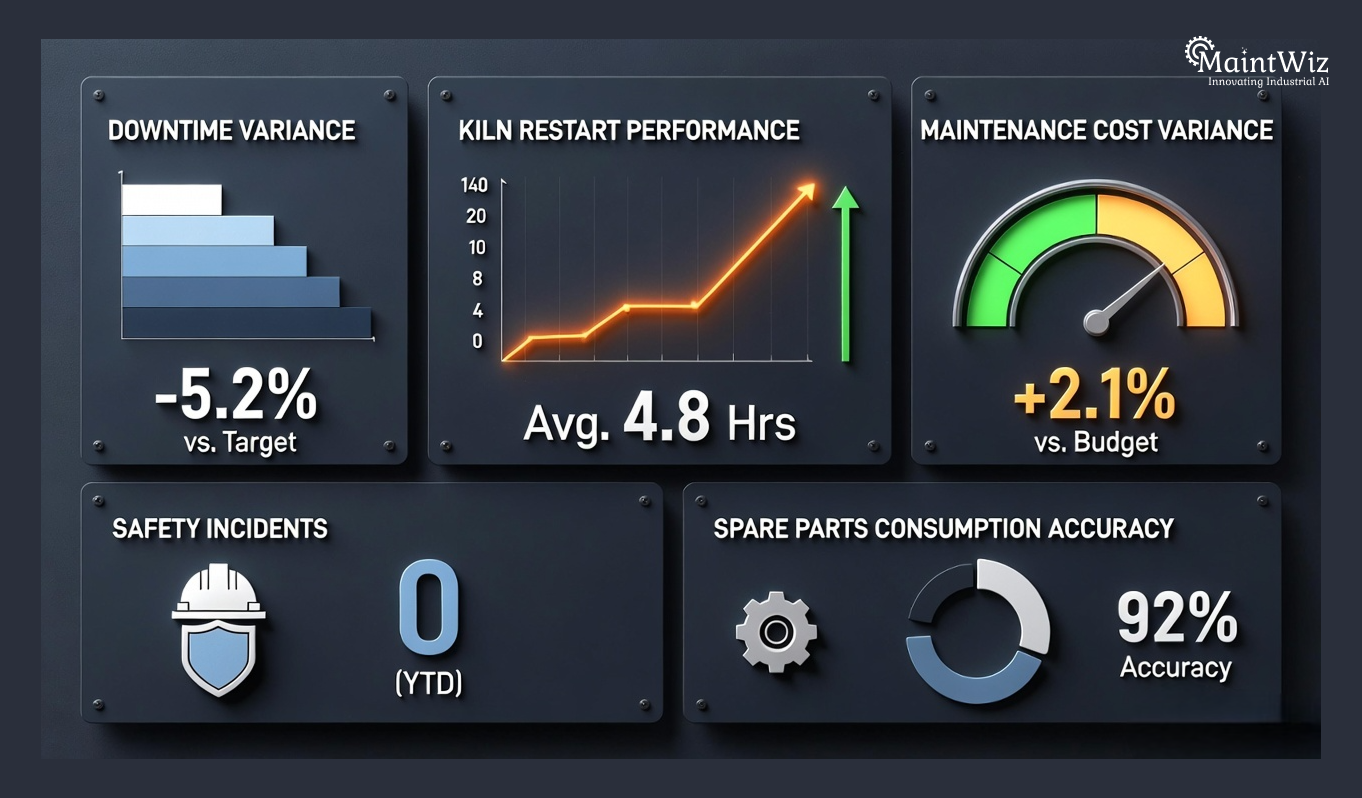
- On-Time Kiln Restart Performance: Percentage of shutdowns where kiln ignition occurs as scheduled, reflecting schedule discipline and execution effectiveness.
- Shutdown Duration Variance: Difference between planned and actual outage duration, highlighting planning accuracy and coordination maturity.
- Maintenance Cost Variance: Comparison of budgeted versus actual shutdown costs, including labor, contractors, and materials.
- Post-Shutdown Failure Incidence: Equipment failures within early operation phase indicate quality of shutdown workmanship and inspection rigor.
- Safety Incident Rate During Shutdowns: Recordable incidents per shutdown period, reflecting effectiveness of risk management and permit systems.
- Parts Consumption Accuracy: Variance between planned and actual spare usage, improving future forecasting and inventory optimization.
Tracking these KPIs consistently turns shutdown performance into a measurable competitive advantage rather than an unpredictable expense.
Why MaintWiz CMMS Is Uniquely Suited for Cement Plant Shutdowns
MaintWiz CMMS is purpose-built for asset-intensive industries where shutdown excellence determines operational and financial performance. Its architecture supports complex maintenance ecosystems like cement plants, where mechanical, refractory, electrical, and safety activities must converge in tightly controlled windows.
- Comprehensive Asset Hierarchy for Kilns and Mills: Detailed equipment structures allow planners to link shutdown tasks precisely to subcomponents and historical performance data.
- Advanced Shutdown Scheduling Capabilities: Integrated planning tools manage task dependencies, resource assignments, and milestone tracking across multi-week shutdowns.
- Digital Work Pack and Checklist Automation: Standardized procedures and safety steps ensure consistent execution across internal teams and contractors.
- Mobile CMMS for Field Execution: Technicians update progress, capture inspection findings, and close tasks directly from the plant floor in real time.
- Shutdown KPI Dashboards and Analytics: Built-in reporting tracks schedule adherence, cost variance, and asset reliability impact after restart.
- Integrated Spare Parts and Inventory Visibility: Planners confirm material readiness and kit availability directly within shutdown work orders.
MaintWiz enables cement producers to transition from reactive outage coordination to predictive, performance-driven shutdown management.
Ready to elevate your cement plant shutdown planning? Discover how MaintWiz CMMS delivers precision scheduling, execution control, and performance analytics for your most critical maintenance events. Request a personalized demo today.

Company
Download App