Chemical Processing Plant Shutdowns
Safe, Efficient, and Environmentally Compliant Maintenance
Shutdowns in chemical processing plants represent some of the most complex, high-risk episodes in industrial maintenance. These events—whether scheduled turnarounds, emergency shutdowns, or major maintenance outages—require precision planning, razor-sharp execution, and uncompromising safety oversight. Getting it wrong jeopardizes human safety, environmental compliance, operational continuity, and corporate reputation.
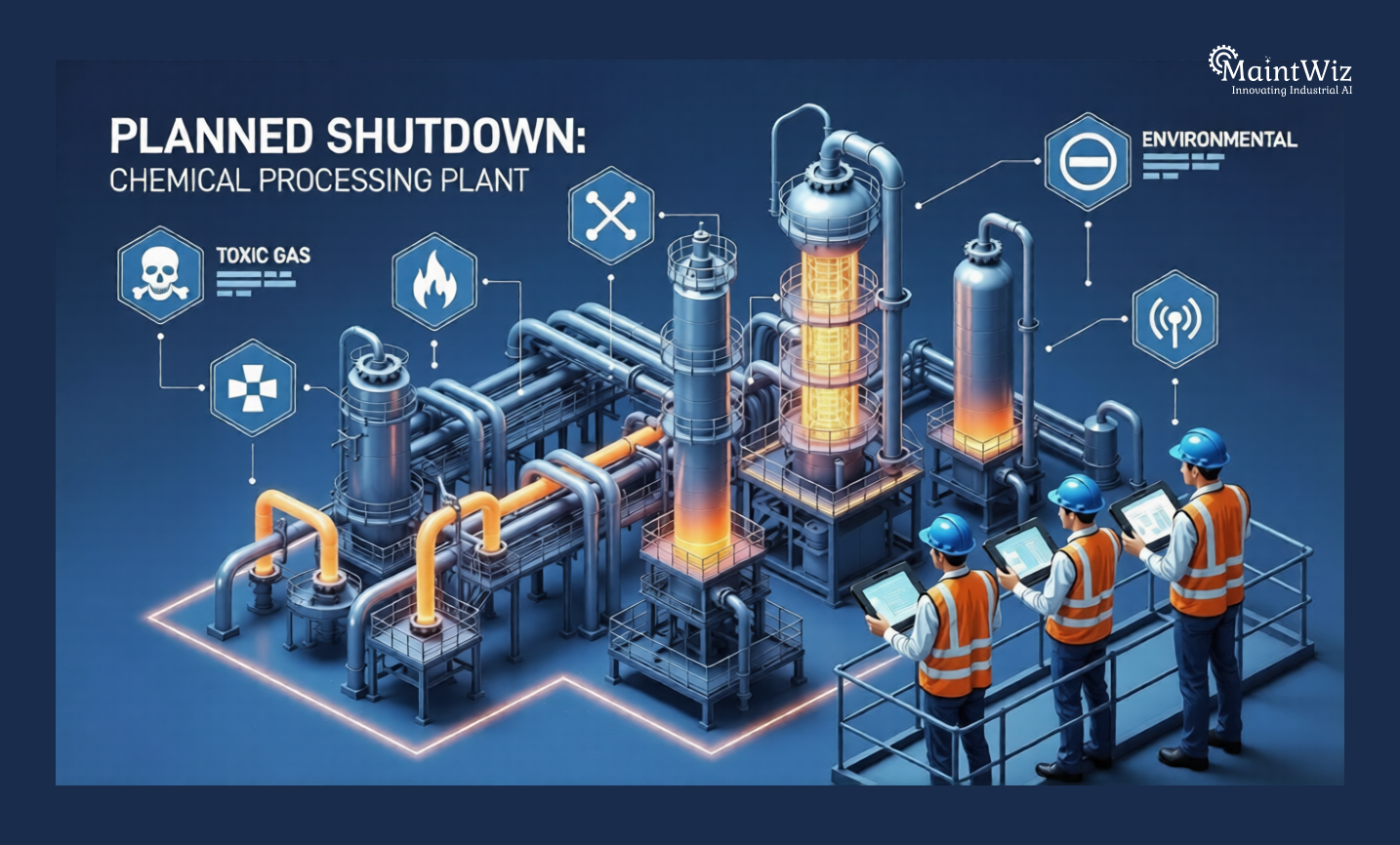
This thought-leadership article unpacks proven methodologies for chemical plant shutdown safety, hazardous material handling, and chemical process maintenance, integrating world-class practices with real-world reliability challenges. We’ll also illustrate how MaintWiz CMMS strengthens shutdown execution with integrated risk controls, collaborative workflows, and data-driven decision support.
Overview: High-Risk Shutdowns in Chemical Operations
Shutdowns in chemical facilities combine hazardous inventories, complex interdependencies, and heavy mechanical workloads. This section defines the risks and stakes—and how to address them systematically.
- Intrinsic hazard landscape – Chemical shutdowns involve multi-phase fluids, toxic vapors, and reactive agents requiring methodical isolation and monitoring.
- Operational failure costs – Even minor lapses can trigger fires, environmental releases, regulatory fines, or catastrophic asset damage.
- Workforce exposure risks – Shutdown tasks expose crews to confined spaces, hot works, and chemical contact—requiring robust controls and planning.
- Regulatory scrutiny – Agencies like OSHA, EPA, EU Seveso, and local regulators enforce stringent compliance for shutdown activities.
- Multidisciplinary coordination – Engineering, operations, safety, and maintenance must work in synchrony or risk disconnects during critical phases.
Risk Mitigation: Hazardous Material Isolation and Purge Sequencing
Systematic hazard mitigation starts with isolating energy and material sources, sequencing purges, and safeguarding personnel before any mechanical work begins.
- Hazardous material isolation plan – Define procedures to isolate tanks, vessels, and lines from feeds, catalysts, and reactive inventories.
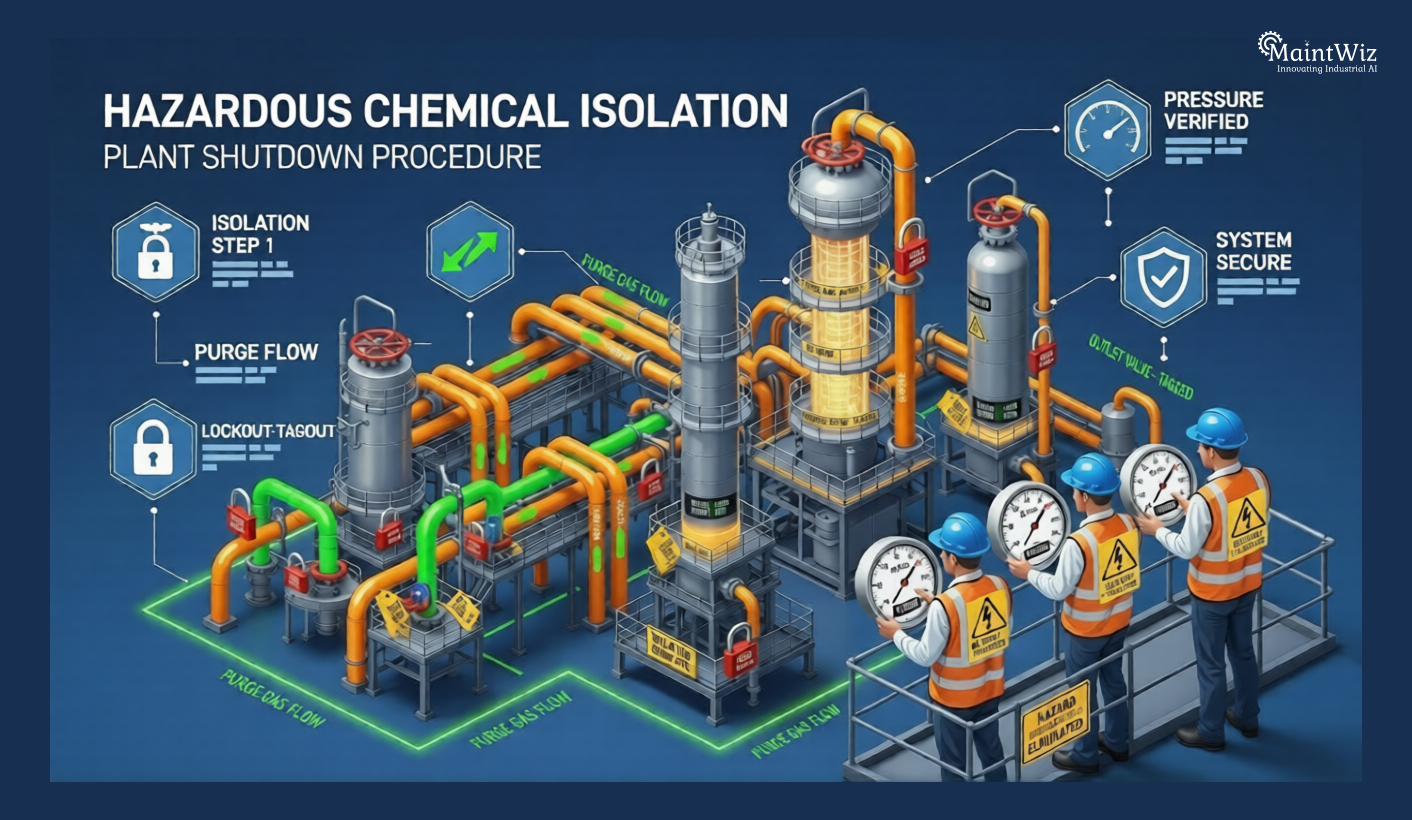
- Valve and line purge sequencing – Controlled purging prevents explosive mixtures and residue carryover into work zones.
- Energy isolation tagging – Lockout-tagout protocols guarantee that energy sources remain deactivated during maintenance.
- Ventilation and air quality monitoring – Gas detectors and HVAC controls reduce exposure to toxic or flammable atmospheres.
- Safe chemical storage staging – Establish segregated, compliant lay-down areas for hazardous materials during shutdown operations.
Permit-to-Work Management and Confined Space Planning
Permit-to-Work (PTW) systems and confined space control are central to eliminating gaps between intent and execution—especially in hazardous chemical settings.
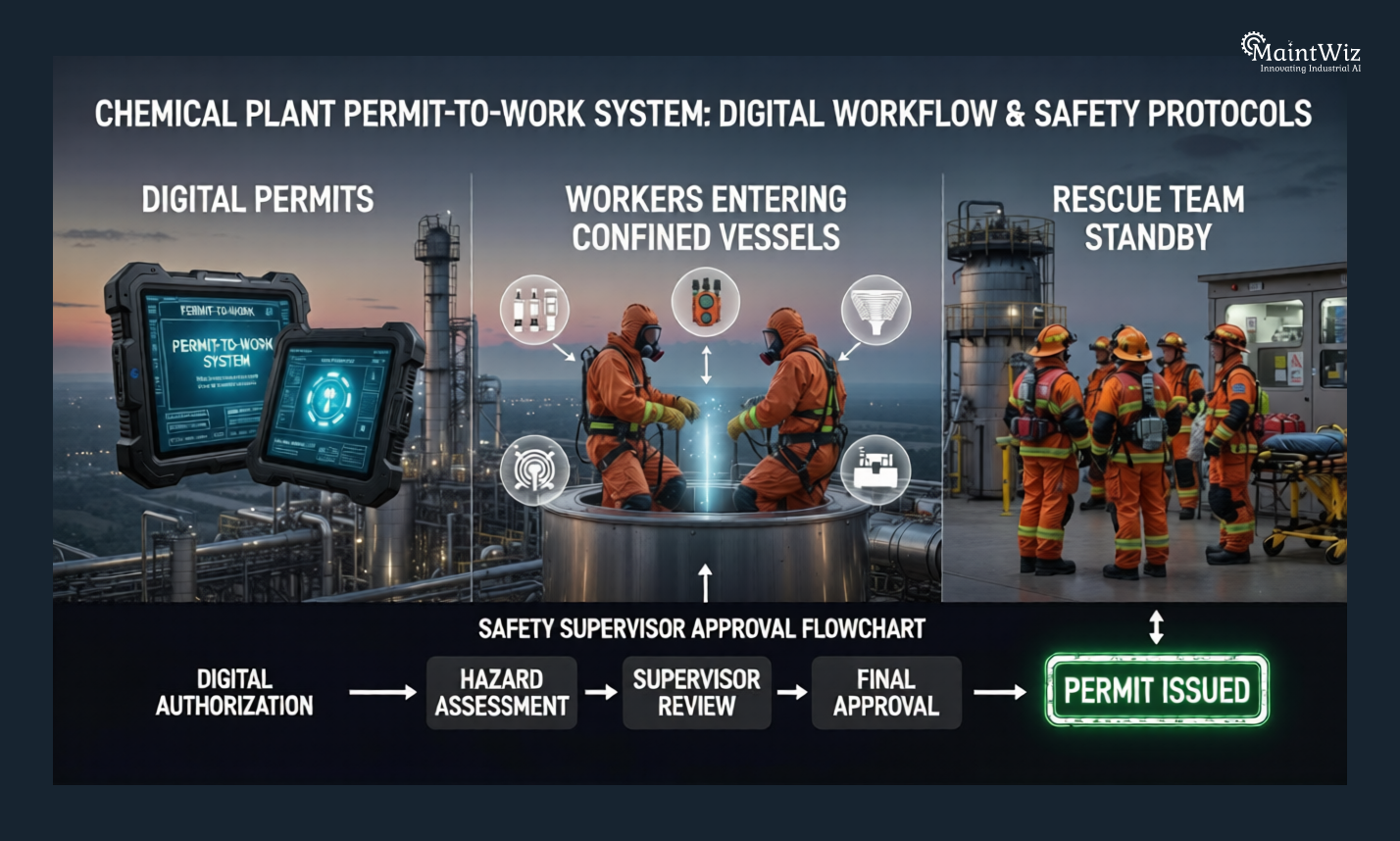
- Electronic permit-to-work enforcement – Digital PTW ensures safety reviews, approvals, and renewals are transparent and auditable.
- Confined space hazard mapping – Identify permit spaces early and detail atmospheric, engulfment, and entrapment risks.
- Isolation verification checkpoints – Requiring independent confirmation reduces the risk of unauthorized entry or incomplete isolation.
- Rescue planning and drills – Pre-planned rescue workflows and trained crews save lives when incidents occur.
- Contractor integration protocols – Suppliers and contractors must be integrated into PTW controls with clear roles and responsibilities.
Environmental Compliance and Waste Handling
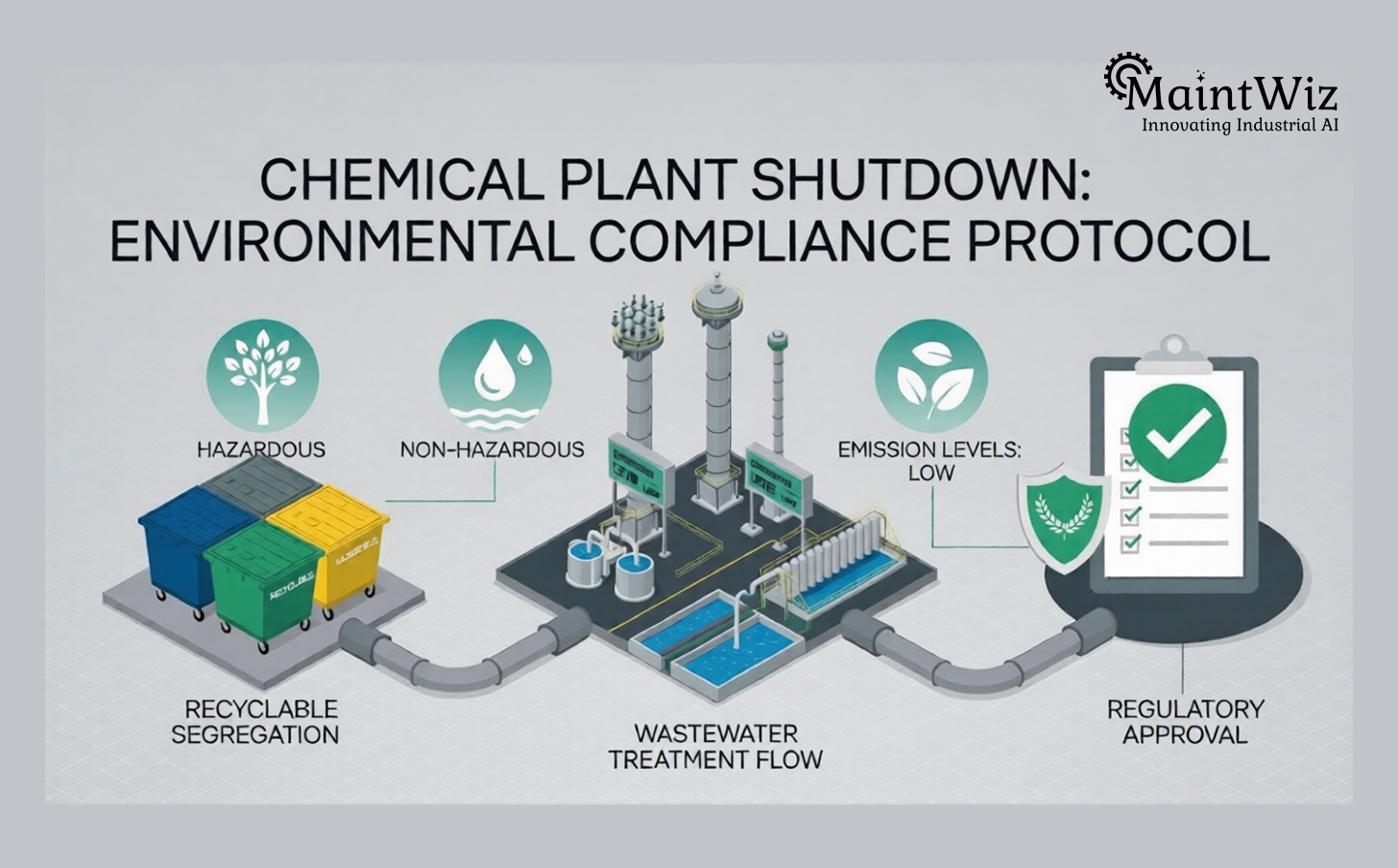
Environmental compliance during shutdowns protects surrounding communities, prevents costly fines, and supports corporate ESG commitments. Detailed planning for waste streams and emissions is critical.
- Regulated waste classification – Identify hazardous wastes, non-hazardous wastes, and recyclable materials before generation.
- Containment and spill control – Secondary containment and absorbents prevent soil and waterway contamination.
- Emissions monitoring – Stack and fugitive emission controls verify compliance with air quality standards.
- Water and effluent management – Pre-treat streams and sequence wastewater discharge to meet discharge permits.
- Documentation for audits – Maintain complete logs of waste movements, manifests, and disposal certificates for regulatory review.
CMMS-Enabled Coordination and Execution
A modern CMMS is the operational backbone of complex shutdowns. It ties planning, execution, safety, and compliance together through automated workflows and real-time visibility.
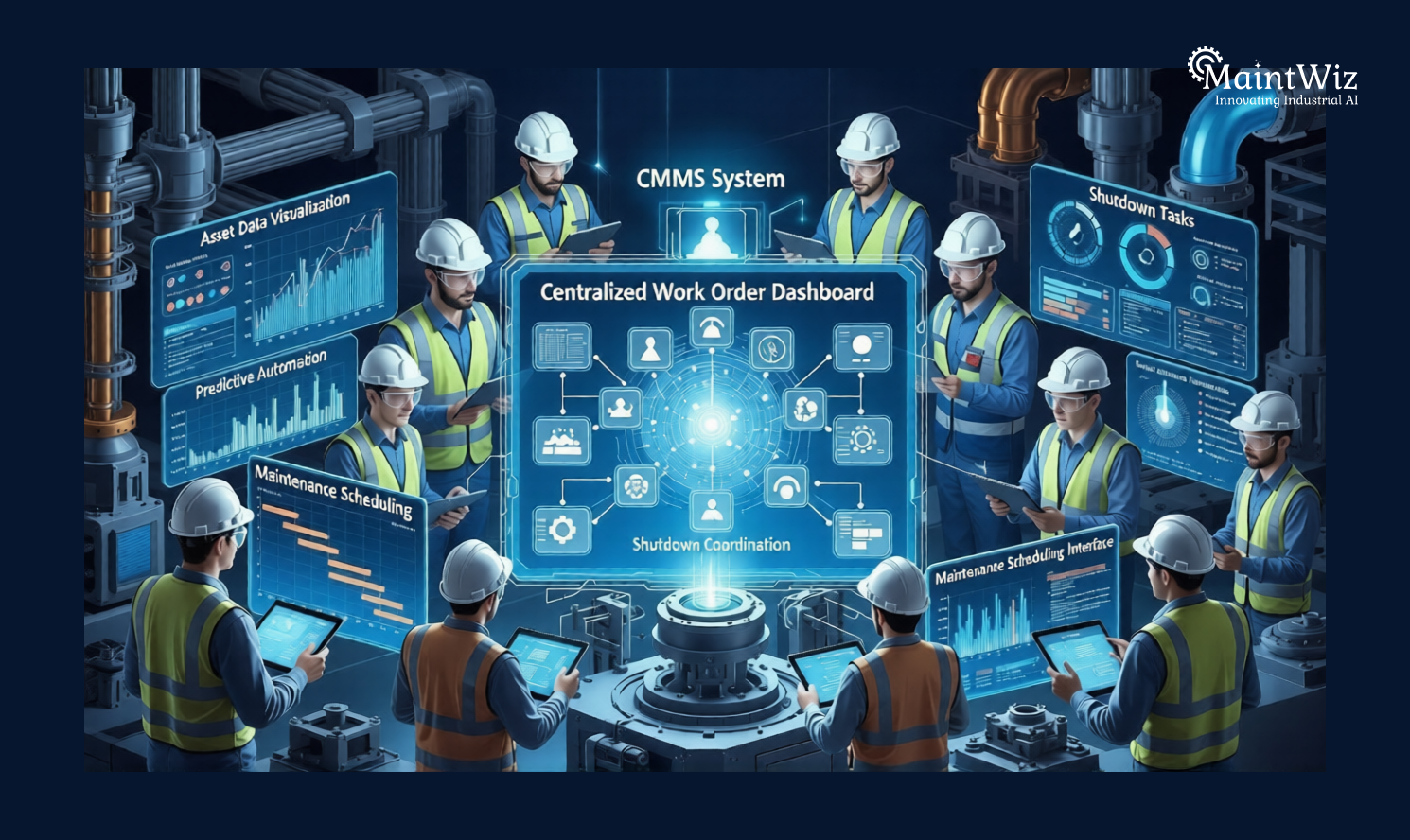
- Centralized work order orchestration – Schedule, assign, and track shutdown tasks across disciplines from a unified dashboard.
- Integrated hazard and safety data – Link PTW, checklists, and hazards directly to work orders to enforce controls at execution.
- Mobile field access – Field crews access task instructions, isolation steps, and safety permits from handheld devices.
- Asset history and failure context – Historical data informs root-cause analysis and defect elimination during shutdown maintenance.
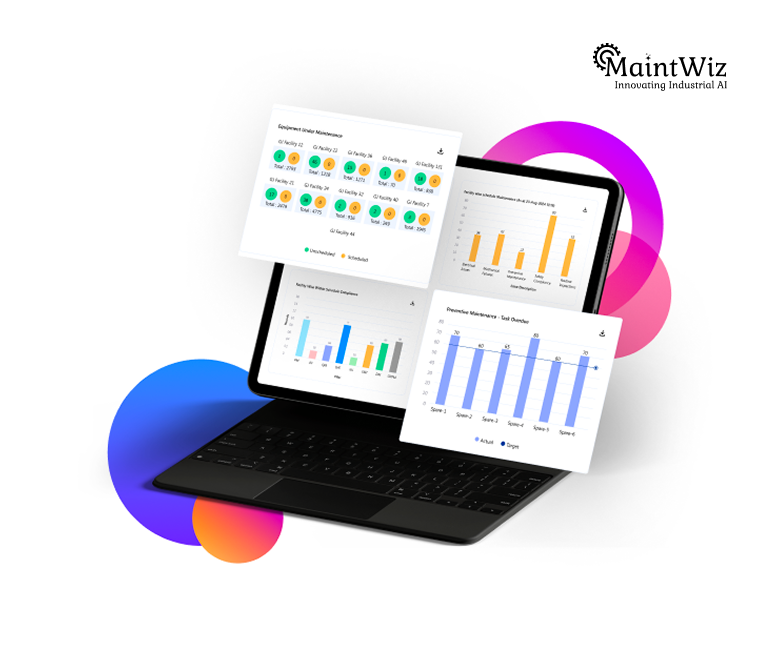
- Real-time KPI dashboards – Live tracking of progress, compliance, and resourcing keeps leadership informed and responsive.
Metrics & Outcomes: Incident Reduction and Downtime Optimization
Shutdown excellence is measurable. The right metrics focus leaders on outcomes that matter: safety, compliance, efficiency, and return-on-maintenance investment.
- LTIFR reduction – Lower lost time injury frequency rates through enforced safety controls and PTW oversight.
- Regulatory compliance KPIs – Track permit adherence, emissions excursions, and waste reporting accuracy.
- Downtime variance analysis – Compare planned vs. actual shutdown durations and adjust future planning.
- Cost avoidance tracking – Quantify savings from prevented incidents, leaks, and rework.
- Maintenance backlog health – Monitor backlog clearance rates and resource utilization during critical windows.
Why MaintWiz CMMS is Uniquely Suited for Chemical Shutdown Excellence
Delivering world-class chemical plant shutdown safety and maintenance outcomes demands a CMMS that integrates operational control, risk management, and performance intelligence. MaintWiz CMMS is engineered for exactly that.
Built as an Industry 4.0 platform with deep asset intelligence and real-time operations visibility, MaintWiz CMMS delivers:
- Enterprise asset register and hierarchy – Manage equipment, vessels, and piping breakdowns with complete context.
- Work order and PTW integration – Embed safety permits, isolation plans, and hazard checklists into execution flows.
- Mobile field execution – Technicians use mobile interfaces to access tasks, permits, and safety data on demand.
- Predictive analytics and condition monitoring – AI-driven insights anticipate failure modes ahead of shutdown windows.
- Integrated compliance tracking – Track environmental permits, emissions, waste manifests, and audit trails in one system.
- Scalable and connected – Seamless integration with ERP, IoT, SCADA, and analytics ecosystems unifies all stakeholders.
For chemical plants aiming to move beyond reactive shutdowns toward predictable, safe, and compliant maintenance execution, MaintWiz CMMS is not just a tool—it’s a strategic enabler.
Ready to transform your plant shutdowns? Schedule a personalized demo of MaintWiz CMMS and discover how integrated maintenance workflows and intelligent analytics improve safety, uptime, and compliance.

Company
Download App