ROI Measurement for Shutdown Maintenance Programs:
Financial Justification & Value Realization
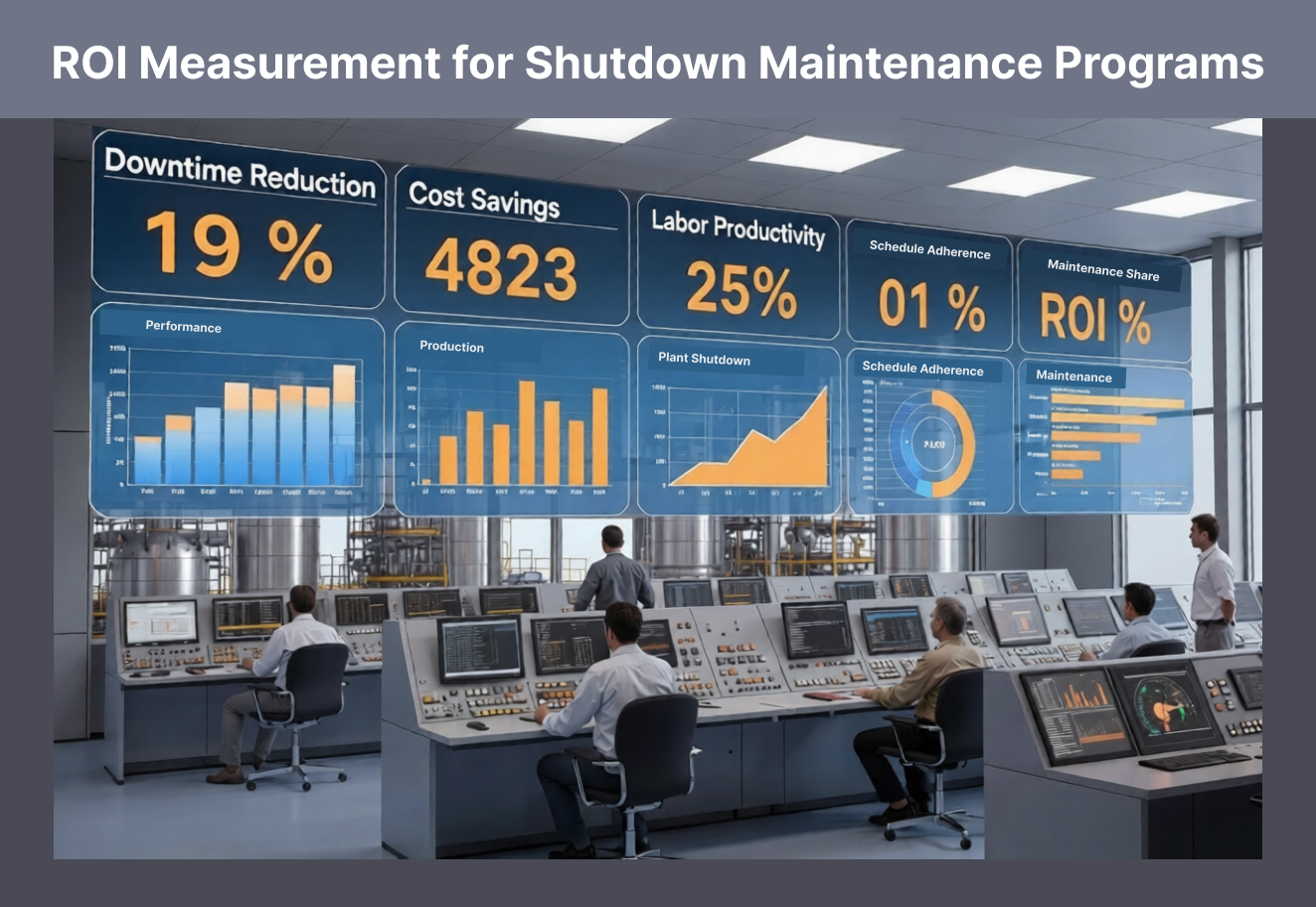
Shutdown maintenance ROI and shutdown return on investment aren’t abstract scorecards — they are the financial truth behind how maintenance excellence drives enterprise value, operational resilience, and competitive advantage.
In asset-intensive industries — refineries, power generation, chemicals, steel, cement, utilities, and mining — planned outages, turnarounds, and shutdowns consume enormous time, money, and risk. Yet, poorly quantified ROI leaves leadership blind to the true value of maintenance investments. This article equips maintenance leaders, plant executives, and CFO/COO stakeholders with a practical, financially sound approach to calculate, benchmark, and optimize ROI in shutdown maintenance programs.
This framework is part of the MaintWiz CMMS thought leadership series on Financial & Compliance topics, bridging maintenance execution and enterprise value.
Executive reality: Shutdown maintenance isn’t a cost — it’s the largest lever to unlock uptime, safety, regulatory compliance, and long-term asset productivity.
Understanding Shutdown Maintenance ROI: Why It Matters
Shutdown maintenance ROI isn’t just an accounting exercise. It’s the economic rationale that translates maintenance planning into shareholder value.
- Strategic ROI definition: Measures the net financial benefit of shutdown maintenance investments against costs over an agreed lifecycle.
- Value beyond cost avoidance: Quantifies productivity gains, asset life extension, safety risk reduction, and compliance value.
- Decision alignment: Ensures plant maintenance decisions align with corporate financial expectations and enterprise budgeting cycles.
Core Financial Concepts You Must Master
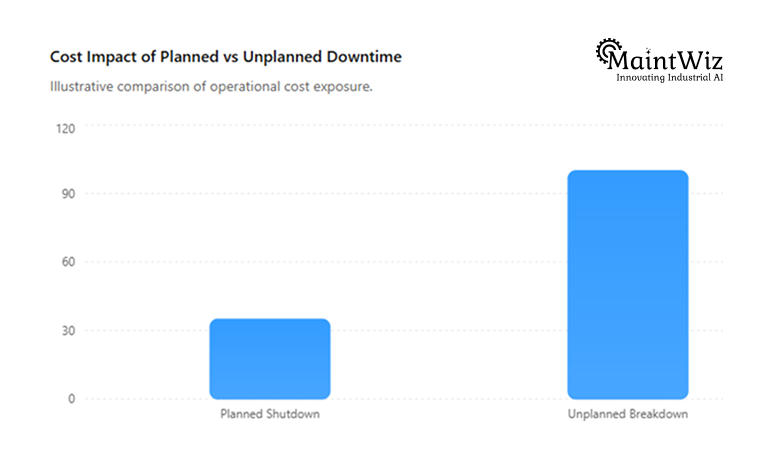
- Net Present Value (NPV) of shutdowns: Determines the worth of future savings and benefits in today’s dollars.
- Return on Investment (ROI): Compares gains from maintenance improvements against shutdown execution costs.
- Cost of Delay (CoD): Quantifies lost production and efficiency when shutdown work is postponed.
- Total Cost of Ownership (TCO): Incorporates lifecycle costs, including unplanned outages and reactive repairs.
Calculating Shutdown Maintenance ROI: A Step-by-Step Framework
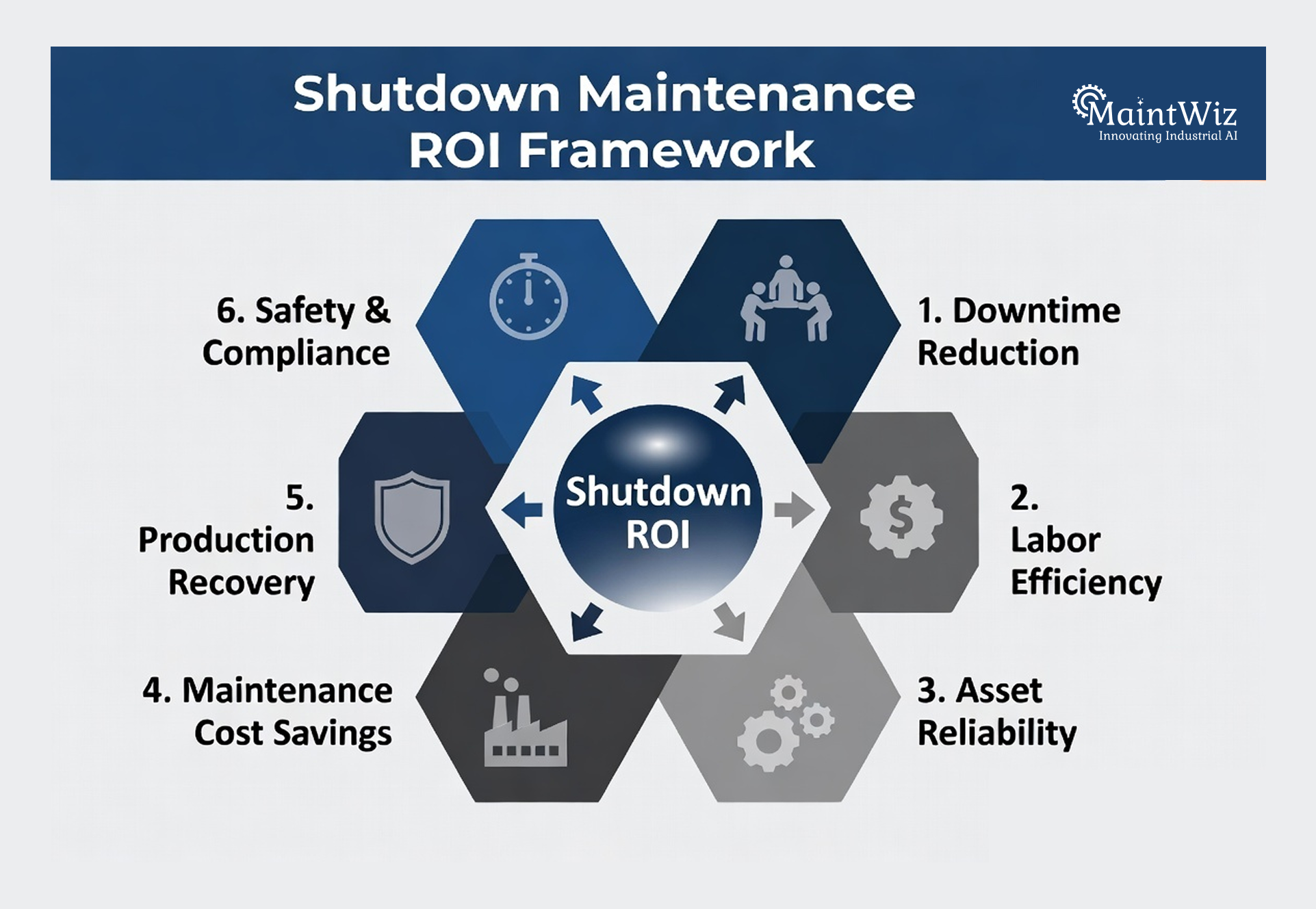
Executive summary: A robust ROI model combines direct and indirect benefits with comprehensive cost capture. Real business impact requires structured quantification across six dimensions.
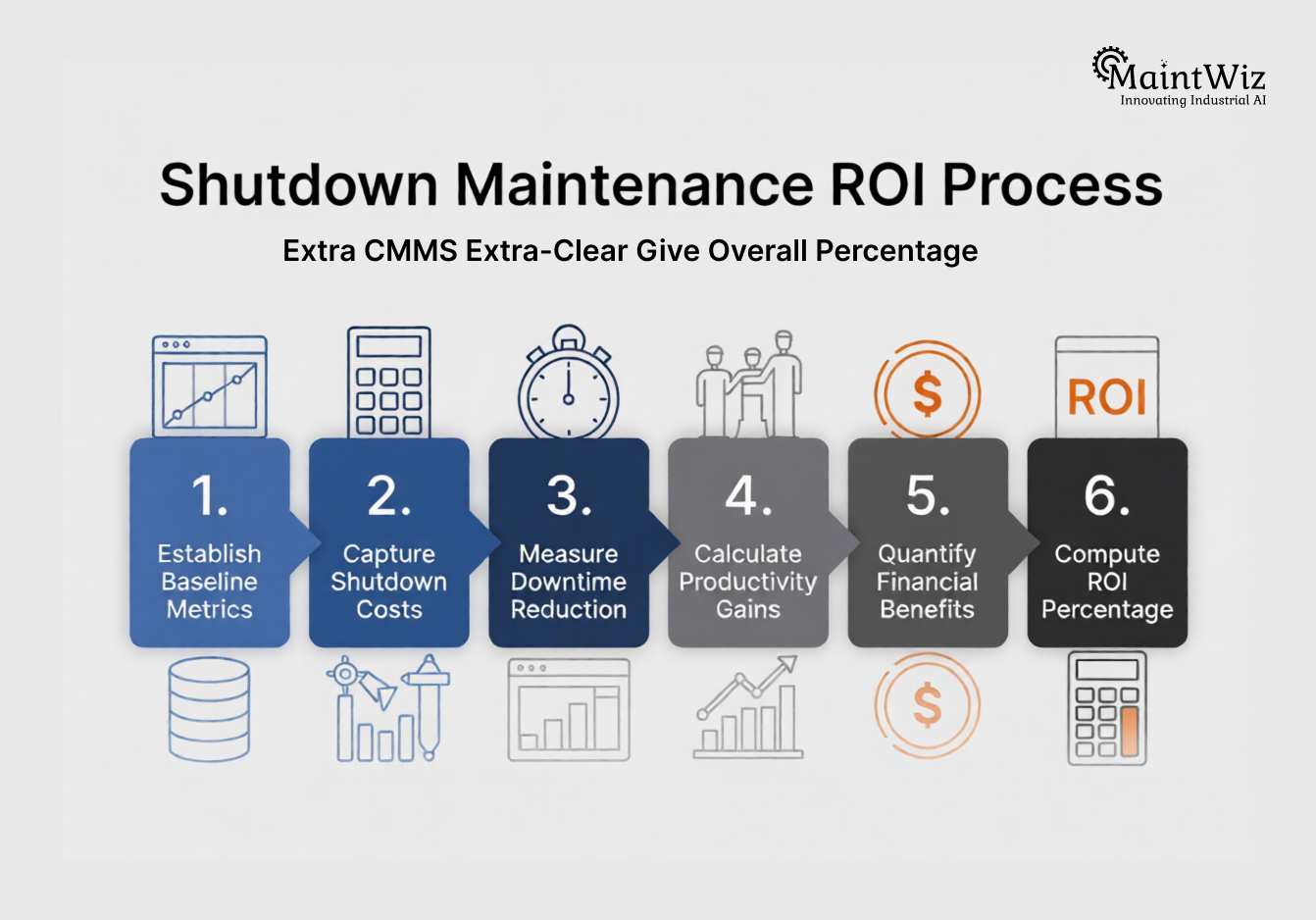
- Define baseline performance: Establish current shutdown execution costs and performance gaps before optimization.
- Quantify all cost categories: Include labor, materials, contractor fees, lost production, inventory, and quality impacts.
- Identify realized benefits: Calculate savings from reduced mean time to repair (MTTR), fewer unplanned outages, and improved uptime.
- Include soft benefits: Factor safety avoidance costs, compliance penalties averted, and reputation gains.
- Compute ROI: (Total Benefits − Total Costs) ÷ Total Costs × 100.
- Frame ROI over time: Use multi-year models for lifecycle and capex planning alignment.
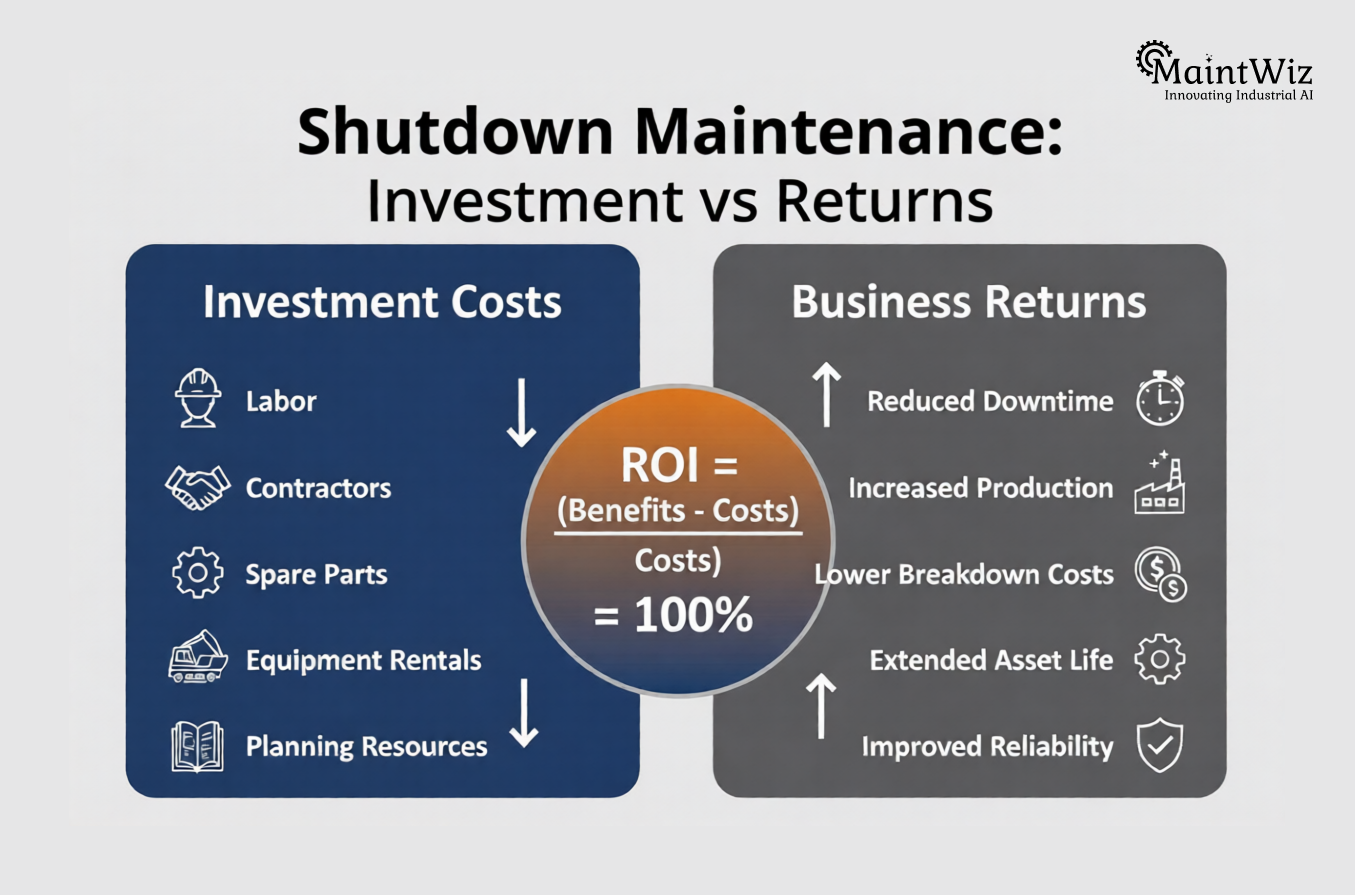
Example ROI Equation for Shutdown Maintenance
ROI = [(Avoided Downtime Loss + Labor & Materials Savings + Quality & Compliance Gains) − Shutdown Execution Costs] ÷ Shutdown Execution Costs × 100
- Avoided Downtime Loss: Lost revenue prevented by efficient shutdown completion.
- Labor & Materials Savings: Costs reduced through optimized execution and resource allocation.
- Quality & Compliance Gains: Costs avoided from non-conformances and regulatory fines.
Key Benefit Categories in Shutdown ROI Measurement
Executive context: Shutdown ROI isn’t a single number — it’s a mosaic of tangible and intangible benefits that drive enterprise performance.
- Reduced Unplanned Downtime: Proactively prevents failures during production cycles, lowering disruption costs.
- Improved Schedule Adherence: Meets production and delivery commitments with higher predictability.
- Lower Inventory Carrying Costs: Reduces stockouts and excessive spare parts inventory tied to outages.
- Enhanced Safety Outcomes: Lowers potential incident costs through more reliable execution and compliance tracking.
- Extended Asset Life: Raises useful life of critical equipment through targeted preventive activities.
- Better Resource Utilization: Optimizes labor and contractor allocation, reducing overhead.
Common Pitfalls in Shutdown ROI Measurement (and How to Avoid Them)
Executive insight: Many organizations underestimate maintenance ROI because they fail to capture hidden costs and benefits accurately.
- Ignoring indirect benefits: Omission of avoided quality loss and compliance penalties skews ROI downward.
- Poor baseline data: Lack of historical performance undermines meaningful comparison.
- No cross-functional alignment: When finance, operations and maintenance aren’t aligned, ROI fails to influence decisions.
- Single-cycle view: Ignoring multi-year effects undervalues long-term asset performance improvements.
- Overlooking risk factors: Failing to quantify safety and reputation benefits weakens the business case.
Benchmarking ROI: Industry Standards and Expectations
Executive overview: Benchmarking ROI against industry peers and internal historical performance provides a reality check and accelerates improvement.
- Segmented peer benchmarks: Compare similar asset classes and shutdown types to set realistic targets.
- Performance trend analysis: Use data analytics to track progress over time.
- Cross-industry learning: Adopt best practices from continuous manufacturing, utilities and heavy process sectors.
- Scorecards and KPIs: Establish financial and operational metrics tied to ROI outcomes.
Integrating ROI Measurement Into Shutdown Planning & Execution
Executive brief: ROI must be integrated into every stage — from planning to post-shutdown review — to ensure continuous improvement and financial accountability.
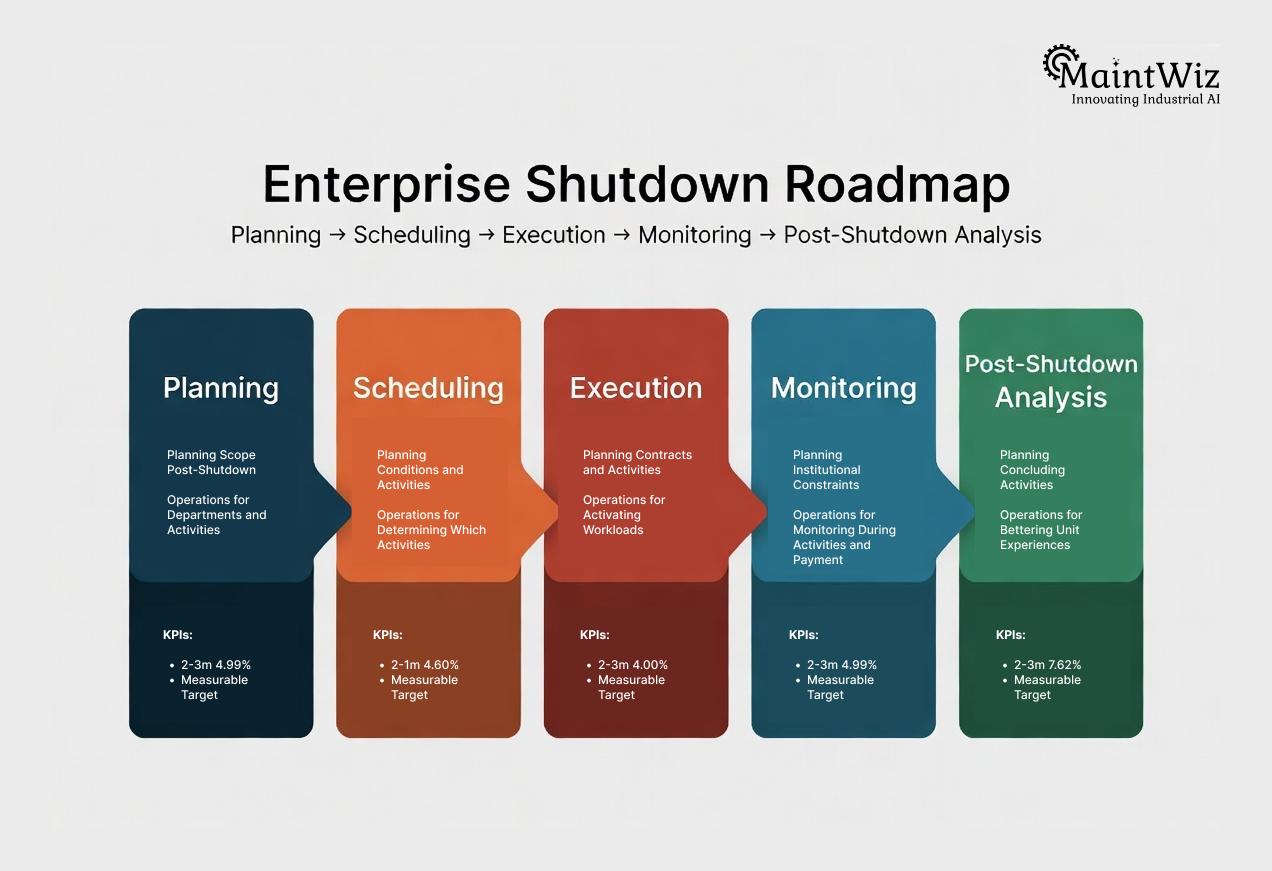
- ROI-driven planning: Set financial targets before planning and align with execution strategies.
- Real-time performance tracking: Use dashboards and alerts to monitor cost drivers and benefit realization.
- Post-shutdown audit: Conduct a formal review of actual vs. planned ROI outcomes.
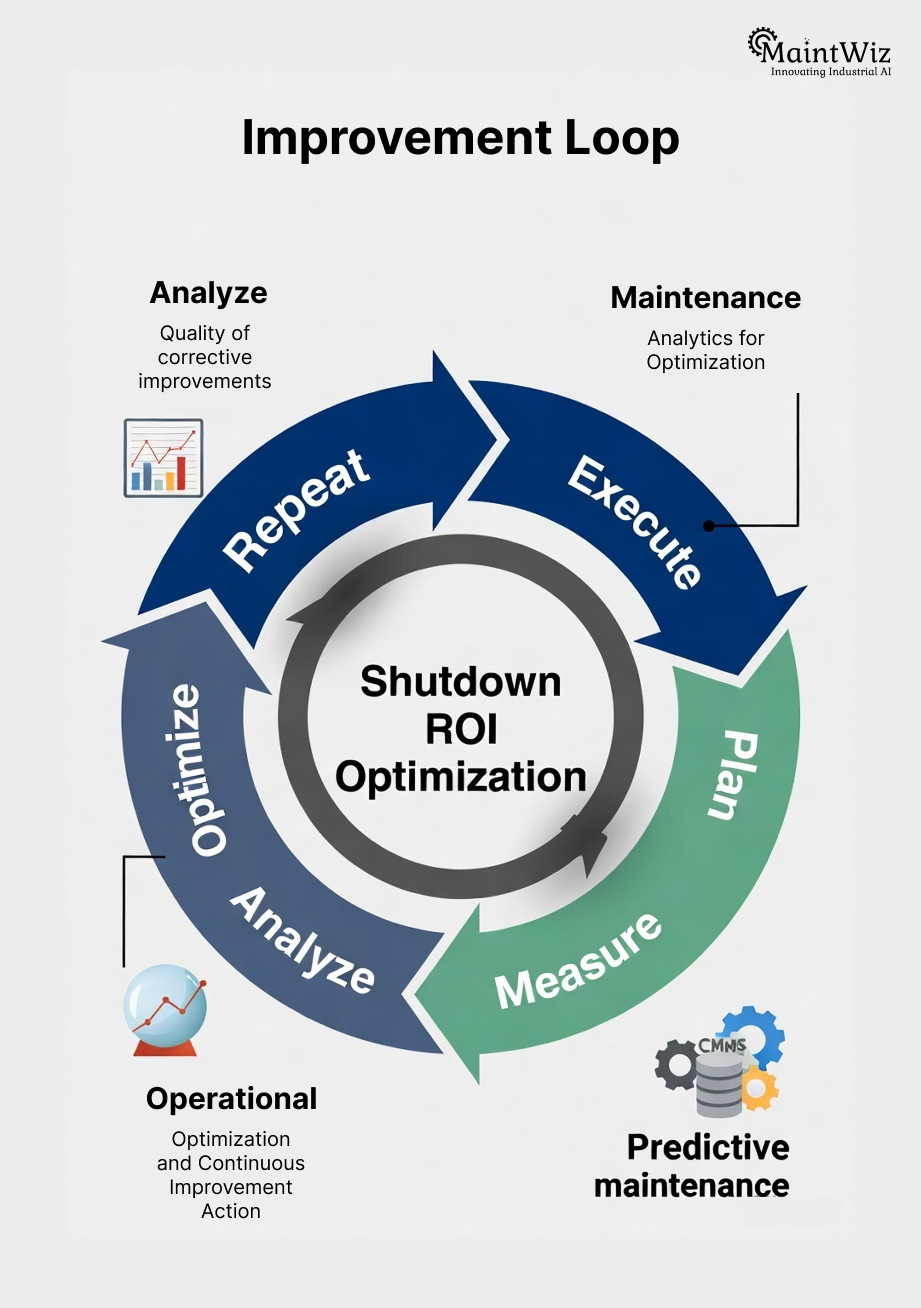
- Continuous learning: Update models with new data to refine future ROI projections.
How MaintWiz CMMS Drives Higher Shutdown Maintenance ROI
Executive overview: MaintWiz CMMS is designed to transform shutdown maintenance planning, execution, and financial measurement — shifting organizations from reactive firefighting to predictable, high-ROI performance.
- AI-enabled shutdown planning: MaintWiz creates structured, detailed procedural checklists with intelligent guidance, reducing errors and execution variance.
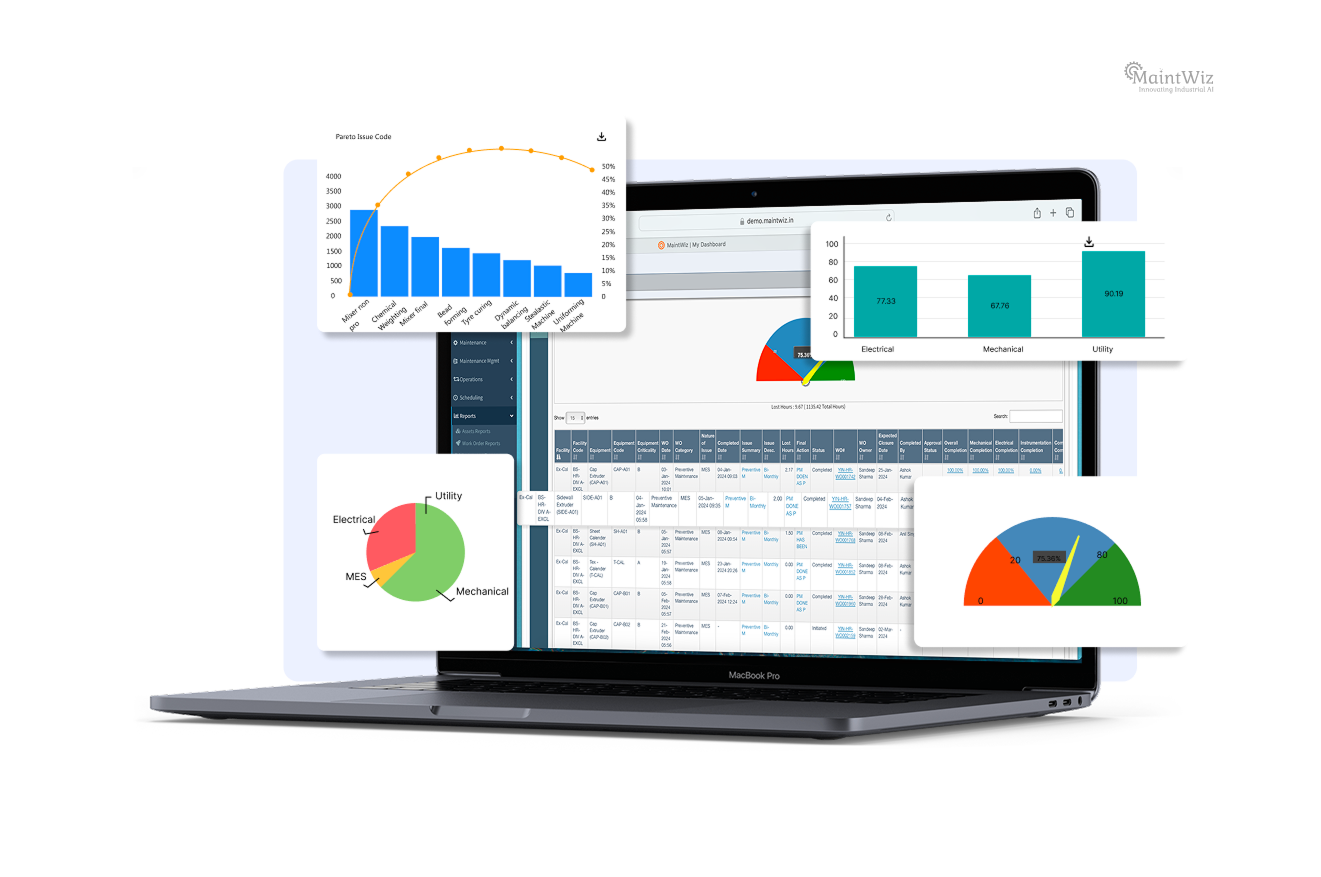
- Real-time progress & cost analytics: Track adherence to schedule, cost variances, and performance metrics to quantify financial impact during execution.
- Post-shutdown performance measurement: Built-in analytics support post-shutdown ROI calculation and continuous improvement insights.
- Integrated asset context: With maintenance KPI dashboards and condition monitoring, MaintWiz ties shutdown outcomes back to asset health and lifecycle value.
- Cross-system integrations: Connects to ERP, IoT, OT, and other systems, ensuring data completeness for accurate ROI models.
- Mobile workforce enablement: Field teams capture real-time data that feeds ROI analytics without delays.
Measurable Outcomes MaintWiz Customers Realize
- 15–30% reduction in unplanned shutdowns: Drives higher uptime and lower disruption costs.
- Improved shutdown planning accuracy (95%+): Enhances cost predictability and schedule performance.
- Reduced shutdown duration: Faster execution curtails lost production time.
- Optimized resource utilization: Increases execution efficiency and lowers direct costs.
Conclusion & Next Steps
Shutdown maintenance ROI is the financial foundation that separates world-class reliability organizations from reactive ones. By embedding disciplined measurement, systematic planning, and data-driven execution, maintenance leaders can turn outages into value drivers. With MaintWiz CMMS, teams gain the real-time visibility, analytics, and workflow rigor required to quantify, improve, and confidently communicate shutdown ROI to enterprise stakeholders.
Ready to measure, optimize, and maximize the ROI of your shutdown maintenance programs? Schedule a demo with MaintWiz experts today.

Company
Download App