Safety Incidents During Shutdowns: Prevention and
Management
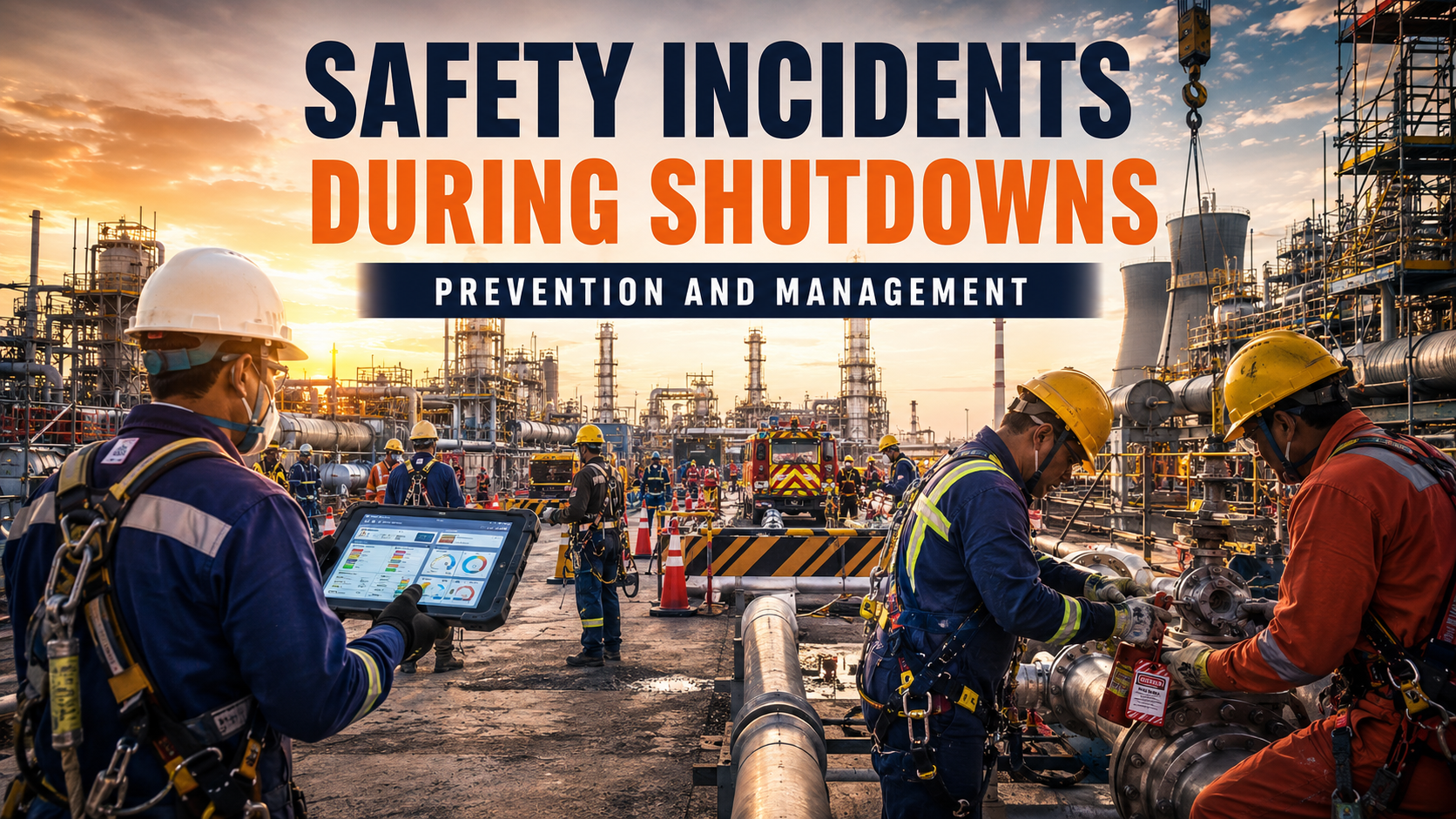
One uncontrolled spark. One missed isolation. One contractor unaware of a confined space hazard. That’s all it takes for a planned shutdown to become a catastrophic safety incident. Shutdowns and turnarounds are among the highest-risk periods in any industrial facility — not because plants are running, but because they are not. Systems are opened, safeguards are bypassed, and thousands of non-routine tasks happen under extreme time pressure.
For refineries, power plants, chemical sites, steel mills, cement plants, and large manufacturing facilities, shutdown safety incidents represent a convergence of hazards: energy isolation failures, simultaneous operations, contractor exposure, and human fatigue. Yet leading organizations consistently deliver shutdowns with zero serious injuries. Their advantage is not luck. It is disciplined shutdown accident prevention rooted in planning, control, and real-time visibility.
This guide provides a field-tested, executive-level framework for preventing and managing safety incidents during shutdowns — combining strategy, execution discipline, and digital enablement.
Why Shutdowns Create Disproportionate Safety Risk
Shutdowns concentrate months of maintenance, inspection, and project work into a compressed window. The operating envelope changes daily, often hourly. Normal safeguards are temporarily removed, and unfamiliar personnel flood the site. The result is a dramatic spike in exposure to high-consequence hazards.
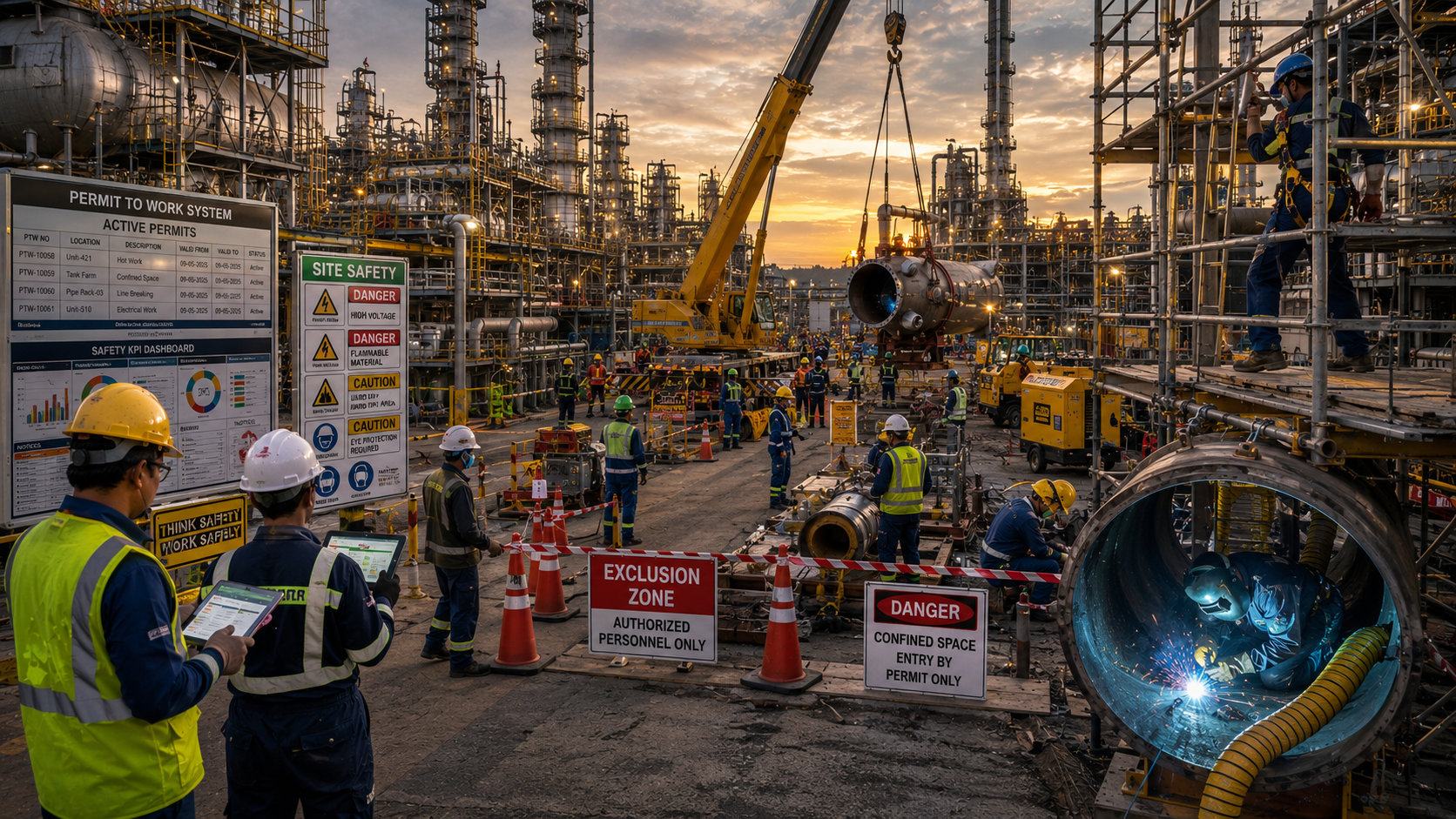
- Non-Routine Work Hazard Exposure – Shutdowns involve tasks rarely performed during normal operations, increasing error likelihood and elevating shutdown safety incident risk significantly.
- Simultaneous Operations (SIMOPS) Risk – Multiple teams working in overlapping areas create conflicting hazards, raising chances of fires, toxic releases, and struck-by incidents.
- Energy Isolation Complexity – Extensive lockout/tagout during shutdowns multiplies potential for isolation failures, one of the leading causes of shutdown accident injuries.
- Contractor Workforce Surge – Temporary workers unfamiliar with site risks contribute to communication gaps, increasing probability of shutdown safety incidents.
- Compressed Schedules and Fatigue – Long shifts and schedule pressure degrade human performance, elevating unsafe decisions and near-miss frequency.
- Temporary System Configurations – Bypassed interlocks and opened process systems remove normal safeguards, exposing workers to abnormal operating hazards.
Most Common Shutdown Safety Incidents
Historical analysis across heavy industries shows a predictable pattern of shutdown accident types. Understanding these patterns enables targeted prevention programs instead of generic safety campaigns.
- Isolation Failure Accidents – Inadequate lockout/tagout or blind installation leads to unexpected energy release, causing serious injuries during maintenance tasks.
- Confined Space Entry Incidents – Poor gas testing, rescue readiness gaps, and permit failures contribute to fatal shutdown safety incidents.
- Hot Work Fire and Explosion Events – Welding near hydrocarbon residues or combustible dust creates ignition sources during shutdown work.
- Dropped Object Injuries – Simultaneous overhead work during scaffolding and lifting increases falling object hazards significantly.
- Working at Height Falls – Temporary access platforms and rushed scaffold erection contribute to frequent shutdown accident cases.
- Struck-By Equipment Incidents – Congested worksites with cranes, forklifts, and trucks raise collision and struck-by injury risks.
- Chemical Exposure Events – Residual chemicals in vessels or pipelines cause toxic exposure during cleaning and inspection tasks.
Reactive Safety vs Proactive Shutdown Safety Management
Organizations with high shutdown incident rates often rely on lagging indicators and toolbox talks. Industry leaders use predictive controls, digital tracking, and real-time risk visibility.
| Reactive Safety Approach | Proactive Shutdown Safety Approach |
|---|---|
| Incident response after injuries occur | Predictive identification of high-risk shutdown tasks |
| Paper permits with limited oversight | Digitally tracked permit-to-work systems |
| Generic safety briefings | Task-specific risk assessments and controls |
| Manual LOTO tracking | Centralized isolation management dashboards |
| Delayed reporting of near misses | Real-time safety observation capture |
Planning Phase: The Foundation of Shutdown Accident Prevention
Most shutdown safety incidents originate in planning gaps, not field execution errors. Effective shutdown safety starts months before execution through structured hazard anticipation.
- Shutdown Risk Register Development – Identifying high-hazard tasks early allows engineering controls, specialized procedures, and contractor competency alignment.
- Critical Task Safety Classification – Ranking tasks by consequence severity focuses oversight on activities most likely to cause shutdown safety incidents.
- Integrated Safety and Work Planning – Embedding safety steps directly into job plans prevents separation between planning and execution realities.
- SIMOPS Hazard Mapping – Visual mapping of concurrent work locations reduces conflicting activities that drive shutdown accident risk.
- Contractor Prequalification and Training – Ensuring contractor competency before arrival reduces onboarding risks and improves hazard awareness.
- Isolation Scope Engineering Reviews – Multi-discipline review of isolation boundaries reduces likelihood of hazardous energy release incidents.
Permit-to-Work Excellence During Shutdowns
The permit-to-work (PTW) system becomes the nerve center of shutdown safety management. Weak permit control is directly linked to major shutdown accident case studies worldwide.
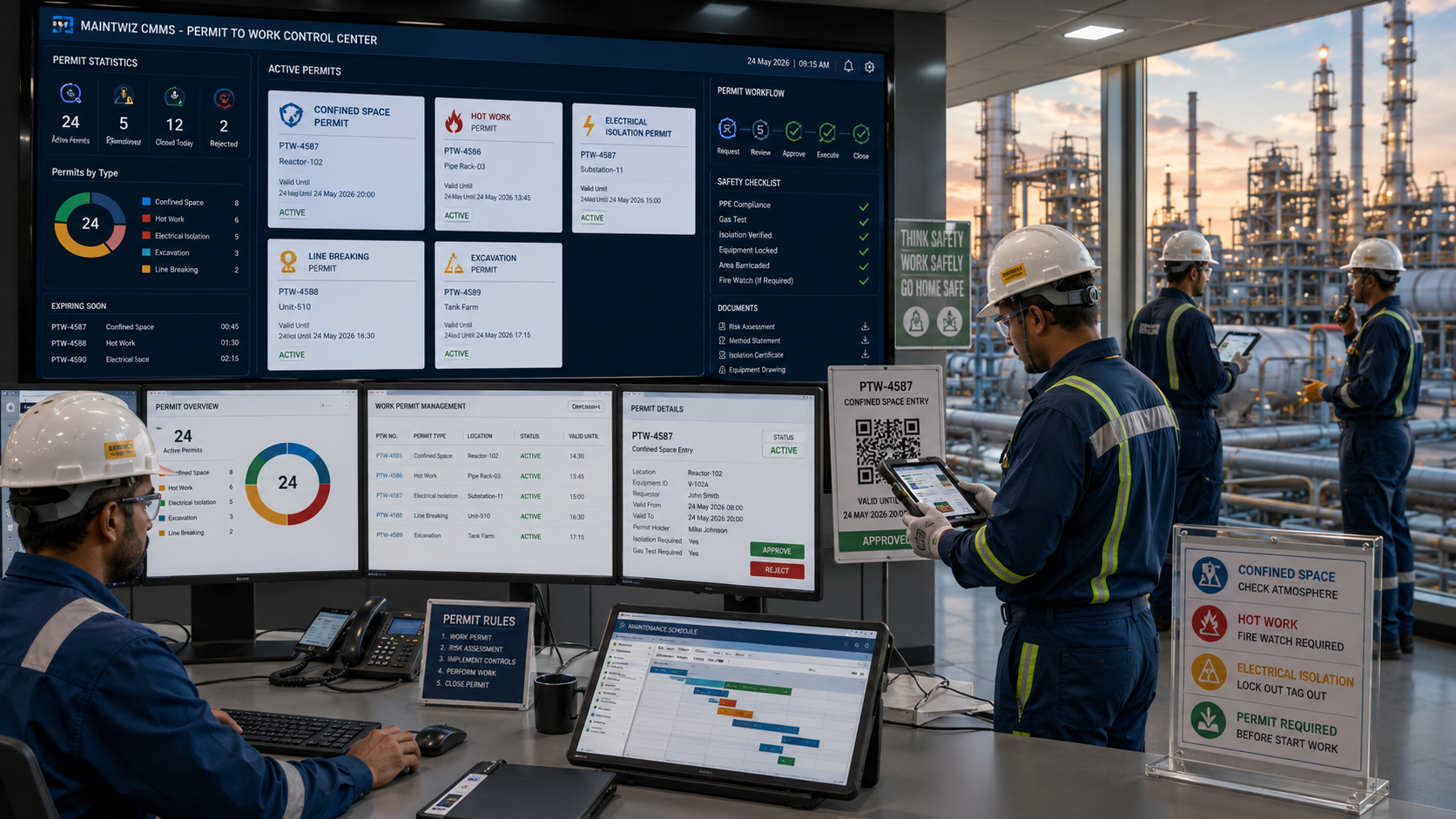
- Digital Permit Visibility Control – Central dashboards prevent overlapping permits that create ignition, confined space, or chemical exposure hazards.
- Task-Specific Hazard Integration – Permits linked to job plans ensure hazards and controls reflect actual work scope.
- Real-Time Permit Status Tracking – Live permit status prevents unauthorized work and reduces unmonitored shutdown safety incidents.
- Permit Audit and Verification Loops – Supervisory checks ensure field conditions match permit assumptions before work begins.
- Automatic Permit Expiry Controls – Time-bound permits prevent work continuation under changed or degraded conditions.
Isolation and Lockout/Tagout (LOTO) Risk Management
Energy isolation failures are among the most severe shutdown safety incidents. The scale of shutdown LOTO demands structured governance and centralized visibility.
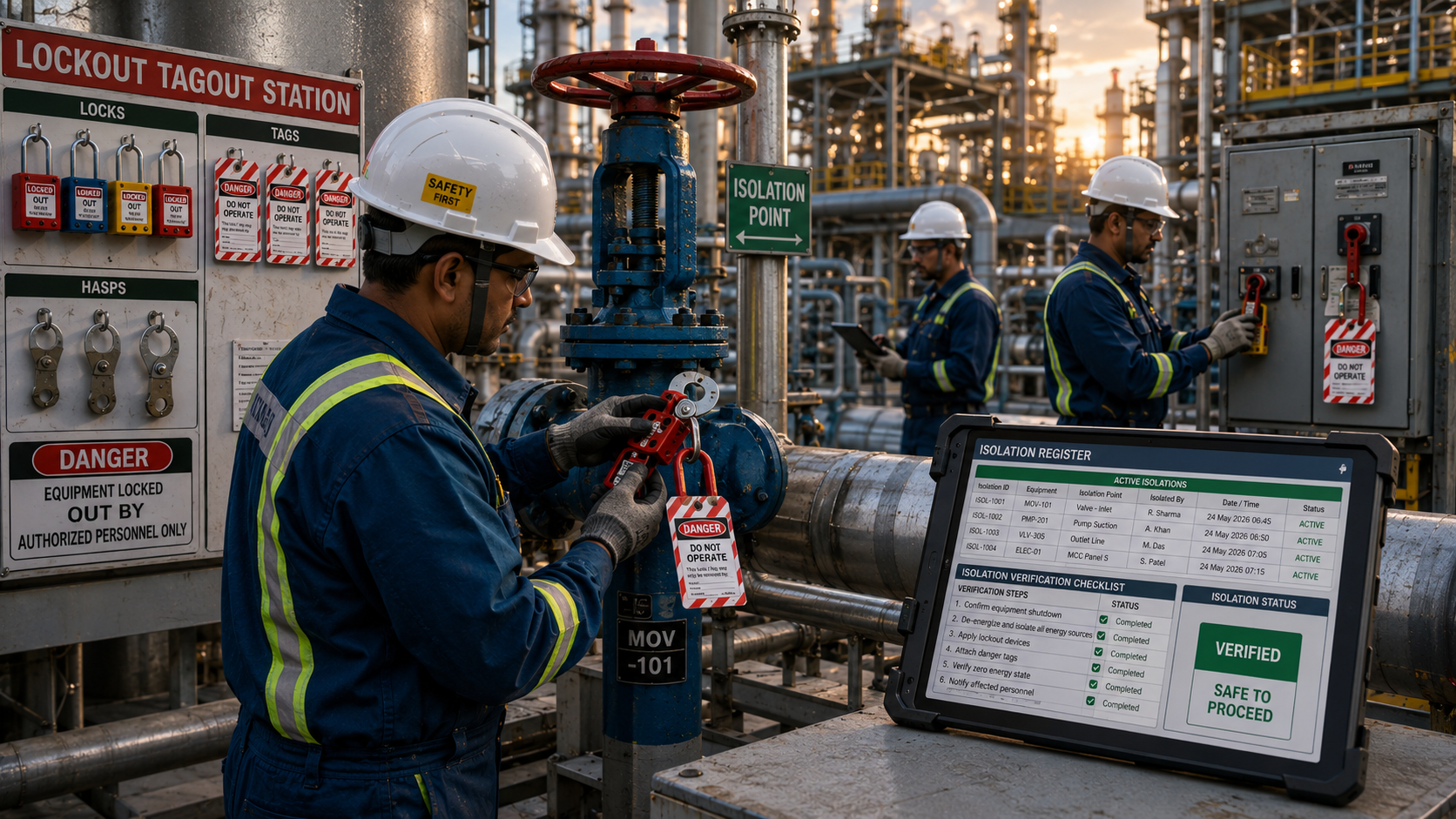
- Isolation Boundary Standardization – Predefined isolation templates reduce human error in complex shutdown scenarios.
- Centralized Isolation Register – A single source of truth for all lockouts prevents conflicting or incomplete energy isolation.
- Blind and Spade Tracking Systems – Positive tracking of physical isolations prevents forgotten removals and exposure hazards.
- Independent Verification Protocols – Second-person verification reduces critical errors leading to shutdown accident cases.
- Isolation Change Management – Formal approval processes ensure new hazards are assessed when isolation plans change.
Contractor Safety Management in Shutdowns
Shutdowns can double or triple workforce size. Contractor coordination becomes a decisive factor in shutdown accident prevention.
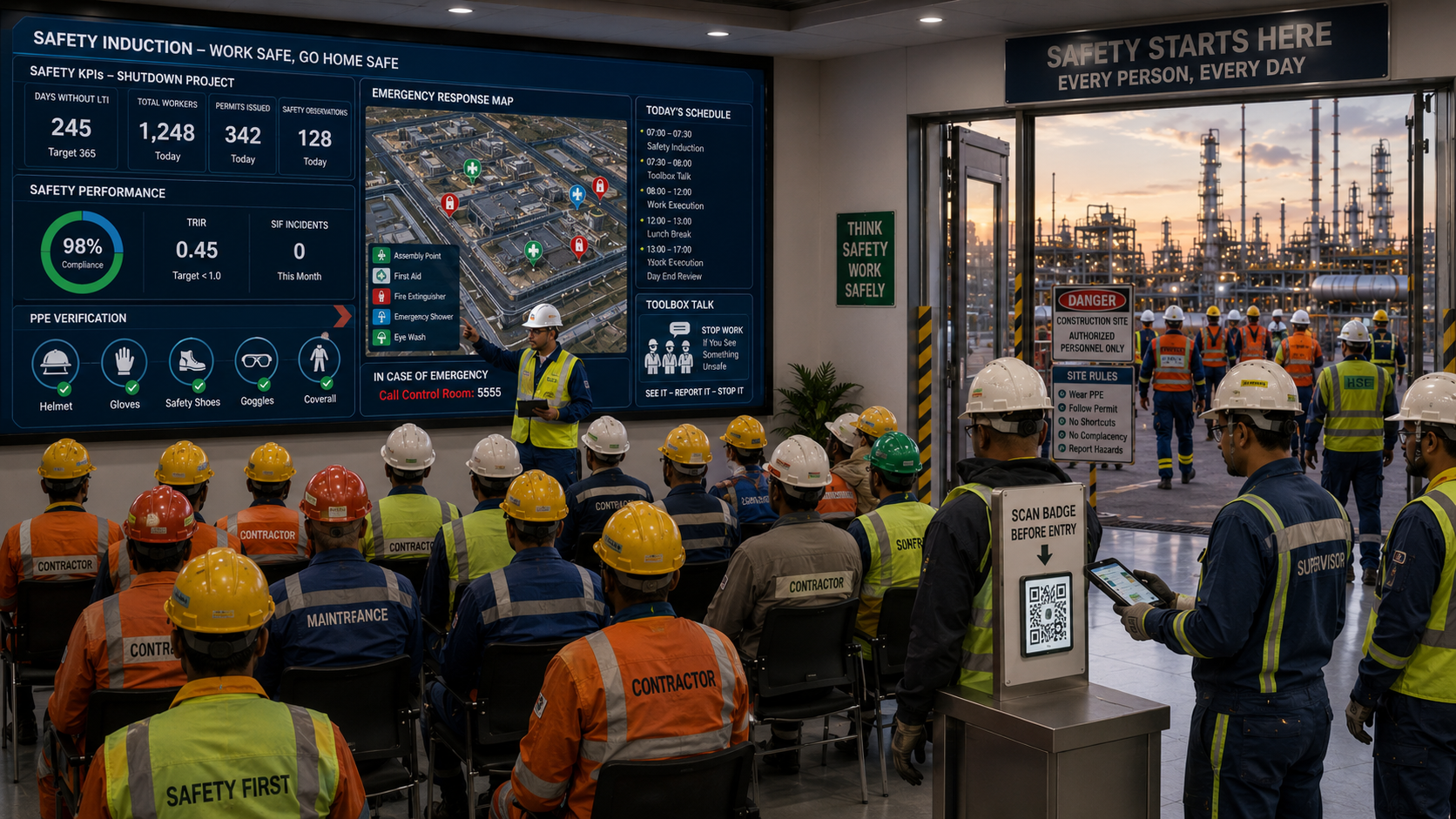
- Centralized Contractor Induction Programs – Standardized onboarding ensures all workers understand shutdown-specific hazards and safety rules.
- Competency-Based Task Assignment – Matching workers to tasks by skill reduces human error in high-risk jobs.
- Supervisor Span-of-Control Limits – Proper supervision ratios improve hazard monitoring and reduce unsafe behaviors.
- Unified Safety Communication Platforms – Daily digital briefings keep contractors aligned with evolving shutdown risk conditions.
- Contractor Safety Performance Tracking – Monitoring leading indicators highlights risk hotspots before shutdown safety incidents occur.
Managing High-Risk Shutdown Activities
Specific work categories consistently dominate shutdown incident statistics and require elevated control measures.
- Confined Space Shutdown Safety Controls – Continuous gas monitoring, rescue readiness, and entry supervisors reduce fatal confined space incidents.
- Hot Work Shutdown Risk Management – Fire watches, gas testing, and ignition control prevent catastrophic fire and explosion events.
- Lifting and Rigging Safety Oversight – Engineered lift plans and exclusion zones reduce struck-by and dropped object incidents.
- Working at Height Protection Systems – Certified scaffolding and fall arrest systems minimize severe fall injuries.
- Line Opening Hazard Controls – Positive isolation verification prevents chemical release during piping disassembly tasks.
Fatigue and Human Performance Risk
Fatigue-driven errors are a hidden contributor to shutdown safety incidents. Human performance management must be treated as a safety control, not a welfare initiative.
- Shift Length and Rest Policy Enforcement – Limiting excessive hours reduces cognitive errors linked to shutdown accident cases.
- Critical Task Timing Strategy – Scheduling high-risk work during peak alertness periods reduces human error probability.
- Supervisor Fatigue Monitoring – Ensuring alert supervision maintains effective hazard recognition in dynamic shutdown environments.
- Worker Fitness-for-Duty Checks – Identifying impairment from fatigue or illness prevents unsafe work conditions.
Leading Indicators That Predict Shutdown Safety Incidents
World-class shutdown safety management relies on leading indicators instead of lagging injury statistics.
- Permit Deviations and Violations – Rising deviations signal breakdowns in work control that precede shutdown safety incidents.
- Isolation Error Near Misses – Tracking LOTO errors highlights systemic weaknesses before serious accidents occur.
- SIMOPS Conflict Reports – Increasing work interference events indicate elevated shutdown accident risk.
- Safety Observation Participation Rates – High engagement in reporting unsafe conditions predicts stronger incident prevention outcomes.
- Rework and Schedule Pressure Trends – Escalating delays often lead to shortcuts and unsafe behaviors.
Incident Response and Emergency Preparedness
Even with strong prevention, shutdowns demand heightened emergency readiness due to increased hazard exposure.
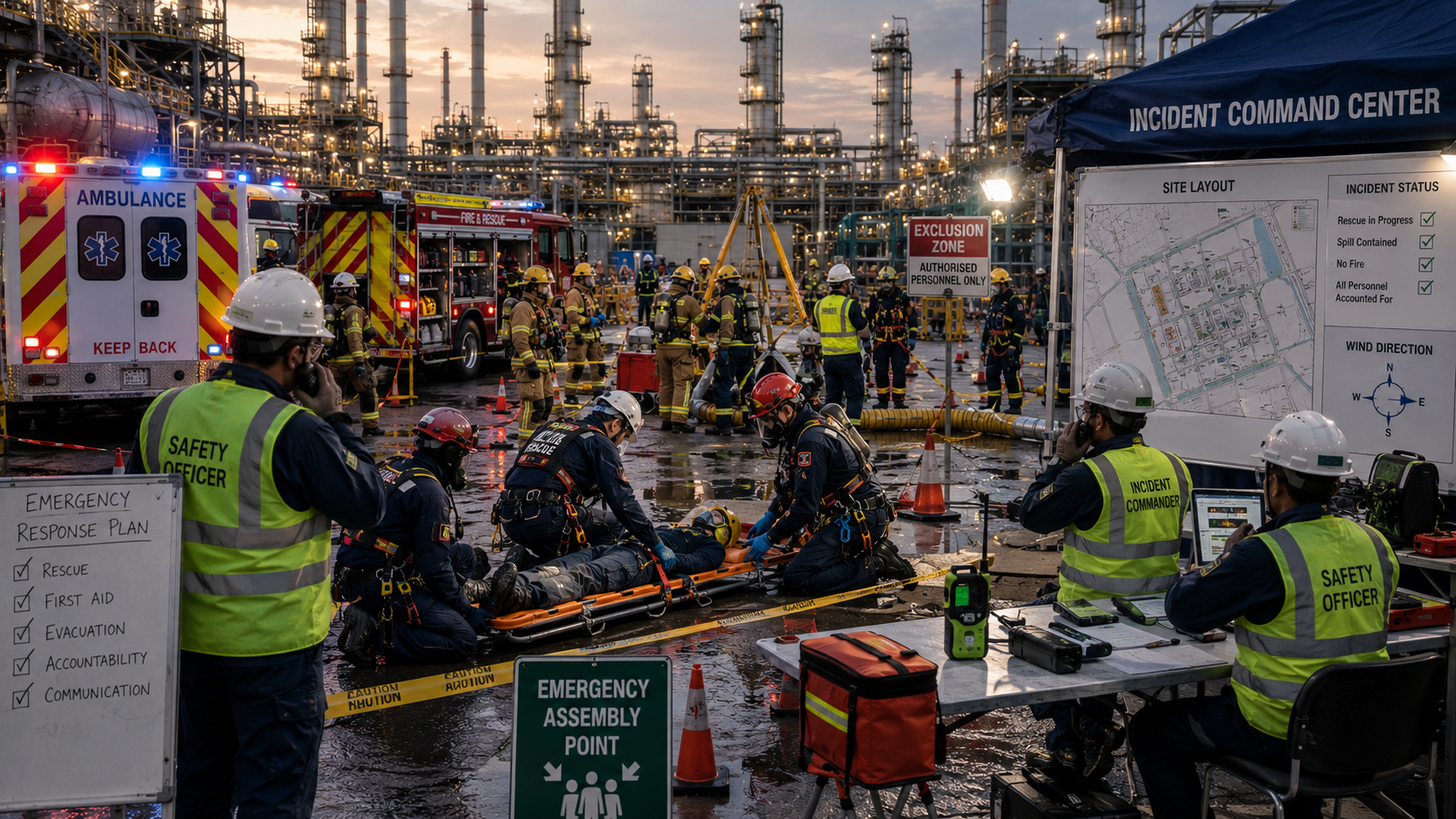
- Shutdown-Specific Emergency Scenarios – Planning for fires, toxic releases, and confined space rescues ensures faster response during incidents.
- Onsite Rescue Capability Assurance – Dedicated rescue teams reduce response times during high-risk shutdown operations.
- Real-Time Workforce Accountability – Accurate personnel tracking improves evacuation and emergency management effectiveness.
- Incident Command Structure Alignment – Clear roles ensure coordinated decision-making during shutdown emergencies.
Post-Shutdown Incident Learning and Continuous Improvement
Shutdown safety excellence is built through structured learning cycles, not one-time initiatives.
- Root Cause Analysis of Shutdown Incidents – Identifying systemic failures prevents recurrence of similar shutdown accident cases.
- Near Miss Trend Analysis – Studying patterns uncovers hidden hazards before they escalate into injuries.
- Shutdown Safety KPI Benchmarking – Comparing performance across events drives accountability and improvement.
- Procedure and Planning Updates – Integrating lessons learned strengthens future shutdown safety programs.
How MaintWiz CMMS Strengthens Shutdown Safety Management
Preventing shutdown safety incidents requires more than procedures — it requires control, visibility, and traceability across thousands of work activities. A robust CMMS becomes the digital backbone that connects planning, permits, isolation, and field execution.
MaintWiz CMMS supports shutdown accident prevention by bringing structure and real-time intelligence into shutdown work management:
- Integrated Work Order and Safety Planning – Linking job plans with safety steps ensures hazard controls are embedded directly into maintenance execution workflows.
- Centralized Permit and Work Coordination – Digital work control visibility reduces overlapping high-risk tasks that lead to shutdown safety incidents.
- Isolation and Asset History Traceability – Equipment-level records improve planning for safe isolation and hazard identification during shutdown activities.
- Mobile Field Execution and Reporting – Real-time updates from the field increase visibility into work status and emerging risks.
- Contractor Work Tracking and Oversight – Structured task tracking improves accountability and reduces unmanaged shutdown accident exposure.
- Analytics for Leading Safety Indicators – Dashboards help identify trends such as permit delays, rework, or isolation issues before incidents occur.
By digitizing shutdown workflows, MaintWiz enables plants to move from reactive incident response to predictive shutdown safety management — a key differentiator for organizations striving for world-class reliability and safety performance.
Ready to reduce shutdown safety incidents and improve turnaround control? Strengthen your shutdown planning, work control, and field execution with a connected CMMS foundation built for industrial maintenance environments.

Company
Download App