Shutdown Learning and Continuous Improvement Programs
Transform Shutdown Lessons Learned into Sustainable Process Excellence for Industrial Reliability
In capital-intensive industries — from refineries to power generation — shutdowns, turnarounds, and outages (STOs) are more than maintenance events; they are strategic inflection points. The difference between a shutdown that merely “checked the boxes” and one that propels operational reliability forward lies in systematic shutdown lessons learned and a robust continuous improvement shutdown program that turns every outage into a knowledge asset. Organizations that master post-shutdown learning consistently reduce downtime, optimise costs, and build competitive advantage.
Why Shutdown Lessons Learned and Continuous Improvement Matter
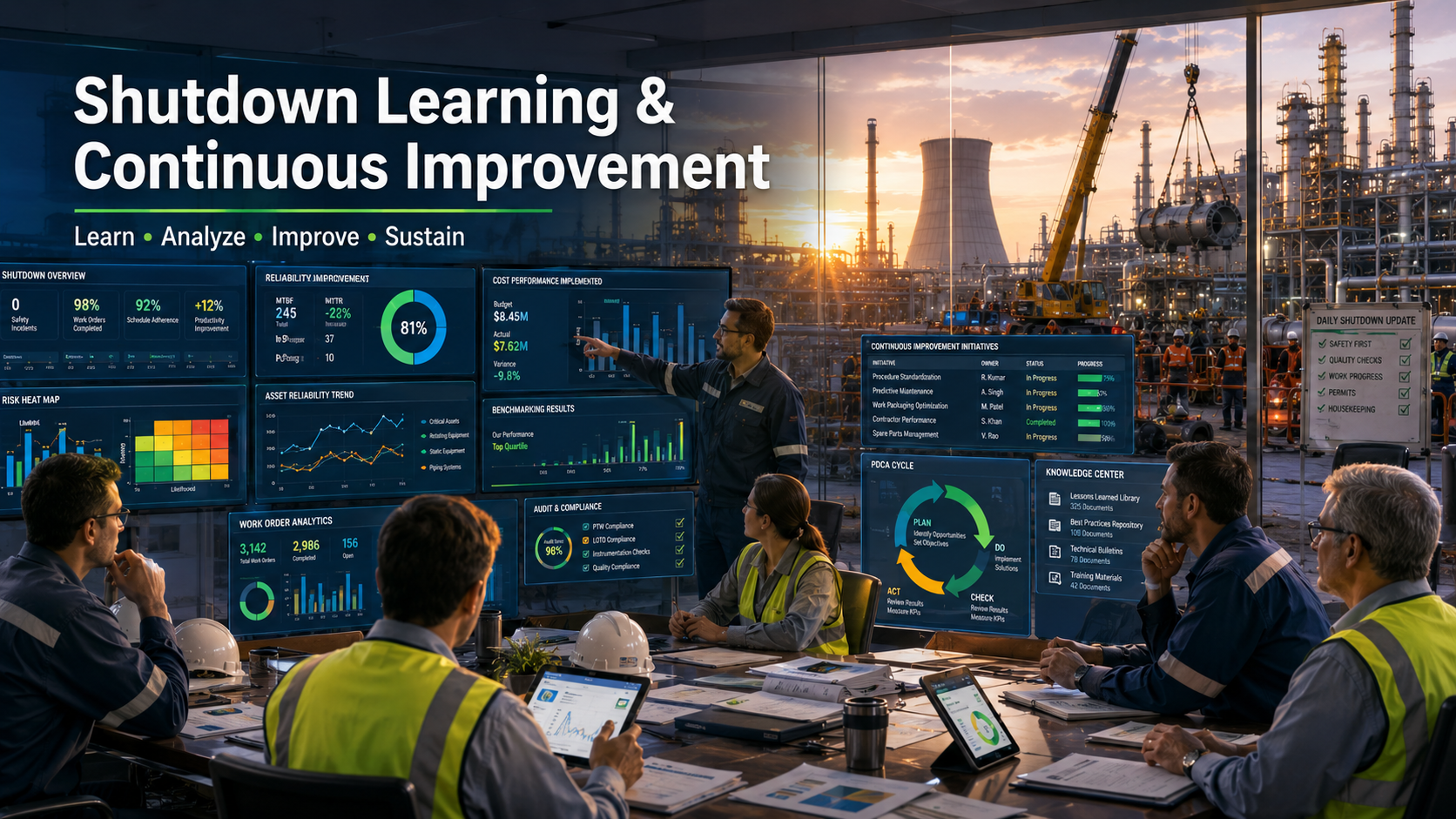
Shutdowns are infrequent yet resource-intensive, carrying risks and opportunities alike. Without disciplined post-shutdown analysis and structured learning mechanisms, insights dissipate, and recurring issues persist — eroding reliability, increasing cost, and threatening safety. A deliberate shutdown learning program ensures that each outage strengthens the organisation’s ability to execute the next one faster, safer, and with higher quality, turning isolated events into a long-term reliability engine.
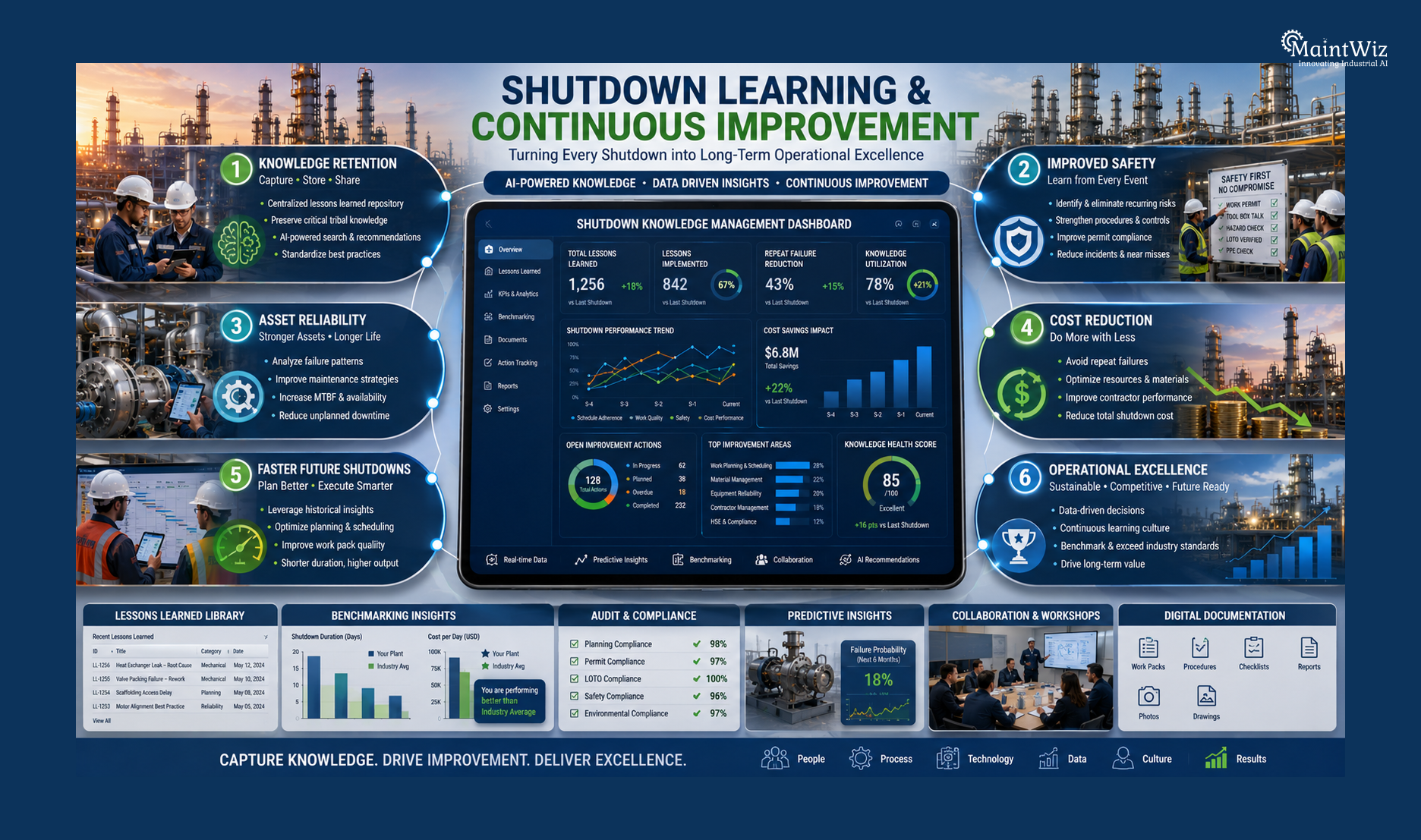
- Strategic Reliability Capture: Institutionalizes operational knowledge to prevent recurrence of failures across shutdown cycles.
- Operational Cost Reduction: Lessons help identify waste and inefficiencies for continuous improvement.
- Safety and Compliance Gains: Post-shutdown evaluations highlight latent hazards and embed corrective controls.
- Performance Benchmarking: Compares objectives versus outcomes to refine future shutdown planning.
Post-Shutdown Analysis: Turning Experience into Insight
Post-shutdown analysis is the fulcrum of learning — the systematic review of results against goals. It fills the gap between execution and improvement, enabling organisations to transition from reactive firefighting to proactive reliability engineering. A robust analysis uncovers root causes, captures frontline observations, and distils lessons into structured knowledge assets.
- Performance vs Plan Evaluation: Quantifies schedule adherence, cost variances, and safety outcomes against targets.
- Root Cause and Trend Analysis: Identifies patterns in recurring failures and organisational bottlenecks.
- Documentation of Emergent Work: Captures unplanned activities and their drivers for future planning.
- Feedback Loop Closure: Ensures insights drive actionable changes in processes, SOPs, and standards.
Structured Approaches to Continuous Improvement After Shutdowns
World-class shutdown learning programs adopt structured improvement frameworks to embed continuous improvement in plant reliability practice. DMAIC, Lean, and Six Sigma principles are effective in dissecting complex shutdown issues, focusing on value creation and waste elimination.
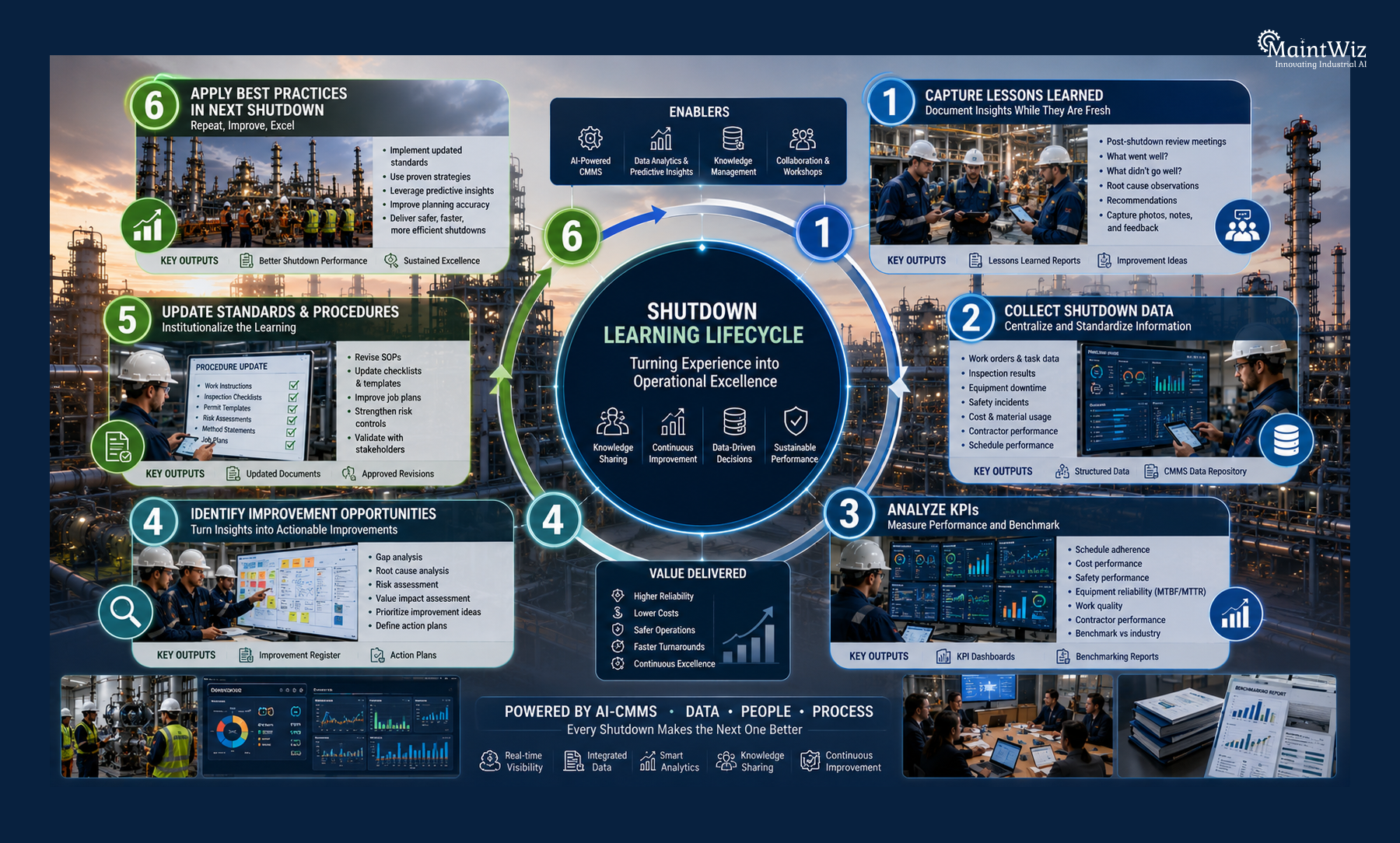
- Define-Measure-Analyse-Improve-Control (DMAIC): Ensures a disciplined, data-driven problem-solving cycle.
- Lean Waste Elimination: Targets delays, redundancies, and process inefficiencies identified post-shutdown.
- Six Sigma Variation Reduction: Reduces variability in execution quality and reliability outcomes.
- Benchmarking and KPIs: Sets measurable improvement goals for schedule, cost, safety, and quality.
Common Barriers and How to Overcome Them
Despite clear value, many organisations struggle to institutionalise learning. Common failures include siloed documentation, lack of accountability for insights, and ineffective knowledge transfer. Overcoming these requires organisational discipline and enabling tools that drive transparency and collaboration.
- Fragmented Data and Documentation: Centralise all post-shutdown reports and evidence in a searchable repository.
- Lack of Integration with Maintenance Systems: Align shutdown insights with maintenance planning and scheduling processes.
- Insufficient Knowledge Transfer: Embed lessons in training, checklists, and SOPs for future execution cycles.
- Over-reliance on Tribal Knowledge: Replace informal knowledge with structured, documented learning artefacts.
Turning Lessons Learned into Sustainable Process Enhancement
Capturing lessons is only half the journey. The true value emerges when organisations embed insights into process enhancements that influence execution standards, decision frameworks, and continuous improvement cycles. This requires governance, accountability, and integration into enterprise reliability programs.
- Governed Learning Workflows: Formal review cadence and roles for evaluating shutdown results.
- Knowledge Artefact Libraries: Maintain structured repositories of lessons, failure reports, and countermeasures.
- Integration with Maintenance Schedules: Use shutdown insights to refine preventive and predictive strategies.
- Performance Dashboards: Track improvements across shutdown cycles to measure impact.
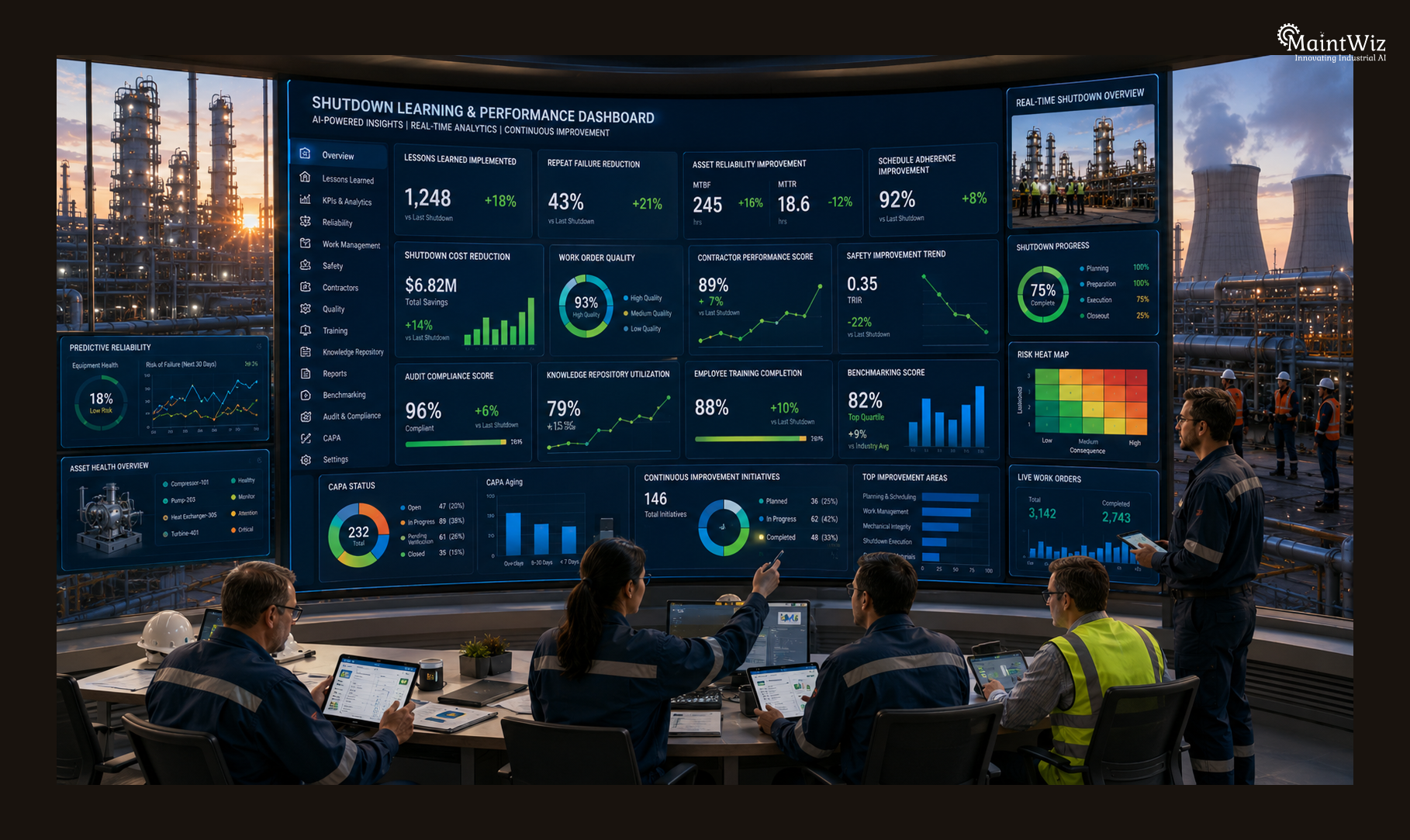
Key Metrics for Shutdown Learning and Continuous Improvement
Rigor in measurement underpins disciplined improvement. Establishing and consistently tracking metrics enables organisations to quantify the impact of shutdown learning programs.
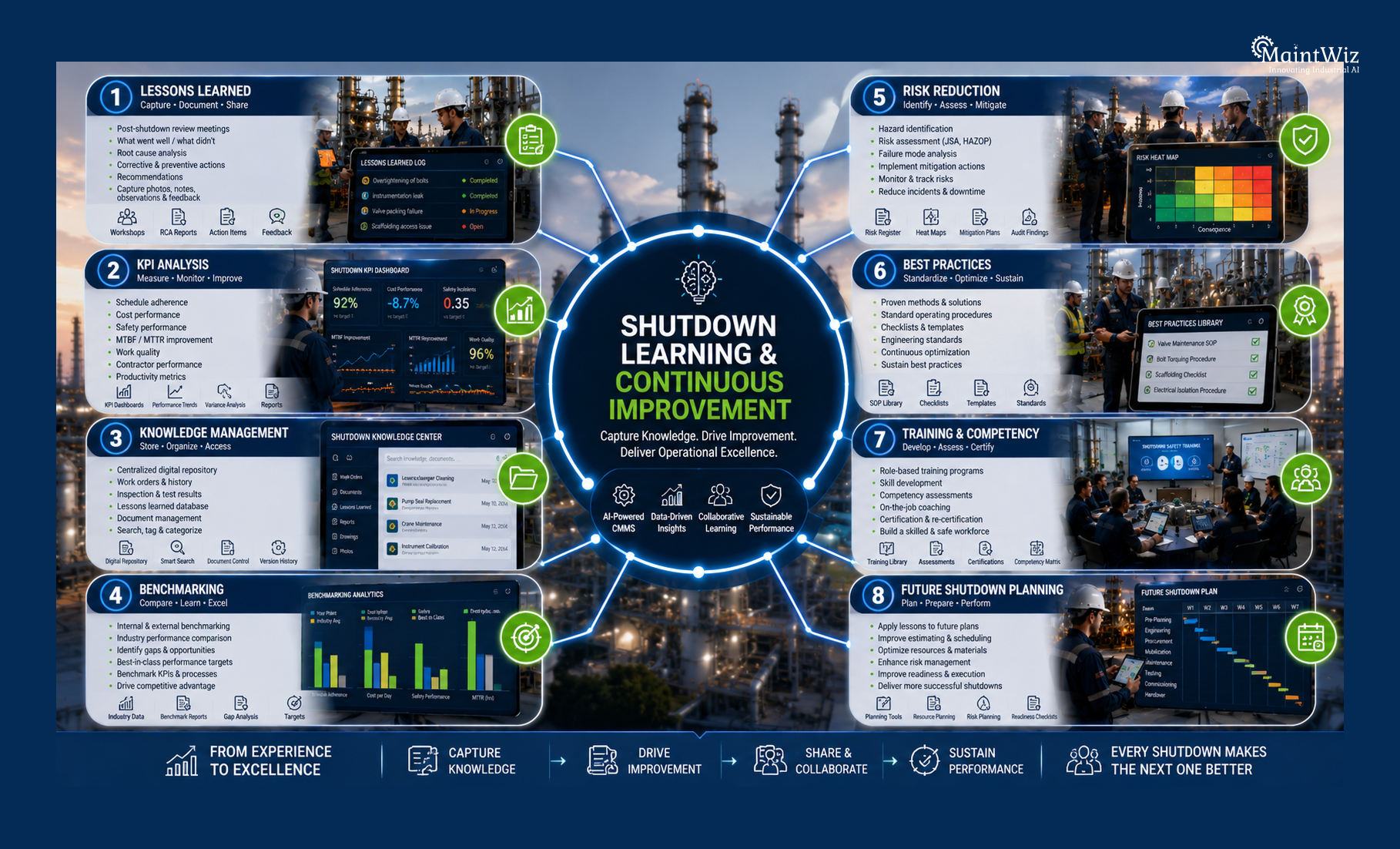
- Schedule Variance: Measures deviation from planned timelines, highlighting planning and execution efficiencies.
- Cost Performance: Tracks budget variance and identifies cost drivers.
- Safety and Compliance Metrics: Monitors incidents, near-misses, and regulatory adherence.
- Rework and Emergent Work: Quantifies unplanned activities as indicators of planning fidelity.
- Reliability Growth: Longitudinal tracking of failure rates and MTBF post-shutdown.
Industry Nuances: Reliability Engineering Across Sectors
Shutdown lessons learned and continuous improvement programs must be tailored to industry specifics — from hydrocarbons to power, mining to heavy manufacturing. Regulatory regimes, safety imperatives, and asset criticality profiles differ, influencing how learning programs are structured and optimised.
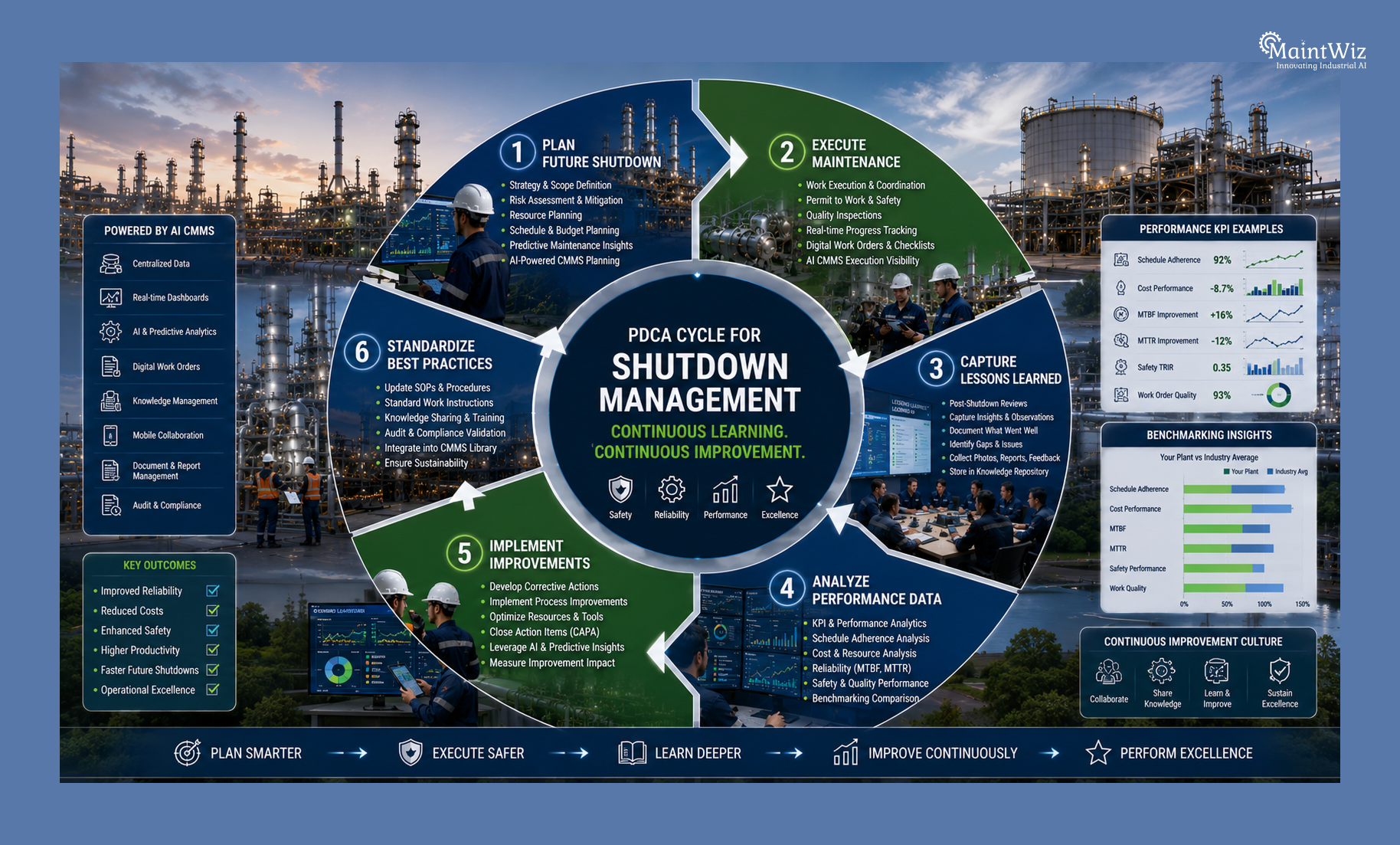
- Process Industries (Oil & Gas, Petrochemicals): Focus on HAZOP learnings, contractor performance, and compliance outcomes.
- Power and Utilities: Prioritize reliability growth and redundancy verification through shutdown cycles.
- Manufacturing and Heavy Industries: Emphasise standardised failure mode capture and integration with line-level maintenance plans.
- Mining & Materials: Address mobile and fixed asset heterogeneity in learning workflows.
Why MaintWiz CMMS is Uniquely Suited for Shutdown Learning and
Continuous Improvement
MaintWiz CMMS offers an enterprise-grade platform that naturally aligns with the requirements of effective shutdown lessons learned and continuous improvement programs. Built for industrial maintenance leaders, MaintWiz consolidates data, empowers analysis, and ensures actionable insights are woven into ongoing reliability workflows.
- Unified Asset and Shutdown History: Capture comprehensive shutdown data in a central repository tied to asset histories for trend analysis.
- AI-Driven Insight Generation: Leverage predictive analytics to identify failure patterns and root causes.
- Work Order and Documentation Traceability: Correlate shutdown tasks with work orders, checklists, and evidence, improving accountability and learning retention.
- Integrated Continuous Improvement Workflows: Standardise post-shutdown analysis and feedback loops into maintenance planning cycles, ensuring every lesson drives process enhancement.
- Mobile and Real-Time Collaboration: Field teams capture observations and corrective actions instantly, embedding learning at the source.
Get started with MaintWiz today and transform your shutdowns from cost centers into engines of operational excellence. Schedule a demo to see how shutdown learning becomes continuous improvement with MaintWiz CMMS.

Company
Download App