
When to Schedule Plant Shutdowns: Strategic Timing Guide

A shutdown at the wrong time destroys profit. A shutdown at the right time creates competitive advantage. In asset-intensive industries, plant shutdown timing is not just a maintenance decision — it is a boardroom strategy decision. Whether in oil & gas, power generation, chemicals, or heavy manufacturing, poorly timed shutdowns erode margins through lost production, emergency repairs, contractor premiums, and safety risk. Strategically timed shutdowns, on the other hand, reduce lifecycle costs, improve reliability, protect compliance, and extend asset life.
This guide explains when to schedule plant shutdowns using a strategic lens that integrates reliability engineering, production economics, risk management, and modern CMMS-driven planning. It is designed for maintenance leaders, plant managers, reliability engineers, and executives responsible for outage performance.
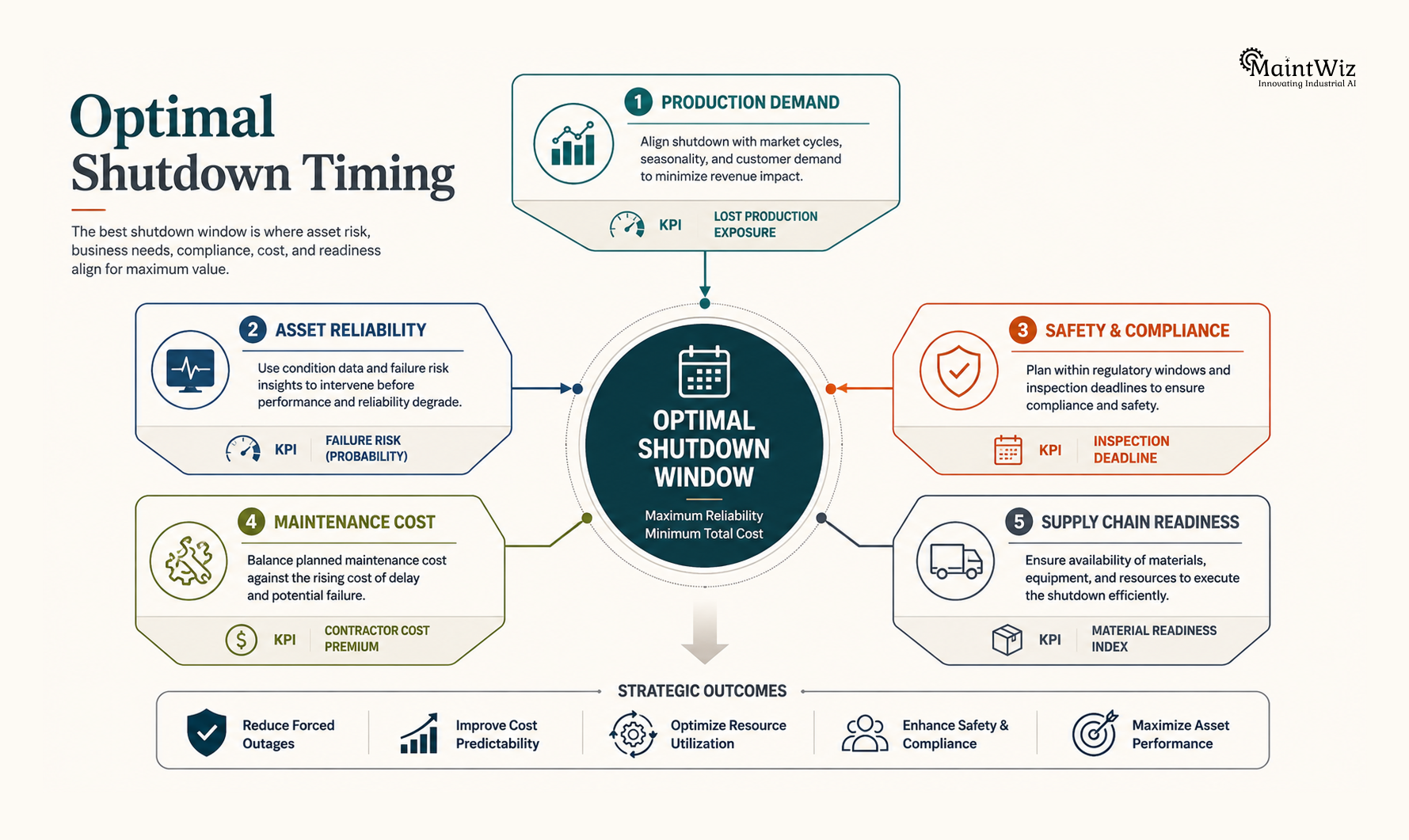
The Strategic Importance of Shutdown Timing
Plant shutdown scheduling sits at the intersection of maintenance strategy and business performance. The timing decision influences revenue, safety, regulatory exposure, and long-term asset health.
- Production Loss Optimization – Shutdown timing should align with low-demand periods, minimizing revenue impact while ensuring essential maintenance is not deferred.
- Asset Reliability Preservation – Strategic timing prevents forced outages caused by deferred maintenance and escalating failure risks.
- Shutdown Risk Reduction – Planned shutdowns reduce safety incidents compared to reactive breakdown-driven stoppages.
- Maintenance Cost Control – Early planning avoids emergency contractor premiums and last-minute material expediting costs.
- Regulatory Compliance Assurance – Many inspections and statutory checks can only occur during shutdown windows, making timing legally significant.
Primary Triggers That Indicate a Shutdown is Due
Shutdown timing should be data-driven. High-performing plants rely on asset condition, reliability indicators, and risk thresholds — not just calendar cycles.
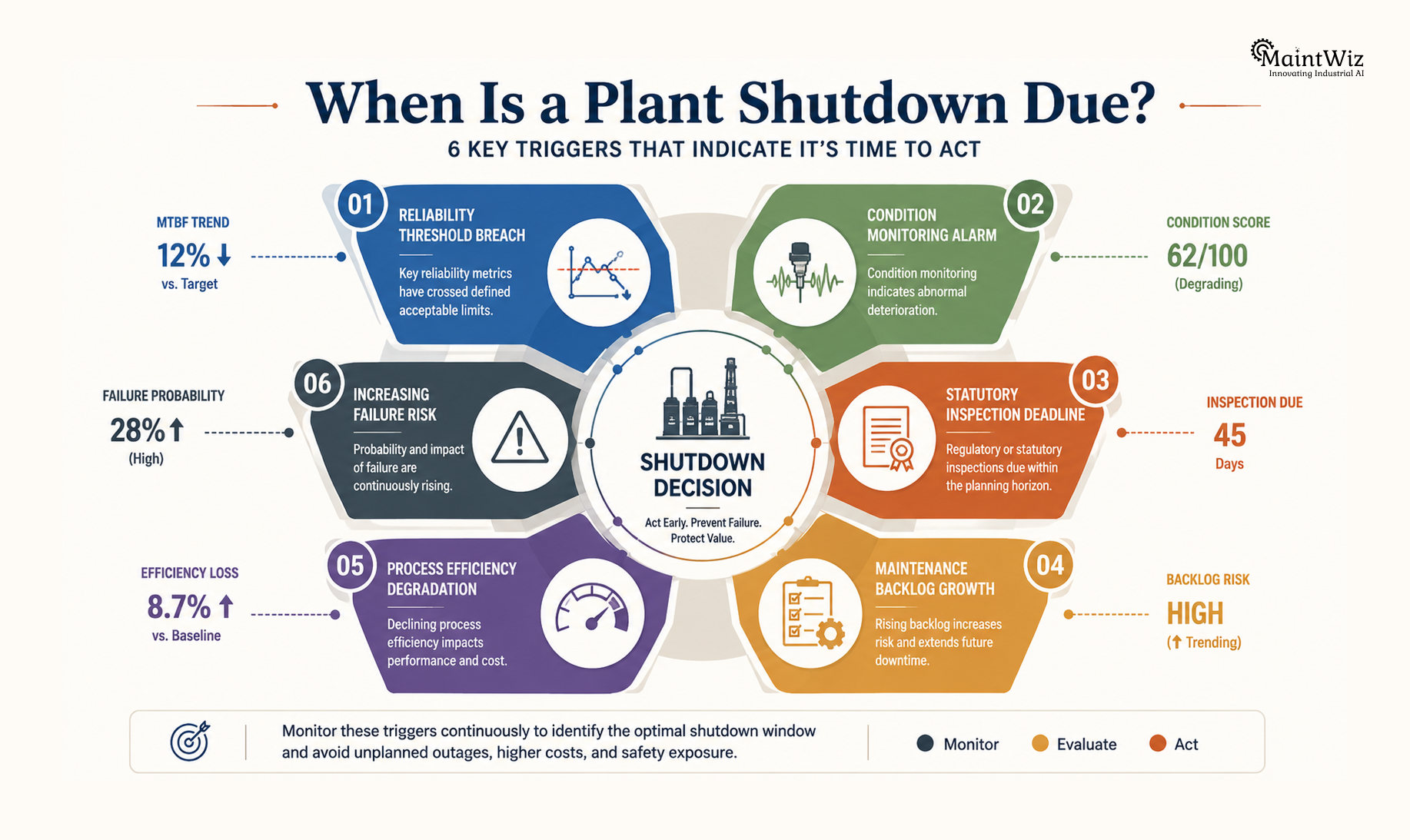
- Reliability Threshold Breach – Rising failure rates, repeat breakdowns, or deteriorating MTBF indicate growing systemic risk requiring coordinated intervention.
- Condition Monitoring Alarms – Vibration, thermography, oil analysis, or ultrasonic data may signal degradation beyond safe online repair limits.
- Statutory Inspection Deadlines – Pressure vessels, boilers, and critical systems have regulatory inspection intervals that dictate shutdown windows.
- Deferred Maintenance Backlog Growth – Excessive high-risk backlog suggests reliability exposure best addressed during a planned outage.
- Process Efficiency Degradation – Reduced throughput, energy inefficiency, or product quality drift often signal fouling or wear requiring shutdown work.
Calendar-Based vs Condition-Based Shutdown Timing
Traditional time-based shutdowns are increasingly being replaced or optimized using condition-based maintenance strategies supported by CMMS and analytics.
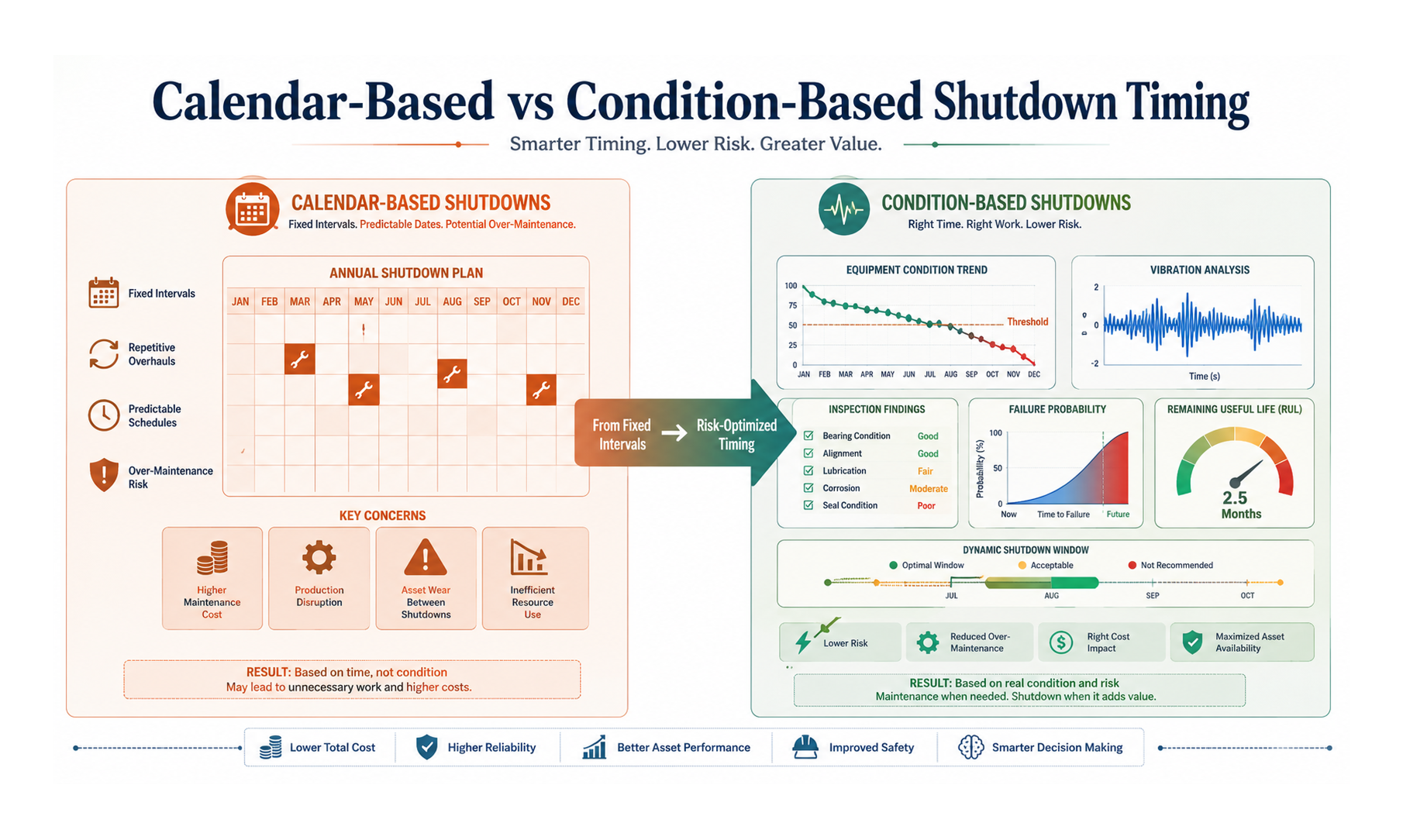
| Calendar-Based Shutdowns | Condition-Based Shutdowns |
|---|---|
| Fixed Interval Planning Shutdowns occur annually or biannually regardless of actual equipment health. | Data-Driven Timing Shutdowns align with asset condition trends and predictive failure indicators. |
| Higher Over-Maintenance Risk Healthy components may be overhauled unnecessarily, increasing cost and outage duration. | Targeted Intervention Scope Work scope focuses on assets truly at risk, reducing downtime duration. |
| Simpler Long-Term Scheduling Production planning is easier due to predictable intervals. | Greater Reliability Optimization Shutdowns occur before failure risk spikes, reducing forced outages. |
| Less Data Dependency Minimal reliance on real-time monitoring or advanced diagnostics. | Requires Strong Data Infrastructure Depends on accurate asset history, condition monitoring, and CMMS analytics. |
Industry-Specific Shutdown Timing Considerations
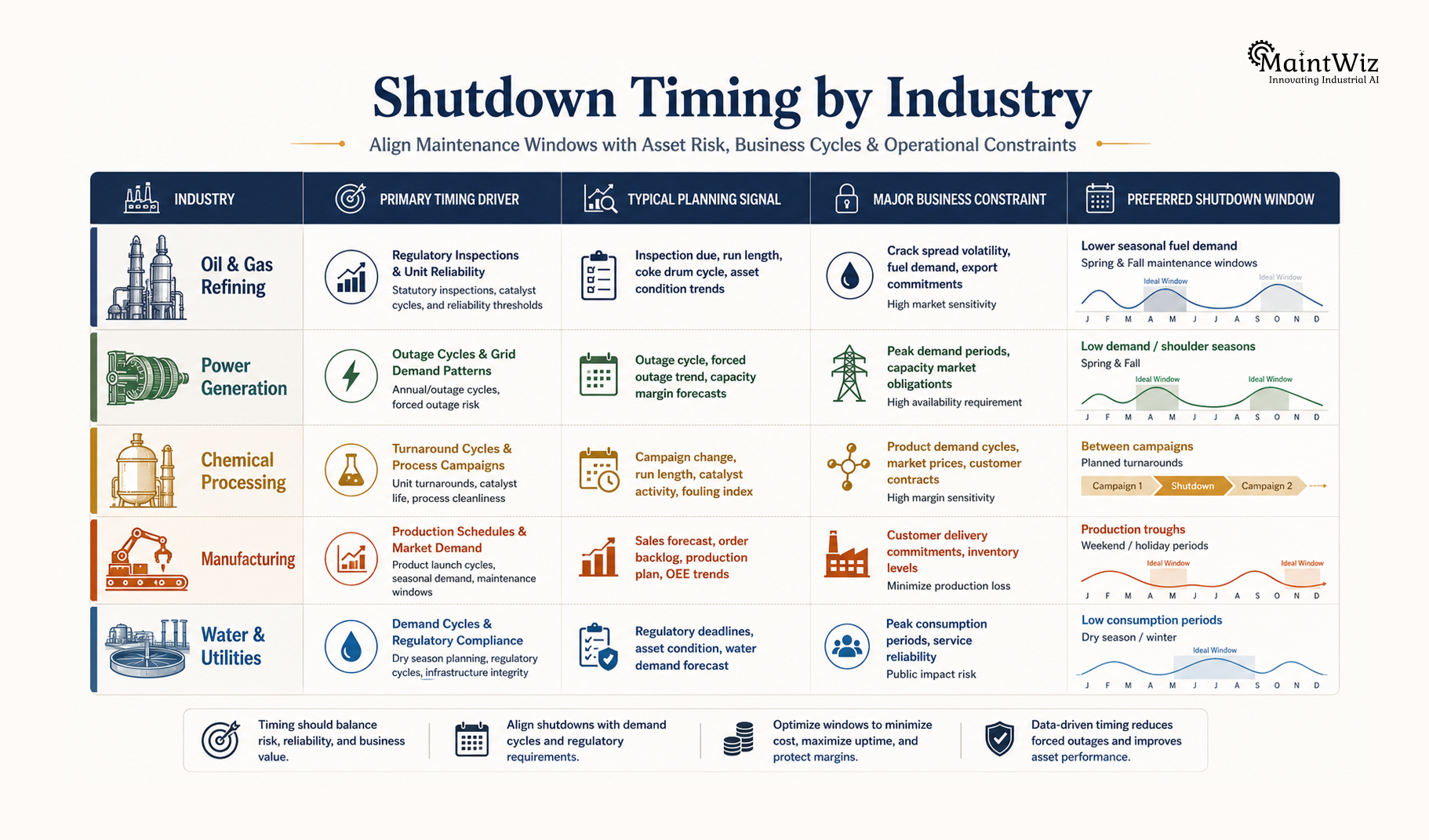
Shutdown timing varies significantly across industries due to process design, regulatory pressures, and asset criticality.
- Refinery Turnaround Scheduling – Major turnarounds align with catalyst life, inspection mandates, and market demand cycles to minimize margin impact.
- Power Plant Outage Timing – Utilities schedule outages during off-peak seasons to avoid grid penalties and lost generation revenue.
- Chemical Plant Maintenance Windows – Batch cycles and campaign changes create natural shutdown opportunities for inspections and overhauls.
- Manufacturing Shutdown Strategy – Plants align shutdowns with demand troughs, holidays, or product changeovers to minimize customer disruption.
- Utility Infrastructure Maintenance – Water and energy utilities balance regulatory reliability targets with seasonal consumption patterns.
Economic Factors That Drive Shutdown Timing Decisions
Financial modeling is essential to determine the economically optimal shutdown window.
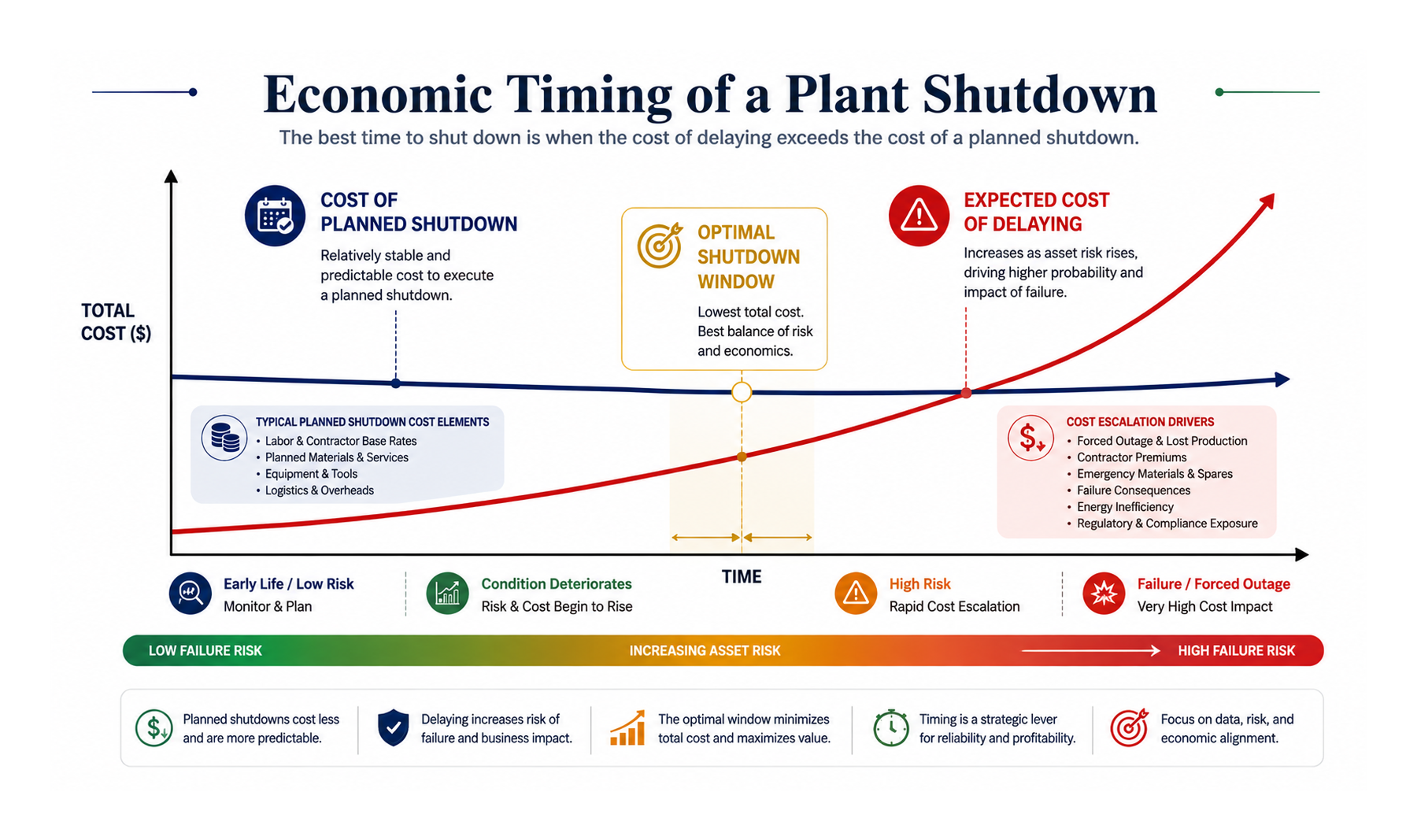
- Lost Production Cost Analysis – Evaluate revenue loss per hour of downtime versus escalating failure risk and repair cost.
- Failure Consequence Modeling – Catastrophic failure often costs multiples of planned shutdown expense due to collateral damage and extended downtime.
- Contractor Market Rate Cycles – Shutdowns scheduled during peak industry seasons inflate labor and service contractor costs.
- Inventory Carrying vs Expediting Cost – Early planning reduces premium freight charges and emergency spares procurement.
- Energy Efficiency Impact – Delayed cleaning or overhaul increases energy consumption, eroding margins before visible failures occur.
Risk-Based Shutdown Timing Framework
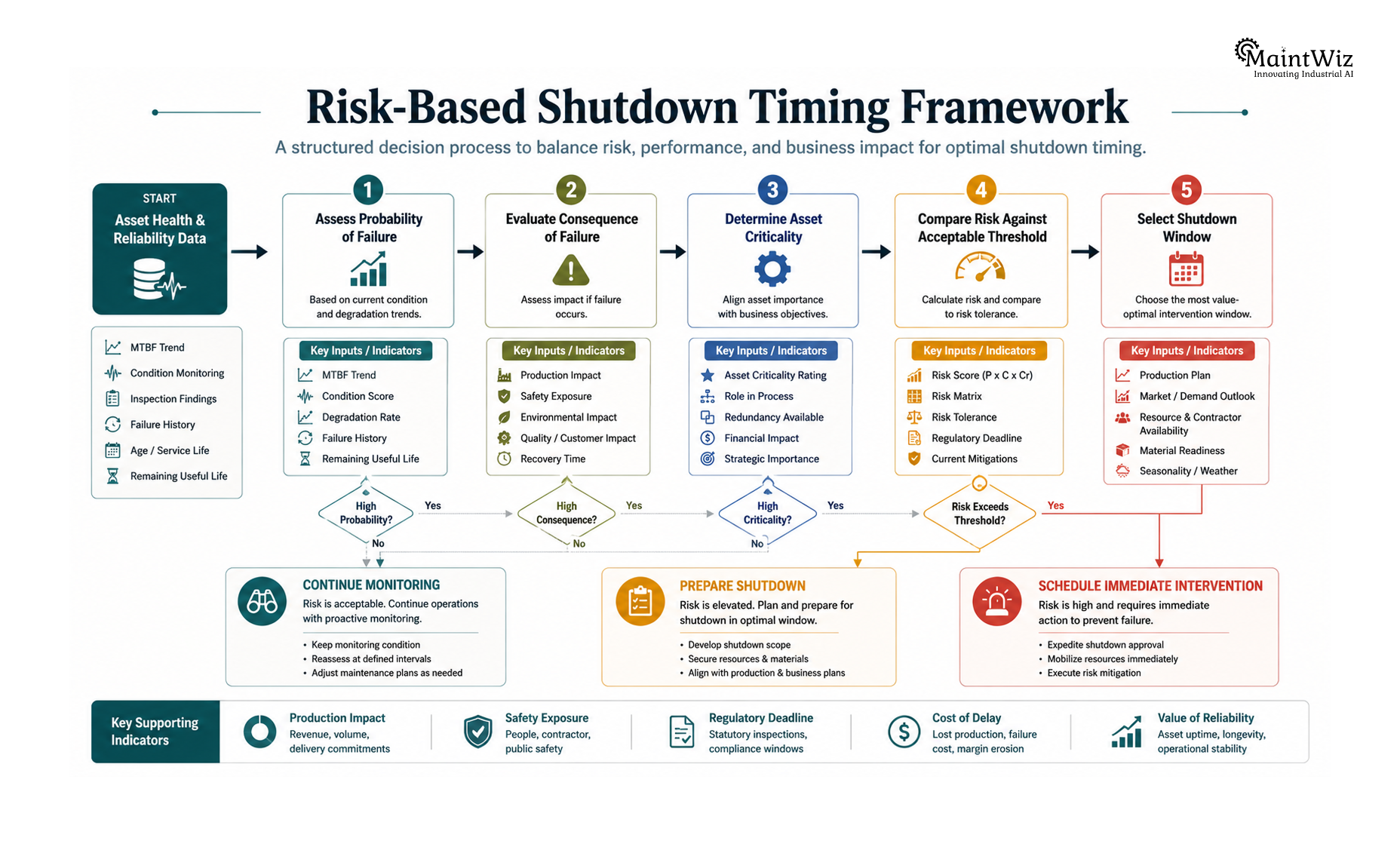
World-class plants use risk-based maintenance (RBM) principles to determine optimal shutdown timing.
- Probability of Failure Trend Analysis – Evaluate degradation rates and remaining useful life using historical failure data.
- Consequence of Failure Evaluation – Assess safety, environmental, production, and reputational impacts of asset failure.
- Criticality Ranking Integration – High-criticality assets drive shutdown timing more than low-impact equipment.
- Risk Matrix Decision Support – Combine likelihood and consequence to identify when risk crosses acceptable thresholds.
- Dynamic Risk Review Cycles – Reassess timing as new condition or performance data becomes available.
Early Warning Signs That a Shutdown is Overdue
Delaying a needed shutdown often creates cascading failures and safety exposure.
- Escalating Emergency Work Orders – Rising reactive maintenance indicates systemic reliability degradation.
- Repeated Temporary Repairs – Frequent patch fixes suggest underlying issues requiring shutdown-level intervention.
- Growing Maintenance Backlog Risk – Critical tasks repeatedly deferred increase the probability of forced outages.
- Unstable Process Performance – Variability in output, temperature, or pressure often indicates internal equipment deterioration.
- Safety Near-Miss Trends – Mechanical integrity issues frequently manifest first as minor incidents before major failures.
Strategic Coordination with Production and Supply Chain
Shutdown timing must be synchronized with commercial and operational realities.
- Demand Cycle Alignment – Schedule outages during seasonal demand dips to reduce revenue impact.
- Inventory Buffer Planning – Build finished goods inventory ahead of shutdown to maintain customer service levels.
- Raw Material Supply Coordination – Align shutdown with supplier maintenance windows to avoid material disruptions.
- Logistics and Distribution Planning – Prevent downstream bottlenecks by coordinating restart schedules with distribution capacity.
- Customer Contract Considerations – Avoid shutdowns during peak contractual delivery obligations or penalty risk periods.
Common Shutdown Timing Mistakes
Poor timing decisions are often rooted in organizational silos and weak data visibility.
- Production-Driven Delay Bias – Deferring shutdowns to chase short-term output often leads to catastrophic forced outages later.
- Ignoring Reliability Data Signals – Condition monitoring warnings are frequently overridden without structured risk review.
- Underestimating Scope Growth Risk – Late shutdown decisions compress planning time, causing scope creep and schedule overruns.
- Seasonal Contractor Shortages – Scheduling during industry peak seasons results in labor scarcity and inflated costs.
- Lack of Cross-Functional Governance – Absence of integrated decision forums leads to misaligned shutdown timing.
Best Practices for Optimizing Shutdown Timing
High-performing organizations treat shutdown timing as a structured, repeatable strategic process.
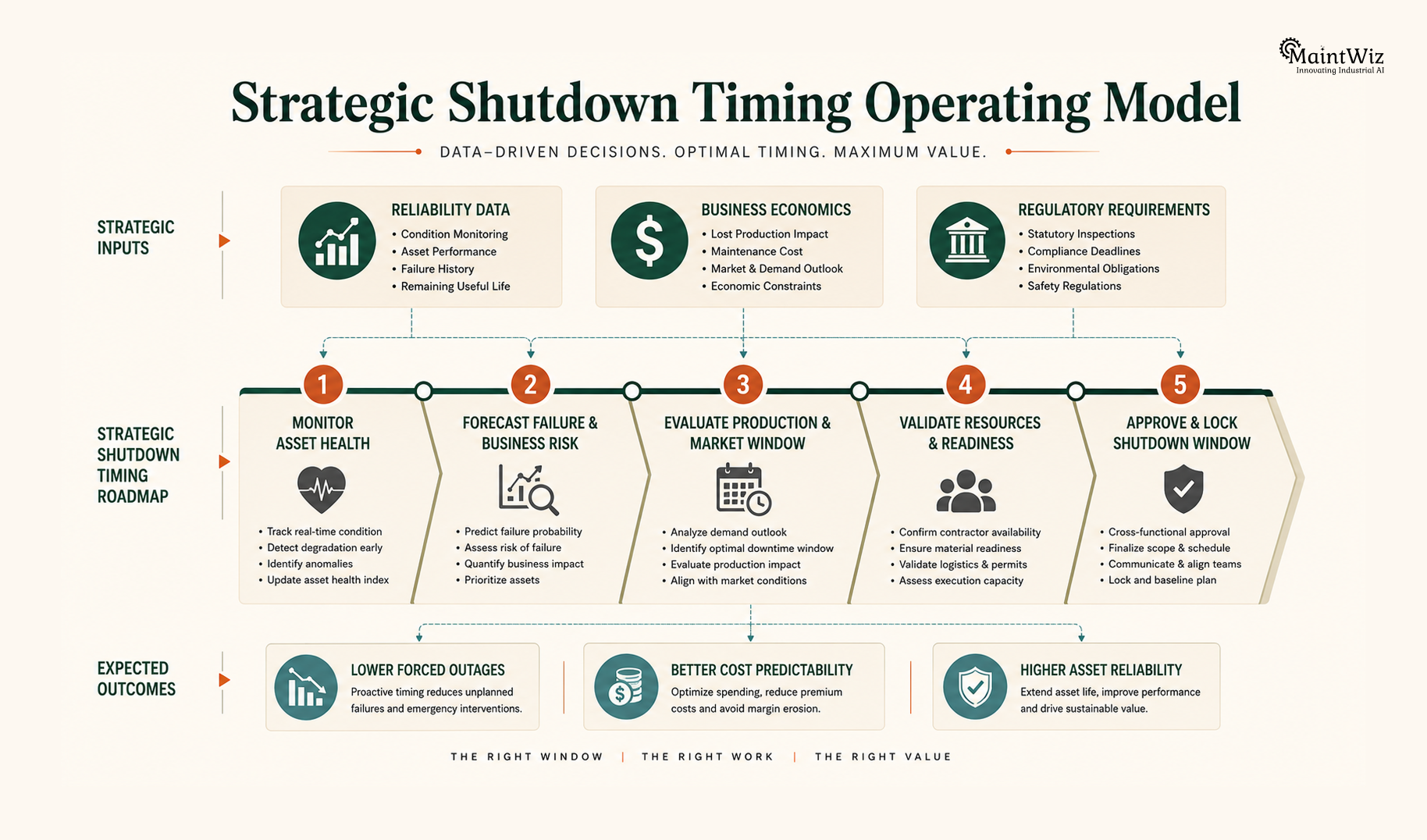
- Integrated Asset Health Dashboards – Combine condition monitoring, failure history, and backlog data for holistic timing decisions.
- Rolling 3–5 Year Shutdown Roadmaps – Maintain long-range visibility to align capital projects, inspections, and major overhauls.
- Risk-Based Decision Workshops – Use cross-functional teams to evaluate timing trade-offs using structured risk frameworks.
- Scenario-Based Financial Modeling – Compare cost of planned shutdown versus probability-weighted failure scenarios.
- Continuous Scope Readiness Tracking – Monitor readiness metrics to avoid last-minute timing shifts.
The Role of Digital CMMS in Shutdown Timing Decisions
Modern shutdown timing decisions rely on accurate, accessible, and integrated maintenance data — something spreadsheets cannot deliver.
- Asset History Visibility – Long-term failure patterns and maintenance records help determine when degradation risk justifies shutdown intervention.
- Preventive Maintenance Compliance Tracking – Missed or overdue PMs highlight systemic reliability risks that influence timing decisions.
- Maintenance Backlog Risk Analysis – CMMS data reveals accumulation of high-priority work best executed during a planned outage.
- Condition Monitoring Data Integration – Linking inspection results to assets supports condition-based shutdown timing.
- Shutdown Work Scope Forecasting – Historical job plans and labor hours help predict outage duration and optimal scheduling windows.
Why MaintWiz CMMS Enables Smarter Shutdown Timing
Strategic shutdown timing depends on reliable data, structured workflows, and cross-functional visibility. MaintWiz CMMS supports these needs by bringing maintenance, reliability, and planning information into a single system of record.
- Centralized Asset Lifecycle Records – MaintWiz provides complete equipment history, helping reliability teams identify degradation trends influencing shutdown timing.
- Preventive and Predictive Maintenance Tracking – Scheduled and condition-triggered tasks are visible in one platform, improving risk-based shutdown planning.
- Maintenance Backlog Transparency – Planners can assess overdue and high-risk work orders that should be bundled into shutdown scope.
- Mobile Inspection Data Capture – Field teams record condition findings in real time, enabling earlier detection of shutdown-triggering issues.
- Work Order Analytics and Reporting – Historical labor, failure, and repair trends support data-driven timing decisions.
By connecting asset data, maintenance history, and inspection insights, MaintWiz helps organizations move from reactive shutdown timing to proactive, risk-based outage strategy.
Conclusion: Shutdown Timing is a Strategic Lever, Not a Calendar Event
The question is no longer “When is the annual shutdown due?” The right question is “When does asset risk, business impact, and economic optimization intersect?”
Plants that master shutdown timing experience fewer forced outages, lower maintenance costs, improved safety, and stronger production reliability. In today’s margin-sensitive industries, that advantage is decisive.

Company
Download App