Human Factors in Equipment Failure: The Overlooked Risk Undermining Industrial Reliability

In asset-intensive industries, leaders invest billions in advanced machinery, predictive analytics, and automation. Yet unplanned downtime, safety incidents, and repeat failures continue to plague even the most modern plants. The uncomfortable truth is this: equipment rarely fails purely because of technology. It fails because of people, processes, and systems interacting under pressure.
Human factors are not a “soft” issue. They are one of the largest, most persistent root causes of equipment failure, safety incidents, and lost production across manufacturing, energy, utilities, chemicals, mining, and infrastructure. For CXOs, this is no longer a maintenance problem—it is a strategic leadership challenge with direct implications for EBITDA, safety, and asset returns.
This article takes a deep, executive-level look at human factors in industrial plant maintenance, explains how they translate into real equipment failures, and outlines how modern, human-centric platforms like MaintWiz CMMS, including ePTW and Safety Permit management, help organizations systematically eliminate these risks.
Why Human Factors Matter in Industrial Maintenance Today
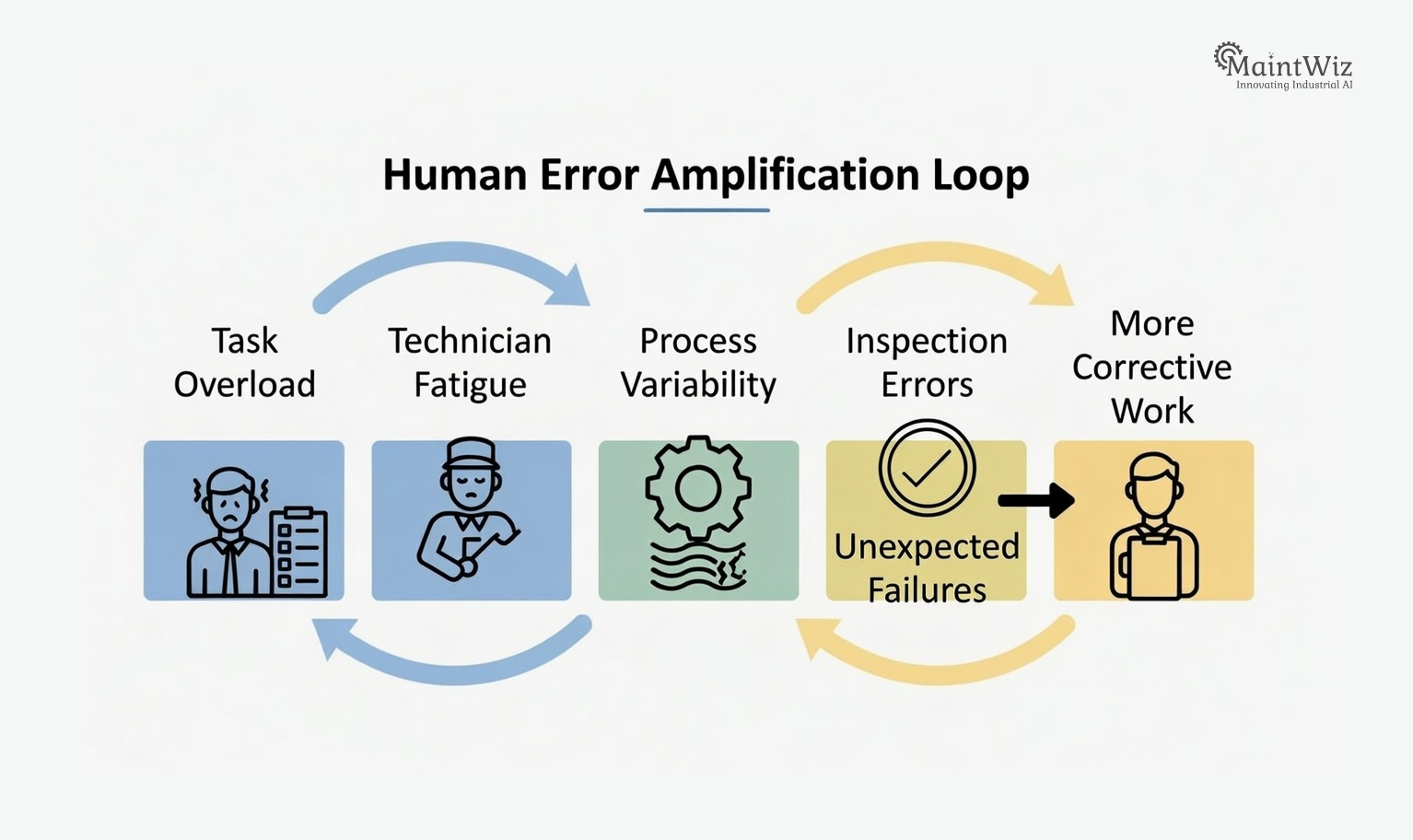
Industrial operations have become more complex, faster paced, and more interconnected than ever. Maintenance teams are expected to do more with fewer people, tighter schedules, and higher safety expectations. In this environment, human limitations collide with system complexity.
Human factors include cognition, behavior, communication, fatigue, training, culture, ergonomics, and decision-making. When these are not deliberately engineered into maintenance systems, errors become predictable—not accidental.
For senior leaders, ignoring human factors means:
- Rising unplanned downtime despite technology investments
- Increased safety and compliance exposure
- Shortened asset life and higher maintenance costs
Loss of tribal knowledge as experienced workers retire
Understanding Human Factors in Equipment Failure
Human factors represent the interaction between people, equipment, processes, and the environment. Failures typically occur not because individuals are careless, but because systems are poorly designed for real human behavior.
Human Error Is a System Outcome
Errors emerge when systems rely on memory, assumptions, or heroics rather than structured processes. Maintenance environments often demand multitasking, rapid decisions, and physical precision—conditions where error probability naturally increases without safeguards.
Latent vs. Active Failures
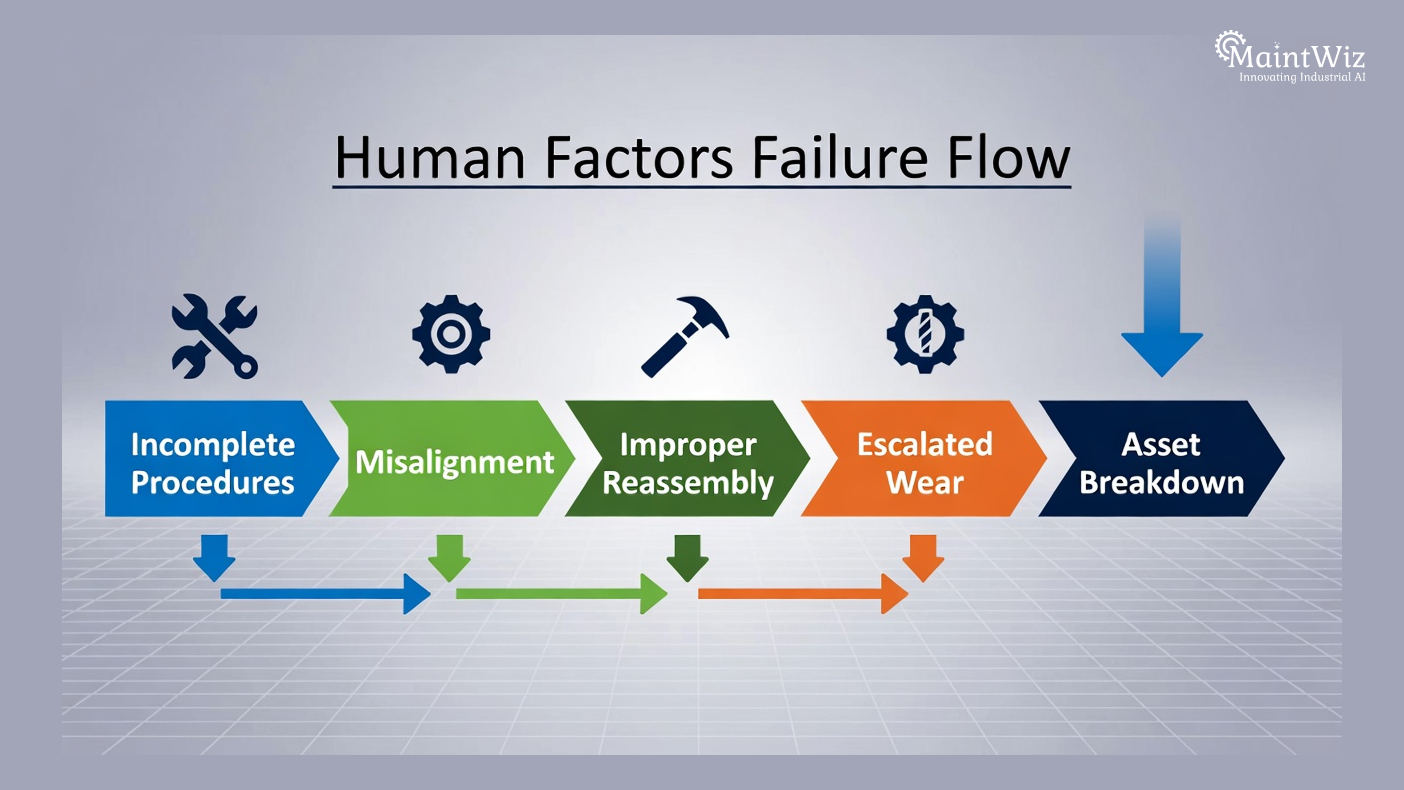
Many failures originate as latent conditions—unclear procedures, skill gaps, time pressure—that remain invisible until they align and trigger an incident. By the time a breakdown occurs, the true cause may be weeks or months old.
Top Human Factors Driving Equipment Failure in Industrial Plants
- Unclear or Incomplete Maintenance Procedures
When work instructions are outdated, ambiguous, or undocumented, technicians rely on experience or assumptions. This leads to inconsistent execution, incorrect assembly, or missed steps. Over time, these deviations accumulate and manifest as premature failures, repeat breakdowns, and safety incidents.
- Communication Breakdowns Between Teams
Poor coordination between operations, maintenance, engineering, and safety teams creates gaps in expectations and execution. Misunderstood work scopes, incomplete handovers, or undocumented changes frequently result in wrong parts, improper settings, or unsafe conditions during maintenance activities.
- Inadequate Training and Competency Gaps
As equipment becomes more sophisticated, skill requirements increase. When training does not keep pace, technicians may misdiagnose faults, apply incorrect repairs, or fail to recognize early warning signs. Competency mismatches are a silent driver of rework and asset degradation.
- Time Pressure and Production Bias
Production demands often push maintenance teams to work faster, not smarter. Under schedule pressure, verification steps are skipped, shortcuts become normalized, and preventive tasks are deferred. While short-term output may improve, long-term reliability deteriorates rapidly.
- Fatigue and Cognitive Overload
Extended shifts, night work, and high task loads impair attention and decision-making. Fatigued technicians are more likely to misread gauges, forget steps, or make unsafe choices. Cognitive overload is especially dangerous in complex, high-risk maintenance activities.
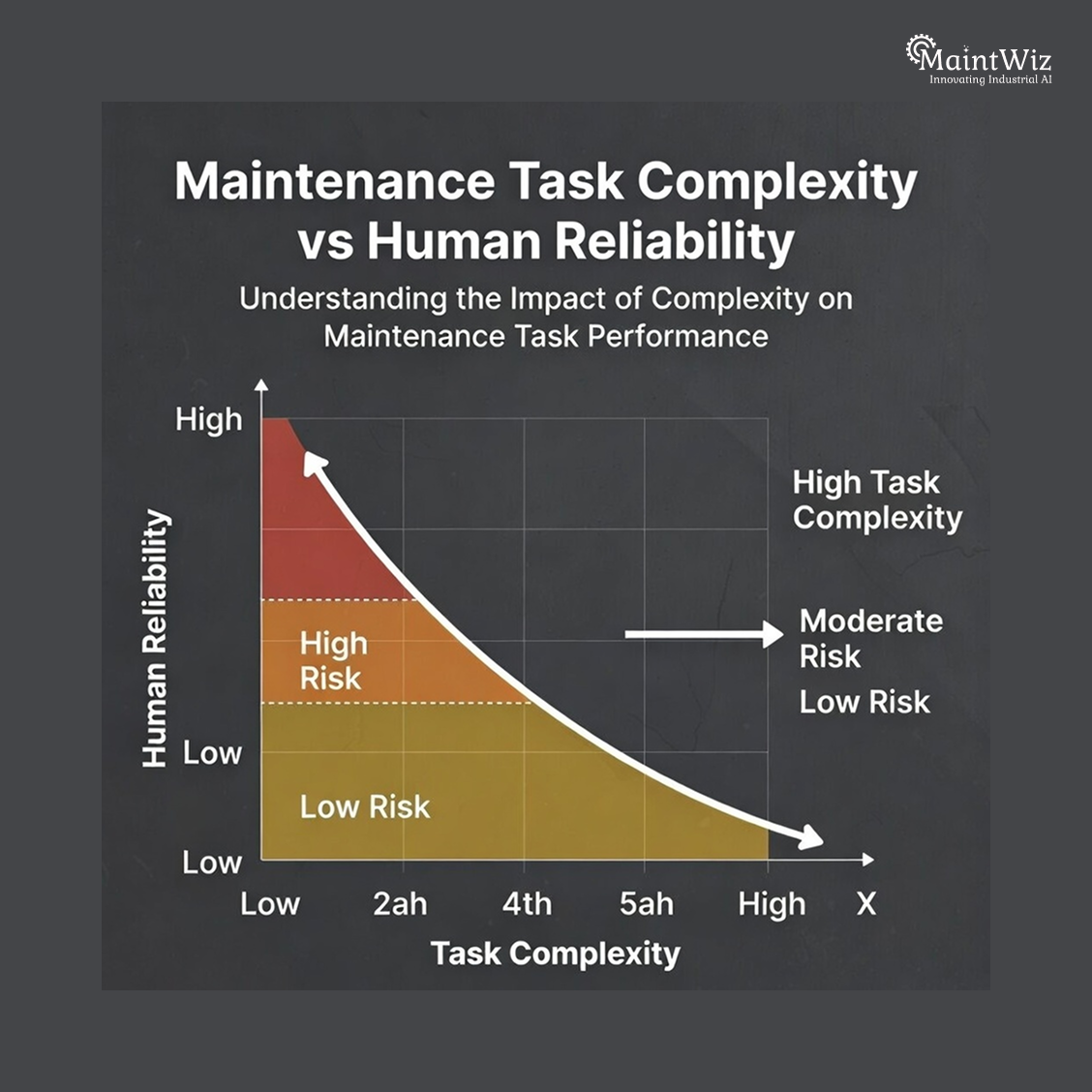
- Poor Ergonomics and Equipment Accessibility
Maintenance tasks performed in awkward positions or confined spaces increase physical strain and error likelihood. Difficult access discourages thorough inspections and proper torqueing or alignment, leading to hidden defects that evolve into failures over time.
- Non-Standardized Work Practices
When similar tasks are performed differently across shifts, plants, or technicians, reliability becomes inconsistent. Lack of standardization makes training harder, errors harder to detect, and best practices impossible to scale across the organization.
- Weak Safety and Accountability Culture
Cultures that tolerate shortcuts, normalize deviations, or discourage reporting near misses allow risks to compound. Over time, unsafe practices become “how work gets done,” until a serious incident exposes the underlying fragility of the system.
How Human Factors Translate Into Real Equipment Failures
Missed or Incorrect Preventive Maintenance
Skipped lubrication, incorrect torque values, or improper calibration accelerate wear and reduce asset life. These failures are often blamed on “equipment quality” rather than maintenance execution errors rooted in human factors.
Improper Repairs and Rework Cycles
Faults that are incorrectly diagnosed or repaired return quickly, increasing downtime and cost. Repeated rework erodes confidence in maintenance teams and masks systemic skill or process gaps.
Delayed Response to Early Warning Signs
Human misinterpretation of alarms, trends, or inspection data delays corrective action. What could have been a planned intervention becomes an unplanned shutdown.
Safety Incidents and Regulatory Non-Compliance
Inadequate permits, missing isolations, or misunderstood safety requirements expose workers to serious harm and organizations to regulatory penalties and reputational damage.
The Leadership Shift Required to Address Human Factors
High-performing organizations stop asking “Who made the mistake?” and start asking “Why did the system allow this mistake?”
This requires:
- Designing maintenance processes around real human behavior
- Reducing reliance on memory and informal knowledge
- Embedding safety and quality checks into workflows
- Leveraging digital systems to guide, verify, and learn
Human factors mitigation is not about more rules—it’s about better systems.
How MaintWiz CMMS Reduces Human-Induced Equipment Failure
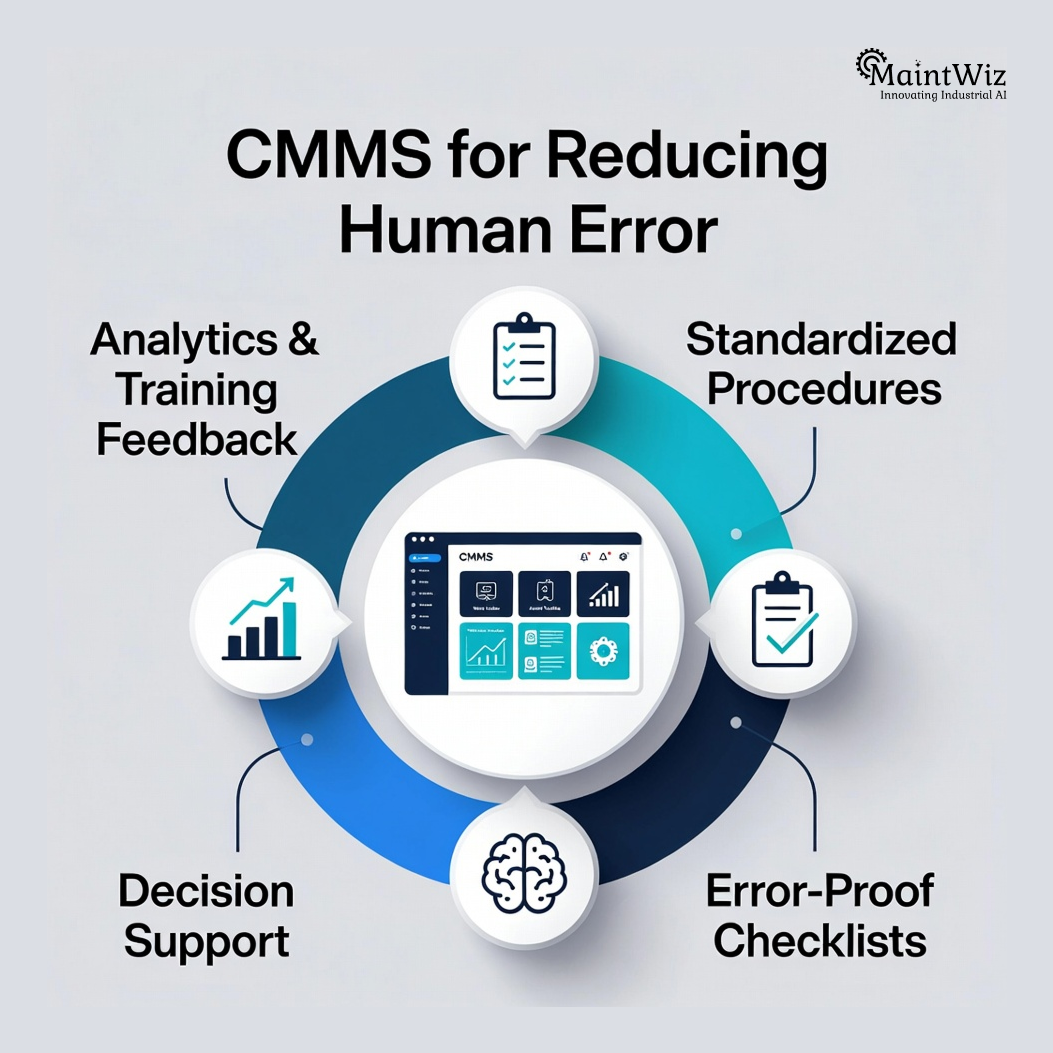
Modern CMMS platforms are no longer just work order trackers. MaintWiz CMMS is designed to actively reduce human error, improve safety, and standardize execution across the maintenance lifecycle.
- Digital, Standardized Work Instructions
MaintWiz embeds step-by-step procedures directly into work orders. Technicians no longer rely on memory or paper manuals, ensuring tasks are performed consistently, correctly, and in the right sequence—every time.
- Intelligent Preventive Maintenance Scheduling
Automated scheduling eliminates missed or overdue tasks. Maintenance is planned based on asset criticality and usage, reducing the risk of deferred work caused by human oversight or competing priorities.
- Built-In Checklists and Verification Controls
Mandatory checklists ensure no critical steps are skipped. Verification fields, sign-offs, and digital records reinforce accountability and consistency, especially for high-risk or regulated activities.
- ePTW (Electronic Permit to Work) Integration
MaintWiz integrates ePTW and Safety Permit management directly into maintenance workflows. Permits, isolations, and safety clearances are digitally issued, approved, and tracked—dramatically reducing the risk of unauthorized or unsafe work.
- Enhanced Safety and Compliance Assurance
By linking permits, lock-out/tag-out steps, and safety checklists to work orders, MaintWiz ensures maintenance cannot proceed without required safety controls. This embeds safety into execution, not just policy.
- Centralized Asset and Maintenance History
Technicians and supervisors access complete asset histories, failure trends, and past repairs in one place. This reduces diagnostic errors and supports better decision-making based on facts, not assumptions.
- Role-Based Access and Responsibility Clarity
MaintWiz assigns tasks, approvals, and permissions by role, ensuring the right people perform and approve the right work. This clarity reduces confusion, duplication, and accountability gaps.
- Analytics, KPIs, and Continuous Improvement
Dashboards and analytics expose repeat failures, human-error trends, and compliance gaps. Leaders gain visibility into where processes—not people—are breaking down, enabling targeted improvement initiatives.
Human Factors, Safety, and the Future of Maintenance
As industrial organizations adopt predictive maintenance, AI, and connected assets, the human layer becomes even more critical. Advanced technology increases decision complexity; without human-centric systems, error risk rises—not falls.
The future of maintenance excellence lies in:
- Designing for human limitations
- Digitally enforcing safe, standard work
- Capturing and institutionalizing knowledge
Treating maintenance as a strategic, system-level capability
Key Takeaways for CXOs and Asset Leaders
- Human factors are a leading cause of equipment failure and safety incidents
- Most errors are predictable outcomes of poorly designed systems
- Addressing human factors requires process, culture, and technology alignment
- CMMS platforms like MaintWiz, with integrated ePTW and safety permits, transform maintenance from reactive to resilient
The plants that win on reliability won’t just have smarter machines—they’ll have smarter systems designed for the people who maintain them.


Jai Balachandran is an industry expert with a proven track record in driving digital transformation and Industry 4.0 technologies. With a rich background in asset management, plant maintenance, connected systems, TPM and reliability initiatives, he brings unparalleled insight and delivery excellence to Plant Operations.
Company
Download App