Turnaround vs Shutdown vs Outage: Key Differences Explained
In capital-intensive process industries, nothing destroys value faster than confusing a turnaround, a shutdown, and an outage—and planning them the same way. I’ve seen world-class plants lose tens of millions because leaders treated a refinery turnaround like a routine shutdown, or managed a forced outage with turnaround bureaucracy.
The terms are often used interchangeably in meetings. On the plant floor, they are fundamentally different events with different objectives, risk profiles, planning horizons, and financial consequences.
This article explains the real differences between turnaround vs shutdown vs outage, why those differences matter strategically, and how STO excellence becomes a competitive advantage.
Why STO Terminology Clarity Is a Board-Level Issue
At executive level, STOs are not maintenance events—they are enterprise risk events.
- Capital-at-risk exposure during STOs: STO windows compress safety, cost, schedule, and reputational risk into days or weeks.
- Disproportionate financial impact: One additional outage day can erase a year of reliability improvement benefits.
- Operational credibility with stakeholders: Regulators, customers, insurers, and partners judge maturity by STO discipline.
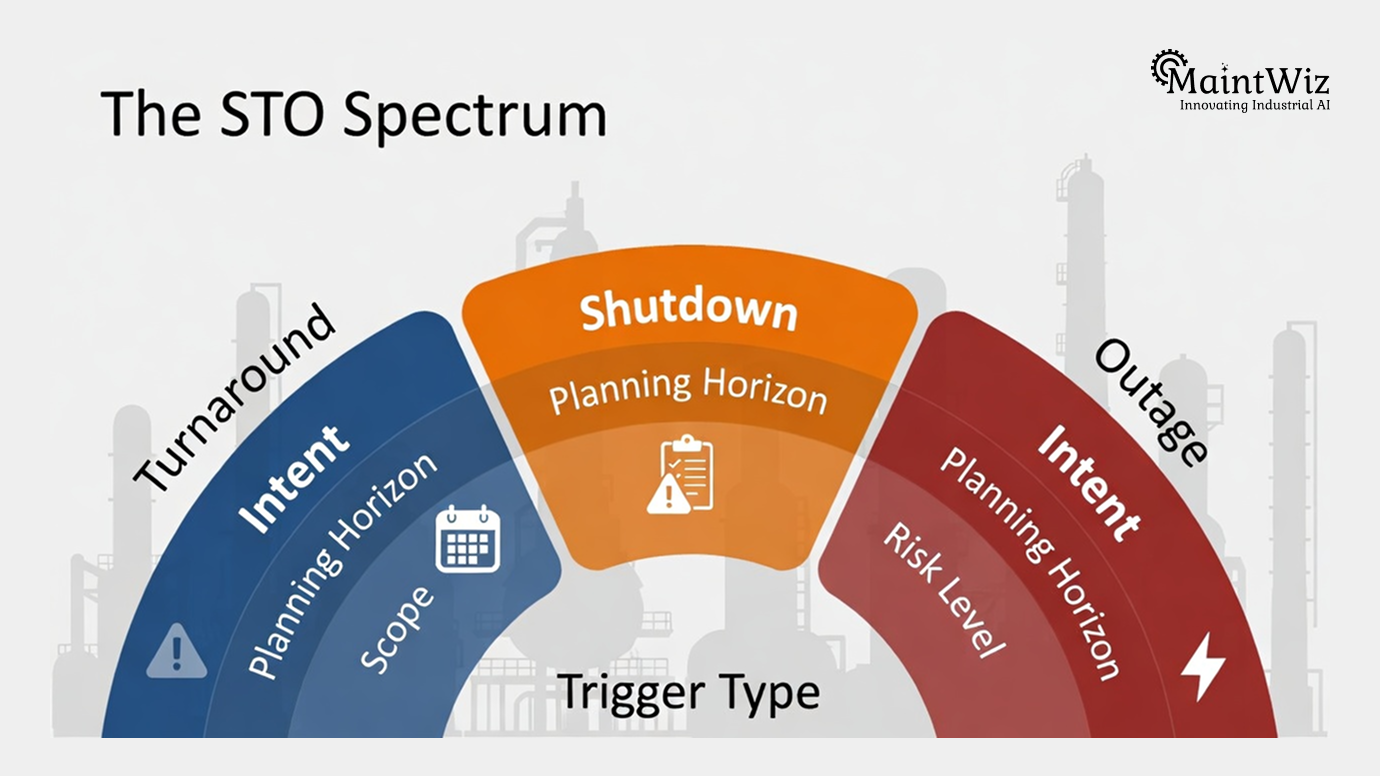
The STO Spectrum: How Turnarounds, Shutdowns, and Outages Differ
STOs differ by intent, not just duration.
- Turnaround strategic intent: Restore asset integrity, compliance, and long-term reliability in a single integrated campaign.
- Shutdown operational intent: Execute planned maintenance or modifications with minimal production disruption.
- Outage risk-recovery intent: Restore operations rapidly after unplanned equipment failure.
Turnaround vs Shutdown vs Outage: Side-by-Side Comparison
| Dimension | Turnaround | Shutdown | Outage |
|---|---|---|---|
| Planning Horizon | 12–36 months | 4–12 weeks | Hours to days |
| Trigger | Strategic / regulatory | Planned maintenance | Forced failure |
| Scope | Enterprise-wide | Unit or system level | Failure-driven |
| Governance | Dedicated TA organization | Maintenance-led | Operations-led |
| Cost Profile | High capex + opex | Moderate opex | Unplanned loss |
| Risk Profile | Safety, schedule, scope | Resource conflicts | Escalating downtime |
What Is a Turnaround?
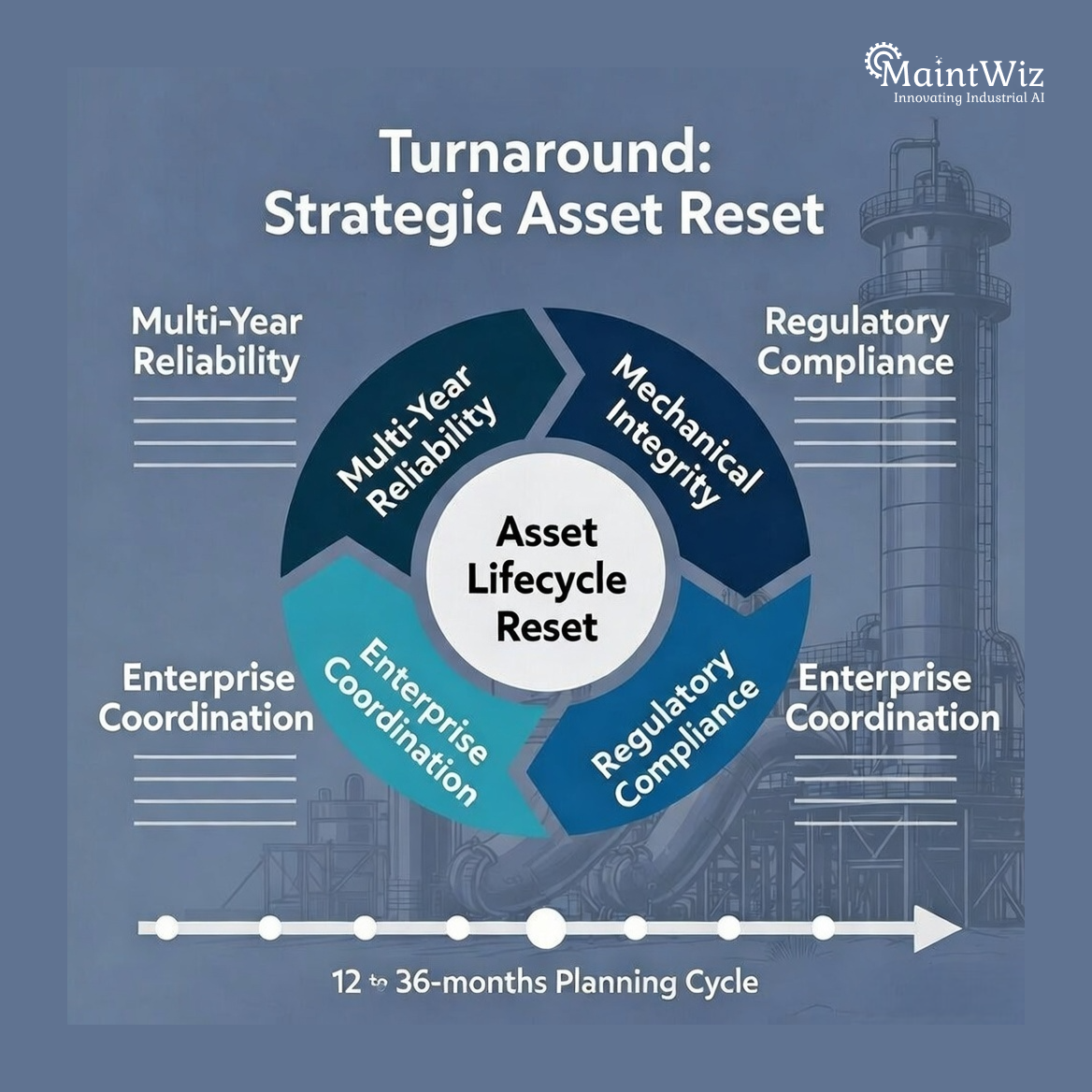
A turnaround is a strategic reset of asset health, not routine maintenance.
- Lifecycle reset objective: Restores mechanical integrity and compliance for multi-year operating run lengths.
- Enterprise-scale coordination: Engineering, procurement, contractors, safety, and operations act as one system.
- Regulatory-driven scope: Statutory inspections define non-negotiable work scope.
- High-impact infrequency: Occurs every 3–6 years but represents the largest maintenance spend.
Why Turnarounds Fail
- Late scope freeze: Scope creep destroys schedules faster than execution inefficiencies.
- Material readiness gaps: Missing critical-path materials cause cascading delays.
- Weak contractor productivity control: Headcount growth without output tracking inflates costs.
What Is a Shutdown?
A shutdown is a planned interruption for focused maintenance or modifications.
- Short planning cycle: Planned weeks or months ahead, not years.
- Defined scope: Limited to specific equipment or systems.
- Maintenance-led governance: Less cross-functional complexity than turnarounds.
- Material production impact: Schedule overruns directly affect output commitments.
Common Shutdown Planning Errors
- Over-engineered governance: Treating shutdowns like mini-turnarounds slows execution.
- Poor operations integration: Weak handovers cause start-up failures.
- Weak work prioritization: Excess non-critical work dilutes focus.
What Is an Outage?
An outage is an unplanned or forced loss of production.
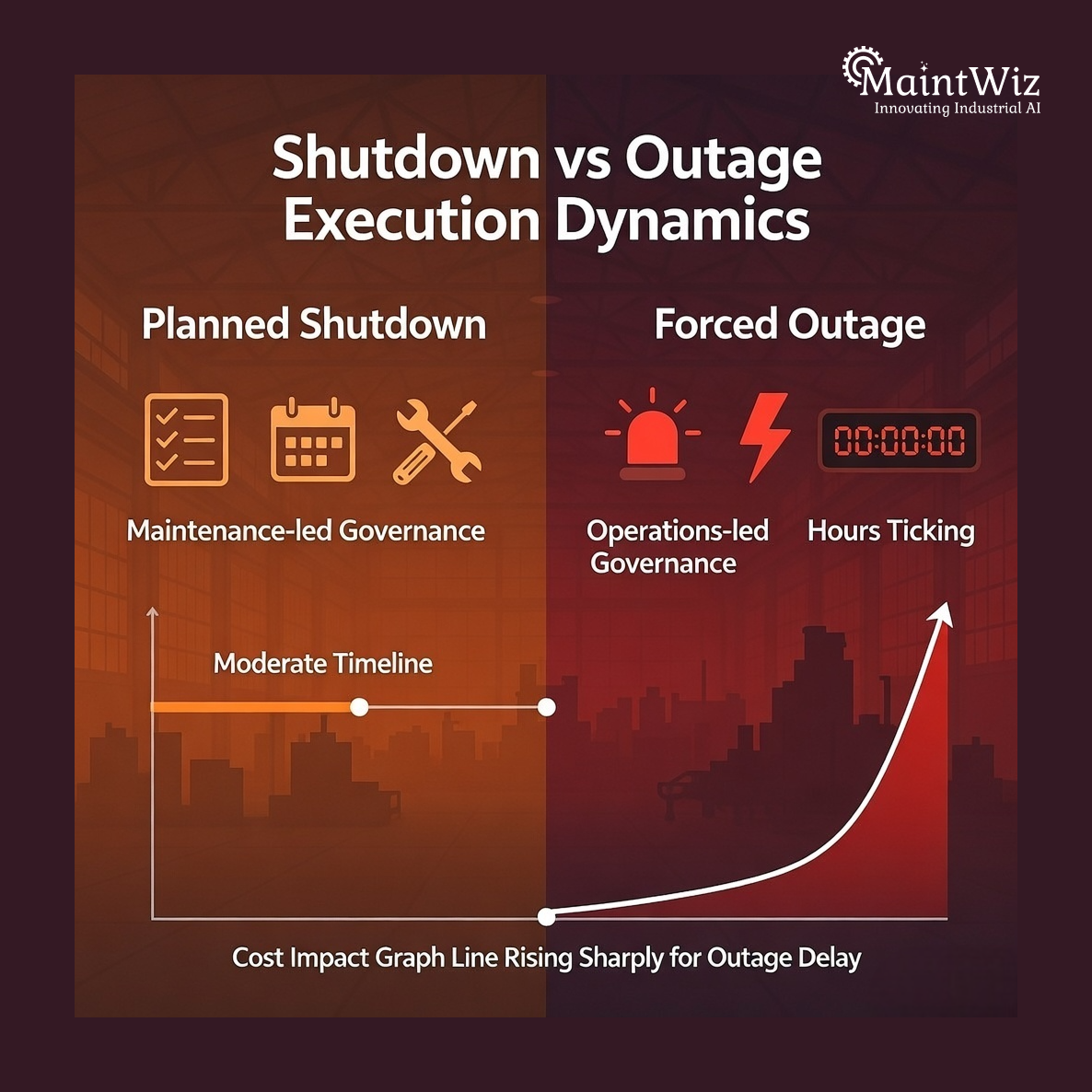
- Reactive execution environment: Decisions are made with incomplete information.
- Escalating cost of delay: Every hour compounds lost margin.
- Operations-led command: Maintenance supports rapid restoration.
- Elevated safety risk: Time pressure increases human error probability.
Outage Management Best Practices
- Clear authority: One outage commander prevents decision paralysis.
- Failure response playbooks: Preparedness enables speed.
- Real-time visibility: Leaders track progress without chasing updates.
Industry-Specific STO Differences
Refining & Petrochemicals
- Refinery turnaround economics: Margin loss per day makes schedule adherence critical.
- Inspection-driven scope: Compliance dominates work lists.
- Contractor ecosystem complexity: Productivity control is essential.
Power Generation
- Outage-driven reliability focus: Forced outages impact grid penalties.
- Seasonal outage windows: Maintenance aligns with demand cycles.
- Condition-based shutdowns: Analytics increasingly drive timing.
Manufacturing
- Demand-aligned shutdowns: Often scheduled during low-demand periods.
- Higher frequency, smaller scope: Incremental asset refresh dominates.
- Lean execution emphasis: Downtime reduction is paramount.
The Role of CMMS in STO Excellence
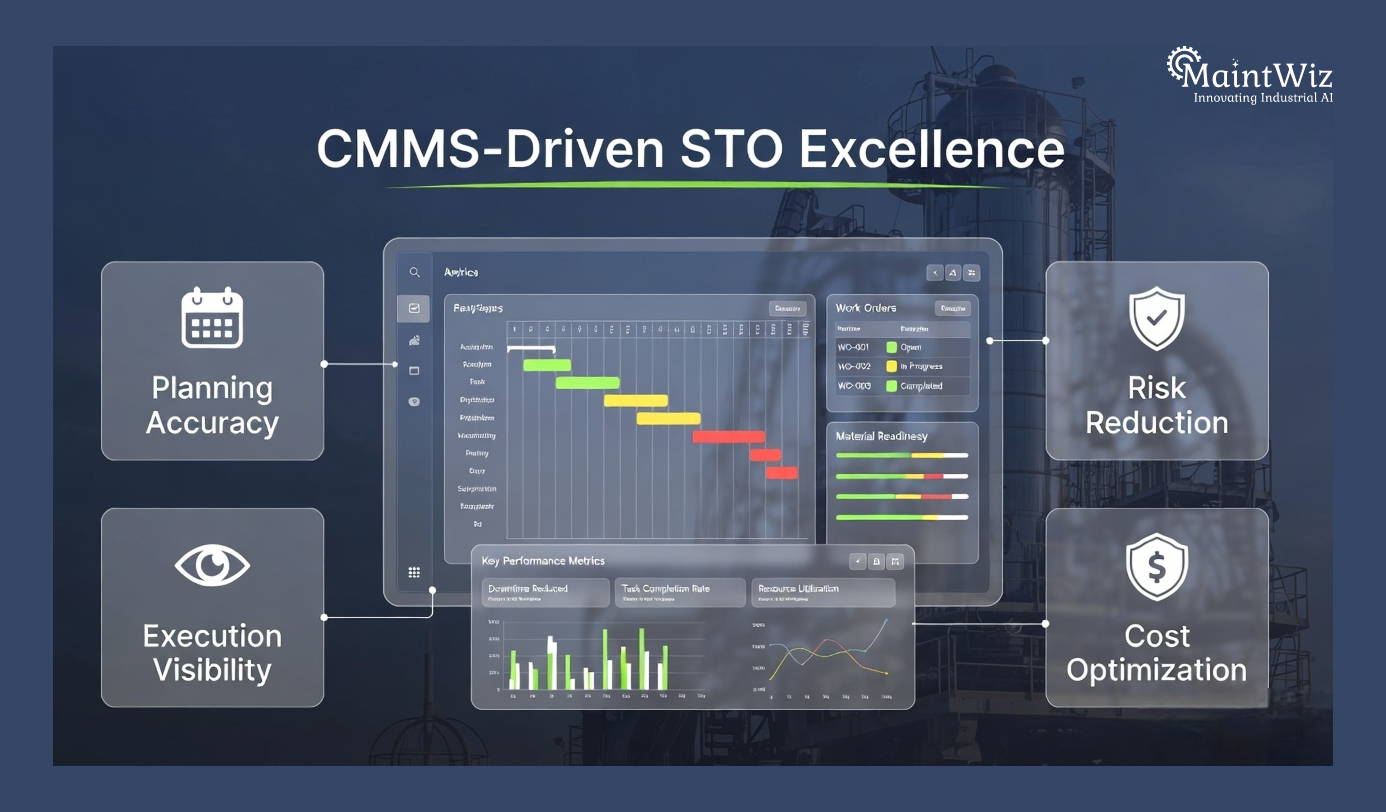
- Planning accuracy: Historical data improves scope definition.
- Execution visibility: Real-time status replaces manual tracking.
- Risk reduction: Standard workflows reduce errors.
- Cost optimization: Analytics expose productivity losses.
Why MaintWiz CMMS Is Uniquely Suited for STOs
MaintWiz for Turnarounds
- Structured work breakdowns: Supports complex turnaround hierarchies.
- Historical intelligence: Past learnings improve scope accuracy.
- Material readiness visibility: Reduces critical-path surprises.
MaintWiz for Shutdowns
- Fast planning cycles: Efficient configuration and scheduling.
- Unified execution view: One version of truth for all teams.
- Post-event analytics: Continuous improvement enabled.
MaintWiz for Outages
- Rapid work order mobilization: Minimal administrative drag.
- Real-time progress tracking: Leaders stay informed.
- Failure data capture: Prevents repeat outages.
Final Takeaway

Company
Download App