

Maintenance Backlog Is the Most Honest KPI in Your Plant

Maintenance Backlog is not just another metric. It’s the clearest lens into the health of your maintenance strategy, operational readiness, and production resilience. In this deep-dive, McKinsey-style analysis with decades of industrial plant experience, we’ll explore why backlog tells the truth that other KPIs often hide — and how world-class teams are mastering it with data-driven tools like MaintWiz CMMS.

Why Maintenance Backlog Matters: The Truth Behind the Numbers

Maintenance Backlog reveals what your maintenance team isn’t doing — and that’s where real risk hides. Unlike vanity KPIs like uptime percentages or superficial compliance counts, backlog exposes latent failure points and impending operational stress.

  1. Backlog Reflects Unmanaged Risk

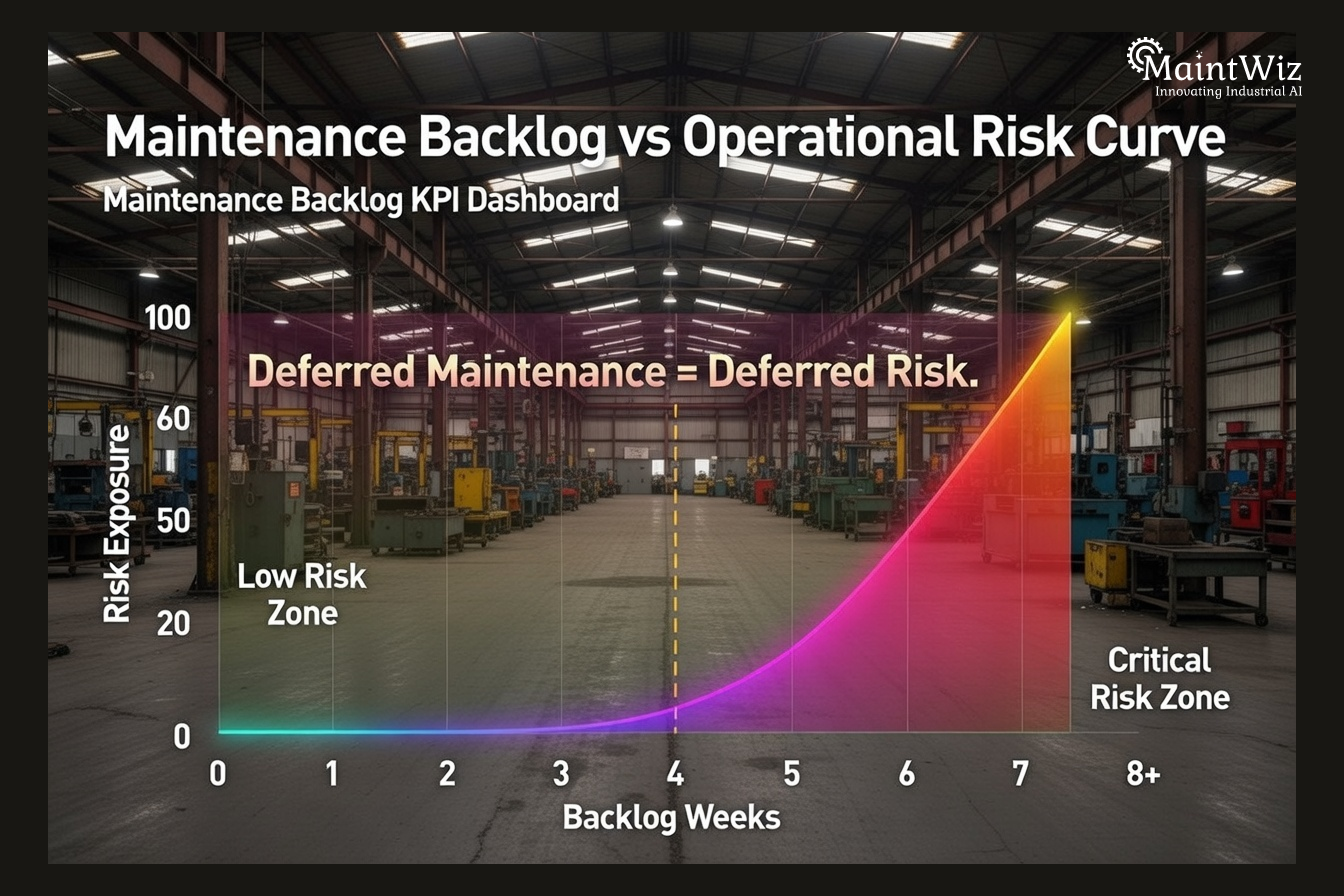
If maintenance tasks are overdue or repeatedly deferred, the likelihood of unexpected breakdowns rises. Backlog is the indicator that quantifies unaddressed risk — making it an essential operational KPI.

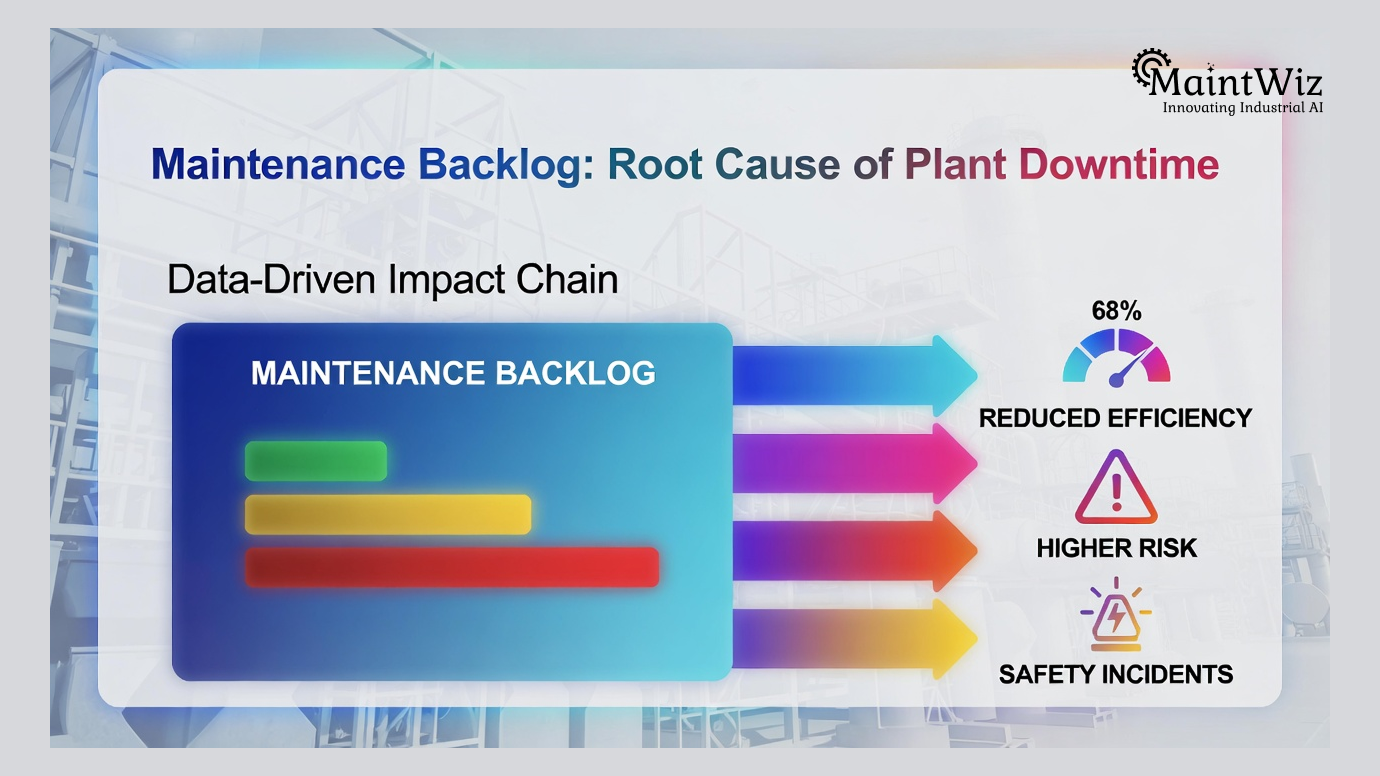
Maintenance backlog leading to plant downtime and operational risk

2. Backlog Drives Reactive Maintenance

A rising backlog usually coincides with a fall in planned maintenance execution. When teams spend more time fixing emergencies than following PM schedules, reliability and asset life suffer.

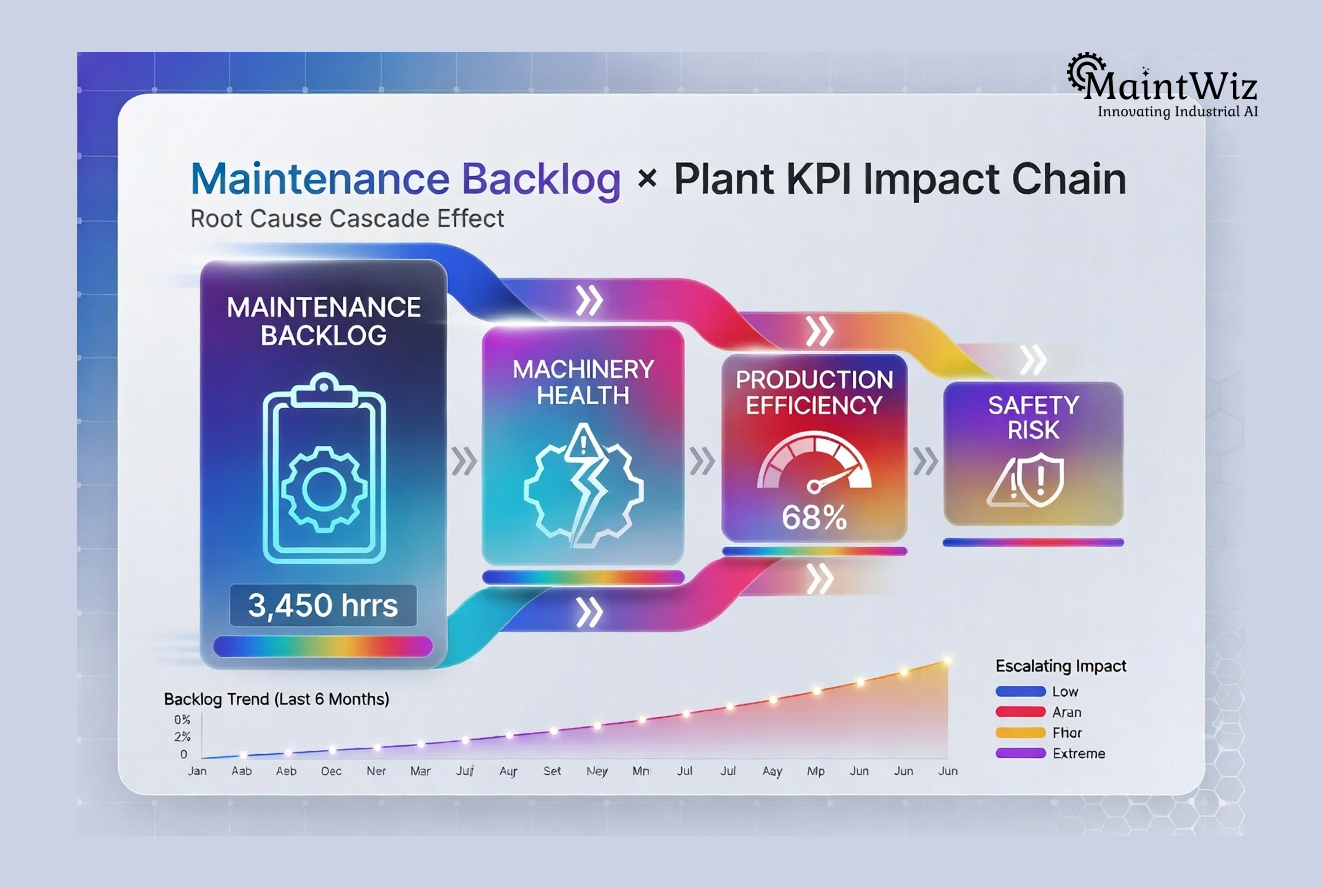
Maintenance backlog impact on cost reliability safety and plant KPIs

3. Backlog Correlates with Cost Leakage

Deferred work turns into costly breakdowns, overtime labor, expedited parts procurement, and production losses. Backlog is a leading indicator of hidden cost inefficiencies.

4. Backlog Reveals Resource Allocation Gaps

Excessive backlog often signals poor planning, misaligned priorities, inefficient scheduling, or skill gaps — all of which are actionable insights.

5. Backlog Mirrors Organizational Discipline

A controlled backlog reflects strong maintenance governance, cross-functional alignment, and accountability in execution — the hallmarks of mature asset management.

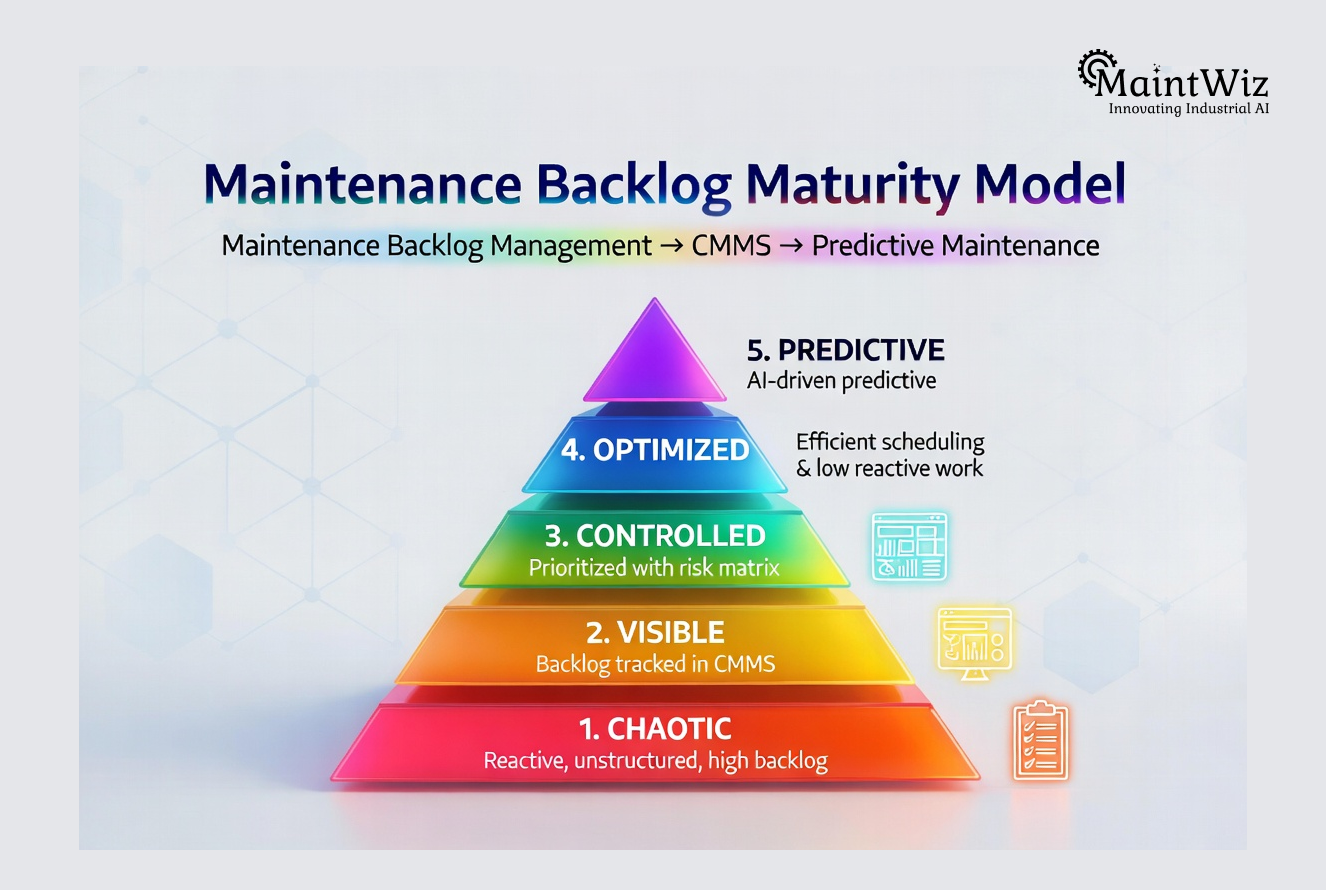
Maintenance backlog maturity stages from reactive to optimized

How Maintenance Backlog Impacts Operational Reliability

Maintenance Backlog is more than a report metric. It directly influences asset reliability, safety, and output predictability.

  • Backlog and Asset Integrity

Every overdue maintenance task is a deferred action to protect asset integrity. Over time, this accelerates wear and risk of catastrophic asset failure.

  • Backlog and Safety Exposure

Backlogs don’t just affect machines — they increase exposure to unsafe conditions. Equipment operating outside maintenance windows creates unpredictable hazards for operators.

  • Backlog and Predictive Maintenance Failure

If your predictive maintenance strategy doesn’t reduce backlog, it’s likely because insights aren’t operationalized into work orders or the work isn’t getting executed.

  • Backlog and Capacity Planning

High backlog limits planning authority, forcing planners into a constant firefighting mode with little capacity for strategic maintenance tasks.

Maintenance backlog increasing operational risk and lowering OEE
  • Backlog and OEE Performance

While Overall Equipment Effectiveness (OEE) is a valuable KPI, backlog is the root cause driver of lower OEE when maintenance execution gaps remain hidden.

Primary Causes of Maintenance Backlog Growth

Understanding the root causes of backlog growth is the first step in reducing it. Here are the most common drivers:

  1. Poor Work Order Prioritization

Without a clear strategy to prioritize work based on asset criticality, less urgent tasks can overshadow mission-critical maintenance, causing backlog to spiral.

  1. Inefficient Scheduling Practices

Siloed calendars, manual scheduling, and lack of real-time coordination between production and maintenance teams create execution bottlenecks.

  1. Resource Constraints

Staffing shortages, skill gaps, and inadequate tools can delay task completion, leading to backlog accumulation.

  1. Inventory Delays

Backlog often arises when parts and materials are unavailable — an issue that modern CMMS inventory forecasting can help mitigate.

5. Lack of Performance Monitoring

Maintenance teams without actionable dashboards or KPI tracking are blindsided by backlogs because early warning signs are missed.

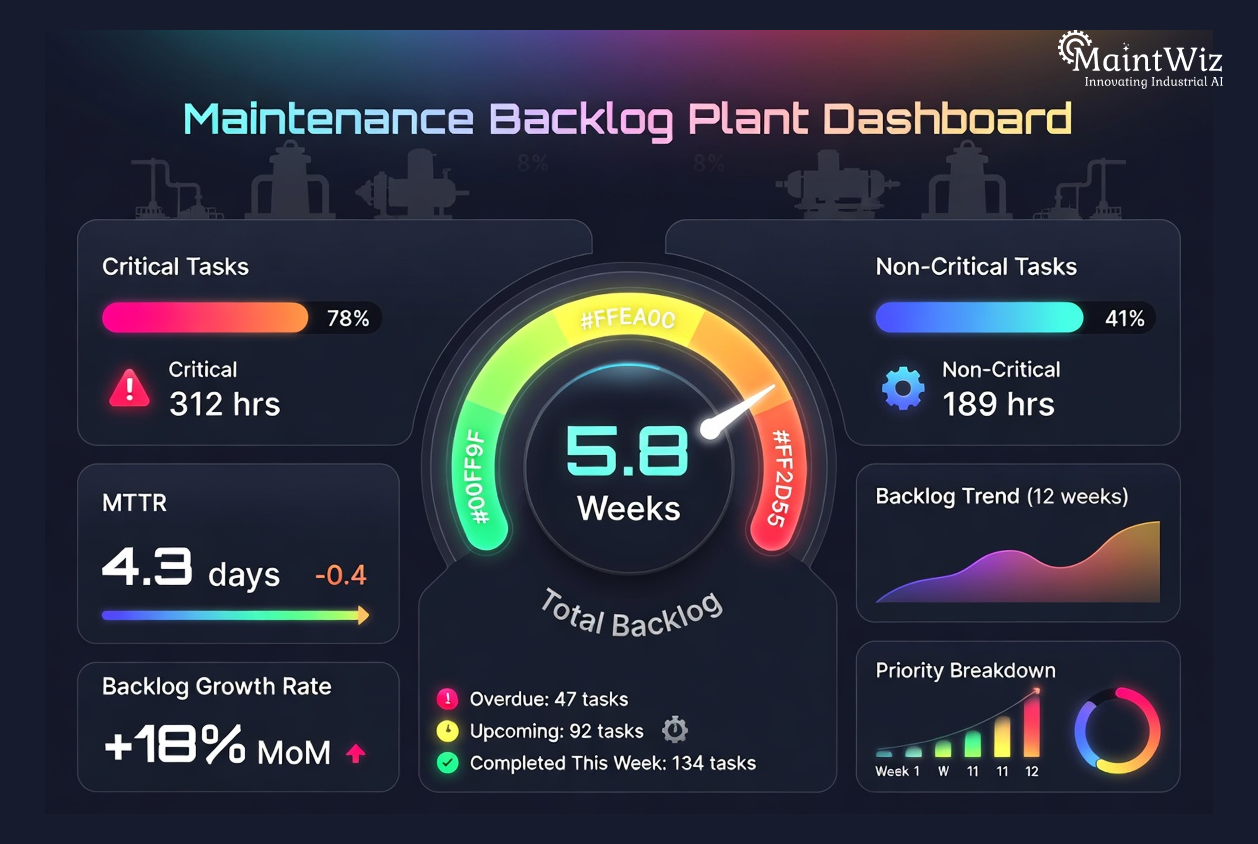
CMMS dashboard showing maintenance backlog hours and overdue work orders

World-Class Backlog Management Strategies

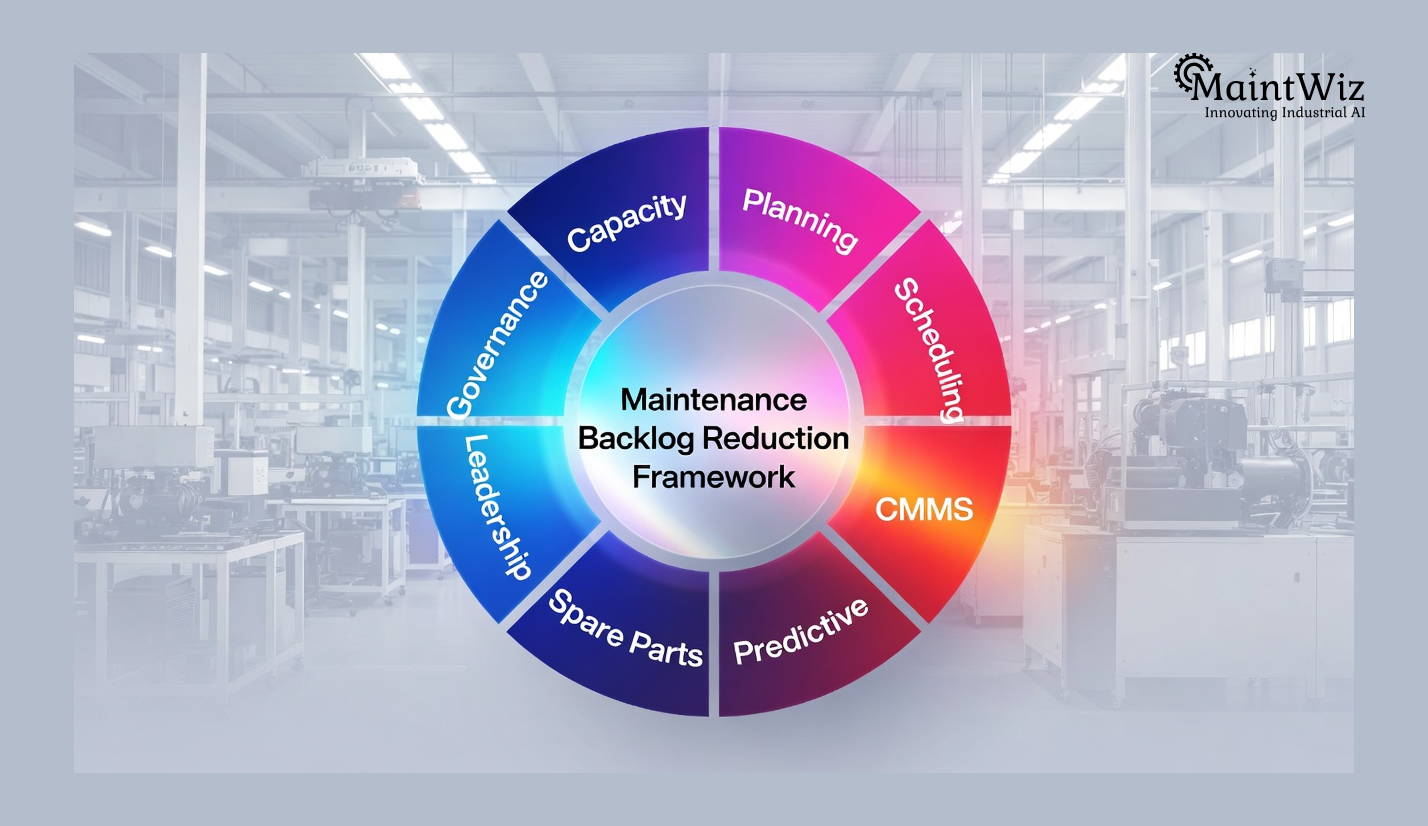
Strategic framework wheel for reducing maintenance backlog

Top industrial operators don’t let backlog manage them — they use systematic approaches to control it.

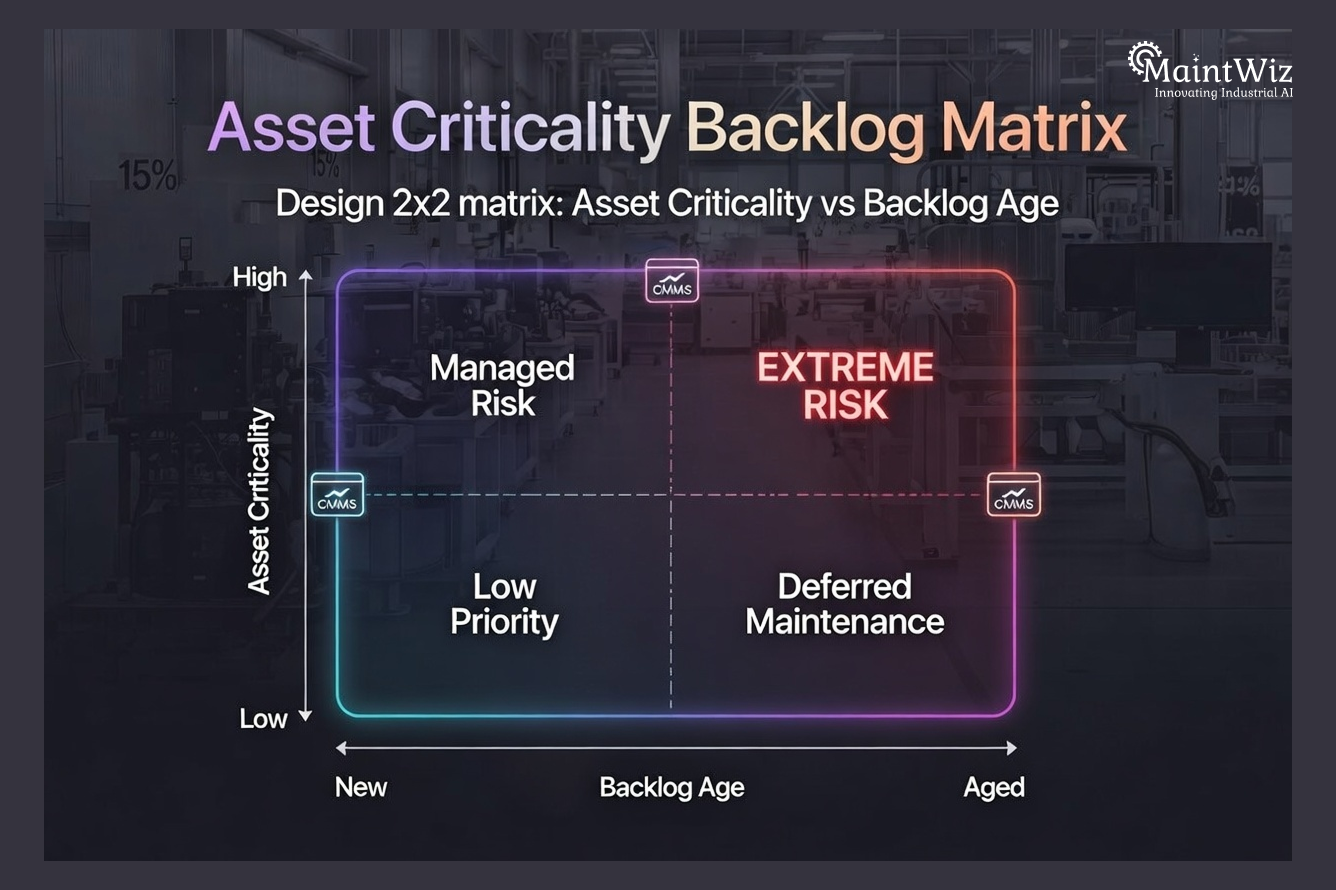
Asset criticality matrix for prioritizing maintenance backlog tasks
  • Risk-Based Backlog Prioritization

Rank backlog tasks by the likelihood and consequence of failure, ensuring resources are dedicated where risk is highest.

  • Integrated Planning & Scheduling

Align maintenance scheduling with production plans to ensure maintenance activities occur without disrupting output.

  • Real-Time Dashboard Tracking

Visibility into backlog metrics at daily intervals helps teams intervene before issues compound.

  • Condition Monitoring Triggers

Turn real-time condition data into automated work orders that close the loop between detection and execution.

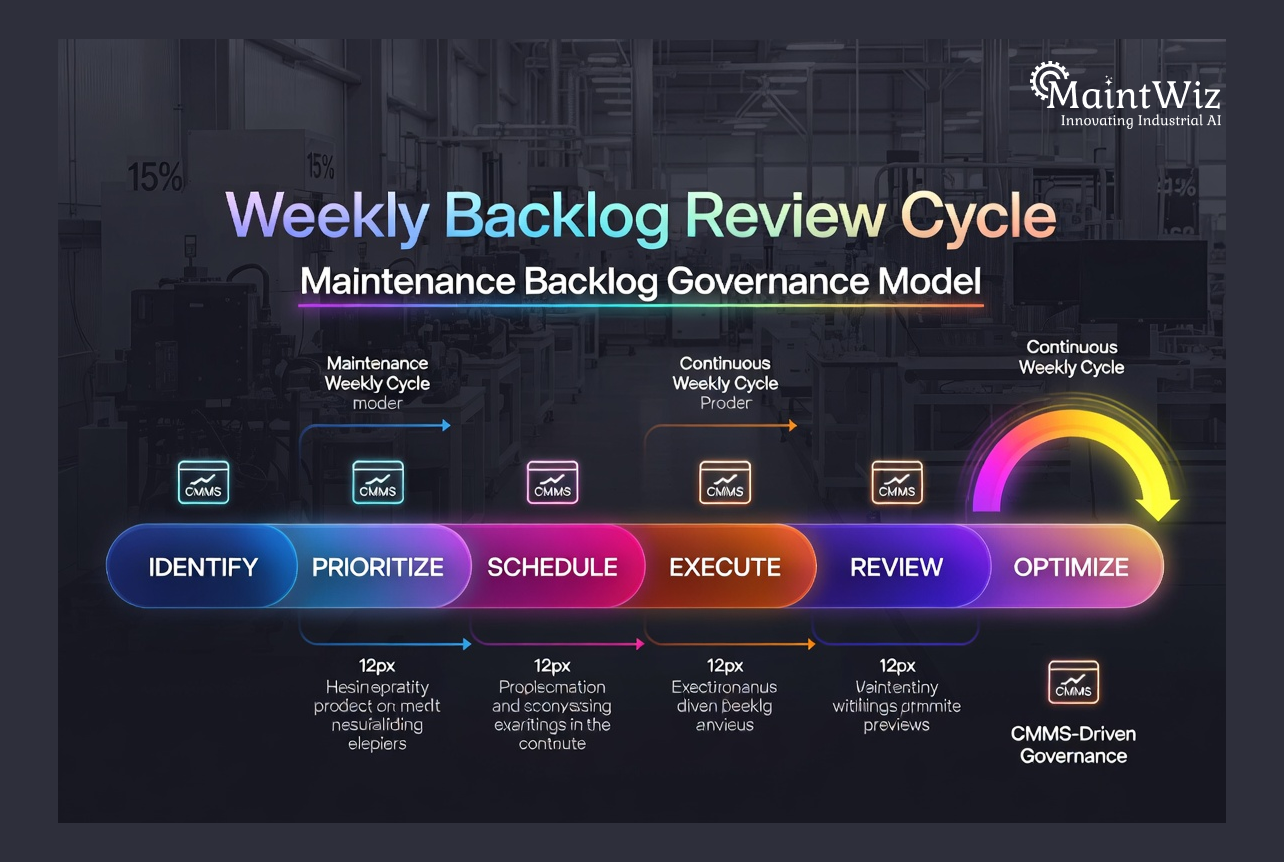
  • Backlog Review Cadence

Establish weekly backlog review meetings between planners, reliability engineers, and production supervisors to clear execution blockers.

Weekly backlog review meeting between maintenance and production teams

Maintenance Backlog KPIs That Matter

Tracking backlog without the right KPIs is like watching a gauge with no units. Here are the KPIs that correlate strongly with maintenance performance:

  • Backlog Hours

Total hours of overdue maintenance work — the purest measure of unexecuted workload.

  • Backlog by Asset Criticality

Backlog stratified by asset risk profile to focus attention on high-impact equipment.

  • Age of Backlogged Tasks

Older tasks are more likely to destabilize operations — so monitor age and get ahead of them.

  • Backlog Completion Ratio

Percentage of backlog cleared within targeted time windows — a key performance benchmark.

  • Trend Velocity

The rate at which backlog is growing or shrinking — an early indicator of strategy health.

Enabling Technologies for Backlog Reduction

Modern maintenance organizations rely on technology to manage and reduce backlog effectively.

  1. Computerized Maintenance Management Systems (CMMS)

A CMMS ensures all backlog tasks are visible, prioritized, scheduled, and tracked — transforming maintenance execution.

  1. Predictive Analytics

Convert condition data into actionable maintenance alerts that prevent backlog from ever forming.

  1. Mobile Maintenance Execution

Field teams can close backlog tasks faster when they can capture data, parts usage, and sign-off on the go.

  1. IoT Integration

Live asset data triggers tasks automatically, reducing reactive work and backlog buildup.

  1. AI-Driven Scheduling

AI optimizes backlog dispatching by matching tasks to technicians based on skill, availability, and criticality.

Why MaintWiz CMMS Is a Game Changer for Backlog Management

MaintWiz CMMS is built to tackle exactly the challenges industrial plants face with backlog today — combining asset intelligence, automation, and real-time insights to reduce unplanned maintenance and elevate reliability.

MaintWiz creates and prioritizes backlog tasks automatically based on condition data and predictive analytics — ensuring work doesn’t fall through the cracks.

  • Predictive Maintenance Integration

Translate sensor and IoT insights into actionable work orders that prevent backlog before it forms.

  • Unified Planning & Scheduling

Align maintenance backlog with production calendars and criticality to optimize execution windows.

  • Mobile First Execution

Technicians update task status, capture evidence, and close backlog tasks in real time — no paperwork delays.

Backlog status flows across enterprise systems, ensuring planning efficiency and risk visibility across the organization.

With MaintWiz, maintenance teams spend less time chasing overdue tasks and more time driving reliability and uptime. From predictive maintenance to backlog prioritization and execution visibility, MaintWiz CMMS unlocks the true potential of your KPI frameworks — turning the most honest metric into your most powerful advantage.

jai

Jai Balachandran is an industry expert with a proven track record in driving digital transformation and Industry 4.0 technologies. With a rich background in asset management, plant maintenance, connected systems, TPM and reliability initiatives, he brings unparalleled insight and delivery excellence to Plant Operations.