

Gantt Chart Mastery for Shutdown Scheduling
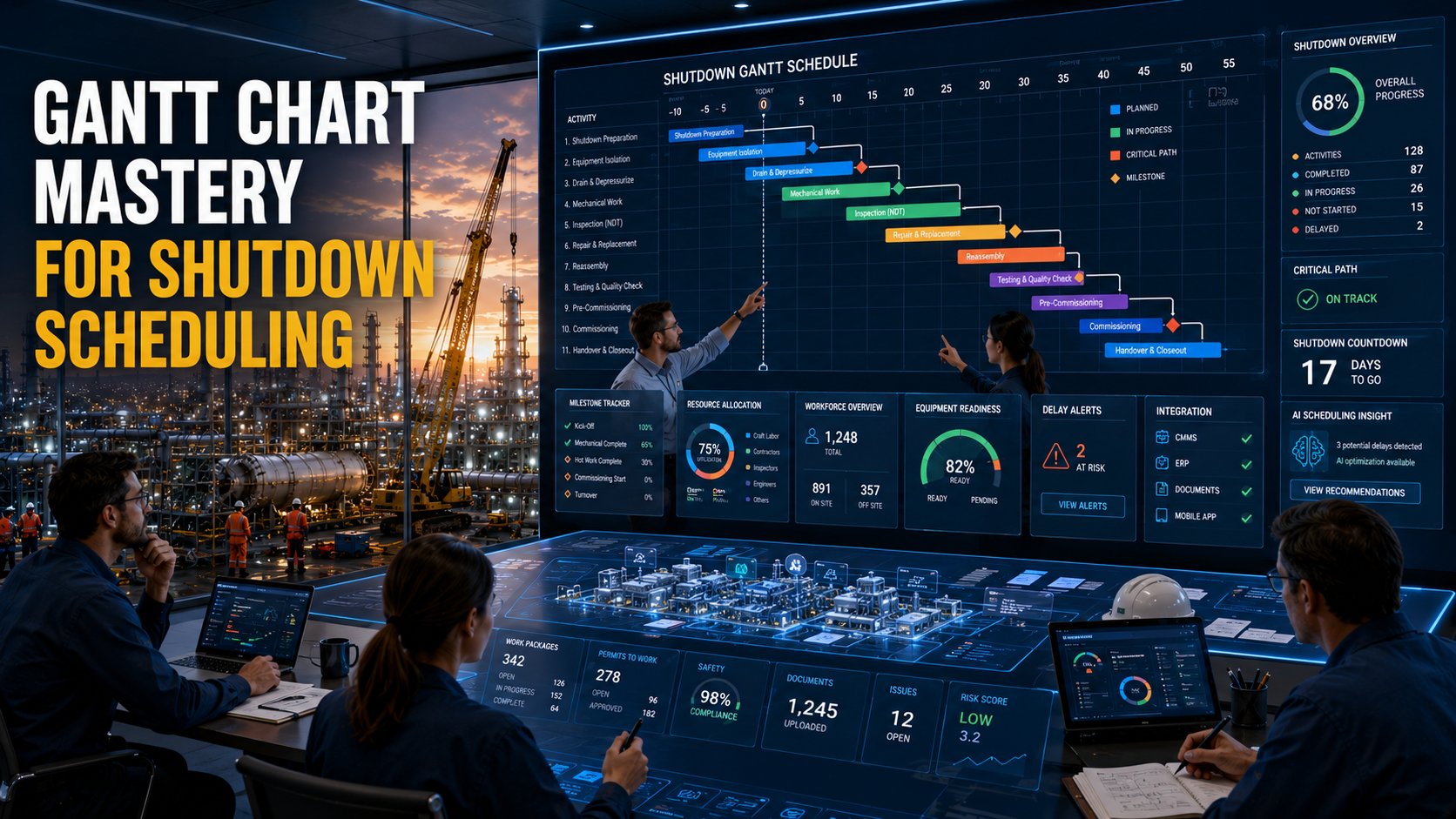
A single day of shutdown delay in a refinery can burn millions. A poorly sequenced turnaround in a power plant can ripple into months of lost production. In these high-stakes windows, the shutdown Gantt chart is not just a planning tool — it is the operational heartbeat of the entire event.
Shutdowns, turnarounds, and outages (STOs) compress months of maintenance, inspection, engineering, and compliance work into a narrow, unforgiving time window. The complexity is staggering: thousands of tasks, hundreds of contractors, critical path constraints, safety dependencies, and regulatory deadlines. In this environment, mastering shutdown scheduling gantt techniques becomes a strategic advantage, not an administrative exercise.
This guide explores how world-class maintenance organizations use shutdown Gantt charts to reduce downtime, control cost, improve safety, and deliver predictable outcomes — and how digital CMMS platforms elevate Gantt scheduling from static charts to real-time execution engines.
Why the Shutdown Gantt Chart Is the Backbone of Turnaround Success
A shutdown involves intense interdependencies. Mechanical, electrical, instrumentation, inspection, scaffolding, cleaning, and safety teams all operate in parallel under tight sequencing constraints. The shutdown gantt chart transforms this chaos into structured, time-phased clarity.
- Critical Path Visualization for Shutdown Scheduling Gantt – Highlights task chains that directly affect outage duration, allowing planners to protect schedule integrity and prioritize scarce skilled resources.
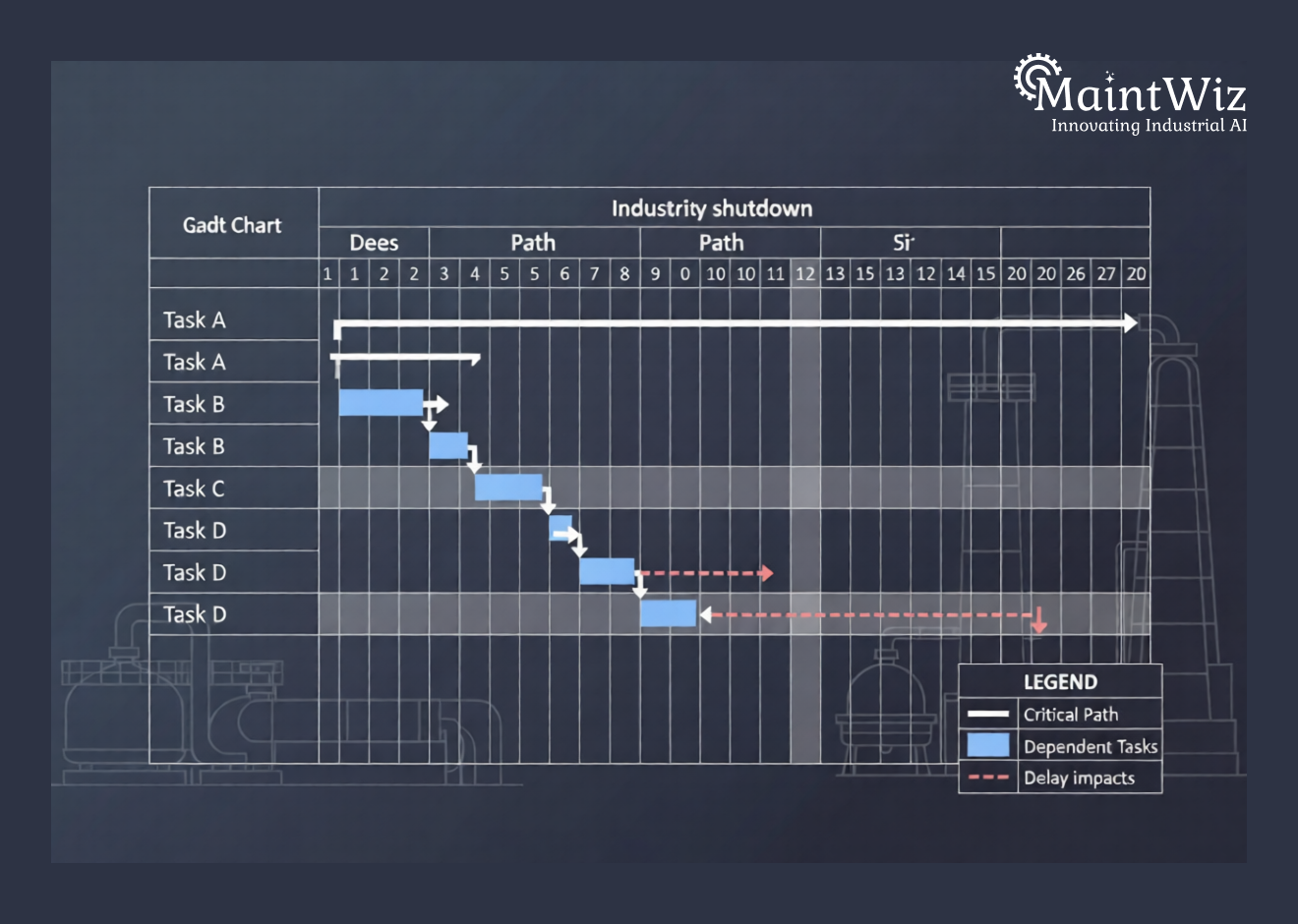
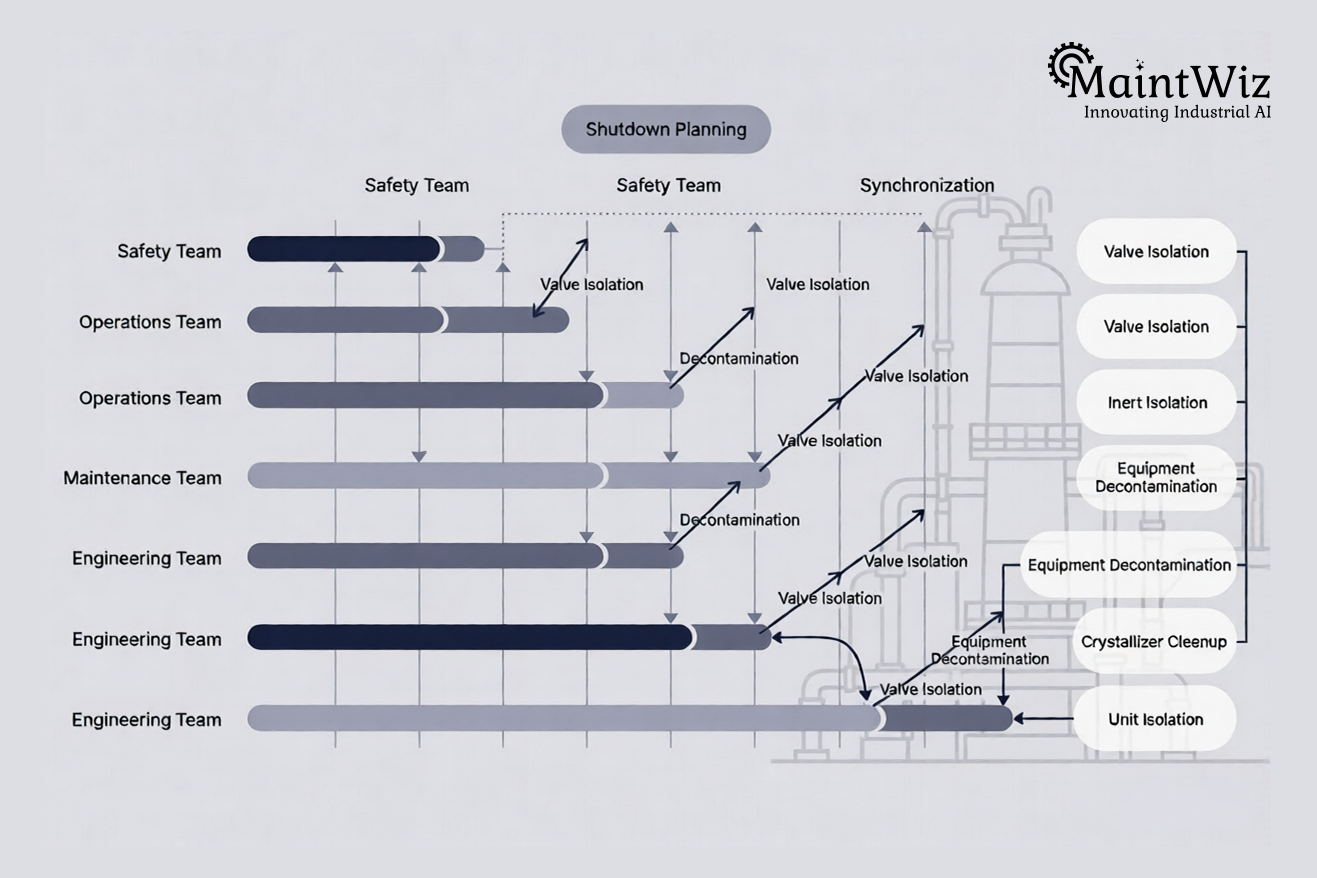
- Parallel Workstream Coordination in STO Gantt Charts – Enables safe overlap of tasks across disciplines without violating isolation, access, or safety dependencies during complex shutdown execution.
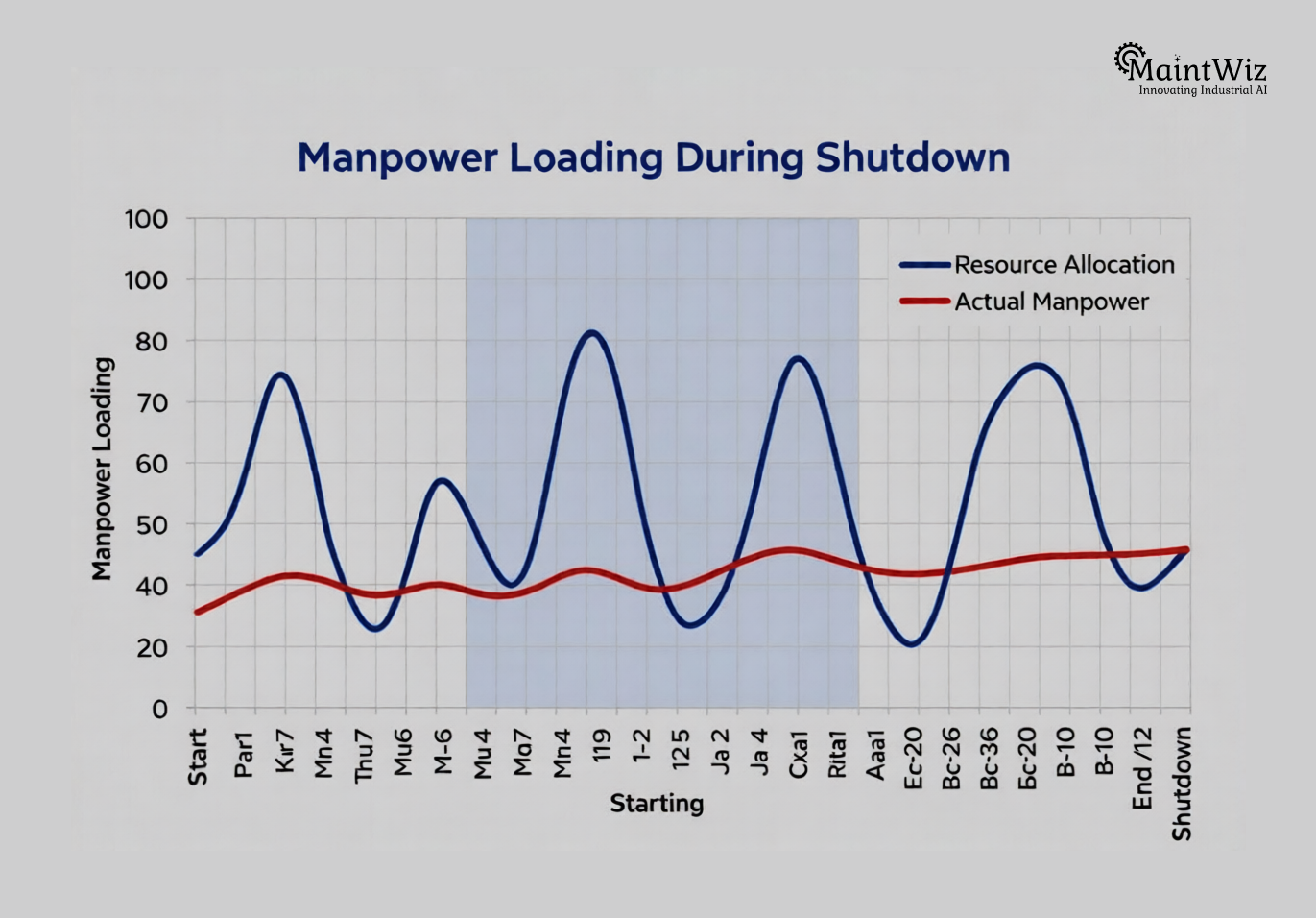
- Time-Phased Resource Loading in Shutdown Scheduling – Aligns manpower, cranes, tools, and contractors to daily demand curves, preventing congestion peaks and idle valleys during outages.
- Milestone Control in Turnaround Gantt Planning – Tracks key events like equipment handover, inspection completion, and restart readiness to ensure structured progress through shutdown phases.
- Delay Impact Analysis Using Shutdown Gantt Logic – Shows how slippage in one activity cascades through successors, enabling rapid re-sequencing decisions during live shutdown execution.
Without a robust shutdown scheduling gantt, teams revert to reactive firefighting. With it, leaders operate with foresight, control, and measurable predictability.
Core Components of an Effective Shutdown Scheduling Gantt
Not all Gantt charts are equal. A world-class shutdown gantt chart goes beyond bars on a timeline. It embeds engineering logic, risk awareness, and execution realism.
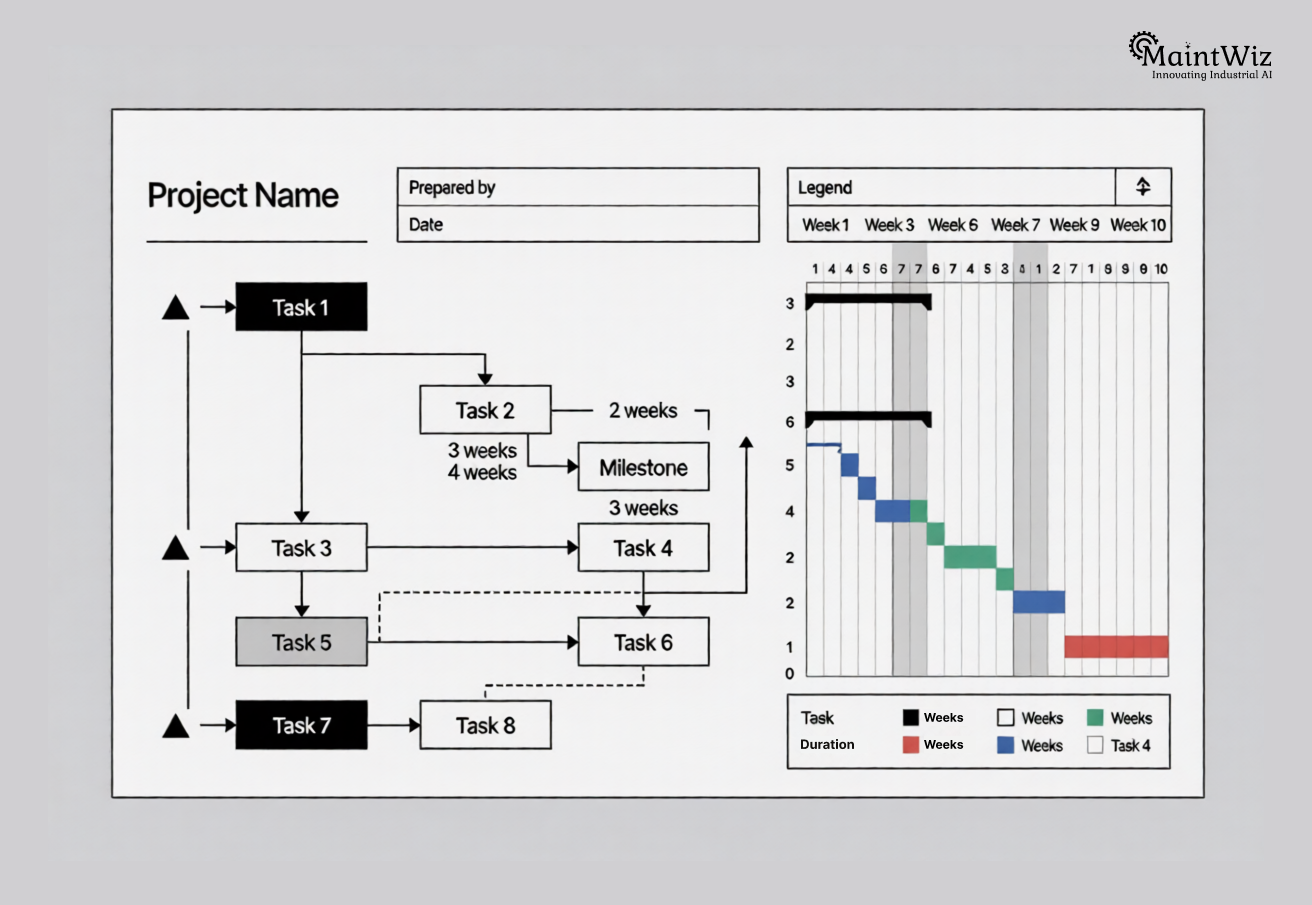
- Task Hierarchy Structure in Shutdown Gantt Charts – Breaks work into systems, equipment, and job packages, ensuring traceability from master plan down to technician-level activities.
- Logical Dependencies in Shutdown Scheduling Gantt – Defines finish-to-start, start-to-start, and safety-driven constraints to reflect real plant conditions rather than optimistic assumptions.
- Duration Realism in Turnaround Gantt Planning – Uses historical shutdown data and craft productivity norms to prevent chronic underestimation of outage timelines.
- Resource Assignments in Shutdown Gantt Schedules – Links each task to crew types, contractor groups, and tools, enabling realistic manpower leveling across the shutdown window.
- Milestones and Gates in STO Gantt Frameworks – Establishes decision checkpoints such as “Ready for Inspection” or “Ready for Start-up” to structure operational governance.
When these elements are rigorously built, the shutdown scheduling gantt becomes a reliable model of reality — not a wish list.
Building a Shutdown Gantt Chart: From Scope to Sequence
High-performing STO teams treat Gantt chart development as a disciplined engineering process. It starts long before the shutdown window opens.
- Scope Freeze Discipline in Shutdown Scheduling – Locks work lists early to protect schedule integrity and avoid late additions that destabilize the shutdown gantt baseline.
- Job Plan Standardization for Turnaround Gantt Accuracy – Uses pre-approved job plans with known durations and labor norms to improve schedule reliability.
- System-Based Sequencing in Shutdown Gantt Charts – Groups tasks by process systems to optimize isolation, cleaning, inspection, and reinstatement flows during outages.
- Constructability Reviews in STO Scheduling Gantt – Validates physical access, scaffolding needs, and crane windows to ensure schedule logic matches field constraints.
- Risk Buffer Placement in Shutdown Gantt Planning – Inserts controlled contingency time on critical paths rather than relying on hidden optimism across all tasks.
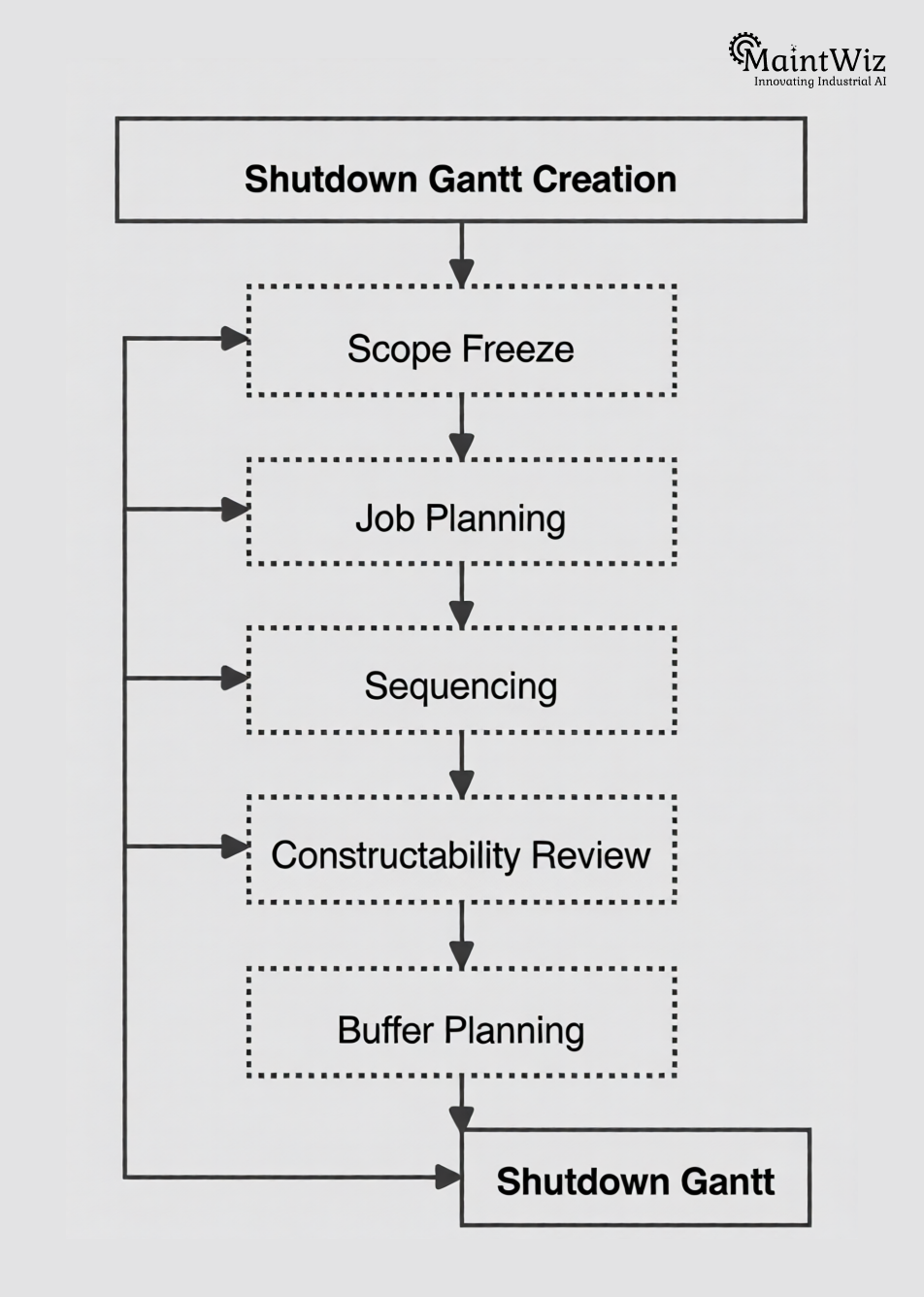
This structured buildup ensures the shutdown gantt chart reflects operational truth, not spreadsheet theory.
Industry Nuances That Shape Shutdown Gantt Scheduling
While core scheduling principles are universal, industry context heavily influences how a shutdown scheduling gantt is structured.
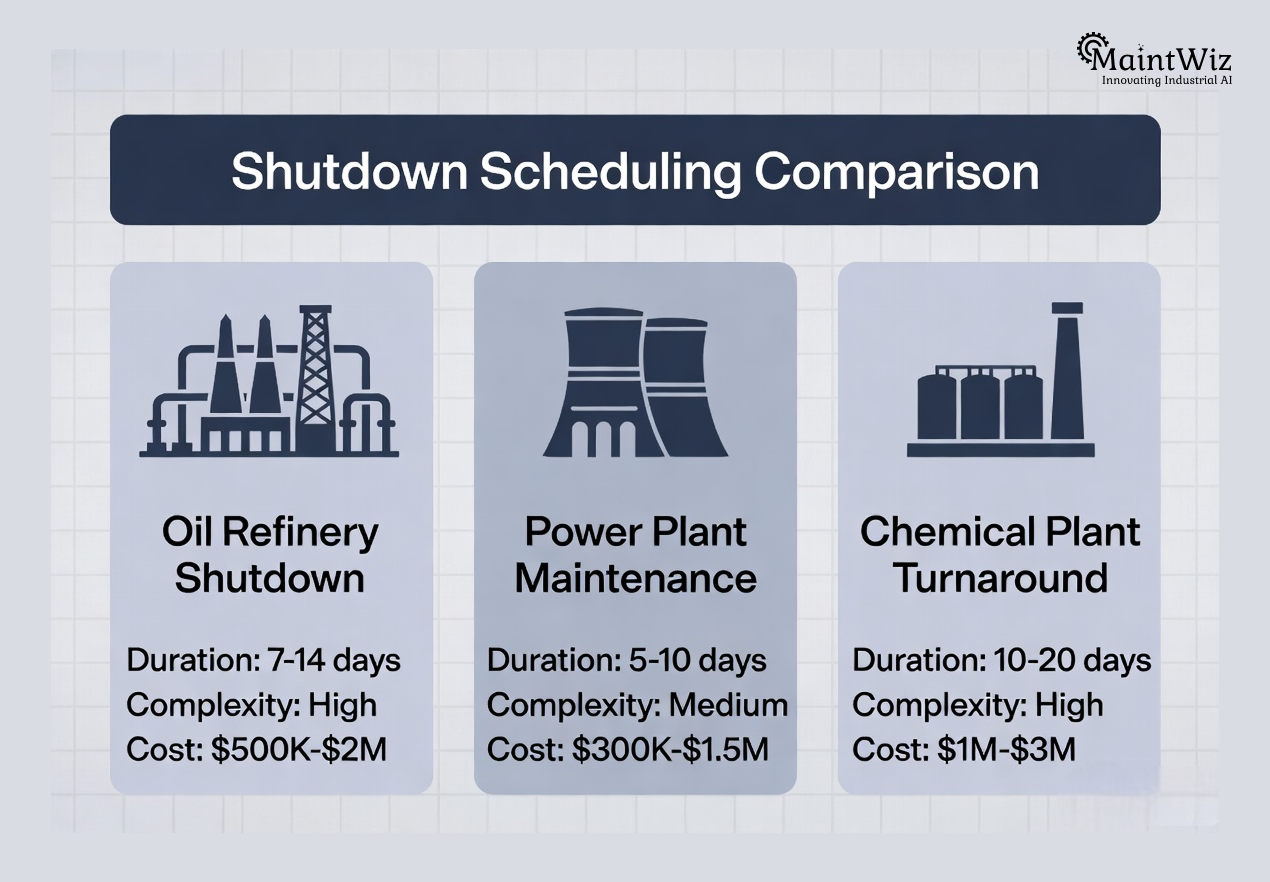
- Refinery Unit Turnaround Gantt Complexity – High interdependence between process units demands tight sequencing of vessel entry, catalyst work, and inspection windows.
- Power Plant Outage Gantt Constraints – Turbine overhauls, boiler inspections, and statutory tests must align with grid commitments and regulatory deadlines.
- Chemical Plant Shutdown Scheduling Risks – Hazardous material handling and decontamination drive extended preparation tasks that must precede mechanical maintenance.
- Steel and Cement Plant STO Gantt Challenges – Heavy equipment replacement and refractory work require crane-intensive, weather-sensitive scheduling logic.
- Water and Wastewater Outage Gantt Planning – Continuous service obligations necessitate phased shutdowns and redundancy planning within the Gantt structure.
Recognizing these nuances allows planners to design shutdown gantt charts that reflect industry reality rather than generic templates.
Common Shutdown Gantt Chart Failures That Derail STOs
Even experienced organizations fall into predictable traps. Most shutdown overruns can be traced back to weaknesses in the shutdown scheduling gantt.
- Optimistic Durations in Shutdown Gantt Plans – Underestimating task effort compresses the schedule artificially, causing cascading delays once field reality intervenes.
- Missing Dependencies in STO Gantt Charts – Overlooking access, safety, or permit constraints leads to blocked crews and idle time during critical shutdown windows.
- Overloaded Resource Curves in Shutdown Scheduling – Assigning more work than available crews can execute creates bottlenecks that extend outage duration.
- Late Scope Additions to Shutdown Gantt – Introducing new work mid-execution destabilizes critical paths and forces disruptive re-sequencing.
- Static Gantt Charts During Live Shutdowns – Failing to update progress daily turns the Gantt into a historical artifact instead of a real-time control tool.
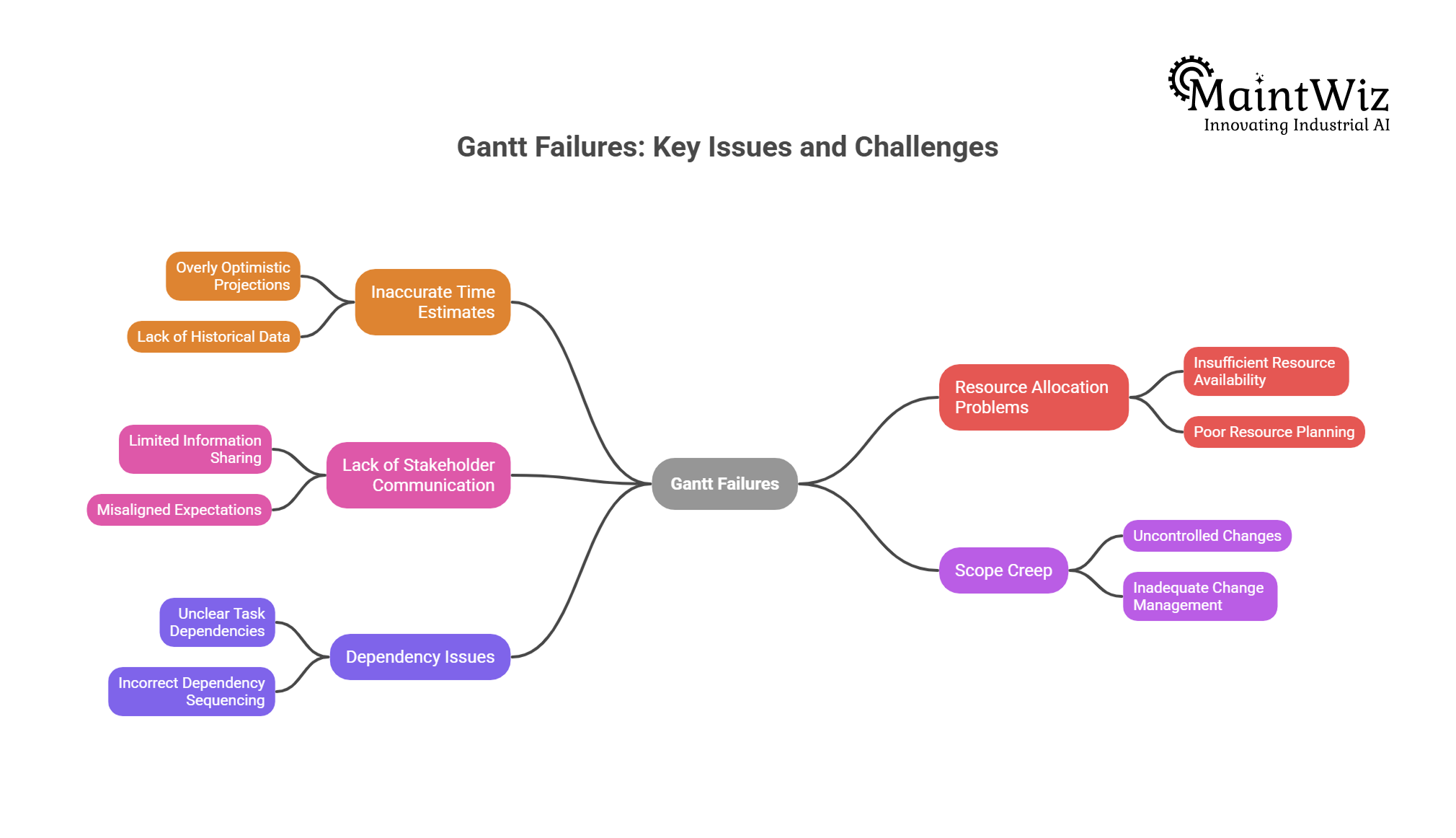
Eliminating these failures often reduces shutdown duration more effectively than adding more manpower.
From Planning Tool to Execution Engine: Live Shutdown Gantt Control
A shutdown gantt chart delivers maximum value when it evolves from a planning document into a live operational dashboard.
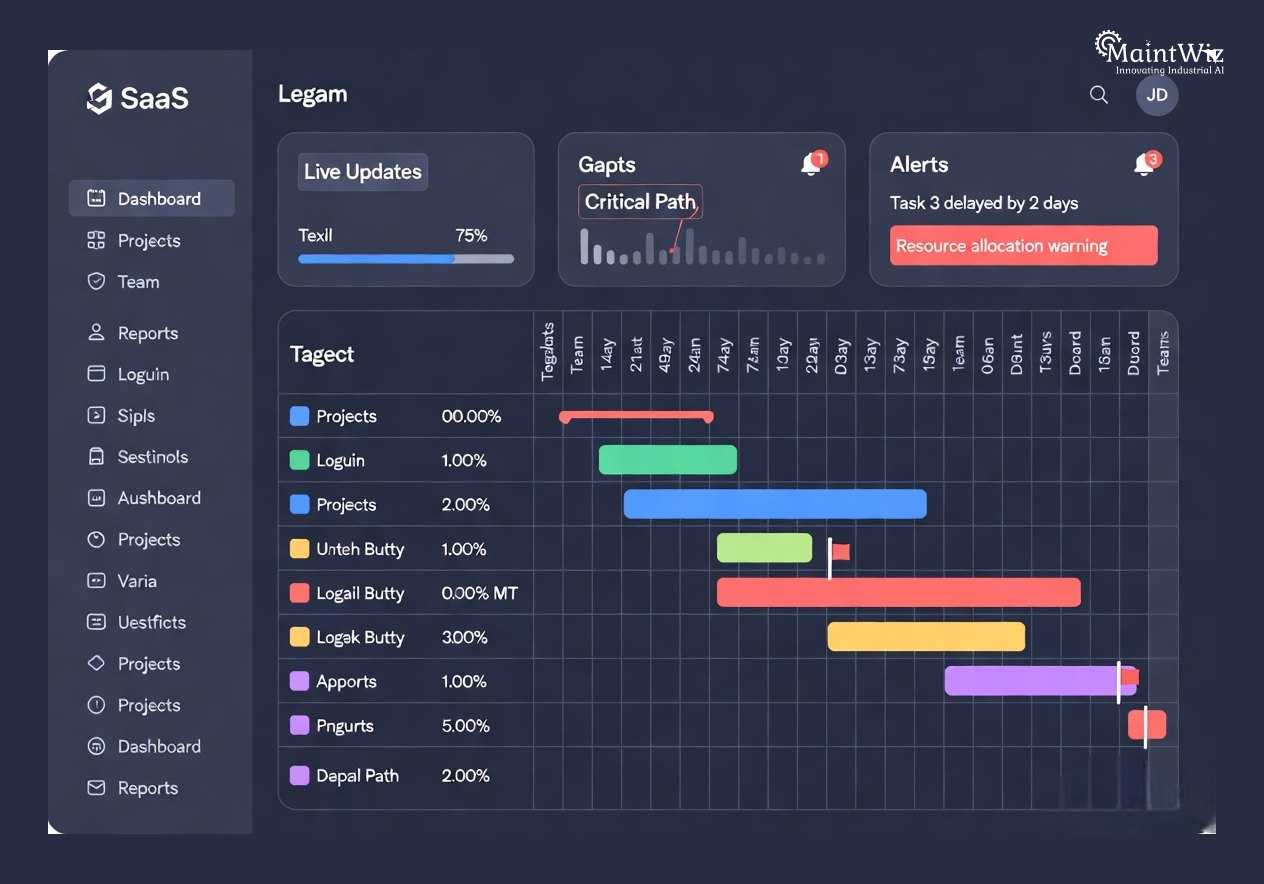
- Daily Progress Updating in Shutdown Scheduling Gantt – Field completion data feeds schedule updates, ensuring leaders see emerging delays before they become crises.
- Critical Path Recalculation in STO Gantt Tools – Automated logic identifies shifting critical tasks as progress changes, enabling proactive management intervention.
- Constraint Visibility in Live Shutdown Gantt Charts – Highlights blocked or permit-delayed tasks so coordination teams can remove obstacles quickly.
- Contractor Performance Tracking in Shutdown Scheduling – Links actual productivity to scheduled durations, revealing underperformance early in the outage cycle.
- Milestone Forecasting Using Shutdown Gantt Data – Predicts completion of major phases such as mechanical completion or ready-for-startup dates.
When actively managed, the shutdown scheduling gantt becomes the central command system of the STO war room.
Comparing Traditional vs Digital Shutdown Gantt Approaches
The shift from static files to integrated digital platforms fundamentally changes how shutdown gantt charts are created and used.
| Aspect | Traditional Gantt Scheduling | Digital CMMS-Integrated Shutdown Gantt |
|---|---|---|
| Data Source | Manual spreadsheet updates | Live work order and field progress data feeds |
| Dependency Accuracy | Often simplified or outdated | Linked to real task status and constraints |
| Resource Visibility | Static estimates | Dynamic crew loading and availability tracking |
| Change Management | Slow, manual rework | Rapid re-sequencing with automated impact analysis |
| Field Alignment | Disconnected from execution | Direct link between schedule and mobile work execution |
Digital shutdown scheduling gantt capabilities dramatically improve agility during execution, where most value is captured.
Best Practices for World-Class Shutdown Gantt Mastery
Organizations that consistently deliver on-time turnarounds treat Gantt scheduling as a core competency, not a software feature.
- Dedicated Shutdown Scheduling Teams – Specialized planners focus solely on STO Gantt logic, ensuring depth of expertise beyond routine maintenance scheduling.
- Historical Shutdown Data Utilization – Uses past outage performance to refine task durations and improve future shutdown gantt accuracy.
- Integrated Risk Reviews in STO Scheduling – Conducts structured risk workshops to stress-test schedule logic against worst-case execution scenarios.
- Field Supervisor Engagement in Gantt Reviews – Involves frontline leaders in validating task sequences to ensure constructability and realistic execution flow.
- Daily War Room Gantt Governance – Reviews live shutdown gantt progress with cross-functional leadership to drive rapid decision-making.
These practices turn shutdown scheduling gantt from a planning artifact into a strategic reliability capability.
How MaintWiz CMMS Strengthens Shutdown Gantt Scheduling
- Work Order Integration with Shutdown Gantt Tasks – Links scheduled STO activities directly to structured work orders, ensuring traceability from plan to technician execution.
- Asset-Centric Shutdown Planning in CMMS – Connects each Gantt task to equipment history, failure data, and maintenance strategies for smarter prioritization.
- Standard Job Plans for Gantt Schedule Accuracy – Uses predefined maintenance procedures and labor norms to improve duration reliability in shutdown scheduling gantt.
- Mobile Execution Feedback into STO Gantt – Field updates from technicians help planners adjust live schedules based on actual progress and constraints.
- Shutdown Performance Analytics in CMMS – Analyzes planned vs actual durations, delays, and resource use to continuously improve future outage Gantt charts.
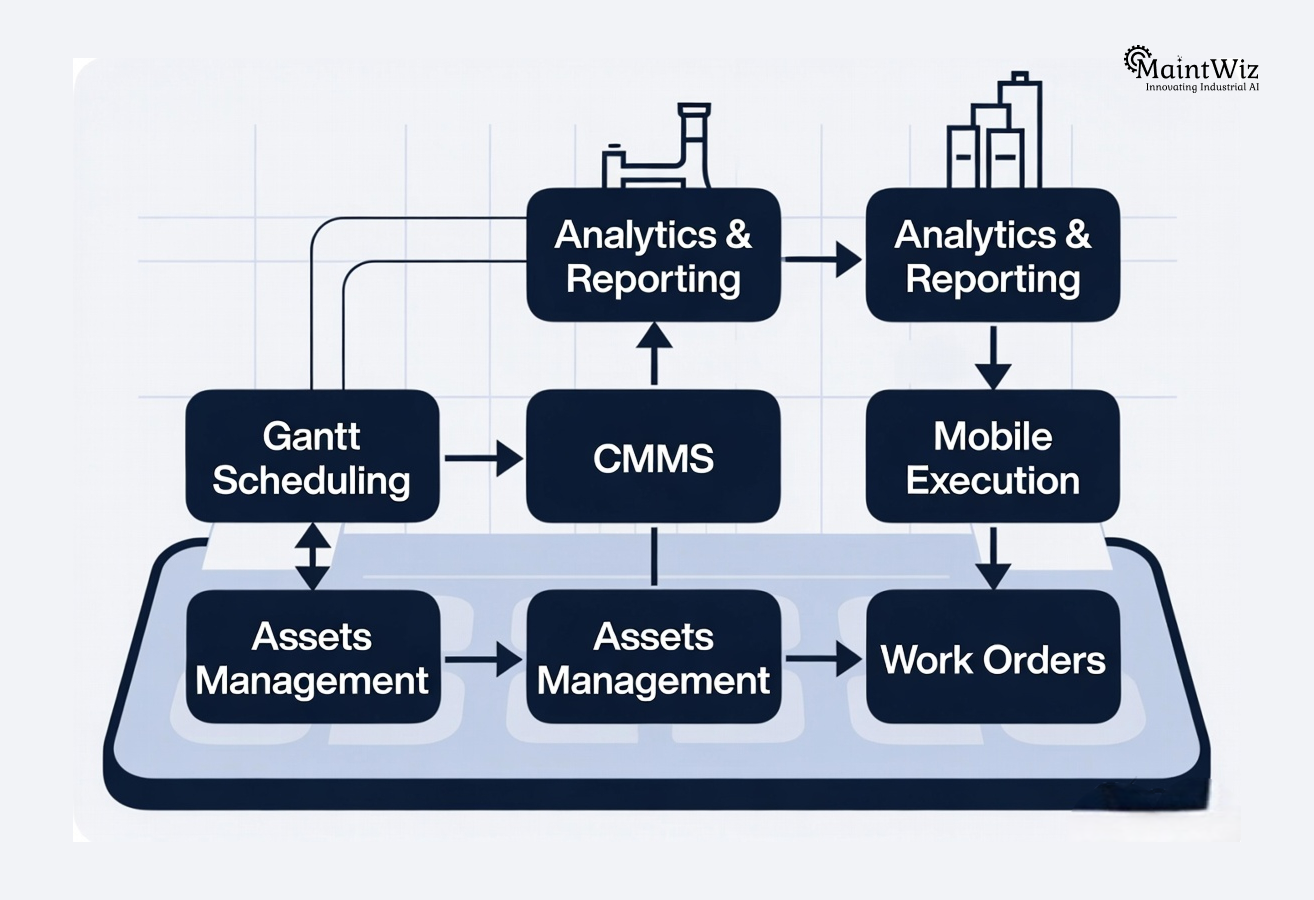
Rather than existing as a disconnected project plan, the shutdown gantt chart becomes embedded in day-to-day maintenance systems, ensuring data continuity before, during, and after the outage.
MaintWiz’s equipment-centric structure, work order control, and execution visibility support the disciplined planning and real-time coordination required for complex STO environments. The platform helps organizations move from reactive shutdown management to predictable, data-driven outage performance.
For maintenance leaders seeking shorter outages, lower risk, and higher schedule confidence, combining shutdown scheduling gantt discipline with a robust CMMS foundation is a decisive step forward.
Explore how MaintWiz supports shutdown and turnaround excellence and transform your next outage into a benchmark event.

Company
Download App