






CMMS Implementation Guide: Why Most Projects Fail

CMMS implementation is often positioned as a technology upgrade. In reality, it is a business transformation initiative—one that directly impacts asset reliability, maintenance cost structures, and operational efficiency.

Yet, despite significant investment, a large percentage of CMMS implementation projects fail to deliver expected outcomes. The failure is rarely due to the software itself. It is rooted in misaligned strategy, poor execution discipline, and lack of organizational readiness.

This guide dissects why most CMMS implementations fail—and more importantly, provides a structured framework to ensure success.

What Is CMMS Implementation and Why It Matters

A CMMS implementation involves deploying a computerized maintenance management system to digitize, standardize, and optimize maintenance operations.

At its core, it enables:

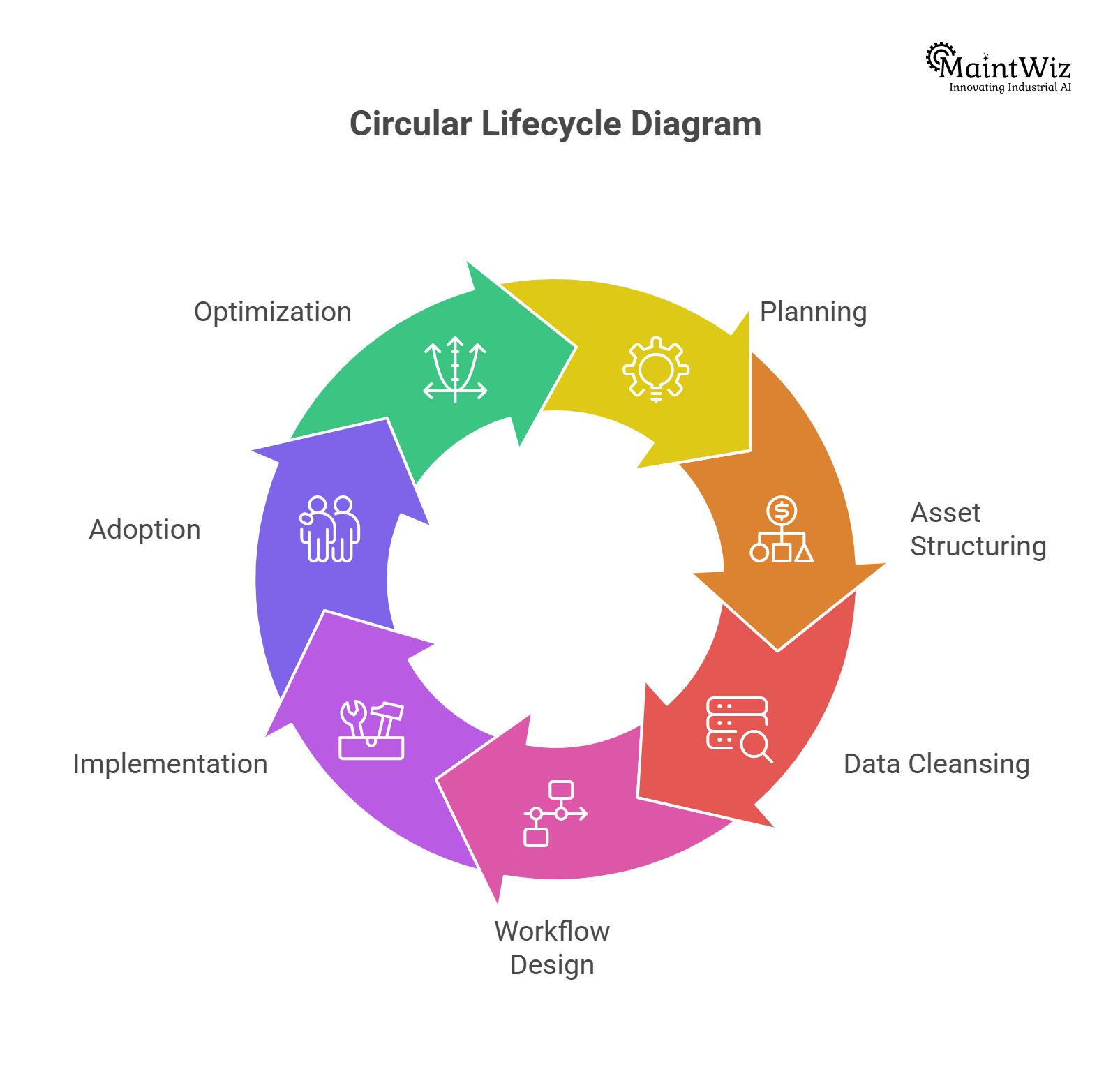
CMMS implementation lifecycle stages in maintenance management

How does CMMS implementation improve maintenance efficiency?

When executed correctly, it delivers:

  • Reduced downtime
  • Improved asset reliability
  • Lower maintenance costs
  • Enhanced decision-making

However, these outcomes are not automatic. They require intentional design and disciplined execution.

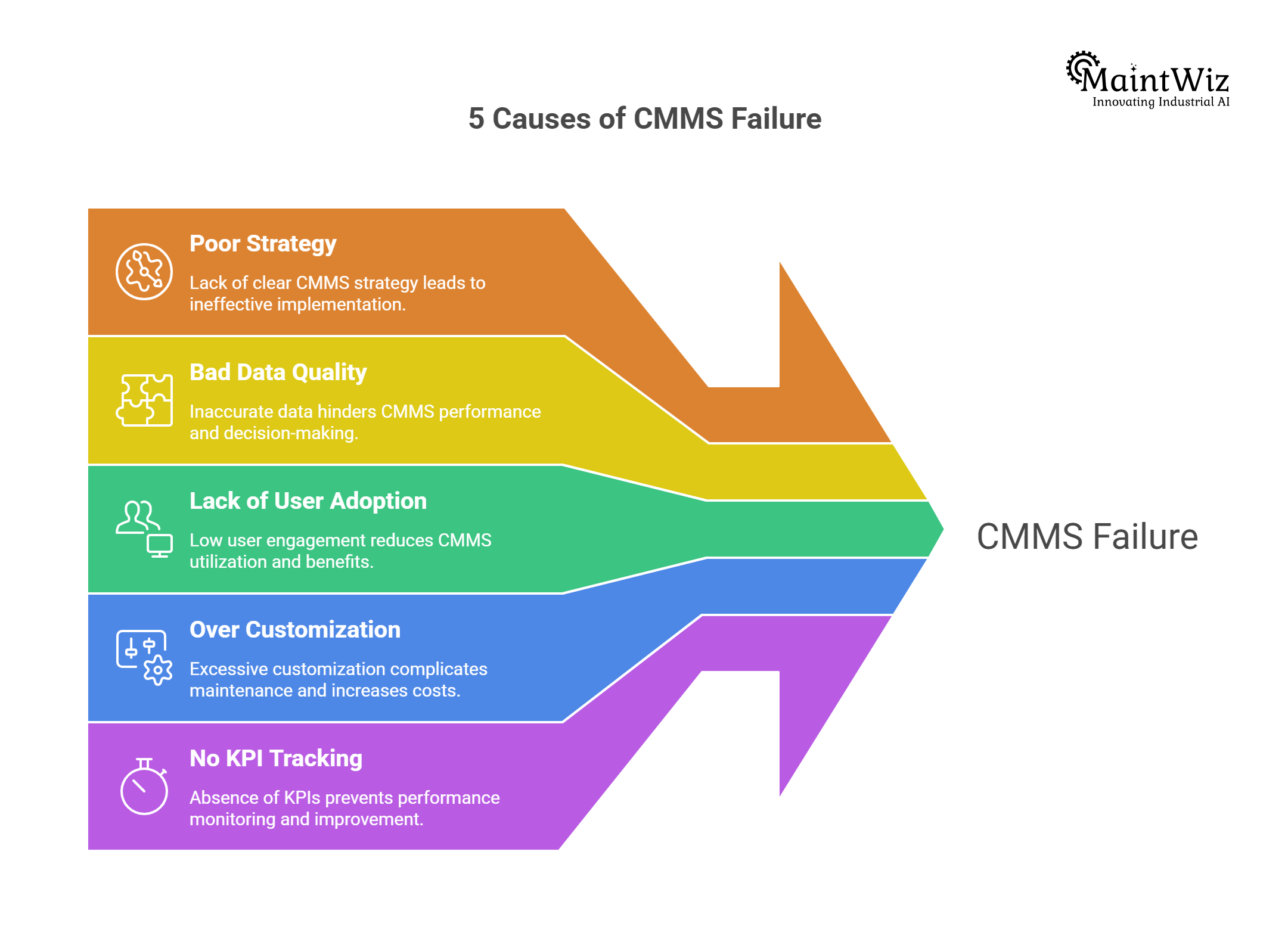
Why Most CMMS Implementation Projects Fail

common reasons for CMMS implementation failure in maintenance systems

Lack of Strategic Alignment

Many organizations treat CMMS as an IT project rather than an operational transformation. This results in:

  • Poor stakeholder alignment
  • Undefined success metrics
  • Limited executive ownership

Poor Data Quality and Asset Structuring

A CMMS is only as effective as its data. Common issues include:

  • Incomplete asset registers
  • Incorrect hierarchies
  • Inconsistent naming conventions

Without structured data, the system cannot deliver meaningful insights.

Overcomplicated Implementation Approach

Organizations often attempt to:

  • Implement all features at once
  • Customize excessively
  • Over-engineer workflows

This increases complexity and delays adoption.

Lack of User Adoption

Technicians and planners may resist:

  • New workflows
  • Digital tools
  • Data entry requirements

Without adoption, even the best systems fail.

No Clear ROI Measurement

Without KPIs, organizations cannot:

  • Track progress
  • Demonstrate value
  • Sustain improvements

CMMS Implementation Framework: A Step-by-Step Approach

Successful CMMS implementation requires a structured, phased approach.

Step 1: Define Business Objectives and Success Metrics

What are the goals of CMMS implementation?

Before selecting or configuring a system, define:

  • Downtime reduction targets
  • Maintenance cost reduction goals
  • Productivity improvement benchmarks

How to align CMMS with business strategy?

Ensure alignment with:

  • Operational priorities
  • Asset criticality
  • Production goals

A CMMS should not just manage maintenance—it should enable business outcomes.

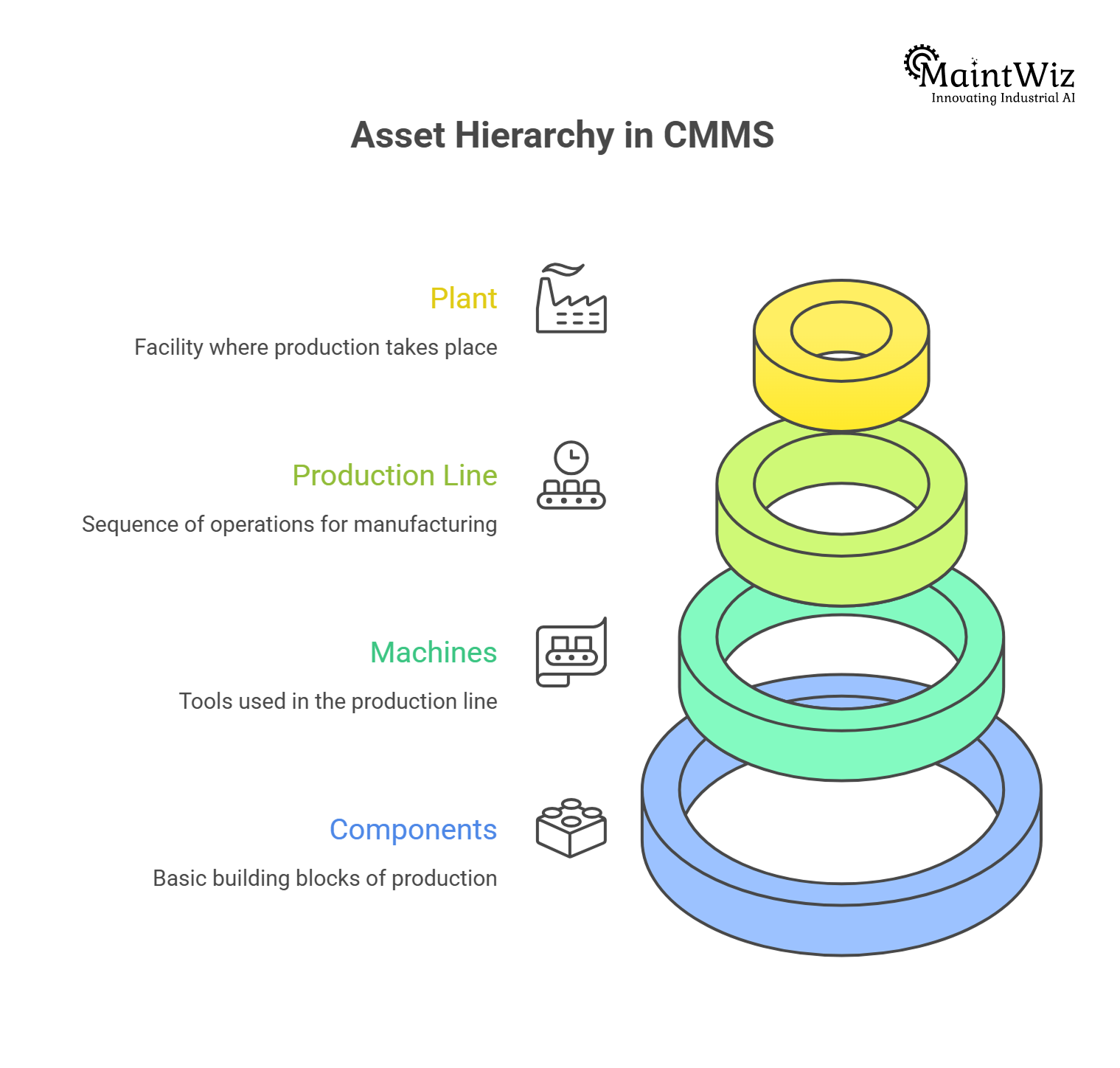
Step 2: Build a Robust Asset Hierarchy

Why is asset hierarchy critical in CMMS implementation?

Asset hierarchy defines how assets are structured within the system.

A well-defined hierarchy enables:

  • Accurate work order assignment
  • Effective maintenance planning
  • Meaningful analytics
asset hierarchy structure in CMMS system for maintenance planning

Best practices for asset structuring

  • Use logical parent-child relationships
  • Standardize naming conventions
  • Include asset criticality classification

This step lays the foundation for all future functionality.

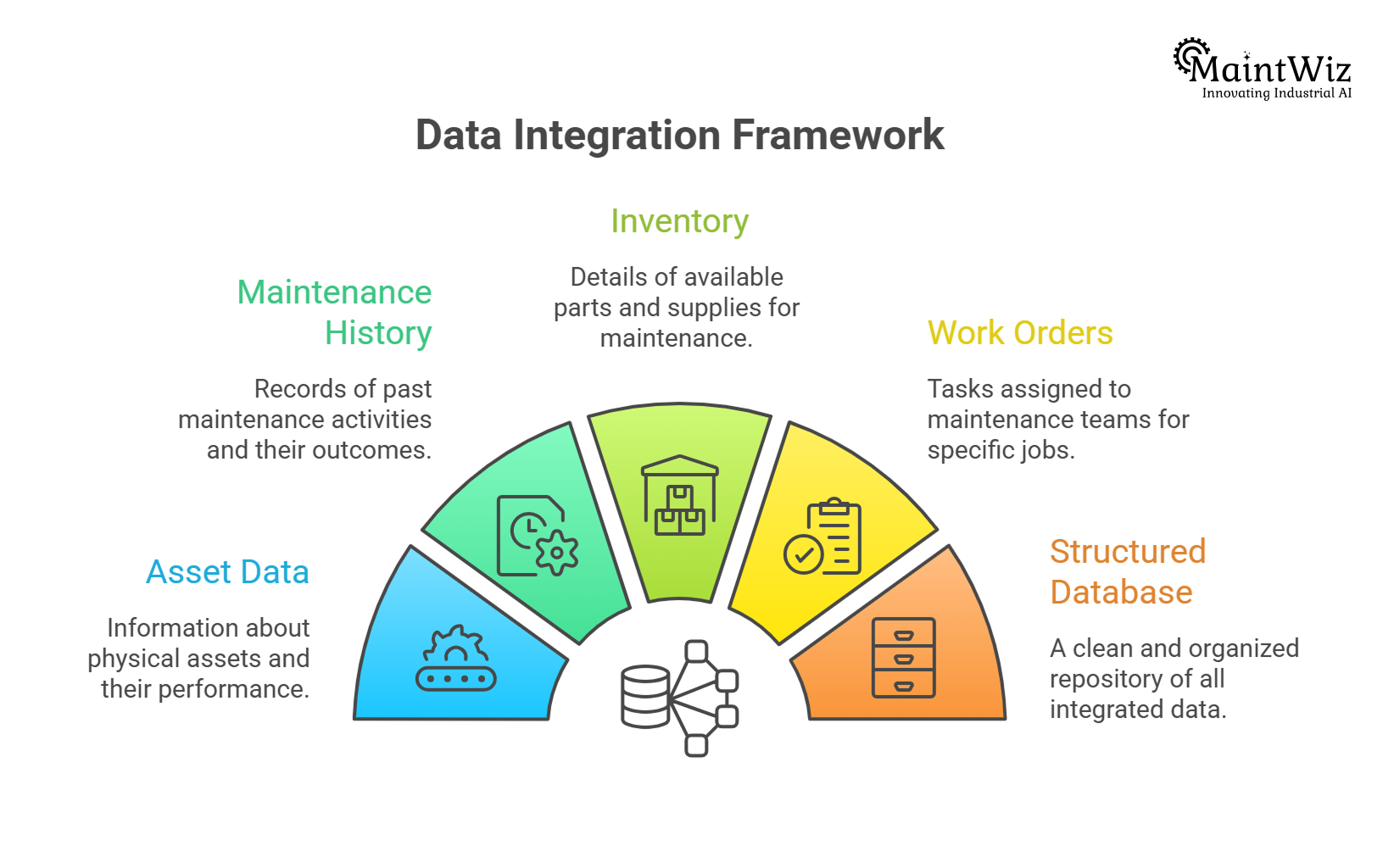
Step 3: Cleanse and Standardize Data

data quality framework for CMMS implementation success

What data is required for CMMS implementation?

  • Asset master data
  • Maintenance history
  • Spare parts inventory
  • Work order templates

Why does poor data lead to failure?

Inaccurate data results in:

  • Incorrect decisions
  • Inefficient workflows
  • Low user trust

Data quality is not a technical task—it is a business-critical discipline.

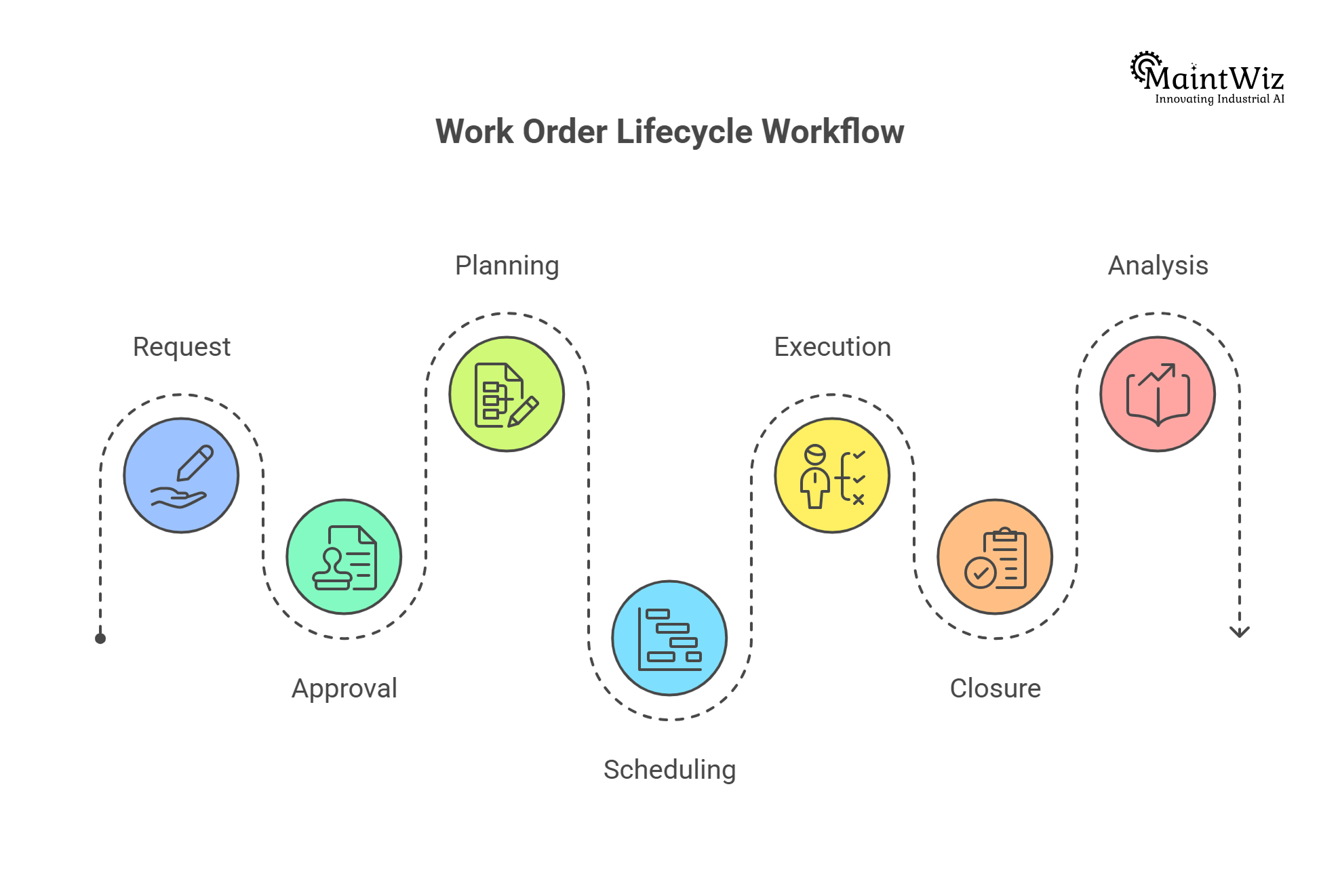
Step 4: Design Standardized Maintenance Workflows

How to create effective work order workflows?

Define:

  • Work order lifecycle stages
  • Approval processes
  • Escalation mechanisms
standardized work order workflow in CMMS implementation

What is the role of standardization?

Standardization ensures:

  • Consistency
  • Efficiency
  • Scalability

Without it, CMMS becomes a digital version of existing inefficiencies.

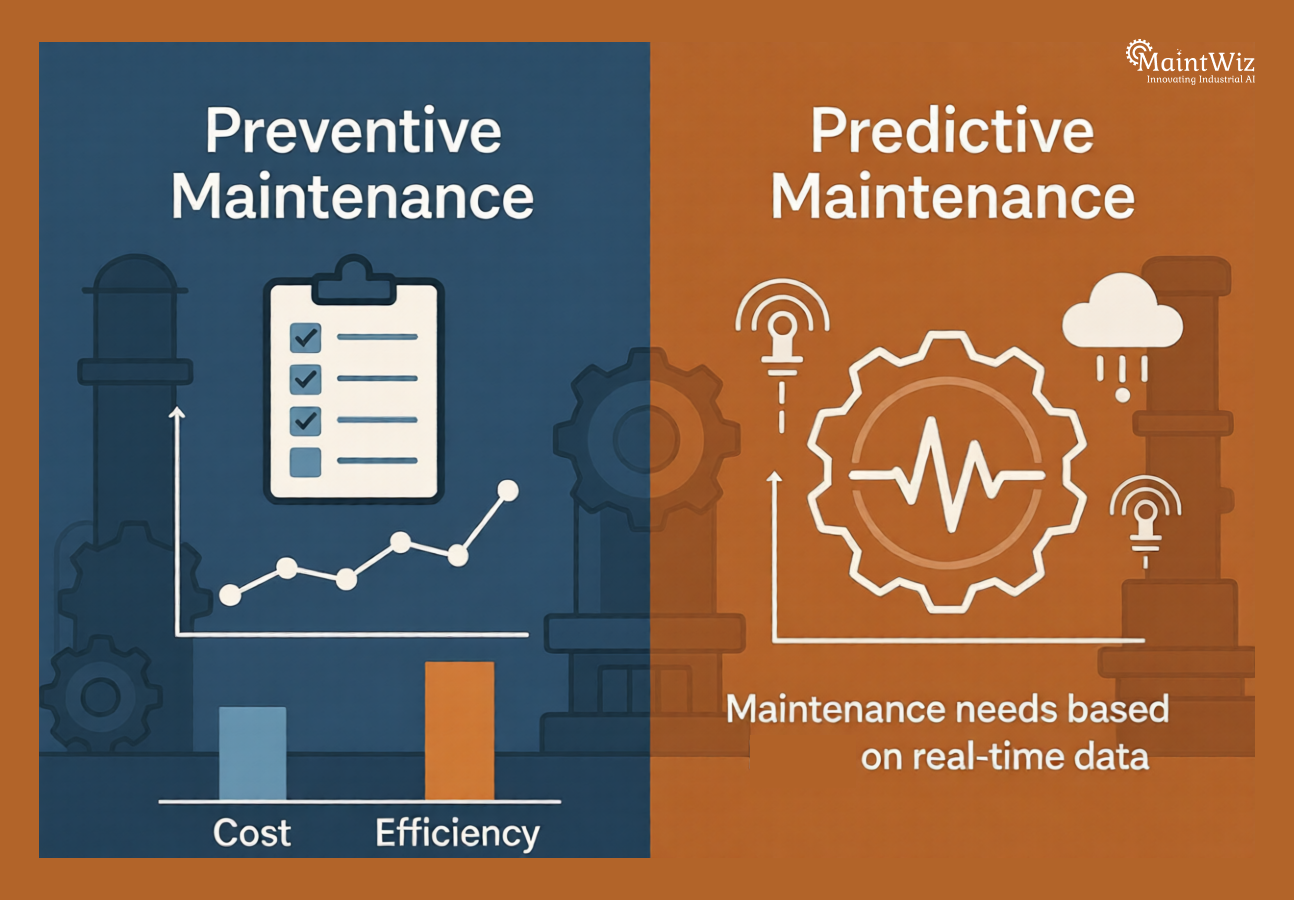
Step 5: Implement Preventive and Predictive Maintenance

preventive and predictive maintenance comparison in CMMS

How to implement preventive maintenance in CMMS?

  • Define maintenance schedules
  • Assign tasks to assets
  • Automate work order generation

How does predictive maintenance enhance CMMS value?

By integrating:

CMMS evolves from a tracking system to a decision-making platform.

Step 6: Enable Mobile and Field Execution

Why is mobile CMMS critical for adoption?

Technicians require:

  • Real-time access to work orders
  • Digital checklists
  • Instant data entry

How does mobility improve efficiency?

  • Reduces delays
  • Improves accuracy
  • Enhances productivity

A CMMS that is not used in the field is fundamentally ineffective.

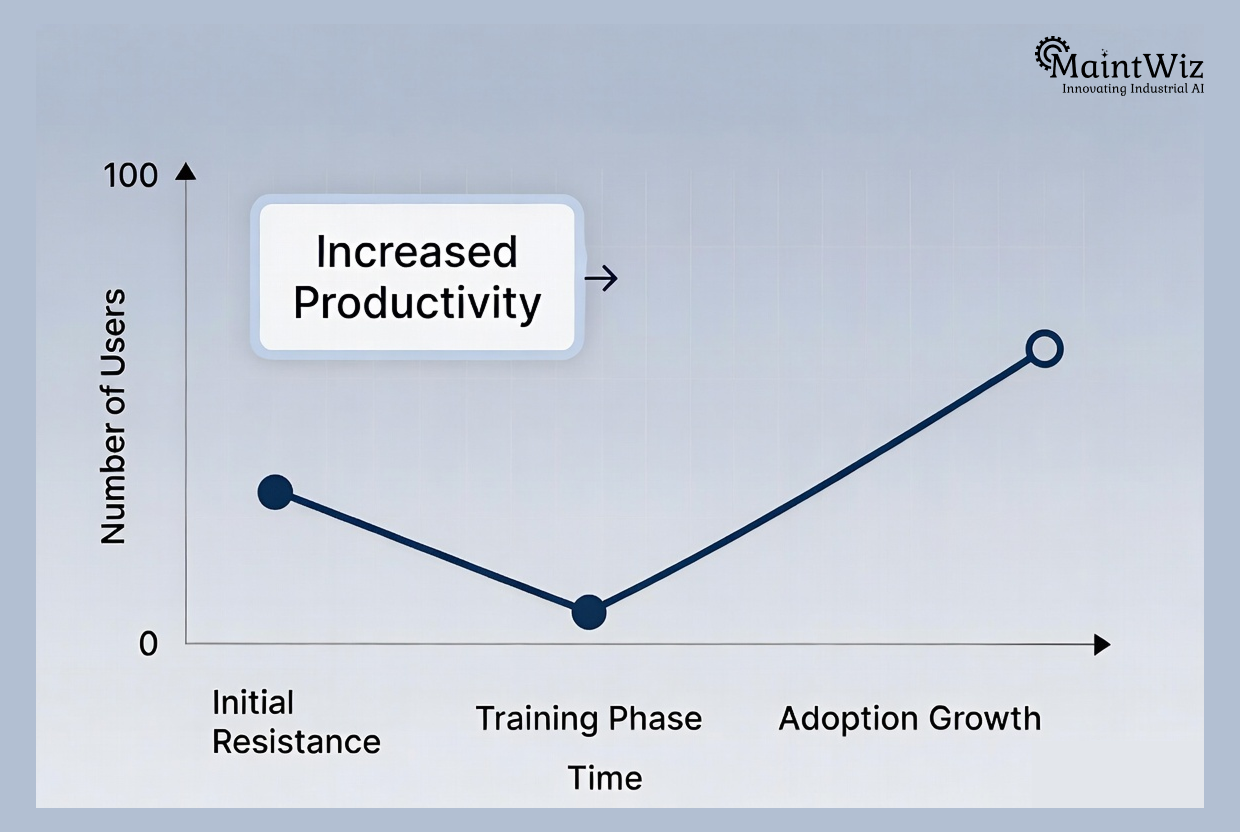
Step 7: Train Users and Drive Adoption

What are the key challenges in CMMS adoption?

  • Resistance to change
  • Lack of training
  • Poor user experience

How to ensure successful adoption?

  • Conduct role-based training
  • Simplify workflows
  • Provide continuous support

Adoption is the bridge between implementation and value realization.

Step 8: Track KPIs and Continuously Optimize

What KPIs should be tracked post-implementation?

Why is continuous improvement essential?

CMMS implementation is not a one-time project. It is an ongoing optimization journey.

Common CMMS Implementation Mistakes to Avoid

Treating CMMS as a Software Deployment

This limits impact and reduces ROI.

Ignoring Change Management

Without addressing people and processes, adoption fails.

Over-Customization

Customizations increase complexity and reduce scalability.

Lack of Executive Sponsorship

Without leadership support, initiatives lose momentum.

How MaintWiz CMMS Enables Successful Implementation

A structured CMMS implementation requires a platform designed for scalability, usability, and rapid value realization. MaintWiz CMMS addresses these requirements effectively.

Asset Reliability and Structuring

MaintWiz enables:

  • Structured asset hierarchy
  • Criticality-based maintenance planning
  • Standardized workflows

This ensures alignment between maintenance execution and business priorities.

Predictive Maintenance Capabilities

MaintWiz integrates:

  • Condition monitoring
  • Predictive analytics
  • Automated alerts

This allows organizations to transition from preventive to predictive maintenance seamlessly.

Planning and Scheduling Optimization

With features such as:

  • Automated work order generation
  • Multi-asset work orders
  • Dynamic scheduling

MaintWiz significantly improves planning efficiency and execution speed.

Advanced Analytics and Insights

MaintWiz provides:

  • Real-time dashboards
  • Performance tracking
  • Failure analysis

This enables data-driven decision-making at all levels.

90-Day Execution Impact

MaintWiz supports rapid implementation through:

  • Pre-configured templates
  • Structured onboarding frameworks
  • Focused deployment approach

Organizations can achieve measurable improvements within a 90-day execution window, making it a practical solution for fast transformation.

The Future of CMMS Implementation

The next generation of CMMS implementation will be defined by:

CMMS will evolve from a system of record to a system of intelligence.

Conclusion

The success of a CMMS implementation is not determined by the software selected, but by the clarity of strategy, quality of execution, and level of adoption.

Organizations that approach implementation as a structured transformation initiative can achieve:

  • Improved asset reliability
  • Reduced maintenance costs
  • Enhanced operational efficiency

Those that do not risk investing in systems that fail to deliver value.

The difference lies in execution discipline and strategic alignment.

FAQs

What is CMMS implementation?

CMMS implementation is the process of deploying a computerized maintenance management system to manage maintenance operations digitally.

Why do most CMMS implementations fail?

Failures occur due to poor planning, lack of data quality, low user adoption, and absence of clear objectives.

How long does CMMS implementation take?

Typically 3–6 months, depending on scope and complexity.

What are the key steps in CMMS implementation?

Define objectives, structure assets, clean data, design workflows, implement maintenance strategies, enable mobility, train users, and track KPIs.

How does CMMS improve maintenance efficiency?

It automates workflows, improves planning, enhances visibility, and enables data-driven decisions.

jai

Jai Balachandran is an industry expert with a proven track record in driving digital transformation and Industry 4.0 technologies. With a rich background in asset management, plant maintenance, connected systems, TPM and reliability initiatives, he brings unparalleled insight and delivery excellence to Plant Operations.