Risk Assessment in Shutdown Planning: Complete
Methodology
One overlooked risk can erase months of shutdown planning. In high-stakes plant shutdowns, turnarounds, and outages, risk is not a side exercise — it is the control center of schedule, safety, cost, and reliability performance. The difference between a world-class shutdown and a crisis event is rarely technical capability alone. It is the depth, structure, and discipline of the shutdown risk assessment process.
Industrial facilities operate under tight production commitments, regulatory pressure, and aging asset conditions. When the plant goes down, the clock starts burning money. Every delay compounds contractor costs, energy penalties, lost production, and restart instability. That is why leading organizations treat plant shutdown risks with the same rigor as process safety hazards.
This guide provides a complete, field-tested methodology to identify, prioritize, mitigate, and control risks across the shutdown lifecycle — from early planning through restart stabilization.
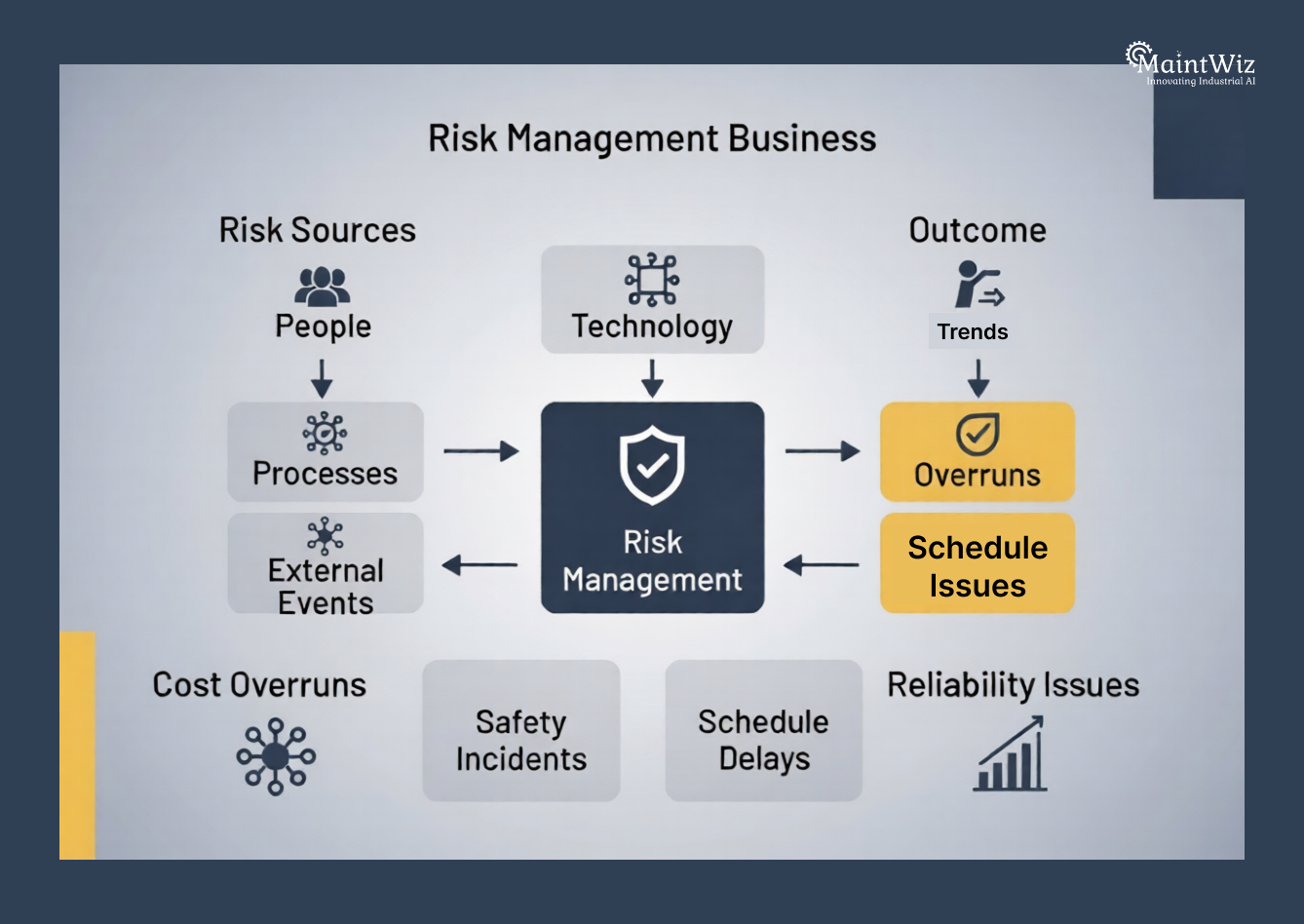
Why Shutdown Risk Assessment Determines STO Success
Shutdowns concentrate years of deferred work, inspections, modifications, and compliance tasks into a compressed execution window. Complexity multiplies interdependencies, increasing uncertainty and exposure to failure.
- Production Loss Exposure Risk — Every extra shutdown day can cost millions in lost throughput, making schedule risk a direct financial threat.
- Safety & Process Hazard Risk — Simultaneous maintenance, confined spaces, and energy isolation increase exposure to serious incidents without structured risk controls.
- Scope Growth & Discovery Risk — Hidden equipment damage and emergent defects often expand work scope beyond planned capacity during execution.
- Resource Congestion Risk — Contractor crowding, tool shortages, and supervision gaps reduce productivity and increase safety incidents significantly.
- Restart Reliability Risk — Incomplete reinstatement or missed quality checks frequently cause post-startup failures and secondary shutdowns.
Organizations that formalize shutdown risk assessment early reduce surprises, improve schedule certainty, and protect workforce safety.
Categories of Plant Shutdown Risks
Effective shutdown risk management begins by classifying risks systematically. Each category affects different stakeholders and demands different mitigation strategies.
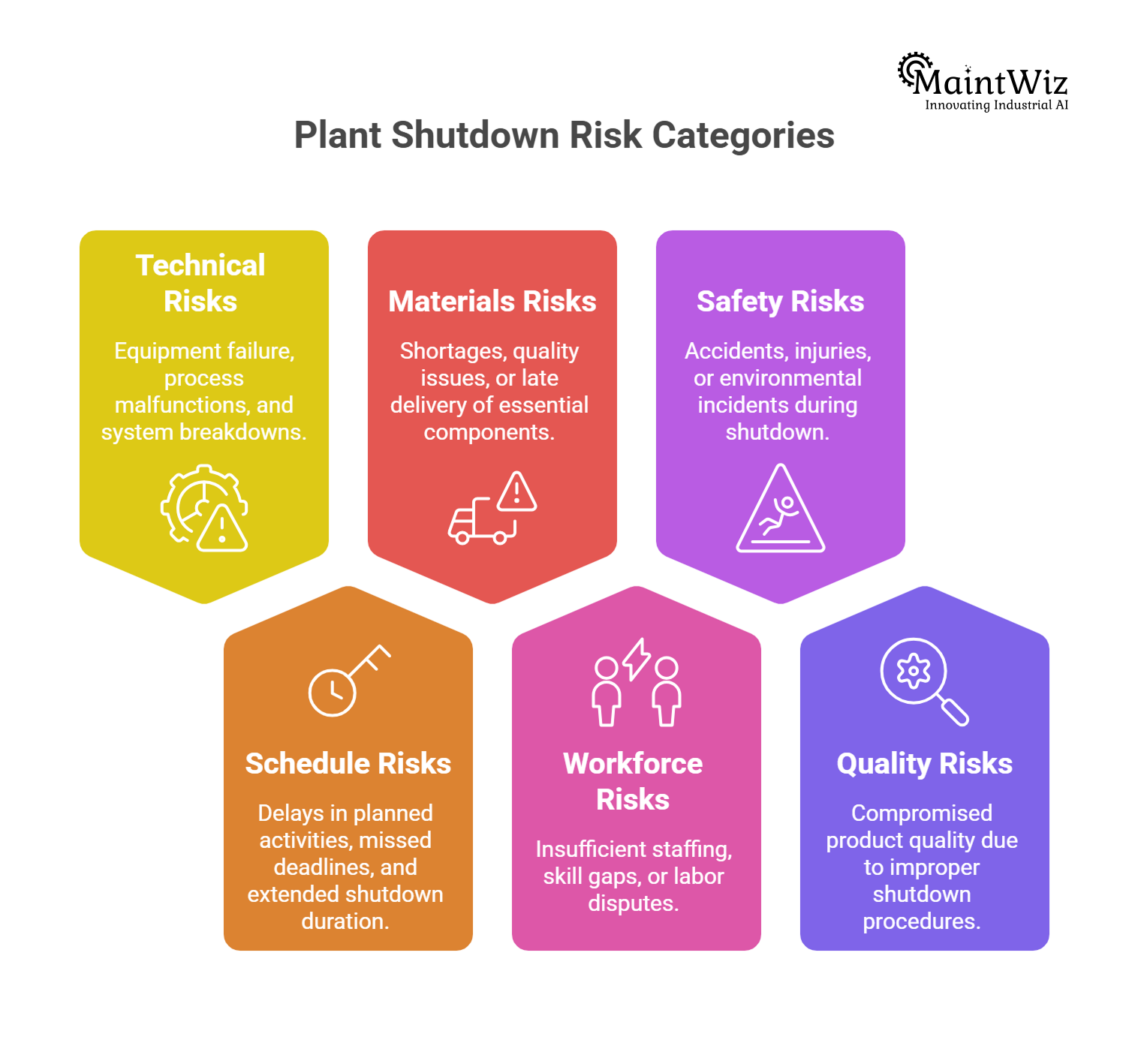
- Technical Integrity Risks — Equipment condition uncertainty, corrosion findings, and inspection outcomes may require unplanned repairs during the shutdown window.
- Schedule & Critical Path Risks — Delays in long-lead jobs, scaffolding, or crane availability directly impact the shutdown critical path timeline.
- Materials & Logistics Risks — Missing spares, incorrect parts, or delayed deliveries can halt execution of time-sensitive work packages.
- Workforce & Contractor Risks — Skill gaps, onboarding delays, and contractor coordination failures reduce productivity and increase rework probability.
- Safety & Regulatory Risks — Permit violations, isolation errors, or environmental non-compliance can stop work and trigger legal consequences.
- Quality & Reinstatement Risks — Poor workmanship, torque errors, or skipped inspections compromise startup reliability and asset performance.
Segmentation allows targeted mitigation rather than generic contingency padding.
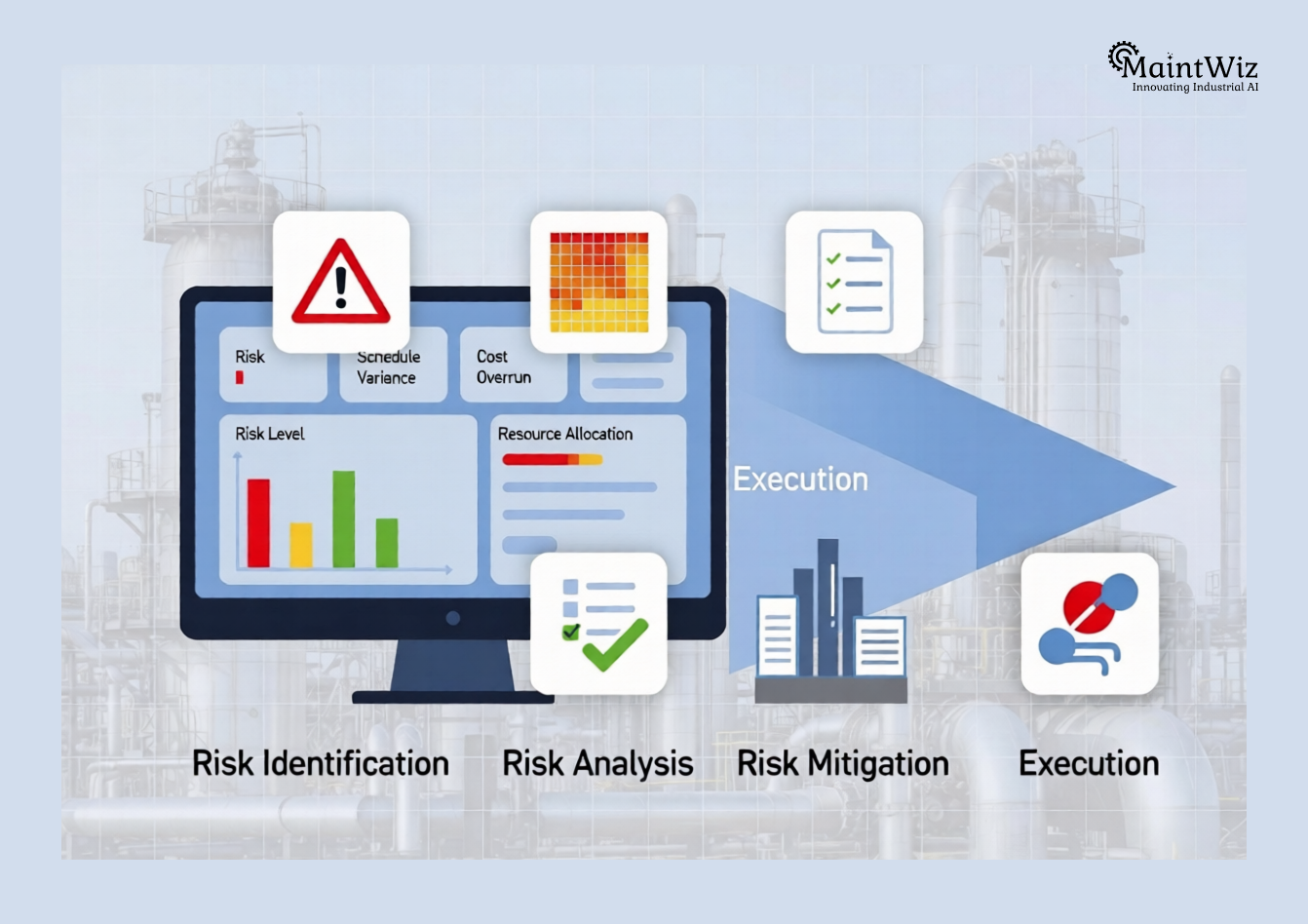
Step 1: Structured Risk Identification Framework
Risk identification should be systematic, not anecdotal. Leading STO teams use cross-functional workshops supported by historical data and asset intelligence.
- Asset Criticality Risk Screening — Prioritize assets based on failure impact, safety exposure, and production consequence to focus assessment efforts effectively.
- Historical Failure Data Review — Analyze previous shutdown overrun causes, repeat failures, and discovery work patterns to anticipate recurring risk areas.
- Work Package Risk Workshops — Conduct multidisciplinary reviews for each major job to identify execution, access, tooling, and sequencing risks.
- SIMOPS Interaction Mapping — Evaluate simultaneous operations conflicts that could cause safety hazards, delays, or access restrictions during shutdown execution.
- Vendor & Contractor Readiness Checks — Assess supplier reliability, manpower availability, and previous performance to flag external execution risks early.
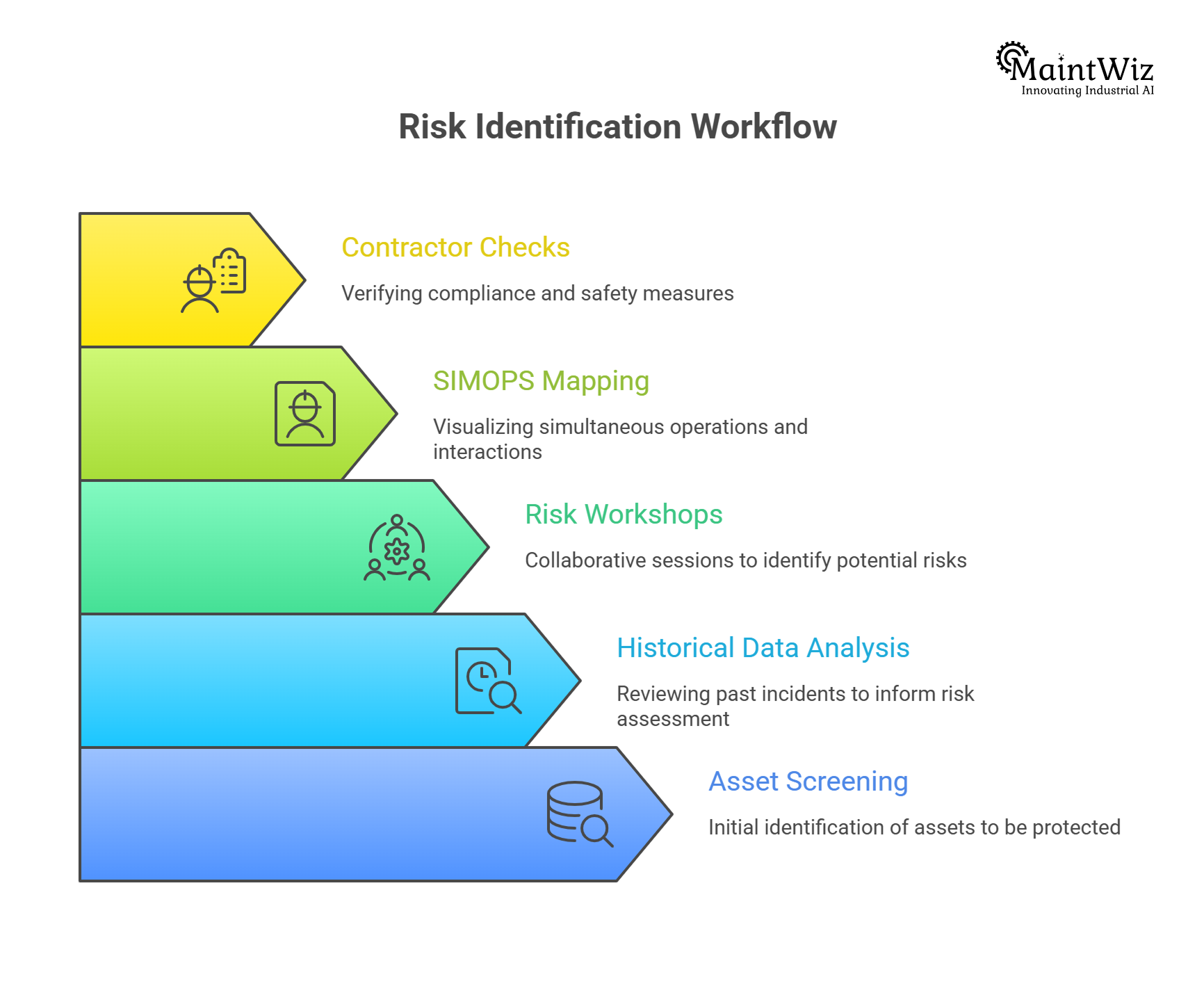
This stage feeds the formal shutdown risk register, the central control document throughout planning and execution.
Step 2: Risk Analysis and Prioritization
Not all risks are equal. A structured scoring approach ensures leadership attention stays focused on the most critical shutdown threats.
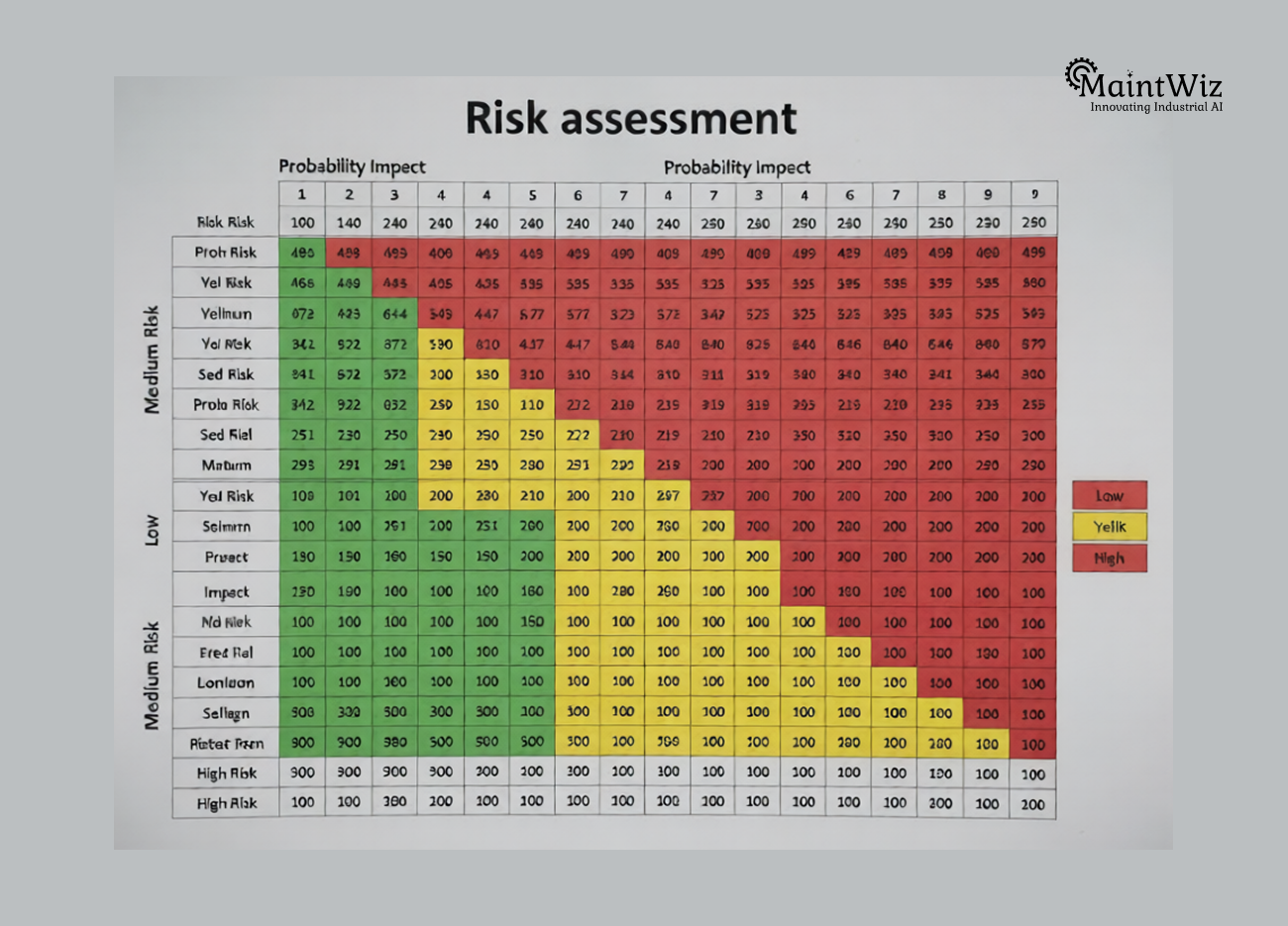
- Probability vs Impact Scoring — Evaluate each risk based on likelihood and consequence to calculate severity and prioritize mitigation resources.
- Schedule Critical Path Weighting — Assign higher risk priority to activities directly affecting the shutdown critical path or restart sequence.
- Safety Severity Multipliers — Escalate risk ratings where potential incidents involve life-threatening hazards or regulatory violations.
- Detection Difficulty Assessment — Risks that are hard to detect early require stronger preventive controls and monitoring plans.
- Financial Exposure Ranking — Quantify potential cost impacts, including downtime losses, contractor escalation, and material premiums.
Visualization through risk heat maps allows executive stakeholders to understand exposure at a glance.
Step 3: Mitigation Strategy Development
Risk mitigation is where planning discipline converts into schedule reliability. Strong mitigation plans are specific, measurable, and assigned to accountable owners.
- Pre-Shutdown Inspection Mitigation — Conduct targeted inspections before shutdown to reduce uncertainty and minimize discovery work during execution.
- Critical Spares Risk Buffering — Secure and stage high-risk spare parts onsite to prevent execution delays caused by supply chain disruptions.
- Parallel Task Strategy Planning — Redesign work sequences to allow parallel execution when delays occur on primary critical path activities.
- Specialist Contractor Pre-Mobilization — Pre-approve and align backup specialist contractors to address unexpected technical findings immediately.
- Enhanced Supervision Deployment — Assign experienced supervisors to high-risk jobs to reduce errors and improve decision speed.
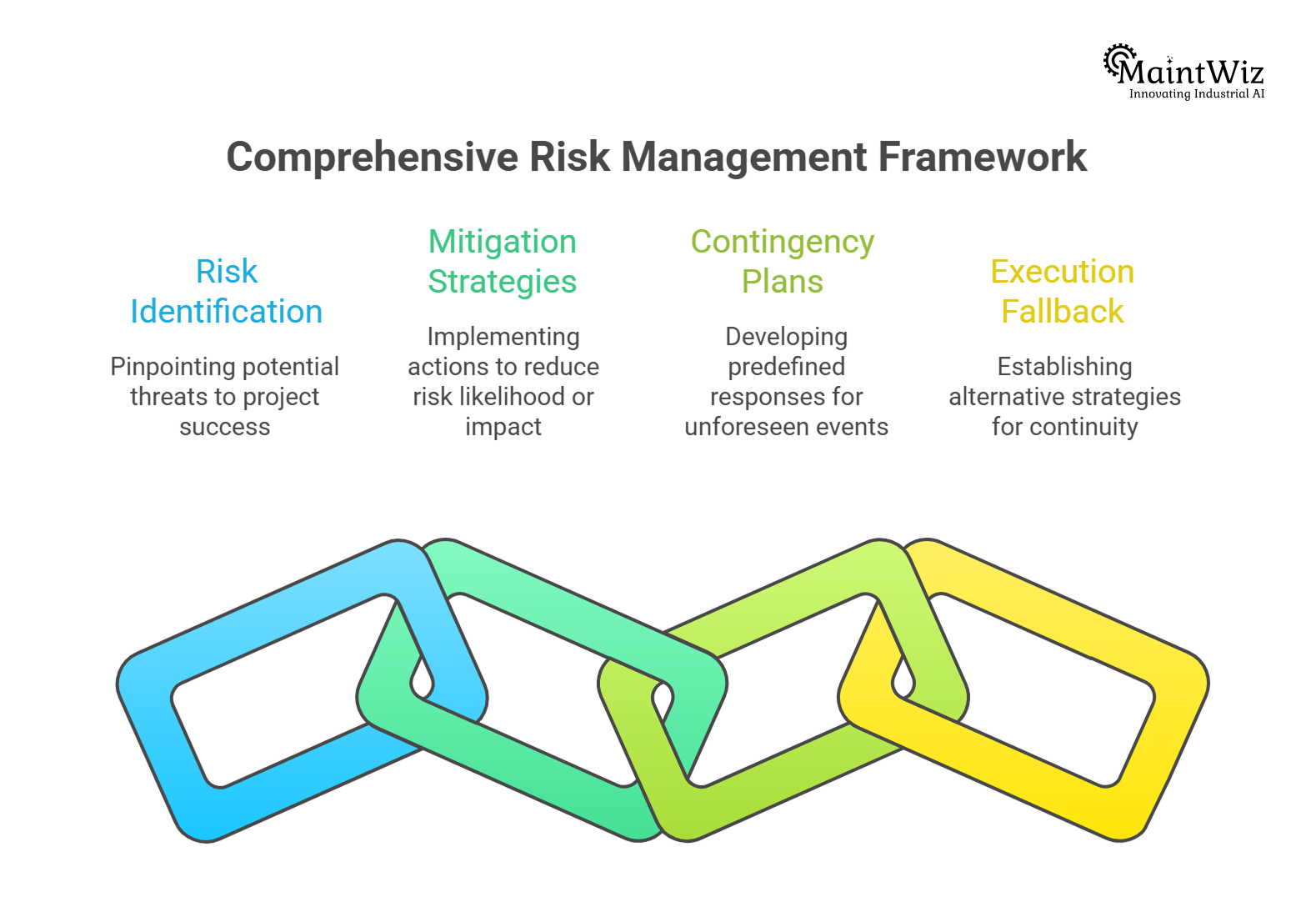
Mitigation actions must be tracked like work orders, not left as informal notes.
Step 4: Contingency Planning for High-Impact Risks
Mitigation reduces probability; contingency planning reduces impact. Mature STO programs plan for failure scenarios explicitly.
- Time Contingency Allocation — Reserve controlled float for high-uncertainty jobs rather than spreading contingency randomly across the schedule.
- Standby Equipment Strategy — Prepare temporary or rental equipment for critical systems where repair outcomes are uncertain.
- Emergency Engineering Support Plans — Secure on-call engineering expertise to address design changes and technical decisions without delay.
- Alternate Work Scope Identification — Prepare secondary work lists that can be executed if primary tasks are delayed or deferred.
- Rapid Procurement Pathways — Pre-define fast-track approval and logistics processes for urgent materials discovered during shutdown.
Contingency without structure becomes waste. Structured contingency protects schedule integrity.
Step 5: Real-Time Risk Monitoring During Execution
Risk assessment is not static. Execution realities shift priorities daily, requiring continuous monitoring and decision support.
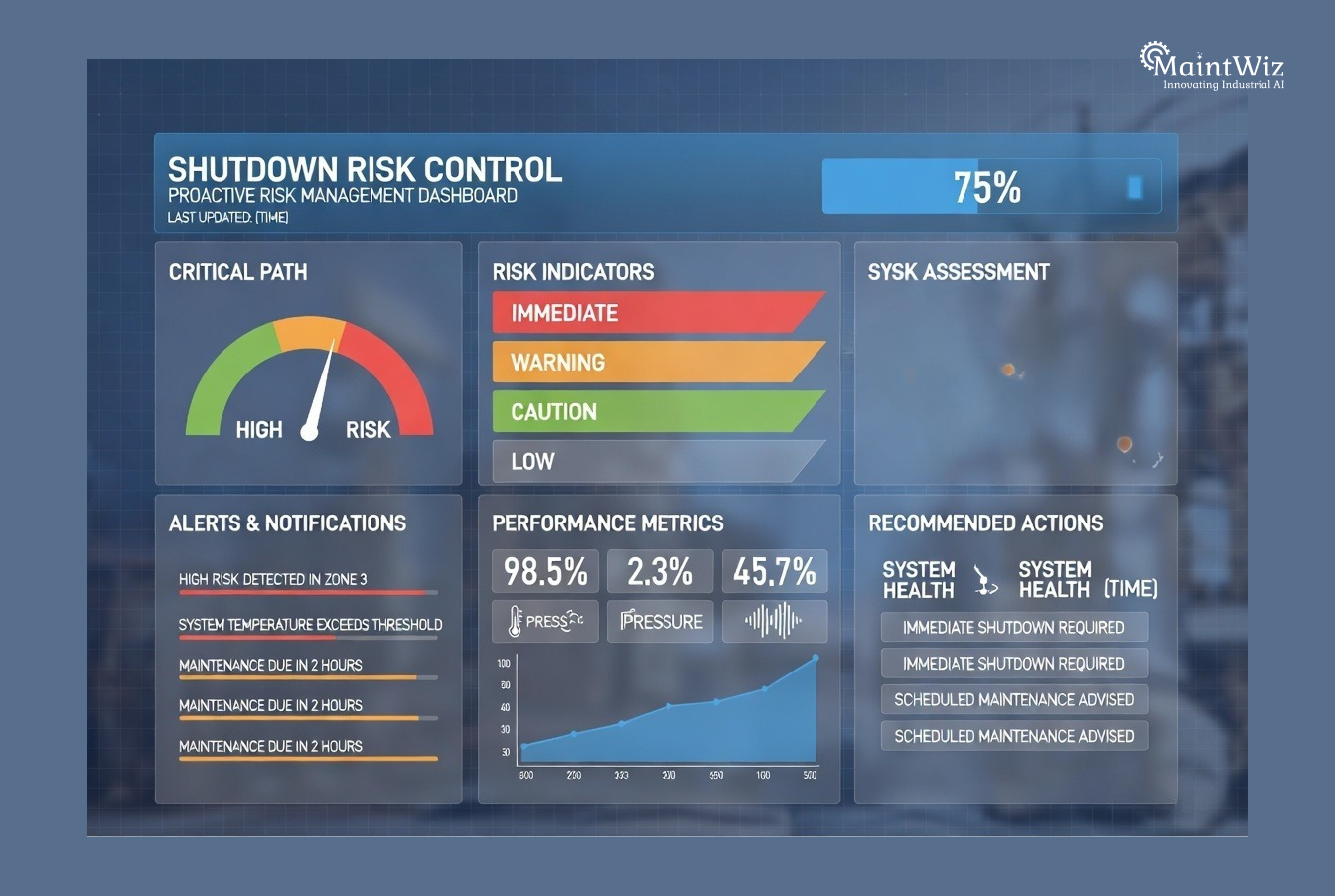
- Daily Risk Review Meetings — Conduct short cross-functional reviews to reassess top risks and update mitigation or contingency actions.
- Critical Path Risk Tracking — Monitor progress of high-risk critical path jobs with enhanced reporting frequency and field verification.
- Emergent Work Risk Evaluation — Assess newly discovered work for schedule, safety, and resource impact before approval.
- Field Productivity Risk Signals — Track work completion rates versus plan to detect systemic delays early.
- Safety Risk Escalation Protocols — Trigger immediate leadership review when high-severity safety deviations are observed.
Execution risk control separates proactive STO leadership from reactive firefighting.
Common Shutdown Risk Management Failures
Many shutdown overruns trace back to predictable risk management weaknesses rather than technical surprises.
- Late Risk Identification Failure — Waiting until execution to analyze risks eliminates mitigation options and forces costly contingency reactions.
- Underestimating Discovery Work Risk — Ignoring inspection uncertainty leads to overloaded schedules and unmanageable scope growth.
- Weak Risk Ownership Accountability — Risks without named owners rarely receive timely mitigation actions or monitoring attention.
- Poor Contractor Risk Integration — Excluding contractors from risk planning creates misalignment and execution conflicts on site.
- No Structured Risk Register Updates — Static risk lists fail to reflect evolving shutdown realities, reducing decision effectiveness.
A disciplined plant shutdown risk assessment culture avoids these pitfalls.
Industry-Specific Shutdown Risk Nuances
Different industries face distinct shutdown risk patterns driven by process complexity and regulatory environments.
- Refinery & Petrochemical Risks — Corrosion findings, catalyst handling, and high-energy isolation complexity create significant discovery and safety exposure.
- Power Plant Shutdown Risks — Turbine overhauls, boiler inspections, and grid return deadlines intensify schedule and quality reinstatement risks.
- Cement & Heavy Industry Risks — Large mechanical components, crane dependency, and refractory work increase logistical and execution uncertainty.
- Mining & Mineral Processing Risks — Remote locations, weather exposure, and contractor mobilization constraints amplify supply chain and workforce risks.
- Water & Wastewater Facility Risks — Continuous service obligations and environmental compliance raise contingency planning and regulatory exposure.
Risk methodologies remain consistent, but mitigation tactics must align with sector-specific realities.
Integrating Risk Assessment with Shutdown Planning Systems
Manual spreadsheets cannot manage thousands of risk-linked tasks. Digital integration ensures traceability, accountability, and visibility.
- Risk-Linked Work Order Tracking — Connect high-risk jobs directly to risk records to ensure mitigation tasks are executed and verified.
- Asset History Risk Insights — Use maintenance history to identify repeat failure patterns that increase shutdown discovery risk probability.
- Spare Parts Risk Visibility — Link critical spares availability to risk items to avoid execution delays caused by material shortages.
- Contractor Performance Risk Monitoring — Track contractor productivity and quality trends to anticipate schedule or workmanship risks early.
- Real-Time Dashboard Risk Reporting — Provide leadership with live risk exposure metrics tied to schedule and cost performance.
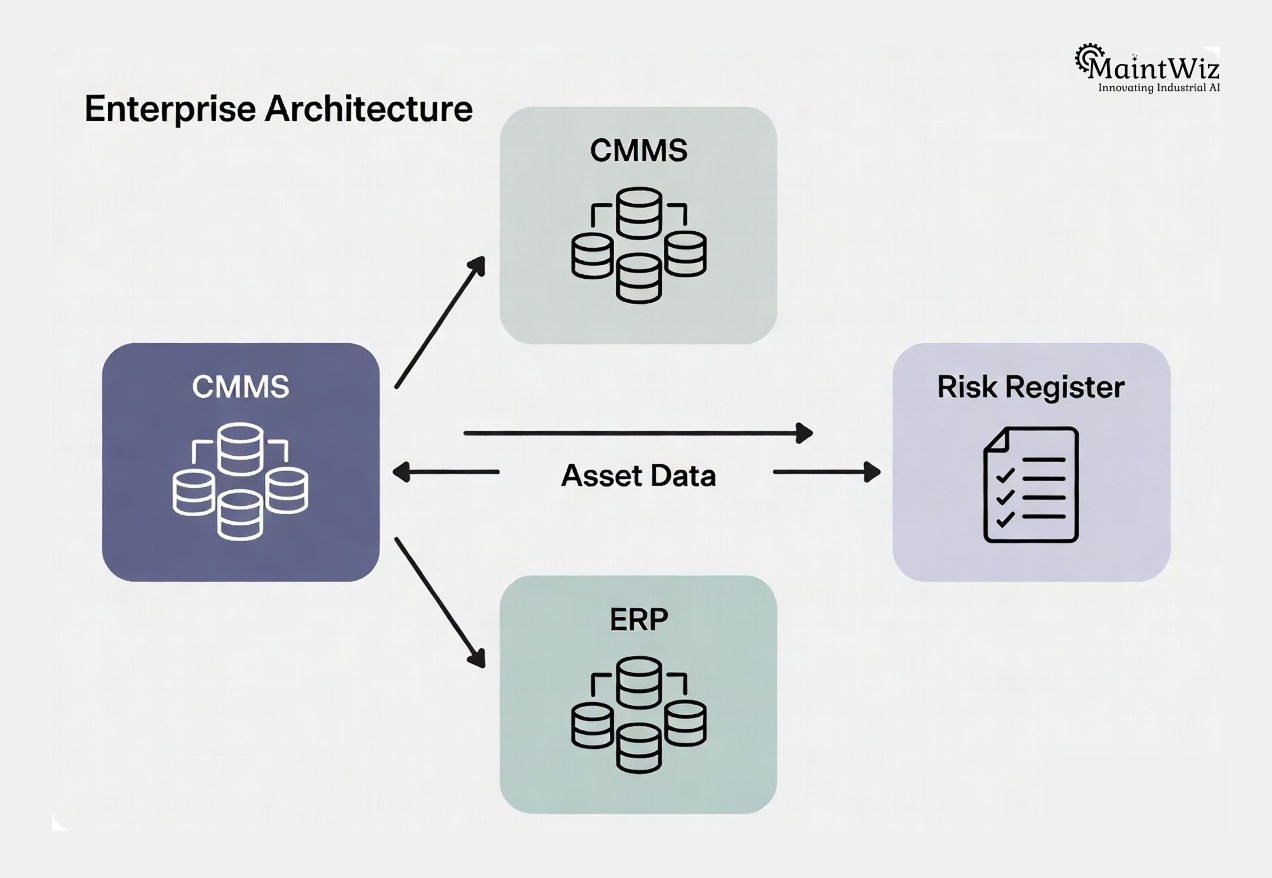
Digital integration transforms risk management from documentation into operational control.
Why MaintWiz CMMS Strengthens Shutdown Risk Assessment
Effective shutdown risk control requires structured data, visibility, and workflow discipline. MaintWiz CMMS supports these needs by connecting asset intelligence, work execution, and planning processes in a single operational environment.
- Centralized Asset Intelligence — Complete equipment history and failure records improve early identification of high-risk assets and likely discovery work.
- Structured Work Order Management — High-risk shutdown jobs can be tracked with clear ownership, status visibility, and execution accountability.
- Spare Parts Planning Support — Visibility into spare availability reduces material-related shutdown delays and supports risk-based inventory staging.
- Mobile Execution Visibility — Field updates from supervisors improve real-time monitoring of high-risk tasks and emerging issues.
- Planning and Reporting Dashboards — Consolidated views help leadership monitor schedule threats, backlog risk, and shutdown progress indicators.
By embedding risk awareness into daily maintenance workflows, MaintWiz CMMS helps organizations move from reactive shutdown firefighting to proactive risk control.
Take Control of Your Next Shutdown Before Risk Takes Control of You
Every successful shutdown is built on decisions made months before execution begins. The earlier risks are identified, the more options you have to control cost, protect schedule, and safeguard people. If your team is still managing shutdown risk through spreadsheets and disconnected systems, it’s time to upgrade your approach. See how MaintWiz CMMS brings structure, visibility, and accountability to shutdown planning — turning uncertainty into controlled, data-driven execution.

Company
Download App