




The 90-Day Asset Reliability Sprint Plan (Step-by-Step)

Are you ready to transform your maintenance operations and build a high-performing asset reliability engine in just 90 days? This actionable plan guides maintenance leaders, reliability engineers, and operations executives through a structured sprint that delivers measurable uptime gains, reduced downtime, and a sustainable reliability culture.

Why You Need a 90-Day Asset Reliability Sprint Plan

Asset reliability isn’t a luxury — it’s a foundational requirement for competitive operations. Organizations that execute a focused, time-boxed reliability improvement plan achieve better equipment uptime, lower maintenance costs, and more predictable production outputs.

  • Build Operational Resilience:A sprint compresses learning and improvements into 90 days rather than months of stagnation.
  • Drive Data-Driven Decisions:Leverage real-time asset performance data to prioritize actions.
  • Reduce Unplanned Downtime:Systematically eliminate frequent breakdowns and failure modes.
  • Create a Reliability Culture: Align maintenance, operations, and leadership around goals.
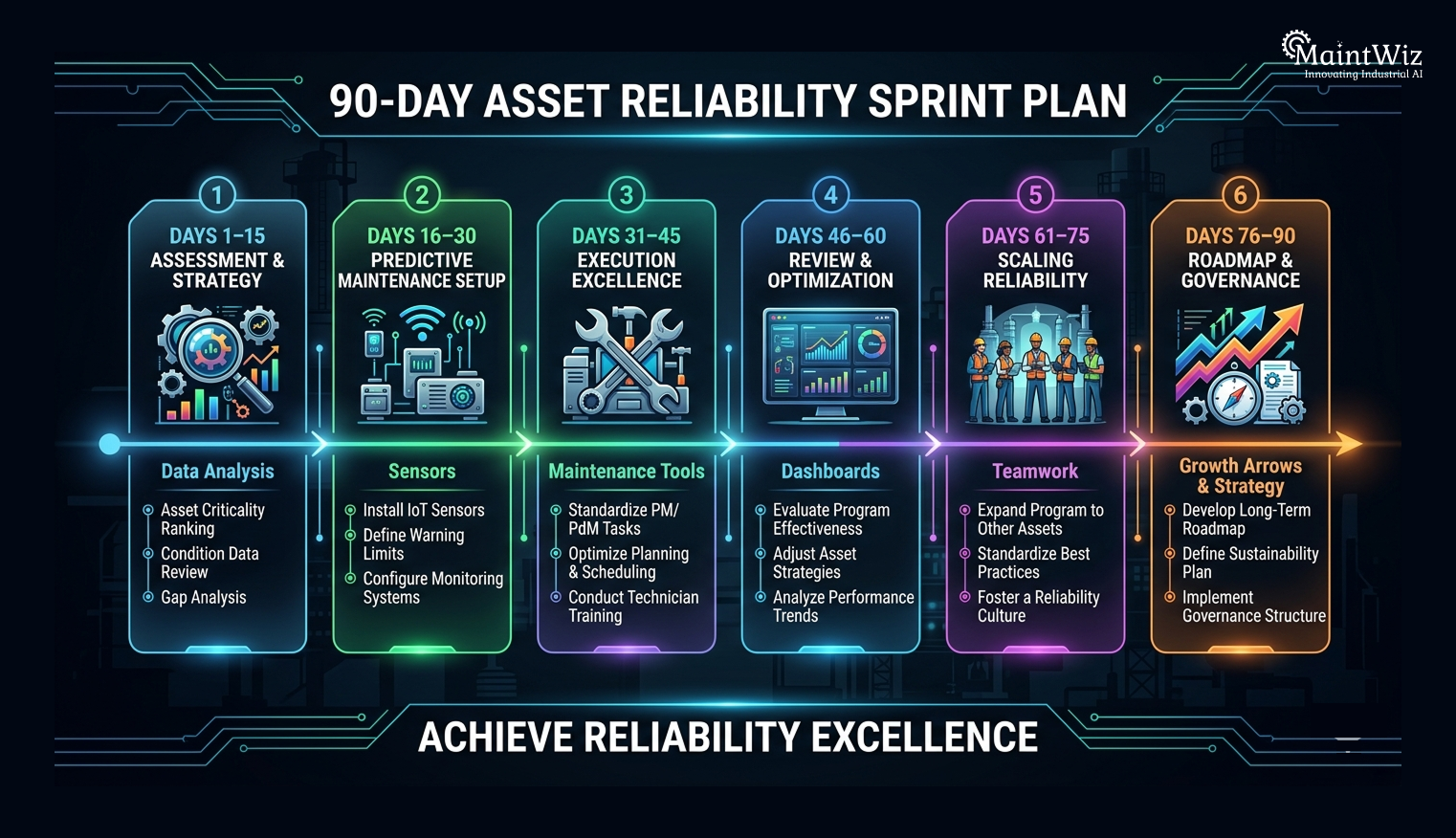
90 day asset reliability sprint plan timeline showing phases from assessment to predictive maintenance and optimization

Day 1–15: Sprint Kickoff & Baseline Reliability Assessment

Overview: The first two weeks are about alignment, data discovery, and setting measurable goals. You’ll assess your current asset health, failure history, and maintenance workflows.

  • Set Sprint Goals:Define KPIs such as uptime targets, MTTR reduction goals, and maintenance backlog improvements.
  • Inventory & Criticality Assessment:Create a prioritized asset list and rank assets by criticality and risk to operations.
  • Historical Data Review:Analyze past downtime events, failure causes, and maintenance records.
  • Work Order Health Check:Evaluate work order completion rates, overdue tasks, and compliance with preventive maintenance plans.
  • Condition Monitoring Setup: Deploy sensors and baseline condition monitoring on top critical assets.

Day 16–30: Establish Predictive & Preventive Maintenance Strategies

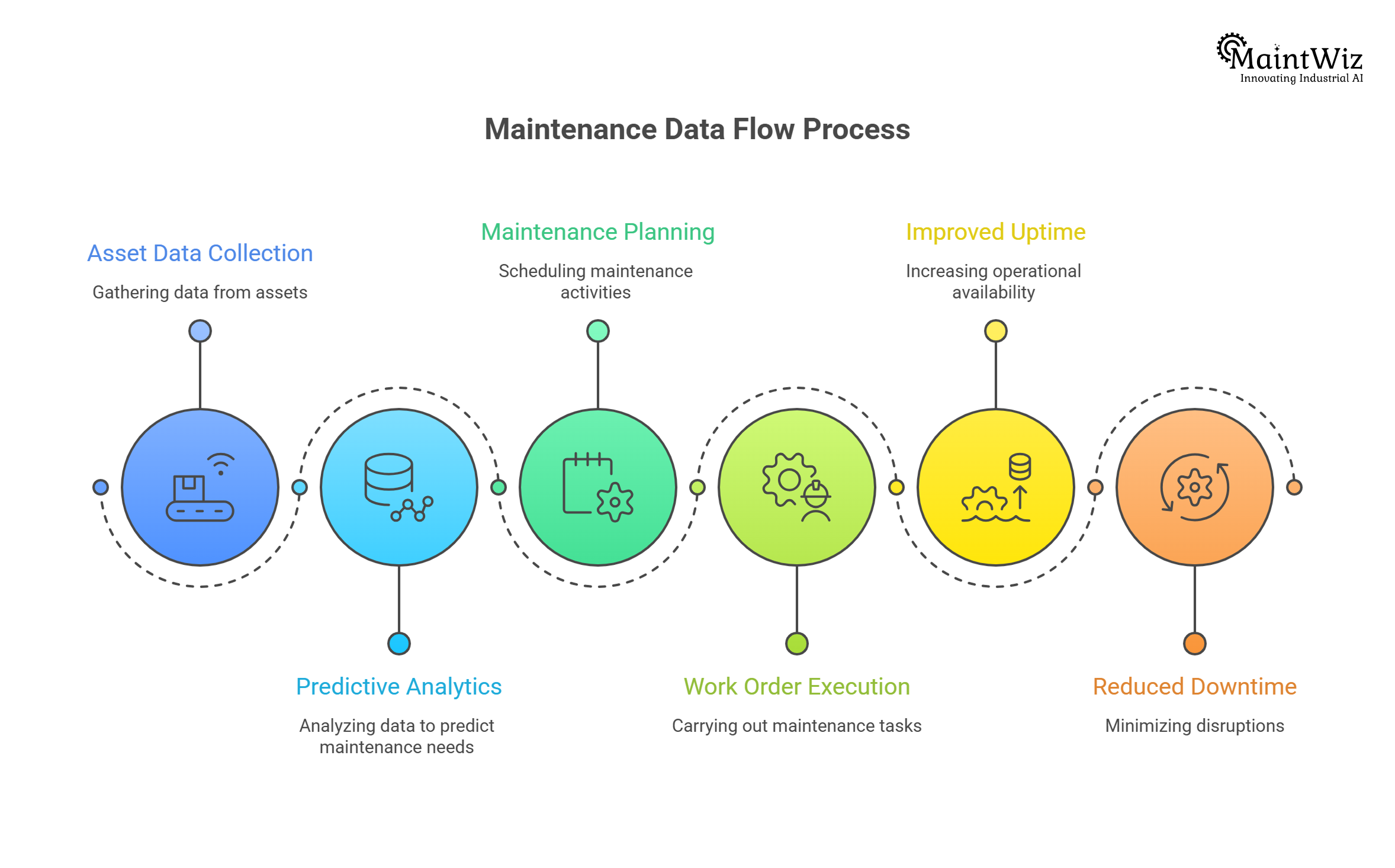
Overview: With baselines defined, it’s time to implement predictive analytics and preventive maintenance planning that targets frequent failure modes and constraint assets.

flowchart showing predictive maintenance process from asset data to improved uptime and reduced downtime
  • Implement Predictive Maintenance:Leverage sensor data, analytics, and predictive models to anticipate failures before they occur.
  • Rebalance PM Schedules:Review and optimize preventive maintenance (PM) frequencies based on failure patterns.
  • Critical Asset Focus:Target assets with the highest downtime impact for proactive maintenance actions.
  • Adjust Work Order Prioritization:Prioritize maintenance tasks based on criticality and operational impact.
  • Team Training on Reliability Tools: Educate technicians and planners on data interpretation, CMMS workflows, and execution discipline.

Day 31–45: Execution Excellence & Workflow Standardization

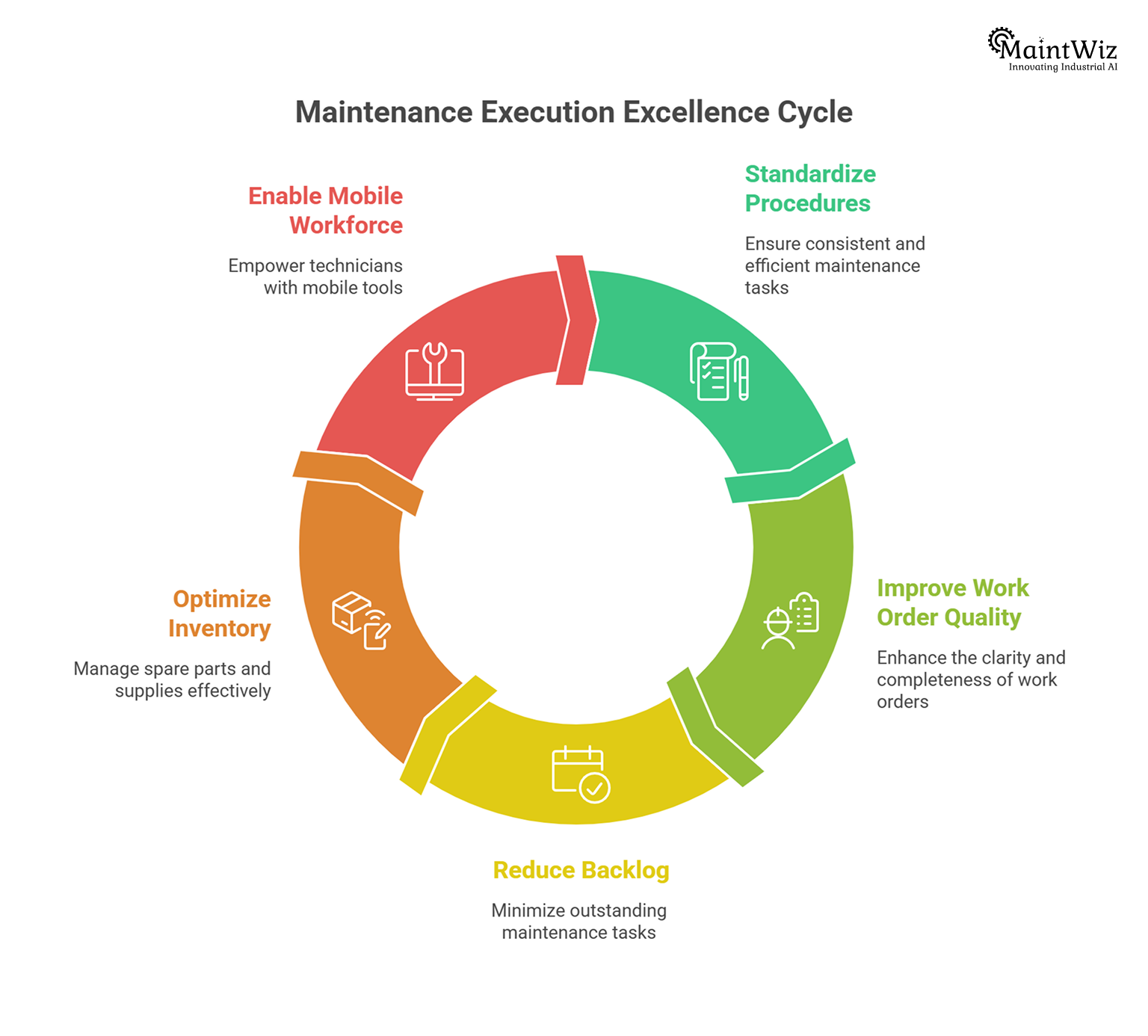
Overview: With plans in place, this sprint phase emphasizes execution excellence — ensuring work gets done right and consistently.

  • Standardize Maintenance Procedures:Document and enforce standard work procedures for common maintenance tasks.
  • Improve Work Order Quality:Capture accurate failure codes, execution times, and parts usage in every work order.
  • Reduce Maintenance Backlog:Strategically clear overdue work orders and regroup for focused execution.
  • Spare Parts & Inventory Optimization:Align inventory levels with asset criticality to prevent stockouts.
  • Empower Mobile Workforce: Enable field technicians with mobile CMMS tools to update statuses in real time.
maintenance execution framework showing standard procedures backlog reduction and mobile workforce enablement

Day 46–60: Mid-Sprint Review & Continuous Improvement Cycles

Overview: At the halfway mark, analyze performance metrics, tweak your strategies, and prepare for the second half of the sprint.

  • Performance Review Workshop:Conduct a sprint review with stakeholders to show KPI progress and insights.
  • Root Cause Analysis (RCA):Dive deeper into frequent failure modes and correct systemic issues.
  • Expand Predictive Coverage:Add more assets or failure modes into your predictive maintenance scope.
  • Schedule Adjustments:Fine-tune PM and PdM schedules based on early sprint results.
  • Optimize Resource Allocation: Reassign maintenance technicians strategically based on asset priorities.

Day 61–75: Refining Reliability & Scaling Best Practices

Overview: In these three weeks, focus on scaling maintenance excellence and embedding reliability best practices throughout your operations.

  • Reliability Workshops:Educate cross-functional teams on proactive maintenance strategies.
  • Performance Dashboards:Deploy executive and planner dashboards to visualize asset health, MTTR/MTBF, and work order trends.
  • Operational Alignment Meetings:Sync maintenance execution with production schedules to minimize disruptions.
  • Feedback Loop Creation:Gather field feedback to improve PM tasks and checklists.
  • Condition-Based Triggers: Configure automated alerts for critical condition breaches.

Day 76–90: Sprint Conclusion & Reliability Roadmap

Overview: The final sprint stretch consolidates learning, celebrates wins, and sets up your long-term reliability roadmap.

  • Sprint Performance Report:Document improvements in uptime, MTTR, backlog, and compliance.
  • Future Roadmap Planning:Build a 6 to 12-month reliability roadmap driven by sprint insights.
  • Governance & Cadence:Establish weekly reliability reviews and KPI tracking processes.
  • Reward & Recognition:Celebrate teams who delivered reliability improvements.
  • Set Next Sprint Goals: Define targets for the next 90-day cycle.

Why Your Maintenance Strategy Needs a Modern CMMS for This Sprint

To execute a reliability sprint with speed, accuracy, and real-time visibility, you need a maintenance platform that supports data, workflows, and execution excellence.

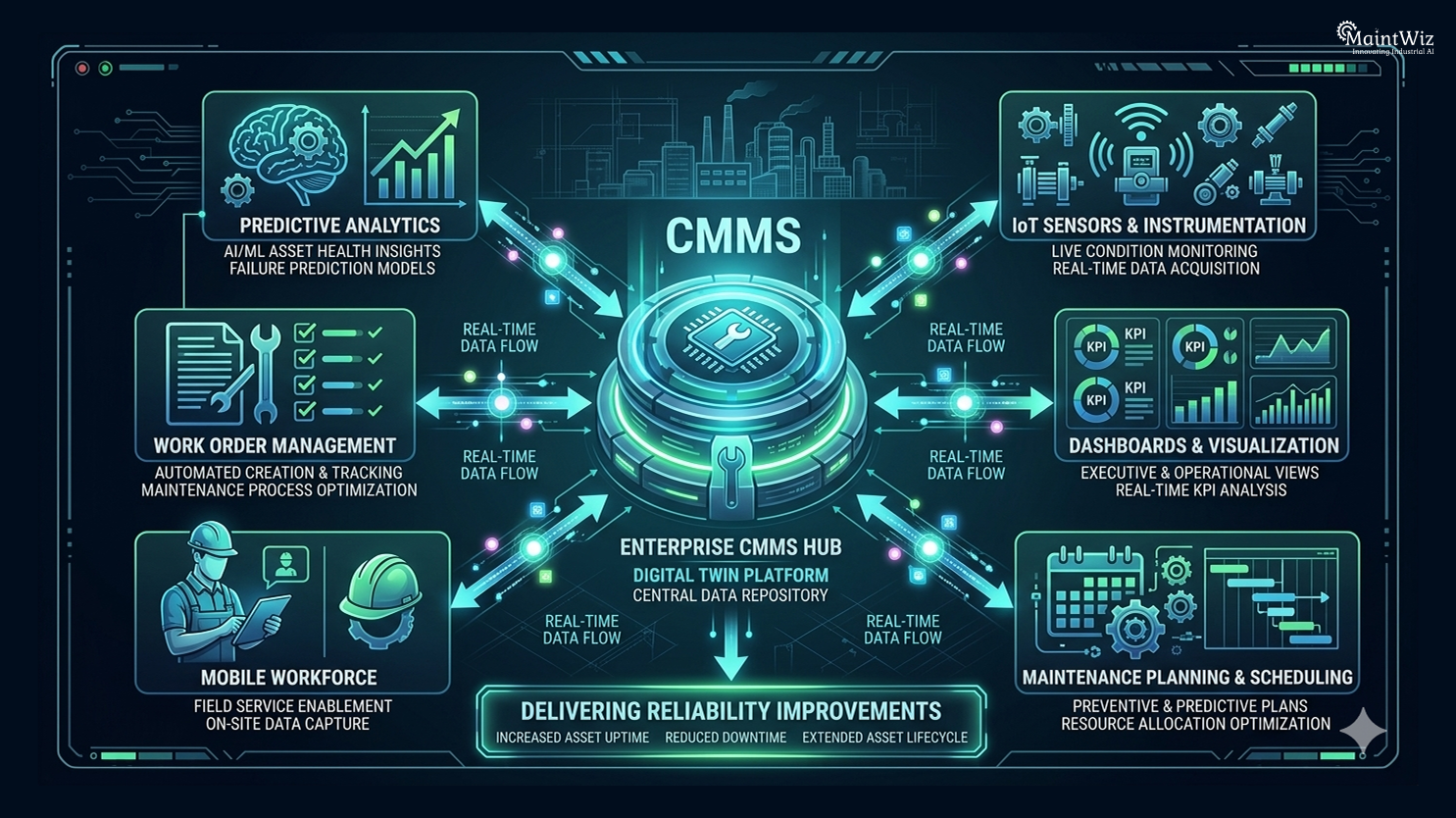
CMMS ecosystem connecting predictive maintenance IoT sensors dashboards and work order management
  • Centralized Asset & Work Order Management:Platforms like MaintWiz CMMS bring every asset, work order, and maintenance record into one unified system.
  • Predictive Maintenance Intelligence:With AI-driven analytics, MaintWiz CMMS helps you anticipate failures and schedule maintenance proactively.
  • Intelligent Scheduling & Optimization:Automated maintenance scheduling boosts uptime and resource utilization.
  • Real-Time Mobile Execution:Field teams can update work orders instantly, improving responsiveness and accuracy.
  • Data-Driven Decision Support: Dashboards and analytics make performance improvements visible and actionable.

MaintWiz CMMS is purpose-built to accelerate your reliability sprint: from predictive insights to execution tracking and continuous improvement dashboards, it delivers the capabilities needed to transform maintenance operations in just 90 days.

jai

Jai Balachandran is an industry expert with a proven track record in driving digital transformation and Industry 4.0 technologies. With a rich background in asset management, plant maintenance, connected systems, TPM and reliability initiatives, he brings unparalleled insight and delivery excellence to Plant Operations.