Autonomous Maintenance Doesn’t Reduce Breakdowns — It
Exposes Bad Processes

Autonomous maintenance has become a cornerstone concept in industrial reliability frameworks like Total Productive Maintenance (TPM). Yet despite its widespread adoption, many plants don’t see the dramatic drop in breakdowns leaders expect — and the reason isn’t about execution, it’s about what the practice exposes:
If your processes are weak, autonomous maintenance doesn’t hide that — it reveals and amplifies it.
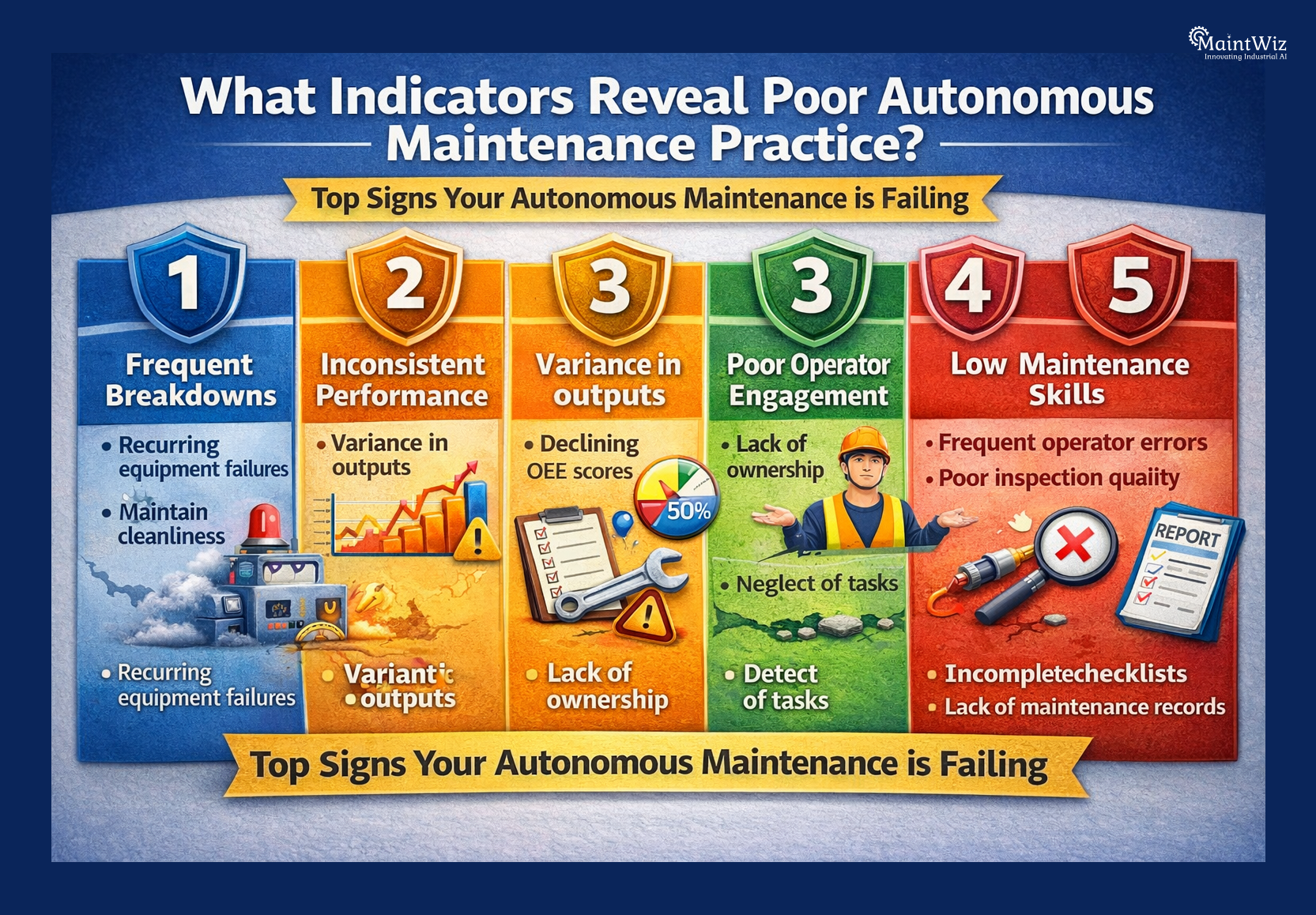
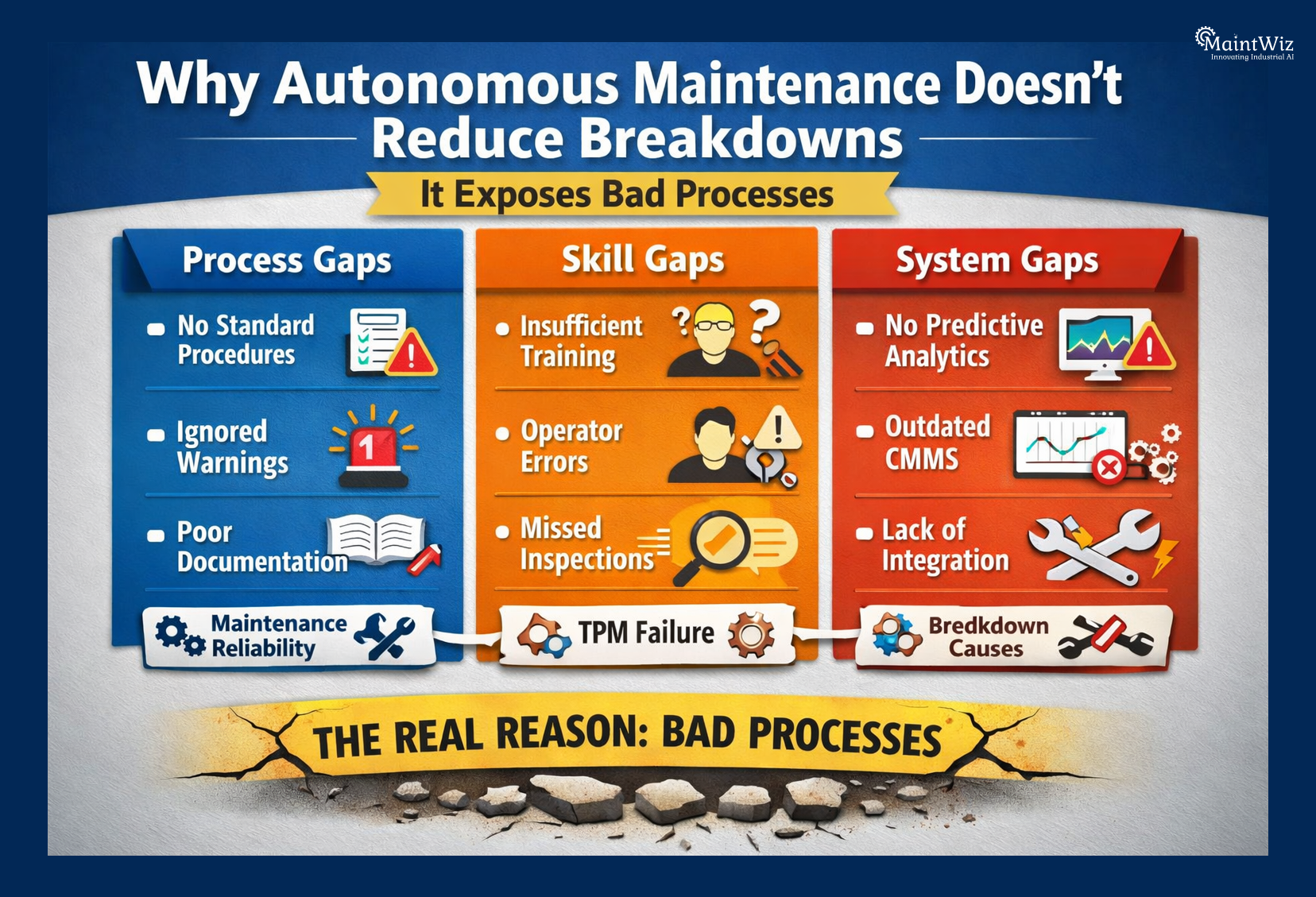
This image outlines the top process weaknesses exposed by autonomous maintenance, including lack of standardization, insufficient training, poor workflows, missing feedback loops, and absence of predictive maintenance integration.
Understanding Autonomous Maintenance in Modern Asset Management
Autonomous maintenance is defined as the delegation of basic maintenance tasks — cleaning, inspection, lubrication, and minor adjustments — to equipment operators instead of relying solely on maintenance technicians. It is one of the eight pillars of TPM and aims to create ownership and early detection of issues.
This operator-led approach seems logical: if operators maintain their own machines, they will catch issues early and reduce breakdowns. However, this logic overlooks a critical truth: Process weaknesses are not removed by delegation — they are highlighted.
- Definition Clarity: Autonomous maintenance includes routine maintenance activities performed by operators to prevent failures.
- Ownership Philosophy: It shifts accountability for basic upkeep to the people who use the machines daily.
- TPM Pillar: Part of the broader Total Productive Maintenance methodology, impacting uptime, quality, and reliability.
Why Autonomous Maintenance Alone Does Not Reduce Breakdowns
It’s tempting to see autonomous maintenance as a silver bullet. Yet, many plants implement it only to watch breakdown metrics stagnate. The reason isn’t the concept — it’s the context in which it’s applied.
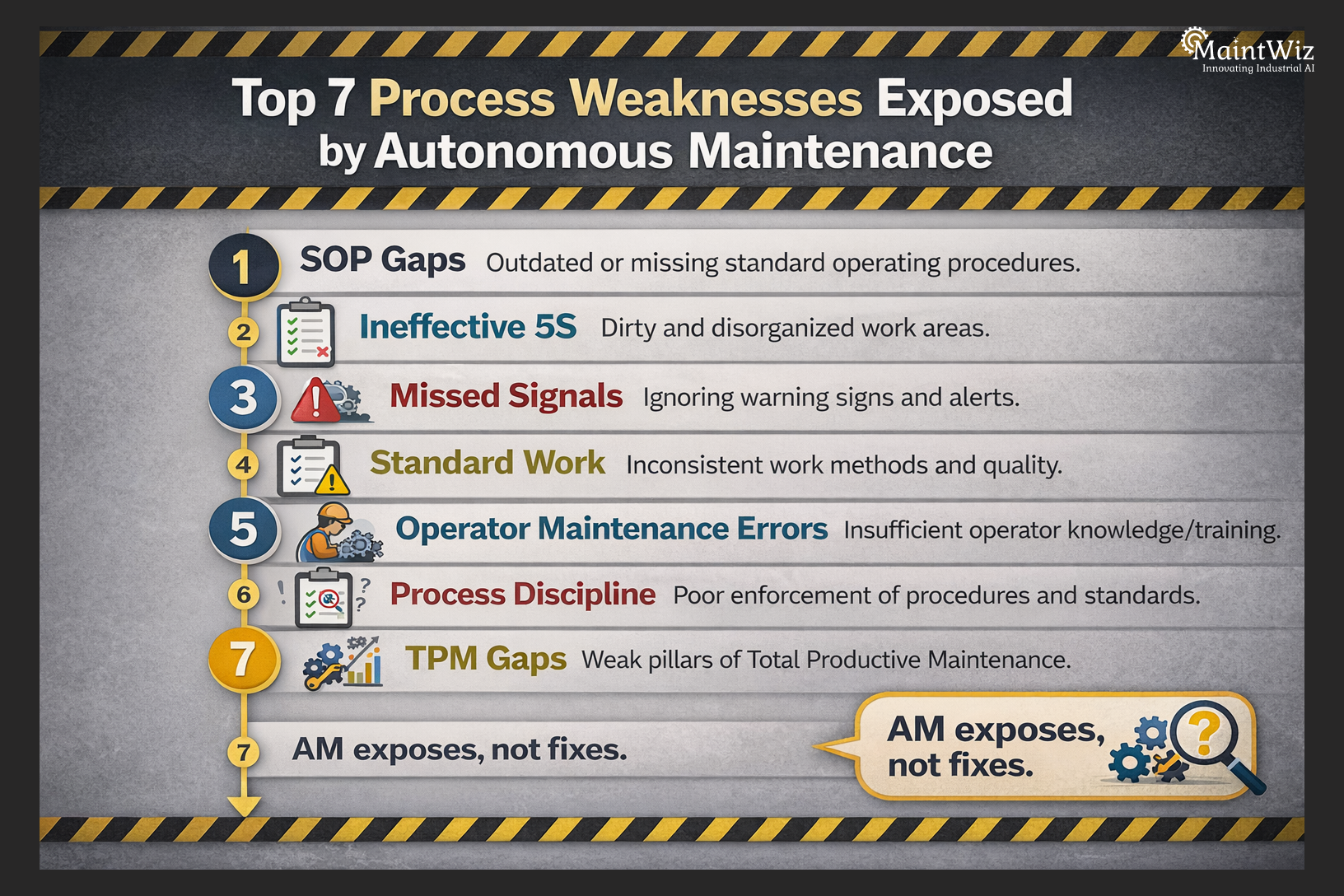
- It Exposes Ineffective Maintenance Processes
When operators perform upkeep, weak processes are revealed — not solved. Without strong standards, documentation, or training, autonomous efforts simply bring underlying process gaps into sharp focus.
- Inefficient Workflows: Operators may follow inconsistent procedures, leading to variable outcomes.
- Unclear Standards: Lack of standardized work instructions means maintenance quality varies.
- Training Gaps: Operators need proper training on CLIT (cleaning, lubrication, inspection, tightening) and other basics.
- It Can Mask the Need for Better Planning and Predictive Analytics
Autonomous maintenance often stops at routine tasks. It doesn’t inherently introduce predictive insights or data-driven planning — two capabilities essential for reducing random breakdowns.
- Reactive Bias: Operators may still respond after failure signals, not before.
- No Predictive Layer: Without predictive analytics, early indicators are often missed.
- Planning Gaps: Routine operator upkeep does not replace a formal maintenance schedule driven by asset condition and risk.
- It Fails Without Cross-Functional Alignment
Operators alone cannot drive reliability. Autonomous maintenance without partnership between operations and maintenance teams creates silos rather than synergy.
- Communication Breakdowns: Lack of collaboration between departments reduces effectiveness.
- Feedback Loops Missing: Insights from autonomous tasks need integration into formal maintenance planning.
- Incentive Misalignment: Operators may prioritize production over proactive maintenance activities.
When Autonomous Maintenance Works — What the Best Plants Do
Autonomous maintenance can be transformational — but only when it’s embedded in a robust reliability ecosystem.
- Standardized Operating Procedures and CLIT Practices
Successful facilities leverage documented processes for operator-led maintenance that everyone follows consistently.
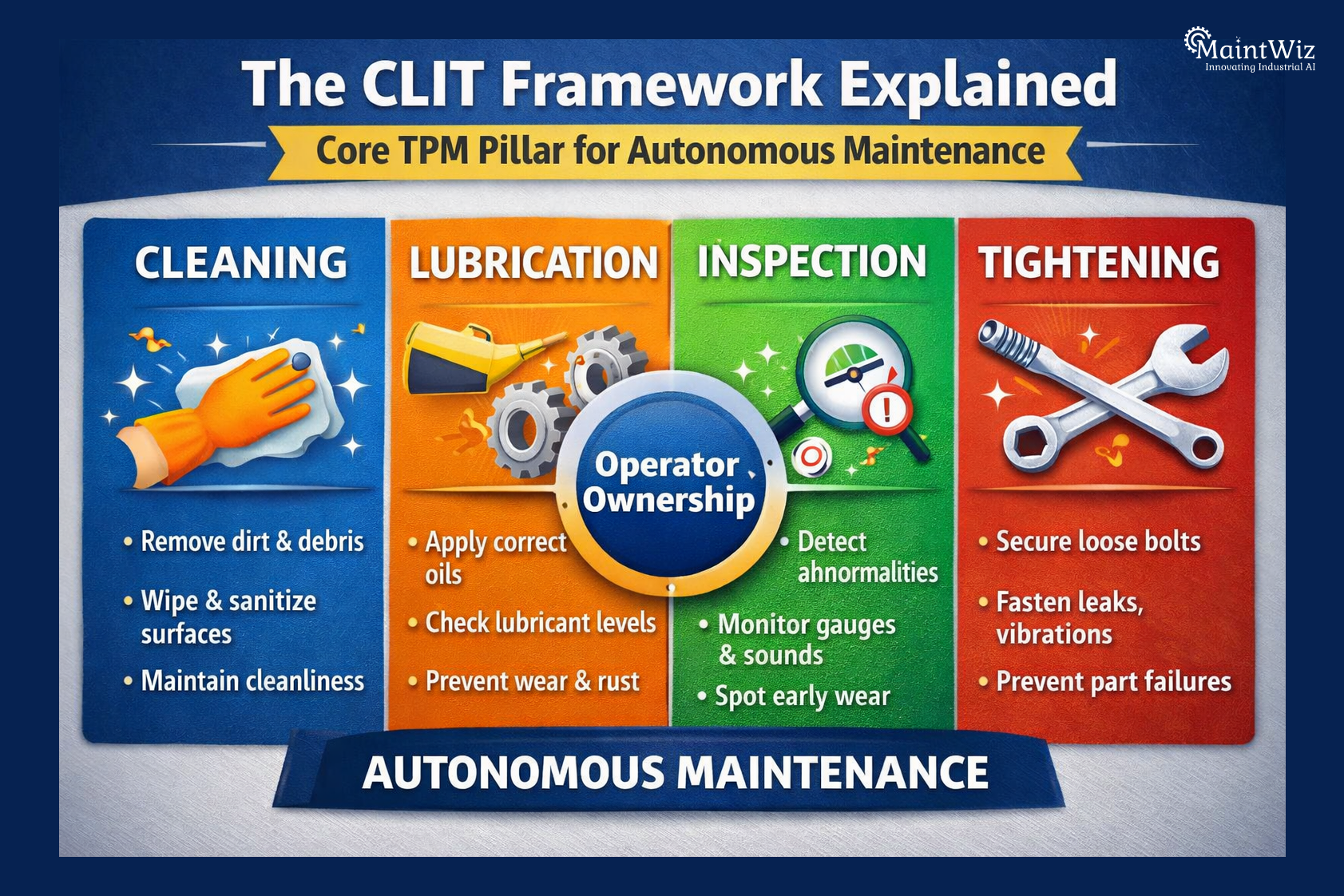
- CLIT Framework: Cleaning, lubrication, inspection, tightening — operator tasks standardize early detection.
- Documentation Control: Clear procedures and checklists reduce variability.
- Performance Tracking: Data collection enables continuous improvement.
- Strong Training and Skill Development
Operators become true asset custodians when they are trained in both process and context.
- Training Programs: Focused on maintenance basics and machine knowledge.
- Certification Paths: Progression from basic tasks to advanced reliability roles.
- Cross-Functional Learning: Joint training with maintenance teams enhances integration.
- Data-Driven Integration with Maintenance Planning
To reduce breakdowns, autonomous maintenance indicators must feed into predictive and preventive planning engines.
- Condition Monitoring Integration: Real-time sensor data enriches operator insights.
- Predictive Alerts: Early warnings reduce unexpected failures.
- Continuous Feedback: Operator inputs shape maintenance priorities.
How Autonomous Maintenance Fits into a Broader Reliability Strategy
Autonomous maintenance isn’t a destination — it’s a foundation for higher-level reliability practices such as:
- Preventive Maintenance: Scheduled upkeep designed to minimize unplanned downtime.
- Predictive Maintenance: Condition-based actions reducing machine failures.
- TPM Culture: Cross-functional ownership of asset performance.
Only when these layers integrate does autonomous maintenance contribute to fewer breakdowns and stronger uptime metrics.
Why MaintWiz CMMS Unlocks the Real Potential of Autonomous Maintenance
At its core, MaintWiz CMMS provides the digital intelligence that turns autonomous maintenance from a checkbox into a catalyst for lasting reliability improvements.
Here’s how MaintWiz enables a true reliability transformation:
- Data-Driven Task Prioritization
MaintWiz doesn’t just record operator maintenance — it evaluates it against real-time condition data to trigger meaningful actions that reduce breakdown risks.
- Integrated Predictive Analytics
By fusing operator observations with IoT insights and failure patterns, MaintWiz predicts issues before they become breakdowns.
- Standardized Maintenance Process Automation
The platform enforces standardized procedures for CLIT and other autonomous tasks, ensuring consistency across operators and shifts.
- Feedback Loop Into Formal Planning
Operator maintenance inputs feed directly into preventive and planned maintenance schedules — ensuring your maintenance strategy evolves from actual conditions, not assumptions.
- Performance Visibility and Reporting
MaintWiz dashboards provide clear, real-time visibility into autonomous maintenance outcomes, asset health, and reliability KPIs — empowering leaders to make timely decisions aligned with uptime and cost goals.
Conclusion: Process Is the Real Driver of Reliability
Autonomous maintenance is a valuable strategy — but its ability to reduce breakdowns depends on the strength of the processes around it. When operators simply perform isolated tasks without feedback loops, standards, or integration with broader maintenance strategy, breakdowns persist.
The plants that succeed aren’t the ones that chase autonomy alone — they pursue a structured, data-driven reliability model that aligns operators, maintenance professionals, and leadership around measurable outcomes.
MaintWiz CMMS is the platform that makes this possible — bridging autonomous maintenance with predictive insights, planning automation, and real reliability results.


Jai Balachandran is an industry expert with a proven track record in driving digital transformation and Industry 4.0 technologies. With a rich background in asset management, plant maintenance, connected systems, TPM and reliability initiatives, he brings unparalleled insight and delivery excellence to Plant Operations.
Company
Download App