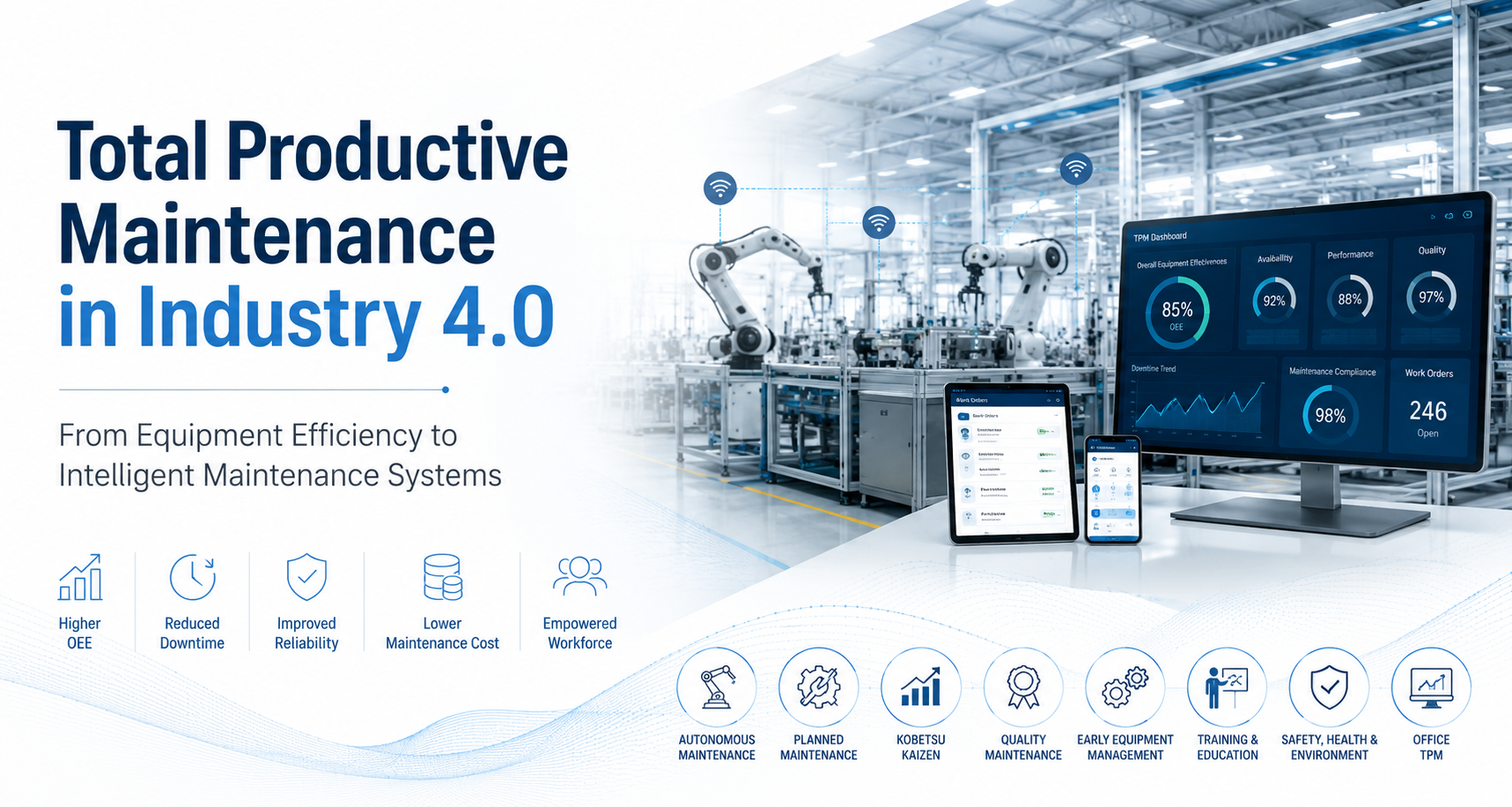

Total productive maintenance is no longer just a lean manufacturing philosophy—it is evolving into a strategic operating system for reliability, efficiency, and decision intelligence in Industry 4.0 environments. While many organizations claim to implement TPM, very few realize its full potential as a driver of asset performance and business value.
This guide reframes total productive maintenance not as a checklist of activities, but as a structured system for eliminating losses, aligning teams, and enabling data-driven maintenance strategies in modern industrial operations.
Total productive maintenance (TPM) is a comprehensive maintenance approach designed to maximize equipment effectiveness by involving all employees—from operators to leadership—in proactive and preventive maintenance activities.
At its core, TPM is built on one fundamental principle:
Equipment reliability is not the responsibility of maintenance alone—it is an organizational capability.
In Industry 4.0, this principle expands further. TPM is no longer just about eliminating breakdowns—it is about integrating:
This transformation turns TPM into a data-enabled reliability framework rather than a purely process-driven methodology.
Despite advancements in AI and predictive technologies, TPM remains highly relevant because it addresses the foundational issues that technology alone cannot solve:
Without TPM, even the most advanced predictive maintenance systems fail to deliver consistent results.
Key Benefits of TPM in Modern Manufacturing
However, these benefits are only realized when TPM is implemented as a system of execution and accountability, not just a theoretical framework.
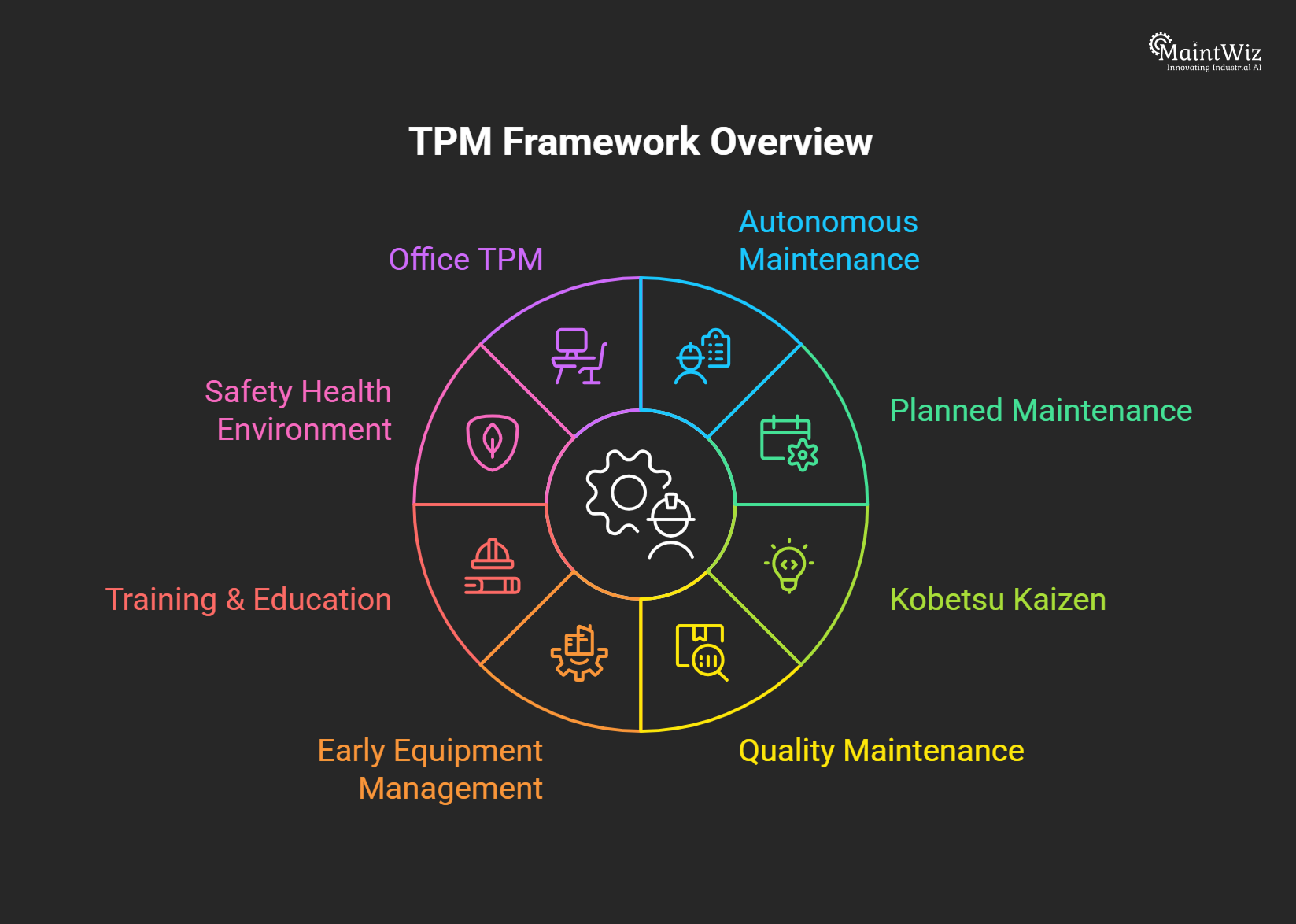
TPM is structured around eight foundational pillars that collectively eliminate losses and improve performance.
Jishu Hozen empowers operators to take ownership of basic maintenance tasks such as cleaning, inspection, lubrication, and tightening.
This pillar is critical because it shifts maintenance from reactive intervention to early detection.
However, autonomous maintenance does not reduce breakdowns on its own—it exposes process weaknesses that must be addressed systematically.
Planned maintenance focuses on scheduling maintenance activities based on equipment condition, historical data, and failure patterns.
In Industry 4.0, this evolves into:
The shift is from time-based maintenance to intelligence-driven maintenance.
Kobetsu Kaizen targets specific losses and inefficiencies through structured problem-solving.
It focuses on eliminating:
This pillar transforms TPM from a maintenance system into a continuous improvement engine.
Quality maintenance ensures that equipment conditions do not lead to defects or variability in production.
It emphasizes:
In modern environments, this integrates with data analytics and quality monitoring systems.
This pillar focuses on designing equipment for maintainability, reliability, and efficiency from the beginning.
It ensures:
Improved equipment performance
TPM requires skilled operators and technicians who understand both equipment and processes.
Training focuses on:
This creates a workforce capable of supporting advanced maintenance strategies.
Safety is embedded into every TPM activity.
The objective is zero accidents, zero defects, and zero breakdowns—but with a modern understanding that risk must be managed, not eliminated blindly.
Office TPM extends maintenance principles to administrative functions such as planning, procurement, and logistics.
It eliminates inefficiencies in:
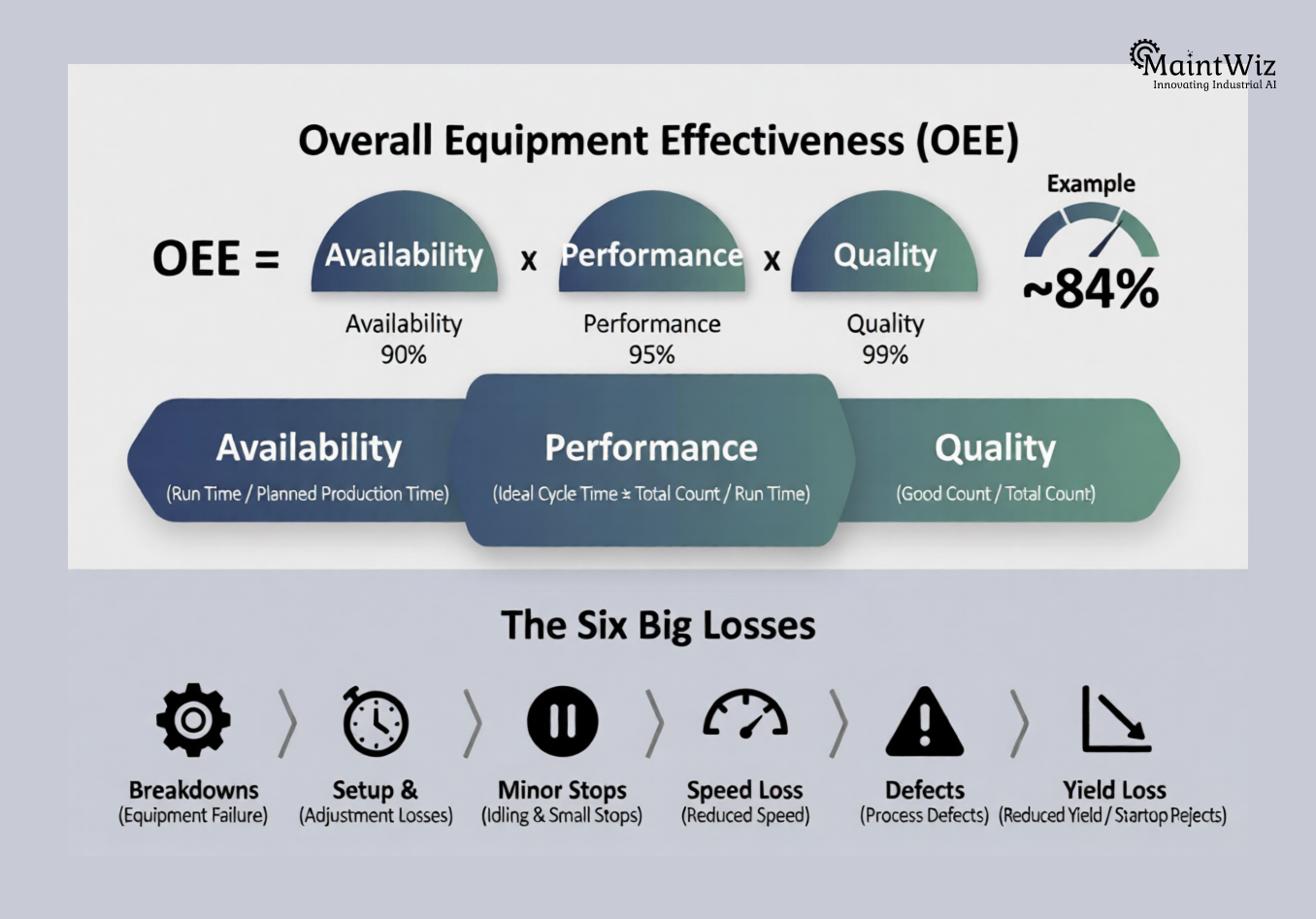
TPM is closely linked to OEE, which measures equipment performance across three dimensions:
TPM systematically eliminates the six big losses that reduce OEE:
In Industry 4.0, OEE evolves from a reporting metric into a decision-making tool.
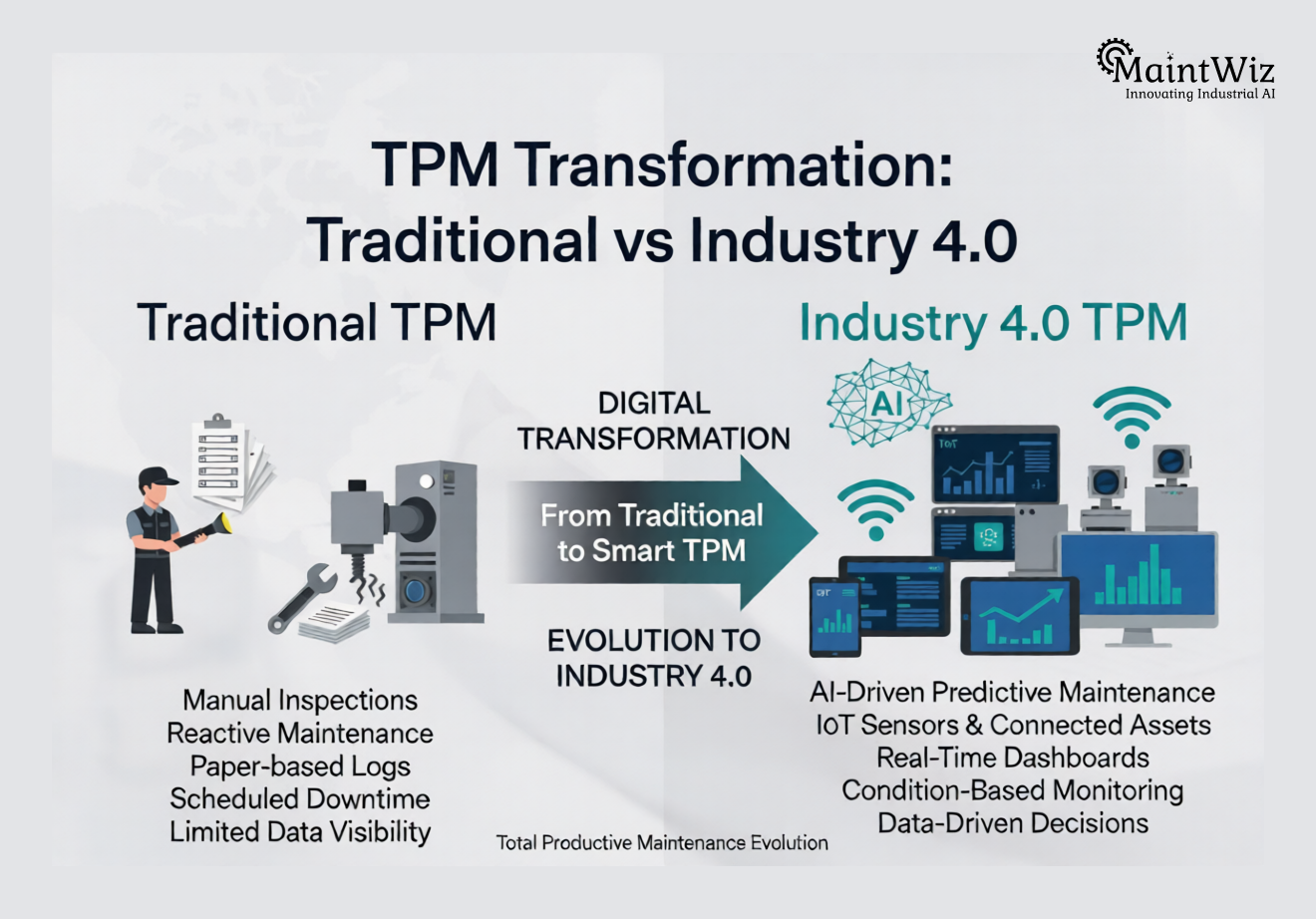
Traditional TPM focuses on discipline and process.
Modern TPM integrates intelligence and automation.
Key Transformations
This shift positions TPM as a foundation for digital maintenance transformation.
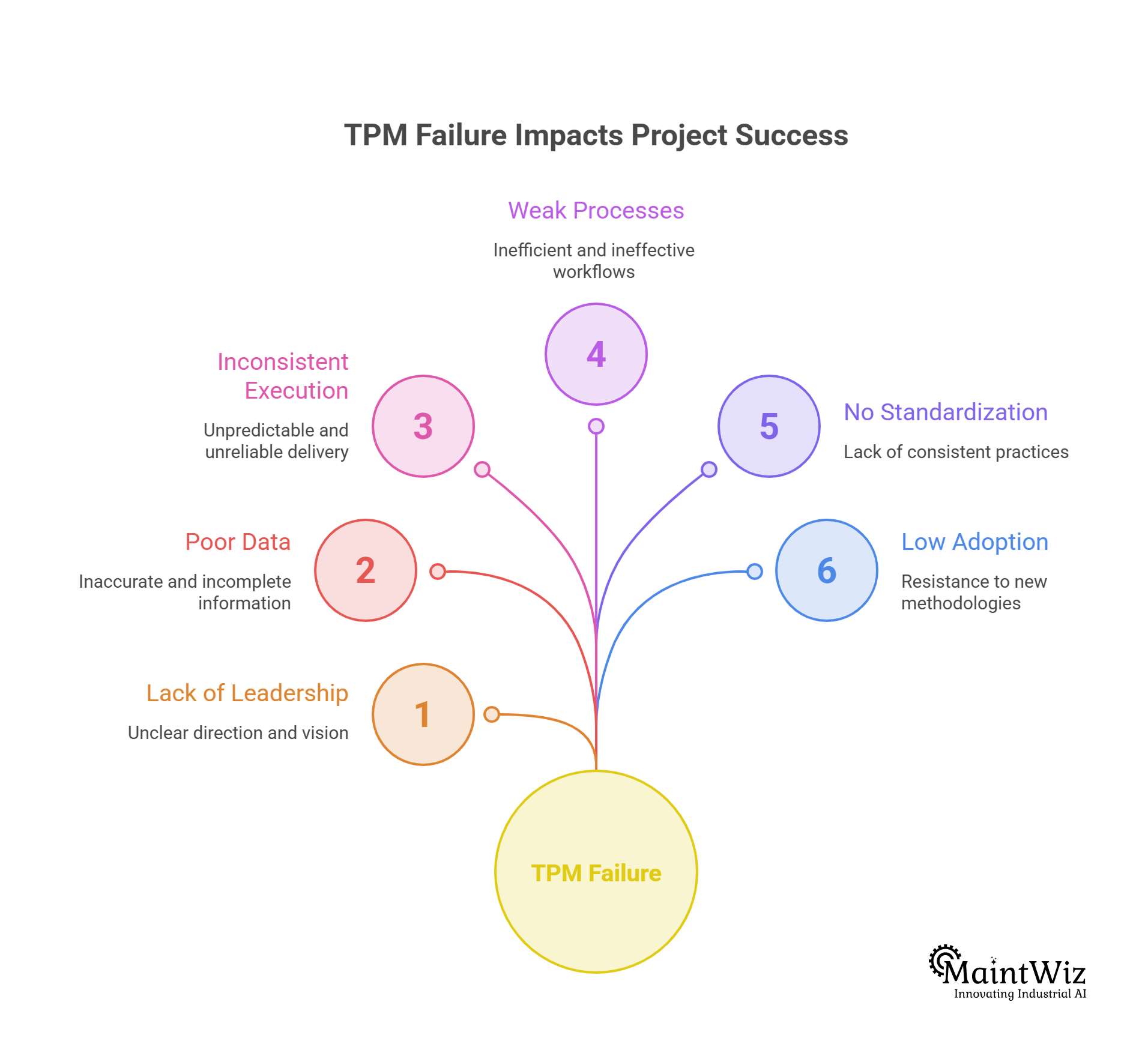
Despite its structured approach, many TPM initiatives fail to deliver results.
Common Reasons
The core issue is not TPM itself—it is how organizations implement and sustain it.
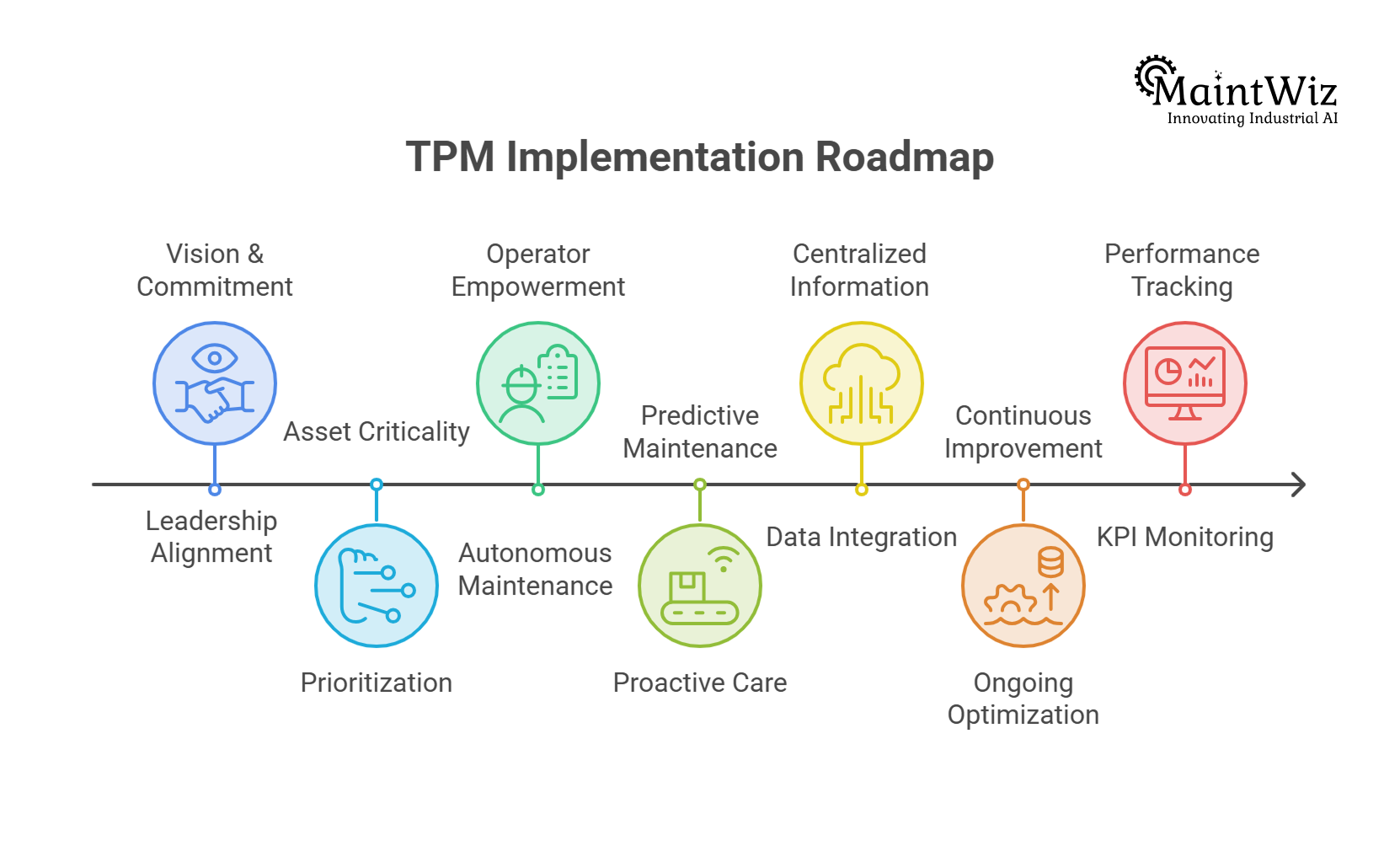
Step 1: Establish Leadership Alignment
Define clear objectives:
Leadership must treat TPM as a strategic initiative, not an operational activity.
Step 2: Build Asset Criticality Framework
Identify high-impact assets based on:
This ensures focus on what matters most.
Step 3: Deploy Autonomous Maintenance (Jishu Hozen)
Focus on consistency, not complexity.
Step 4: Implement Planned and Predictive Maintenance
Move beyond fixed schedules:
Step 5: Integrate Data and Technology
Connect TPM with:
This transforms TPM into a data-driven system.
Step 6: Establish Continuous Improvement Loops
Use Kobetsu Kaizen to:
Step 7: Monitor KPIs and Performance
Track:
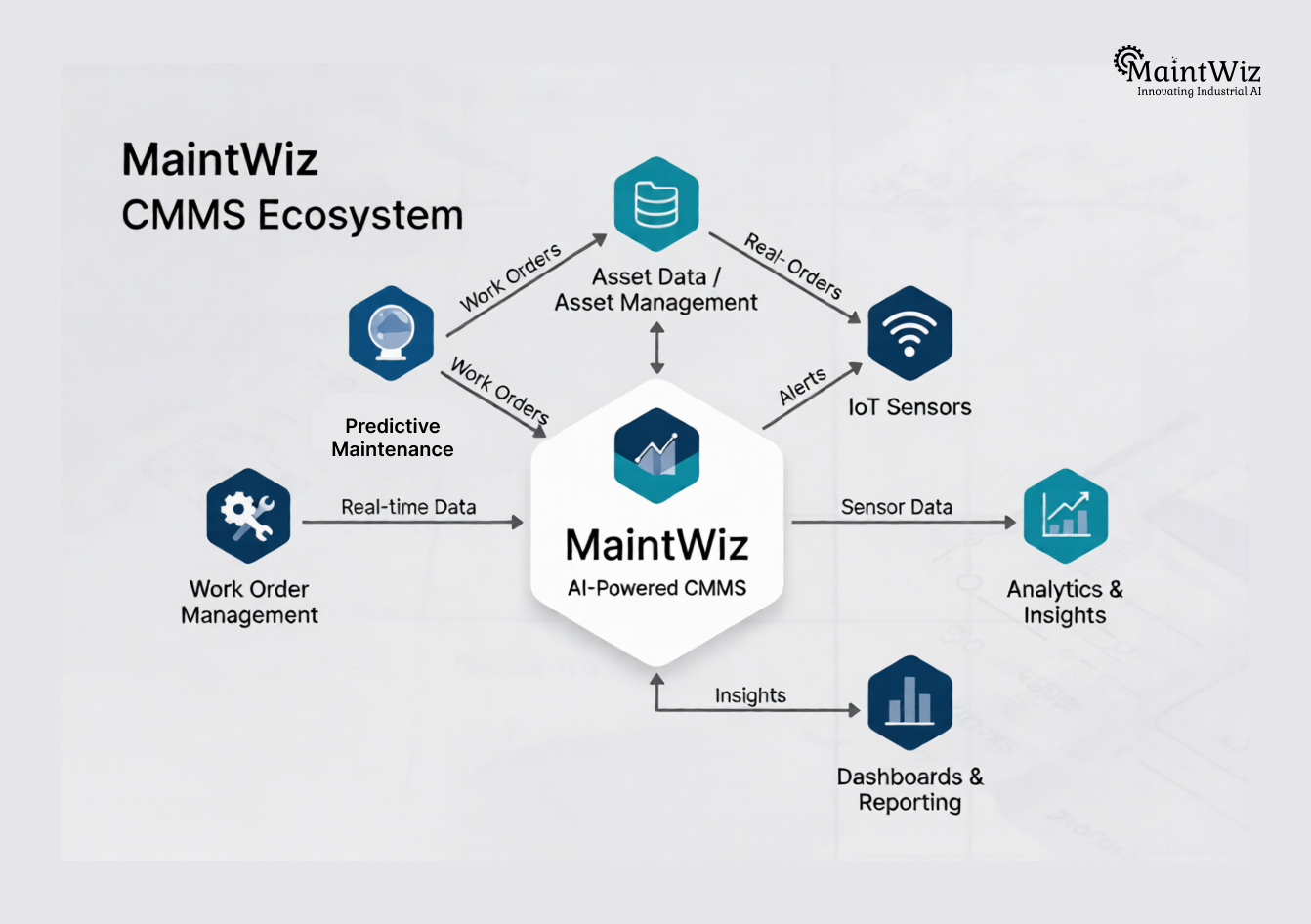
MaintWiz CMMS plays a critical role in transforming TPM from a manual process into a scalable, intelligent system.
Ensures disciplined execution of maintenance tasks across teams.
Combines sensor data and analytics to predict failures before they occur.
Enforces consistency in autonomous and planned maintenance activities.
Provides dashboards for monitoring asset performance, downtime, and KPIs.
Transforms maintenance data into actionable insights for continuous improvement.
MaintWiz enables rapid TPM deployment by:
This significantly reduces the time required to achieve measurable results.
TPM is evolving beyond process discipline into a system of intelligence.
Future capabilities include:
The organizations that succeed will not be those that simply implement TPM—but those that integrate TPM with digital intelligence.
Total productive maintenance is not outdated—it is incomplete when implemented without data, integration, and strategic alignment.
In Industry 4.0, TPM must evolve from:
Organizations that make this shift will unlock:
TPM is no longer just about maintaining equipment.
It is about maximizing the performance of the entire system.

Jai Balachandran is an industry expert with a proven track record in driving digital transformation and Industry 4.0 technologies. With a rich background in asset management, plant maintenance, connected systems, TPM and reliability initiatives, he brings unparalleled insight and delivery excellence to Plant Operations.

Company