Transform Shutdown Precision, Compress Durations, Eliminate Bottlenecks — Apply the Power of Critical Chain Project Management & Shutdown Critical Path Optimization to Maximize Asset Uptime
Shutdowns, turnarounds, outages, and maintenance windows are among the most resource-intensive and revenue-impacting events in asset-intensive industries. Traditional critical path planning is necessary, but insufficient to unlock breakthrough duration compressions and robustness against execution variability. Critical Chain Analysis — a disciplined application of Critical Chain Project Management (CCPM) — systematically identifies resource constraints, bottlenecks, and variability buffers, enabling industrial leaders to accelerate shutdowns while maintaining safety and reliability.
This article unpacks the strategic and tactical mechanisms of critical chain analysis for shutdown optimization, how it integrates with modern CMMS systems like MaintWiz, and why “shutdown critical path optimization” is now a competitive differentiator for heavy industries.
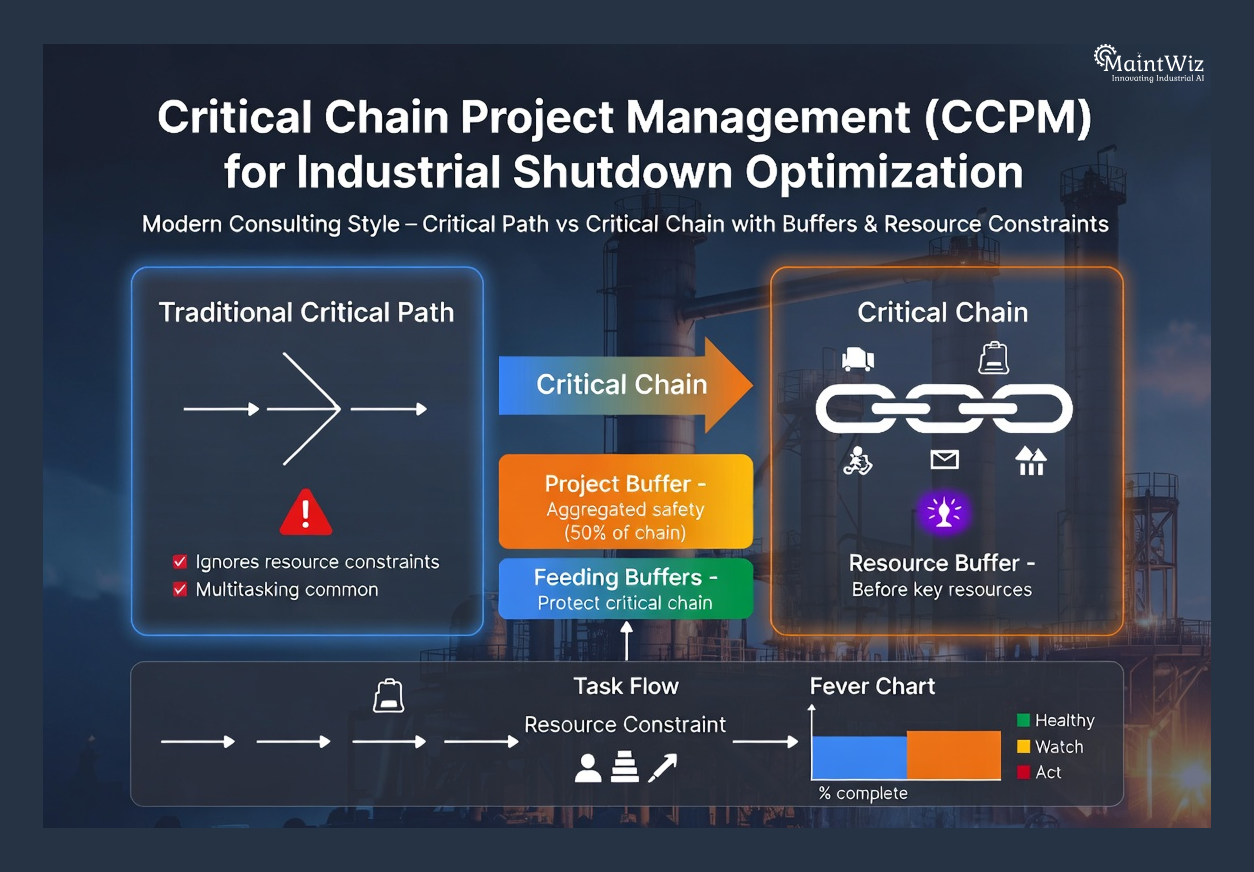
CCPM is a schedule optimization methodology that emphasizes resource constraints, buffer management, and eliminating wasteful schedule padding — especially powerful for complex shutdowns and turnarounds. It extends traditional critical path analysis by factoring in finite resource availability and aggressive yet attainable task durations.
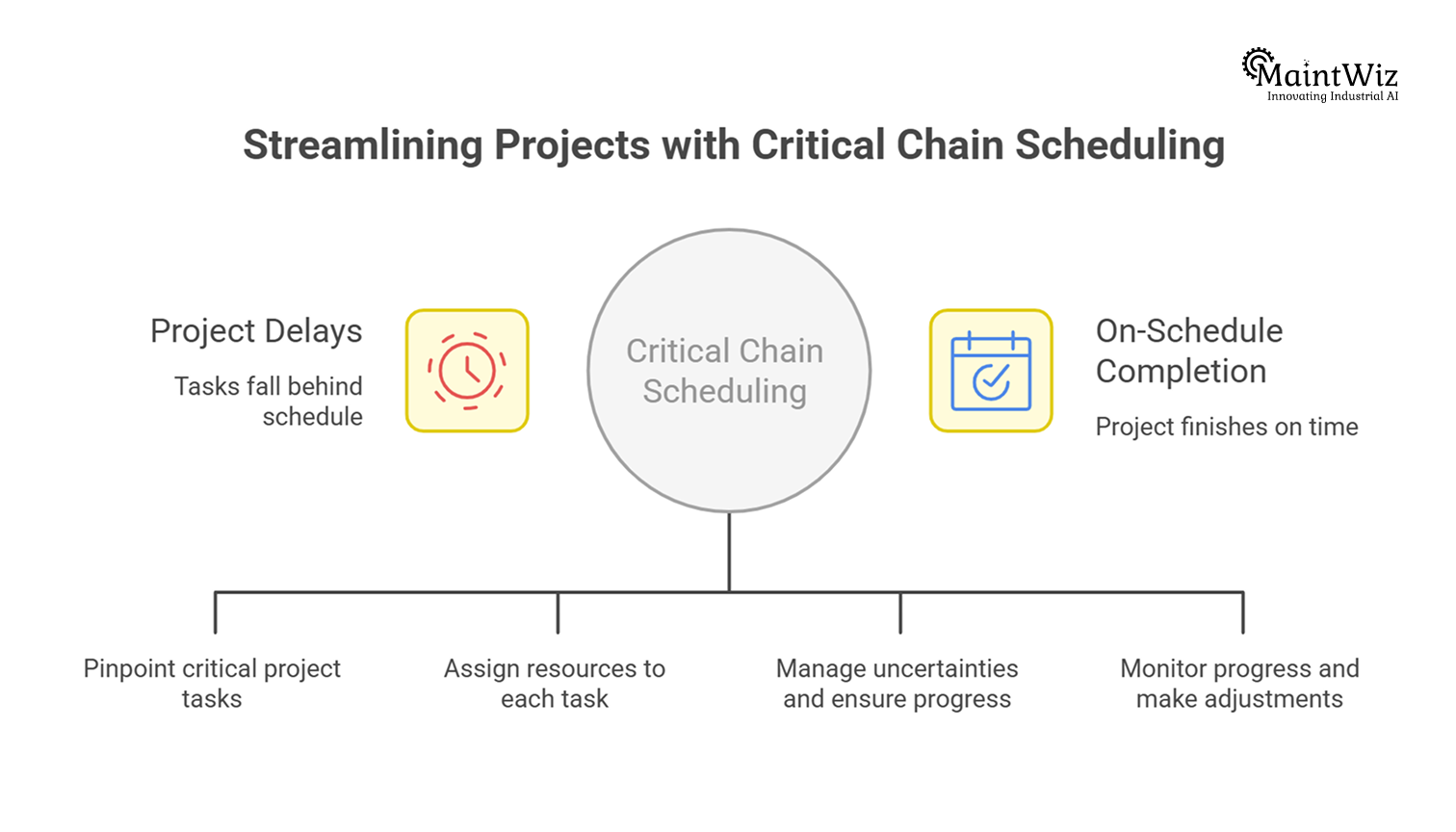
Critical Chain Scheduling Fundamentals – Identify the sequence of resource-constrained tasks that most directly influence total shutdown duration.
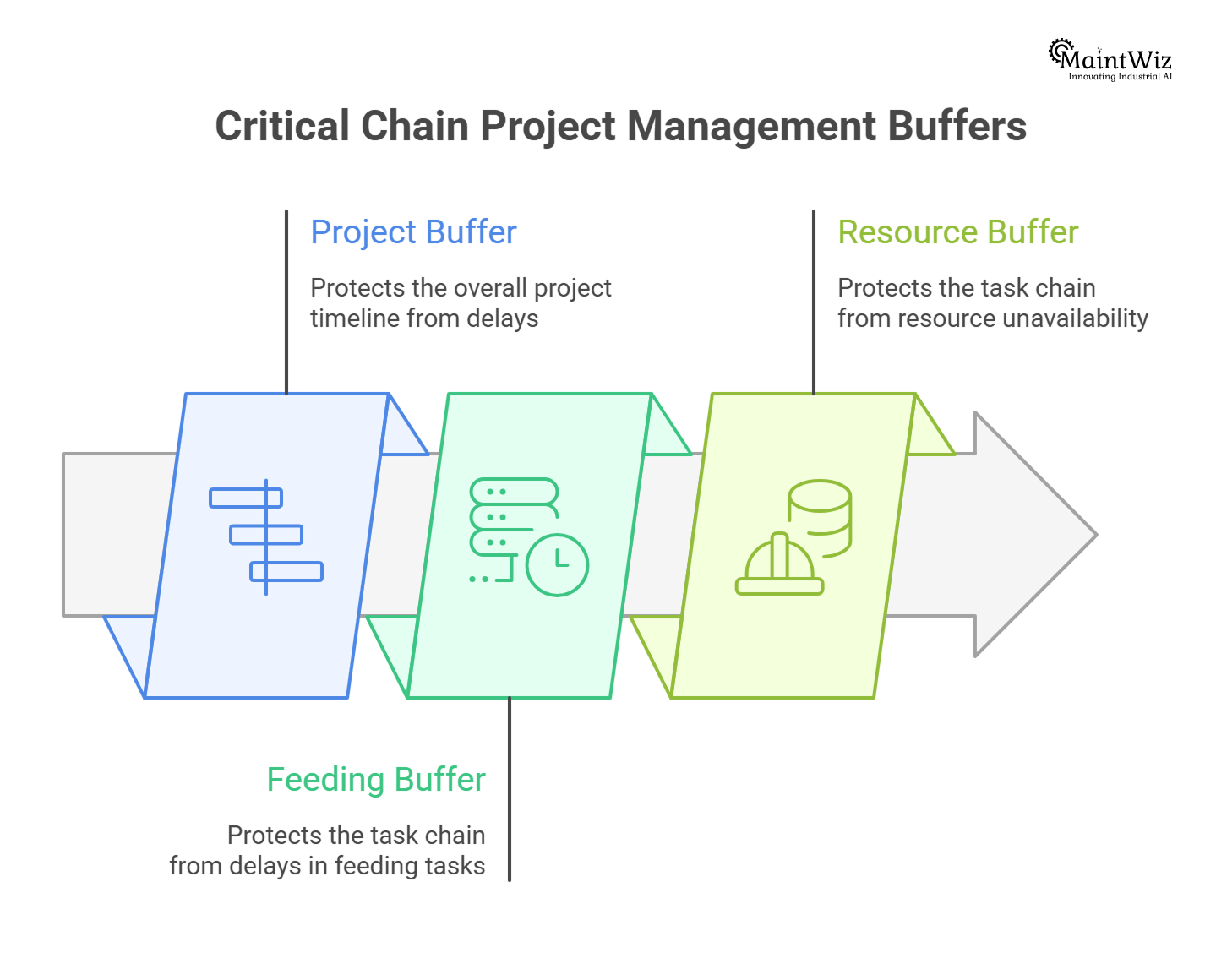
Buffers for Schedule Protection – Create project, feeding, and resource buffers to absorb variability without eroding core schedule performance.
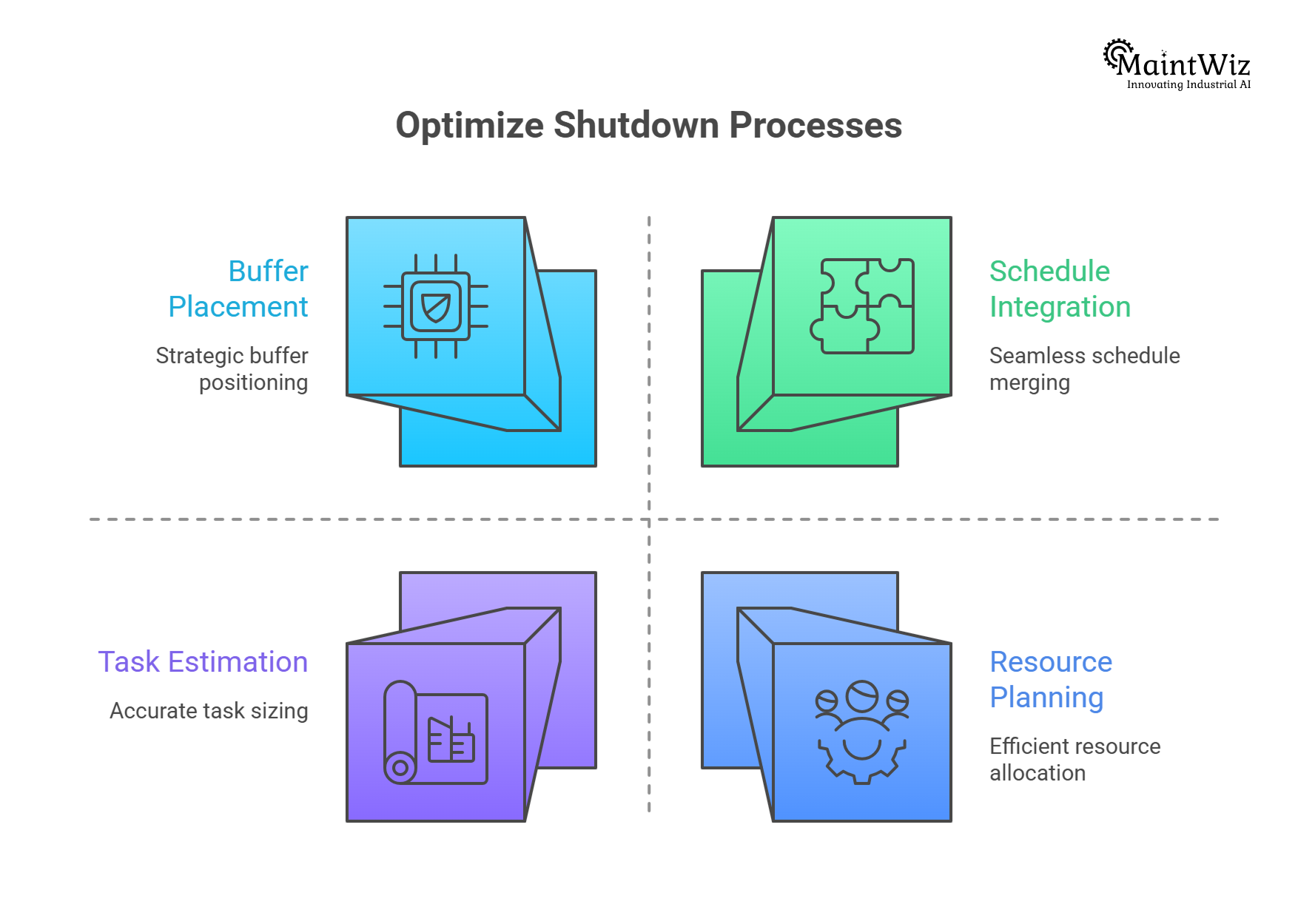
Resource-Levelled Plan – Ensure that specialized crews, critical tools, and limited equipment are allocated in a way that prevents resource contention.
Applied to industrial shutdown planning, CCPM directly enables “shutdown critical path optimization” by reducing schedule pessimism and focusing on real constraint management.
Why Critical Chain Matters in Shutdown Optimization
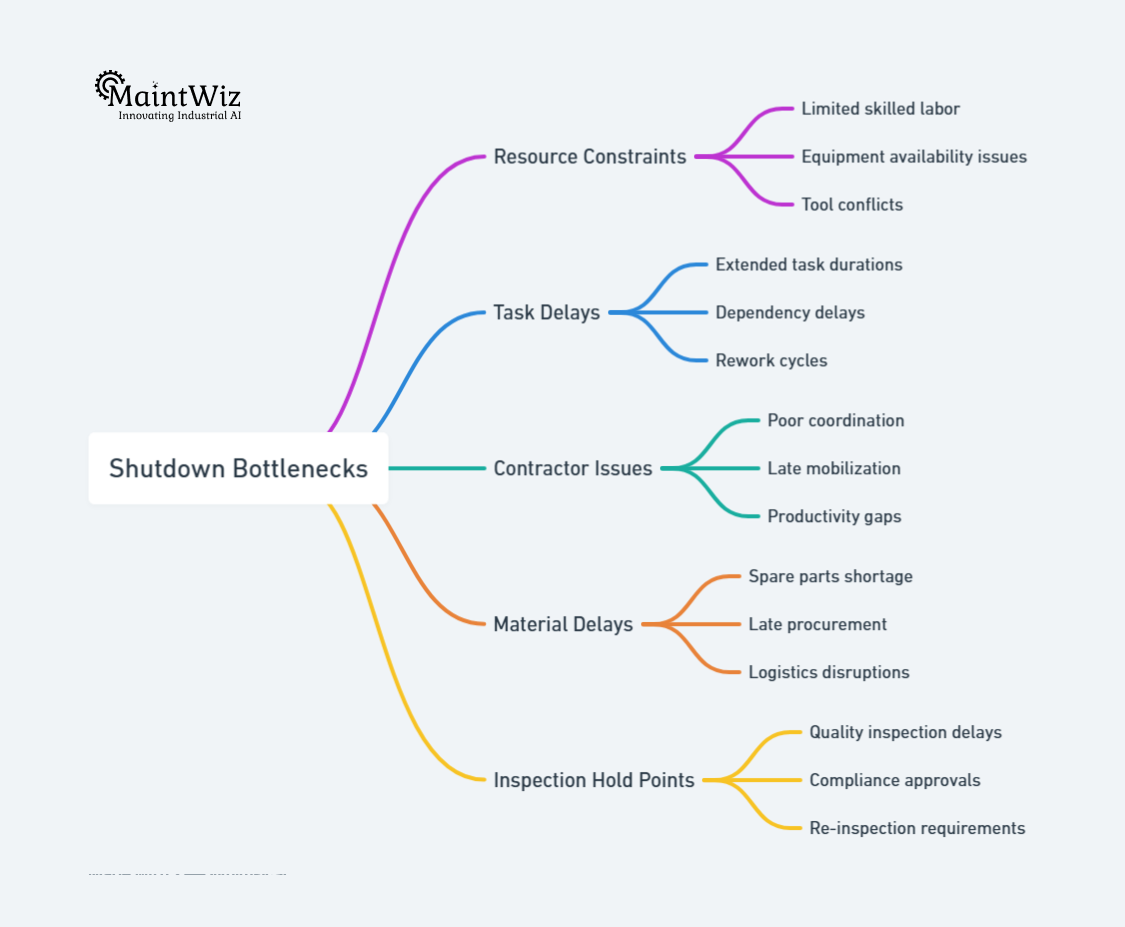
Shutdowns in process, power, and manufacturing environments involve thousands of discrete tasks — from inspections and mechanical overhauls to safety verifications and commissioning. Variability is inevitable: missing parts, late inspections, stacked resource demands, and interdependent workstreams. Critical chain analysis turns these challenges into strategic planning inputs.
Bottleneck Identification Precision – Pinpoint true schedule constraints rather than just longest task sequences.
Compressed Durations Without Risk – Aggressive but realistic task durations + buffer strategy minimize overall shutdown duration.
Buffer-Driven Risk Transparency – Visibility into buffer consumption signals schedule health in real time.
Resource Utilization Optimization – Reduces idle time and multi-tasking that waste labor and equipment effort. :
Key Components of Shutdown Critical Chain Methodology
To operationalize CCPM for shutdowns, planners must deliberately choose critical tasks, define accurate task durations, and aggregate slack into meaningful buffers.
Aggressive Task Estimating Principles – Use 50% confidence duration estimates to drive urgency and minimize unnecessary padding.
Project Buffer Placement – Consolidate individual safety margins into a strategic project buffer at the end of the critical chain.
Feeding & Resource Buffers – Isolate opportunities to protect feeding chains and ensure critical resource readiness.
Integrated Schedule Network – Build a detailed network integrating inspection, mechanical, electrical, commissioning, and safety tasks.
Advanced Schedule Optimization Practices for STO Teams
Beyond core CCPM, elite shutdown organizations leverage optimization techniques for further duration reduction and robustness.
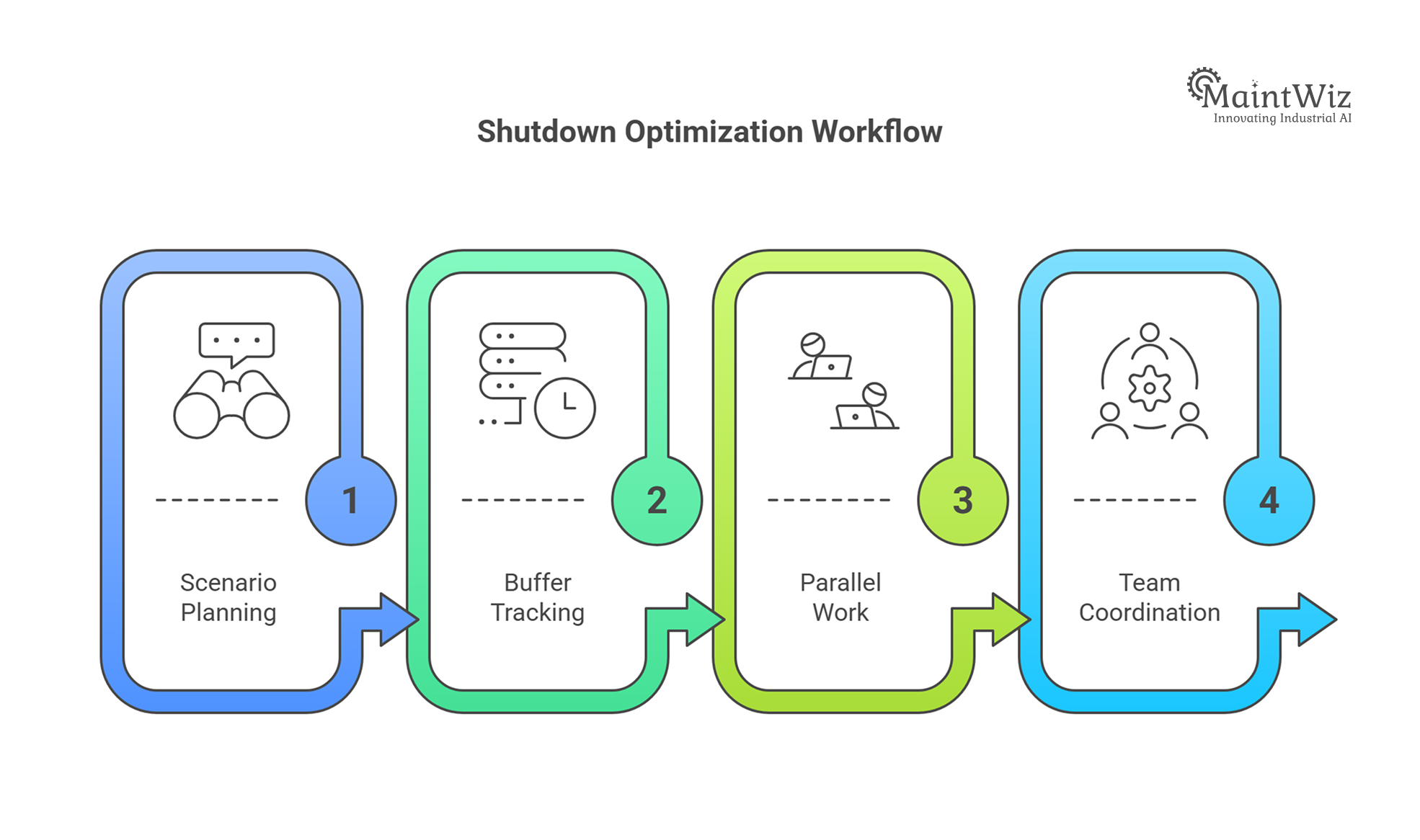
Iterative What-If Scenario Planning – Model schedule variants under multiple resource and risk conditions.
Real-Time Progress vs. Buffer Consumption Views – Track buffer burn to pre-empt slippage and reallocate resources in execution.
Parallel Workstream Engineering – Structure for non-interfering concurrent execution where safety permits.
Synchronized Cross-Functional Teams – Integrate maintenance, operations, safety, and contractors into one cohesive plan.
Common Shutdown Planning Pitfalls & How Critical Chain Fixes Them
Industrial shutdown plans often succumb to legacy planning mistakes — padded tasks, untracked resource contention, and invisible constraints.
Static Plans Fail in Execution – Buffer monitoring supports dynamic response and rebalancing.
Applying Critical Chain in Heavy Industry Shutdowns
Whether in oil & gas, power generation, chemicals, steel, or mining operations, shutdown critical path optimization drives measurable gains.
Petrochemical Complexes – Minimize lost production value during outages with resource-driven critical chains.
Power Plants – Optimize turbine overhauls and cooling system maintenance within compressed windows.
Manufacturing Lines – Align tooling changeovers and quality verification to shorten downtime cycles.
Utilities & Water Systems – Coordinate multi-disciplinary crews to achieve swift, compliant turnarounds.
Why MaintWiz CMMS Excels in Shutdown Critical Chain Optimization
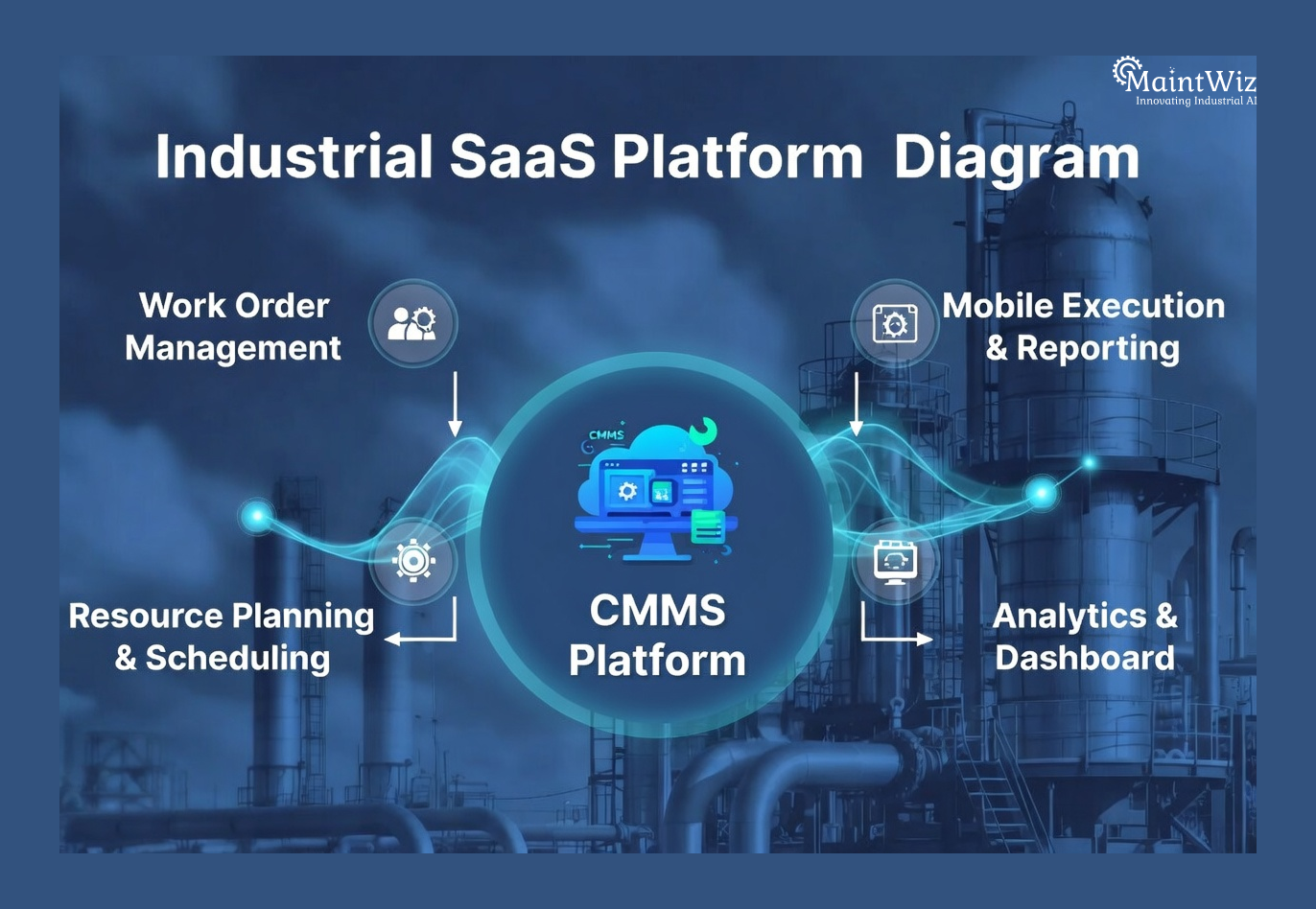
MaintWiz is an AI-powered CMMS designed for enterprise maintenance and shutdown planning. Its capabilities naturally support critical chain analysis and shutdown critical path optimization.
AI-Driven Work Order Prioritization – Automatically sequences tasks based on criticality and resource constraints, aligning with critical chain logic.
Real-Time Asset & Workforce Intelligence – Up-to-date resource availability feeds into buffer analysis and execution planning.
Seamless Cross-Functional Collaboration – Single pane of glass for maintenance, operations, safety permits, and commissioning data.
Mobile Execution & Feedback Loops – Technicians update task status in real time, improving schedule accuracy and critical chain feedback.
MaintWiz’s combination of predictive analytics, integrated resource planning, and execution feedback positions it uniquely to support shutdown critical path optimization in complex industrial environments, from discrete manufacturing to process plants and utilities.
Ready to elevate your shutdown performance?Request a demo and see how MaintWiz can transform shutdown planning and execution.