Executive Hook: In complex industrial environments, “shutdown daily management” and “shutdown coordination” aren’t operational niceties — they are mission-critical drivers of safety, uptime, and profitability. Effective daily management during plant shutdowns transforms a reactive scramble into a structured, high-velocity execution engine that minimizes risk, controls cost, and ensures continuity of operations.
This guide delivers a comprehensive playbook for industrial reliability leaders, maintenance managers, and turnaround coordinators seeking world-class daily shutdown execution. It uncovers how disciplined daily management creates predictability, drives stakeholder alignment, and accelerates outage objectives with precision and confidence.
Why Daily Shutdown Management Matters
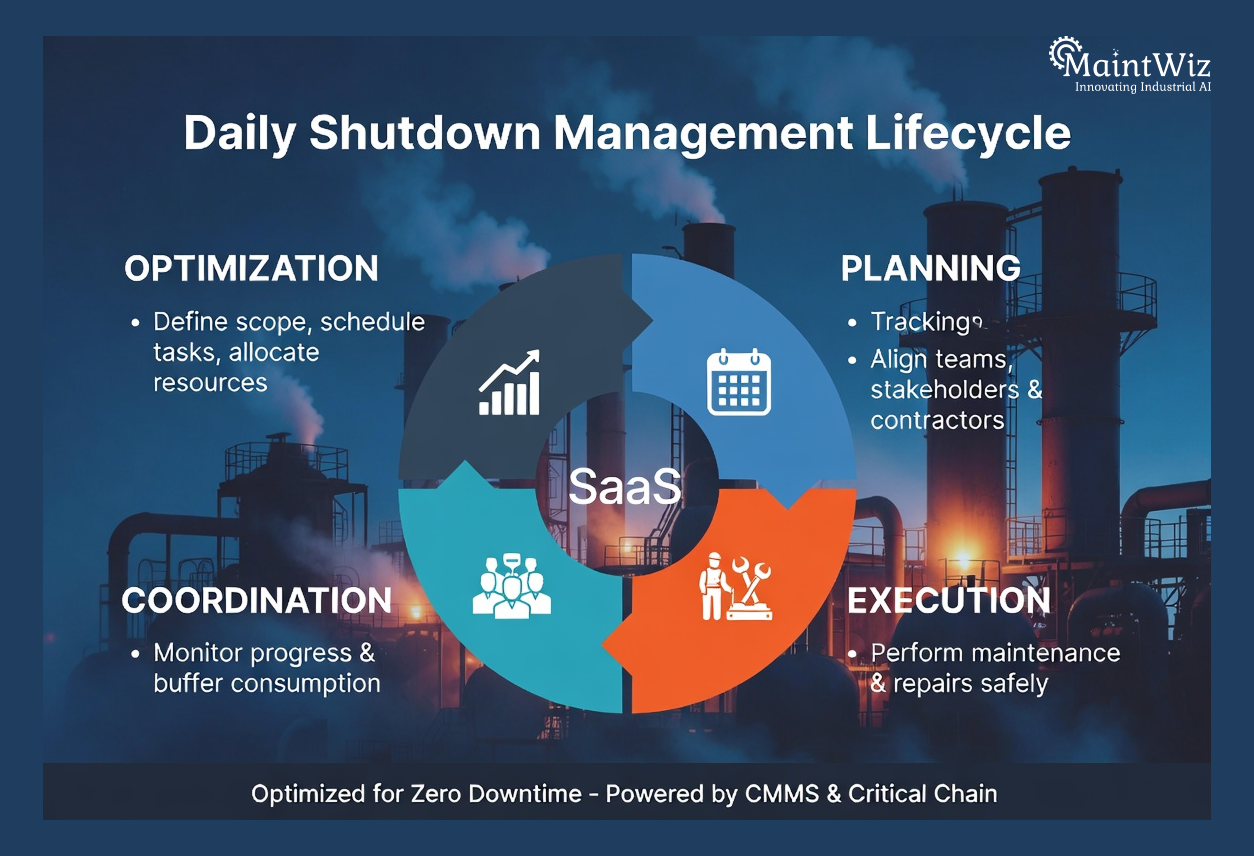
Daily shutdown management is the linchpin that translates high-level shutdown planning into dependable, repeatable, zero-surprise execution. When daily coordination shuts the gap between strategy and action, plants realize:
Risk Mitigation Excellence — Clear daily priorities reduce safety and quality risks in dynamic environments.
Cross-Functional Alignment — Operations, maintenance, engineering, and contractors operate with a shared playbook.
Without daily management rigor, schedule slippage, cost overruns, and safety lapses become predictable outcomes rather than preventable anomalies.
Core Principles of Effective Shutdown Coordination
Successful shutdowns hinge on disciplined coordination routines that handle complexity without overload. These core principles should anchor every daily shutdown stand-up:
Clear Daily Objectives — Establish specific, measurable goals for each shift and phase of work.
Dynamic Change Control — Incorporate formal approvals for schedule or scope deviations.
Unified Situational Awareness — Share real-time progress against plan with all stakeholders.
Daily Coordination Framework
An effective daily coordination framework transforms mission ambiguity into sharp focus. Follow these best practices:
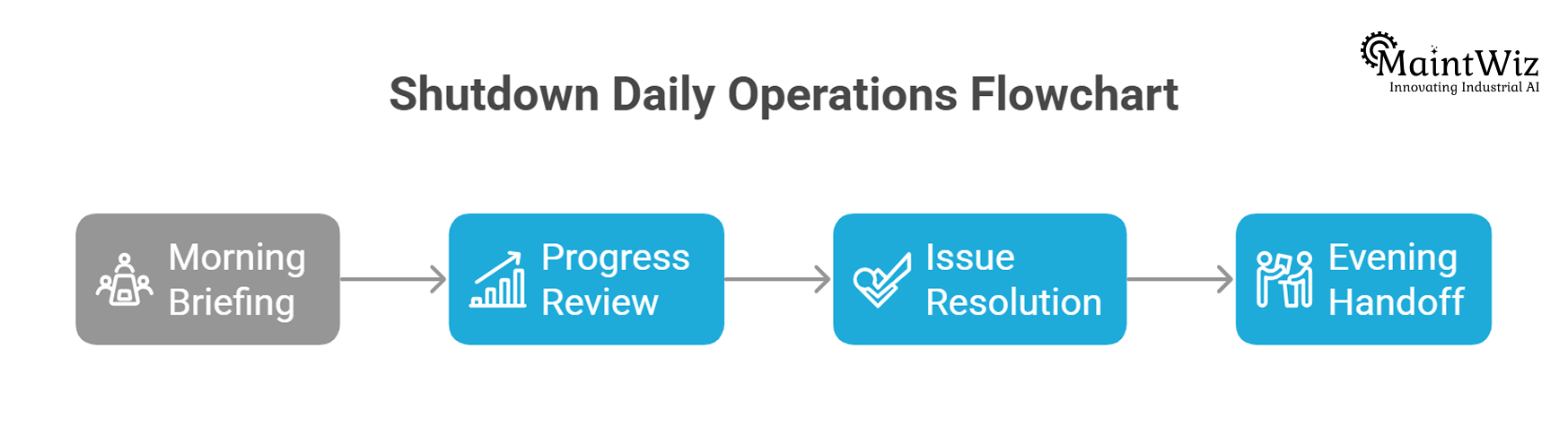
Morning Briefing Ritual — Kick off each day with a structured coordination meeting that connects planning to execution.
2. Midday Progress Pulse — Review real-time status, resolve blockers, and adjust sequencing as needed. 3. Evening Debrief and Handoff — Capture learnings, update targets, and align evening and night shift teams.
Best Practice Insight: Daily change-control boards and plan-do-review cycles help teams anticipate disruption and adapt proactively. Consistent change control also protects original milestone commitments.
High-Impact Daily Shutdown Planning Tactics
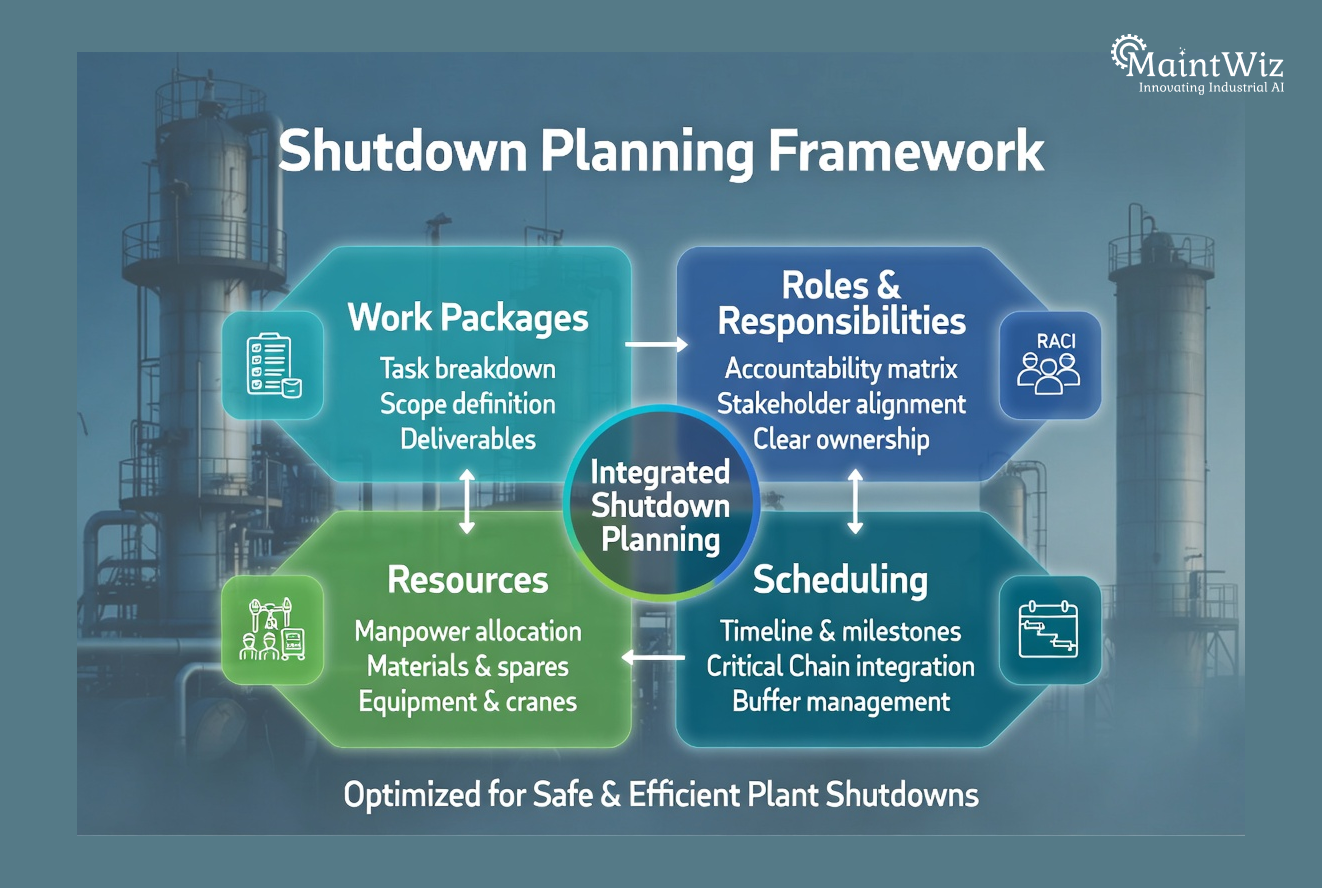
Daily shutdown planning should be granular, evidence-based, and tightly integrated into execution systems. These tactics are proven accelerators of shutdown performance:
Work Packaging Discipline — Break large shutdown scopes into discrete, manageable work packages that can be tracked daily.
Role & Responsibility Clarity — Each work package should have a single accountable leader and clearly defined handoff points.
Resource Forecasting Accuracy — Daily tracking of labor, tools, and spares prevents last-minute scrambling and idle time.
Daily Schedule Optimization Techniques
To maintain pace without erosion of quality or safety:
1. Critical Path Reinforcement — Prioritize tasks on the critical path in daily stand-ups to safeguard overall timeline integrity.
2. Bottleneck Identification — Daily checks on work progress and constraint points reduce idle capacity and conflict.
3. Float Management — Preserve schedule flexibility for contingencies without eroding core milestones.
Execution discipline ensures that daily shutdown activity is more than well-intentioned effort — it becomes measured progress. The following execution practices separate high-performers from average performers:
Daily Readiness Reviews — Confirm prerequisites (materials, permits, safety checks) before work begins each day.
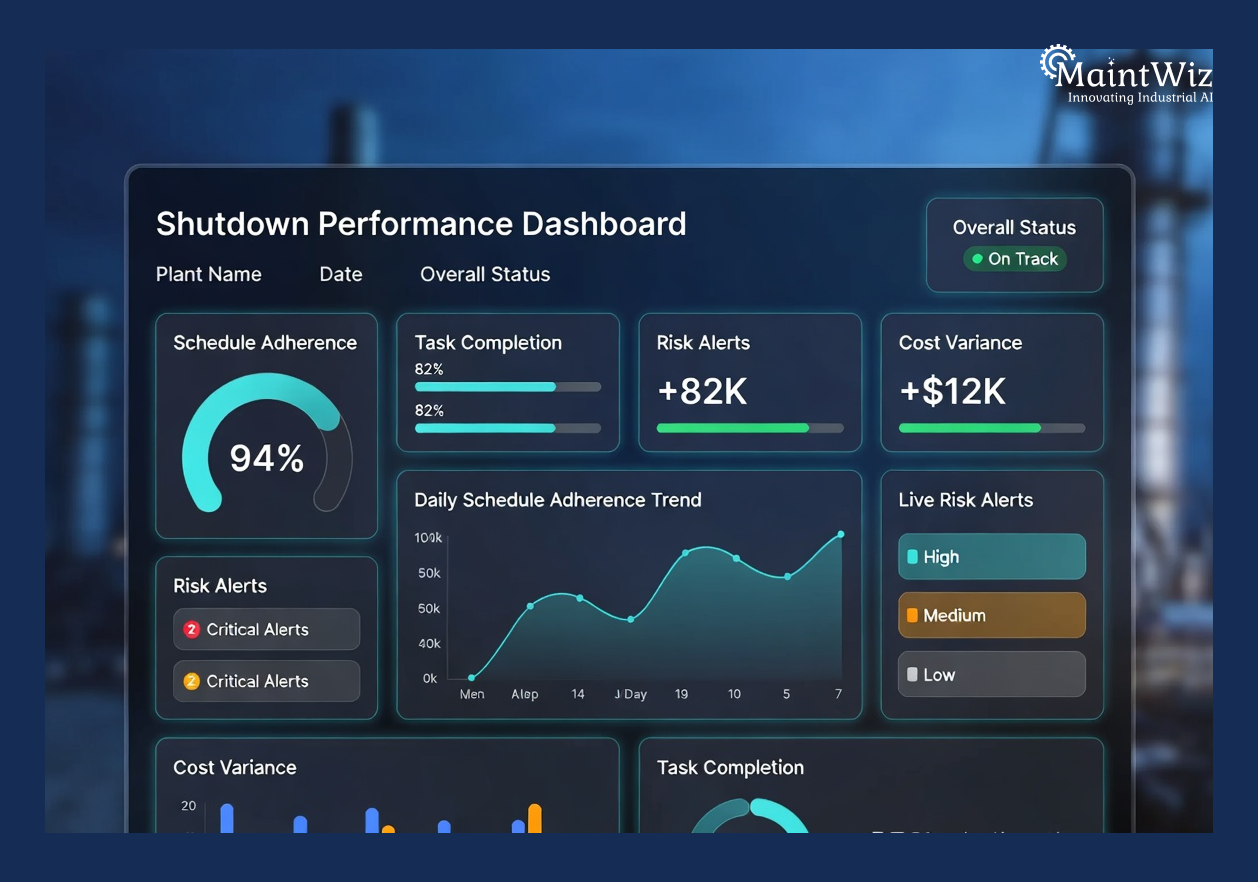
Real-Time Progress Tracking — Monitor work order status, risk flags, and deviation requests on a live dashboard.
Continuous Safety Verification — Reinforce lockout/tagout and risk controls multiple times per shift.
Execution Rituals that Improve Outcomes
These execution rituals are proven enablers of shutdown discipline:
Daily Safety & Quality Huddles — Integrate safety checks with daily coordination to embed compliance into execution.
Daily Barrier Reviews — Verify isolation, permits, and tagged systems before work release.
Performance Scoreboards — Visual daily metrics sharpen accountability for schedule, cost, and quality.
Insight: Plants that implement daily performance scorecards see fewer hidden delays and better adherence to target scope and schedule over long shutdown periods.
People & Communication Best Practices
Shutdown coordination requires human systems as much as technical systems. Leaders must cultivate routines that create clarity and trust across functional boundaries:
Cross-Functional Stand-Ups — Inclusive daily stand-ups ensure all functions see progress and risks together.
Vendor & Contractor Alignment — Daily contractor briefings and KPI tracking keep external teams tightly linked to goals.
Single Source of Truth — A shared platform for schedules, work orders, and safety documents prevents miscommunication.
Communication Cadence Tips
Daily shutdown coordination communication is most effective when these routines are formalized:
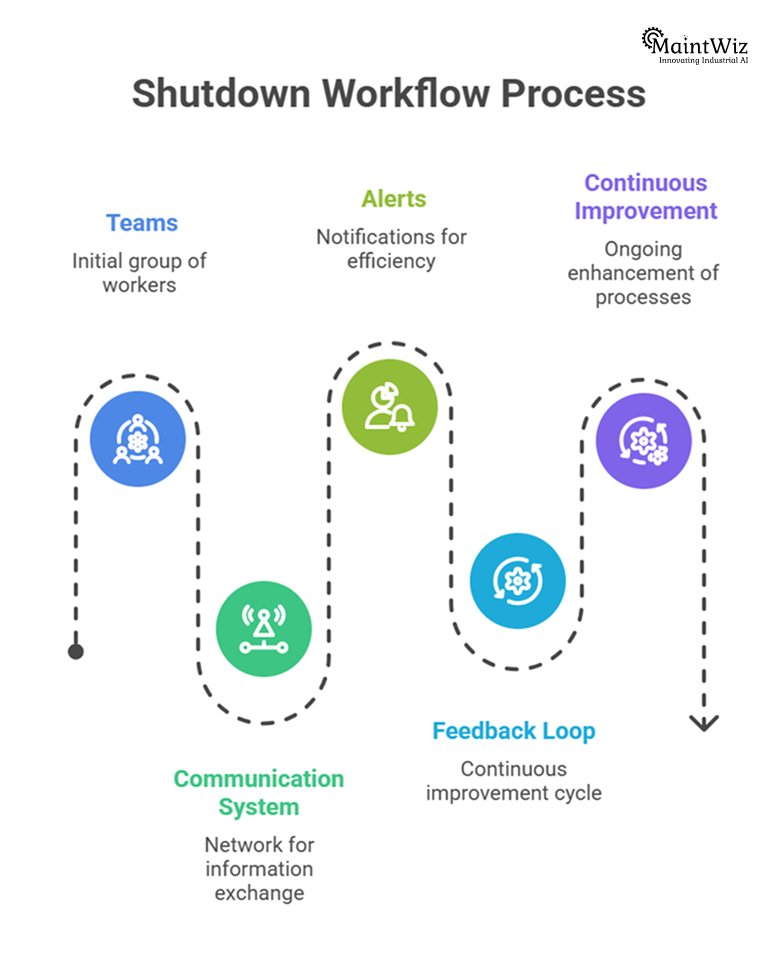
Structured Shift Handoffs — Ensure handoff meetings highlight open issues and action items.
Visual Control Boards — Use dashboards to display daily progress, risk flags, and resource status.
Real-Time Alerts — Trigger SMS or platform messaging for changing priorities.
Tools & Technology That Support Daily Shutdown Coordination
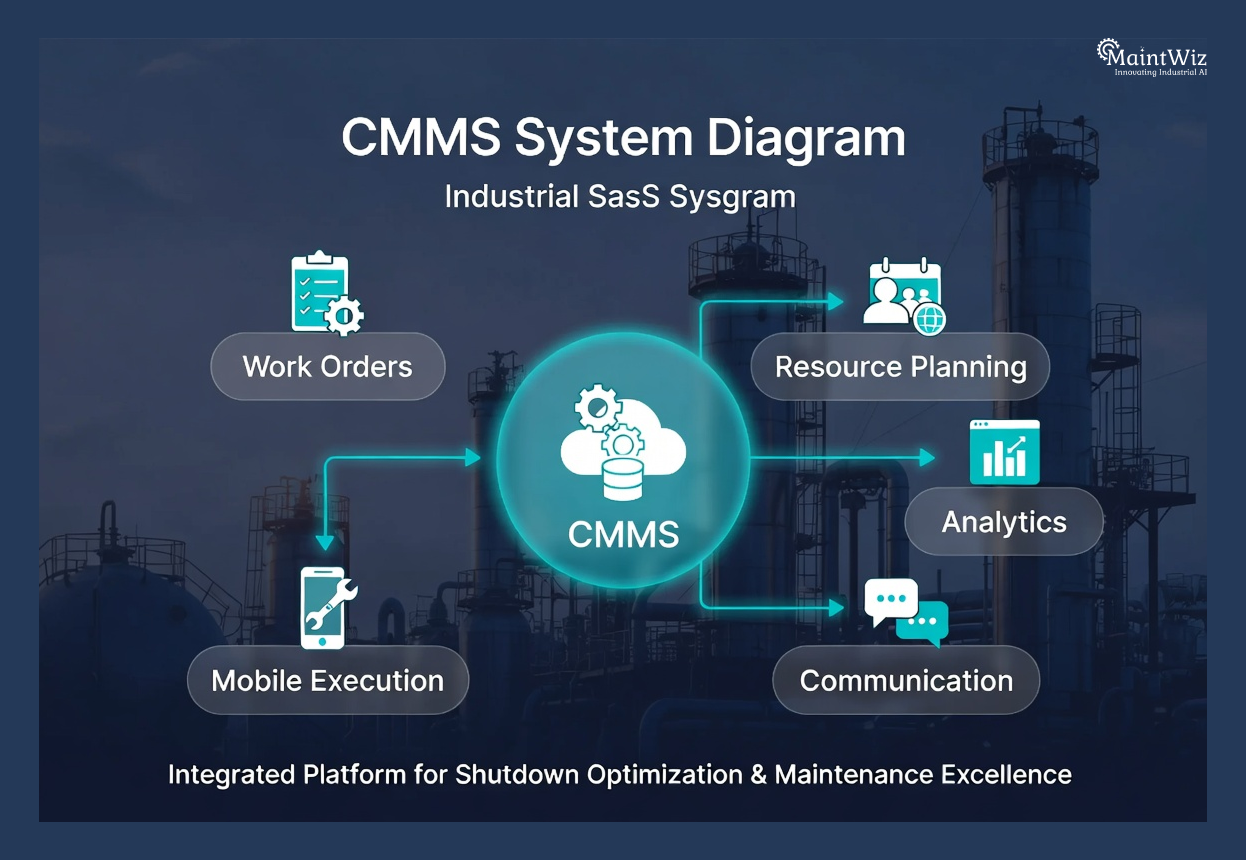
Modern shutdown management relies on integrated digital tools that enable real-time visibility, data-driven decisions, and cross-team accountability. A robust CMMS is the operational backbone of daily shutdown execution.
Integrated Work Order Management — Centralized daily work orders reduce duplication and confusion.
Resource & Skill Matching — Align technicians’ certifications and availability with daily tasks to prevent delays.
Inventory & Spare Parts Tracking — Ensure critical parts are available when needed, preventing reactive hold-ups.
Real-Time Visibility & Analytics
Daily shutdown teams need live reporting on key metrics. Effective analytics provide:
Schedule Adherence Metrics — Track daily vs target completion rates.
Risk & Quality Indicators — Flag high-impact deviations early.
Cost Variance Alerts — Monitor daily spending against budget baselines.
Industry-Context Nuances: Heavy Industries & STO Complexity
Daily shutdown management in heavy industries like refining, petrochemicals, power generation, mining, and utilities has additional layers of complexity. Four industry realities shape daily shutdown coordination:
Asset Criticality Hierarchy — In high-consequence assets, prioritization and safety controls deeply influence daily sequencing.
Regulatory Workflows — Compliance checkpoints and signed permits often dictate daily execution windows.
Multi-Vendor Interfaces — Complex supply chains require daily alignment of vendor deliveries and contractor tasks.
Environmental & Risk Constraints — Shift-by-shift adherence to environmental permits and risk protocols is non-negotiable.
Why Shutdown Daily Management Fails
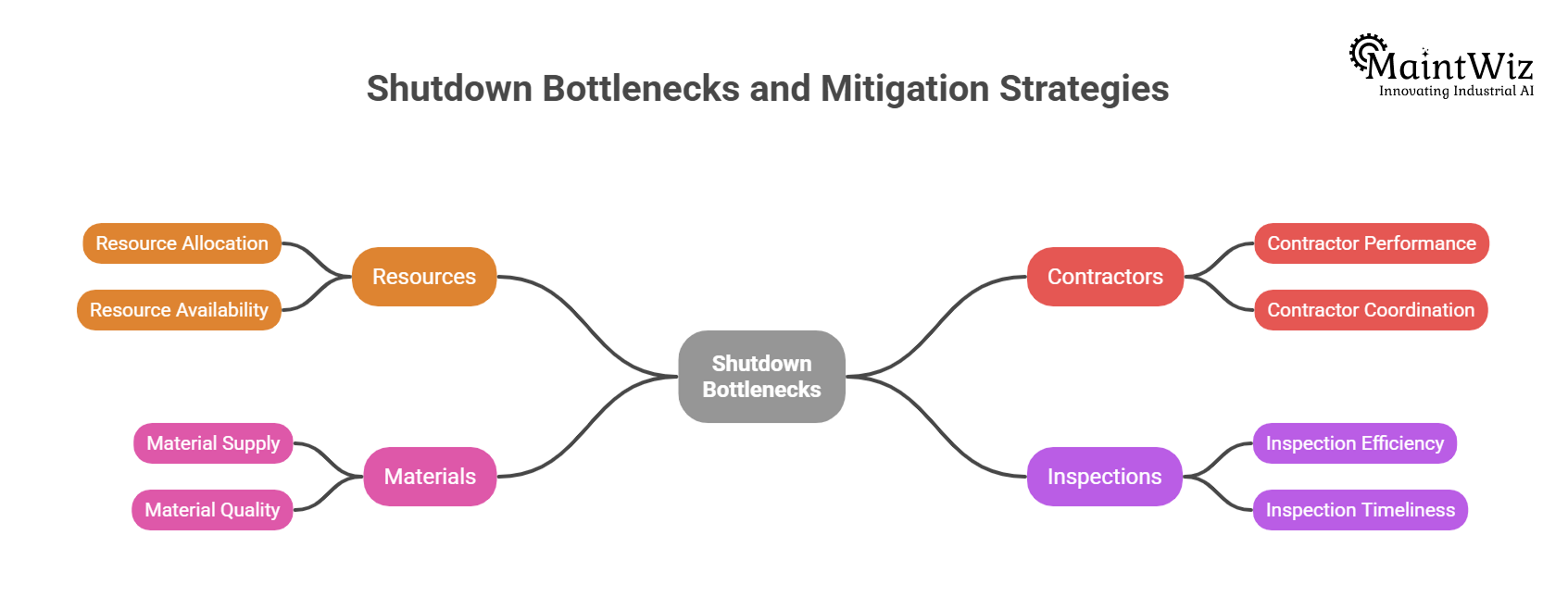
Common failures in shutdown coordination are avoidable. They usually stem from weak execution discipline rather than lack of planning time:
Lack of Daily Routines — Without daily check-ins and scorecards, shutdown teams lose alignment and momentum.
Poor Change Control — Uncontrolled scope changes lead to confusion and rework.
Siloed Communication — Fragmented communication channels create hidden delays and quality lapses.
MaintWiz CMMS: Built for Daily Shutdown Management Success
MaintWiz CMMS uniquely empowers enterprise teams to master daily shutdown management with AI-augmented capabilities built into the core platform: