Food & Beverage Plant Maintenance Shutdowns:
Ensuring Hygiene, Safety, and Operational Continuity
Transform shutdowns from risk events into competitive capability: deliver hygienic sanitation, allergen control, rapid changeover, and unbroken throughput.
The modern food & beverage (F&B) environment demands meticulous planning and execution of maintenance shutdowns. These events are not simply planned downtime — they are strategic levers to embed hygiene, eliminate contamination vectors, and ready your plant for peak performance and compliance. With rising regulatory scrutiny, consumer safety expectations, and high-velocity product portfolios, shutdowns must be orchestrated with surgical precision.
This guide delivers executive-level insight, operational rigor, and CMMS-aligned execution strategies tailored to F&B plant maintenance shutdowns. It blends hygiene & sanitation principles with agile changeovers, resource orchestration, CMMS-native discipline, and metrics that matter.
Importance of Scheduled Maintenance in Food & Beverage
Scheduled maintenance shutdowns are the backbone of operational continuity, food safety, and cost management in F&B facilities. They provide structured opportunities to inspect, clean, repair, and validate equipment integrity, eliminating hidden failure risks that erode product quality and uptime.
- Planned Downtime Discipline — Systematic shutdown windows reduce unplanned breakdown risk and accommodate hygiene-critical activities.
- Regulatory Compliance Alignment — Integrates sanitation standards (FDA, FSMA, HACCP) to avoid recalls and penalties.
- Asset Reliability Uplift — Proactive maintenance prevents contaminant ingress and mechanical wear that jeopardizes process integrity.
- Cost Efficiency Optimization — Prevents premium emergency repairs and scrap losses tied to equipment failures.
- Cross-functional Alignment — Creates interlocks across maintenance, quality, operations, and sanitation teams for safety-first execution.
- Risk-Mitigated Throughput — Reduces the likelihood of unplanned downtime disrupting delivery commitments.
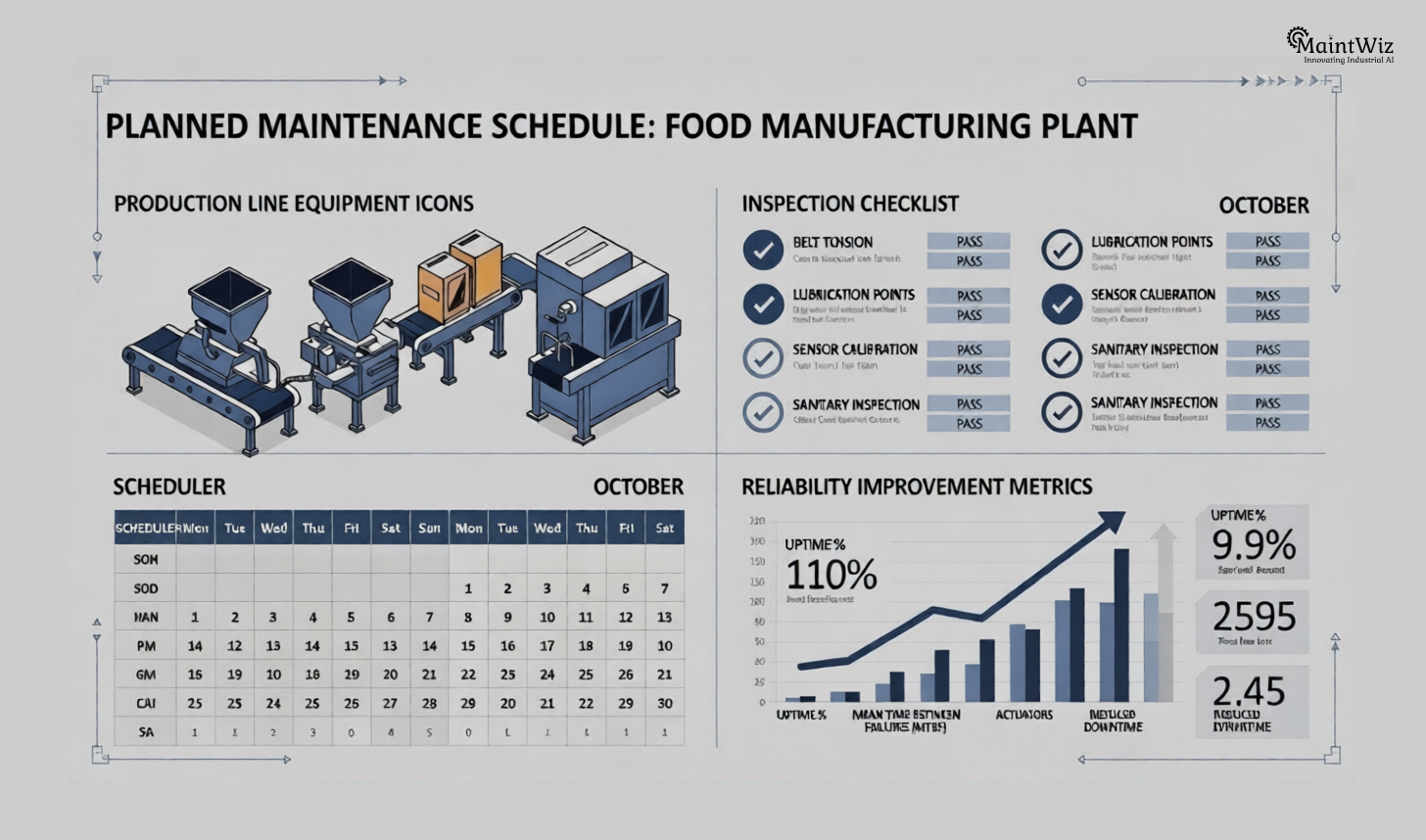
Food Plant Shutdown Risks and Strategic Importance
Shutdowns in F&B plants serve dual purposes: safety & operational readiness. They must preempt allergen cross-contact, microbial contamination, and mechanical degradation.
- Hidden Failure Detection — Routine inspection reveals latent faults before they escalate to product safety events.
- Sanitation Assurance — Deep cleaning intervals enforced through structured shutdown protocols.
- Allergen Control Integration — Dedicated sequences eliminate cross-contact vectors between product lines.
- Validation & Verification — Shutdowns provide time for biological and chemical surface validation tests.
Hygiene and Sanitation Protocol Integration
Hygiene is not an add-on to maintenance — it is the core. F&B plants must embed sanitation protocols into every shutdown phase, ensuring surfaces, seals, and transfer points are free of biological and allergenic contaminants before restart.
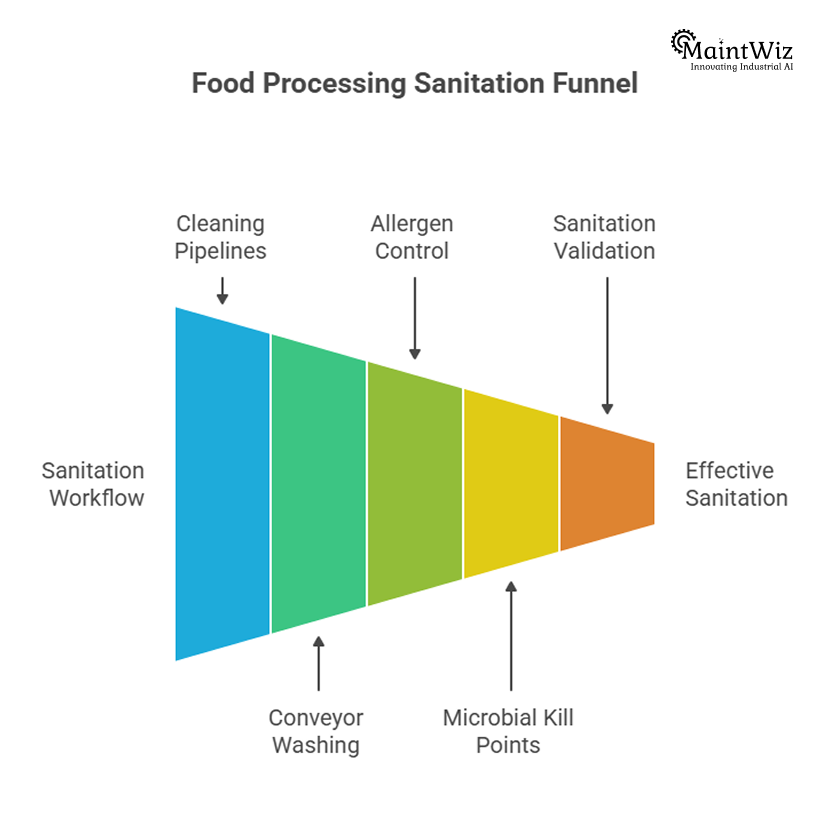
- Sanitary Shutdown Sequencing — Plans that logically sequence cleaning to avoid recontamination.
- Purge & Flush Protocols — Ensures residual ingredients and residues are completely removed from lines.
- Microbial Kill-Point Mapping — Validates heat, chemical, and mechanical kill points across systems.
- Allergen Zone Segregation — Physical demarcation and cleaning frequency tied to allergen risk classes.
- Documentation and Traceability — Comprehensive cleaning logs tied to product batches and zones.
- Regulatory Sanitation Checks — Integrates 3rd party audit readiness checkpoints.
Hygiene and sanitation drive consumer safety and brand trust. Mature plants manage these activities with SOP-led methods, routine verification, and continuous improvement loops.
Equipment and Line Changeover Planning
Effective changeover planning accelerates time-to-sterile while minimizing maintenance risk. In high-mix F&B facilities, rapid changeovers unlock flexibility without sacrificing hygiene integrity.
- Changeover Readiness Checklists — Predefined steps for disassembly, cleaning, and reassembly per equipment class.
- Allergen-Specific Change Sequences — Tailored plans that respect allergen matrices and barrier requirements.
- Tool & Consumable Staging — Prepositioned kits aligned to line type and product families.
- Standardized Work Protocols — Reduces variation and enforces best-practice execution.
- Quick-Release Mechanisms — Engineering features that shorten disassembly/assembly durations.
- Pre-Shutdown Simulations — Dry-runs that validate sequences under nominal conditions.
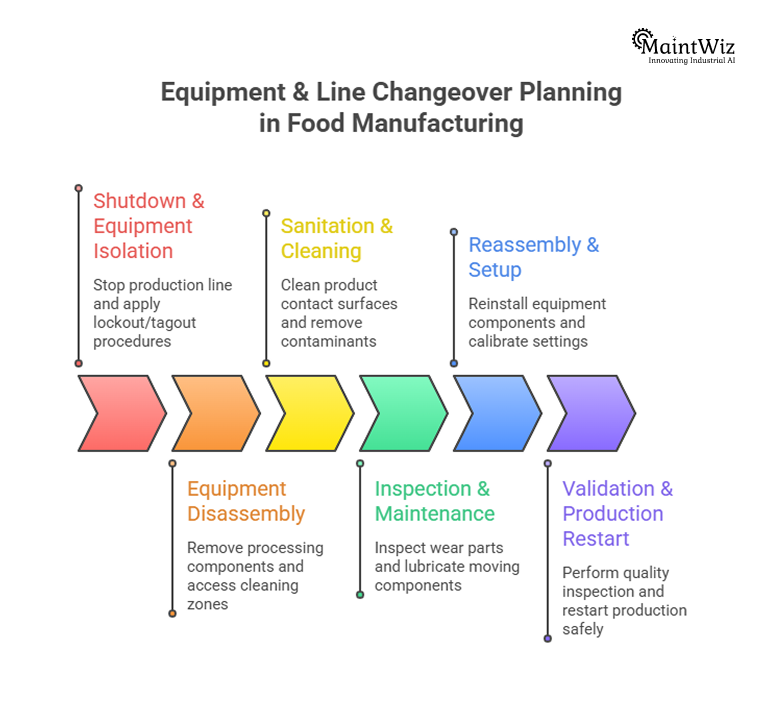
Changeovers are not just mechanical tasks — they are risk vectors for contamination and downtime. Structured planning reduces errors, accelerates readiness, and drives throughputs.
Resource and Workflow Coordination
Shutdowns demand multidisciplinary orchestration — maintenance technicians, sanitation crews, quality inspectors, and operations supervisors must operate as a synchronized unit.
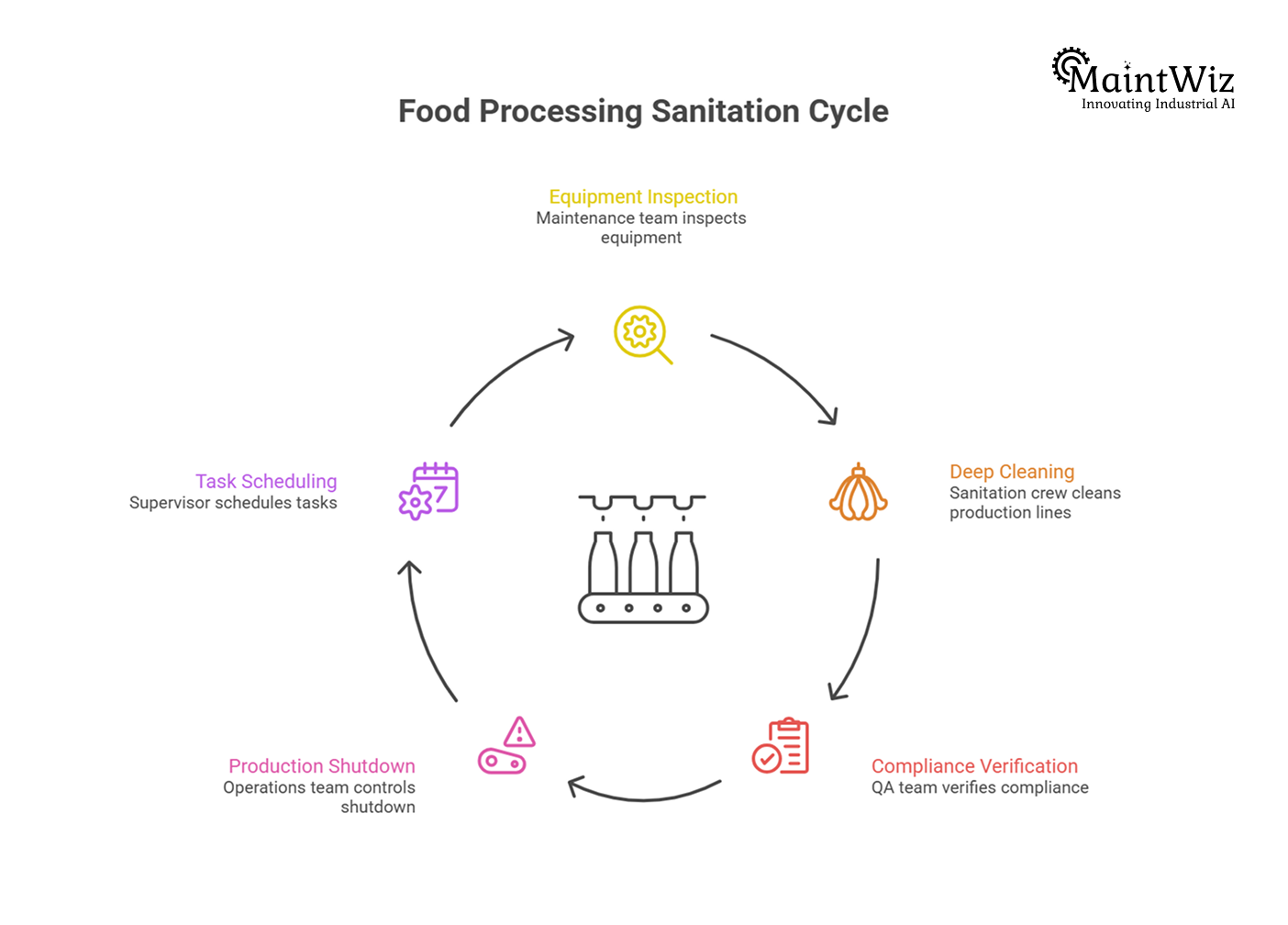
- Cross-Functional Workflows — Orchestrated tasks that align handoffs between groups.
- Shift Handover Protocols — Ensures continuity across work windows and prevents information loss.
- Real-Time Communication Channels — Digital tools for instant updates and issue escalation.
- Role-Based Task Assignments — Precision assignments to avoid overlaps and gaps.
- Labor Load Balancing — Prevents bottlenecks by matching skills to critical tasks.
- Contingency Crew Standby — Predefined backup teams to respond to emergent failures.
Effective coordination transforms shutdowns into predictable outcomes rather than chaotic events. Teams must plan, rehearse, and communicate in real-time.
CMMS Integration: SOPs, Cleaning Logs, Audit Readiness
A modern CMMS (Computerized Maintenance Management System) is foundational to shutdown success. It operationalizes SOPs, captures sanitation history, and drives compliance transparency.
- SOP Automation — Digitally enforced procedures that standardize execution and reduce variation.
- Cleaning Log Integration — Persistent, searchable records of sanitation activities and validation checks.
- Predictive Task Generation — CMMS triggers maintenance tasks based on run-hours, cycles, and hygiene thresholds.
- Audit Trail Visibility — Timestamped records that support regulatory inspections and certifications.
- Mobile Work Execution — Technicians capture data in real-time at the point of service.
- Deviation & CAPA Tracking — Links observed anomalies to corrective actions and continuous improvement loops.
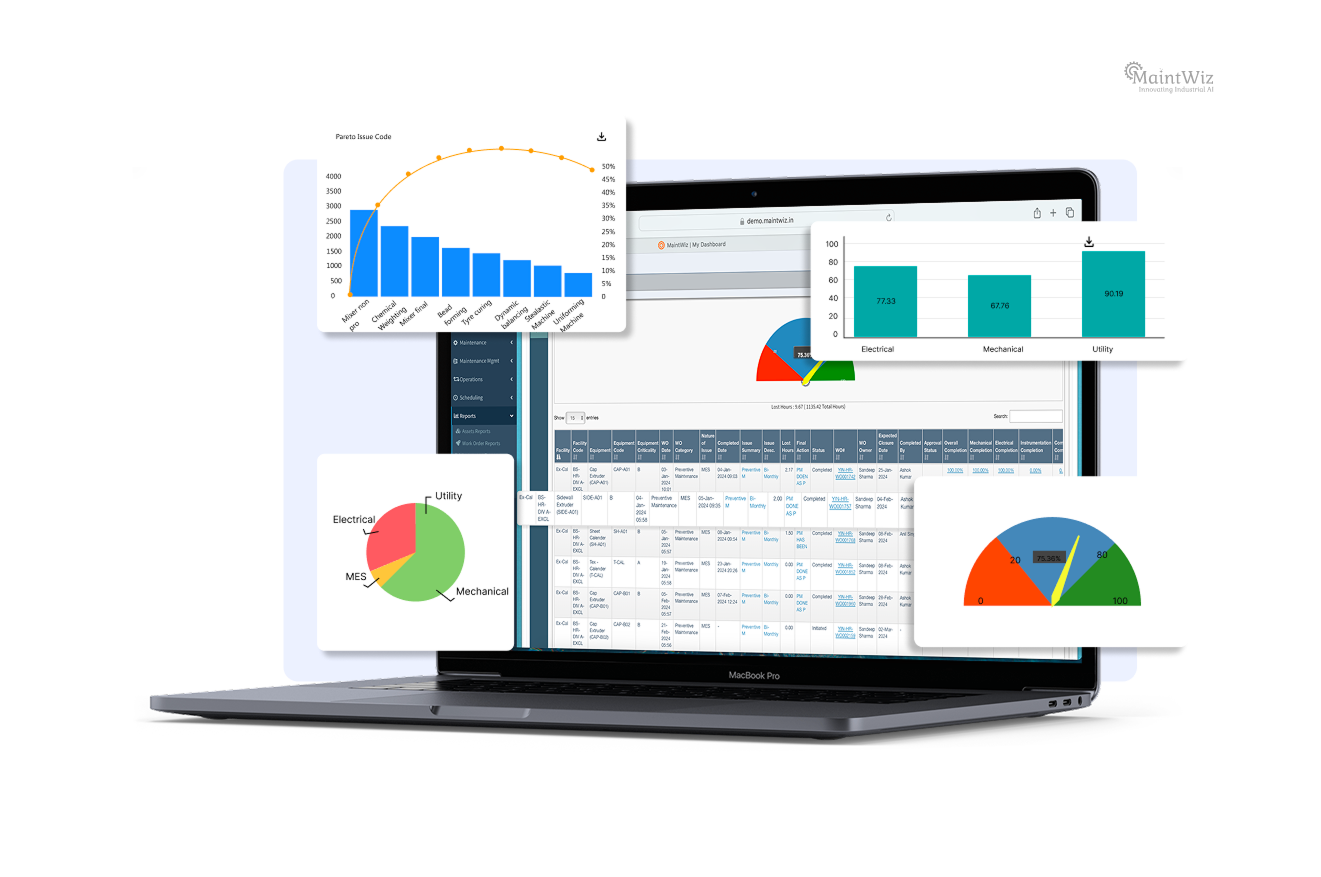
CMMS integration is the nervous system of shutdown execution — it captures intent, action, and evidence in a single platform.
Metrics: Product Safety, Downtime Reduction, Production Continuity
What matters is not activity volume but outcome quality. Best-in-class plants measure shutdown performance through metrics that align with safety, uptime, and cost.
- Sanitation Confirmation Rates — Percentage of zones passing validation checks on first attempt.
- Downtime Utilization Efficiency — Ratio of productive activity to total shutdown window.
- Rework & Scrap Reduction — Downstream impact of shutdown effectiveness on product yield.
- Compliance Findings Closed — Closed CAPAs against audit observations within defined windows.
- Changeover Cycle Times — Time to transition between product families with zero safety deviations.
- Maintenance Backlog Trends — Tracks executed vs. deferred work to avoid hidden risk accrual.
Metrics enable continuous improvement, executive reporting, and operational accountability across maintenance and sanitation domains.
Why MaintWiz CMMS is Uniquely Suited for F&B Plant Shutdowns
MaintWiz CMMS is purpose-built to elevate planned maintenance into a strategic capability for food & beverage plants. It aligns maintenance rigor with hygiene requirements, transforms compliance documentation into an asset, and drives visibility and accountability across multidisciplinary teams.
MaintWiz Delivers:
- Built-In SOP and Sanitation Templates — Configurable standards align with FSMA, HACCP, and allergen control protocols.
- Mobile-First Execution — Field crews capture sanitation and maintenance data at the point of service, eliminating transcription errors.
- Scheduled Task Automation — Intelligent triggers based on run hours, cycles, and hygiene windows ensure nothing is missed.
- Real-Time Dashboards — Executive-ready views of downtime utilization, sanitation validation, and compliance status.
- Audit-Ready Documentation — Full traceability of cleaning logs, changeover checkpoints, and corrective actions.
- Cross-Team Collaboration — Workflows that unify maintenance, operations, QA, and sanitation teams around shared goals.
With MaintWiz, shutdowns become predictable, hygienic, and compliant events — not reactive firefighting episodes. Operators gain confidence in restart readiness, quality teams trust sanitation evidence, and maintenance leaders measure performance, not just activities.
Ready to transform your F&B planned maintenance? Contact MaintWiz for a tailored demo and see how structured shutdown excellence accelerates safety, uptime, and operational continuity.

Company
Download App