Renewable Energy & Energy Transition Assets
Ensuring Reliability and Longevity in Modern Energy Infrastructure
Powering the Transition with Reliability, Predictive Intelligence & Operational Discipline – Renewable energy infrastructure — from wind turbines to solar farms and grid-scale energy storage — is foundational to the global energy transition. Today’s energy leaders cannot accept unexpected outages or suboptimal performance; ensuring maximum uptime, grid compliance, and asset longevity is non-negotiable. This article delivers strategic insights and execution-ready frameworks for maintenance leaders responsible for critical renewable assets, including how modern CMMS platforms like MaintWiz can safeguard performance across the lifecycle.
Unique Challenges of Renewable Asset Maintenance
Renewables combine mechanical complexity, environmental exposure, and distributed geography — creating distinctive maintenance hurdles. Leaders must understand failure modes, environmental impacts, and remote access constraints to improve reliability and reduce operational costs.
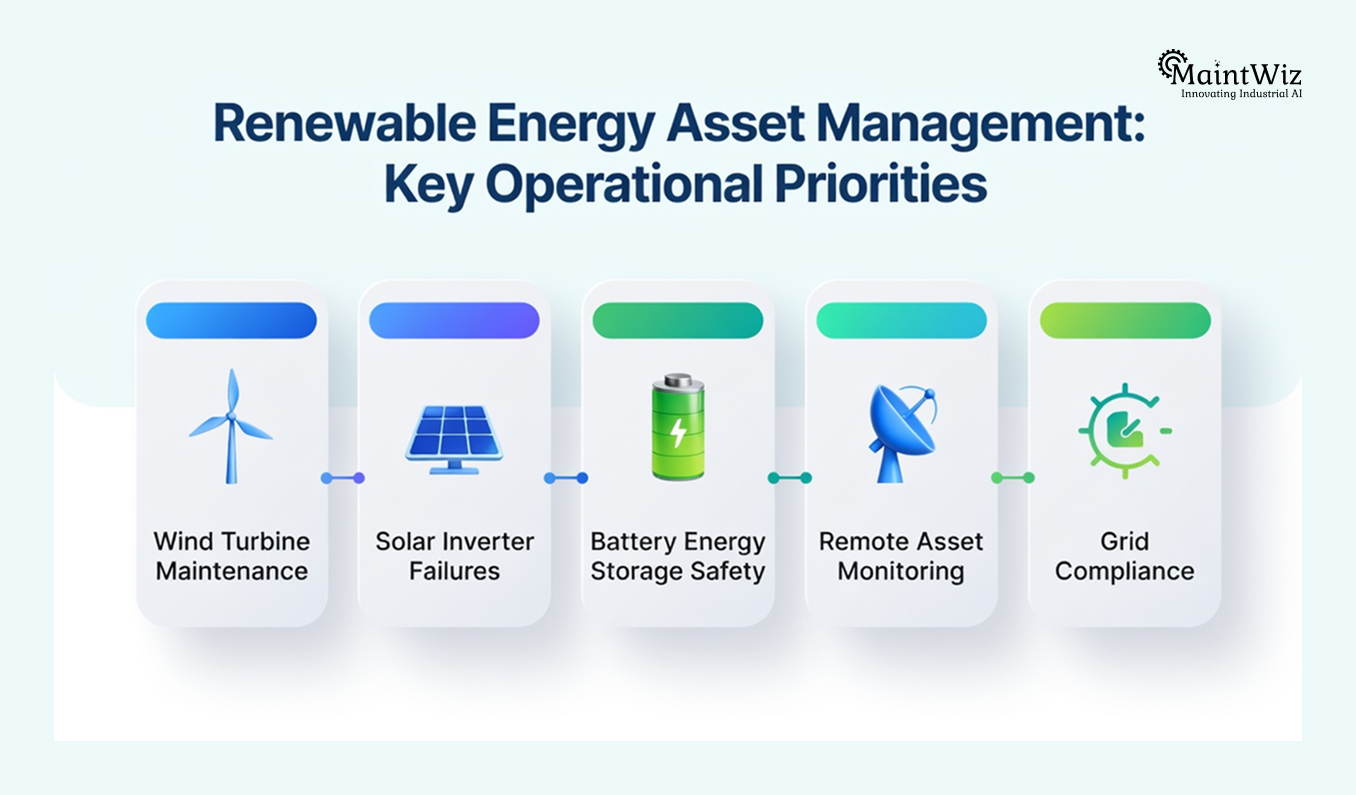
- Wind Turbine Maintenance Complexities – High-altitude mechanics and dynamic loading require structured inspections and predictive fault detection to prevent blade, gearbox or generator failures.
- Solar Farm Outage Risk Management – Module degradation, soiling rates, and inverter failures demand rigorous preventive schedules tied to performance data.
- Energy Storage Reliability Demands – Thermal management, battery state-of-health tracking, and safety compliance are critical to asset longevity and grid support.
- Remote & Distributed Asset Coordination – Geography increases travel cost, delays response time, and requires remote visibility into conditions and task execution.
- Grid Compliance & Safety – Renewables must meet stringent regional compliance requirements — including fault ride-through, protection settings, and commissioning records.
Preventive and Predictive Maintenance Scheduling
Renewables must shift from reactive patchwork to systematic preventive and predictive maintenance scheduling to maximize availability and minimize wind turbine maintenance costs and solar farm outages.
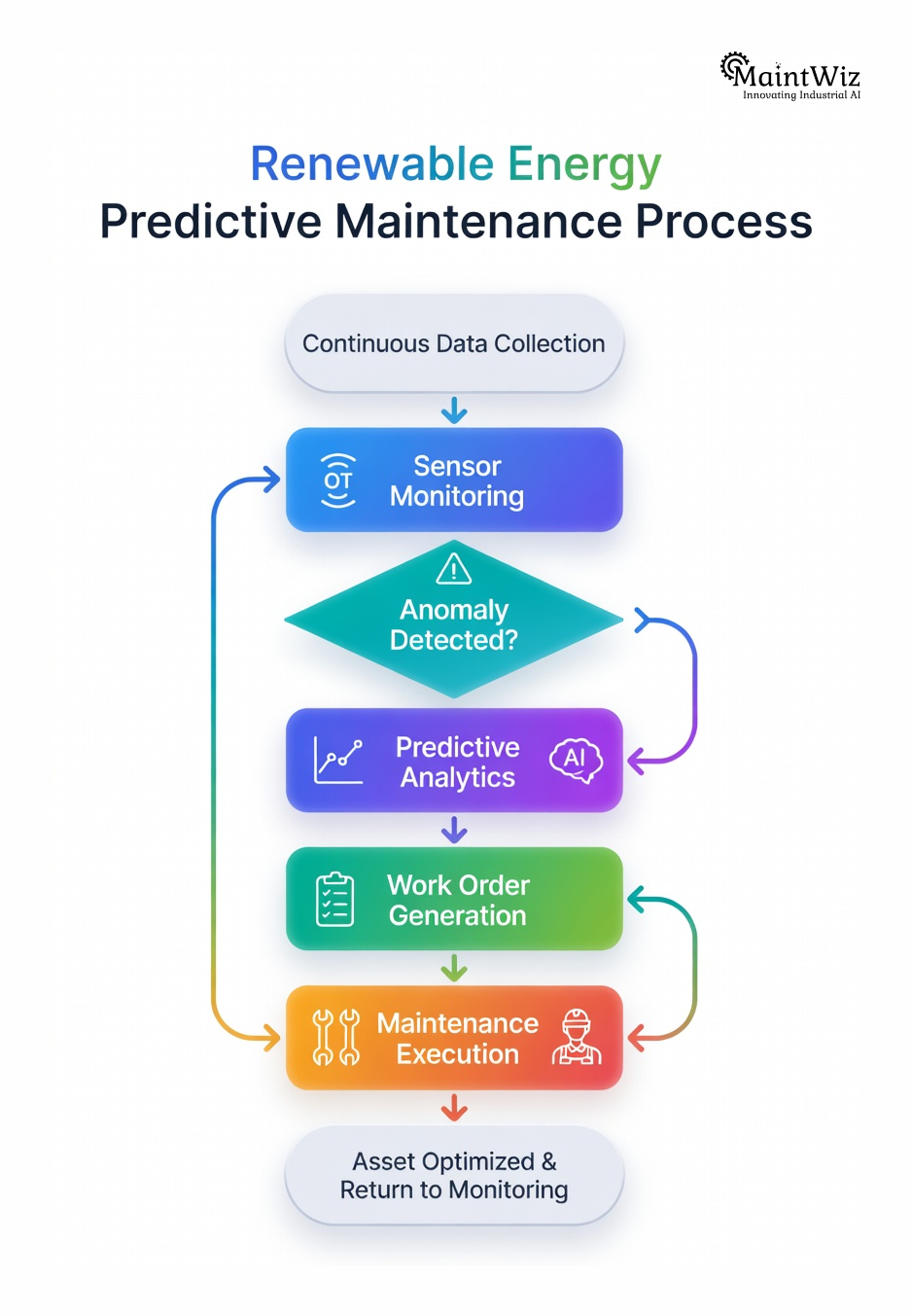
- Condition-Based Monitoring Integration – Use sensor thresholds (vibration, temperature) to trigger maintenance before degradation causes system failures.
- Dynamic Preventive Maintenance Plans – Time-based and performance-based PM schedules aligned with asset life cycles reduce unplanned downtime.
- Predictive Analytics for Failure Anticipation – Machine learning models forecast component wear patterns to schedule interventions at optimal intervals.
- Resource Optimization & Routing – Intelligent schedule assignment maximizes technician productivity across sites.
- Maintenance Window Coordination – Align shutdowns with grid demand patterns and weather forecasts to minimize impact (e.g., avoid solar farm outage during peak demand).
Safety and Compliance Considerations
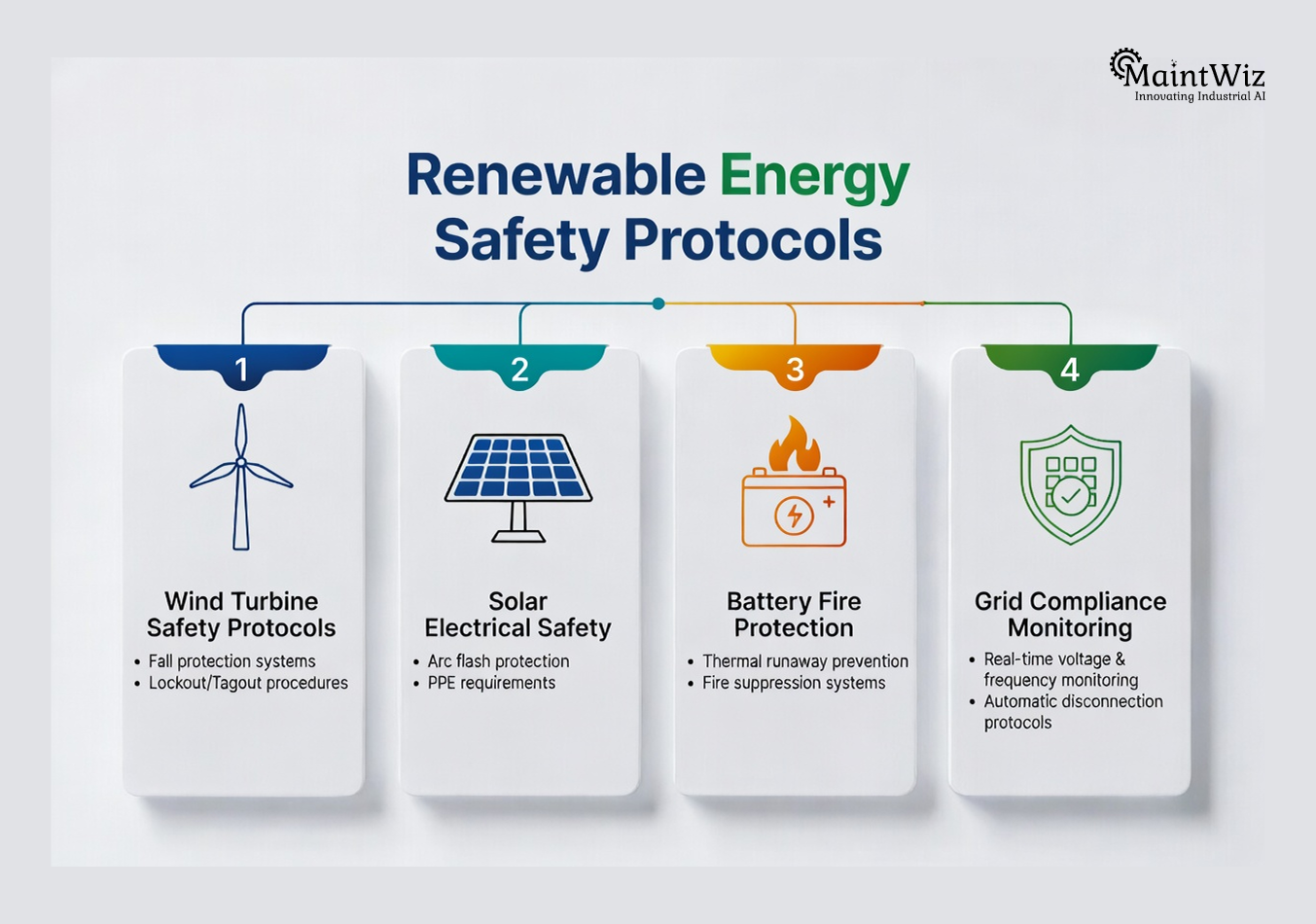
Safety compliance and regulatory alignment are core to stakeholder trust and operational legitimacy across renewable assets.
- Grid Interconnection Standards – Maintain compliance with regional grid codes through documented evidence and configuration checks.
- Wind Site Safety Protocols – High-altitude and heavy-component work require stringent lockout/tagout and fall-protection procedures.
- Solar Electrical Safety – High DC voltages and inverter maintenance require documented SOPs for technician safety and audit readiness.
- Battery Energy Storage Safety – Ensure compliance with fire suppression standards and thermal runaway mitigation procedures.
- Regulatory Documentation & Audit Trails – Maintain traceable records of inspections, certifications, and incident reporting for compliance verification.
CMMS Role in Remote Monitoring and Coordination
Modern CMMS platforms are no longer back-office tools — they are command centers that unify remote monitoring, workforce coordination, predictive signals, and compliance workflows into an operational ecosystem.
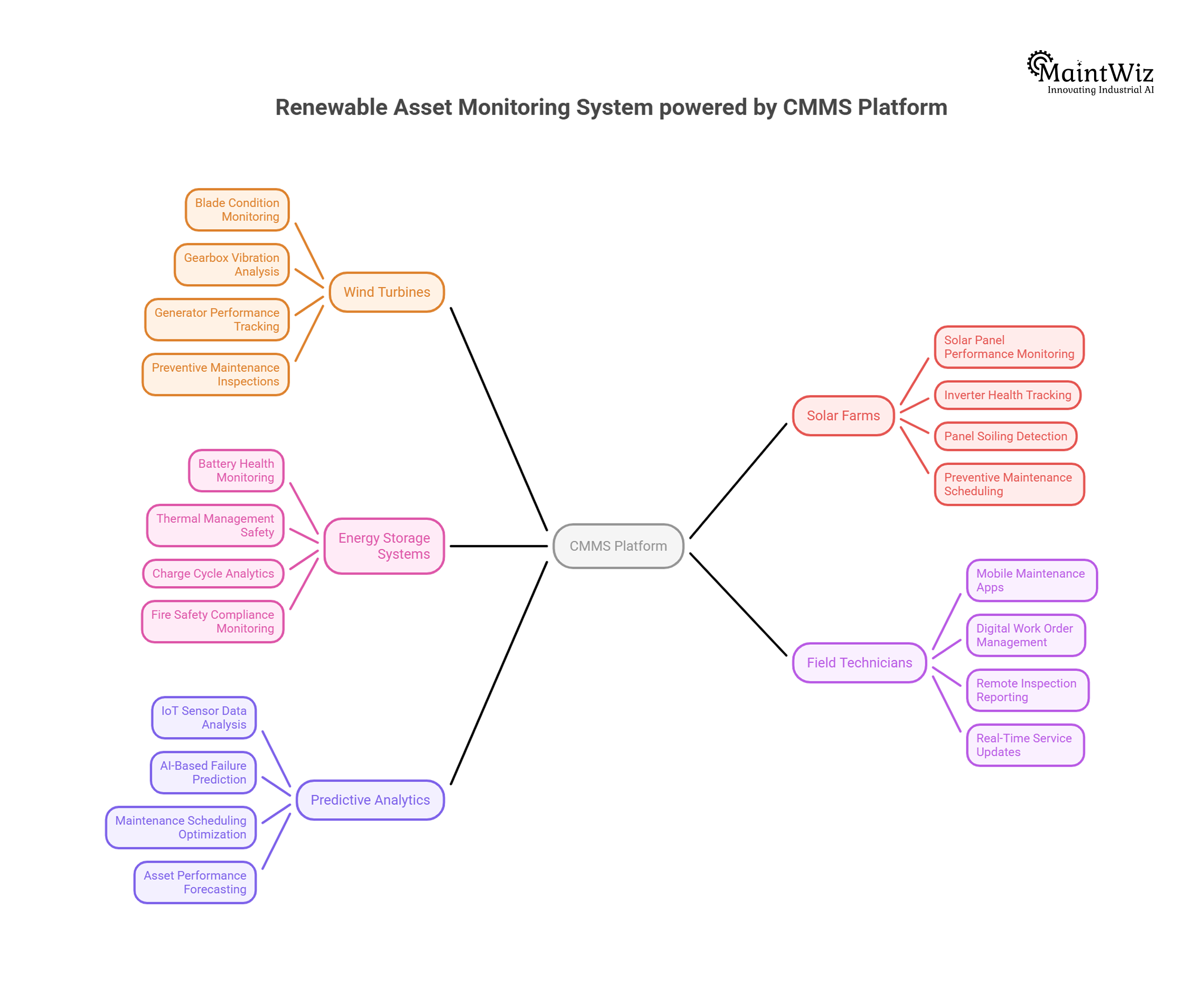
- Real-Time Condition Insights – CMMS dashboards ingest sensor data and provide actionable alerts for emerging faults.
- Mobile Work Execution – Field crews access schedules, checklists, and historical records via mobile interfaces in real time.
- Work Order Automation – Generate tasks from condition thresholds and predictive models to preempt solar farm outage or wind turbine maintenance events.
- Integration with IoT & ERP – Seamless connectivity to IoT sensor networks and core systems enhances visibility and decision integrity.
- Centralized Documentation – All SOPs, manuals, certificates, and compliance artifacts are centrally accessible, reducing administrative burden.
KPI Framework: Asset Uptime, Operational Efficiency & Grid Reliability
Robust KPIs help maintenance leaders quantify performance, justify investments, and continuously refine strategies for renewable assets.
- Asset Uptime Percentage – Measure operational availability of wind turbines, solar arrays, and storage systems against baseline expectations.
- Mean Time Between Failures (MTBF) – Track recurrence of failures to refine preventive actions and spare strategy.
- Mean Time to Repair (MTTR) – Drive rapid response through workflow optimization and mobile task support.
- Scheduled vs Unscheduled Work Ratio – Higher scheduled maintenance reflects maturity in preventive maintenance planning.
- Grid Compliance Performance – Monitor adherence to grid code standards and audit success rates as a function of documented activities.
Why MaintWiz CMMS Is Uniquely Suited for Renewable Energy Assets
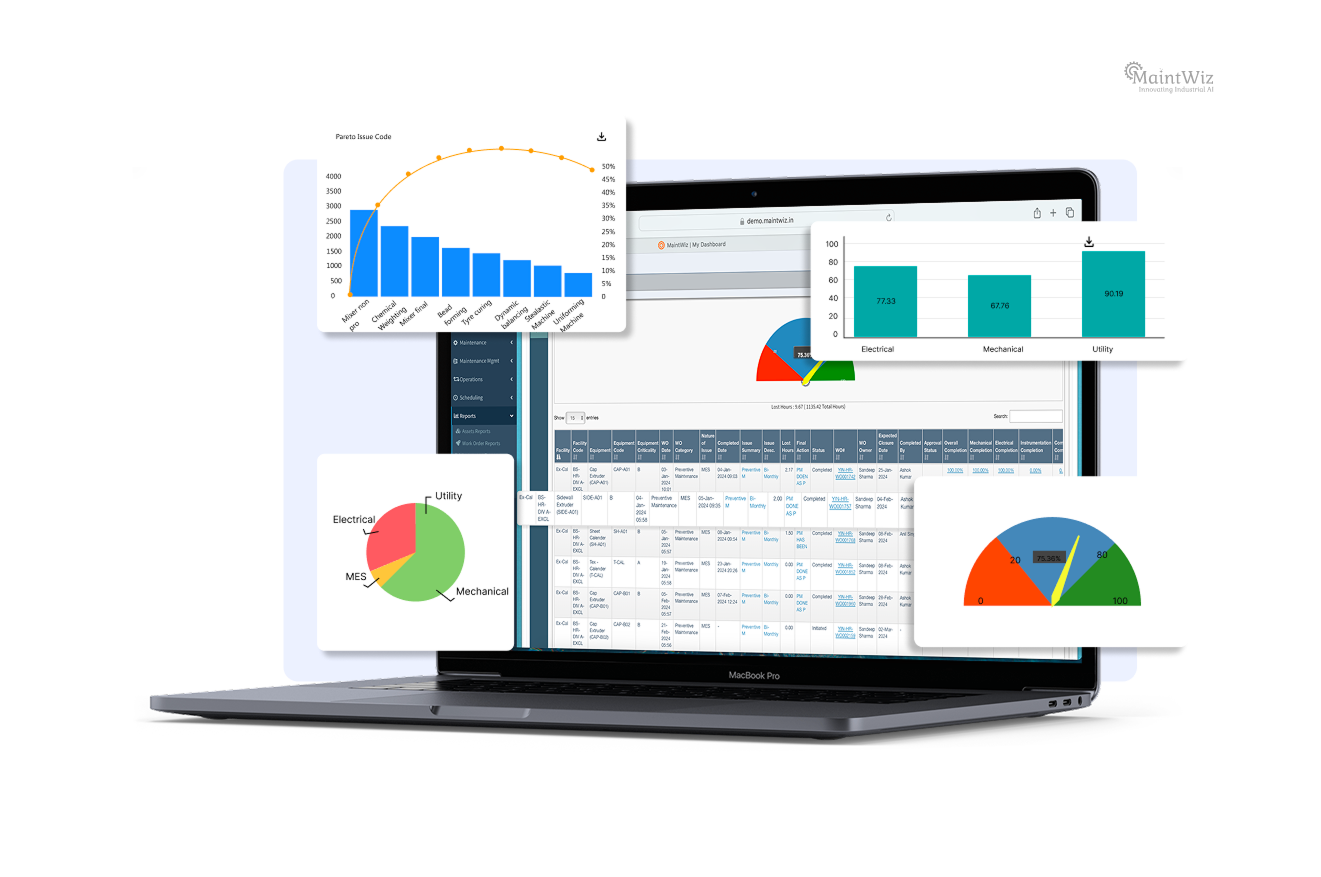
Renewables demand a CMMS that does more than record work — it must anticipate failures, streamline multidisciplinary teams, and drive evidence-based maintenance decisions. MaintWiz CMMS delivers precisely that with capabilities built for modern asset ecosystems.
- AI-Driven Predictive Maintenance – Leverages condition data to predict faults before they cause downtime, minimizing wind turbine maintenance costs and avoiding solar farm outages
- Comprehensive Asset Management – Centralizes asset hierarchies and histories for distributed renewable portfolios.
- IoT & Sensor Integration – Ingests real-time signals into work orders, forecasts, and trend analytics, enabling proactive interventions.
- Mobile Field Execution – Field technicians access tasks, checklists and capture evidence in real time, transforming remote sites into connected operations.
- Compliance & Documentation – MaintWiz ensures audit-ready documentation and permits capture, enhancing grid compliance readiness.
These capabilities uniquely position MaintWiz to help renewable operators increase asset uptime, improve grid reliability, and extend asset lifecycles — all while reducing maintenance costs and execution risk.
Ready to optimize your renewable energy assets with data-driven maintenance intelligence? Schedule a Demo with MaintWiz today and transform the reliability and performance of your wind turbines, solar farms, and energy storage infrastructure.

Company
Download App