Refinery & Petrochemical Shutdown Excellence
Maximizing Turnaround Efficiency, Safety, and Regulatory Compliance
Every refinery turnaround is a race against time, risk, and rising cost pressure. A single day of delayed restart can mean millions in lost margin, disrupted supply commitments, and executive scrutiny. Yet the true challenge of refinery shutdown maintenance is not just speed — it is orchestrating thousands of interdependent tasks safely, compliantly, and predictably across some of the most complex industrial assets in the world. Shutdown excellence is no longer a maintenance objective. It is a strategic business capability.
Petrochemical shutdown planning demands a level of precision rarely seen in day-to-day operations. Interconnected process units, aging equipment, regulatory inspections, catalyst replacements, and contractor mobilization all converge into a narrow execution window. Plants that treat shutdowns as routine events often struggle with cost overruns, scope creep, safety incidents, and delayed startups. Plants that treat them as enterprise programs — supported by digital systems, risk-based planning, and performance analytics — consistently outperform peers.
The True Cost and Risk Profile of Refinery Shutdowns
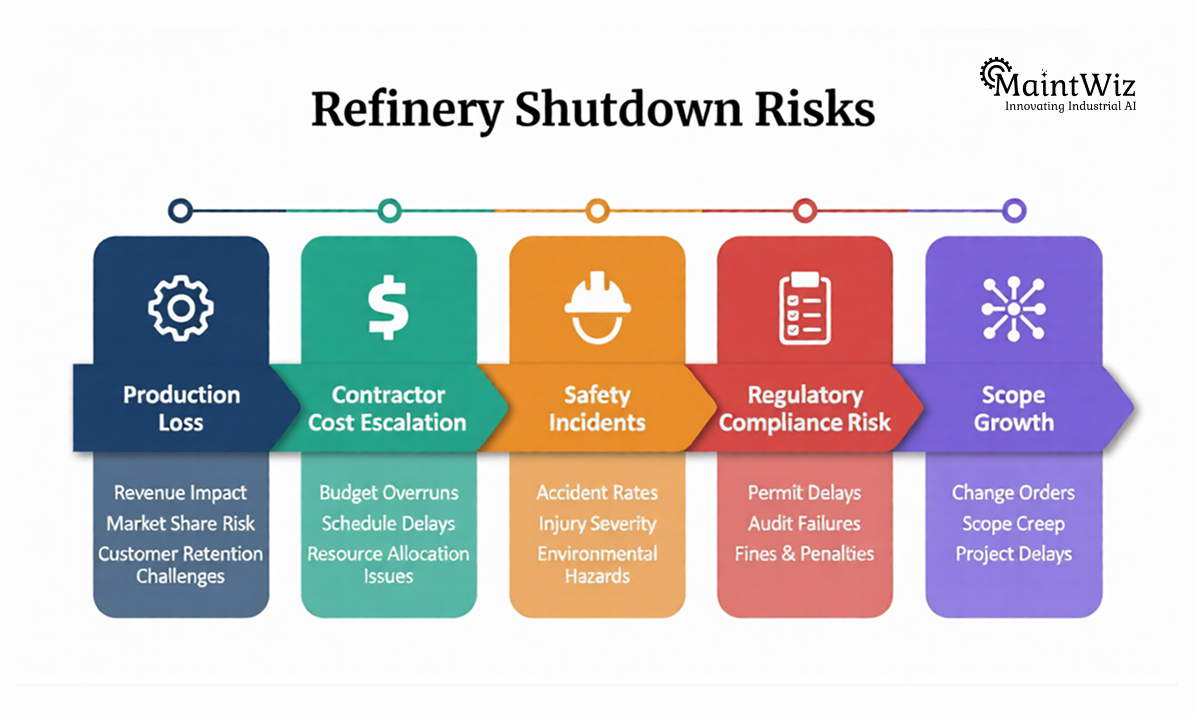
Refinery turnarounds represent one of the largest periodic capital-like expenditures in process industries. But the visible maintenance budget tells only part of the story. The hidden costs of inefficiency, safety exposure, and poor coordination often exceed direct labor and material spend.
- Production Loss Exposure — Each additional day of downtime can translate into substantial lost refining margin, contractual penalties, and downstream supply disruptions.
- Scope Growth Risk — Incomplete pre-shutdown inspections often uncover late defects, expanding scope mid-execution and destabilizing schedules, budgets, and resource plans.
- Safety Incident Amplification — Dense manpower, simultaneous high-risk tasks, and unfamiliar contractors increase the probability and severity of recordable incidents.
- Regulatory Non-Compliance Consequences — Missed statutory inspections, emissions deviations, or documentation gaps can trigger fines, shutdown extensions, or reputational damage.
- Contractor Cost Escalation — Poor planning leads to idle time, rework, overtime premiums, and claims, significantly inflating total turnaround expenditure.
World-class operators approach refinery shutdown maintenance as a risk-managed investment. Their goal is not just to “finish the job,” but to protect asset integrity, extend run length, and ensure predictable performance until the next cycle.
Planning for Interconnected Units and Critical Path Control
Refineries and petrochemical complexes operate as tightly integrated ecosystems. A delay in one unit can cascade across multiple process areas, utilities, and offsites. Effective petrochemical shutdown planning begins with a deep understanding of technical dependencies and critical path drivers.
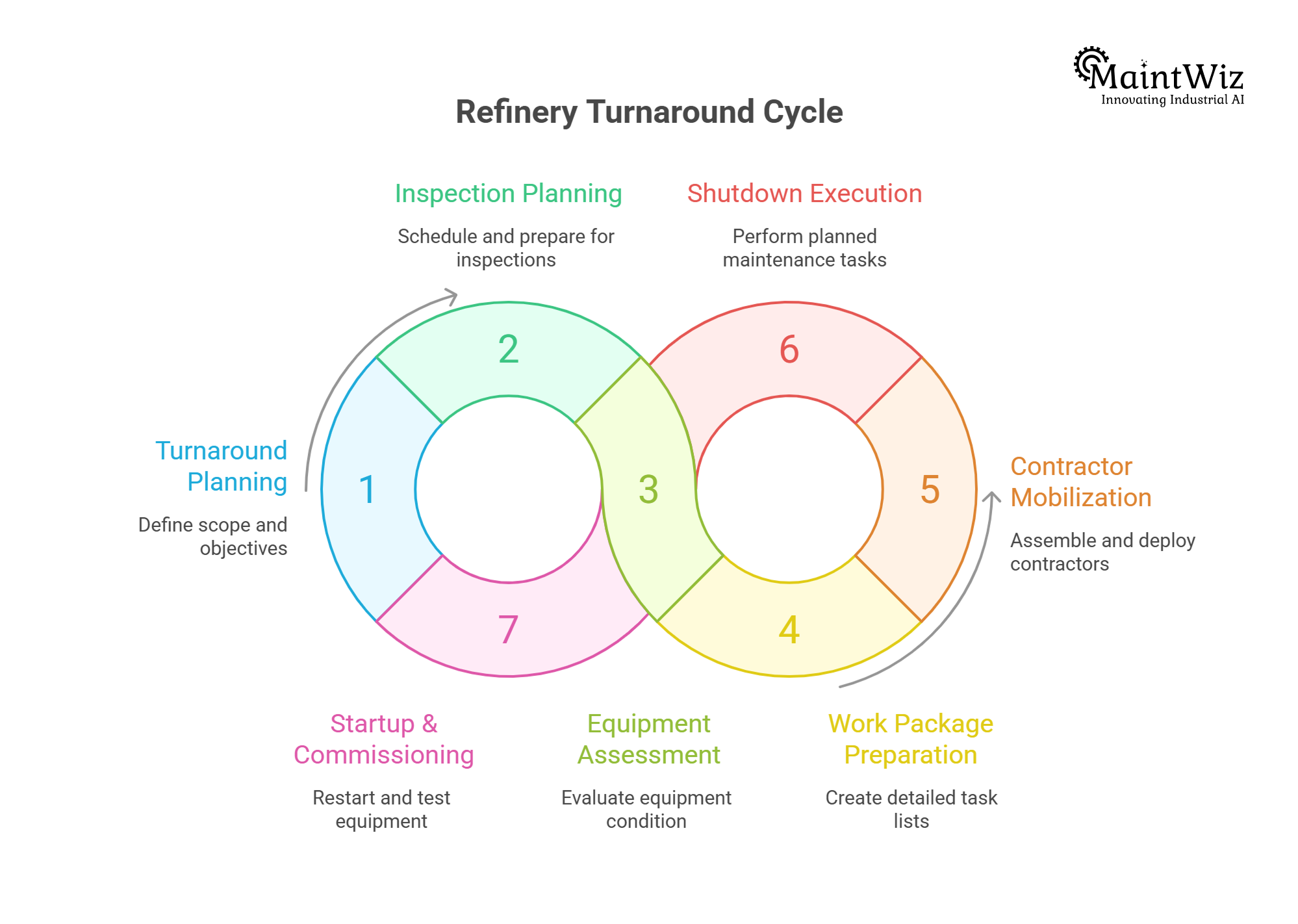
- Integrated Unit Dependency Mapping — Detailed logic networks connect reactors, distillation columns, utilities, and offsites to reveal true startup and shutdown interdependencies.
- Critical Path Equipment Identification — Long-lead, high-risk assets such as reactors, compressors, and furnaces receive priority planning, early inspection, and contingency preparation.
- Inspection Sequencing Optimization — Regulatory and integrity inspections are sequenced early to prevent late discoveries that force major schedule rework.
- Turnaround Work Breakdown Structuring — Large scopes are divided into manageable work packages aligned with systems, crafts, and execution zones for better control.
- Backward Scheduling from Startup Milestones — Planning starts with the target restart date, aligning all activities to protect commissioning, testing, and hydrocarbon introduction windows.
High-performing sites treat the schedule as a living risk document. Critical path activities are continuously stress-tested against weather risk, resource availability, and potential scope additions. This proactive mindset reduces surprises and protects startup commitments.
Inspection, Catalyst Replacement, and Mechanical Integrity
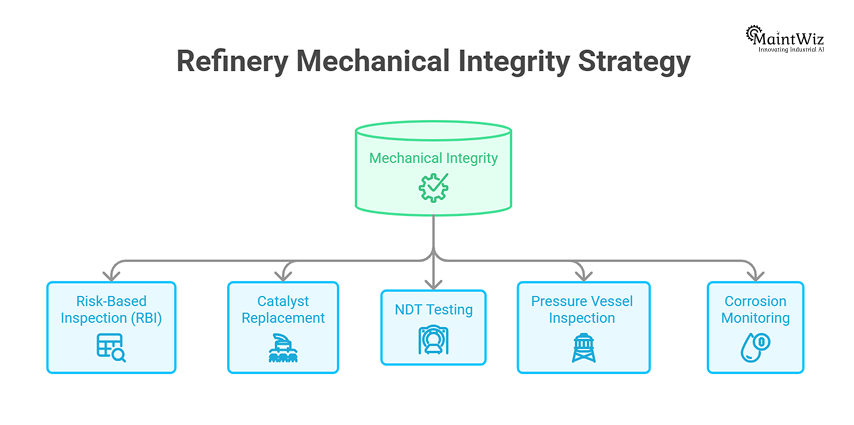
Refinery shutdowns are driven largely by inspection and integrity requirements. Mechanical integrity programs, statutory mandates, and reliability objectives converge during turnarounds, making disciplined inspection planning essential.
- Risk-Based Inspection Integration — RBI methodologies prioritize high-consequence corrosion circuits, pressure vessels, and piping systems to focus resources where risk reduction is greatest.
- Statutory Inspection Compliance Planning — Boilers, pressure vessels, safety valves, and lifting equipment inspections are aligned with legal intervals and certification requirements.
- Catalyst Replacement Optimization — Reactor catalyst changeouts are tightly coordinated with vessel entry, refractory work, and internals inspection to minimize idle time.
- Non-Destructive Testing Coordination — NDT methods such as ultrasonic testing, radiography, and eddy current testing are scheduled to avoid access conflicts and scaffolding rework.
- Defect Elimination Work Integration — Known bad actors and repeat failure points are addressed proactively during shutdown to extend run length and reduce future unplanned outages.
Safety, Environmental, and Regulatory Compliance Under Shutdown
Conditions
Shutdown environments are inherently high risk. Confined space entries, hot work, line breaking, and simultaneous operations occur at a scale rarely seen during normal production. Maintaining control requires rigorous systems and leadership focus.
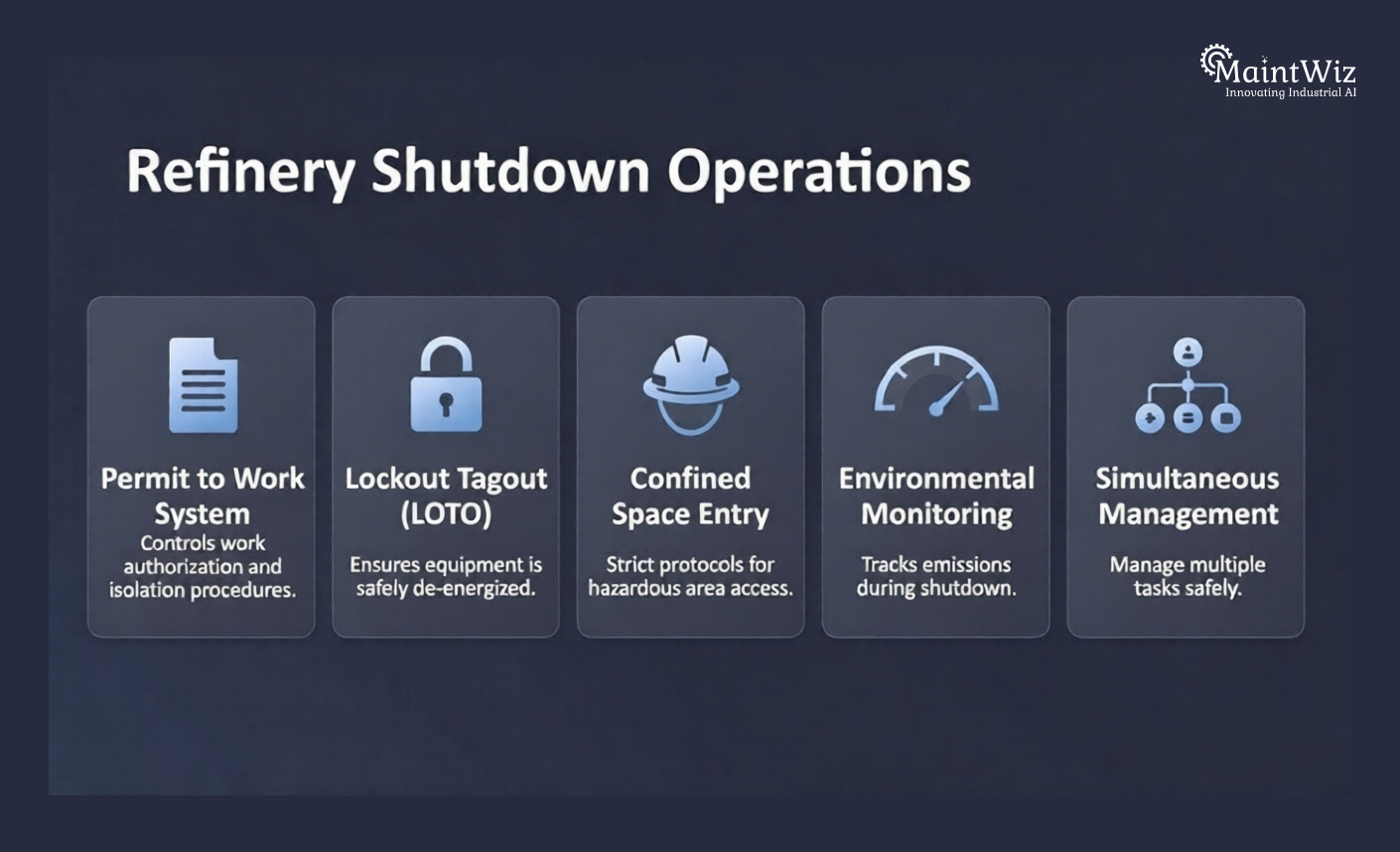
- Comprehensive Permit to Work Governance — Integrated permit systems control hot work, confined space entry, electrical isolation, and excavation across all contractors and plant teams.
- Energy Isolation and LOTO Assurance — Structured lockout/tagout processes with verification steps prevent unexpected energy release during maintenance and inspection tasks.
- Simultaneous Operations Risk Management — SIMOPS reviews identify conflicting activities, such as welding near open vessels, and enforce safe sequencing and physical segregation.
- Environmental Protection Controls — Emissions management, effluent handling, and hazardous waste segregation are monitored to prevent regulatory violations during cleaning and decontamination.
- Shutdown Safety Culture Reinforcement — Daily toolbox talks, visible leadership, and near-miss reporting maintain risk awareness despite schedule pressure and workforce fatigue.
Leading refiners recognize that safety performance during shutdowns directly influences long-term reliability and workforce morale. A major incident can erase years of operational gains and severely damage stakeholder trust.
Contractor and Workforce Orchestration at Scale
A refinery turnaround may involve several thousand contractor personnel alongside plant employees. Managing this temporary workforce surge requires structured governance, clear accountability, and real-time visibility.
- Defined Contractor Scope Ownership — Clear work boundaries, deliverables, and performance expectations prevent overlaps, gaps, and disputes during execution.
- Skill and Certification Verification — Tradespeople qualifications, safety training, and statutory certifications are validated before site access to reduce quality and safety risks.
- Workface Planning Discipline — Crews receive fully prepared work fronts, including materials, drawings, permits, and access, minimizing idle time and productivity losses.
- Centralized Communication Structures — Daily coordination meetings and shared dashboards align contractors, planners, and operations teams on priorities and constraints.
- Fatigue and Workforce Welfare Monitoring — Shift rotations, rest facilities, and welfare provisions reduce fatigue-related errors and incidents during extended shutdown schedules.
Turnaround success often hinges less on technical complexity and more on human coordination. Sites that invest in structured contractor integration consistently see higher productivity and fewer disputes.
Digital CMMS Enablement for Turnaround Execution
Modern refinery shutdown maintenance cannot be effectively managed with spreadsheets and paper binders. Digital CMMS platforms provide the structure, traceability, and visibility required to control thousands of concurrent activities.
- Digital Work Pack Standardization — Job plans, safety steps, drawings, and checklists are bundled into structured electronic work packs for consistent field execution.
- Real-Time Work Order Status Tracking — Supervisors and planners monitor progress, delays, and completions live, enabling rapid intervention on emerging bottlenecks.
- Asset History and Inspection Record Access — Technicians view past failures, repair notes, and inspection trends to make informed decisions during disassembly and repair.
- Mobile Field Data Capture — Photos, readings, and completion notes are recorded at the point of work, improving data quality and eliminating post-job paperwork delays.
- Integrated Materials and Spares Visibility — Work orders are linked to required materials, ensuring critical spares are available when needed and reducing waiting time.
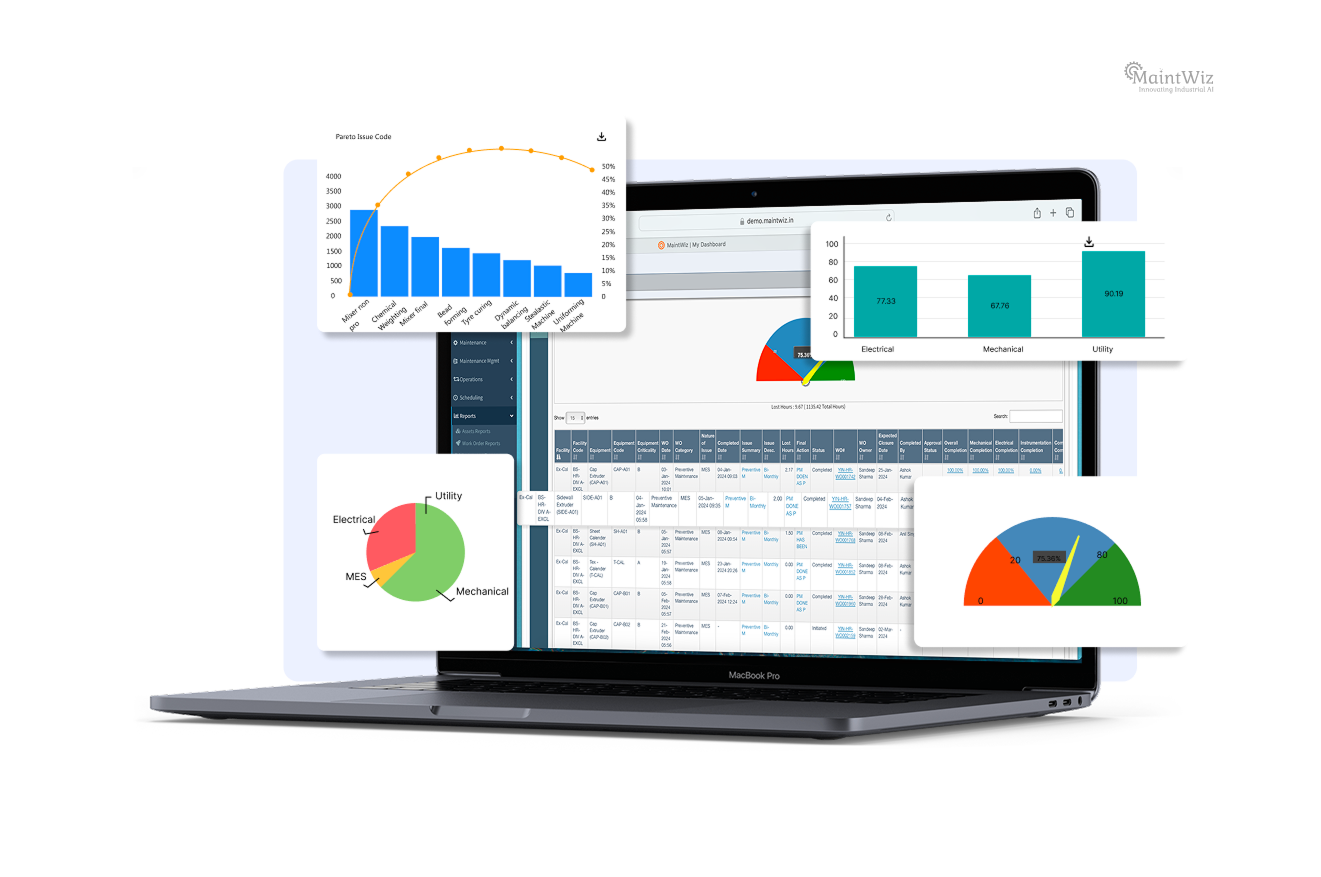
Digital control does more than improve efficiency. It creates a permanent knowledge base that strengthens future petrochemical shutdown planning cycles and supports reliability improvement initiatives.
Performance Metrics That Define Turnaround Excellence
What gets measured gets managed. High-performing organizations track a focused set of metrics that link shutdown performance to business outcomes and continuous improvement.
- Schedule Adherence Index — Measures actual versus planned completion of critical path activities, highlighting planning accuracy and execution discipline.
- Cost Performance Variance — Compares approved budget against actual spend, identifying drivers such as scope growth, productivity losses, or contractor claims.
- Safety Incident Frequency Rate — Tracks recordable injuries and high-potential near misses to assess effectiveness of shutdown safety controls.
- Rework and Quality Deviation Rate — Monitors repeat repairs or inspection failures that indicate workmanship or planning gaps.
- Startup Reliability Performance — Evaluates post-shutdown run length, early failures, and forced outages as indicators of turnaround work quality.
These metrics transform shutdowns from one-time events into structured learning cycles. Each turnaround becomes a data-driven opportunity to improve the next.
Why MaintWiz CMMS Supports Refinery and Petrochemical Shutdown
Excellence
Executing a refinery turnaround requires a platform that connects planning, execution, compliance, and performance analytics. MaintWiz CMMS supports asset-intensive industries with capabilities that align closely to shutdown demands.
- Structured Preventive and Inspection Management — MaintWiz organizes inspection schedules, task lists, and compliance records, helping teams prepare comprehensive shutdown scopes.
- Centralized Work Order Control — All turnaround jobs are created, prioritized, tracked, and closed within a single system, providing full visibility across departments.
- Mobile Maintenance Execution Enablement — Field teams can access job details, record findings, and close tasks digitally, improving speed and documentation accuracy.
- Asset History and Failure Insight Access — Historical maintenance and breakdown data support better scoping decisions and identification of chronic problem equipment.
- Dashboard and KPI Monitoring Capability — Configurable dashboards help leadership monitor shutdown progress, backlog, and performance indicators in near real time.
By digitizing refinery shutdown maintenance workflows, MaintWiz helps organizations reduce uncertainty, improve coordination, and build a repeatable framework for turnaround success. Instead of reacting to events, teams operate with shared visibility, structured processes, and data-driven decision support.
Shutdown excellence is not achieved through effort alone. It is achieved through preparation, discipline, and the right digital foundation. Refineries and petrochemical plants that modernize their shutdown approach today will operate safer, restart faster, and outperform competitors for years to come.

Company
Download App