CMMS Software for Manufacturing Industry: From
Maintenance Execution to Strategic Control
Introduction: The Leadership Blind Spot in Maintenance
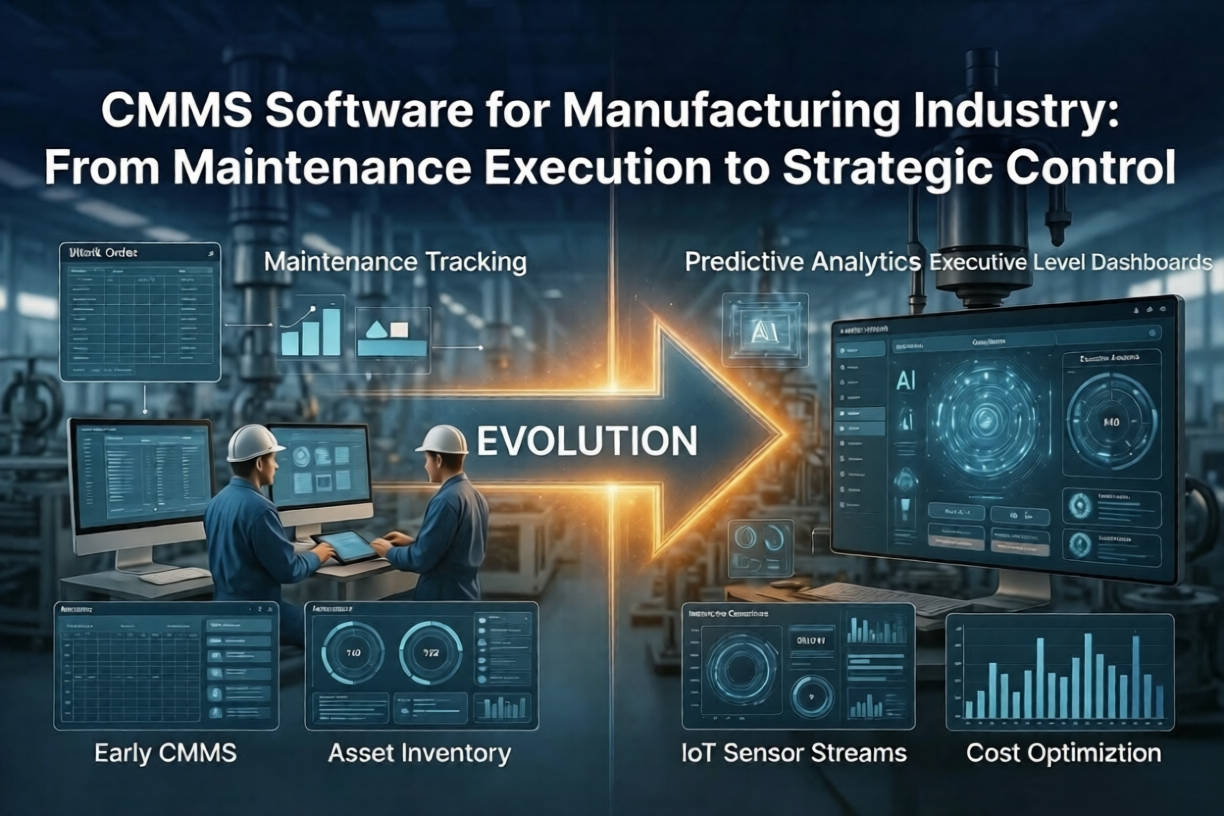
CMMS software for manufacturing industry environments is widely implemented, yet rarely leveraged at its full strategic potential. In most organizations, it exists as an operational system—tracking work orders, scheduling preventive maintenance, and recording asset history. These functions are necessary, but they are not where competitive advantage is created.
At a leadership level, maintenance is not an operational concern. It is a capital efficiency function.
Every maintenance decision—whether to intervene, delay, replace, or monitor—has a direct impact on cost structure, asset life, and production continuity. Yet, in many plants, these decisions are still driven by static schedules, fragmented data, and legacy assumptions.
This is where CMMS software must be reframed.
It is not a system to manage maintenance.
It is a system to govern how maintenance decisions are made.
Organizations that understand this shift extract exponential value. Those that don’t continue to invest in maintenance activity without improving outcomes.
The Structural Shift in Manufacturing Complexity
Manufacturing today operates in an environment of heightened complexity. Assets are no longer isolated mechanical units; they are part of interconnected systems influenced by variable loads, environmental conditions, and real-time production demands.
Despite this, maintenance strategies in many organizations remain anchored in outdated models. Preventive maintenance schedules are followed with discipline, but often without questioning their relevance. The assumption that time-based interventions can effectively prevent failure is increasingly misaligned with reality.
Failures today are not linear. They are influenced by multiple dynamic variables, including:
- Operating conditions that fluctuate across shifts and production cycles
- Load variations that accelerate or delay wear patterns
- Environmental factors that impact asset performance unpredictably
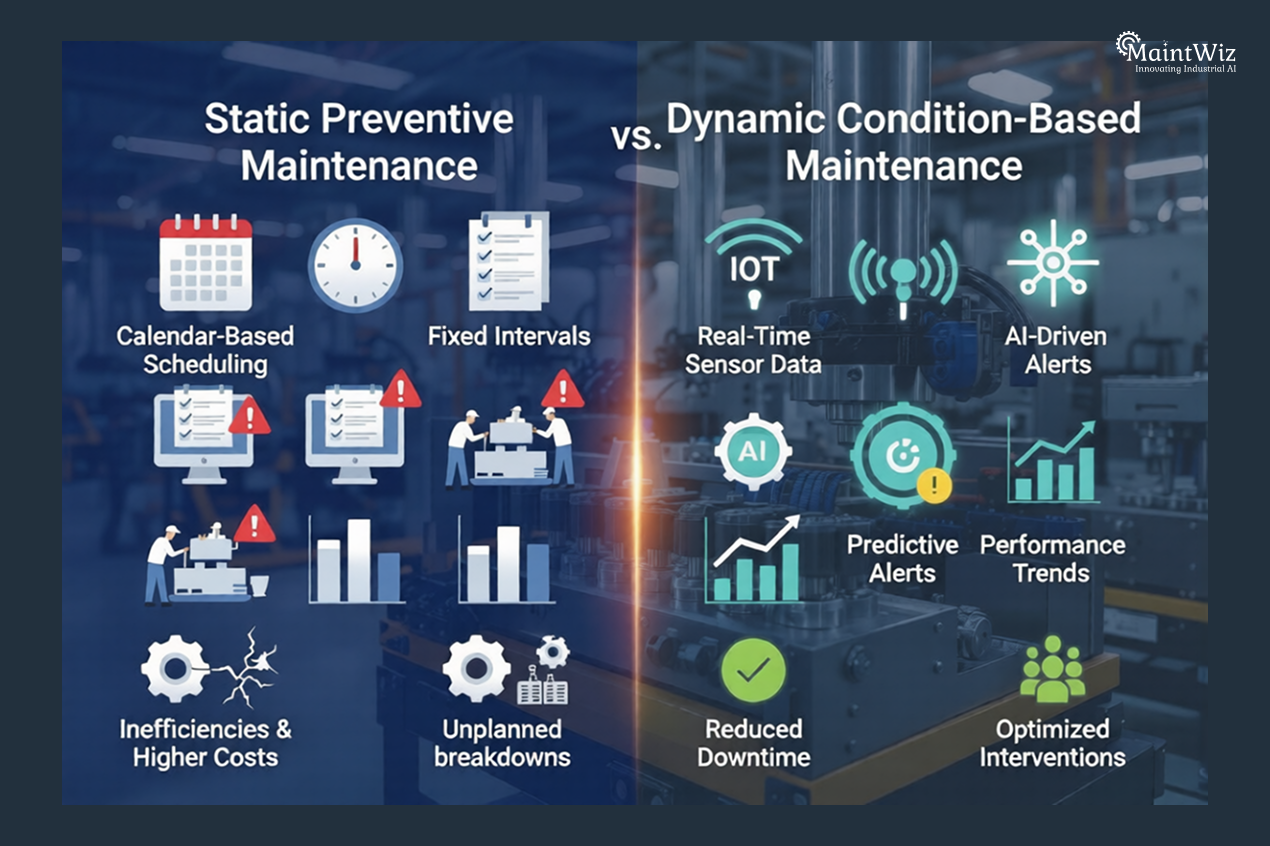
Applying a static maintenance strategy to a dynamic system inevitably creates inefficiency. This is not an execution failure. It is a strategy failure.
CMMS software, when used correctly, is designed to address this exact challenge by enabling a transition from static planning to dynamic decision-making.
From Maintenance Activity to Decision Intelligence
Most organizations use CMMS to answer a backward-looking question: What work was completed?
High-performing organizations use it to answer a forward-looking question: What should we do next—and why?
This distinction separates operational maturity from strategic capability.
At its core, CMMS aggregates asset data, maintenance history, and intervention outcomes into a centralized system. But the real value emerges when this data is used to drive decisions that improve performance.
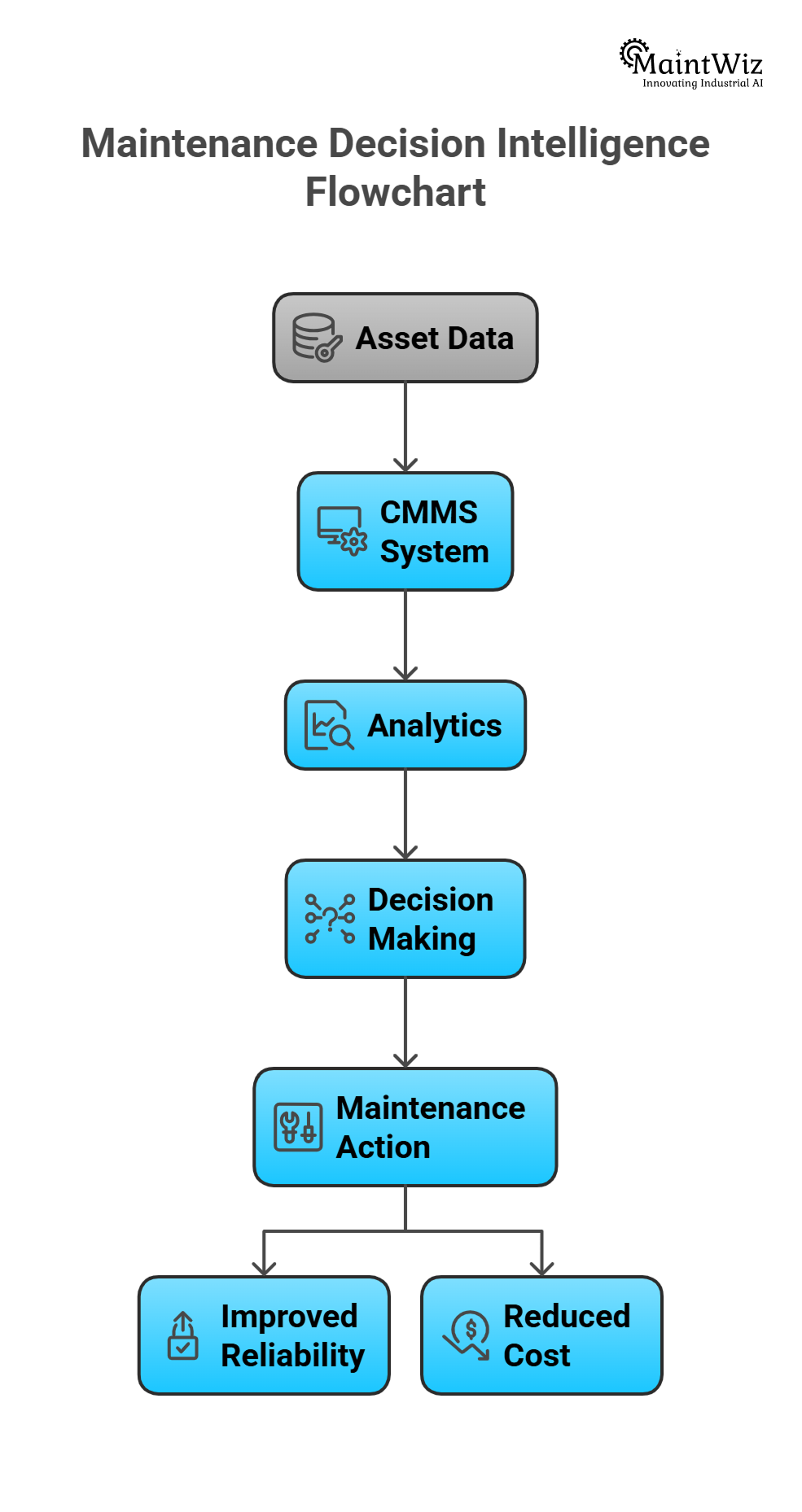
Instead of measuring success by activity metrics such as work order completion or preventive maintenance compliance, leadership teams must focus on outcome-based indicators:
- Are failures reducing over time?
- Is maintenance cost per asset improving?
- Are interventions aligned with actual risk?
CMMS becomes the foundation for answering these questions. It transforms maintenance from a function of execution into a function of continuous optimization.
Downtime Is a Symptom, Not the Core Problem
In most manufacturing organizations, downtime is treated as the primary operational challenge. It is tracked rigorously, escalated quickly, and addressed with urgency. While this focus is understandable, it is strategically incomplete.
Downtime is not the problem. It is an outcome.
It reflects deeper inefficiencies in how maintenance decisions are made—inefficiencies that often go unexamined because downtime itself is more visible than its underlying causes.
When organizations focus exclusively on reducing downtime, they often respond with increased maintenance activity. This can lead to:
- Over-maintenance of assets that do not require intervention
- Increased labor and spare parts consumption
- Planned downtime that does not deliver proportional reliability gains
The result is a paradox: downtime may decrease marginally, but total cost increases significantly.
CMMS provides the capability to move beyond this reactive approach. By linking maintenance actions to outcomes, it enables organizations to understand not just when downtime occurs, but why—and at what cost.
The strategic question shifts from:
“How do we reduce downtime?”
to:
“How do we minimize the total cost of failure and intervention?”
The Economics of Maintenance: A Leadership Perspective
Maintenance is often managed as a cost center, with a focus on controlling budgets and reducing expenses. However, this perspective overlooks a critical reality: maintenance decisions directly influence both cost and revenue.
Under-investment in maintenance leads to increased failures, higher downtime, and lost production. Over-investment leads to unnecessary interventions, inflated costs, and reduced efficiency. The objective is not to minimize maintenance spend, but to optimize it relative to reliability outcomes.
CMMS enables this optimization by providing visibility into three critical dimensions:
- Cost distribution across assets, allowing identification of high-cost equipment
- Failure patterns, enabling targeted interventions where they matter most
- Maintenance effectiveness, measuring whether actions taken are delivering results
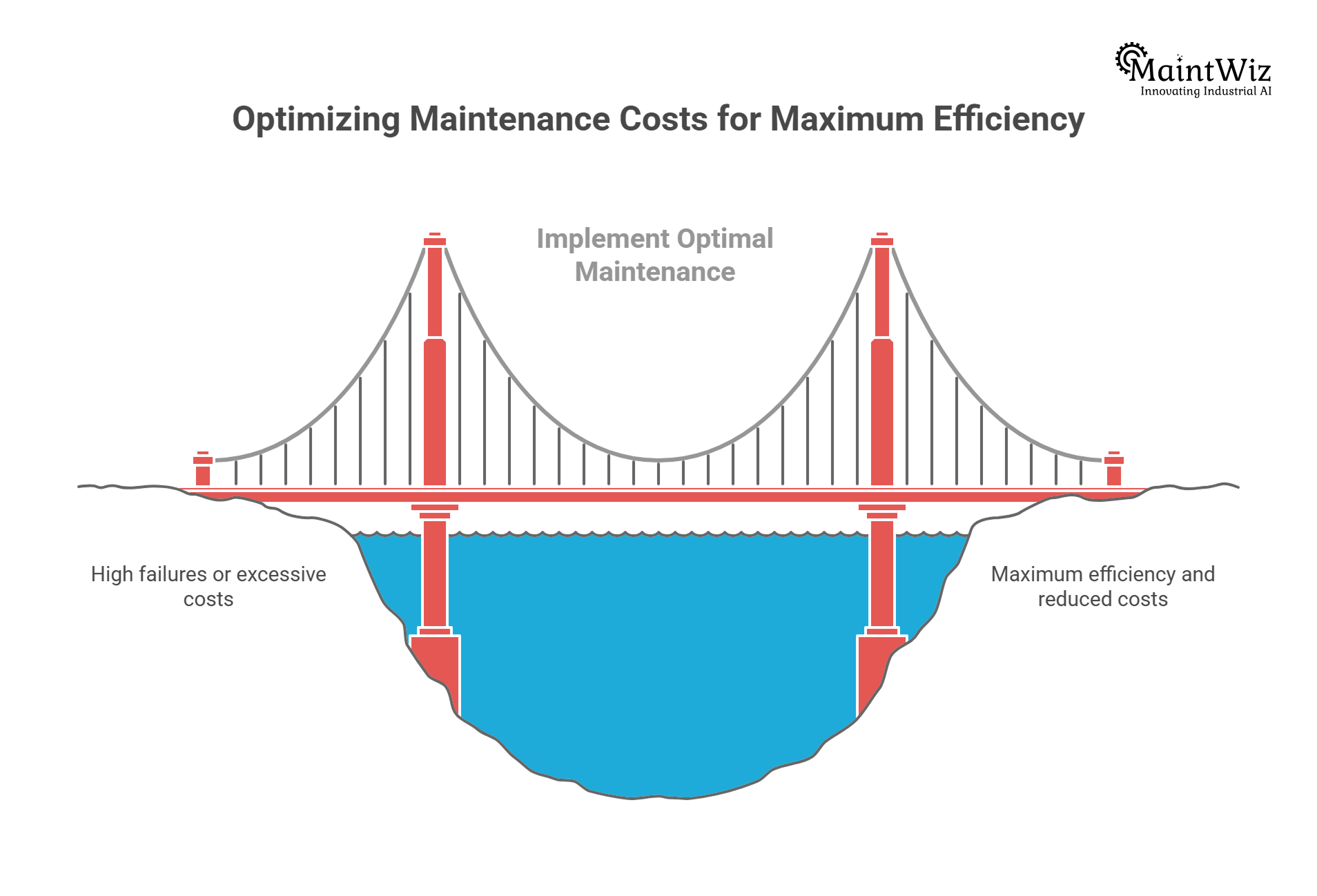
This shifts maintenance from a reactive cost function to a proactive value function.
Why CMMS Implementations Fail to Deliver Strategic Value
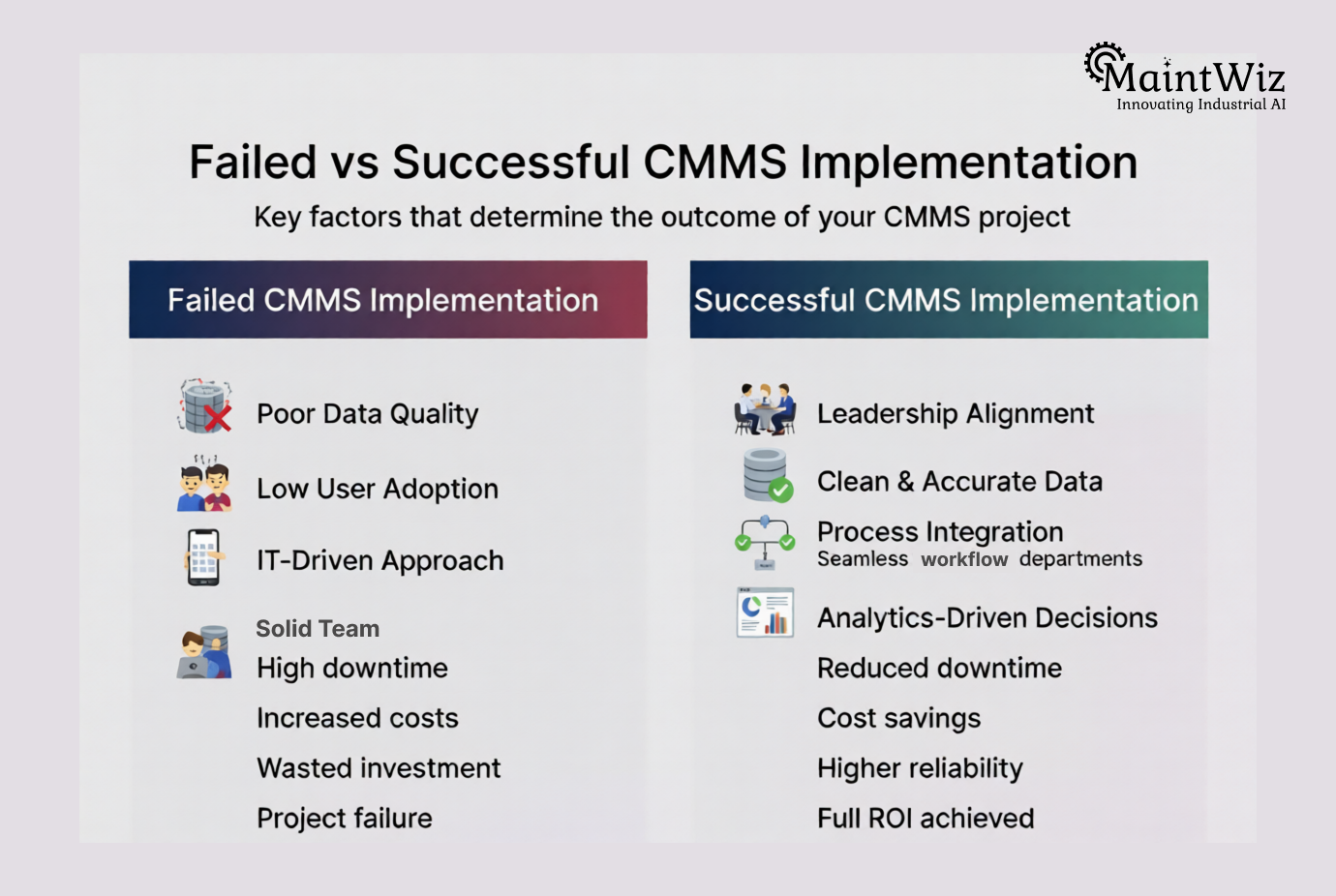
Despite widespread adoption, many CMMS implementations fail to produce meaningful business impact. The reasons are rarely technical. They are rooted in how the system is positioned and used within the organization.
A common failure pattern is treating CMMS as an IT initiative rather than an operational transformation. When implementation focuses on system configuration without addressing underlying processes, inefficiencies are simply digitized.
Another issue is the absence of clearly defined business objectives. Without specific targets for cost reduction, downtime improvement, or reliability enhancement, it becomes impossible to measure success. The system may function correctly, but its value remains.
Data quality also plays a critical role. CMMS relies on accurate and consistent data to generate insights. Inconsistent data entry, incomplete asset hierarchies, and lack of standardization undermine the system’s effectiveness.
Finally, adoption is often assumed rather than managed. A system that is not consistently used cannot deliver consistent value. Adoption requires leadership commitment, process discipline, and accountability.
Reframing CMMS as a Strategic Operating Layer
High-performing organizations approach CMMS differently. They do not see it as a tool to be implemented, but as a system to be operationalized.
They begin by aligning CMMS with business outcomes. Instead of focusing on features, they define what the system must achieve—whether it is reducing downtime, optimizing maintenance cost, or improving asset reliability.
They shift focus from activity to impact. Metrics are chosen not based on ease of measurement, but on relevance to performance. The emphasis moves from tracking tasks to evaluating outcomes.
Integration is another critical factor. CMMS is connected with condition monitoring systems, IoT sensors, and analytics platforms, enabling real-time visibility into asset performance. This integration allows for more informed and timely decisions.
Most importantly, these organizations build a culture of data-driven decision-making. Processes are standardized, data quality is enforced, and accountability is embedded into daily operations.
MaintWiz CMMS: Enabling a 90-Day Strategic Shift
MaintWiz CMMS is designed to support this transition from operational tracking to strategic control. Its value lies not in its features, but in how it enables organizations to rethink maintenance as a driver of performance.
MaintWiz provides a structured framework that allows organizations to move from fragmented maintenance practices to a cohesive, data-driven system within a short timeframe.
Within a focused 90-day execution cycle, organizations can:
- Establish a standardized asset hierarchy and data structure
- Implement disciplined maintenance workflows
- Gain visibility into asset performance and cost drivers
- Begin identifying patterns that inform better decisions
Beyond execution, MaintWiz supports advanced capabilities such as predictive maintenance integration, real-time analytics, and performance dashboards. These capabilities enable organizations to move beyond reactive and preventive models toward a more intelligent, condition-based approach.
The outcome is not just improved maintenance efficiency, but a fundamental shift in how maintenance contributes to business performance.
The Future of CMMS: From System of Record to System of Intelligence
The role of CMMS is evolving rapidly. As manufacturing embraces digital transformation, CMMS is becoming a central platform for integrating data, processes, and decisions.
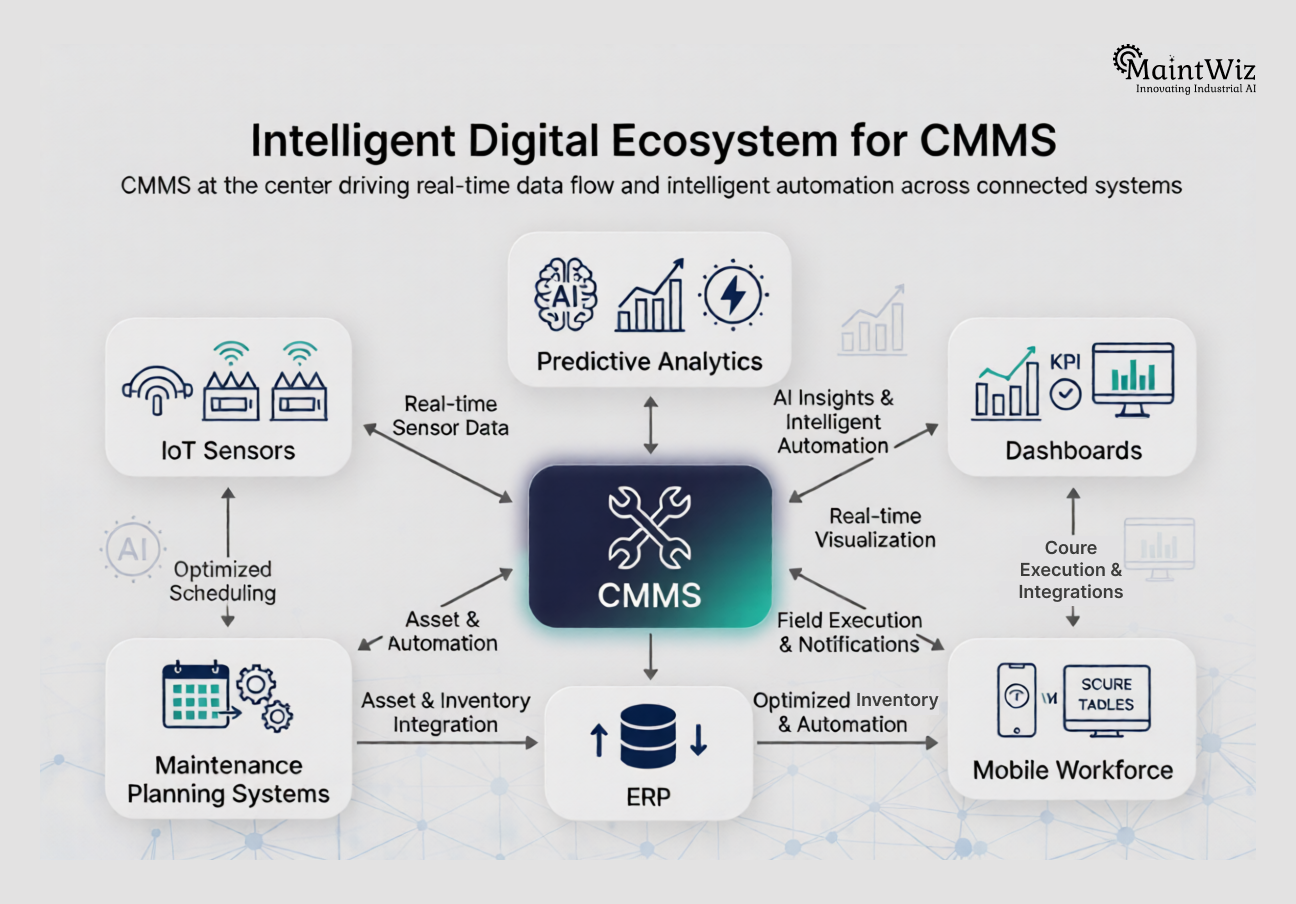
Emerging capabilities include:
- Integration with IoT sensors for real-time condition monitoring
- Use of artificial intelligence to predict failures and recommend actions
- Automation of work order generation based on asset behavior
- Advanced analytics that provide prescriptive insights
This evolution is transforming maintenance from a reactive function into a proactive and eventually autonomous system.
Organizations that embrace this shift will not only improve operational efficiency but also gain a strategic advantage in how they manage assets and resources.
The Leadership Imperative: From System Adoption to Strategic Utilization
For leadership teams, the question is no longer whether to adopt CMMS. The question is whether the system is being used to its full potential.
This requires a shift in perspective. CMMS must be viewed not as a support system, but as a strategic enabler of performance. It must be integrated into broader business objectives, aligned with financial outcomes, and supported by organizational discipline.
Leaders must evaluate whether their CMMS is simply recording maintenance activity or actively guiding maintenance decisions. They must assess whether the system is providing insights that influence how resources are allocated and risks are managed.
The answers to these questions will determine whether CMMS remains an operational necessity or becomes a source of competitive advantage.
Conclusion: From Maintenance Management to Performance Leadership
CMMS software for manufacturing industry environments represents far more than a technological upgrade. It is a shift in how organizations approach maintenance, decision-making, and performance optimization.
When used at a basic level, CMMS delivers incremental improvements in efficiency. When used strategically, it transforms maintenance into a driver of cost optimization, reliability, and operational excellence.
The difference lies not in the system itself, but in how it is understood and applied.
Organizations that continue to treat CMMS as a tracking tool will remain constrained by their existing limitations. Those that embrace it as a strategic control system will unlock new levels of performance.
Ultimately, manufacturing excellence is no longer defined by how efficiently products are produced. It is defined by how intelligently the systems that enable production are managed.
And CMMS sits at the center of that intelligence.


Jai Balachandran is an industry expert with a proven track record in driving digital transformation and Industry 4.0 technologies. With a rich background in asset management, plant maintenance, connected systems, TPM and reliability initiatives, he brings unparalleled insight and delivery excellence to Plant Operations.
Company
Download App