

Work Permit Management During Shutdowns: Safety and
Efficiency
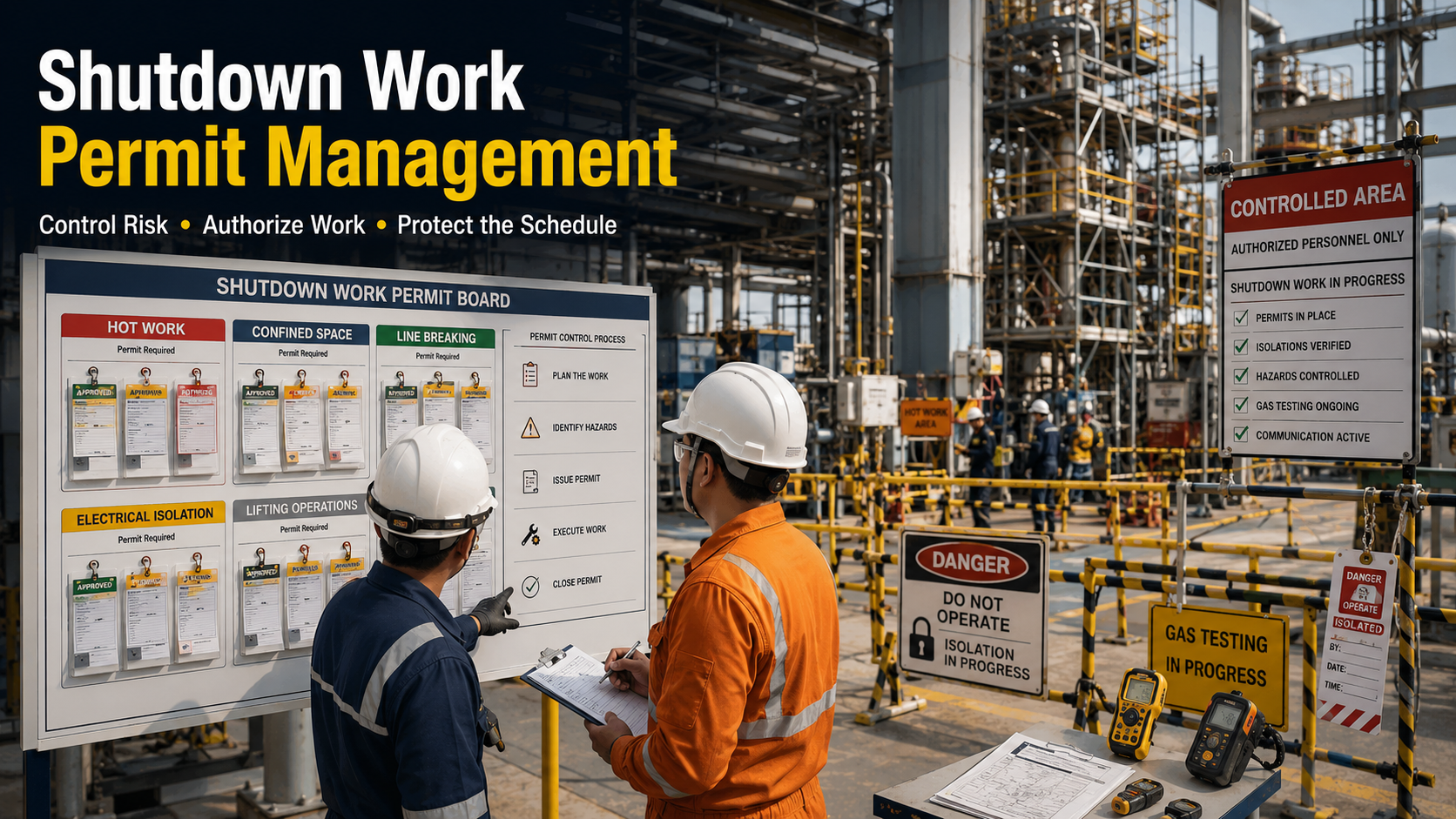
One uncontrolled task can stop a shutdown. One missed permit can stop a career. During plant shutdowns, thousands of high-risk activities happen simultaneously — confined space entries, hot work, line breaking, electrical isolation, lifting operations. The only thing standing between safe execution and catastrophic failure is a disciplined shutdown work permits system that is fast, foolproof, and fully visible.
Shutdowns compress months of maintenance into days. Speed is critical. So is zero harm. The challenge is not choosing between safety and productivity — it is designing a permit to work shutdown system that delivers both.
This article explores how modern, workflow-driven permit systems protect people, prevent incidents, and accelerate shutdown performance across refineries, power plants, chemical complexes, heavy manufacturing, utilities, cement, steel, mining, and process industries.
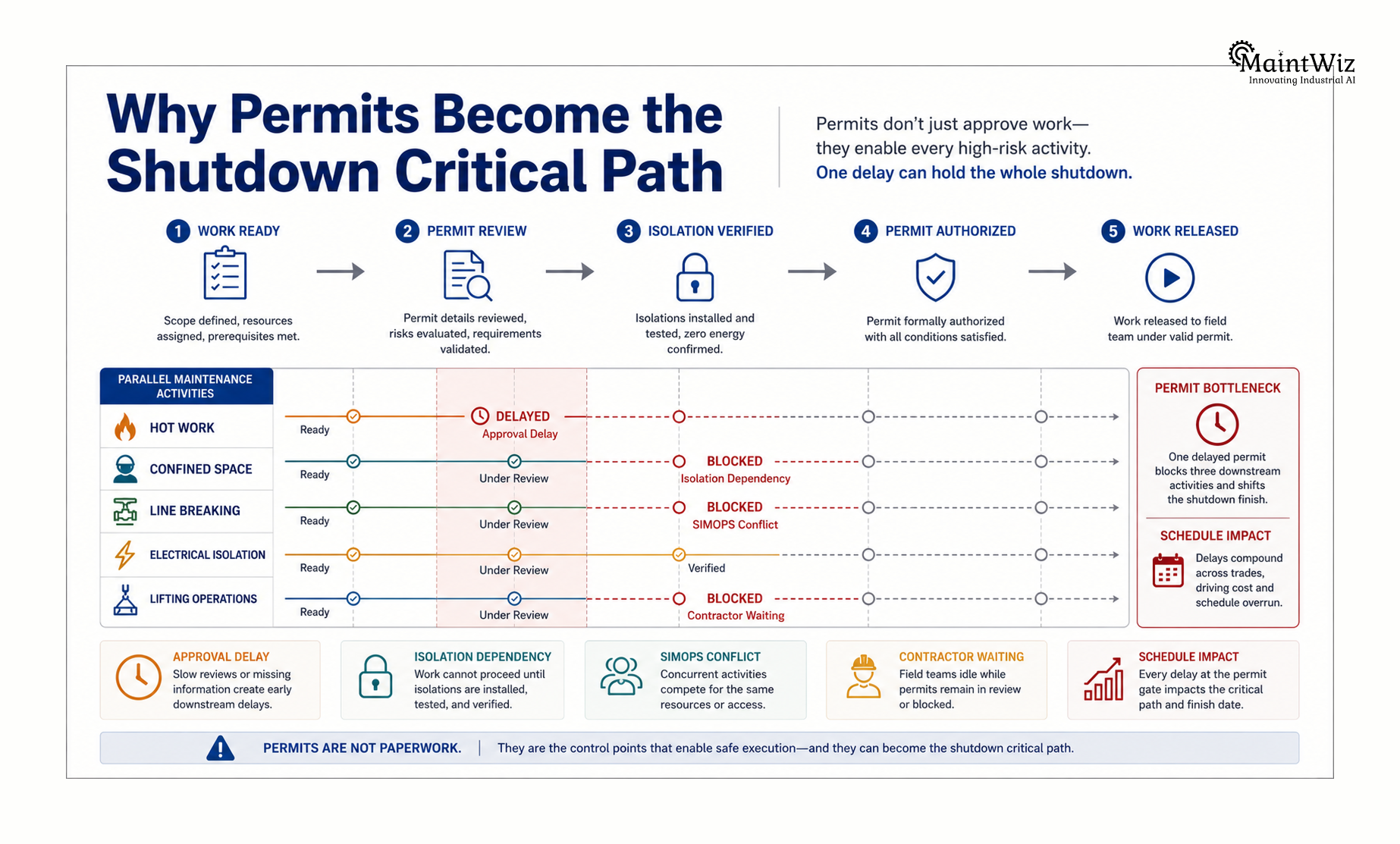
Why Shutdown Work Permits Become the Critical Path
In routine operations, permits are important. During shutdowns, they are mission-critical. Work density increases 10–50x. Risk levels multiply. Coordination complexity explodes.
- High-Risk Shutdown Activities: Simultaneous hot work, vessel entry, line opening, and electrical isolation create layered hazards that require tightly controlled permit sequencing.
- Compressed Maintenance Windows: Shutdown timelines leave no buffer for permit delays, making streamlined approval workflows essential for schedule adherence.
- Multi-Contractor Environments: Hundreds of external workers unfamiliar with plant hazards require structured, standardized permit processes to ensure consistent safety compliance.
- Regulatory and Insurance Exposure: Incident investigations often focus first on permit records, making accurate digital traceability critical for legal defensibility.
- Interdependent Task Execution: One delayed or improperly cleared permit can block multiple parallel activities, directly affecting shutdown critical path milestones.
Core Objectives of a Permit to Work Shutdown System
A shutdown permit system must do more than authorize work. It must coordinate risk, control energy, and enable safe speed.
- Hazard-Controlled Work Authorization: Ensures every task starts only after risk identification, isolation verification, and protective measures are validated by responsible authorities.
- Real-Time Work Visibility: Provides control rooms and shutdown managers instant visibility into who is working where, under what risks, and under which permits.
- Energy Isolation Integrity: Links permits to lockout-tagout and isolation certificates, preventing premature energization and protecting workers inside equipment or systems.
- Simultaneous Operations (SIMOPS) Control: Prevents incompatible tasks from occurring in proximity, reducing cross-risk interactions common during shutdown congestion.
- Audit-Ready Compliance Records: Creates time-stamped, tamper-resistant permit histories required for statutory audits, internal reviews, and incident investigations.
Types of Shutdown Work Permits and Their Risk Profiles
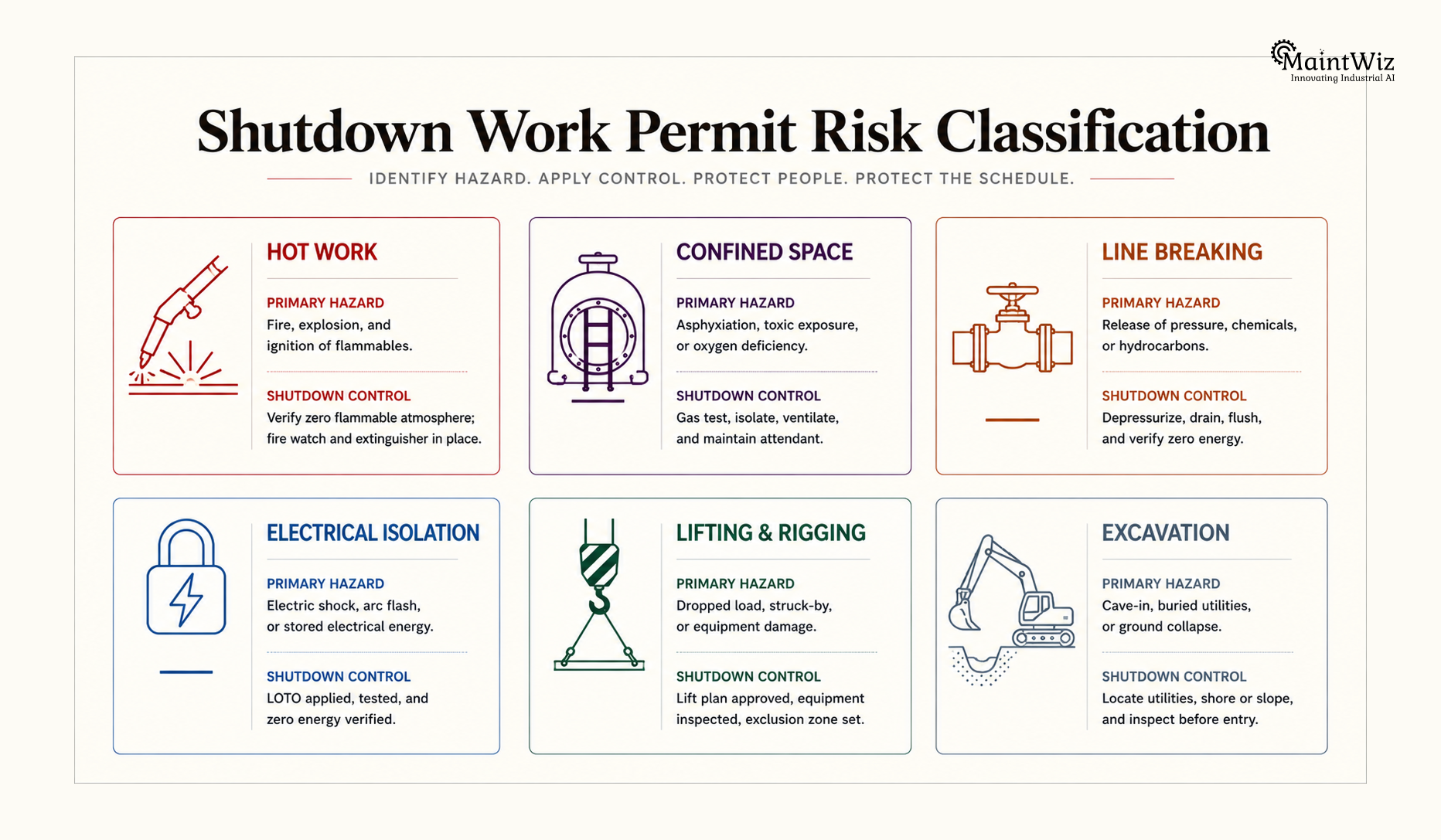
Different shutdown tasks require specialized permit controls. A one-size-fits-all permit form creates blind spots and risk escalation.
| Permit Type | Primary Risk | Shutdown-Specific Concern |
|---|---|---|
| Hot Work Permit | Fire and explosion | Residual hydrocarbons and temporary ventilation systems increase ignition risk during turnaround cleaning activities |
| Confined Space Permit | Toxic exposure, oxygen deficiency | Vessel entries peak during shutdowns, increasing atmospheric monitoring workload and rescue readiness requirements |
| Line Breaking Permit | Chemical release, pressure exposure | Multiple simultaneous blinds and breaks increase chances of misidentification or incomplete depressurization |
| Electrical Isolation Permit | Electrocution, arc flash | Temporary power systems and contractor tools complicate isolation verification and re-energization sequencing |
| Lifting and Rigging Permit | Dropped loads, structural impact | Crane congestion during equipment replacement increases coordination complexity and lift path conflicts |
| Excavation Permit | Underground utility strikes | Shutdown civil work exposes buried cables and pipelines often undocumented in legacy drawings |
Common Shutdown Permit Failures That Lead to Incidents
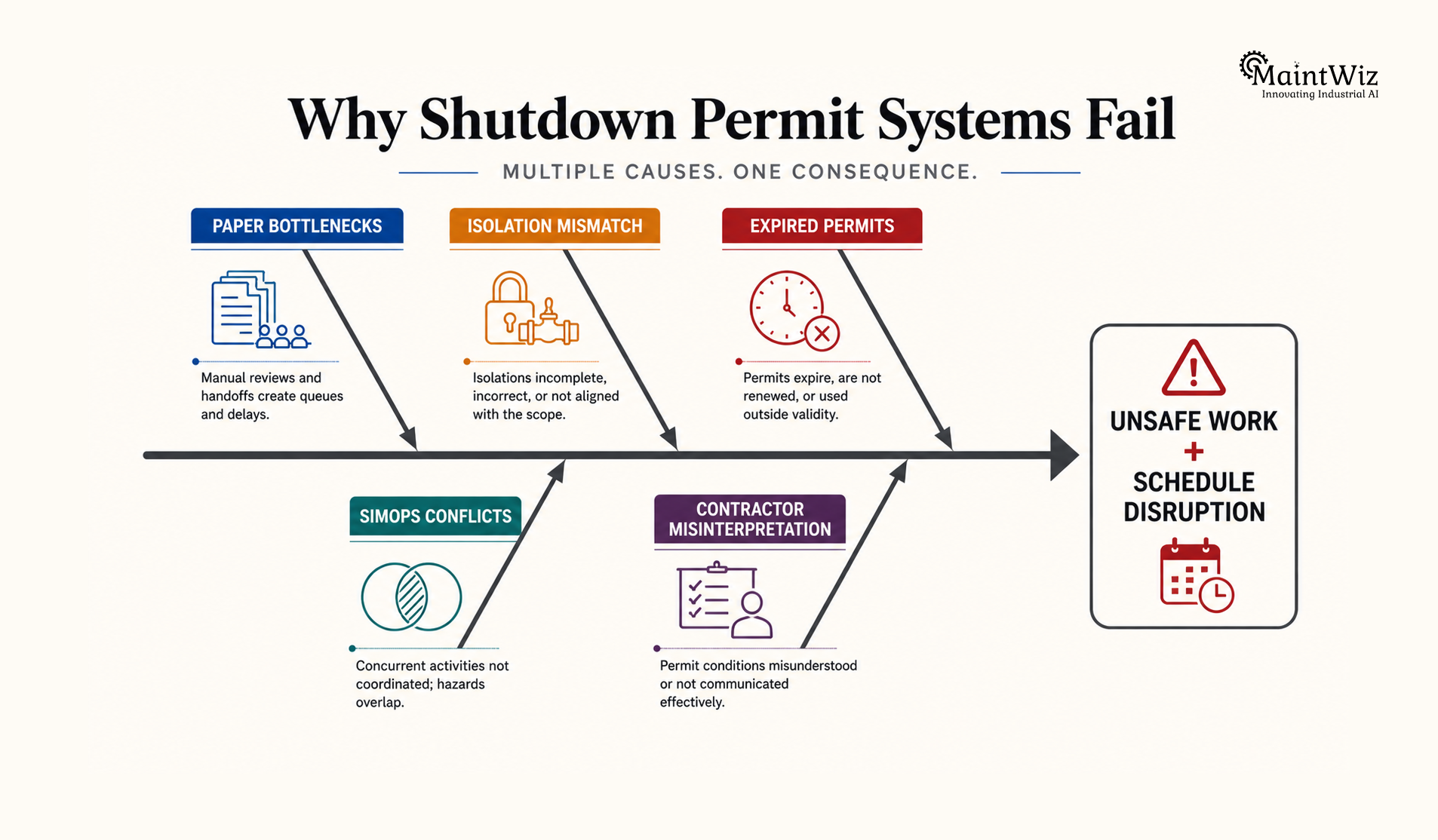
Most shutdown incidents are not due to unknown hazards — they result from permit process breakdowns under schedule pressure.
- Paper-Based Permit Bottlenecks: Manual approvals cause queues, rushed reviews, and incomplete hazard assessments when supervisors are overloaded during peak shutdown periods.
- Isolation Mismatch Errors: Permits issued without verifying updated isolation status lead to live energy exposure when lockout-tagout records are outdated.
- Expired Permit Overruns: Work continuing after permit validity lapses bypasses atmospheric testing, gas monitoring, or safety watch requirements.
- SIMOPS Conflict Oversight: Lack of centralized visibility allows incompatible tasks like hot work near open lines to occur simultaneously.
- Contractor Permit Misinterpretation: Inconsistent formats across departments create confusion for contractors unfamiliar with site-specific permit terminology and controls.
Designing an Efficient Shutdown Work Permit Workflow
Speed in shutdown permits comes from structure, not shortcuts. The goal is rapid but controlled authorization.
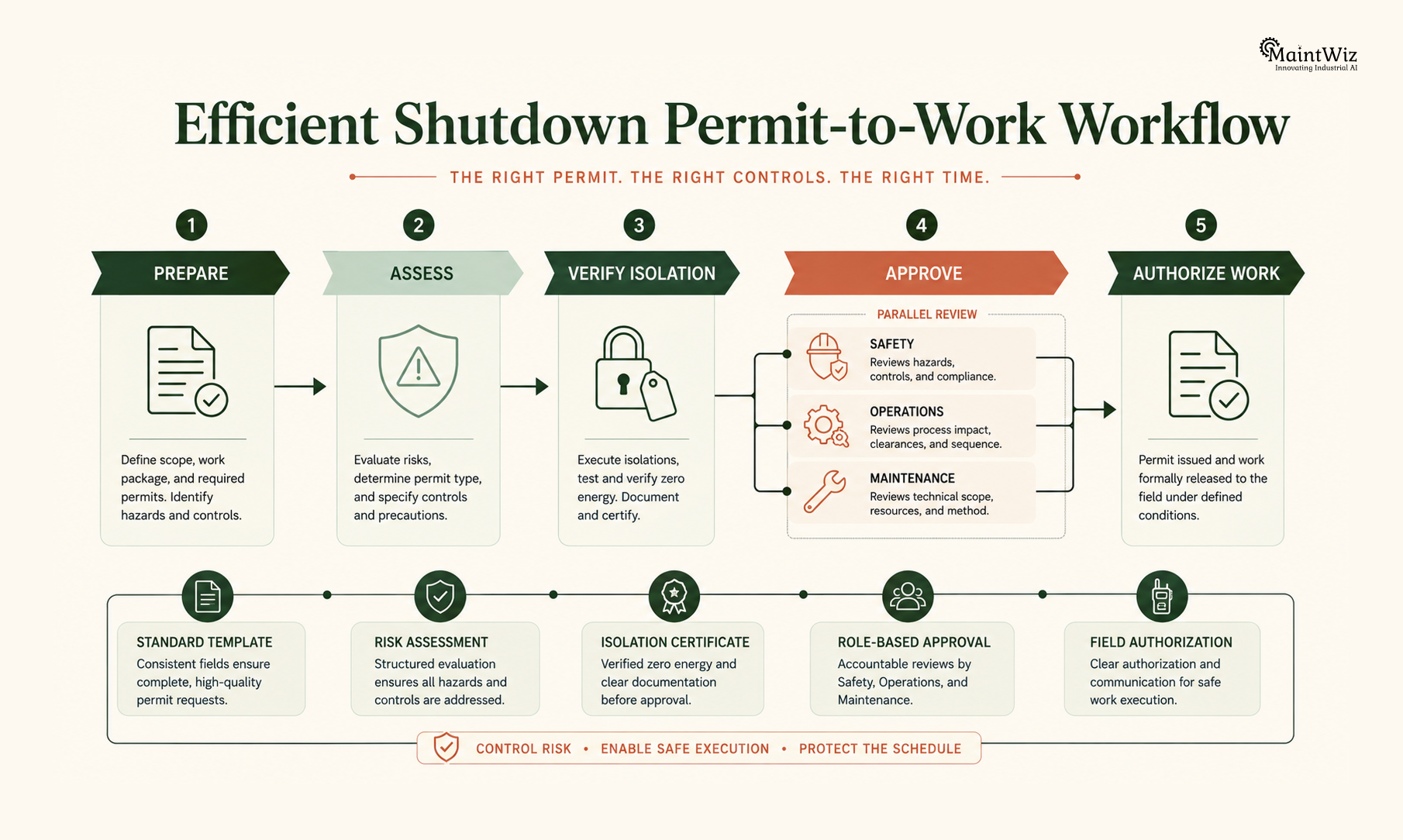
- Pre-Approved Permit Templates: Standardized digital templates reduce drafting time and ensure mandatory hazard controls are never missed during permit preparation.
- Role-Based Approval Routing: Automated workflows send permits to the correct approvers instantly, avoiding delays caused by physical document handovers.
- Isolation Certificate Integration: Linking permits directly with isolation records ensures energy control is validated before authorization is granted.
- Parallel Review Capability: Multiple stakeholders review permits simultaneously instead of sequentially, compressing approval time without compromising scrutiny.
- Mobile Field Authorization: Supervisors approve or suspend permits on mobile devices, preventing work stoppage while waiting for control room access.
Safety Protocol Integration Within Permit to Work Shutdown Systems
A permit is only effective when it enforces field-level safety behaviors.
- Gas Testing Verification Fields: Mandatory atmospheric test entries ensure confined space and hot work permits cannot be activated without safe readings recorded.
- PPE Compliance Checklists: Embedded PPE requirements align protective gear with specific task hazards, reducing reliance on memory or verbal instructions.
- Tool and Equipment Validation: Permit-linked tool inspections ensure certified, explosion-proof, or calibrated equipment is used in hazardous environments.
- Rescue and Emergency Planning: Confined space permits include rescue readiness confirmation, preventing entries without standby personnel and recovery equipment.
- Dynamic Risk Reassessment Triggers: Workflow prompts revalidation when job scope changes, ensuring new hazards are evaluated before continuation.
Managing Simultaneous Operations (SIMOPS) During Shutdowns
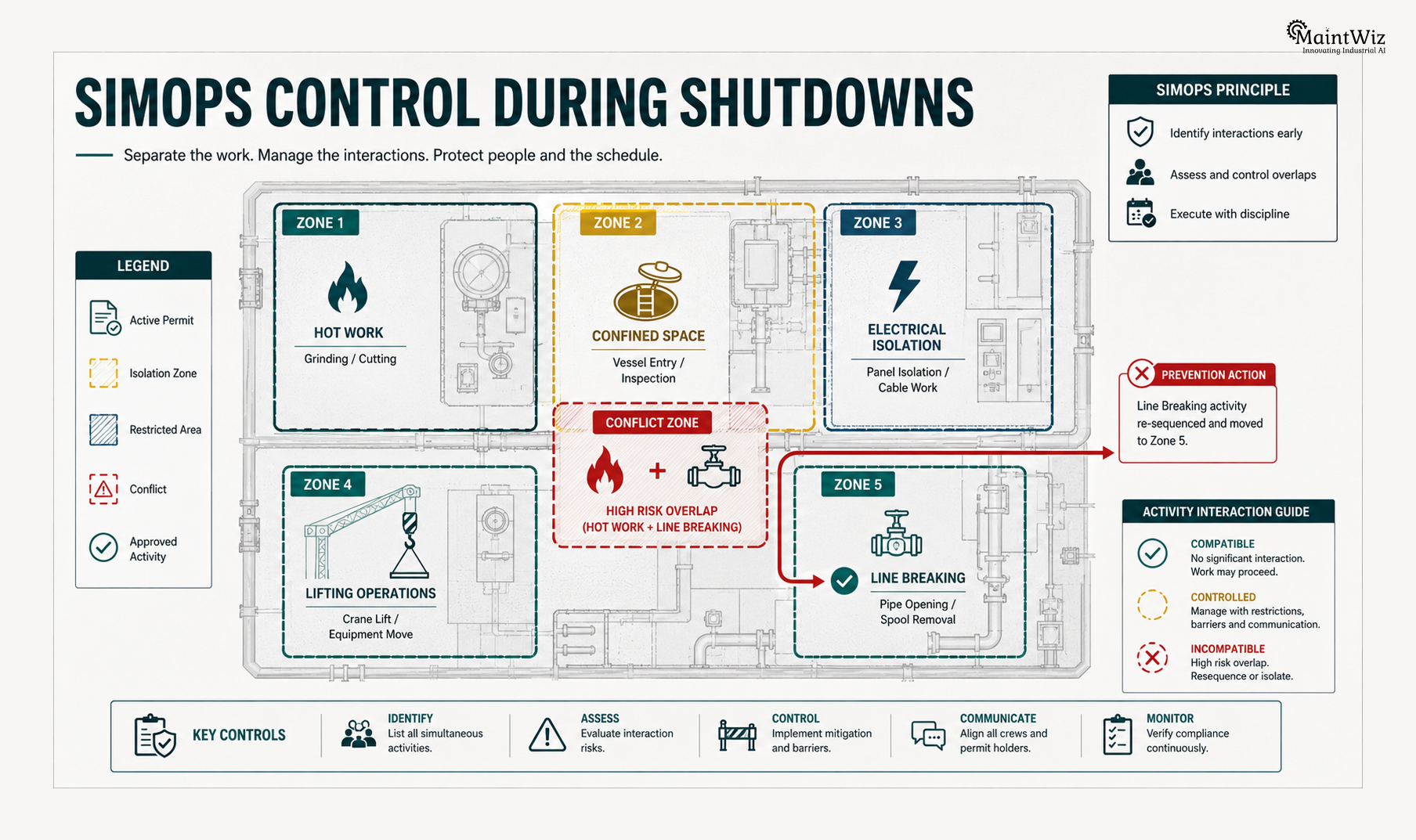
Shutdowns turn plants into dense work zones. SIMOPS control is where permit systems prove their value.
- Location-Based Permit Mapping: Visual plant maps display active permits by area, preventing incompatible tasks from being authorized in overlapping zones.
- Conflict Detection Rules: System rules block hot work permits near open hydrocarbon systems, reducing reliance on manual cross-checks.
- Centralized Permit Control Room: A single visibility hub allows shutdown managers to coordinate high-risk activities across departments in real time.
- Shift Handover Continuity: Digital permit logs prevent information loss between shifts, ensuring ongoing hazards are communicated accurately.
- Task Sequencing Governance: Permit dependencies ensure upstream isolation or cleaning tasks are completed before downstream intrusive work begins.
Digital vs Paper Shutdown Work Permits
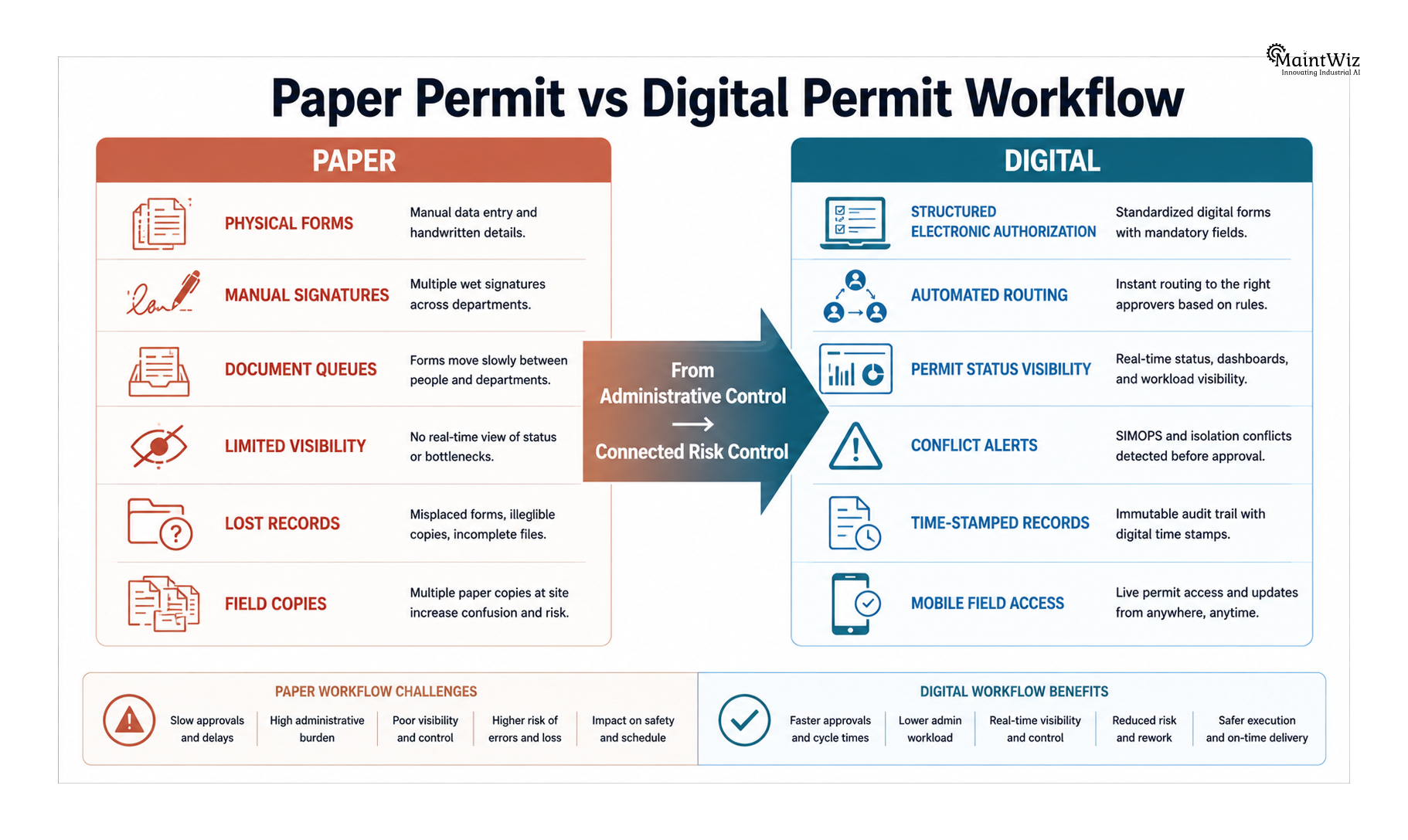
The scale of modern shutdowns makes paper permits operationally risky.
| Factor | Paper Permits | Digital Permit Systems |
|---|---|---|
| Approval Speed | Manual movement causes delays | Instant routing reduces waiting time |
| Visibility | No central tracking | Real-time dashboard of all permits |
| SIMOPS Control | Dependent on human memory | Automated conflict detection alerts |
| Audit Traceability | Prone to loss or damage | Time-stamped, secure digital history |
| Field Accessibility | Requires physical copies | Mobile access at job location |
Industry-Specific Shutdown Permit Challenges
- Refinery Turnarounds: Residual hydrocarbons and catalyst handling increase fire, toxic exposure, and nitrogen purge risks requiring layered permit controls.
- Power Plant Overhauls: Boiler entries, turbine lifting, and high-voltage isolation create simultaneous confined space and electrical hazard management complexity.
- Chemical Plant Shutdowns: Reactive chemical residues require enhanced line-breaking permits and specialized gas monitoring protocols.
- Steel and Cement Plants: Heavy lifting and refractory work combine thermal hazards with structural risks demanding coordinated lifting and hot work permits.
- Mining and Processing Facilities: Conveyor isolation and confined chute entries increase mechanical and engulfment hazards during shutdown maintenance.
Best Practices for World-Class Shutdown Permit Management
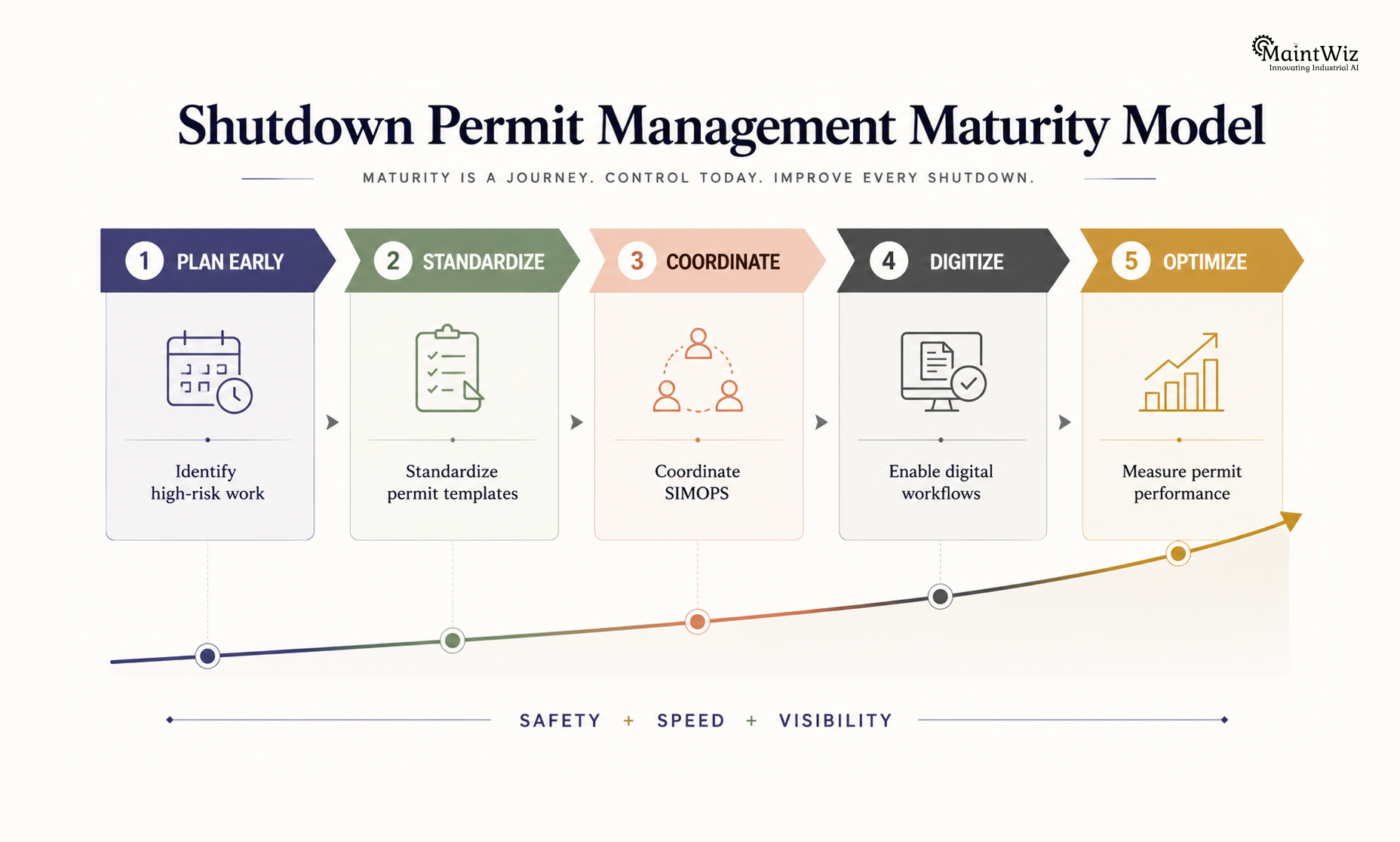
- Permit Planning in Shutdown Scope Development: Identify high-risk jobs early and predefine permit requirements to avoid last-minute safety planning under time pressure.
- Dedicated Permit Control Teams: Assign trained coordinators to manage permit flow, freeing supervisors to focus on field execution and quality oversight.
- Daily Permit Review Meetings: Cross-functional coordination meetings align maintenance, operations, and safety teams on next-day high-risk work approvals.
- Contractor Permit Training Programs: Mandatory induction ensures all contractors understand site-specific shutdown permit expectations before mobilization.
- Permit Performance Metrics Tracking: Monitor approval turnaround time, rejections, and permit violations to continuously improve workflow efficiency.
From Safety Compliance to Shutdown Performance Advantage
Leading organizations treat shutdown work permits as a performance lever, not a paperwork obligation.
- Reduced Incident-Driven Delays: Strong permit discipline minimizes accidents that can halt entire shutdowns and trigger regulatory investigations.
- Faster Work Authorization Cycles: Streamlined workflows reduce idle labor hours, directly improving shutdown schedule performance.
- Improved Contractor Productivity: Clear, predictable permit processes prevent crews from waiting unproductively for approvals.
- Lower Insurance and Liability Exposure: Demonstrable safety governance strengthens insurer confidence and reduces post-incident legal vulnerability.
- Enhanced STO Reputation: Reliable shutdown execution builds organizational credibility, influencing future capital project approvals and operational trust.
How MaintWiz CMMS Strengthens Shutdown Work Permit Management
Shutdown permit excellence requires more than standalone forms. It demands integration with maintenance planning, asset isolation, workforce coordination, and real-time execution visibility. This is where MaintWiz CMMS provides measurable value.
- Integrated Maintenance and Permit Workflows: Work orders, shutdown tasks, and permits connect within one system, ensuring safety authorization aligns with planned maintenance activities.
- Configurable Digital Permit Forms: Organizations can standardize shutdown work permits while tailoring hazard controls for industry-specific and site-specific risk profiles.
- Isolation and Asset Context Visibility: Permit approvals can reference equipment history and isolation status, reducing risk of energy control errors.
- Mobile-Enabled Field Execution: Supervisors and safety officers review, approve, or suspend permits directly from the field, accelerating controlled decision-making.
- Centralized Shutdown Dashboards: Real-time visibility into active permits, high-risk jobs, and work locations supports SIMOPS control and executive oversight.
- Audit-Ready Digital Records: MaintWiz maintains structured, time-stamped permit histories that support compliance reviews and incident investigations.
By embedding permit to work shutdown processes into the broader maintenance and asset management ecosystem, MaintWiz helps plants execute safer, faster, and more predictable shutdowns.
Ready to transform shutdown safety and performance? Discover how MaintWiz can modernize your shutdown work permit management and turn compliance into a competitive advantage.

Company
Download App