

Shutdown Material Management: Inventory and Logistics
Unlock Shutdown Excellence with Strategic Material Planning & Logistics — In heavy industries, where every hour of a planned outage can cost millions, mastery of shutdown material management and shutdown inventory planning is not optional — it’s a core competitive advantage. World-class shutdowns deliver safety, minimize downtime, and ensure materials and spares are exactly where and when needed.

This comprehensive guide dives into end-to-end shutdown material planning — from inventory forecasting and logistics orchestration to supply continuity assurance — with enterprise best practices and how advanced CMMS capabilities like MaintWiz enable predictable, optimized outcomes.
Why Shutdown Material Management Matters
In STO (Shutdown–Turnaround–Outage) projects across refining, petrochemicals, power generation, heavy manufacturing, and mining, material management is a critical risk vector. Poor planning causes delays, cost overruns, and safety exposures. Strategic shutdown inventory planning reduces risk while boosting confidence of execution teams and leadership stakeholders.
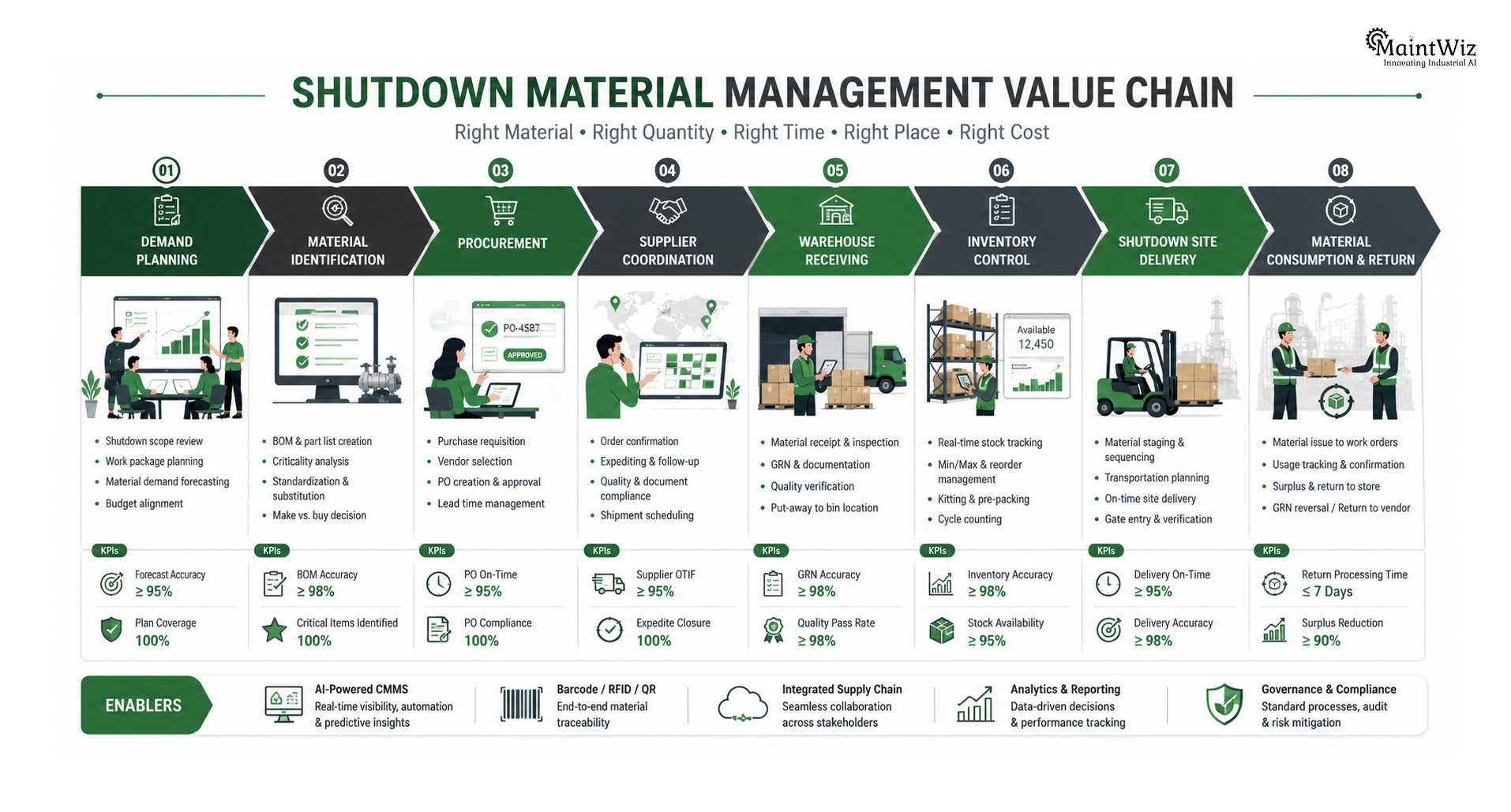
Business Impact of Proactive Shutdown Material Management
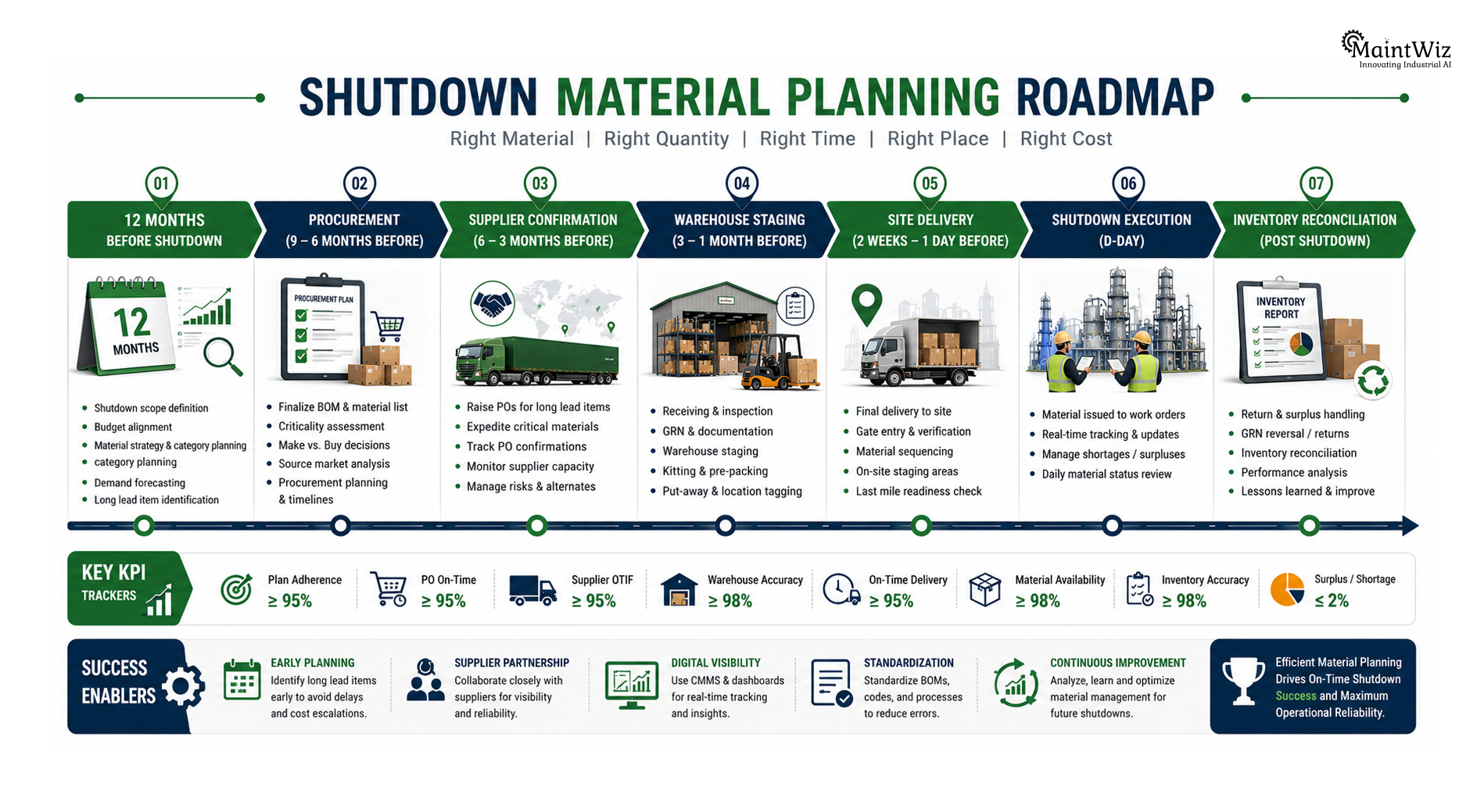
- Cost Avoidance Through Precision Forecasting – Reduces rush procurement costs by aligning inventory with predictive demand patterns at scale.
- Downtime Reduction via Logistics Synchronization – Ensures critical spares and consumables align with work schedule milestones.
- Safety & Compliance Assurance – Material readiness supports procedural adherence and reduces shortcut behaviors.
- Stakeholder Confidence & Predictability – Transparent logistics planning increases stakeholder trust and execution reliability.
1. Demand Forecasting & Inventory Readiness
Accurate shutdown inventory planning starts with demand visibility — understanding what materials will be needed, in what quantities, and when. This goes beyond listing parts to orchestrating readiness against technical scope and work sequence.
Key Elements of Demand Forecasting
- Asset-centric BOM Accuracy – Ensure build-of-materials are complete and reflect actual installation conditions, avoiding phantom stock issues.
- Historical Failure Data Integration – Use past shutdown data to refine demand trends for consumables and spares.
- Criticality Weighted Demand – Prioritize materials correlated to high-impact assets to avoid schedule blockers.
- Forecast Buffer Strategy – Intelligent safety stock buffers reduce stockouts while minimizing excess capital lock-up.
- Consumption Profiling – Predict consumption across work crews using task durations and execution frequency.
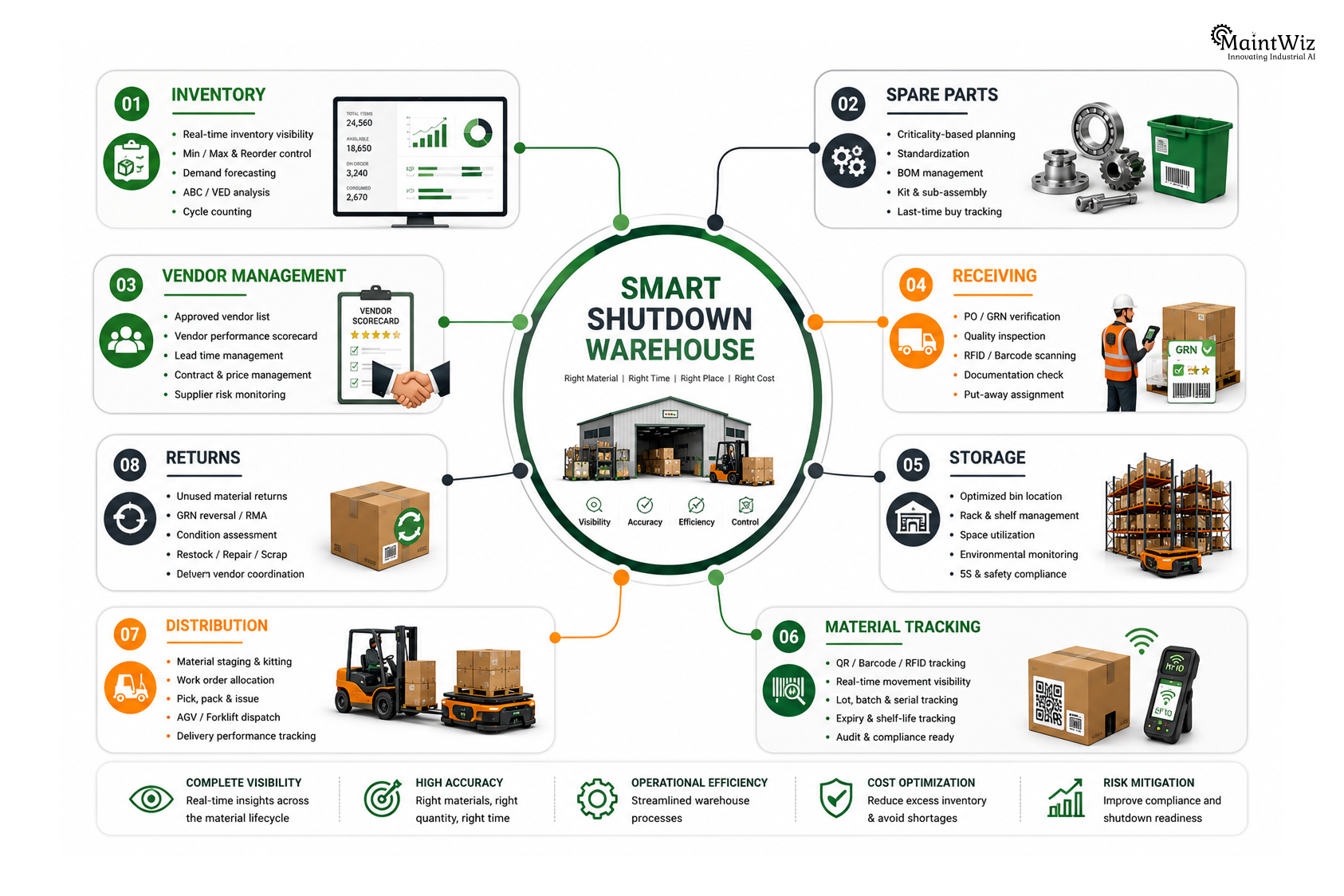
Forecasting with high confidence requires detailed asset and work plan data alongside real-time historical patterns.
2. Inventory Classification & Optimization
All parts are not equal. Effective shutdown inventory planning uses classification to drive procurement and staging strategies that differentiate between mission-critical spares and low-risk components.
Inventory Segmentation Best Practices
- Critical vs Non-Critical Tagging – Assign risk profiles to parts based on impact on shutdown timeline.
- ABC-XYZ Prioritization – A (high value/critical), B (moderate risk), C (low risk) classification drives stocking decisions.
- Lifecycle Cost Visibility – Track total cost of ownership including carrying cost, lead time, and usage frequency.
- Obsolescence Monitoring – Proactively retire or replace components nearing end-of-support status.
- Real-Time Stock Visibility – Avoid blind spots that lead to surprise shortages.
3. Logistics Orchestration & Staging
Logistics is the translation layer between inventory planning and physical readiness. It ensures parts are delivered to staging areas on time, materials are properly labeled, and job packs reflect precise usage sequences.
Critical Logistics Functions
- Job Pack Sequencing – Align staging of parts with scheduled work sequence to reduce handling waste.
- Staging Zone Optimization – Minimize internal transport delays by staging close to execution zones.
- Transportation Coordination – Sync internal movers, external carriers, and warehouse teams.
- Barcode/RFID Material Tracking – Track movements to consumption with high accuracy.
- Replenishment Routing – Dynamic replanning to respond to consumption variances.
4. Supplier Collaboration & Sourcing Strategy
A shutdown’s success hinges on reliable sourcing and vendor alignment — particularly for long-lead, critical spares. Material delays from external partners are a leading cause of shutdown overruns.
Best Practices for Supplier Coordination
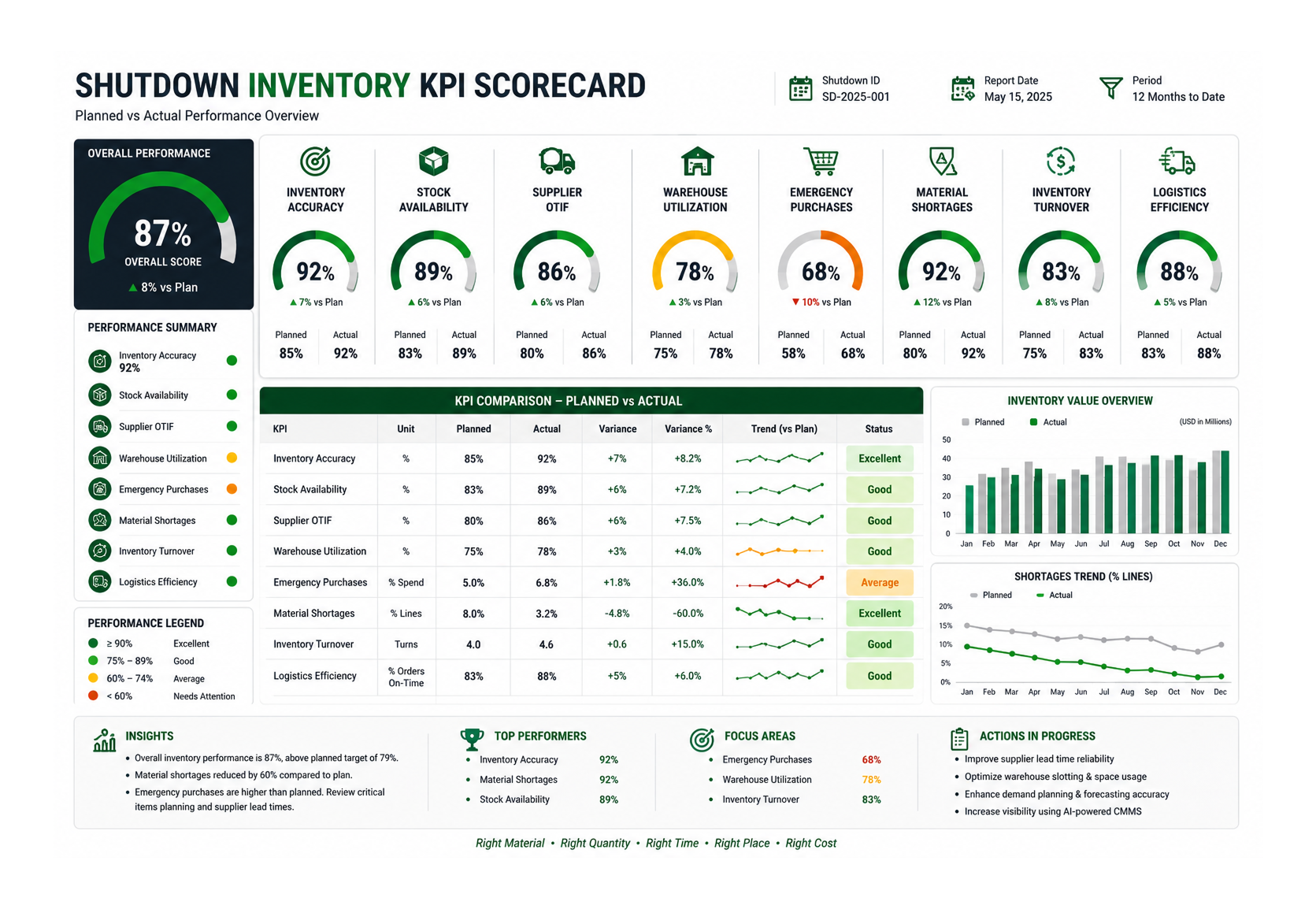
- Supplier Lead Time Modeling – Incorporate delivery variability into project risk planning.
- Vendor Performance KPIs – Track on-time and complete delivery rates.
- Contractual SLAs for STO – Define penalties and incentives tied to shutdown delivery milestones.
- Collaborative Forecast Sharing – Share anticipated demand with key suppliers to improve responsiveness.
- Vendor Managed Inventory (VMI) – Partner with key suppliers for localized stock positions.
5. Risk Management & Contingency Planning
Shutdown inventory planning must account for risk — not just demand. Proactive risk analysis and mitigation ensure material shortfalls do not derail execution.
Risk Mitigation Strategies
- Failure Mode Criticality Assessment – Predict parts most likely to fail and require replacement.
- Redundancy Planning – Pre-stage secondary options for high-risk parts.
- Emergency Stock Release Protocols – Clear authority and process for rapid stock allocation.
- Crisis Logistics Frameworks – Rapid response routing and ad hoc transport planning.
- Real-Time Variance Alerts – Detect deviations from planned consumption immediately.
6. Technology Empowerment: CMMS, Analytics & Automation
Modern shutdown inventory planning is data-driven. CMMS platforms with AI, real-time analytics, and workflow automation turn planning from guesswork into execution certainty.
Enabling Capabilities for High-Performance Shutdowns
- Integrated Inventory & Work Order Links – Connect materials to tasks for demand visibility across execution plans.
- AI-Assisted Consumption Forecasting – Reduce forecast errors using pattern recognition from historical shutdowns.
- Mobile Scanning & Tracking – Real-time updates from field execution reduce blind spots.
- Automated Reorder Alerts – Prevent stockouts with threshold-based triggers.
- Cross-Team Collaboration Dashboards – Unified views for planners, logistics, and execution teams.
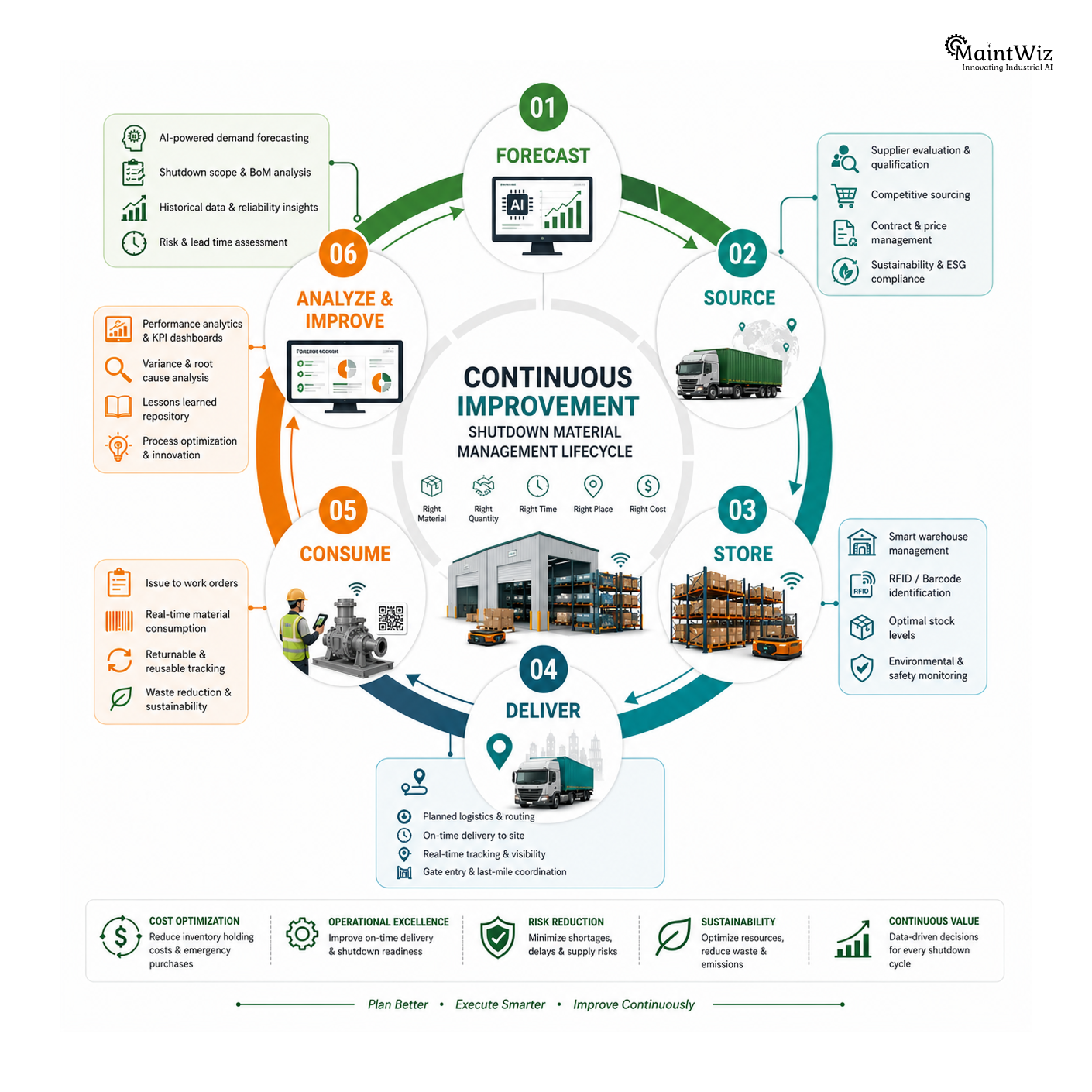
Advanced CMMS capabilities, like those in MaintWiz, integrate inventory management with planning and execution workflows, ensuring that materials flow according to plan rather than reacting to field surprises.
7. Common Failures in Shutdown Material Planning
Even seasoned planners fall into similar traps that undermine shutdown material readiness. Recognizing and addressing them in your planning cycle drives reliability and performance.
Typical Pitfalls and How to Avoid Them
- Siloed Inventory Data – Break down data silos with unified CMMS rather than spreadsheets.
- Inaccurate BOMs – Regularly validate BOMs against field conditions to avoid surprises.
- Static Safety Stock – Dynamic buffers outperform fixed rules in volatile demand.
- Reactive Logistics – Proactive staging beats just-in-time chaos under shutdown pressure.
- Poor Supplier Communications – Early forecasting and shared KPIs build accountability.
Why MaintWiz CMMS Excels for Shutdown Inventory Planning
MaintWiz CMMS brings the combination of robust inventory management, predictive analytics, and fully integrated maintenance planning that world-class shutdown material managers demand. With AI-enhanced forecasting and real-time stock visibility linked directly to work order plans, MaintWiz moves material readiness from manual spreadsheets to automated assurance.
- Real-Time Inventory Control – Maintain live visibility into stock across locations, reducing shortages and overstock.
- AI-Powered Demand Forecasts – Use historical shutdown data and consumption trends to refine procurement planning.
- Seamless Logistics Tracking – Barcode/RFID and mobile scanning ensure materials move according to plan
- Integrated Work Order Links – Parts and materials tie directly to shutdown tasks for demand traceability
- Supplier Coordination Tools – Track delivery schedules and performance against STO milestones.
These capabilities ensure shutdown teams can trust inventory forecasts and material staging, elevating STO execution from firefighting to strategic control.
Ready to optimize shutdown material management? Book a personalized demo of MaintWiz CMMS and transform your shutdown inventory planning into an operational advantage.

Company
Download App