Jishu Hozen Explained: How to Digitize Autonomous
Maintenance in 2026
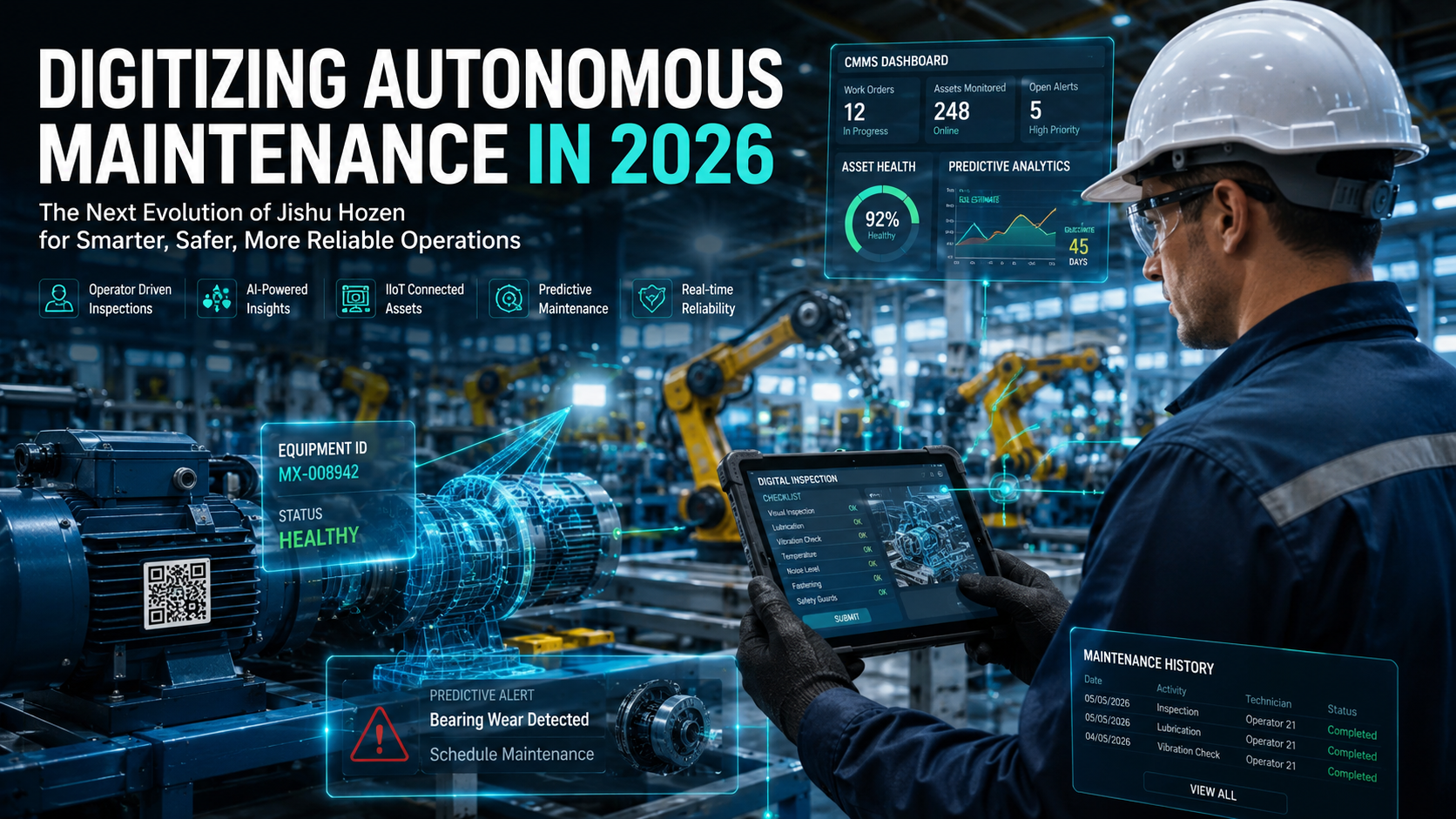
For decades, manufacturers have pursued a single objective that remains as relevant today as it was when Total Productive Maintenance (TPM) first emerged in Japanese manufacturing—maximize equipment reliability by involving every employee in maintaining production assets. Among TPM’s eight foundational pillars, Jishu Hozen, or Autonomous Maintenance, has consistently been recognized as one of the most transformative. It empowers machine operators to take ownership of routine maintenance activities, detect abnormalities early, and prevent minor issues from escalating into costly equipment failures.
While the philosophy remains timeless, the operational environment has changed dramatically. Today’s factories are no longer defined solely by mechanical assets and manual inspections. They are increasingly characterized by connected equipment, Industrial Internet of Things (IIoT) devices, artificial intelligence, digital work instructions, mobile maintenance applications, and real-time operational analytics. Operators are expected to manage more complex production systems while maintaining higher productivity, stricter quality standards, and tighter compliance requirements than ever before.
In this environment, paper-based autonomous maintenance practices are rapidly reaching their limits. Manual checklists become difficult to manage across hundreds of assets, inspection records are fragmented, abnormalities are inconsistently documented, and valuable operational knowledge often remains trapped within individual shifts or experienced personnel. As manufacturing organizations accelerate their Industry 4.0 initiatives, these limitations create significant barriers to achieving sustainable equipment reliability.
This is why manufacturers are increasingly embracing Jishu Hozen digital strategies that combine TPM principles with digital maintenance technologies. Rather than replacing operators, digital autonomous maintenance equips them with intelligent tools that improve inspection quality, standardize procedures, accelerate issue reporting, and integrate frontline observations directly into enterprise maintenance workflows.
Digitizing Jishu Hozen is not simply about replacing paper forms with tablets. It represents a fundamental evolution in how organizations capture operational knowledge, monitor equipment health, collaborate across departments, and continuously improve maintenance performance.
Organizations that successfully digitize autonomous maintenance typically experience:
- Higher Overall Equipment Effectiveness (OEE)
- Reduced minor stoppages and chronic equipment losses
- Earlier fault detection
- Improved maintenance planning
- Better operator engagement
- Higher maintenance compliance
- Increased asset availability
- Stronger reliability culture across the plant
However, realizing these outcomes requires more than software implementation. It demands a structured transformation that aligns people, processes, technology, and continuous improvement principles.
This article explores how manufacturers can modernize Jishu Hozen for 2026 through a practical framework that integrates digital technologies with TPM best practices while preserving the operator ownership that makes autonomous maintenance successful.
Why Jishu Hozen Is More Important Than Ever in Industry 4.0
Modern manufacturing plants operate in an environment where every minute of equipment downtime directly affects production schedules, customer commitments, operating costs, and competitive performance. At the same time, maintenance teams are being asked to manage larger asset portfolios with limited resources, while experienced technicians continue to retire faster than new talent can replace them.
These challenges make operator involvement more valuable than ever.
Operators interact with equipment continuously throughout each production shift. They are the first to notice subtle changes in machine behavior—unusual vibration, abnormal sounds, temperature variations, lubricant leaks, product quality deviations, or inconsistent operating cycles. Historically, however, much of this knowledge has remained informal, relying on verbal communication or handwritten notes that rarely become part of the organization’s maintenance intelligence.
Digital autonomous maintenance changes this dynamic by transforming operator observations into structured operational data that can be analyzed, prioritized, and acted upon systematically.
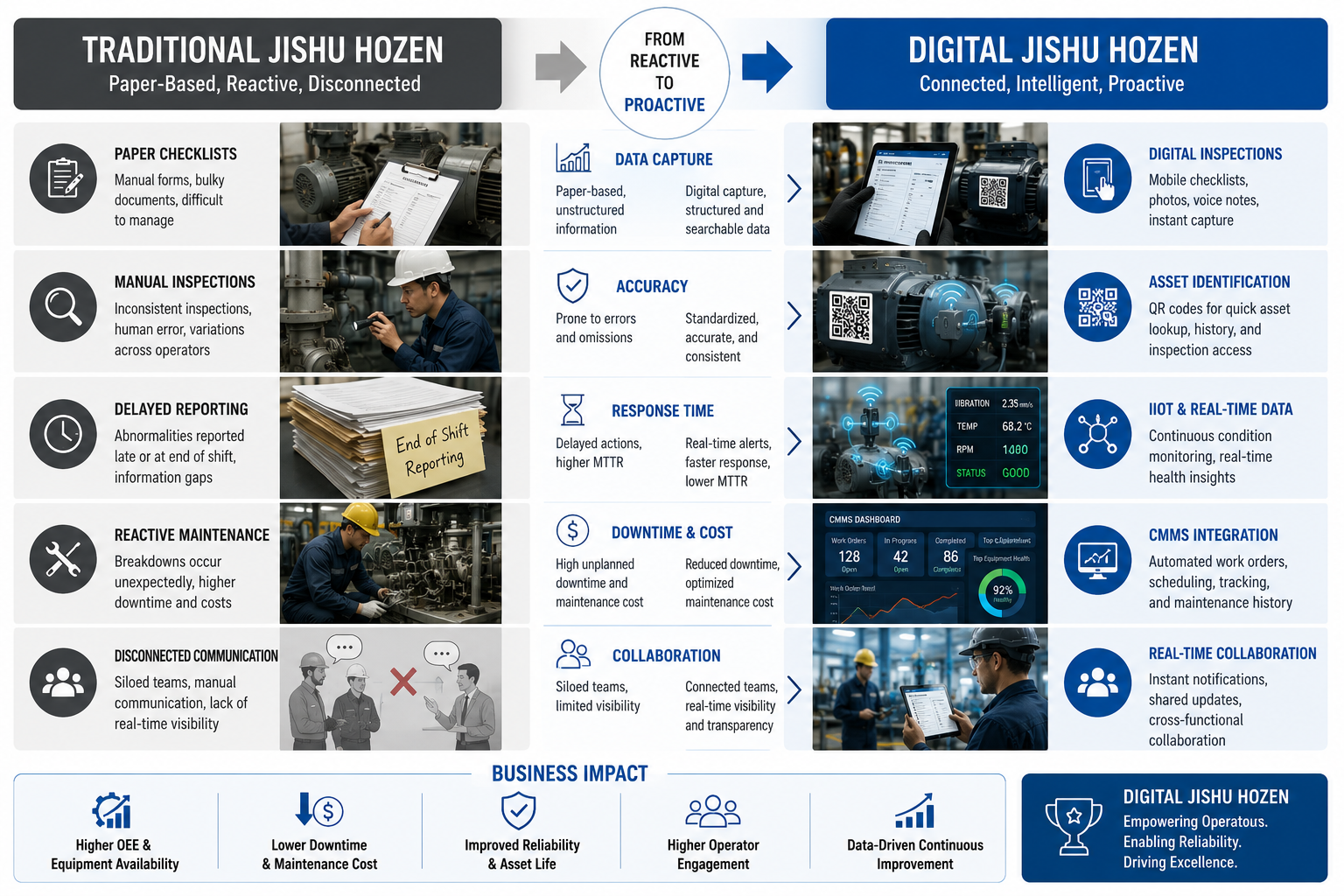
Instead of viewing operators solely as equipment users, leading manufacturers increasingly recognize them as the first layer of asset reliability management.
This shift creates several strategic advantages:
- Maintenance teams spend less time responding to avoidable breakdowns.
- Reliability engineers gain richer equipment health information.
- Supervisors obtain real-time visibility into equipment conditions.
- Production teams experience fewer unplanned interruptions.
- Management gains measurable KPIs for autonomous maintenance performance.
More importantly, digital Jishu Hozen establishes a collaborative relationship between production and maintenance rather than treating them as separate organizational functions.
Understanding Digital Jishu Hozen
At its core, Jishu Hozen digital applies modern technologies to strengthen—not replace—the original philosophy of autonomous maintenance.
Traditional Jishu Hozen focuses on enabling operators to perform essential maintenance activities, including:
- Cleaning
- Inspection
- Lubrication
- Tightening
- Minor adjustments
- Equipment condition monitoring
- Early abnormality detection
These activities remain fundamental.
What changes is how they are executed, documented, monitored, and continuously improved.
Instead of relying on paper checklists and manual reporting, digital autonomous maintenance introduces connected workflows supported by:
- Mobile maintenance applications
- Digital inspection forms
- QR code-enabled asset identification
- IoT-connected equipment
- Real-time operator notifications
- CMMS integration
- AI-assisted anomaly detection
- Digital work instructions
- Cloud-based maintenance records
- Analytics dashboards
As operators complete inspections, information becomes immediately available across the organization. Maintenance planners, supervisors, reliability engineers, and plant managers gain instant visibility into equipment conditions without waiting for paper reports or end-of-shift updates.
The result is a maintenance ecosystem where frontline observations directly influence maintenance planning and reliability improvement initiatives.
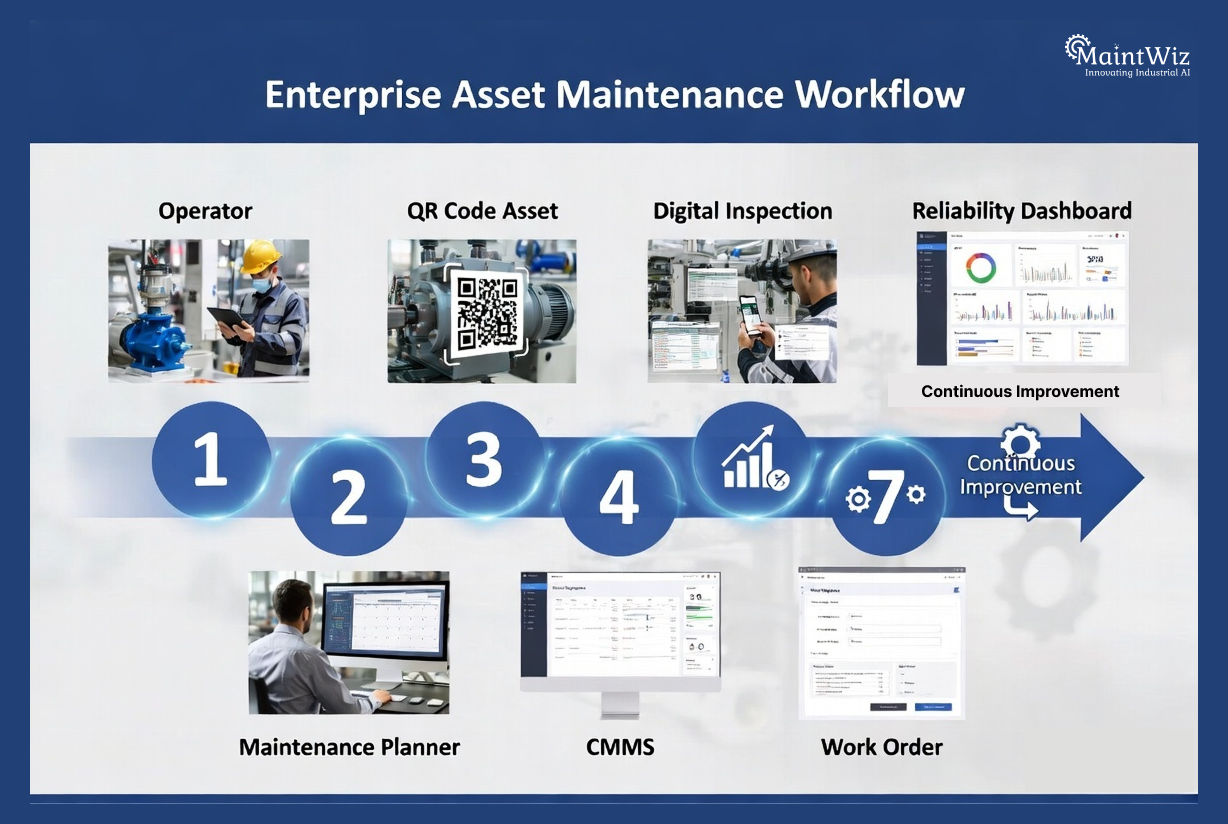
The Seven Pillars of Digital Autonomous Maintenance
Although organizations often focus primarily on technology implementation, successful digital Jishu Hozen depends on balancing operational discipline with digital enablement.
Several foundational capabilities must work together.
1. Standardized Digital Inspection Procedures
Consistency is the cornerstone of autonomous maintenance.
Every operator should inspect equipment using standardized procedures regardless of experience level, shift, or production area.
Digital inspection workflows provide:
- Step-by-step instructions
- Required inspection photographs
- Acceptable operating ranges
- Safety reminders
- Automatic timestamping
- Inspection completion tracking
Standardization reduces variability while improving inspection quality across the organization.
2. Real-Time Abnormality Reporting
Traditional TPM often relies on operators documenting abnormalities during or after production.
Digital systems enable operators to report issues immediately.
For example, an operator noticing excessive gearbox vibration can:
- Scan the equipment QR code.
- Capture a photograph.
- Record the abnormal condition.
- Select issue severity.
- Submit the report directly into the maintenance workflow.
Maintenance supervisors receive instant notifications, allowing corrective actions to begin before equipment deterioration accelerates.
This significantly shortens the time between fault detection and maintenance intervention.
3. Connected Equipment Intelligence
The future of autonomous maintenance combines human observation with machine intelligence.
Operators continue performing visual inspections, but connected assets simultaneously provide:
- Vibration measurements
- Temperature trends
- Energy consumption
- Pressure readings
- Lubrication conditions
- Motor current
- Operating hours
Rather than replacing operators, IIoT enhances their decision-making.
If an operator notices slight bearing noise while IIoT data simultaneously indicates rising vibration, maintenance teams gain significantly greater confidence that intervention is required.
Human expertise and digital intelligence become complementary capabilities rather than competing approaches.
Why Many Autonomous Maintenance Programs Fail
Despite decades of TPM implementation, many organizations struggle to sustain autonomous maintenance beyond the initial rollout. The issue rarely lies with the philosophy itself. More often, it stems from inconsistent execution, inadequate governance, and the absence of systems that reinforce daily maintenance behaviors.
Common challenges include:
- Paper checklists that are completed retrospectively rather than in real time.
- Inconsistent inspection quality between operators and shifts.
- Lack of visibility into completed autonomous maintenance activities.
- Delayed communication between production and maintenance teams.
- Difficulty tracking recurring equipment abnormalities.
- Limited use of inspection data for continuous improvement.
- Minimal performance measurement beyond checklist completion rates.
These shortcomings reduce autonomous maintenance to a compliance exercise instead of a reliability strategy.
Digital transformation addresses these limitations by making every inspection, observation, and corrective action visible, traceable, and measurable. It enables organizations to move from simply asking, “Was the checklist completed?” to far more valuable questions such as:
- Which abnormalities occur most frequently?
- Which assets generate the highest operator interventions?
- How quickly are reported issues resolved?
- Are inspection findings reducing unplanned downtime?
- Which production areas require additional training or engineering support?
By answering these questions with real operational data, manufacturers transform Jishu Hozen from a routine maintenance activity into a strategic capability that continuously strengthens equipment reliability and operational performance.
From Paper-Based TPM to Digital Autonomous Maintenance: A Five-Step Transformation Framework
Digital transformation is often perceived as a technology initiative. In reality, successful Jishu Hozen digital programs are operational transformation initiatives enabled by technology. Organizations that achieve lasting results do not simply replace paper checklists with tablets—they redesign maintenance workflows, clarify operator responsibilities, strengthen engineering governance, and create a culture where data drives continuous improvement.
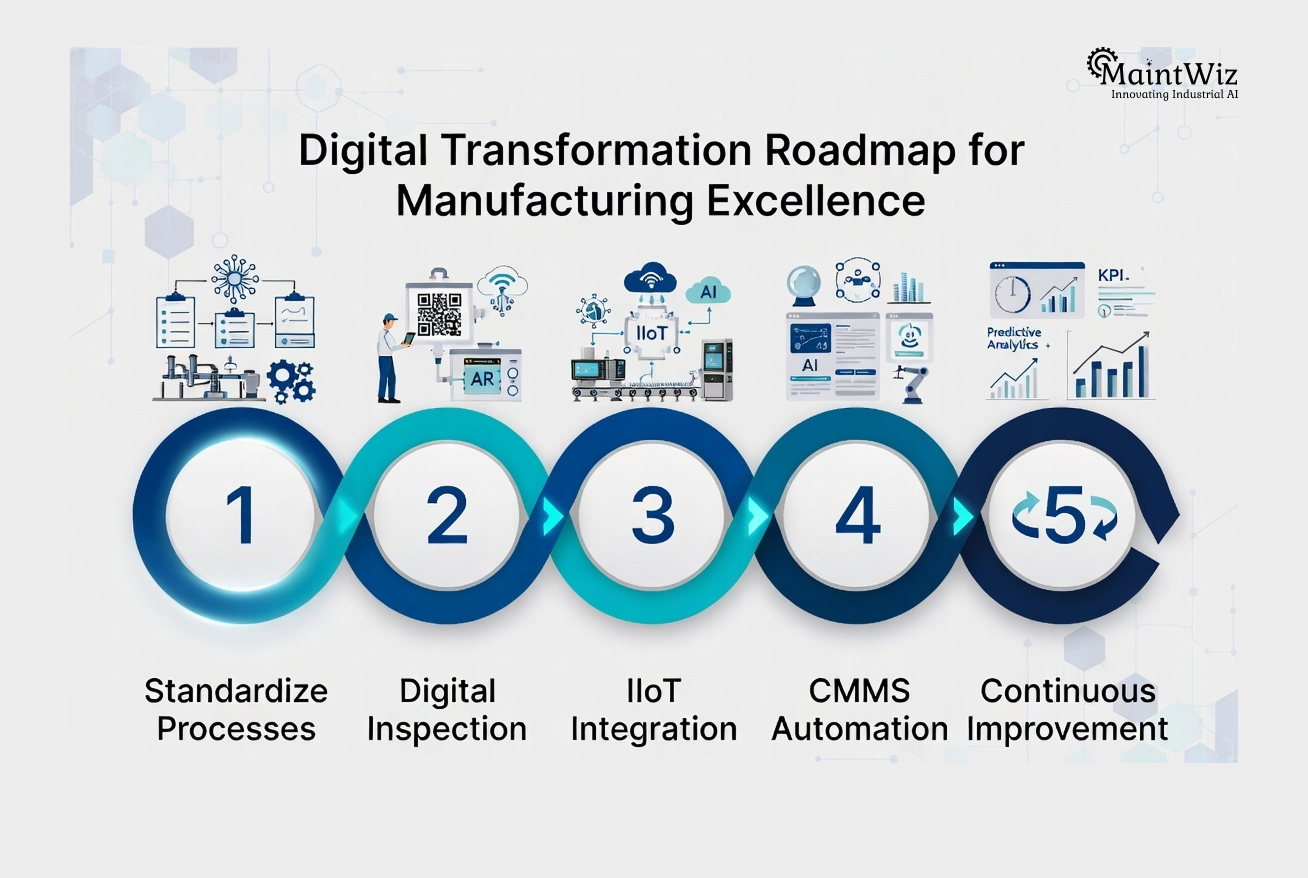
The following five-step framework provides a practical roadmap for manufacturers seeking to modernize autonomous maintenance while preserving the TPM philosophy of operator ownership.
Step 1: Standardize Autonomous Maintenance Before Digitizing It
One of the most common mistakes organizations make is digitizing inconsistent processes. If inspection routines differ between operators, shifts, or production lines, digital tools will only accelerate inconsistency rather than eliminate it.
Before introducing software, manufacturers should review existing Jishu Hozen practices and establish standardized operating procedures for every critical asset. These procedures should clearly define:
- Cleaning activities and frequencies
- Lubrication points
- Inspection checkpoints
- Acceptable operating conditions
- Safety precautions
- Minor adjustments permitted for operators
- Escalation criteria for maintenance intervention
Visual management techniques—including annotated equipment images, color-coded lubrication points, and standard operating photographs—help ensure that operators perform inspections consistently regardless of experience level.
Organizations should also classify assets according to operational criticality. Production bottleneck equipment, safety-critical systems, utilities, and high-value assets may require more frequent autonomous inspections than non-critical equipment.
Standardization creates the operational foundation upon which digital technologies can deliver measurable value.
Step 2: Replace Paper Checklists with Intelligent Digital Workflows
Traditional autonomous maintenance relies heavily on paper inspection sheets. While familiar, these documents create several operational challenges. Records can be misplaced, inspection quality varies, and valuable information remains difficult to analyze.
Digital inspection workflows address these limitations by providing operators with guided, standardized, and traceable maintenance procedures.
Instead of manually recording observations, operators can use mobile devices or rugged tablets to:
- Access equipment-specific inspection routines
- Scan QR codes for instant asset identification
- Capture photographs of abnormalities
- Record measurements digitally
- Receive automated reminders for overdue inspections
- Submit inspection results immediately
Digital workflows also reduce administrative effort. Maintenance supervisors no longer need to consolidate paper records or manually update maintenance logs, allowing them to focus on coaching teams and improving reliability performance.
An additional advantage is data integrity. Every inspection is automatically timestamped, linked to the asset, and associated with the individual performing the task. This creates a reliable maintenance history that supports audits, compliance, and continuous improvement initiatives.
Step 3: Connect Autonomous Maintenance with IIoT and Condition Monitoring
Human observation remains invaluable, but it has natural limitations. Operators cannot continuously monitor every parameter of complex industrial equipment. This is where Industrial Internet of Things (IIoT) technologies significantly enhance autonomous maintenance.
By integrating IIoT sensors with Jishu Hozen activities, organizations create a hybrid maintenance model that combines operator expertise with real-time machine intelligence.
For example, consider a centrifugal pump operating in a chemical processing plant. During a routine autonomous maintenance inspection, the operator notices a slight increase in noise but no visible damage. At the same time, IIoT sensors detect a gradual increase in vibration and bearing temperature. Individually, these observations may not appear urgent. Together, they provide strong evidence that the bearing is beginning to deteriorate.
This combination of human insight and sensor-generated data enables maintenance teams to intervene before the issue develops into an unplanned failure.
Connected maintenance also reduces unnecessary inspections by allowing operators to focus on assets exhibiting early signs of deterioration. Rather than performing identical checks on every machine regardless of condition, inspection priorities can be dynamically adjusted based on equipment health.
Organizations implementing IIoT-enabled autonomous maintenance typically monitor parameters such as:
- Vibration
- Temperature
- Pressure
- Lubrication quality
- Motor current
- Energy consumption
- Operating hours
- Production cycles
Integrating these data streams into the autonomous maintenance process improves inspection quality while strengthening predictive maintenance capabilities.
Step 4: Integrate Jishu Hozen with a CMMS for End-to-End Maintenance Visibility
Digital inspections generate valuable operational data, but without integration into a Computerized Maintenance Management System (CMMS), much of that value remains isolated.
A modern CMMS serves as the operational backbone of digital autonomous maintenance by connecting frontline observations with maintenance planning, execution, and performance analysis.
When operators report abnormalities through digital inspection workflows, the CMMS can automatically:
- Create maintenance requests
- Generate work orders
- Prioritize tasks based on asset criticality
- Assign technicians with the required skills
- Verify spare parts availability
- Schedule repairs during planned downtime
- Record maintenance history
- Track completion status
- Update asset performance metrics
This integration eliminates delays associated with manual communication and ensures that maintenance teams respond to equipment issues in a timely and consistent manner.
Furthermore, linking autonomous maintenance activities with historical work order data enables reliability engineers to identify recurring failure modes, assess repair effectiveness, and optimize preventive maintenance strategies.
A connected CMMS also enhances collaboration between production and maintenance departments by providing a shared, real-time view of equipment health and maintenance priorities.
Step 5: Establish Continuous Improvement Through Data-Driven Reliability Management
The ultimate objective of digital Jishu Hozen is not merely to digitize inspections—it is to create a self-improving maintenance organization.
Every inspection, abnormality report, corrective action, and maintenance intervention contributes to a growing repository of operational knowledge. By analyzing this information systematically, manufacturers can identify recurring issues, refine maintenance standards, and improve equipment reliability over time.
Continuous improvement should be embedded into daily operations through regular review meetings where production, maintenance, and reliability teams evaluate:
- Recurring equipment abnormalities
- Inspection compliance
- Equipment downtime trends
- Maintenance response times
- Root cause analysis findings
- Operator feedback
- Asset health indicators
- Overall Equipment Effectiveness (OEE)
Rather than measuring success solely by the number of inspections completed, organizations should evaluate whether autonomous maintenance activities are reducing failures, extending equipment life, and improving operational performance.
A mature Jishu Hozen program evolves continuously, using operational data to refine maintenance strategies, improve operator training, and strengthen cross-functional collaboration.
How MaintWiz CMMS Accelerates Digital Jishu Hozen
Successfully digitizing autonomous maintenance requires more than mobile checklists. It demands a platform capable of connecting operators, maintenance teams, reliability engineers, and management through a unified maintenance ecosystem.
MaintWiz CMMS supports this transformation by enabling organizations to digitize autonomous maintenance workflows while integrating them with broader maintenance planning and asset management processes.
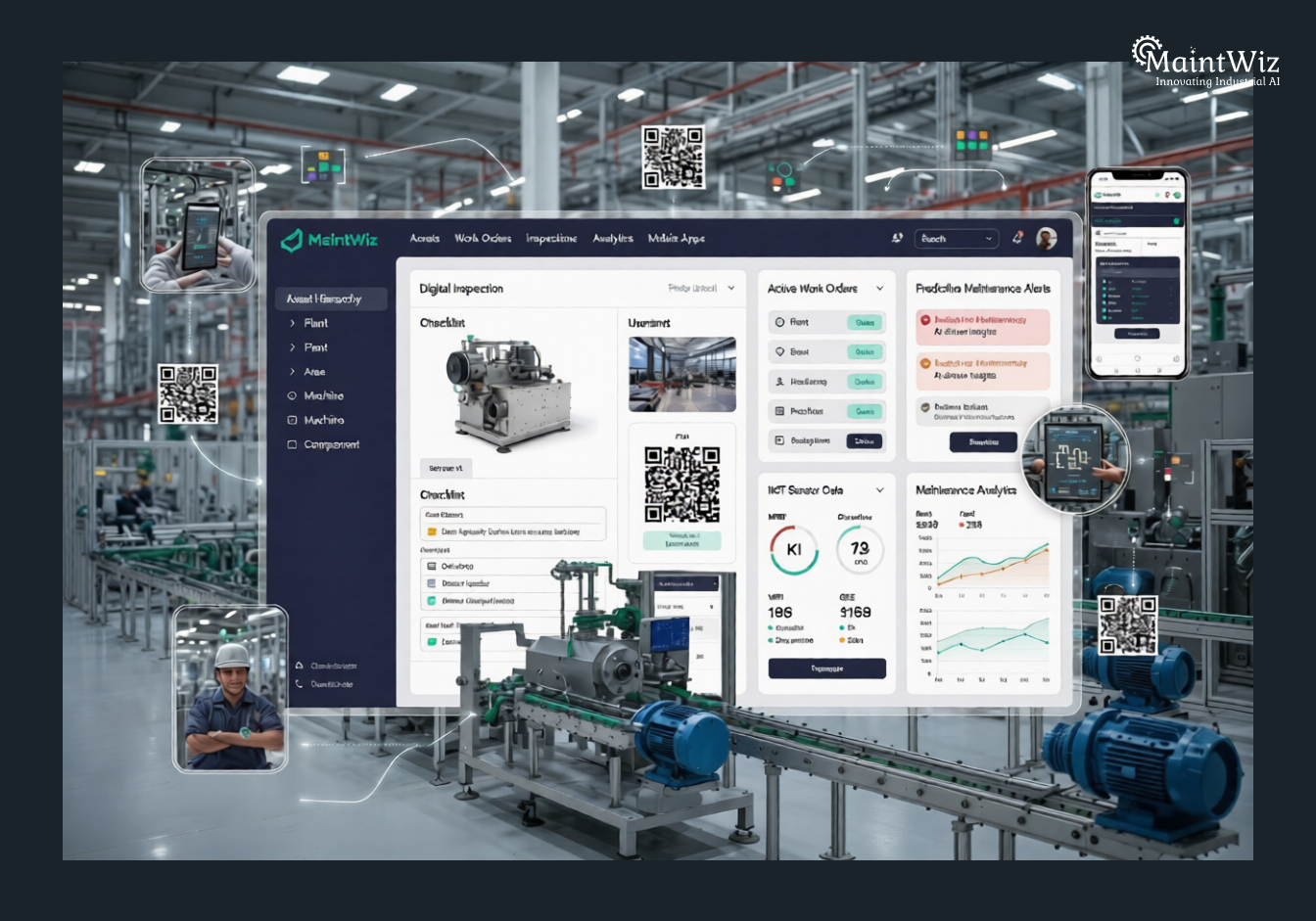
Operators can perform digital inspections using standardized procedures, capture abnormalities with photographs, and submit findings directly into the maintenance workflow. Equipment-specific inspection histories, work orders, and asset documentation become immediately accessible, ensuring that maintenance decisions are based on complete operational context.
By integrating with IIoT-enabled equipment, MaintWiz further enhances autonomous maintenance through condition-based alerts and predictive insights. Sensor-generated equipment data can complement operator observations, helping maintenance teams prioritize interventions based on actual asset condition rather than fixed maintenance schedules.
Maintenance planners benefit from centralized visibility into inspection results, work order backlogs, technician availability, and spare parts inventory. Reliability engineers can analyze recurring failure modes, identify chronic equipment issues, and monitor asset performance using integrated analytics dashboards.
For manufacturers pursuing a structured digital transformation, MaintWiz also supports a phased 90-day implementation roadmap:
Days 1–30: Build the Foundation
- Standardize autonomous maintenance procedures.
- Create a structured asset hierarchy.
- Configure digital inspection templates.
- Define operator responsibilities.
- Establish baseline maintenance KPIs.
Days 31–60: Digitize and Connect
- Deploy mobile inspection workflows.
- Integrate QR code-enabled asset identification.
- Connect IIoT sensors to critical equipment.
- Automate maintenance notifications and work requests.
- Train operators and supervisors on digital processes.
Days 61–90: Optimize and Scale
- Analyze inspection trends and asset health.
- Refine maintenance schedules using operational data.
- Monitor reliability KPIs through dashboards.
- Expand digital autonomous maintenance across additional production areas.
- Establish continuous improvement governance.
This structured approach enables organizations to achieve measurable improvements while minimizing disruption to ongoing production operations.
Measuring the Success of Digital Jishu Hozen
An effective digital autonomous maintenance program should be evaluated using meaningful operational and reliability metrics rather than simple activity counts.
Recommended KPIs include:
Equipment Reliability
- Mean Time Between Failures (MTBF)
- Mean Time to Repair (MTTR)
- Asset Availability
- Overall Equipment Effectiveness (OEE)
- Breakdown Frequency
Autonomous Maintenance Performance
- Inspection Compliance Rate
- Abnormalities Reported per Asset
- Average Time to Resolve Operator Findings
- Operator Participation Rate
- Autonomous Maintenance Audit Scores
Maintenance Effectiveness
- Planned vs. Reactive Maintenance Ratio
- Work Order Completion Rate
- Preventive Maintenance Compliance
- Maintenance Backlog
- Repeat Failure Rate
Business Performance
- Downtime Reduction
- Maintenance Cost per Asset
- Spare Parts Optimization
- Production Throughput
- Energy Efficiency
Monitoring these indicators allows organizations to quantify the business value of digital autonomous maintenance while identifying opportunities for further improvement.
Conclusion
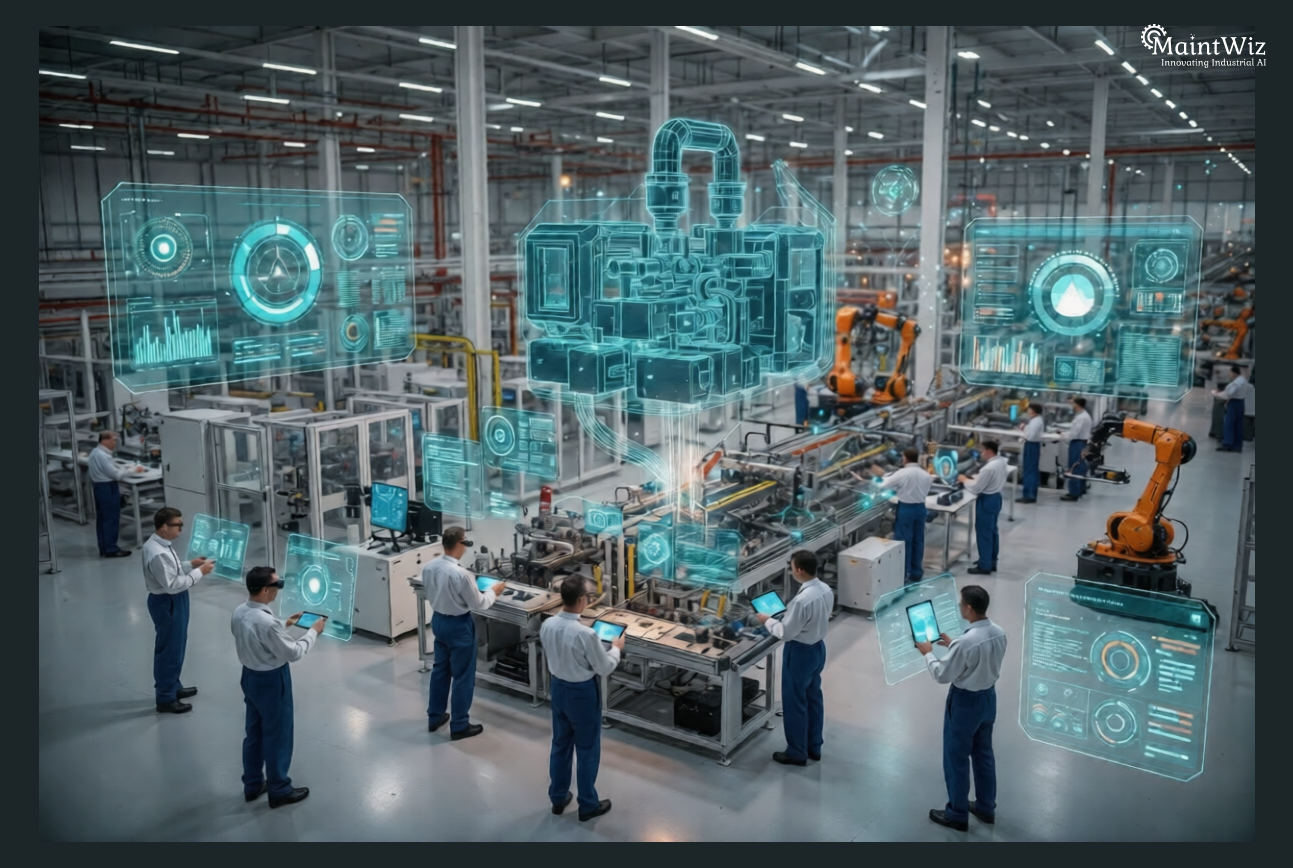
The principles of Jishu Hozen remain as relevant today as they were when TPM was first introduced. What has changed is the technological environment in which manufacturers operate. Connected assets, IIoT platforms, mobile applications, AI-driven analytics, and integrated CMMS solutions have fundamentally expanded what autonomous maintenance can achieve.
Digitizing Jishu Hozen is not about replacing operator expertise—it is about amplifying it. By combining standardized maintenance practices with real-time equipment intelligence and digital workflows, manufacturers can detect problems earlier, improve collaboration between production and maintenance, and create a more resilient reliability culture.
Organizations that embrace Jishu Hozen digital are better positioned to reduce unplanned downtime, increase equipment availability, improve Overall Equipment Effectiveness, and support broader Industry 4.0 transformation initiatives.
As manufacturing continues to evolve, autonomous maintenance will remain a cornerstone of operational excellence. The difference is that, in 2026 and beyond, the most successful Jishu Hozen programs will be digital, connected, data-driven, and continuously improving—empowering operators and maintenance teams to make smarter decisions that deliver lasting business value.


Jai Balachandran is an industry expert with a proven track record in driving digital transformation and Industry 4.0 technologies. With a rich background in asset management, plant maintenance, connected systems, TPM and reliability initiatives, he brings unparalleled insight and delivery excellence to Plant Operations.
Company
Download App