


Most industrial organizations believe they have maintenance under control. Preventive schedules are followed, inspections are completed, and shutdowns are planned meticulously. Yet despite all this structure, maintenance costs continue to rise, downtime persists, and asset failures still catch teams off guard.
This paradox exists because most plants are optimizing activity, not outcomes.
The real question is not whether you are doing preventive maintenance—it’s whether your maintenance strategy is economically optimal.
This blog provides a rigorous, real-world cost analysis of predictive maintenance vs preventive maintenance, breaking down where money is actually gained or lost, and how leading plants are transitioning toward data-driven reliability models.
Preventive maintenance (PM) is based on time or usage intervals. It assumes that servicing equipment at regular intervals reduces failure risk. While this is directionally correct, it suffers from a fundamental limitation:
It operates on assumptions—not actual asset condition.
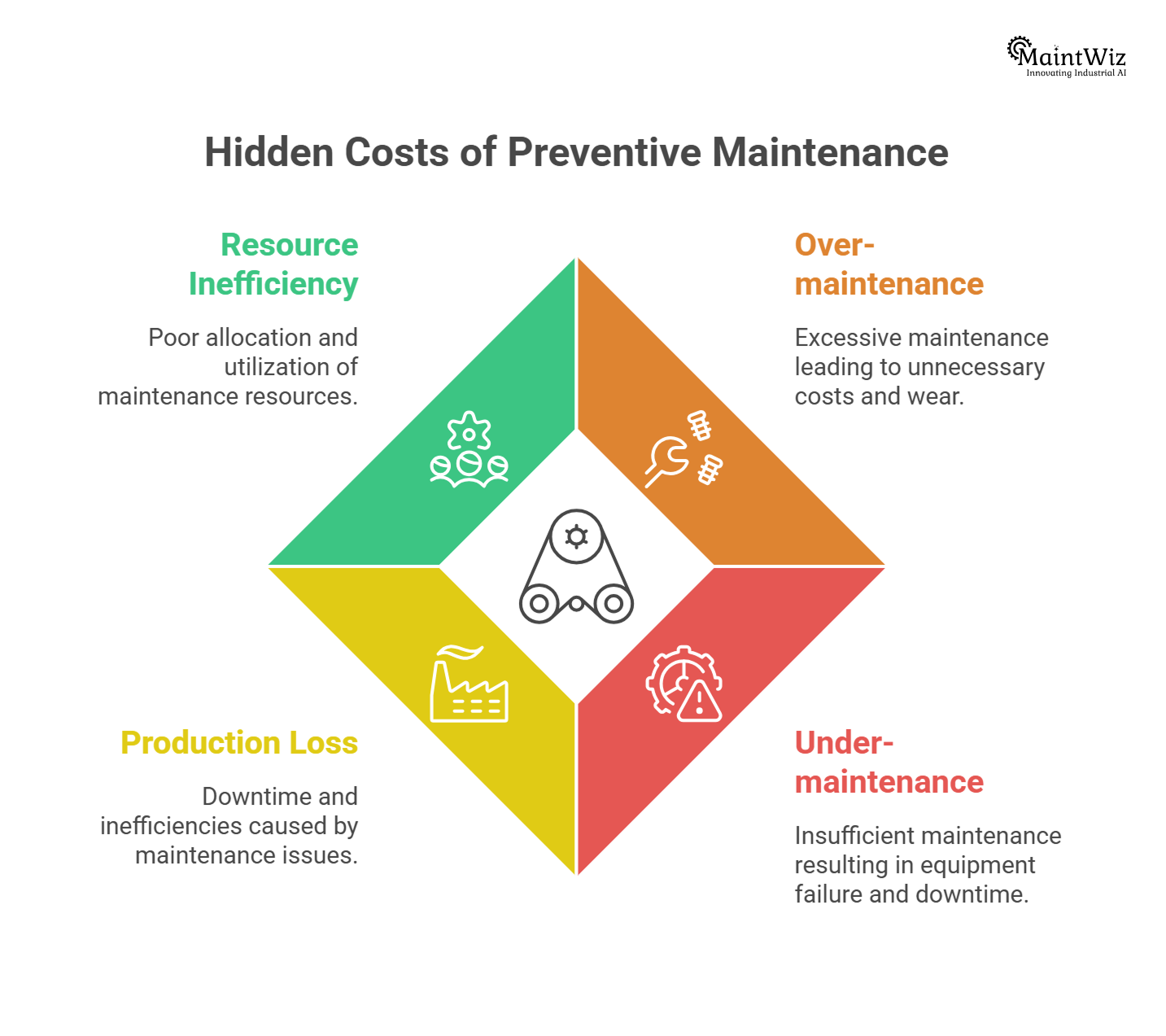
Hidden Cost Drivers in Preventive Maintenance
Result: Preventive maintenance stabilizes operations but does not optimize cost.
Predictive maintenance (PdM) uses real-time data, condition monitoring, and analytics to determine when maintenance should actually occur.
Instead of asking:
“When should we maintain this asset?”
It asks:
“What is the actual health of this asset right now?”
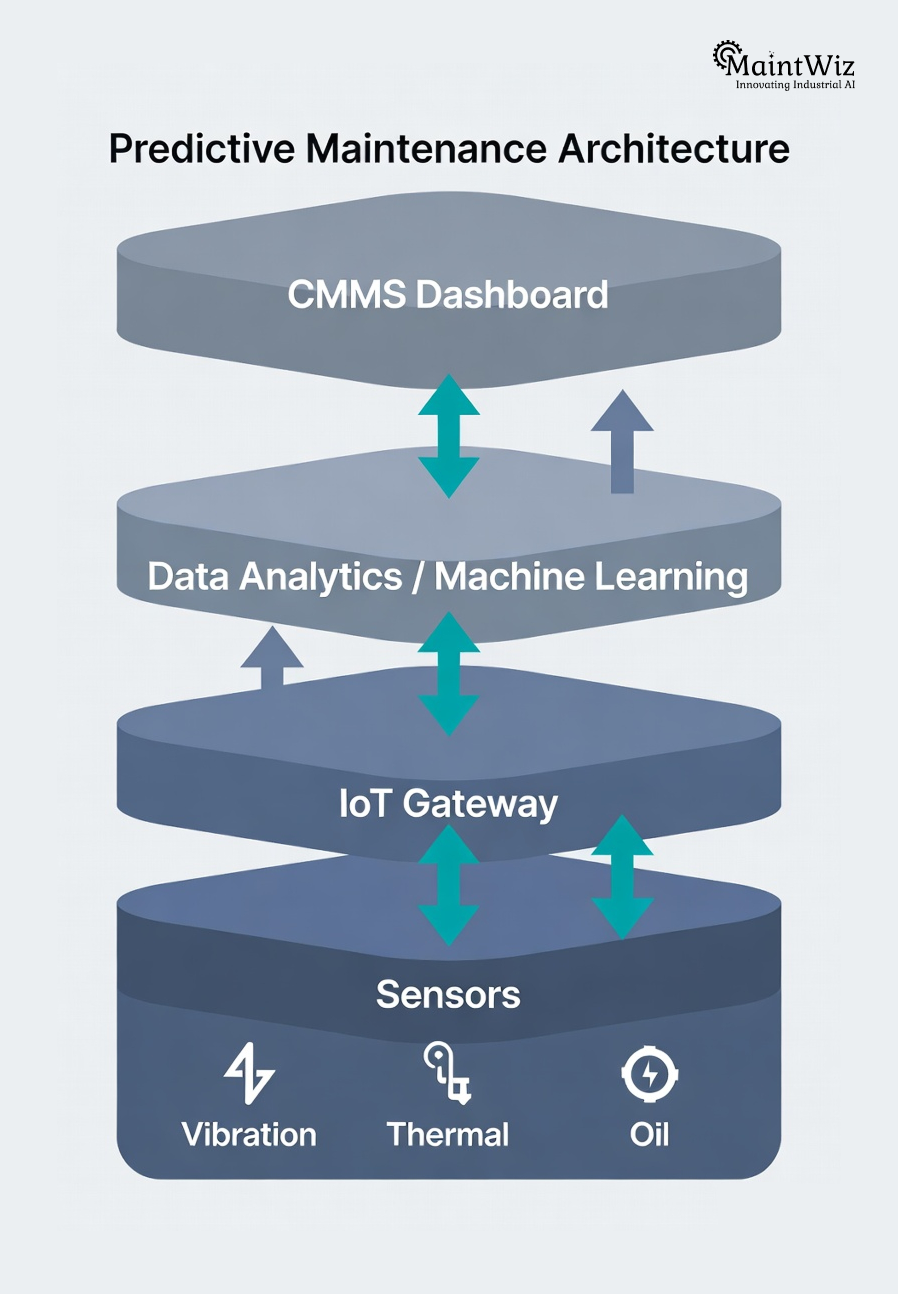
Key Technologies Behind Predictive Maintenance
Machine learning algorithms
Cost Advantage Mechanism
Predictive maintenance reduces costs by aligning maintenance actions with actual failure probability, not estimated intervals.
Let’s move beyond theory and examine cost components.
Preventive Maintenance
Predictive Maintenance
Impact:
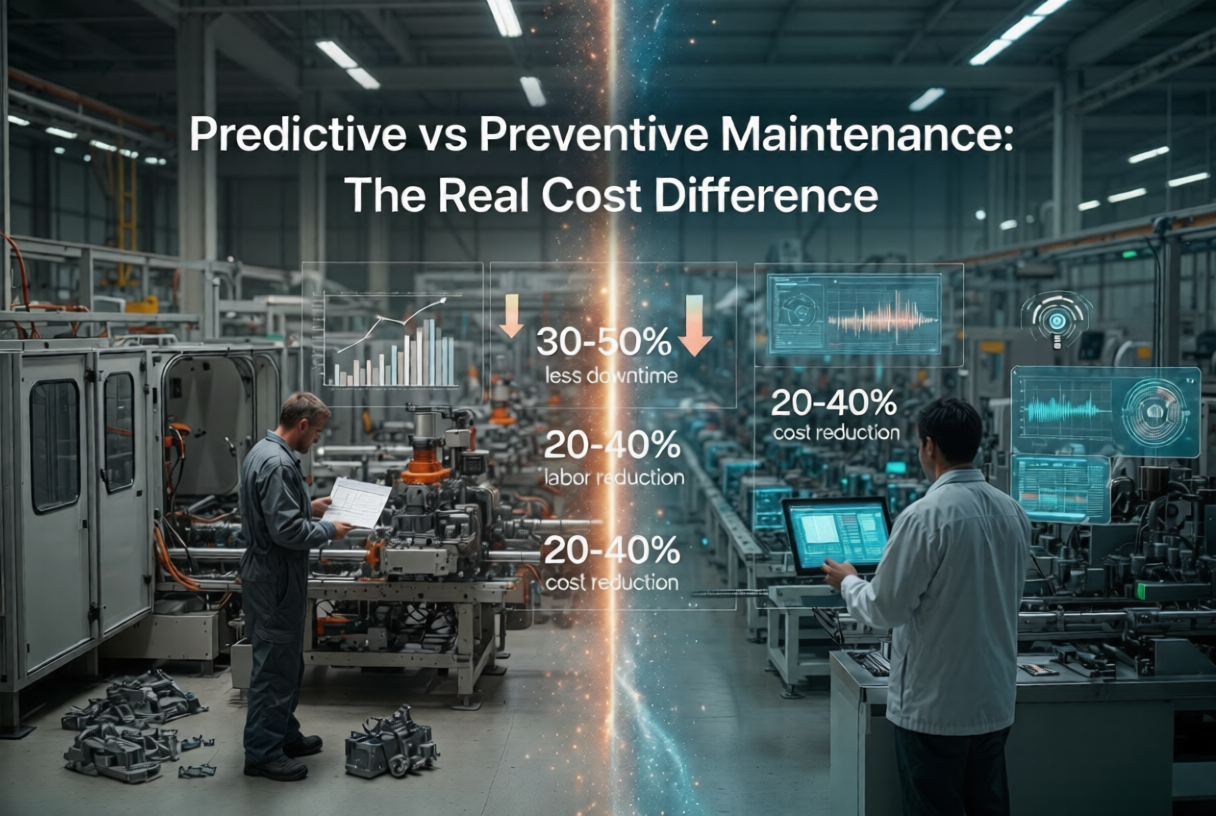
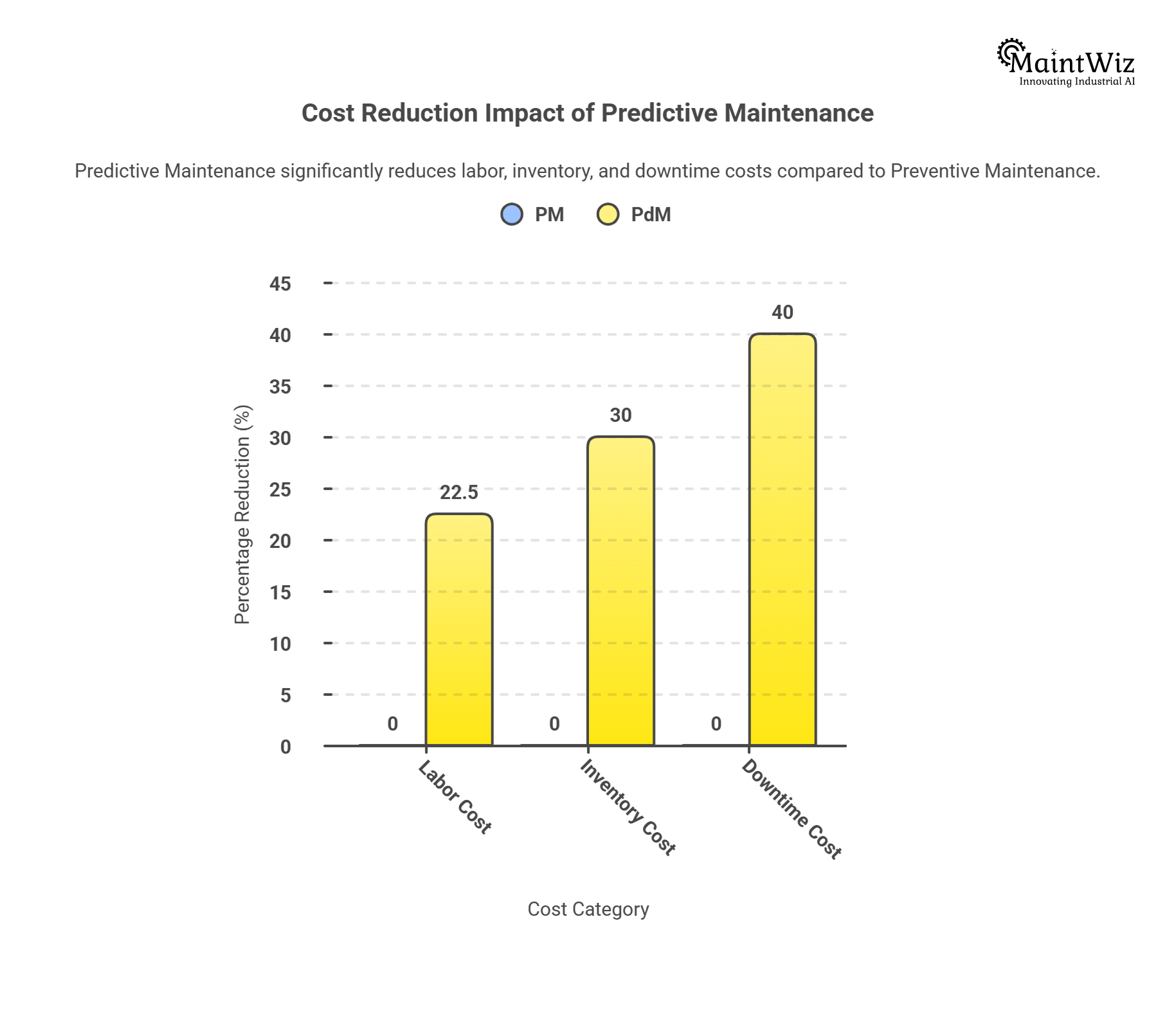
Plants adopting PdM typically reduce maintenance labor by 15–30%
Preventive Maintenance
Predictive Maintenance
Impact:
Inventory costs can drop by 20–40%
Preventive Maintenance
Predictive Maintenance
Impact:
Downtime reduction of 30–50% in mature PdM environments
Preventive Maintenance
Predictive Maintenance
Preventive Maintenance
Predictive Maintenance
Risk mitigation through real-time insights
The total maintenance cost is not just:
Maintenance Cost = Labor + Spare Parts
It is:
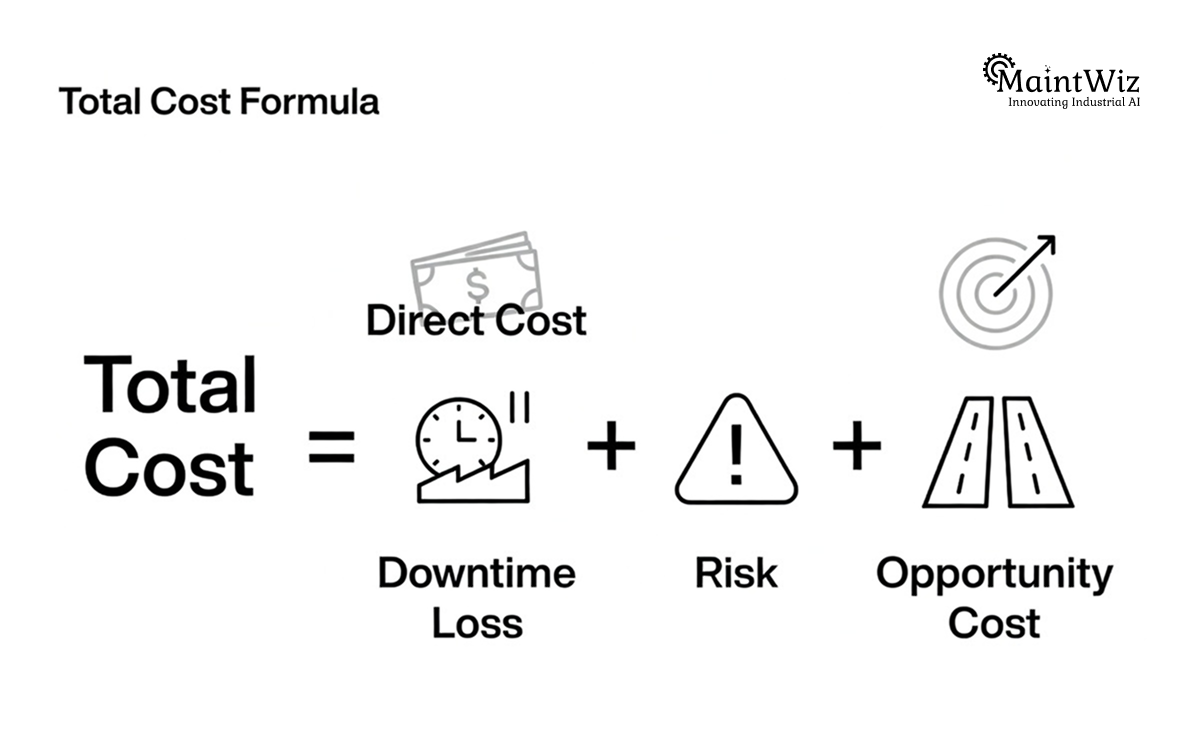
Total Cost of Maintenance = Direct Costs + Downtime Loss + Risk Exposure + Opportunity Cost
Preventive maintenance primarily optimizes direct costs, while predictive maintenance optimizes total cost of ownership (TCO).
Despite its limitations, preventive maintenance is not obsolete.
Ideal Use Cases for Preventive Maintenance
The key is not to eliminate PM—but to right-size it.
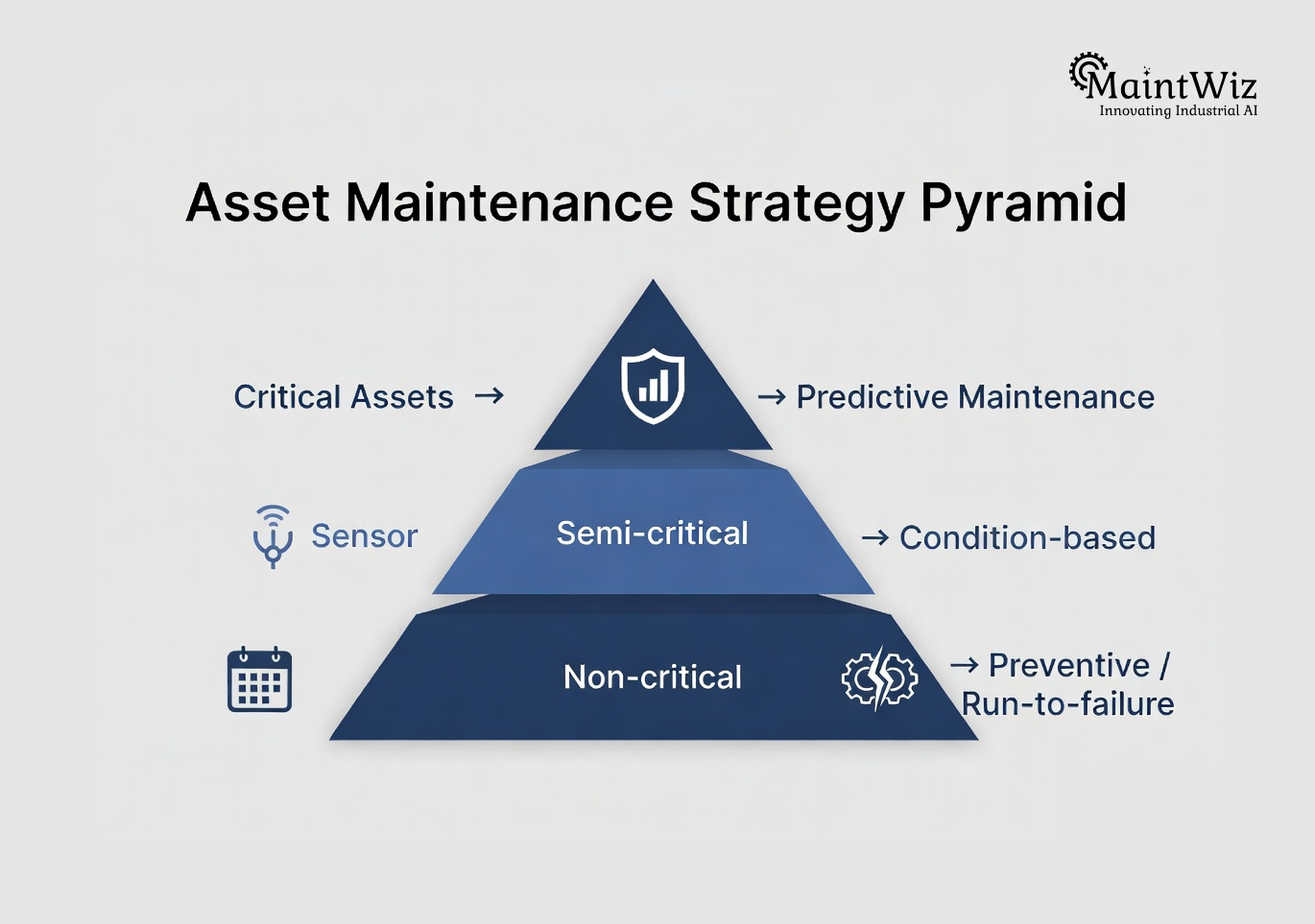
Leading organizations are not choosing between PM and PdM. They are integrating both.
Maintenance Strategy Segmentation
This hybrid model ensures optimal allocation of resources.
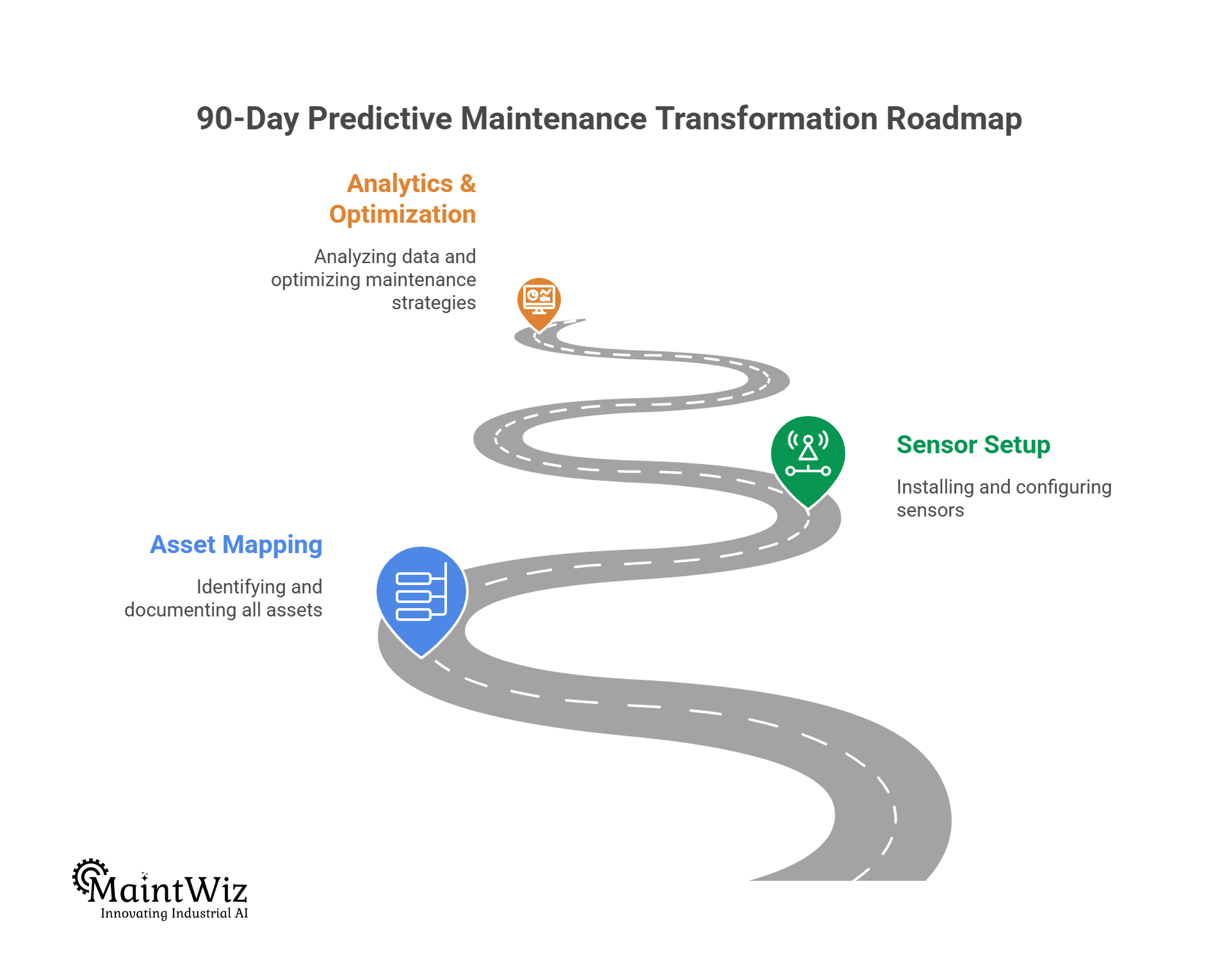
Shifting to predictive maintenance does not require a multi-year transformation. A structured 90-day sprint can deliver measurable results.
Phase 1 (Days 1–30): Asset Criticality Mapping
Phase 2 (Days 31–60): Data & Monitoring Setup
Phase 3 (Days 61–90): Analytics & Optimization
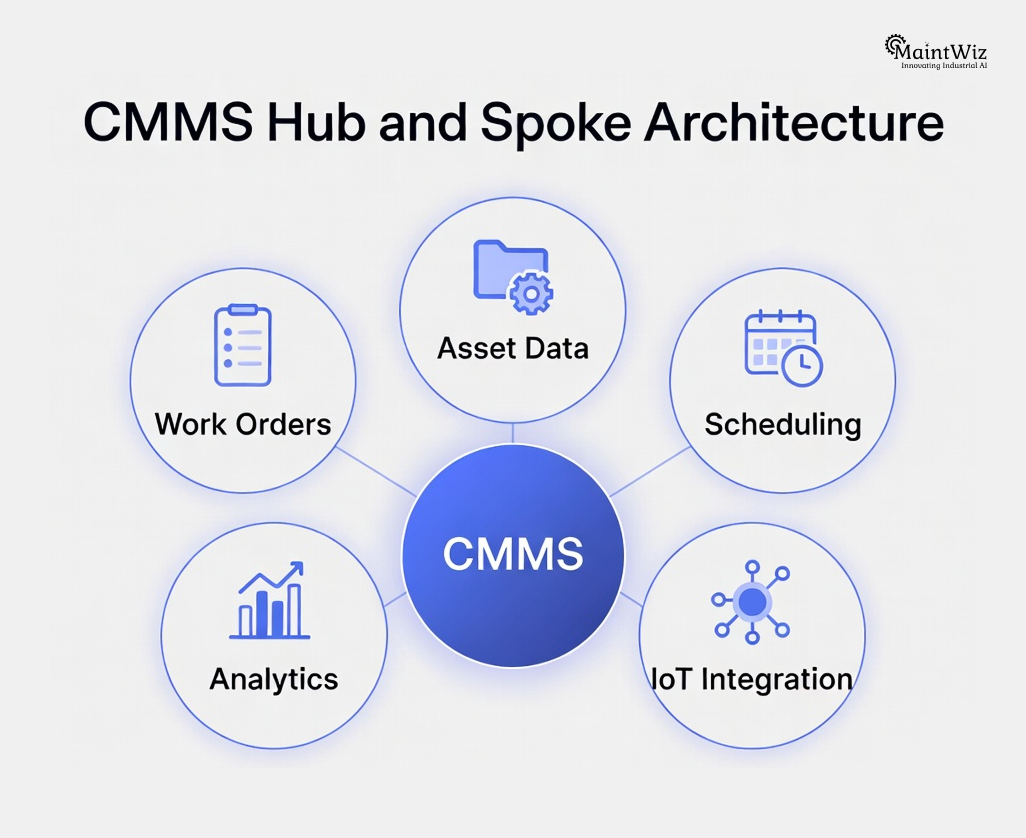
A transition from preventive to predictive maintenance requires more than sensors—it requires orchestration.
How MaintWiz CMMS Enables This Shift
Without a CMMS platform:
MaintWiz acts as the operational backbone, ensuring that predictive insights convert into measurable business outcomes.
Even with the right intent, many organizations fail to realize full benefits.
Key Mistakes
No integration with CMMS
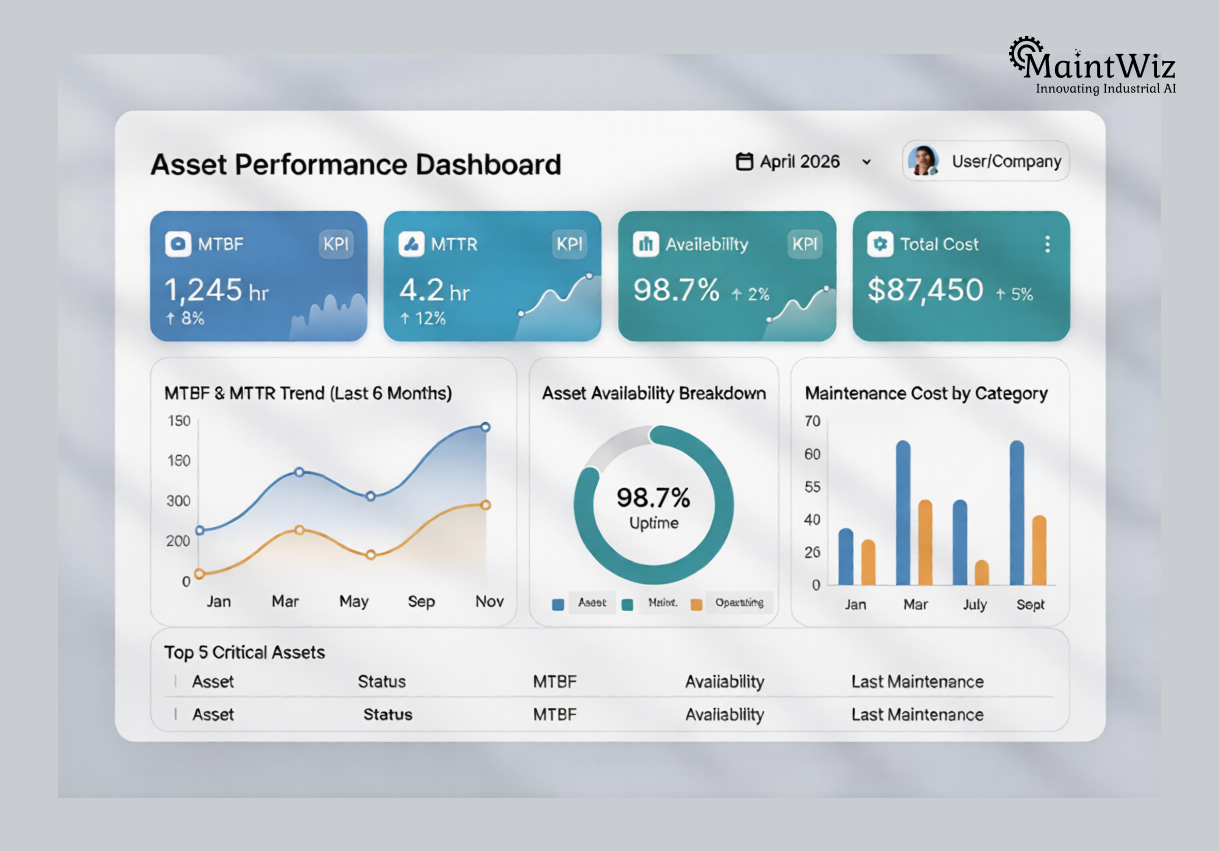
To validate ROI, track the right metrics:
Operational KPIs
Financial KPIs
Strategic KPIs
High-performing plants that adopt predictive maintenance typically achieve:
These are not theoretical gains—they are consistently observed across industries such as manufacturing, energy, and process plants.
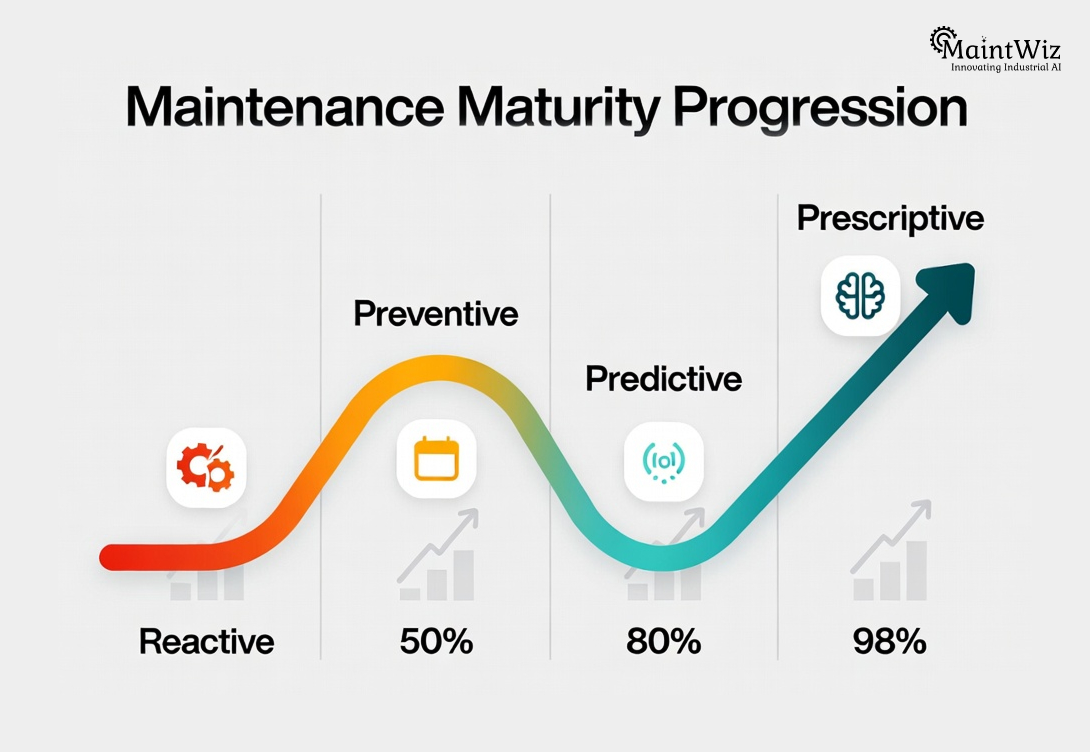
The ultimate goal is not better maintenance—it is higher reliability.
Evolution Path
Organizations that move up this maturity curve gain a sustainable competitive advantage.
Preventive maintenance gives you control.
Predictive maintenance gives you optimization.
If your plant is still relying heavily on preventive schedules, you are likely:
The real cost is not visible in your maintenance budget—it is hidden in downtime, inefficiencies, and lost productivity.
The future belongs to organizations that can measure, predict, and act—before failure occurs.

Jai Balachandran is an industry expert with a proven track record in driving digital transformation and Industry 4.0 technologies. With a rich background in asset management, plant maintenance, connected systems, TPM and reliability initiatives, he brings unparalleled insight and delivery excellence to Plant Operations.

Company