IIoT + CMMS Integration: How to Build a Smart Factory
Maintenance System in 5 Steps

Industrial maintenance is entering a decisive new phase. For decades, maintenance teams have relied on periodic inspections, preventive maintenance schedules, and operator experience to keep critical assets running. While these approaches have delivered measurable improvements over reactive maintenance, they struggle to meet the expectations of modern manufacturing environments where every minute of downtime directly impacts productivity, customer commitments, and profitability.
Today’s manufacturing plants generate enormous volumes of operational data. Every motor, pump, compressor, conveyor, gearbox, transformer, HVAC system, and production line continuously produces information about its operating condition. Yet in many organizations, this data remains isolated within programmable logic controllers (PLCs), supervisory control and data acquisition (SCADA) systems, historians, or standalone Industrial Internet of Things (IIoT) platforms. Maintenance teams continue making decisions based on historical work orders instead of real-time equipment intelligence.
This disconnect represents one of the biggest obstacles to achieving truly predictive maintenance.
The real competitive advantage emerges when Industrial Internet of Things (IIoT) technologies are integrated with a modern Computerized Maintenance Management System (CMMS). Instead of simply monitoring equipment, organizations create an intelligent maintenance ecosystem where asset data automatically triggers maintenance workflows, prioritizes work orders, predicts failures, and continuously improves maintenance planning.
IIoT CMMS integration transforms maintenance from a schedule-driven activity into a condition-driven, intelligence-led process. Rather than asking, “When should we inspect this machine?” maintenance teams begin asking, “What is the machine telling us right now?”
This shift enables organizations to:
- Detect failures before they occur
- Prioritize maintenance based on asset health
- Reduce unplanned downtime
- Improve maintenance productivity
- Optimize spare parts inventory
- Extend equipment life
- Improve Overall Equipment Effectiveness (OEE)
- Strengthen reliability across the entire plant
However, successful integration requires much more than connecting sensors to software. Organizations need a structured implementation strategy that aligns technology, maintenance processes, asset criticality, and business objectives.
This article presents a practical five-step framework for building a smart factory maintenance system through IIoT and CMMS integration.
Why IIoT CMMS Integration Has Become a Strategic Priority
Manufacturers worldwide are under increasing pressure to produce more with fewer resources while maintaining high levels of quality, safety, and operational reliability. Rising energy costs, skilled labor shortages, aging equipment, and complex production environments have made traditional maintenance models increasingly inefficient.
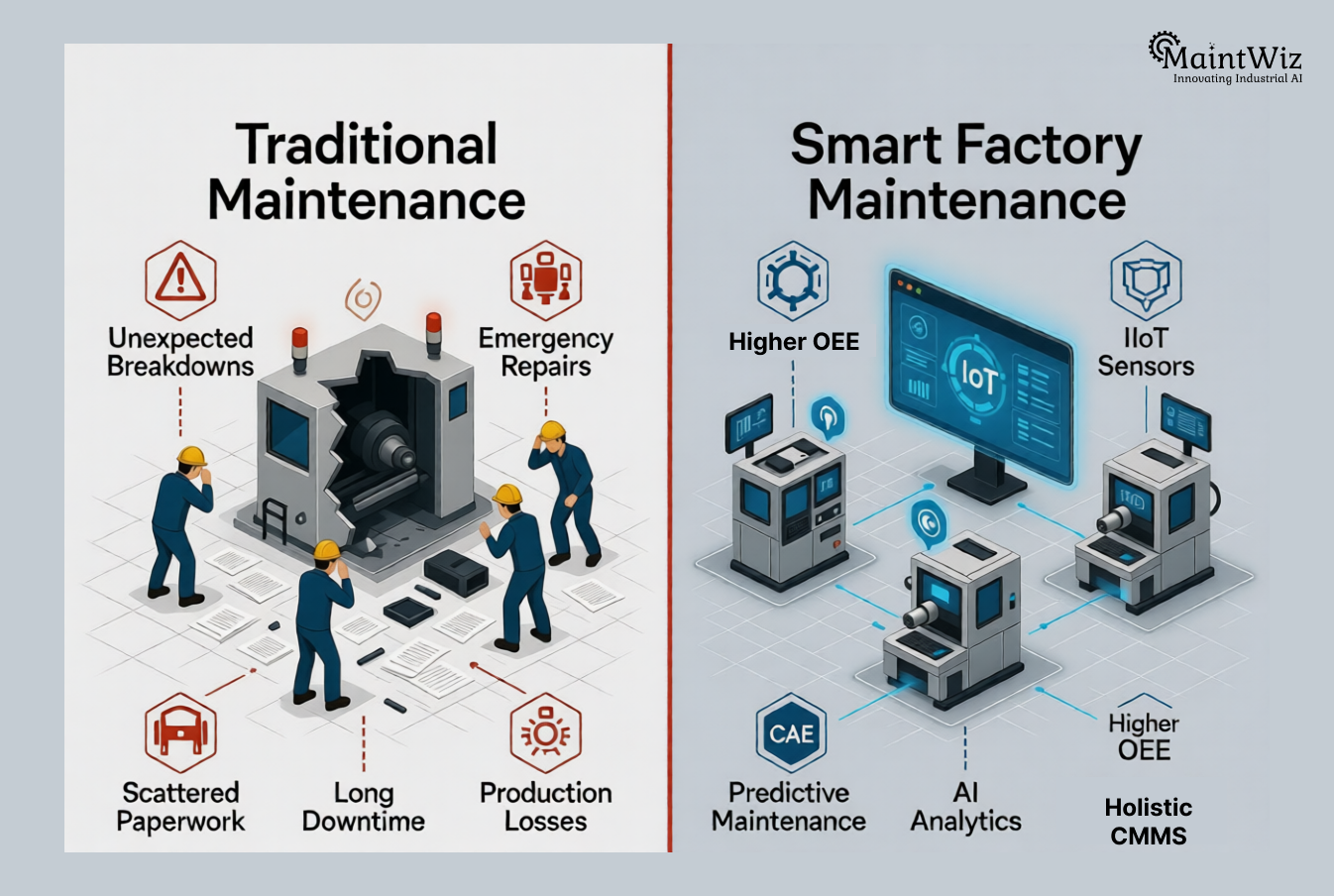
Modern factories now generate thousands of equipment signals every second. Vibration patterns, bearing temperatures, lubrication conditions, motor current, pressure fluctuations, energy consumption, and operating cycles collectively provide an accurate picture of machine health. Yet if this information never reaches the maintenance planning process, its value remains largely unrealized.
This is where IIoT CMMS integration creates measurable business impact.
Instead of operating as separate systems, IIoT platforms become the “eyes and ears” of the plant, while the CMMS acts as the operational decision engine. Real-time asset intelligence automatically drives maintenance actions, eliminating delays between fault detection and maintenance execution.
The result is a maintenance organization capable of responding proactively rather than reactively.
Leading manufacturers increasingly view this integration as a foundational capability for Industry 4.0, enabling autonomous maintenance, predictive analytics, and AI-assisted decision-making.
Understanding IIoT CMMS Integration
At its core, IIoT CMMS integration is the seamless exchange of information between connected industrial assets and maintenance management software.
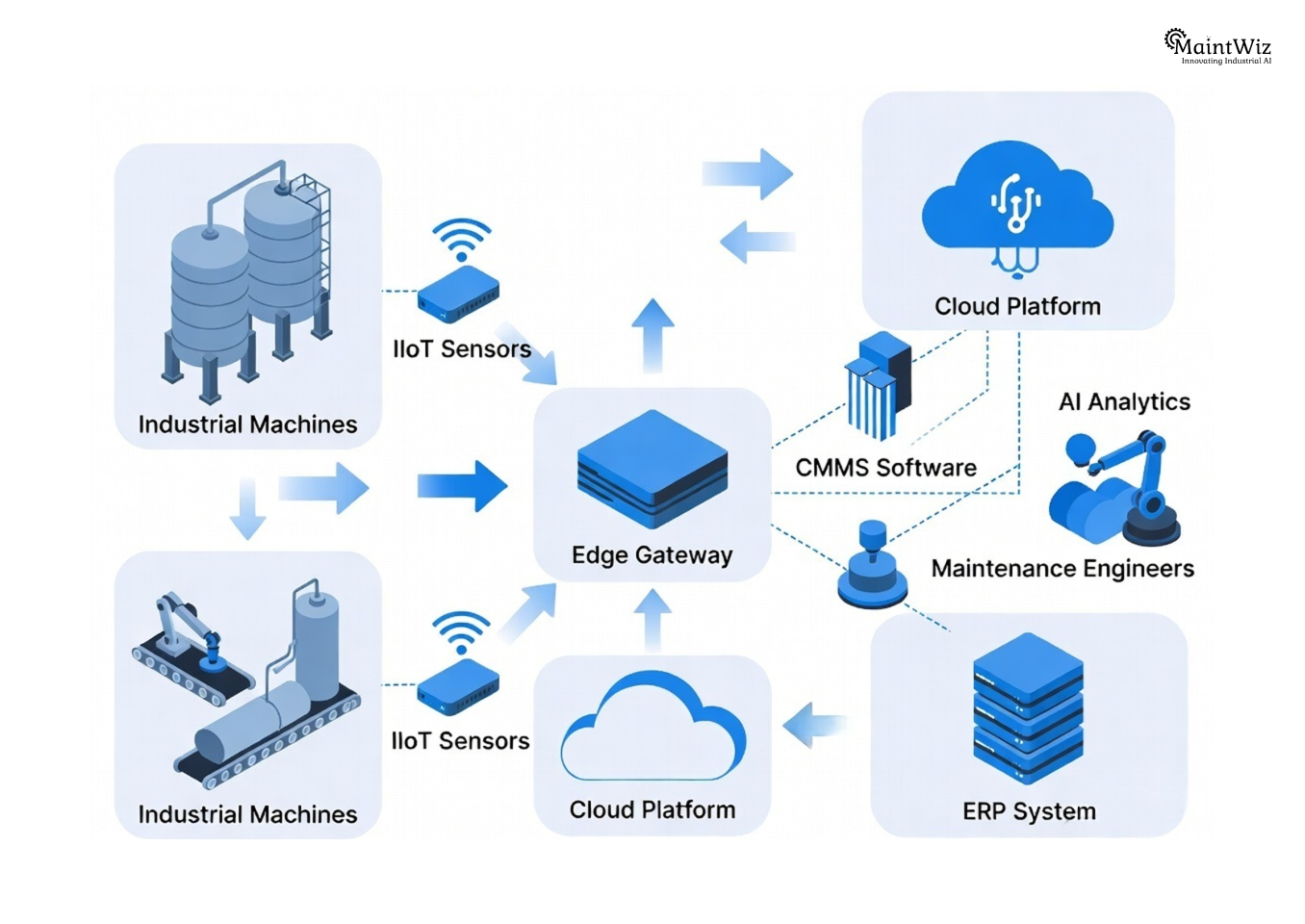
IIoT devices continuously collect operational data from machinery, while the CMMS transforms this data into actionable maintenance activities.
Instead of relying solely on calendar-based maintenance schedules, organizations gain the ability to trigger maintenance based on actual equipment condition.
For example:
A vibration sensor detects increasing bearing vibration on a centrifugal pump.
Instead of waiting for the next monthly inspection, the IIoT platform automatically sends an alert to the CMMS.
The CMMS then:
- Creates a maintenance work order
- Assigns priority based on asset criticality
- Allocates qualified technicians
- Checks spare bearing availability
- Notifies supervisors
- Updates maintenance history
- Tracks repair completion
- Stores data for future reliability analysis
This closed-loop workflow significantly reduces response time while improving maintenance consistency.
Step 1: Establish a Reliability-Centered Asset Foundation Before Connecting IIoT Devices
Many digital maintenance initiatives begin by deploying hundreds of sensors across the factory floor. While sensor technology has become increasingly affordable, indiscriminately instrumenting every asset rarely delivers proportional business value.
The most successful IIoT CMMS integration projects begin with asset criticality—not technology.
Before selecting sensors or configuring data pipelines, organizations should conduct a structured asset criticality assessment. Every production asset contributes differently to operational performance. A compressor supplying the entire production line carries a substantially higher operational risk than a standalone utility pump with available redundancy.
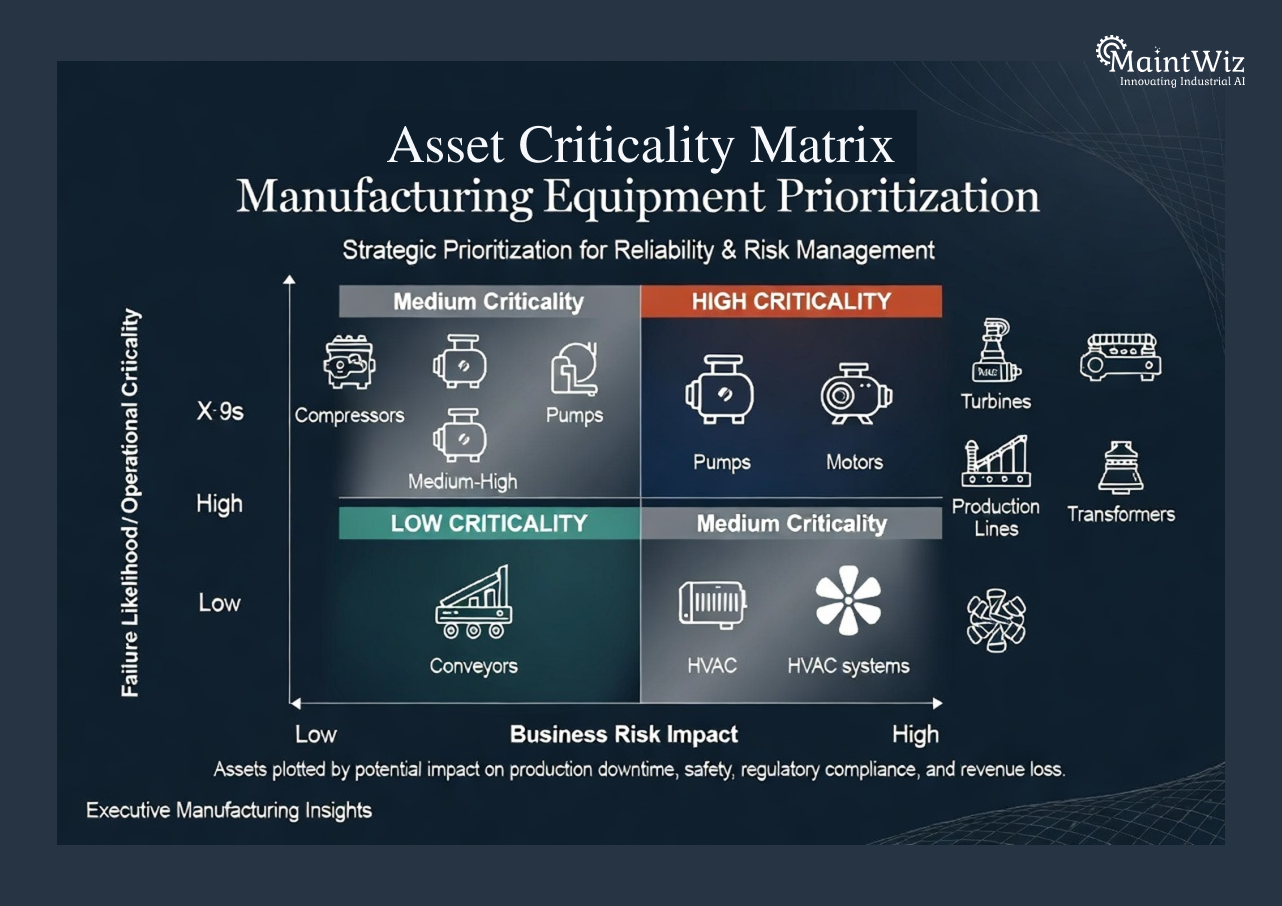
Criticality analysis helps maintenance leaders determine where real-time monitoring will produce the greatest return on investment.
Key evaluation criteria include:
- Impact on production output
- Safety implications
- Environmental compliance
- Equipment replacement cost
- Mean Time Between Failures (MTBF)
- Mean Time To Repair (MTTR)
- Maintenance history
- Spare parts availability
- Energy consumption
- Regulatory requirements
Once critical assets have been identified, maintenance teams should create a standardized asset hierarchy within the CMMS.
A well-structured hierarchy enables:
- Accurate work order assignment
- Consistent maintenance history
- Improved failure analysis
- Better spare parts planning
- Equipment lifecycle tracking
- Performance benchmarking
- Asset genealogy
Organizations often underestimate the importance of clean master data. Duplicate equipment records, inconsistent naming conventions, and incomplete maintenance histories significantly reduce the effectiveness of predictive maintenance algorithms.
Reliable predictive maintenance begins with reliable asset data.
This stage should also include defining maintenance objectives for each critical asset. For example, rotating equipment may require vibration monitoring, while electrical systems may benefit more from thermal imaging and current analysis. Compressors might demand pressure, temperature, and energy monitoring, whereas hydraulic systems may focus on fluid contamination and pressure stability.
Rather than deploying technology for its own sake, maintenance leaders should identify the operational questions they want IIoT data to answer.
Examples include:
- Is this bearing approaching failure?
- Is energy consumption increasing beyond expected levels?
- Has lubrication effectiveness deteriorated?
- Is vibration trending outside acceptable limits?
- Is the motor operating beyond its designed load?
Answering these questions provides a clear business purpose for every connected sensor and ensures that the resulting data supports actionable maintenance decisions.
Step 2: Build a Robust IIoT Data Collection and Condition Monitoring Framework
Once critical assets have been identified and maintenance objectives clearly defined, the next priority is establishing a reliable condition monitoring infrastructure. This is where many organizations discover that successful IIoT initiatives depend less on the quantity of data collected and more on the quality, relevance, and context of that data.
Industrial assets operate under constantly changing conditions. Load variations, environmental factors, production schedules, operator behavior, and equipment age all influence machine performance. Effective condition monitoring captures these dynamic changes in real time and converts them into meaningful maintenance intelligence rather than overwhelming maintenance teams with raw data.
The first step is selecting the right sensing technologies based on equipment failure modes. Rotating machinery, for example, benefits from vibration sensors capable of detecting bearing wear, shaft misalignment, imbalance, and mechanical looseness. Temperature sensors provide early indications of overheating in motors, electrical panels, transformers, and gearboxes. Pressure sensors help identify leaks, pump inefficiencies, and hydraulic abnormalities, while current sensors reveal motor loading, electrical faults, and abnormal power consumption. For assets where lubrication is critical, oil quality sensors can detect contamination, moisture ingress, and lubricant degradation long before visible equipment damage occurs.
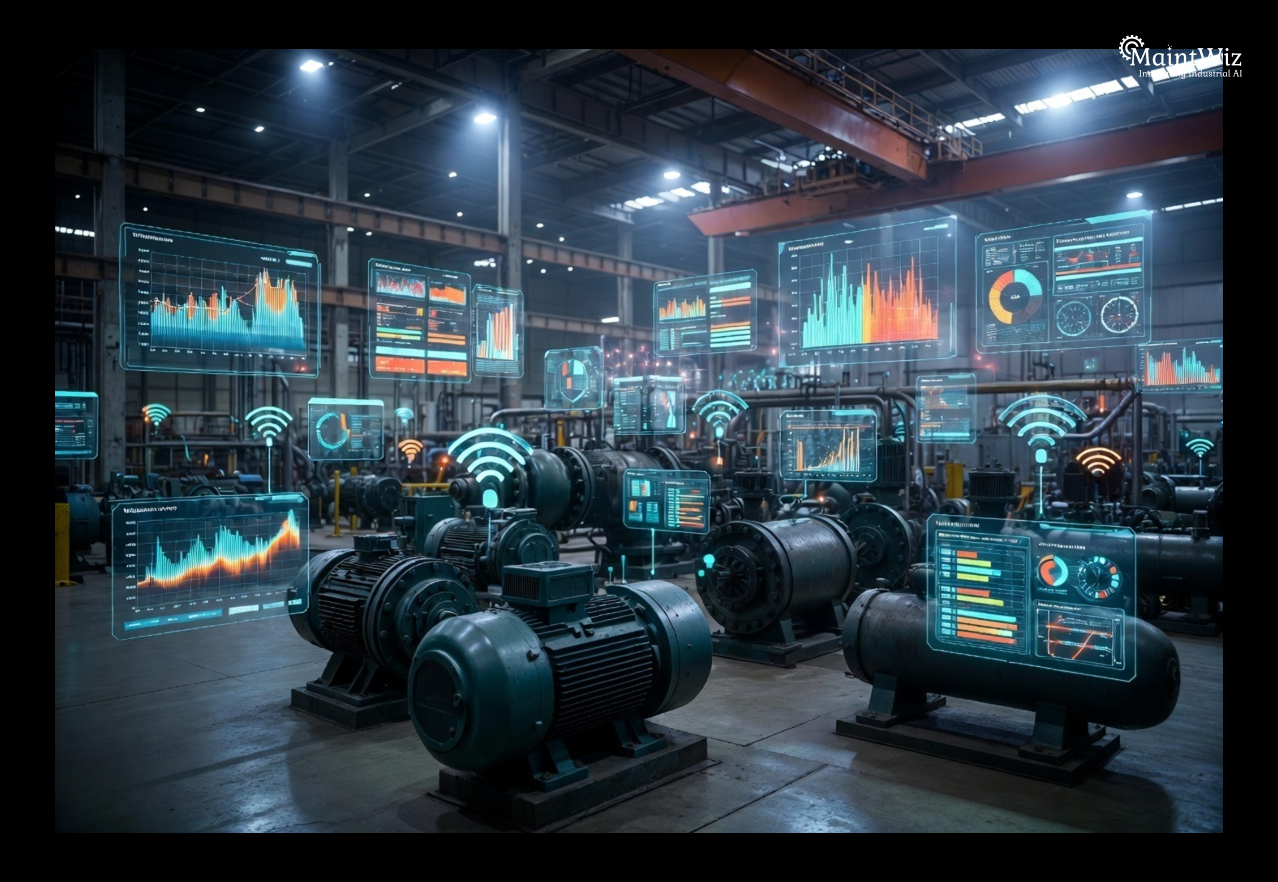
However, simply installing sensors is not enough. Data must be contextualized. A vibration reading of 5 mm/s may be normal for one machine and a critical alarm for another. Thresholds should therefore be defined according to asset type, operating conditions, manufacturer recommendations, and historical performance. Establishing equipment-specific baselines enables maintenance teams to distinguish genuine anomalies from routine operational fluctuations.
Equally important is the design of the data acquisition architecture. IIoT devices should communicate securely with edge gateways or industrial communication platforms capable of filtering, aggregating, and validating data before transmitting it to enterprise systems. This reduces unnecessary network traffic and ensures that only relevant, high-quality information reaches the CMMS.
At this stage, organizations should also determine how frequently data needs to be collected. High-speed rotating equipment may require continuous monitoring, whereas slower-moving or less critical assets may only need periodic readings. Aligning data frequency with asset criticality prevents excessive data storage costs while ensuring that emerging failures are detected early enough for proactive intervention.
A mature condition monitoring framework also incorporates alarm management strategies. Instead of generating alerts for every threshold breach, organizations should define multiple severity levels—such as advisory, warning, and critical—each linked to specific maintenance responses. This prioritization prevents alarm fatigue and ensures that maintenance resources focus on the issues posing the greatest operational risk.
Ultimately, the goal of Step 2 is not to create more data, but to create trusted, actionable insights that serve as the foundation for automated maintenance workflows in the subsequent stages of IIoT CMMS integration.
Step 3: Integrate IIoT Data with Your CMMS to Automate Intelligent Maintenance Workflows
Collecting high-quality equipment data is only half the equation. The real value of an IIoT initiative is realized when operational insights are translated into maintenance actions without manual intervention. This is where IIoT CMMS integration evolves from a technology project into a business transformation initiative.
In many manufacturing facilities, operations teams receive equipment alarms while maintenance teams continue to rely on spreadsheets, emails, phone calls, or shift handovers to initiate work. These fragmented processes introduce delays, create communication gaps, and often result in maintenance activities being performed too late. Critical information may never reach the technician responsible for resolving the issue, or it may arrive without sufficient context to support an effective repair.
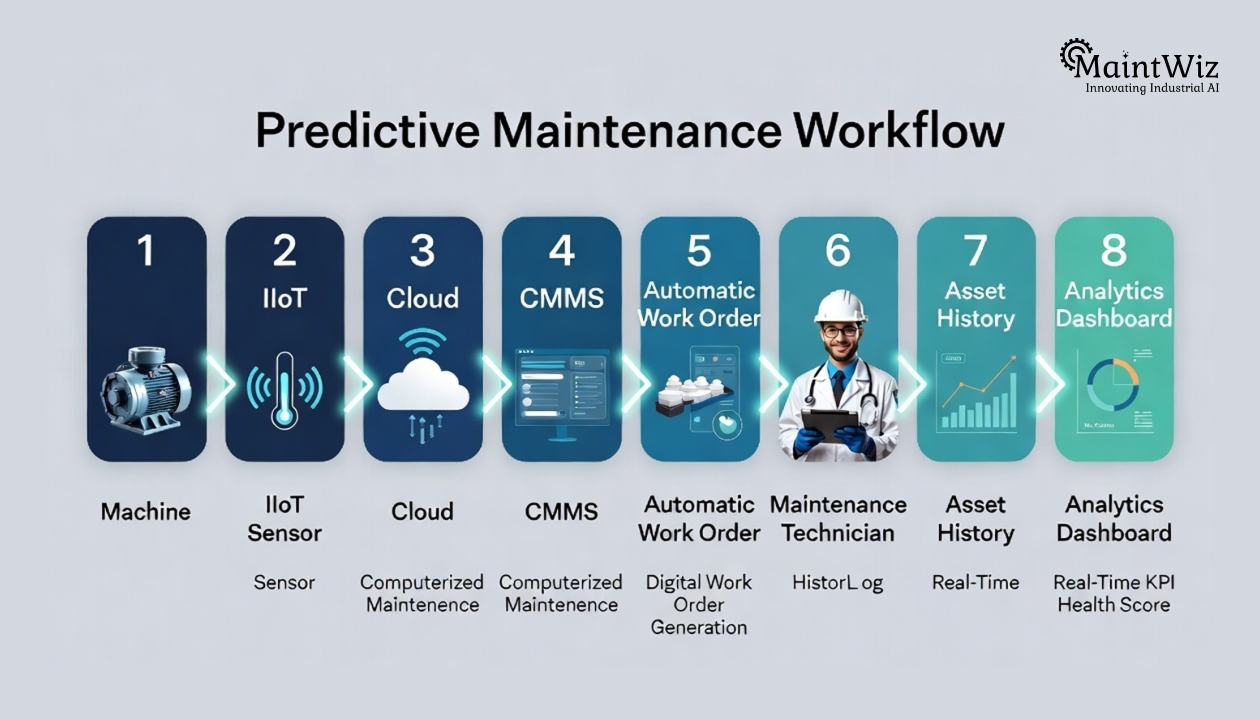
An integrated CMMS bridges this gap by acting as the operational hub for maintenance execution. Instead of treating equipment data and maintenance planning as separate functions, the system continuously interprets equipment conditions and converts them into structured maintenance workflows.
A mature integration enables the following sequence:
- An IIoT sensor detects an abnormal condition.
- The anomaly is validated against predefined operating thresholds.
- The event is classified based on severity and asset criticality.
- The CMMS automatically generates a work request or work order.
- The appropriate maintenance procedure is attached.
- The work is assigned to technicians with the required skills.
- Spare parts availability is verified.
- Supervisors receive notifications and escalation alerts if required.
- Once completed, maintenance history is automatically updated for future analysis.
This closed-loop workflow significantly reduces the time between fault detection and corrective action while improving consistency across maintenance operations.
Establish Event-Driven Maintenance Rules
Not every equipment alert should trigger an immediate work order. Excessive automation without governance can overwhelm maintenance teams with unnecessary tasks and create “alert fatigue.” Organizations should therefore establish clear business rules that determine how different equipment events are handled.
Examples include:
- A minor increase in vibration may generate an inspection request within the next scheduled maintenance window.
- A rapid increase in bearing temperature may trigger a high-priority corrective work order.
- Continuous deterioration over several operating cycles may initiate a predictive maintenance workflow.
- Multiple abnormal parameters occurring simultaneously may automatically escalate the issue to engineering leadership.
These rules should reflect operational risk rather than simply technical thresholds. A small anomaly on a production bottleneck asset may require immediate attention, while a similar reading on a redundant utility asset may be monitored over time.
Integrate Across the Digital Manufacturing Ecosystem
Although the CMMS becomes the maintenance execution platform, maximum value is achieved when it integrates with other enterprise systems. Modern smart factories increasingly connect maintenance data with:
- Enterprise Resource Planning (ERP)
- Manufacturing Execution Systems (MES)
- SCADA platforms
- PLCs
- Digital historians
- Asset Performance Management (APM) platforms
- Energy Management Systems
- Inventory and procurement systems
This connected ecosystem enables maintenance decisions to consider production schedules, inventory availability, energy performance, and operational priorities simultaneously.
For example, if an impending bearing failure is detected during a high-demand production period, the CMMS can recommend scheduling maintenance during the next planned production changeover rather than initiating an immediate shutdown. This level of contextual decision-making minimizes production disruption while protecting equipment reliability.
Build High-Quality Maintenance Data
Every automated work order contributes to an expanding repository of maintenance intelligence. Over time, organizations accumulate valuable information about:
- Failure patterns
- Equipment life cycles
- Technician productivity
- Repair effectiveness
- Spare parts consumption
- Maintenance costs
- Downtime causes
- Asset reliability trends
This historical knowledge becomes increasingly valuable as predictive analytics and AI capabilities mature, enabling maintenance strategies to evolve continuously based on operational evidence rather than assumptions.
Step 4: Use Predictive Analytics and Artificial Intelligence to Optimize Maintenance Decisions
The next stage of digital maintenance maturity extends beyond monitoring equipment conditions. It focuses on understanding why equipment behaves the way it does and predicting what is likely to happen next.
Traditional preventive maintenance answers the question:
“When should maintenance be performed?”
Predictive maintenance answers a far more valuable question:
“When is maintenance actually needed?”
Artificial intelligence and advanced analytics continuously analyze equipment behavior across thousands of operating hours, identifying subtle trends that are difficult for human observers to detect.
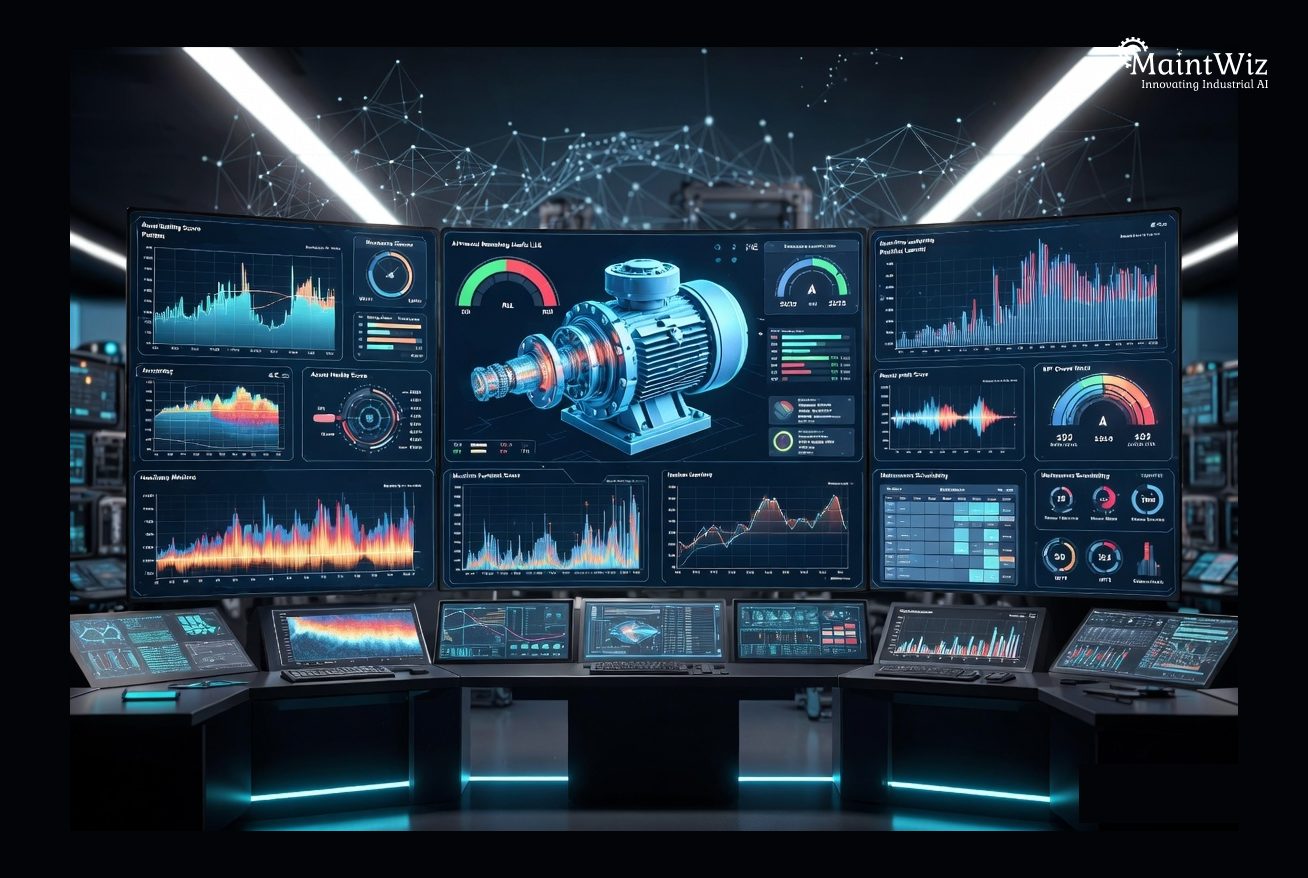
Rather than relying on a single parameter, predictive algorithms evaluate relationships between multiple variables, including:
- Vibration signatures
- Temperature profiles
- Lubrication quality
- Electrical current
- Pressure fluctuations
- Production load
- Environmental conditions
- Historical maintenance records
This multidimensional analysis significantly improves prediction accuracy while reducing unnecessary maintenance interventions.
Shift from Reactive Decisions to Risk-Based Maintenance
One of the greatest benefits of predictive analytics is its ability to prioritize maintenance activities according to operational risk.
Instead of servicing every machine at fixed intervals, maintenance resources are directed toward assets that genuinely require attention.
This delivers several advantages:
- Reduced preventive maintenance workload
- Longer equipment operating life
- Lower maintenance costs
- Better technician utilization
- Reduced spare parts consumption
- Improved production availability
Rather than replacing preventive maintenance entirely, predictive analytics enables organizations to refine maintenance schedules using actual equipment health information.
Enhance Decision-Making with Reliability Dashboards
Executives, plant managers, maintenance supervisors, and reliability engineers require different levels of operational visibility.
Modern IIoT CMMS integration supports role-based dashboards that present information aligned with each stakeholder’s responsibilities.
Examples include:
Plant Leadership
- Overall Equipment Effectiveness (OEE)
- Plant availability
- Maintenance cost trends
- Downtime impact
- Reliability performance
Maintenance Managers
- Backlog analysis
- Work order completion
- Asset health scores
- Technician utilization
- Preventive maintenance compliance
Reliability Engineers
- Failure modes
- Root cause trends
- Remaining Useful Life (RUL)
- MTBF
- MTTR
- Reliability growth
These dashboards transform maintenance from an operational support function into a strategic contributor to business performance.
Step 5: Create a Culture of Continuous Improvement and Reliability Excellence
Technology alone does not create a smart maintenance organization.
Long-term success depends on establishing governance, standardized processes, and a culture that continuously learns from operational data.
Organizations frequently underestimate this final step. They invest heavily in sensors, software, and analytics while overlooking the human and organizational capabilities required to sustain digital transformation.
A successful IIoT CMMS integration should establish an ongoing reliability improvement cycle.
The cycle typically includes:
- Collect equipment condition data.
- Detect anomalies.
- Execute maintenance activities.
- Analyze maintenance outcomes.
- Identify recurring failure modes.
- Improve maintenance strategies.
- Update maintenance plans.
- Repeat the cycle using newly acquired operational knowledge.
Each maintenance intervention should improve future maintenance decisions.
Measure What Matters
Continuous improvement requires measurable performance indicators.
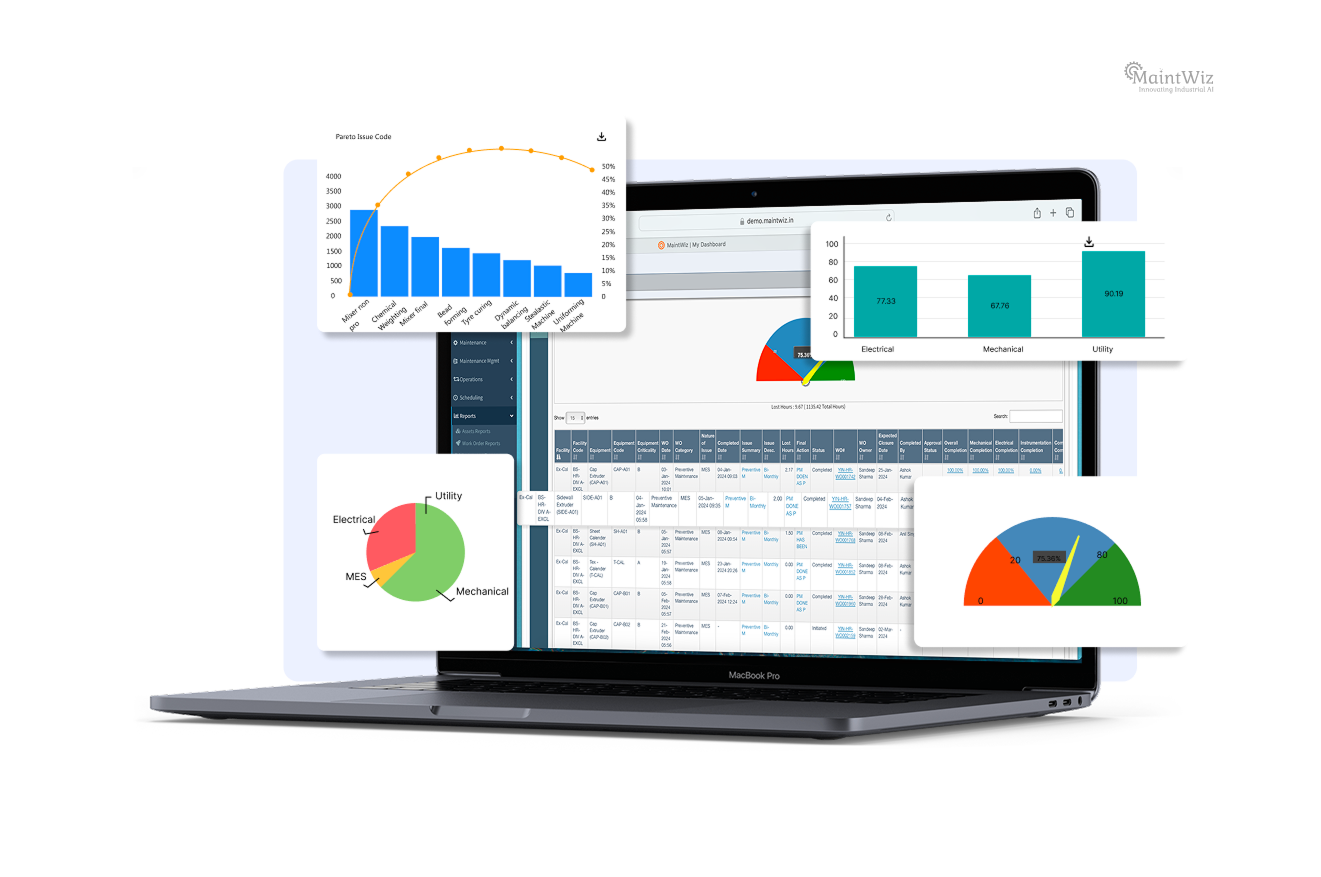
Leading organizations monitor KPIs such as:
Asset Reliability
- Mean Time Between Failures (MTBF)
- Mean Time To Repair (MTTR)
- Equipment availability
- Asset health score
Maintenance Performance
- Planned vs. reactive maintenance
- Schedule compliance
- Work order completion rate
- Maintenance backlog
Financial Performance
- Maintenance cost per asset
- Downtime cost
- Inventory carrying cost
- Spare parts optimization
Operational Performance
- Overall Equipment Effectiveness (OEE)
- Production losses
- Energy efficiency
- First-time fix rate
Rather than treating these KPIs as monthly reports, organizations should use them to continuously refine maintenance strategies and investment decisions.
How MaintWiz CMMS Enables IIoT-Driven Smart Factory Maintenance
Building a connected maintenance ecosystem requires more than integrating sensors with software. It requires a centralized platform capable of transforming equipment intelligence into structured, repeatable maintenance processes.
This is where MaintWiz CMMS plays a pivotal role.
MaintWiz provides a comprehensive maintenance management platform that connects asset information, maintenance planning, predictive insights, technician workflows, and operational analytics within a single environment. Instead of operating in disconnected systems, maintenance teams gain a unified view of equipment health, work execution, spare parts, and performance metrics.
When integrated with IIoT-enabled assets, MaintWiz supports condition-based maintenance by enabling organizations to respond to real-time equipment events with automated and standardized workflows. Maintenance teams can prioritize interventions based on asset criticality, monitor work order execution, maintain complete asset histories, and use historical performance data to strengthen future maintenance planning.
For organizations pursuing predictive maintenance, MaintWiz also provides the operational framework needed to convert equipment intelligence into measurable business outcomes. Maintenance planners can align predictive alerts with workforce scheduling, inventory availability, and planned shutdown windows, ensuring that maintenance actions are executed at the most appropriate time with minimal disruption to production.
Beyond day-to-day maintenance execution, MaintWiz contributes to long-term asset reliability by providing analytics that support continuous improvement initiatives. Trends in failure modes, recurring work orders, maintenance costs, equipment performance, and technician productivity can be analyzed to identify opportunities for optimization across the asset lifecycle.
For organizations implementing a 90-day smart factory maintenance transformation, MaintWiz provides the operational backbone for each phase of the journey:
- Days 1–30: Establish a structured asset hierarchy, assess criticality, standardize master data, and configure maintenance workflows.
- Days 31–60: Integrate IIoT data streams, automate work order generation, define condition-based maintenance rules, and monitor equipment health.
- Days 61–90: Leverage maintenance analytics, optimize preventive maintenance intervals, improve KPI visibility, and institutionalize reliability-focused decision-making across the organization.
Rather than simply digitizing maintenance records, MaintWiz enables organizations to build a connected, intelligence-driven maintenance operation that supports higher equipment availability, improved planning accuracy, and sustained operational excellence.
Conclusion
The journey toward a smart factory does not begin with artificial intelligence, advanced analytics, or sophisticated sensors. It begins with a clear maintenance strategy that aligns technology with business objectives.
IIoT CMMS integration provides the foundation for that strategy by connecting real-time equipment intelligence with disciplined maintenance execution. When implemented thoughtfully, it enables organizations to move beyond reactive firefighting and calendar-based maintenance toward a predictive, data-driven operating model.
The five-step framework outlined in this article—establishing a reliability-centered asset foundation, building robust condition monitoring, integrating IIoT with the CMMS, applying predictive analytics, and embedding continuous improvement—offers a practical roadmap for manufacturers seeking to modernize maintenance operations.
As industrial organizations continue their digital transformation journeys, maintenance will play an increasingly strategic role in achieving operational resilience, maximizing asset performance, and sustaining competitive advantage. The manufacturers that succeed will not simply collect more equipment data—they will use that data to make faster, smarter, and more reliable maintenance decisions.


Jai Balachandran is an industry expert with a proven track record in driving digital transformation and Industry 4.0 technologies. With a rich background in asset management, plant maintenance, connected systems, TPM and reliability initiatives, he brings unparalleled insight and delivery excellence to Plant Operations.
Company
Download App