Kobetsu Kaizen in Maintenance: Using AI to Drive Focused
Improvement on the Shop Floor
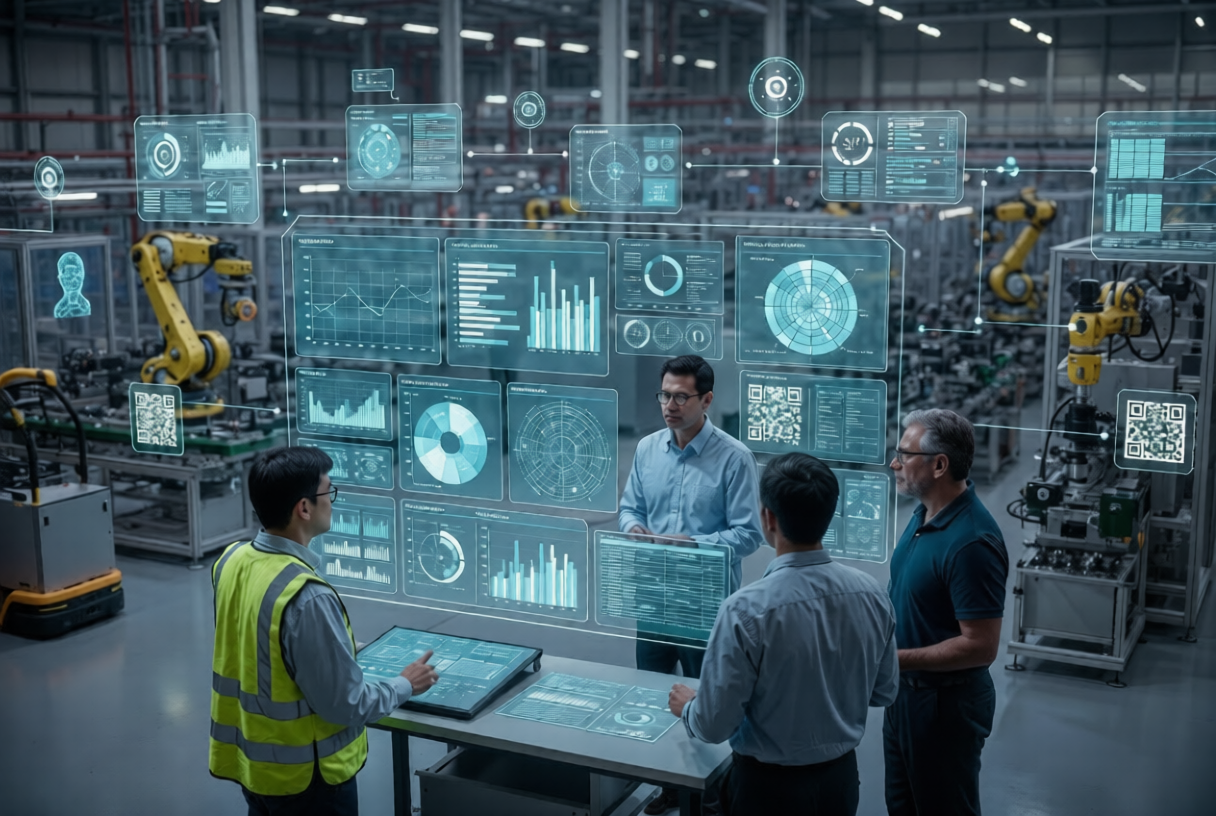
Manufacturing has always been a relentless pursuit of incremental improvement. Long before artificial intelligence, predictive analytics, and Industrial Internet of Things (IIoT) technologies entered the factory floor, world-class manufacturers understood that sustainable operational excellence was built through disciplined, systematic problem-solving rather than isolated breakthrough projects. This philosophy became the foundation of Total Productive Maintenance (TPM) and Lean Manufacturing, where every recurring loss is treated as an opportunity for continuous improvement.
Among TPM’s eight pillars, Kobetsu Kaizen, commonly translated as Focused Improvement, occupies a unique position. Unlike routine maintenance activities that preserve equipment performance, Kobetsu Kaizen seeks to eliminate chronic losses by identifying root causes, implementing structured countermeasures, and continuously refining operational processes. It is not simply about fixing problems—it is about ensuring that the same problem never occurs again.
Yet the manufacturing environment of 2026 presents a level of complexity that traditional Kaizen methodologies were never designed to address. Production systems now generate millions of operational data points every day. Maintenance teams must interpret sensor readings, machine alarms, work order histories, energy consumption trends, production schedules, operator observations, and quality data simultaneously. While information has become abundant, actionable insights remain scarce.
This is where Kobetsu Kaizen maintenance enters a new era.
Artificial intelligence is fundamentally reshaping how focused improvement initiatives are identified, prioritized, and executed. Instead of relying solely on manual investigations or periodic improvement workshops, manufacturers can now leverage AI-powered maintenance platforms to detect hidden failure patterns, recommend corrective actions, predict recurring losses, and continuously monitor the effectiveness of improvement initiatives.
Rather than replacing Kaizen, AI strengthens its core philosophy by enabling maintenance teams to make faster, more informed decisions based on evidence rather than assumptions.
Organizations embracing AI-driven focused improvement are already demonstrating measurable operational benefits, including:
- Significant reductions in chronic equipment failures
- Higher Overall Equipment Effectiveness (OEE)
- Faster root cause identification
- Reduced Mean Time to Repair (MTTR)
- Improved Mean Time Between Failures (MTBF)
- Better maintenance planning accuracy
- Higher workforce productivity
- Increased asset reliability
- Stronger collaboration between production, engineering, and maintenance
However, realizing these outcomes requires more than deploying artificial intelligence tools. It demands a structured approach that integrates TPM principles, digital maintenance systems, operational analytics, and cross-functional problem-solving into a unified continuous improvement strategy.
This article explores how manufacturers can modernize Kobetsu Kaizen by combining artificial intelligence, CMMS platforms, and industrial analytics to drive measurable improvements across the shop floor.
Why Kobetsu Kaizen Remains the Engine of Continuous Improvement
Manufacturing organizations often associate maintenance success with reducing equipment failures. While minimizing breakdowns is essential, it represents only one aspect of operational excellence.
The more significant challenge lies in addressing chronic losses—small, recurring inefficiencies that individually appear insignificant but collectively erode productivity, increase operating costs, reduce equipment availability, and limit manufacturing competitiveness.
These chronic losses typically manifest as:
- Frequent minor stoppages
- Repeated bearing failures
- Recurring lubrication problems
- Excessive changeover times
- Quality defects caused by equipment instability
- Excessive maintenance overtime
- Energy inefficiencies
- Operator interventions
- Inconsistent maintenance execution
Traditional maintenance programs frequently address these issues symptom by symptom. A failed bearing is replaced. A leaking seal is repaired. A conveyor is restarted. While production resumes, the underlying causes remain unresolved, allowing the same failures to recur repeatedly.
Kobetsu Kaizen challenges this reactive mindset by asking a fundamentally different question:
“Why does this problem continue to happen?”
Rather than focusing solely on restoring equipment, focused improvement seeks to eliminate the conditions that allow failures to develop in the first place.
This shift transforms maintenance from an operational support function into a strategic driver of manufacturing performance.
Understanding Kobetsu Kaizen in Modern Maintenance
The Japanese term Kobetsu Kaizen literally translates to Focused Improvement. Within the TPM framework, it refers to a structured methodology for identifying, analyzing, and eliminating losses that reduce equipment effectiveness.
Unlike preventive maintenance, which seeks to prevent failures through scheduled activities, Kobetsu Kaizen targets systemic problems that repeatedly impact operational performance.
Typical improvement initiatives include:
- Eliminating recurring equipment failures
- Reducing setup and changeover losses
- Improving equipment accessibility
- Optimizing lubrication practices
- Simplifying maintenance procedures
- Reducing spare parts consumption
- Improving operator-maintainer collaboration
- Increasing equipment reliability
- Enhancing maintenance planning
Historically, these initiatives depended heavily on manual data collection, engineering expertise, and cross-functional workshops.
While highly effective, this approach often struggled with several limitations.
Teams spent considerable time gathering maintenance records, reviewing historical work orders, analyzing production logs, interviewing operators, and manually identifying recurring patterns.
By the time root causes were confirmed, weeks—or even months—could have passed.
Artificial intelligence dramatically changes this process.
How Artificial Intelligence Changes Focused Improvement
One of AI’s greatest strengths is its ability to recognize patterns across vast amounts of operational data that would be nearly impossible for humans to identify manually.
Instead of reviewing hundreds of maintenance reports individually, AI continuously analyzes relationships between:
- Equipment failures
- Maintenance history
- Operator observations
- Spare parts usage
- Production schedules
- Environmental conditions
- Sensor readings
- Energy consumption
- Machine utilization
- Quality defects
This enables maintenance teams to shift from reactive investigations toward proactive improvement opportunities.
For example, AI may discover that a specific gearbox consistently fails shortly after production shifts exceed a certain throughput level. It may identify that bearing failures increase when ambient temperatures rise above predefined thresholds or that lubrication issues occur more frequently following specific production changeovers.
These relationships often remain invisible using conventional maintenance reporting.
By surfacing hidden operational patterns, AI significantly accelerates focused improvement initiatives.
Why Traditional Root Cause Analysis Is No Longer Enough
Root Cause Analysis (RCA) has long been one of the most valuable tools in maintenance management. Techniques such as the 5 Whys, Fishbone Diagrams, Pareto Analysis, and Failure Mode and Effects Analysis (FMEA) continue to provide structured methods for understanding equipment failures.
However, modern manufacturing environments generate data volumes that exceed the capacity of manual analysis.
Consider a production facility operating hundreds of connected assets. Every machine continuously produces information related to vibration, temperature, pressure, motor current, operating cycles, energy consumption, maintenance interventions, quality metrics, and operator activities. Analyzing these variables manually is both time-consuming and prone to oversight.
Artificial intelligence does not replace Root Cause Analysis—it augments it.
Instead of beginning investigations with assumptions, engineers can start with AI-generated insights that highlight likely failure patterns, correlations, and contributing factors. Human expertise remains essential for validating findings, implementing corrective actions, and assessing operational feasibility, but AI significantly reduces the time required to identify where improvement efforts should be focused.
This combination of human judgment and machine intelligence creates a more effective and scalable approach to continuous improvement.
The Evolution from Reactive Kaizen to AI-Driven Continuous Improvement
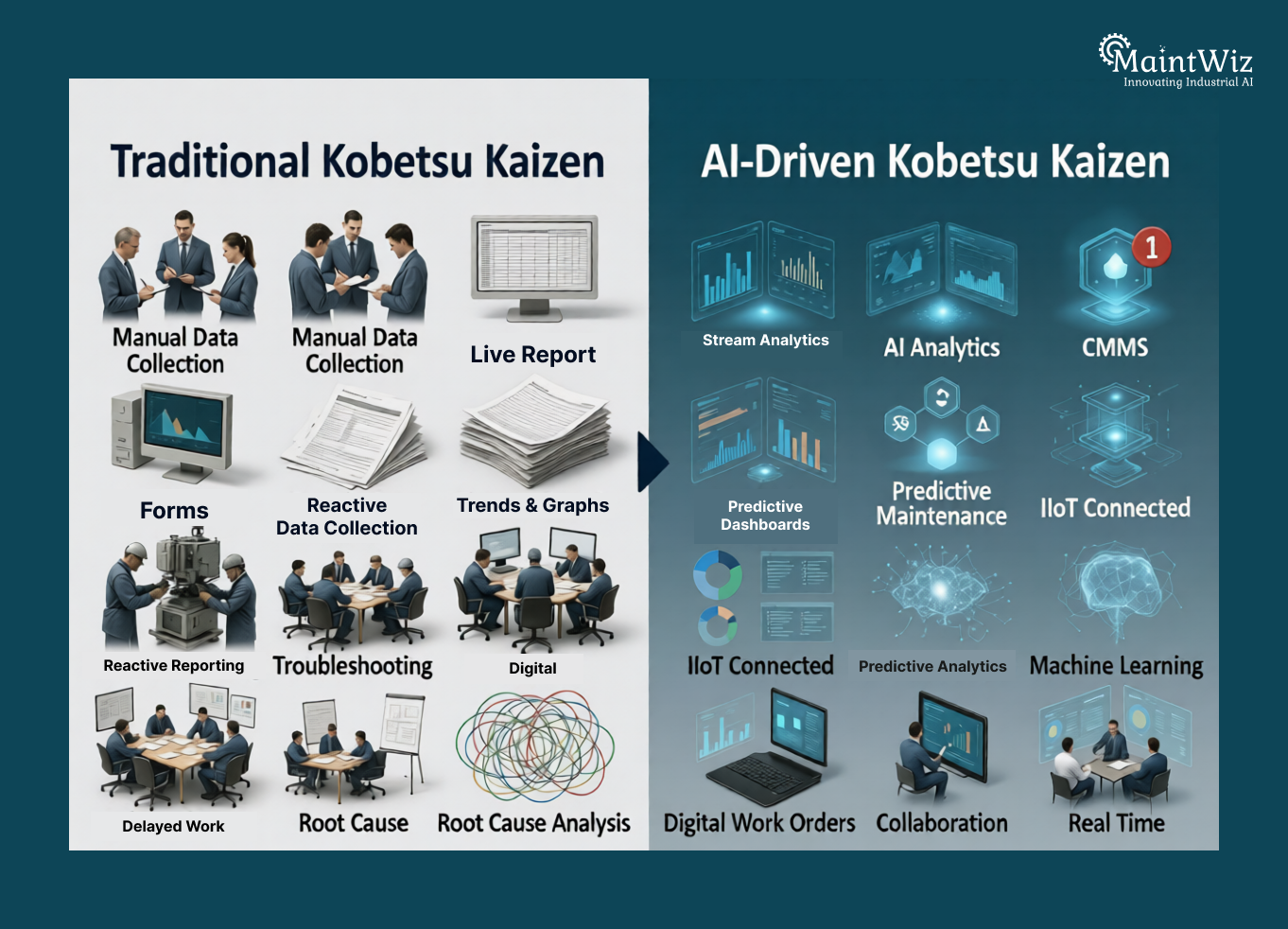
Traditional Kobetsu Kaizen initiatives were often triggered after a significant equipment issue or recurring operational problem became visible. Improvement teams would assemble, collect data, perform root cause analysis, implement countermeasures, and monitor results. While effective, this process was largely event-driven and dependent on periodic reviews.
AI enables a continuous improvement model in which opportunities for Kaizen are identified automatically as operational data is generated.
Instead of waiting for repeated failures, maintenance teams receive proactive recommendations based on emerging trends.
For example, an AI-powered maintenance platform may identify:
- A gradual increase in vibration across multiple pumps of the same model.
- A recurring relationship between lubrication intervals and premature bearing wear.
- Rising maintenance costs associated with a specific production line.
- Increasing work order frequency for a particular class of equipment.
- Hidden failure patterns that affect Overall Equipment Effectiveness (OEE).
Rather than reacting to these issues after they impact production, organizations can launch focused improvement initiatives before chronic losses become business-critical.
In this way, AI transforms Kobetsu Kaizen from a reactive problem-solving exercise into a continuously operating improvement engine—one that identifies opportunities, supports evidence-based decision-making, and enables maintenance teams to drive sustained operational excellence.
Building an AI-Driven Kobetsu Kaizen Program: A Five-Step Framework for Sustainable Improvement
While artificial intelligence provides unprecedented analytical capabilities, technology alone cannot create a culture of continuous improvement. Successful Kobetsu Kaizen maintenance programs combine structured TPM methodologies with digital intelligence, cross-functional collaboration, and disciplined execution.
The following five-step framework provides manufacturers with a practical roadmap for embedding AI into focused improvement initiatives while preserving the Kaizen philosophy of eliminating losses at their source.
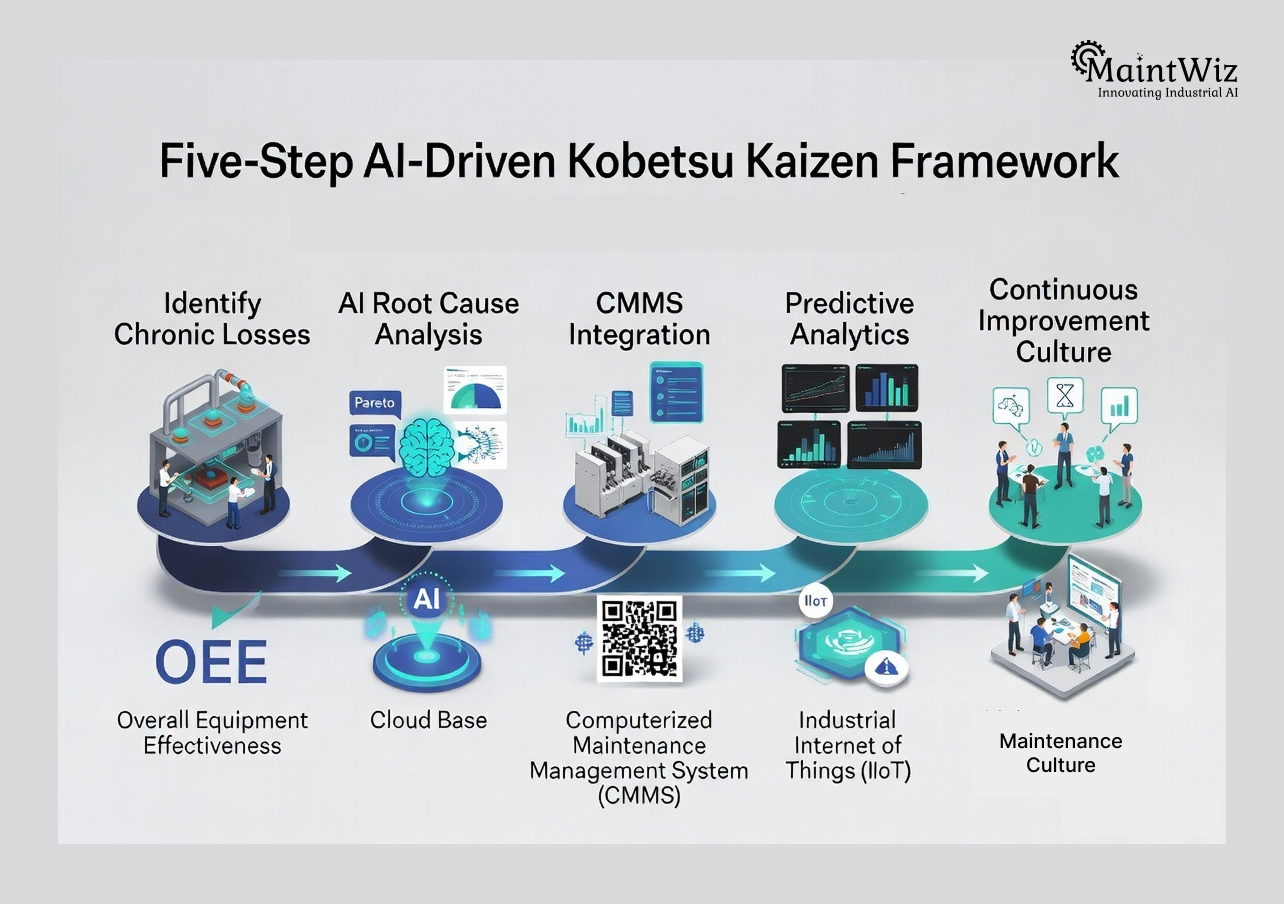
Step 1: Identify Chronic Losses Using Data Instead of Assumptions
Every improvement initiative should begin with an objective understanding of where operational losses occur.
Historically, improvement teams relied on production meetings, operator feedback, maintenance records, and engineering observations to prioritize Kaizen activities. While these inputs remain valuable, they often reflect isolated events rather than broader operational trends.
Artificial intelligence fundamentally changes this starting point by continuously analyzing data across the entire maintenance ecosystem.
Instead of asking teams to determine which machine deserves attention, AI identifies assets that consistently contribute to production losses based on measurable operational evidence.
These insights may include:
- Assets generating the highest maintenance costs
- Equipment with recurring emergency work orders
- Machines responsible for repeated production interruptions
- Components with abnormal replacement frequencies
- Production lines experiencing declining Overall Equipment Effectiveness (OEE)
- Systems consuming excessive maintenance labor hours
By prioritizing improvement initiatives using operational intelligence rather than intuition, organizations ensure that engineering resources focus on the areas with the greatest business impact.
This data-driven prioritization also improves alignment between production, maintenance, engineering, and plant leadership by creating a shared understanding of operational priorities.
Step 2: Accelerate Root Cause Analysis with AI and Maintenance Intelligence
Root Cause Analysis (RCA) remains the heart of every Kobetsu Kaizen initiative. However, the speed and accuracy of RCA improve dramatically when supported by artificial intelligence.
Instead of manually reviewing months of maintenance records, AI-powered platforms can correlate information from multiple operational sources simultaneously, including:
- CMMS work order history
- Operator inspection records
- Predictive maintenance alerts
- Equipment sensor data
- Spare parts consumption
- Maintenance technician notes
- Production throughput
- Energy usage
- Historical equipment failures
This integrated analysis enables engineers to identify relationships that are difficult to detect through manual investigation.
For example, AI may reveal that a recurring conveyor failure is consistently preceded by a combination of elevated motor current, increased ambient temperature, and higher production volumes during a specific product changeover.
Rather than spending weeks collecting evidence, improvement teams can begin testing corrective actions almost immediately.
Importantly, AI does not replace established RCA methodologies such as the 5 Whys, Fishbone Diagrams, or Failure Mode and Effects Analysis (FMEA). Instead, it strengthens these techniques by providing higher-quality data and highlighting the most likely contributing factors.
The result is faster investigations, more effective corrective actions, and greater confidence in long-term solutions.
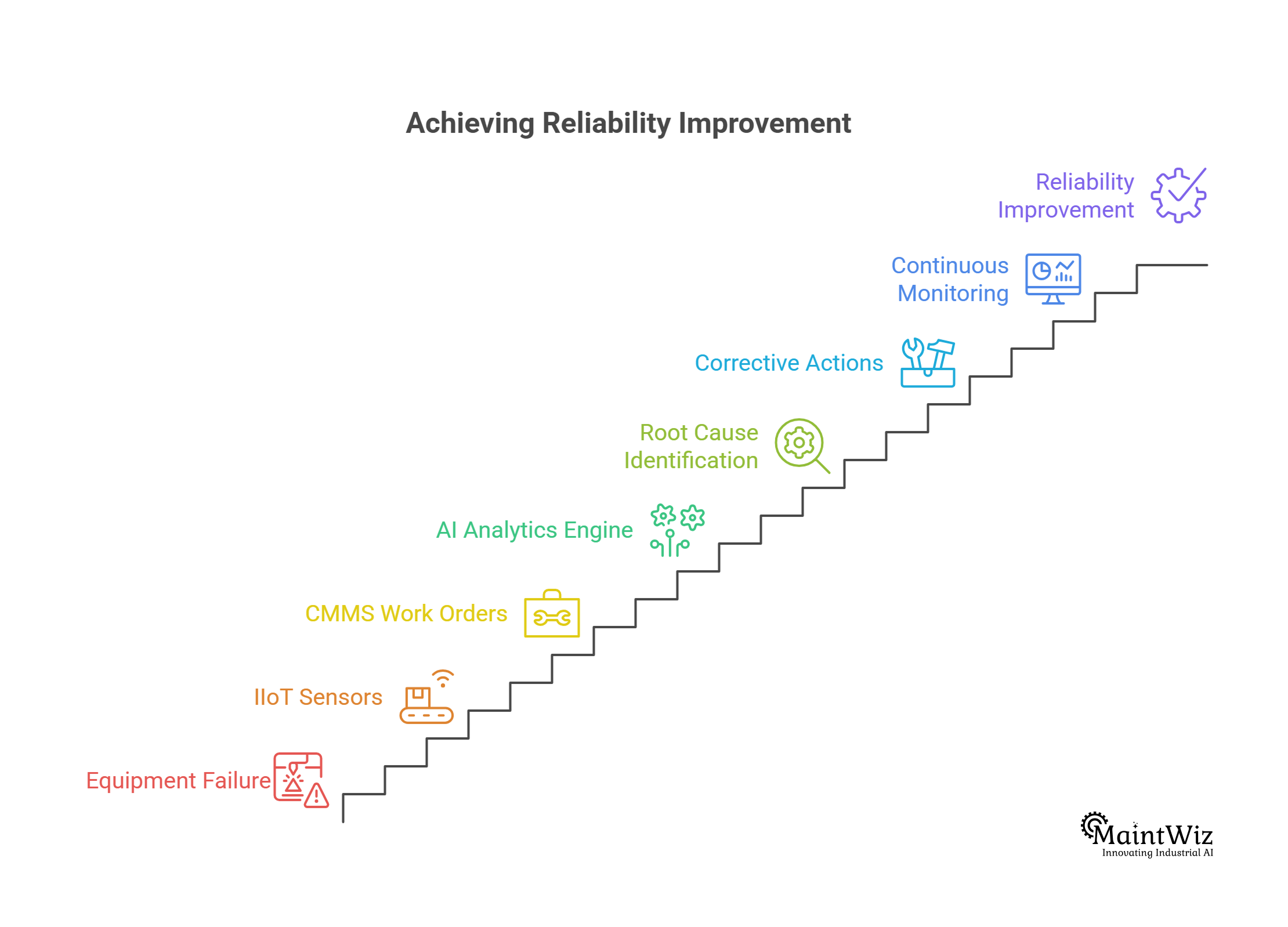
Step 3: Integrate Focused Improvement with CMMS Workflows
One of the most common reasons Kaizen initiatives lose momentum is that improvement recommendations remain disconnected from day-to-day maintenance execution.
A maintenance engineer may identify an effective solution, but unless it is incorporated into routine maintenance practices, the same problem eventually returns.
A modern Computerized Maintenance Management System (CMMS) bridges this gap by transforming improvement recommendations into standardized operational workflows.
Once a focused improvement initiative is approved, the CMMS can:
- Update preventive maintenance procedures
- Modify inspection checklists
- Revise lubrication schedules
- Generate recurring maintenance tasks
- Assign corrective work orders
- Document engineering changes
- Record lessons learned
- Maintain a complete history of implemented improvements
This ensures that successful Kaizen initiatives become part of standard operating practice rather than isolated improvement projects.
The integration also improves organizational learning. Future maintenance teams can access documented improvement histories, reducing dependence on tribal knowledge and ensuring that operational expertise is retained even as experienced personnel retire or change roles.
Step 4: Monitor Improvement Performance Through Predictive Analytics
Traditional Kaizen programs often evaluate success several weeks or months after implementation. While this approach confirms whether corrective actions have been effective, it offers limited opportunity for real-time adjustment.
Predictive analytics enables organizations to monitor improvement initiatives continuously.
Instead of relying solely on periodic performance reviews, maintenance leaders can observe whether operational indicators begin improving immediately after implementing corrective actions.
Examples include:
- Declining equipment vibration
- Reduced emergency work orders
- Improved equipment availability
- Lower maintenance costs
- Increased production throughput
- Improved Overall Equipment Effectiveness (OEE)
- Reduced Mean Time to Repair (MTTR)
- Increased Mean Time Between Failures (MTBF)
AI further enhances this process by detecting early warning signs that previously resolved issues may be returning.
If failure patterns begin to reappear, the maintenance team can intervene before performance deteriorates significantly.
Continuous monitoring transforms focused improvement from a one-time project into an ongoing reliability strategy.
Step 5: Build a Continuous Improvement Culture Across the Shop Floor
Technology can accelerate improvement, but sustainable operational excellence ultimately depends on people.
The most successful manufacturers treat Kobetsu Kaizen as a shared organizational responsibility rather than a maintenance initiative alone.
Operators contribute frontline equipment knowledge.
Maintenance technicians provide practical repair expertise.
Reliability engineers analyze long-term equipment performance.
Production managers evaluate operational constraints.
Plant leadership removes organizational barriers and allocates improvement resources.
Artificial intelligence serves as the analytical engine that connects these diverse perspectives through a common set of operational insights.
Organizations should establish structured improvement review meetings where cross-functional teams examine:
- Recurring operational losses
- Equipment health trends
- Root cause analysis findings
- Maintenance KPIs
- Improvement project status
- AI-generated recommendations
- Lessons learned
- Opportunities for standardization
This governance process ensures that focused improvement becomes embedded within daily operations rather than remaining an occasional improvement activity.
How MaintWiz CMMS Enables AI-Powered Kobetsu Kaizen
Digitizing focused improvement requires more than storing maintenance records digitally. Manufacturers need an integrated platform capable of connecting maintenance execution, operational analytics, engineering collaboration, and continuous improvement.
MaintWiz CMMS provides this foundation by bringing together maintenance planning, work order management, asset history, inspection management, predictive maintenance, and performance analytics within a unified digital environment.
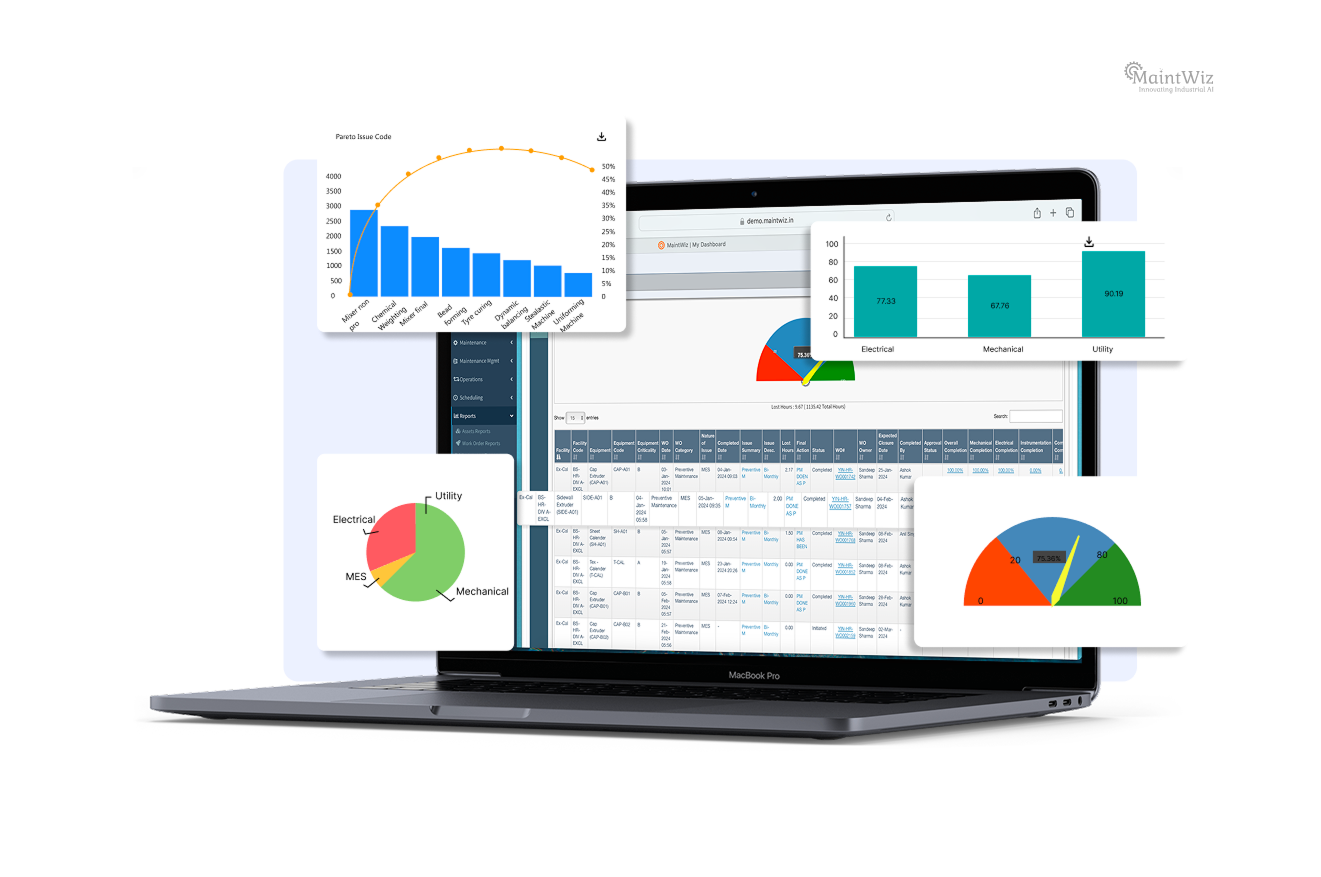
As operators, technicians, and engineers interact with the platform, MaintWiz continuously builds a comprehensive knowledge base of equipment performance. Historical work orders, inspection findings, spare parts consumption, maintenance costs, and recurring equipment issues become connected, enabling teams to identify chronic losses more effectively.
When integrated with Industrial Internet of Things (IIoT) devices and predictive maintenance technologies, MaintWiz extends this capability even further. Equipment condition data—including vibration, temperature, operating hours, and performance trends—can be correlated with maintenance history to support evidence-based improvement initiatives.
Rather than relying solely on periodic reviews, maintenance leaders gain continuous visibility into asset performance and emerging operational risks.
For organizations beginning their digital transformation journey, MaintWiz supports a structured 90-day focused improvement implementation roadmap.
Days 1–30: Establish the Improvement Foundation
- Identify high-impact assets using maintenance history.
- Configure standardized asset hierarchies.
- Digitize inspection checklists.
- Define baseline maintenance KPIs.
- Prioritize chronic equipment losses.
Days 31–60: Connect Data and Automate Workflows
- Deploy digital work order management.
- Enable mobile maintenance inspections.
- Integrate operator observations with maintenance planning.
- Connect critical assets through IIoT monitoring.
- Begin AI-assisted maintenance analytics.
Days 61–90: Scale Continuous Improvement
- Monitor improvement KPIs through dashboards.
- Evaluate AI-generated reliability insights.
- Standardize successful improvement initiatives.
- Expand focused improvement across production lines.
- Establish recurring reliability review meetings.
This phased implementation minimizes operational disruption while delivering measurable improvements in maintenance performance and equipment reliability.
Measuring the Success of AI-Driven Kobetsu Kaizen
Continuous improvement should always be evaluated using measurable business outcomes rather than activity metrics alone.
Manufacturers implementing digital focused improvement programs should monitor four categories of performance indicators.
Reliability KPIs
- Mean Time Between Failures (MTBF)
- Mean Time to Repair (MTTR)
- Equipment Availability
- Breakdown Frequency
- Failure Recurrence Rate
Maintenance Performance
- Planned vs Reactive Maintenance Ratio
- Preventive Maintenance Compliance
- Work Order Completion Rate
- Maintenance Backlog
- Maintenance Cost per Asset
Operational Excellence
- Overall Equipment Effectiveness (OEE)
- Minor Stoppage Reduction
- Production Throughput
- First Pass Yield
- Changeover Efficiency
Continuous Improvement Metrics
- Number of Kaizen Projects Completed
- Root Cause Resolution Rate
- Improvement Implementation Time
- Cost Savings Generated
- Employee Participation Rate
- Recurring Issue Elimination Rate
Monitoring these indicators enables organizations to quantify the long-term impact of focused improvement while identifying new opportunities for operational excellence.
Conclusion
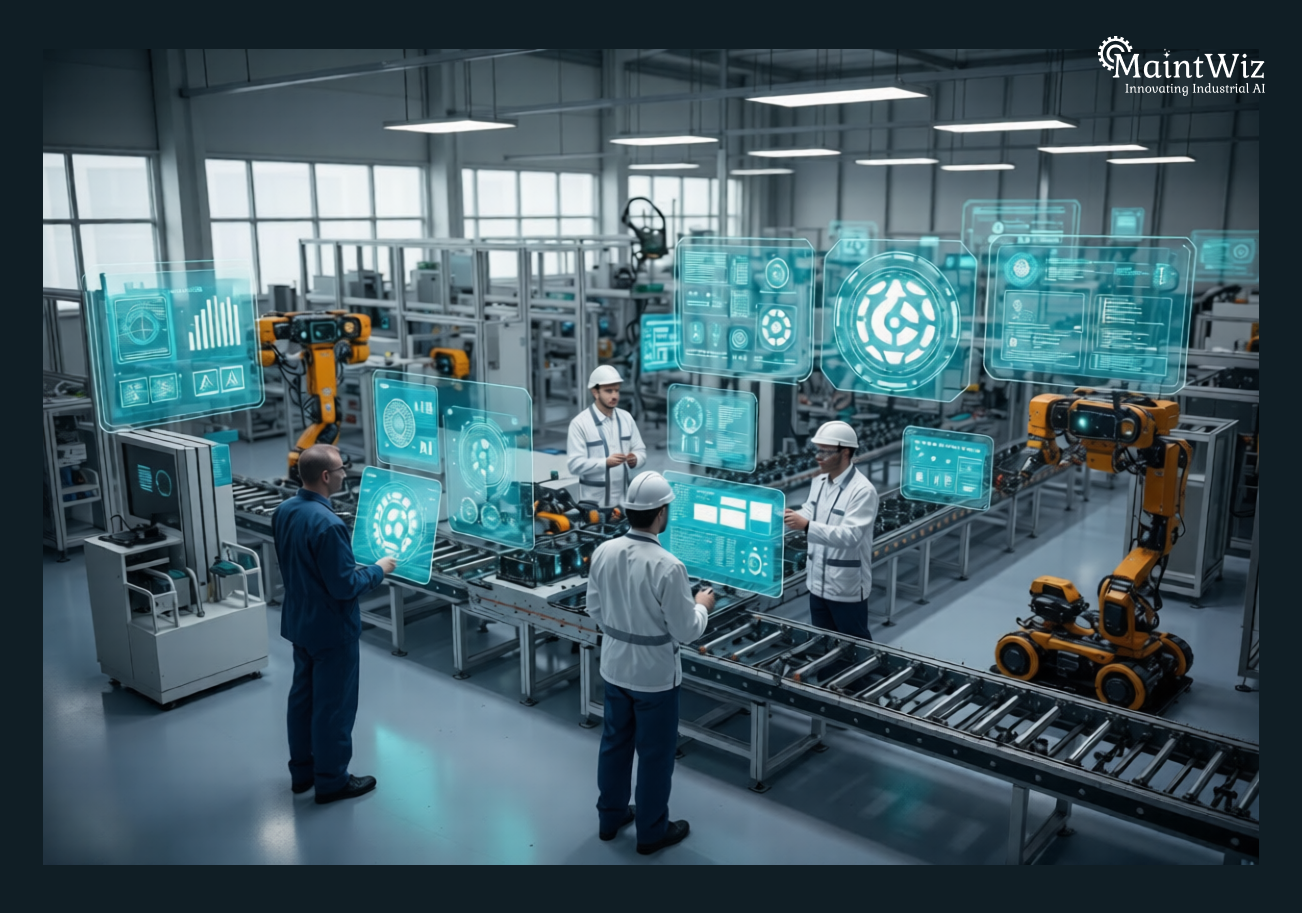
Kobetsu Kaizen has always represented the disciplined pursuit of eliminating losses through structured problem-solving. While the philosophy remains unchanged, the tools available to manufacturers have evolved dramatically.
Artificial intelligence, advanced analytics, IIoT, and integrated CMMS platforms now enable organizations to identify chronic losses faster, investigate root causes more accurately, and sustain improvements through data-driven decision-making.
The future of Kobetsu Kaizen maintenance is not about replacing human expertise—it is about amplifying it. AI enables engineers to focus on solving complex operational challenges rather than spending valuable time searching for data. Maintenance teams gain clearer visibility into equipment performance, operators contribute structured operational insights, and leadership benefits from measurable improvements in reliability, productivity, and cost performance.
Manufacturers that successfully combine TPM principles with digital technologies will move beyond reactive maintenance and isolated improvement projects toward a culture of continuous, evidence-based operational excellence.
In 2026 and beyond, the most successful factories will not simply repair equipment more efficiently—they will build intelligent improvement systems where every maintenance activity, every operator observation, and every data point contributes to a smarter, more reliable, and more competitive manufacturing operation.

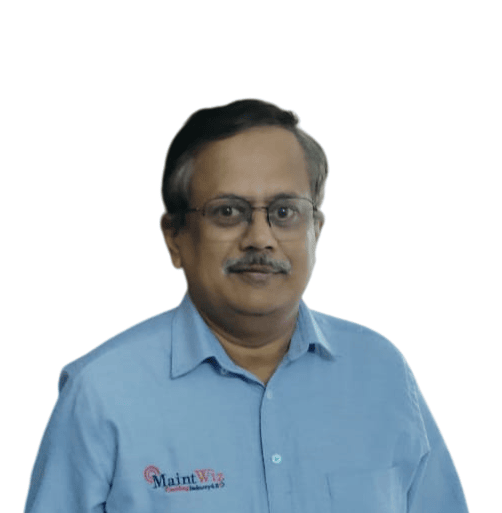
Jai Balachandran is an industry expert with a proven track record in driving digital transformation and Industry 4.0 technologies. With a rich background in asset management, plant maintenance, connected systems, TPM and reliability initiatives, he brings unparalleled insight and delivery excellence to Plant Operations.
Company
Download App