
Key takeaways
- MTBF = operating time / number of failures; MTTR = repair time / number of failures; inherent availability = MTBF / (MTBF + MTTR).
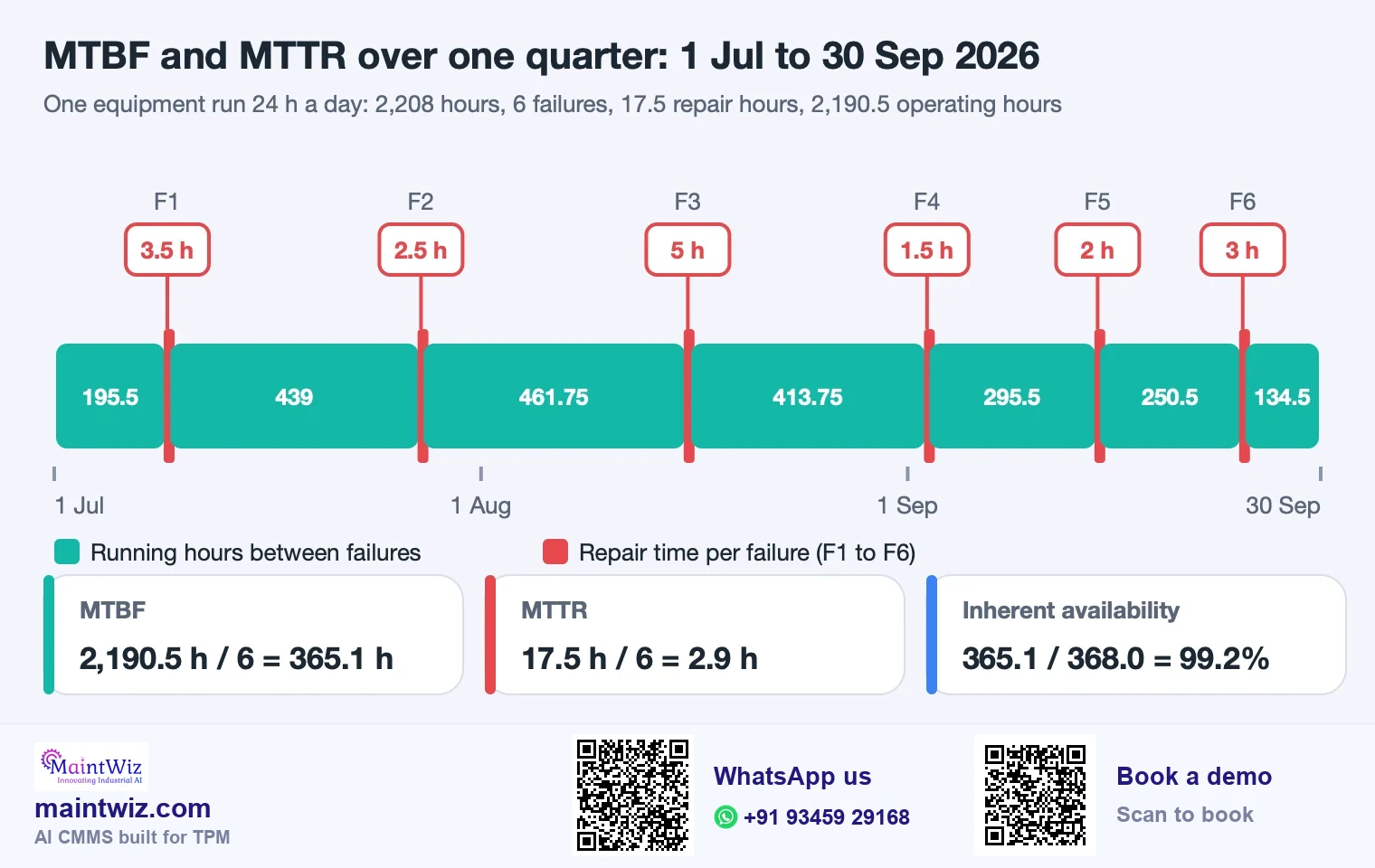
- The example log reproduces a checked case: six failures in a 2,208-hour quarter with 17.5 repair hours give MTBF 365.1 h, MTTR 2.9 h and 99.2%.
- Decide what counts as a failure and whether waiting for parts is repair time before comparing periods or machines.
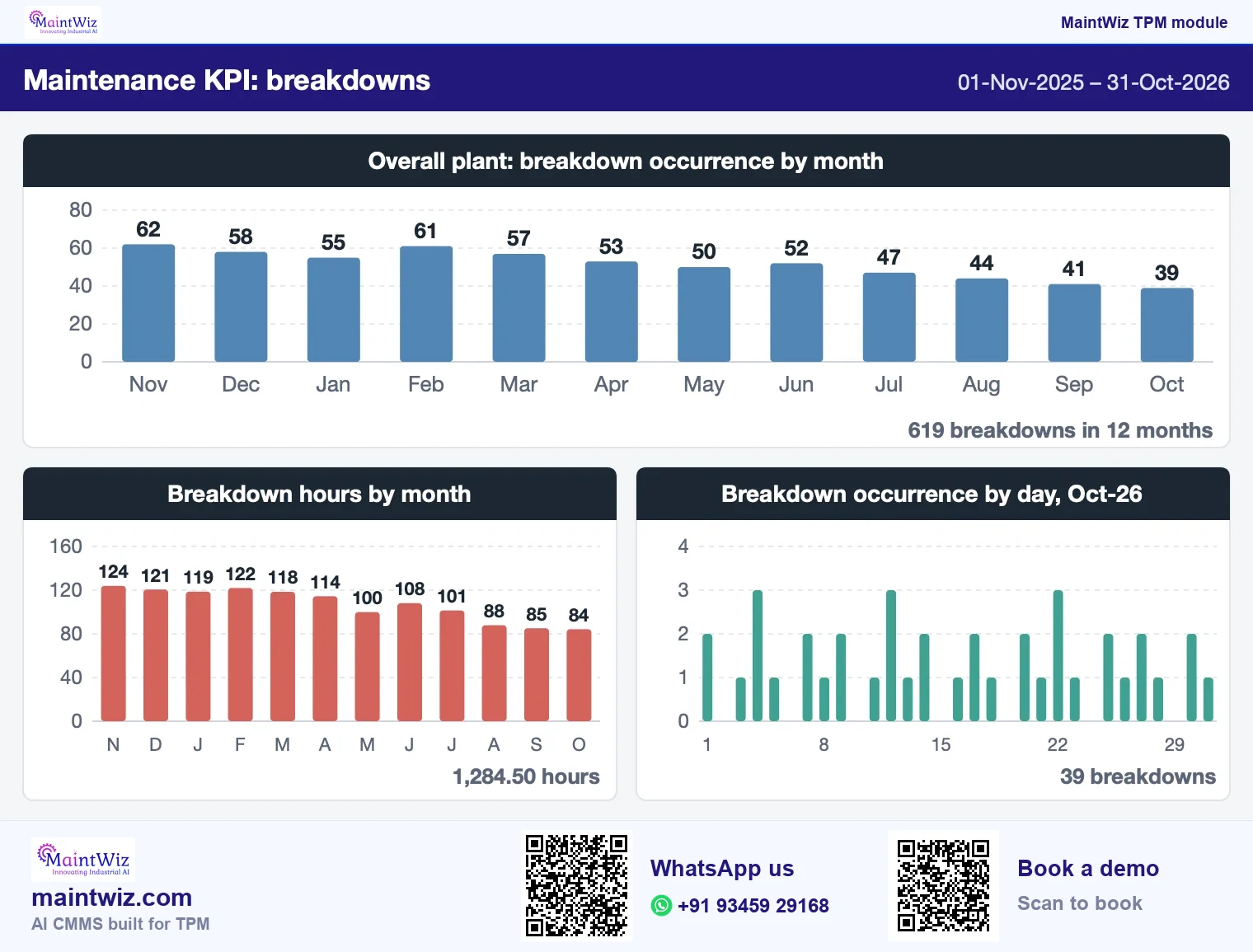
- MaintWiz work orders hold each breakdown and its repair hours, and the KPI dashboard trends breakdown count and hours by month and by day, so MTBF and MTTR come from records, not retyping.
Calculator
Free MTBF and MTTR calculator
Working shown
 maintwiz.comAI CMMS built for TPM
 WhatsApp us
 +91 93459 29168
 Book a demo
Log every failure of one equipment with the time it stopped and the time it was back in service, and set when the equipment is meant to run: the days, the hours per day and the time the run window starts. Only repair time inside the run hours counts; a failure entirely outside them is flagged and left out, and a repair that straddles the end of the run window counts for the part inside. MTTR is the mean of the repairs; MTBF is the scheduled running time left after the repairs, shared across the failures. To compare machines, run it once per machine on the same rules; for several machines together, add their failures and operating hours, then divide. Use the example to see a quarter with six failures.
Get MTBF and MTTR from your breakdown records without the spreadsheet: MaintWiz keeps breakdown records and work orders on the same equipment list as OEE, and its downtime report splits unplanned, planned and performance loss. Book a demo to see it on your own breakdown data.
Downloads
MTBF and MTTR workbook (Excel) with availability and failure log
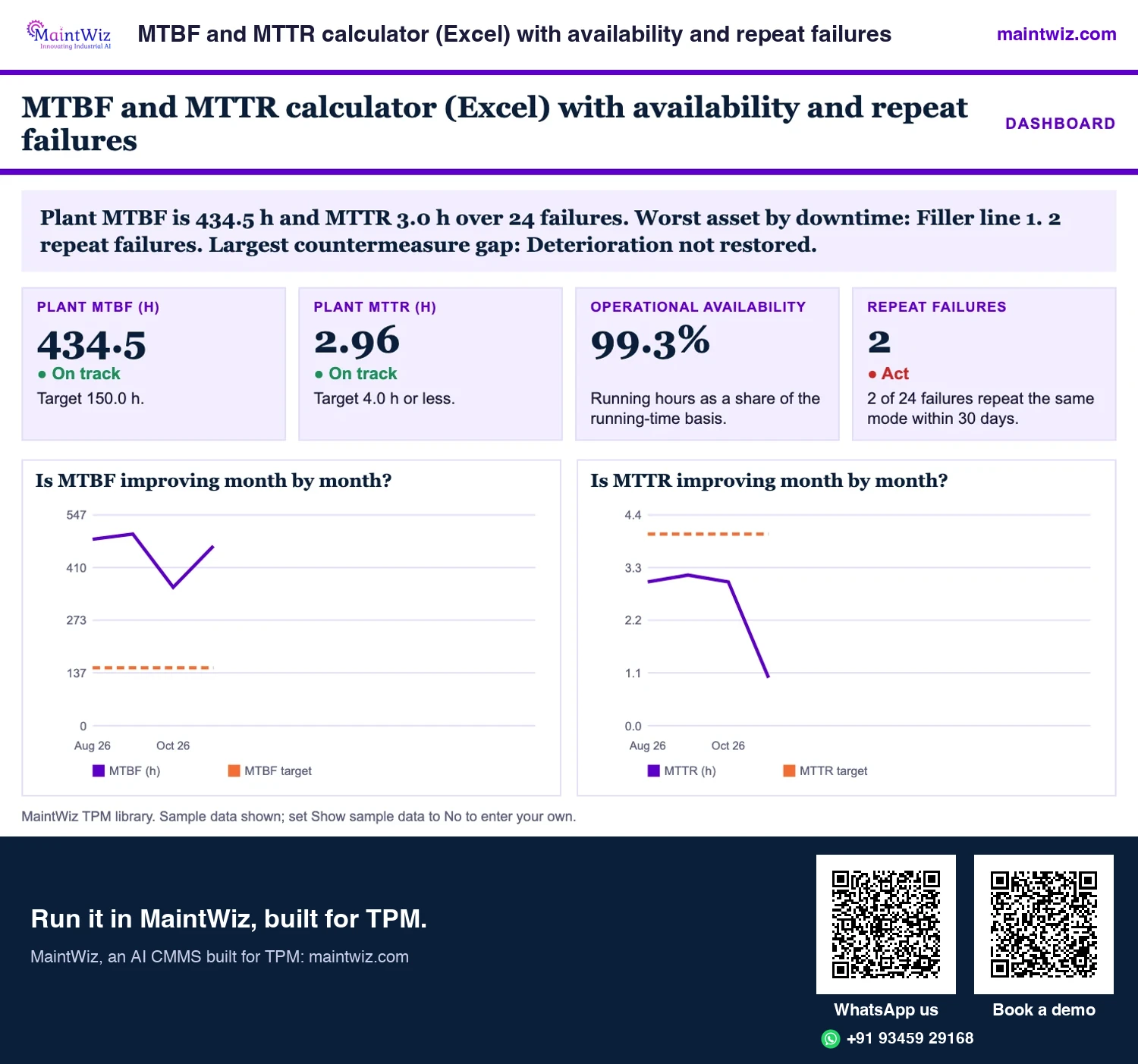
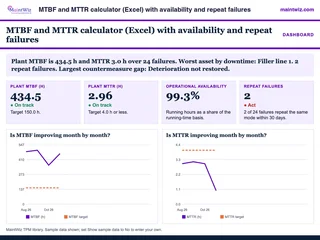 ExcelMTBF and MTTR calculator (Excel) with availability and repeat failures
Log failures and read MTBF, MTTR, inherent and operational availability by asset
- Sheets
- Dashboard, Inputs, Assets, Failure log, Results, Read me
- A4
- Version
- v1.1, 5 November 2026
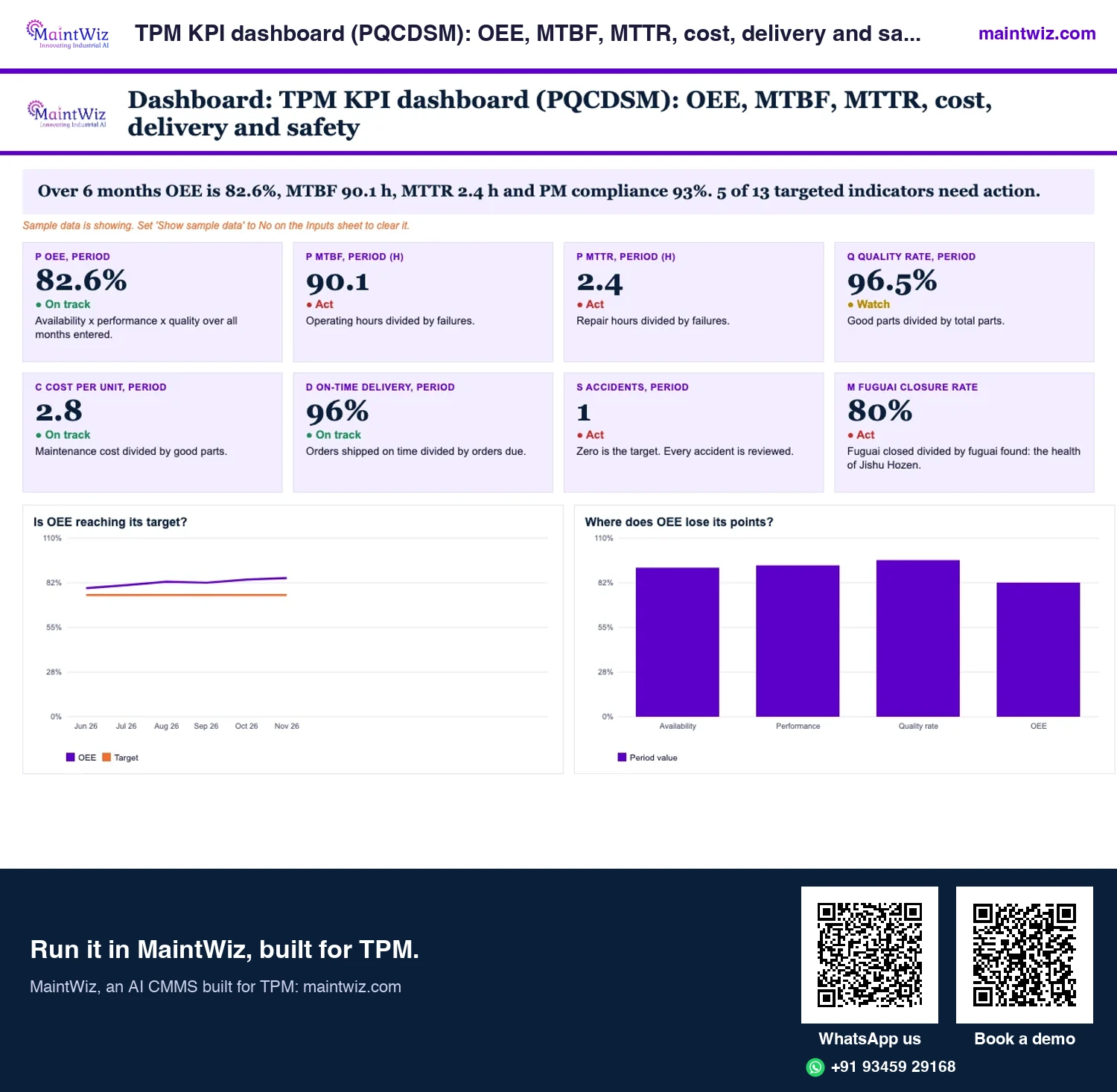
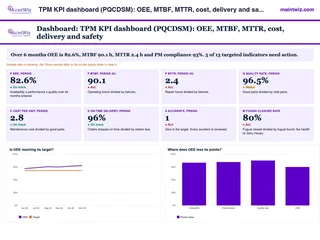 ExcelTPM KPI dashboard (PQCDSM): OEE, MTBF, MTTR, cost, delivery and safety
Track OEE, MTBF, MTTR, cost per unit, on-time delivery, safety and fuguai closure monthly against targets
- Sheets
- Dashboard, Inputs, Data, Targets, Read me
- A4
- Version
- v1.0, 2 November 2026
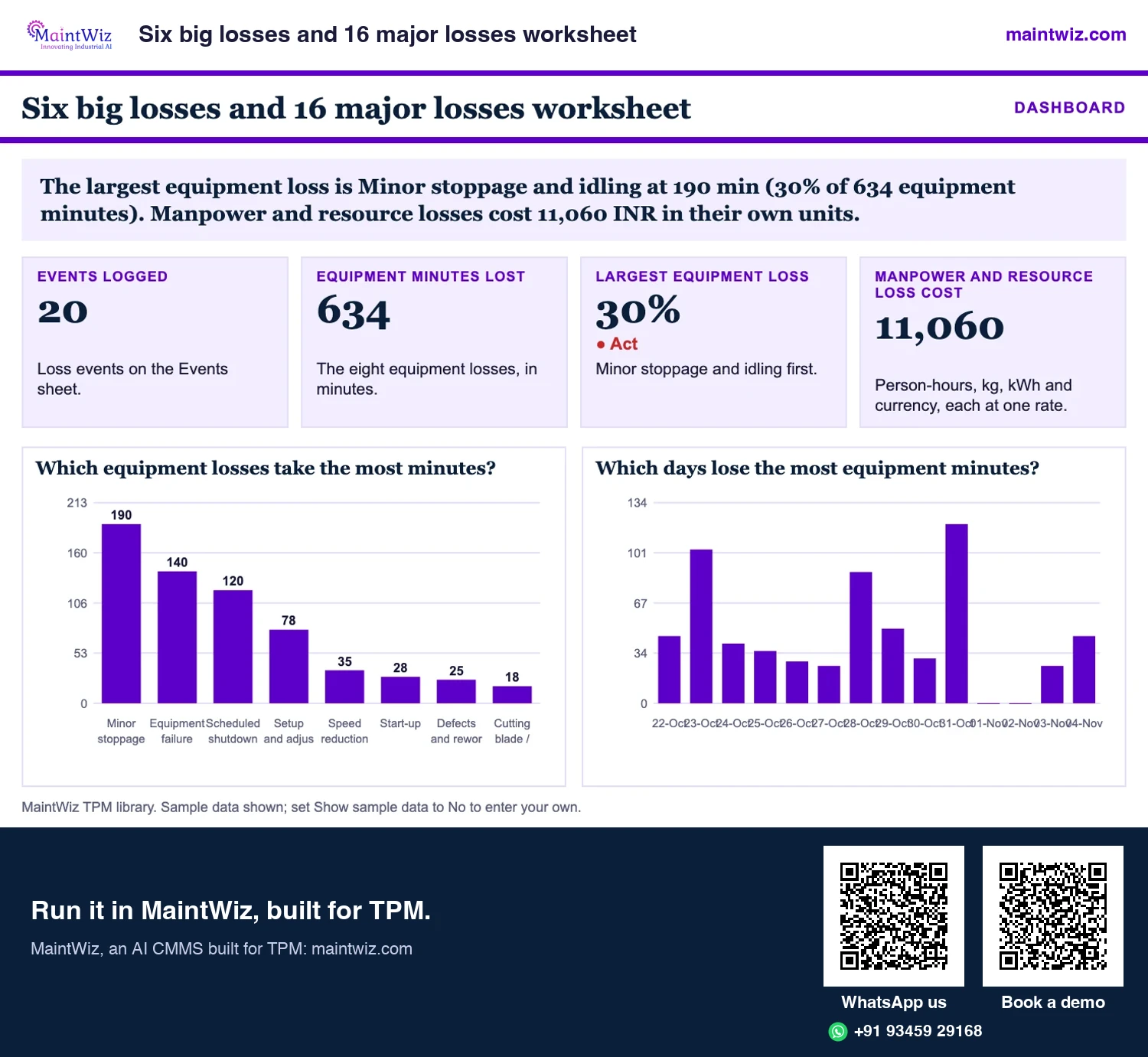
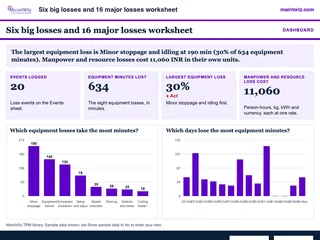 ExcelSix big losses and 16 major losses worksheet
Log loss events, rank the eight equipment losses in minutes
- Sheets
- Dashboard, Inputs, Lists, Events, Summary, Read me
- A4
- Version
- v1.2, 5 November 2026
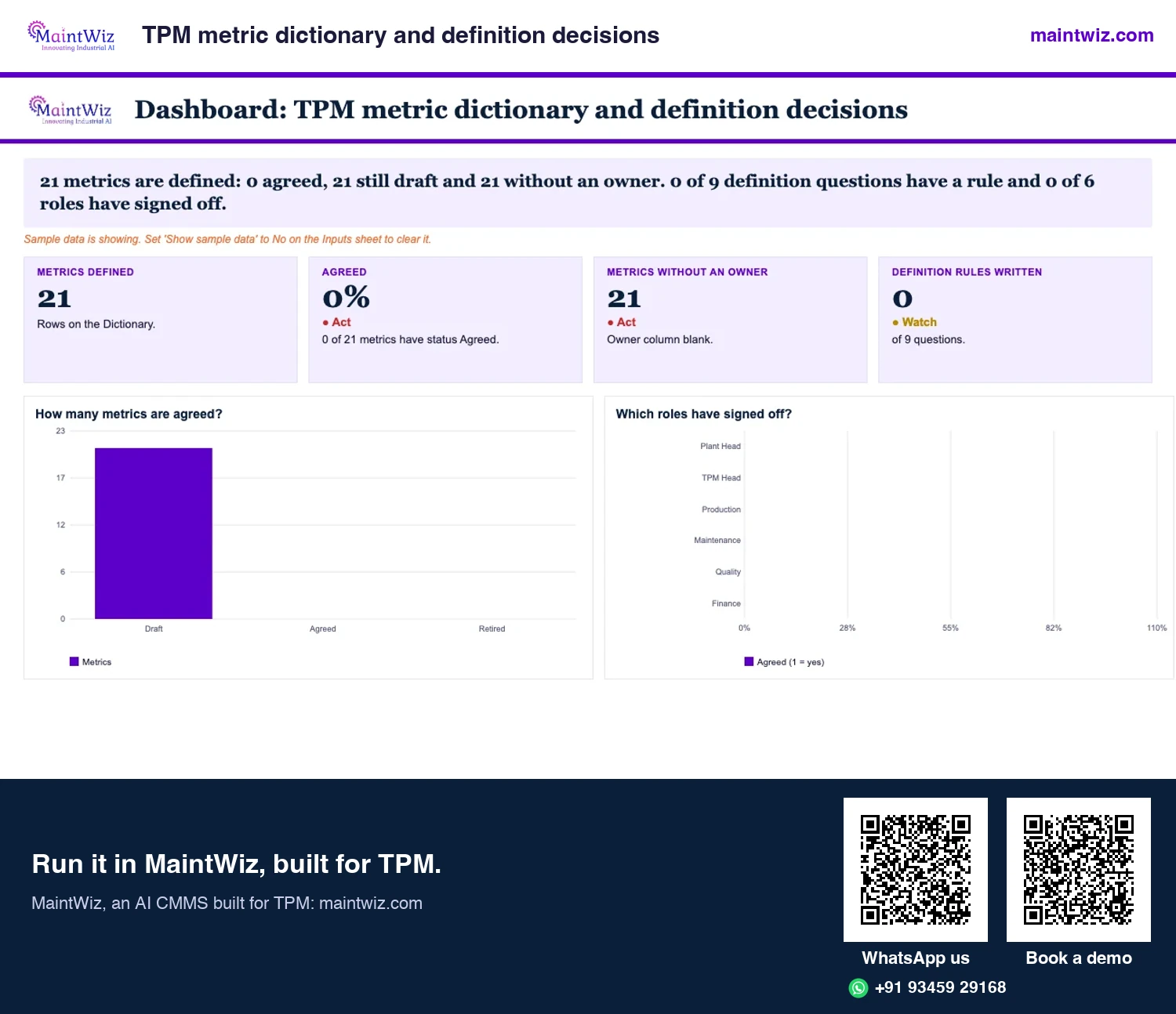
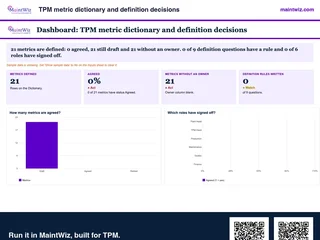 ExcelTPM metric dictionary and definition decisions
Twenty-one TPM metric definitions, including fuguai closure, BM / PM ratio, cost per unit and OTIF
- Sheets
- Dashboard, Inputs, Dictionary, Decisions, Sign-off, Read me
- A4
- Version
- v1.0, 2 November 2026
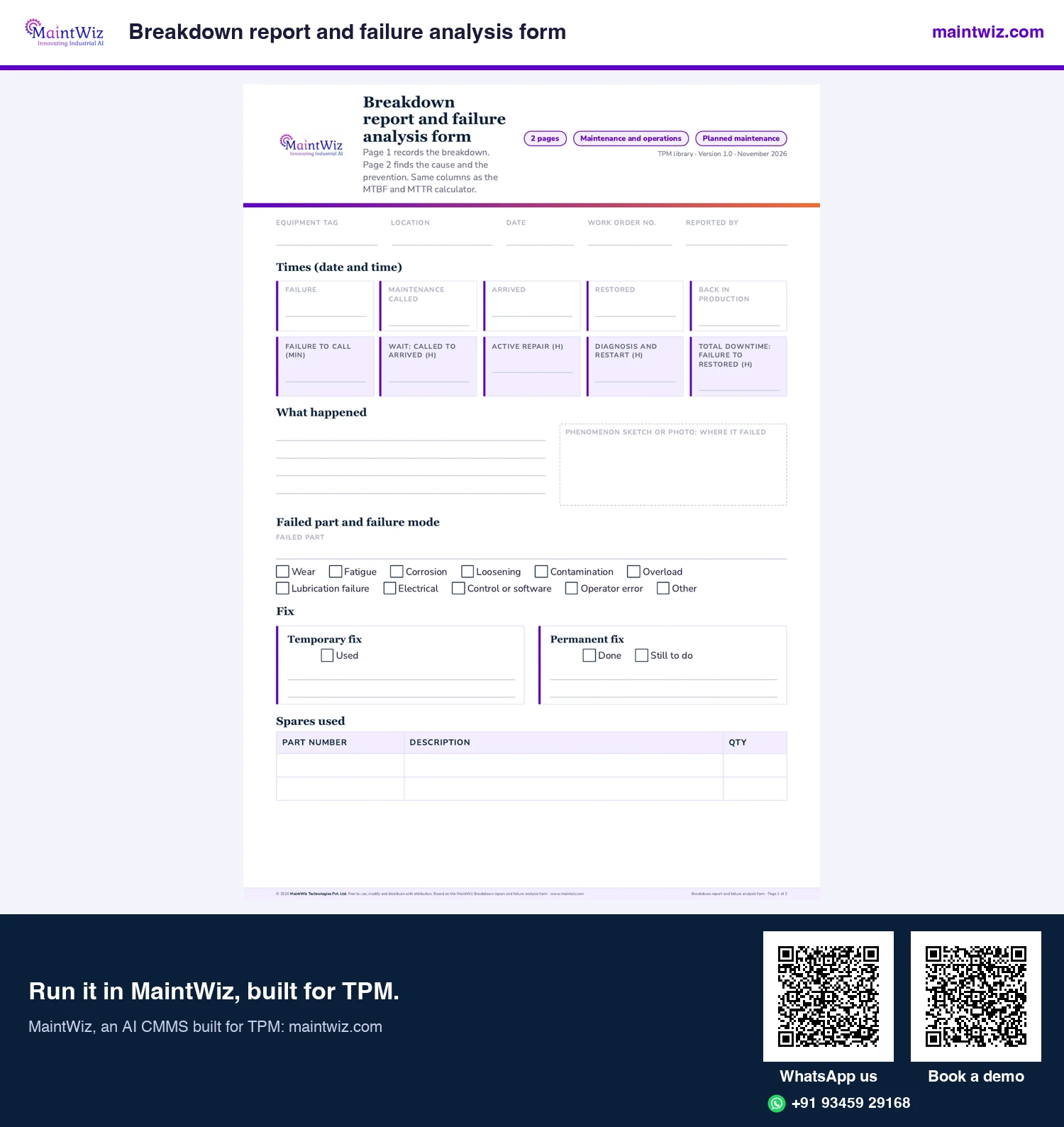
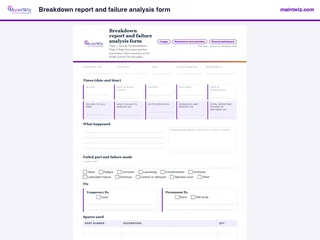 PDFBreakdown report and failure analysis form
Record a breakdown with failure-to-call time, a phenomenon sketch
- Pages
- 2
- A4
- Created
- 5 November 2026
Formulas
How are MTBF and MTTR calculated?
- Operating time = scheduled period - repair time (when repair time is inside the period)
- MTBF (mean time between failures) = operating time / number of failures
- MTTR (mean time to repair) = total repair time / number of failures
- Failure rate = number of failures / operating time
- Inherent availability = MTBF / (MTBF + MTTR)
Both measures are averages for repairable equipment. MTBF says how long equipment tends to run between failures; MTTR says how long it tends to take to put right. Inherent availability combines them and describes breakdown availability only: OEE availability also counts changeovers, waiting and other stops. MaintWiz work orders record each breakdown and its repair hours, and the KPI dashboard totals breakdown occurrence and breakdown hours by month and by day, the two inputs to MTBF and MTTR.
Methods note
MTBF is operating time divided by the number of failures, MTTR is total repair time divided by the number of failures, and inherent availability is MTBF over MTBF plus MTTR. The choice between MTBF, MTTF and MTTR is explained under MTBF vs MTTF vs MTTR.
Check the calculator against these cases
| Inputs | Expected result |
|---|---|
| Example log: 1 Jul to 30 Sep 2026 (92 days, 2,208 h), runs 24 h a day on all seven days; six failures with repairs of 3.5, 2.5, 5.0, 1.5, 2.0 and 3.0 h | Repair 17.5 h; operating 2,190.5 h; MTBF 365.1 h; MTTR 2.9 h; availability 99.2% |
| Seven days (168 h), 24 h a day; two failures with repairs of 4 h and 5 h | Operating 159 h; MTBF 79.5 h; MTTR 4.5 h; availability 94.6% |
| Seven days, run window 06:00 to 22:00 every day (112 h scheduled); one failure from 08:00 to 10:00 | Operating 110 h; MTBF 110.0 h; MTTR 2.0 h; availability 98.2% |
| Same window; a second failure from 23:00 to 05:00 the next morning | Left out and flagged: no repair time falls inside the run hours, so the failure count stays at one |
Work one by hand first: for the second case, 168 - 9 = 159 hours of operation, 159 / 2 = 79.5 hours between failures, 9 / 2 = 4.5 hours to repair and 79.5 / (79.5 + 4.5) = 94.6%. Figure 2 shows the same working for the quarter.
MTBF and MTTR worked: 2,208 hours, 6 failures, 17.5 hours of repair
The calculator's example log, 1 Jul to 30 Sep 2026
| Measure | Working | Result |
|---|---|---|
| Operating time | 2,208 h period minus 17.5 h repair | 2,190.5 h |
| MTBF | 2,190.5 h / 6 failures | 365.1 h |
| MTTR | 17.5 h / 6 failures | 2.9 h |
| Failure rate | 6 failures / 2,190.5 h | 0.0027 / h |
| Inherent availability | 365.1 / (365.1 + 2.9) | 99.2% |
Repair time is taken out of the period before dividing; repair is not counted as operating time
maintwiz.comAI CMMS built for TPMWhatsApp us+91 93459 29168Book a demoISO 22400-2:2014 lists MTBF, MTTF and MTTR among its manufacturing KPIs and defines each with its formula.
Definitions
What counts as a failure and as repair time?
| Decision | Why it changes the answer | What to write down |
|---|---|---|
| What is a failure | Counting every stop as a failure lowers MTBF; counting only breakdowns that need a work order raises it | The minimum stop length and work-order type that count |
| Where repair time starts and ends | Including waiting for parts or people inflates MTTR and hides the cause | Start at the failure, end when the equipment is released to production; show waiting time separately |
| Planned stops | Counting them as operating time overstates MTBF | Exclude scheduled shutdowns from the period or from operating time, and say which |
| Several failures in one stop | One long stop can contain more than one failure | Count by failure cause or by stop, and keep the rule |
| Start-up failures after repair | They look like new failures but may be the same event | A rule for repeat failures within a set time |
These rules belong on the metric dictionary so that every plant calculates the same way.
Reading results
How to read the result
A low MTBF with a short MTTR means frequent, quickly fixed failures: look for causes that operators can detect early, which is the work of autonomous maintenance. A high MTBF with a long MTTR means rare but slow failures: look at spares, access, diagnosis skill and standard repair methods, which is the work of planned maintenance. Both can improve availability, but they need different actions.
Reading MTBF together with MTTR
Four readings and the TPM routine each one points to
Jishu Hozen
Frequent and quick: operators detect early and clear the cause
Keep and monitor
Rare and quick: no action beyond routine checks
Kobetsu Kaizen
Frequent and slow: the first priority for focused improvement
Keikaku Hozen
Rare and slow: spares, access and a standard repair
maintwiz.comAI CMMS built for TPMWhatsApp us+91 93459 29168Book a demo- Trend MTBF and MTTR monthly for each critical equipment, not for the plant average.
- Rank equipment by number of failures and by total repair hours: the two rankings often differ.
- Pair them with the loss breakdown from your OEE records so a breakdown figure is not read alone.
- Do not compare plants unless the definitions match.
Code the stops behind the failures with the downtime reason-code library.
Failure patterns
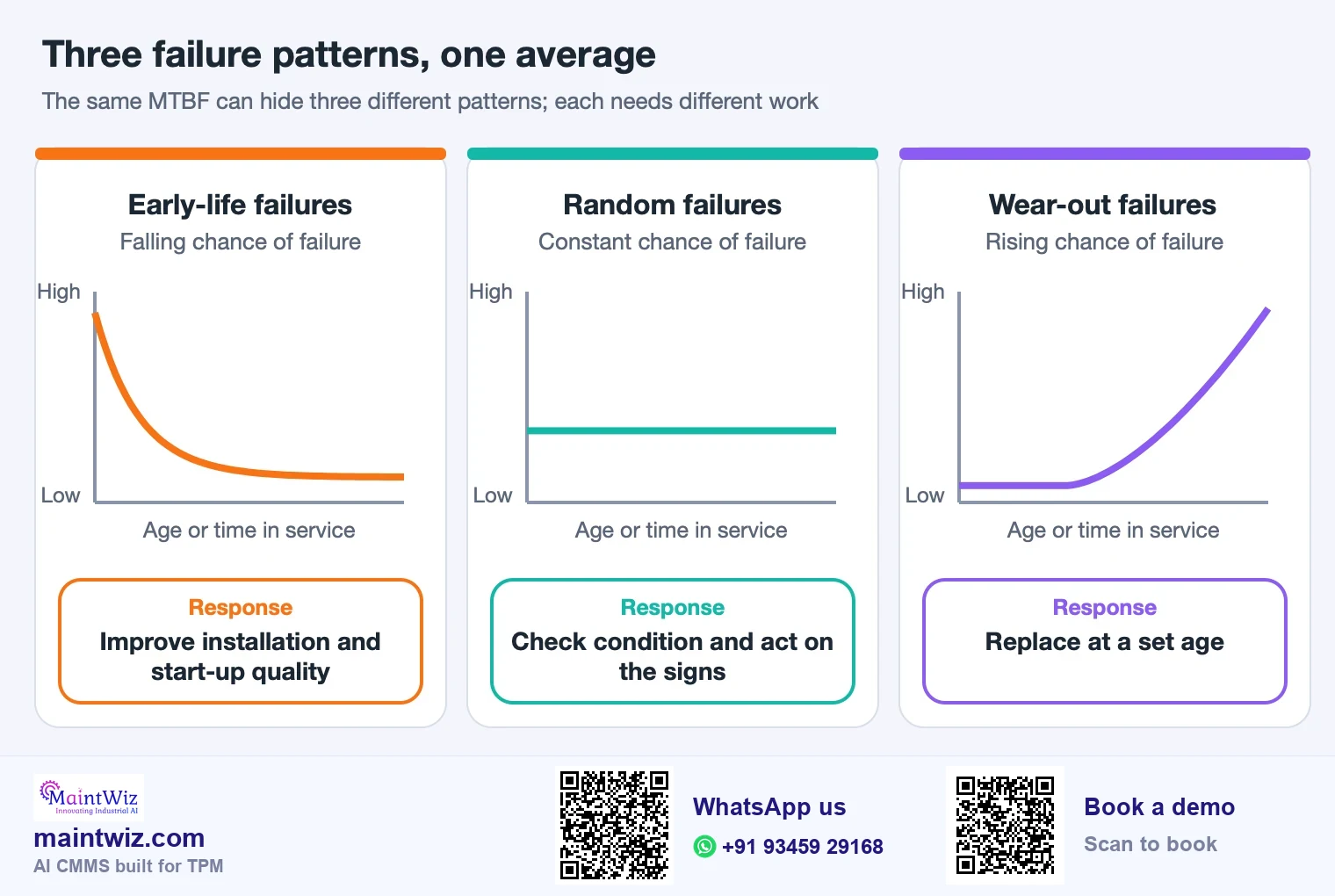
How to read MTBF across failure patterns
Read MTBF beside the failure pattern: early-life, random and wear-out failures each need a different task. For equipment with few failures, use a longer window and read each failure in its work order. MTBF also depends on how many hours the equipment really runs; an idle machine has a high MTBF.
From a calculator to continuous measurement
A calculator answers one question once. Continuous MTBF and MTTR need work orders that record failure start, end and cause for every critical equipment, in a system that totals them by period. MaintWiz keeps those work orders beside the PM schedules of planned maintenance and the stop records of its OEE software, so failures and losses are read together.
FAQ
Frequently asked questions
What is the formula for MTBF?
MTBF is operating time divided by the number of failures in the period. With 710 operating hours and 4 failures, MTBF is 177.5 hours. Define what counts as a failure and as operating time before comparing periods or machines.
What is the formula for MTTR?
MTTR is total repair time divided by the number of failures, one repair per failure. With 10 hours of repair across 4 failures it is 2.5 hours. Say whether waiting for parts or people is included, because it changes the figure.
What is the difference between MTBF and MTTR?
MTBF measures how long equipment runs between failures; MTTR measures how long a failure takes to repair. A high MTBF means fewer failures, a low MTTR means faster recovery, and each calls for different actions.
How do MTBF and MTTR relate to availability?
Inherent availability is MTBF divided by the sum of MTBF and MTTR. It describes breakdown availability only, so it is higher than OEE availability, which also counts changeovers, waiting and other stops.
Can MTBF be calculated with zero failures?
No. With no failures the average time between them is undefined; you can only say the equipment ran at least the whole operating time. Use a longer period or note that no failure occurred.
Does the calculator store my data?
No. The calculation runs in your browser and nothing you enter is sent anywhere or kept after you close the page. Copy the result table into your own sheet if you want a record.
Where do MTBF and MTTR come from in a CMMS?
From breakdown records: the failure count and repair hours for each equipment. MaintWiz keeps breakdown records and work orders on the same equipment list as OEE and the pillar dashboards, so the inputs come from one record. Use this calculator to see the mean from a failure history and to check the arithmetic.
Sources
Sources
- ISO 22400-2:2014, Automation systems and integration: Key performance indicators (KPIs) for manufacturing operations management, Part 2: Definitions and descriptions https://www.iso.org/standard/54497.html