
Key takeaways
- Every industry runs the same eight pillars; what changes is which losses dominate and so which pillar to start with.
- Heavy and continuous industries start with autonomous and planned maintenance; pharma and chemicals start with quality maintenance and safety; food, automotive and electronics start with focused improvement on changeovers, minor stops and rejects.
- MaintWiz holds each pillar's records on one equipment list, with menus, roles and master data configured for your sector.
- The entire TPM can be rolled out in 6 to 8 weeks, with easy Excel uploads and guided project management from the MaintWiz implementation team.
By industry
How does TPM differ in different industries?
Thirteen sectors against the six big losses
A dot marks a dominant loss; idling and minor stops and reduced speed share one column
| Sector | Breakdowns | Set-up and changeover | Minor stops and slow running | Defects and rework | Start-up and yield | Lead pillars | MaintWiz modules |
|---|---|---|---|---|---|---|---|
| Steel and metals | Autonomous maintenance, planned maintenance, safety | Abnormality register, OEE, near miss | |||||
| Cement | Autonomous maintenance, planned maintenance, safety | Abnormality register, early equipment management | |||||
| Power | Planned maintenance, autonomous maintenance, training | Abnormality register, OEE, training | |||||
| Oil and gas | Planned maintenance, safety, training | Abnormality register, training, near miss | |||||
| Water and wastewater | Planned maintenance, autonomous maintenance | PM scheduling, abnormality register | |||||
| Paper and pulp | Autonomous maintenance, focused improvement | Abnormality register, OEE | |||||
| Tyre and rubber | Autonomous maintenance, planned maintenance, quality maintenance | Quality defects, OEE, Kaizen | |||||
| Textile and garments | Autonomous maintenance, focused improvement, training | OEE, 5S audits, training | |||||
| Paints and chemicals | Safety, autonomous maintenance, quality maintenance | Near miss, quality defects, OEE | |||||
| Pharmaceuticals | Quality maintenance, training, autonomous maintenance | Quality defects, training, 5S audits | |||||
| Food and beverages, FMCG | Focused improvement, autonomous maintenance, quality maintenance | OEE, Kaizen, quality defects | |||||
| Automotive and components | Focused improvement, quality maintenance, early equipment management | OEE, Kaizen, MP sheet | |||||
| Electronics, packaging, plastics | Focused improvement, autonomous maintenance, quality maintenance | OEE loss Pareto, Kaizen, quality defects |
 maintwiz.comAI CMMS built for TPM
 WhatsApp us
 +91 93459 29168
 Book a demo
The method is the same worldwide: JIPM describes TPM as a programme in which everyone, from operators to management, works to remove equipment losses. What differs by sector is the mix of the six big losses: breakdowns, set-up and adjustment, minor stops, reduced speed, process defects and start-up losses. The mix decides which pillar pays first (Figure 1).
| Industry | Dominant losses | Pillars that matter most | MaintWiz page |
|---|---|---|---|
| Steel and metals | Breakdowns, scale and dust, heat | Autonomous maintenance, planned maintenance, safety | Steel and metal manufacturing |
| Automotive and components | Changeovers, minor stops, rejects | Focused improvement, quality maintenance, early equipment management | Automotive components |
| Pharmaceuticals | Changeover and cleaning, minor stops, rejects | Quality maintenance, training, autonomous maintenance | Pharmaceuticals |
| Food and beverages, FMCG | Changeovers, minor stops, cleaning, yield | Focused improvement, autonomous maintenance, quality maintenance | Food and beverages |
| Paints and chemicals | Batch changeovers, leaks, contamination | Safety, autonomous maintenance, quality maintenance | Paints manufacturing |
| Cement | Kiln and mill stops, dust, wear | Autonomous maintenance, planned maintenance, safety | Cement manufacturing |
| Tyre and rubber | Mixer and press stops, changeovers, rejects | Autonomous maintenance, planned maintenance, quality maintenance | Process manufacturing |
| Textile and garments | Breaks, stops, changeovers, lint | Autonomous maintenance, focused improvement, training | Textile and garment manufacturing |
| Oil and gas | Rotating equipment stops, leaks, shutdowns | Planned maintenance, safety, training | Oil and gas |
| Power | Forced outages, auxiliary trips | Planned maintenance, autonomous maintenance, training | Power plants |
| Paper and pulp | Web breaks, contamination, drying stops | Autonomous maintenance, focused improvement | Paper and pulp |
| Water and wastewater | Pump failures, blockages, missed rounds | Planned maintenance, autonomous maintenance | Water and wastewater |
| Discrete manufacturing, electronics, packaging, plastics | Changeovers, minor stops, set-up, rejects | Focused improvement, autonomous maintenance, quality maintenance | Discrete manufacturing |
Downloads
TPM by industry: six big losses worksheet, pillars sheet and pillar selector
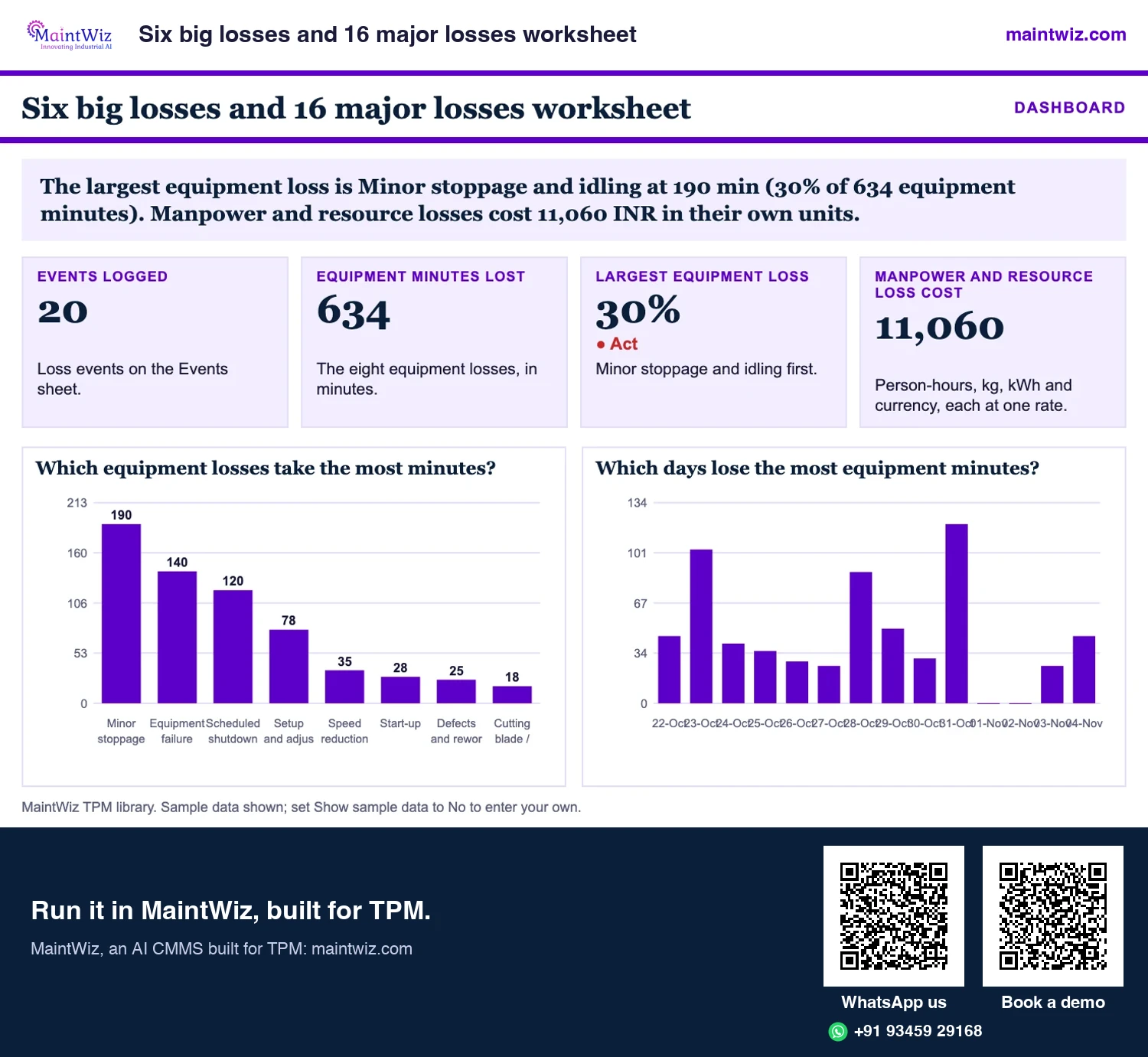
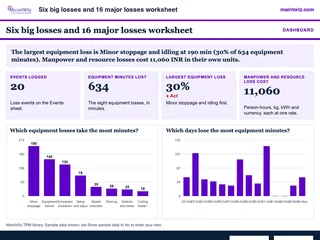 ExcelSix big losses and 16 major losses worksheet
Log loss events, rank the eight equipment losses in minutes
- Sheets
- Dashboard, Inputs, Lists, Events, Summary, Read me
- A4
- Version
- v1.2, 5 November 2026
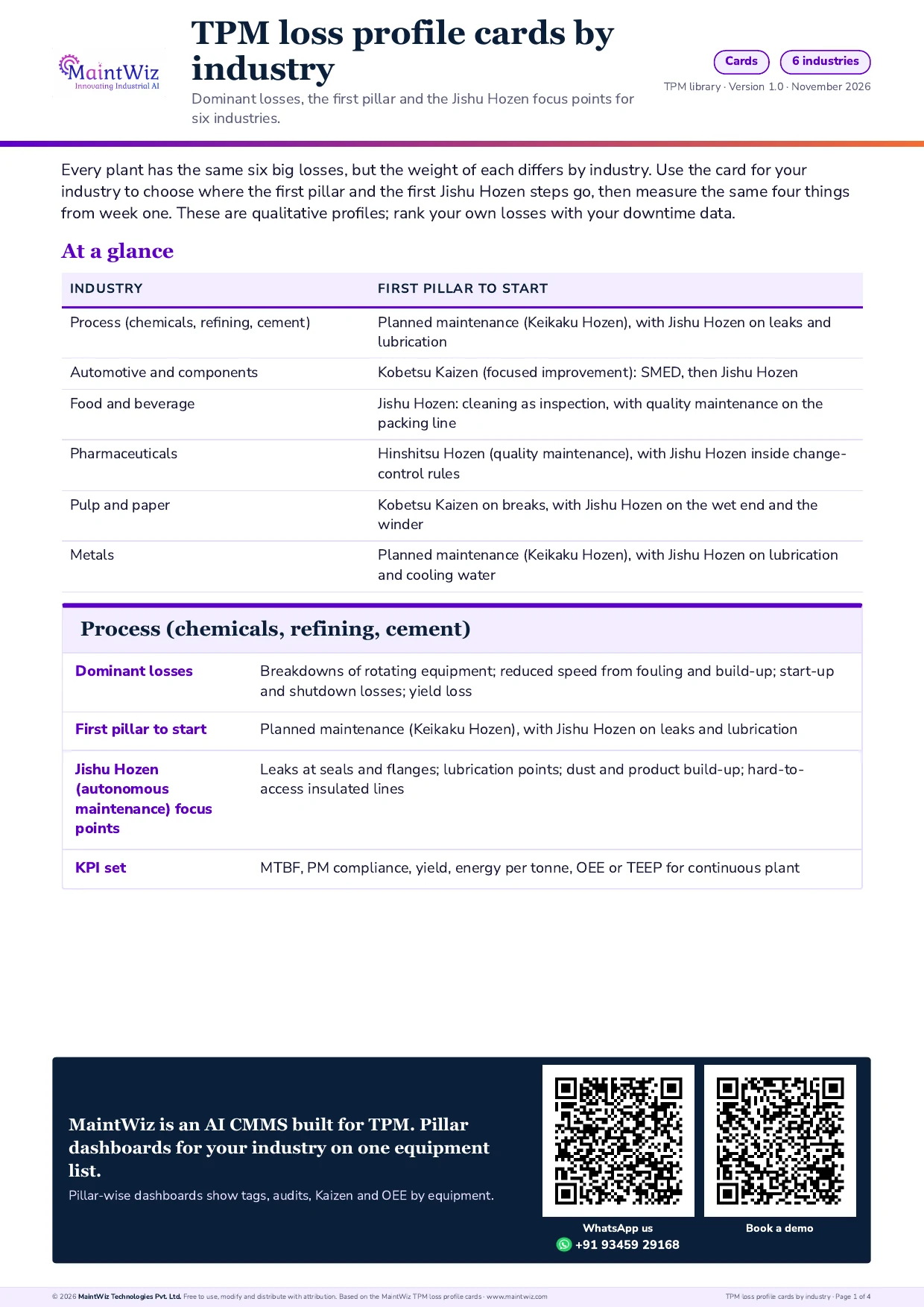
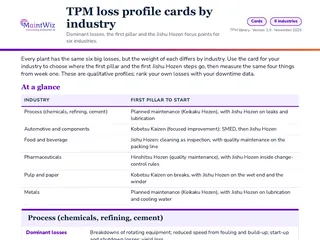 PDFTPM loss profile cards by industry: process, automotive, food, pharma, paper, metals
Pick the first TPM pillar for your industry: loss profile cards for process, automotive, food, pharma, paper and metals, with dominant losses.
Inside: One card for each of six industries · Dominant losses and the first pillar to start · Jishu Hozen focus points · The KPI set to measure from week one · At-a-glance table of all six
- Pages
- 4
- A4
- Created
- 5 November 2026
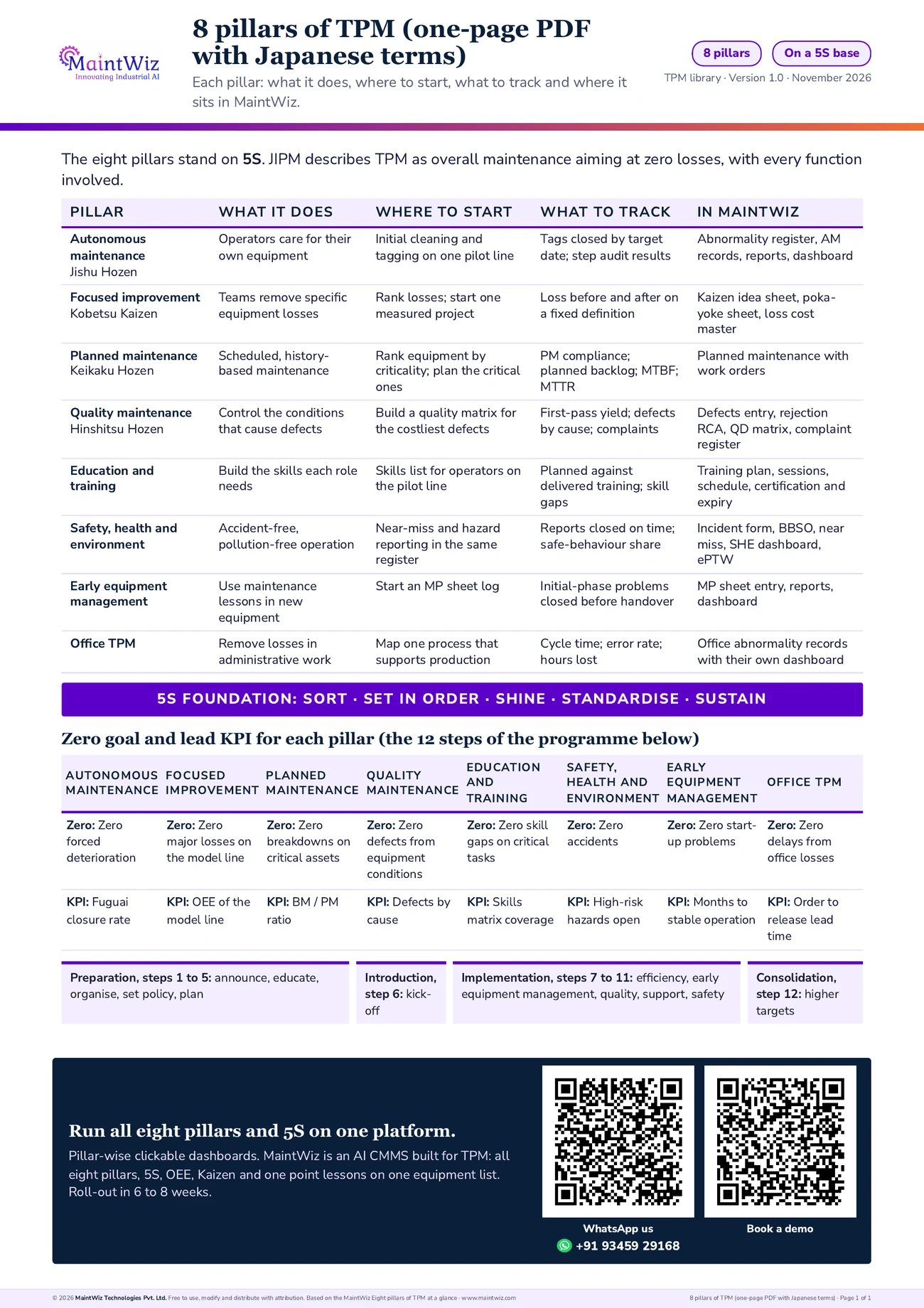
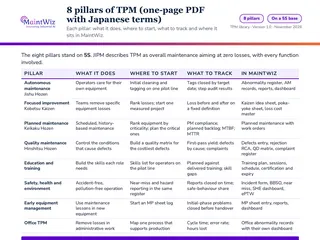 PDF8 pillars of TPM (one-page PDF with Japanese terms)
The eight pillars on one page with Japanese names, zero goal, lead KPI and where each sits in MaintWiz
- Pages
- 1
- A4
- Created
- 5 November 2026
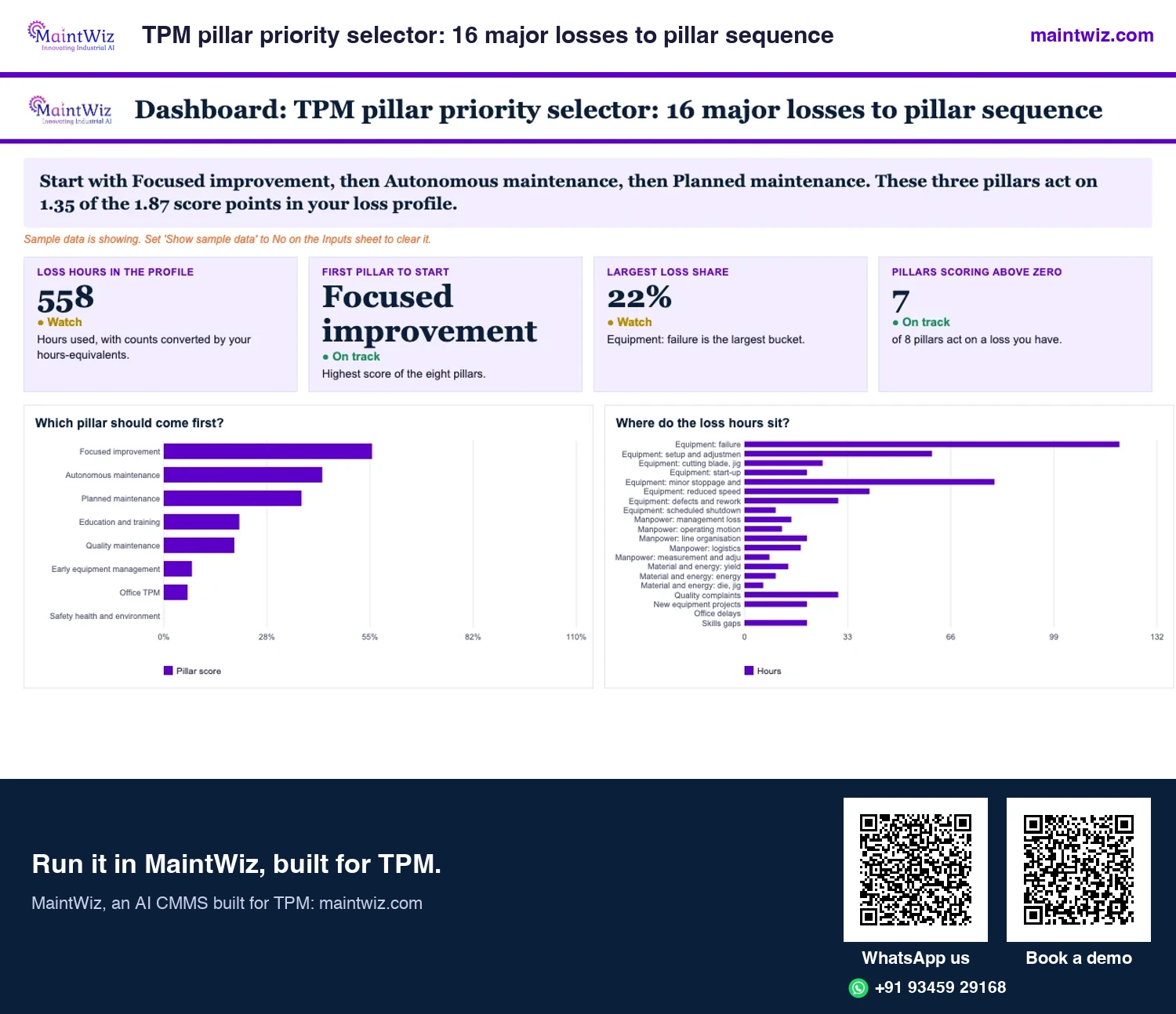
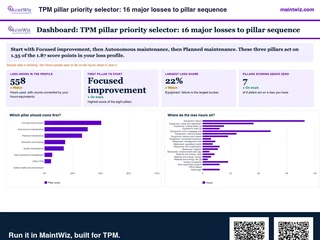 ExcelTPM pillar priority selector: 16 major losses to pillar sequence
Enter your 16 major losses and see which TPM pillar to start first
- Sheets
- Dashboard, Inputs, Mapping, Results, Read me
- A4
- Version
- v1.0, 2 November 2026
Heavy industry
How does TPM apply in heavy and continuous industries?
Where equipment runs for long periods under heat, dust and load, the largest losses are breakdowns and the slow running that follows repairs. Operators who clean, inspect and lubricate (see Jishu Hozen) find abnormalities early, and tagged abnormalities become planned work.
Cement: a kiln-stop tag loop
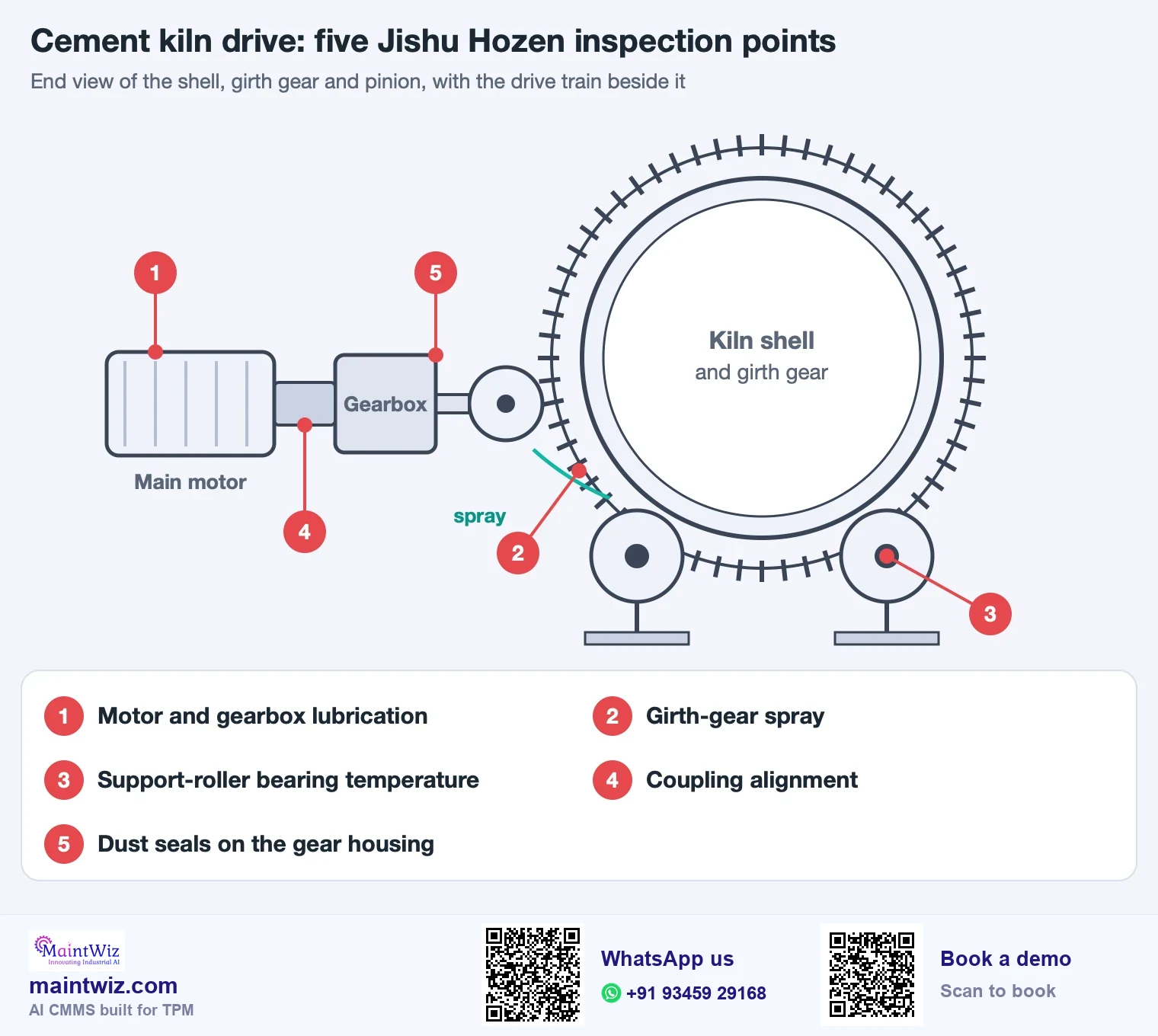
An operator on a mill round finds a seeping gearbox seal and raises a tag in the abnormality register against that mill, with category, tag colour, owner and target date. When maintenance work is needed the tag is converted to a work order, and the closure shows on the Jishu Hozen dashboard. MaintWiz for cement manufacturing covers kilns, mills and conveyors, with autonomous maintenance software for the daily rounds.
Process industries
How does TPM apply in batch and process industries?
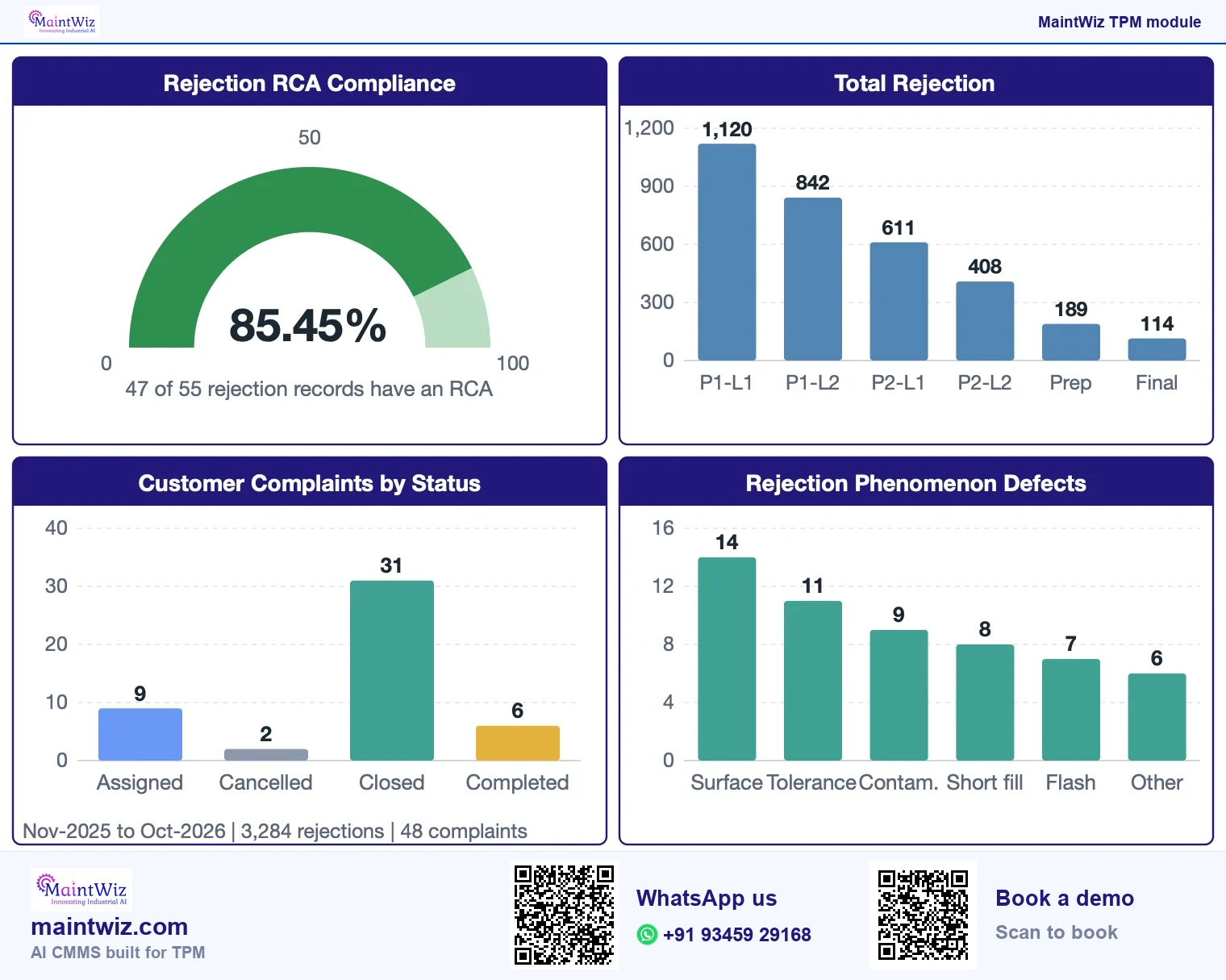
In batch and process plants, time disappears between products: cleaning, changeover and set-up, and quality losses from contamination and process drift. In pharma and chemicals, quality maintenance, safety and training carry more weight; food lines start with focused improvement on changeovers. Either way the same records must be easy to find at the equipment.
Food: a filling-line changeover Pareto
Operators record each stop with a reason code at the line. The OEE downtime report ranks the lost hours by category and type in a Pareto, so the changeover between flavours shows as the largest planned loss. The team opens a Kaizen idea sheet for it and the next report shows the change. MaintWiz for food and beverages shows the OEE and Kaizen modules on a packing line.
Discrete lines
How does TPM apply in discrete and assembly industries?
Discrete lines lose output to many small events: changeovers, minor stops, rejects and rework. These show up in OEE as availability, performance and quality losses; the first win is usually to see them by equipment and attack the largest first with focused improvement.
Automotive: a die change
Die-change time appears in OEE as a set-up loss, ranked by equipment against minor stops and rejects. The team records a Kaizen and a poka-yoke sheet for it, and the MP sheet carries the lesson into the next die design. MaintWiz for automotive components shows OEE, Kaizen and early equipment management on one equipment list.
Other sectors
What about smaller plants, foundries, mining and other sectors?
TPM in a small manufacturing company or SME works the same way, on a smaller equipment list: start with one pilot area, the largest loss and a few tags a week, then add pillars. TPM in a foundry follows the steel and metals pattern (heat, dust, repeated breakdowns), and TPM in mining follows the heavy-industry pattern (wear, dust, access and safety). MaintWiz configures menus, roles and master data for your plant, so foundries, mines and small plants run the same modules on their own equipment list; book a demo and bring your equipment list.
Your sector
Where does your sector sit in JIPM data?
Of the 688 JIPM award entries outside Japan that can be classified by industry, food, beverage and agri-food leads with 282, followed by food processing and packaging systems with 139 and automotive with 88. See where your sector sits, market by market, in TPM award winners by country (Figure 4).
JIPM award entries outside Japan by industry
Where the industry is classified: 688 entries
| Industry | Entries (share) |
|---|---|
| Food, beverage and agri-food | 282 (41.0%) |
| Food processing and packaging systems | 139 (20.2%) |
| Automotive and auto components | 88 (12.8%) |
| Steel and metals | 39 (5.7%) |
| Cement and building materials | 36 (5.2%) |
| Oil, gas and refining | 35 (5.1%) |
| Pulp and paper | 22 (3.2%) |
| Chemicals and petrochemicals | 15 (2.2%) |
Source: JIPM TPM Awards winners archive, Awarded Year 2006-2025, outside Japan; MaintWiz analysis
maintwiz.comAI CMMS built for TPMWhatsApp us+91 93459 29168Book a demoModule by sector
Which MaintWiz modules fit your sector?
Start with the pillar that matches your largest loss, then add the others on the same equipment list. Rank your own loss profile with the pillar priority selector.
| Sector | First pillar to start with | MaintWiz modules |
|---|---|---|
| Automotive and components | Focused improvement | OEE, Kaizen, quality defects, early equipment management, 5S and one point lessons on one equipment list |
| Cement | Autonomous maintenance | Autonomous maintenance, abnormality register, early equipment management, OEE and safety records |
| Chemicals and paints | Safety | Near miss and BBSO, autonomous maintenance, abnormality register, quality defects and OEE |
| Electronics and plastics | Focused improvement | OEE at equipment, line and plant level, Kaizen and quality defects |
| Food, beverage and FMCG | Focused improvement | OEE, Kaizen, autonomous maintenance, 5S audits and quality defects |
| Oil and gas | Planned maintenance | Abnormality register, training with certification and expiry handling, near miss and BBSO |
| Packaging | Focused improvement | OEE with loss stratification and a lost-hours Pareto, Kaizen and autonomous maintenance |
| Pharmaceuticals | Quality maintenance | Quality defects, autonomous maintenance, training with certification and expiry handling, 5S audits |
| Steel and foundries | Autonomous maintenance | Autonomous maintenance, abnormality register, OEE, Kaizen and near miss and BBSO |
| Textile | Autonomous maintenance | Autonomous maintenance, OEE, 5S audits and training |
| Tyre and rubber | Autonomous maintenance | Autonomous maintenance, quality defects, OEE and Kaizen |
| Mining, paper and power | Autonomous maintenance and planned maintenance | Autonomous maintenance, abnormality register, OEE, training and safety records |
| Small and medium plants | One pilot area | One pilot area first, equipment list loaded from Excel templates, then more pillars; roll-out in 6 to 8 weeks |
Modules by loss
Which MaintWiz modules answer which loss?
Each loss has a module that records it, so the team sees the same loss in the same place every week.
| Loss | How it shows up | MaintWiz module |
|---|---|---|
| Breakdowns | Unplanned stops, repeat failures | OEE downtime report and lost-hours Pareto; abnormality register with tag to work order |
| Set-up and changeover | Time between products | OEE and Kaizen projects |
| Minor stops and slow running | Short stops, reduced speed | OEE loss stratification and daily OEE |
| Defects and rework | Rejects, complaints | Quality defect module |
| Dirt, leaks and disorder | Contamination, hard-to-reach points | Autonomous maintenance and 5S audits |
| Skills and safety | Untrained tasks, near misses | Training with certification and expiry handling; near miss and BBSO |
| New equipment problems | Teething trouble, known weaknesses repeated | Early equipment management |
Roll-out
How does a MaintWiz roll-out work in any industry?
The entire TPM can be rolled out in 6 to 8 weeks with guided project management from the MaintWiz implementation team. Equipment lists and masters load through easy Excel uploads, the screens are intuitive, operators capture records on mobile devices, and SAP PM and MM connect through web services where you run SAP. Data exports to XLS and PDF, and line and plant OEE views roll up the equipment in scope.
MaintWiz AI agents run on your plant's own records, such as tags, work orders and losses, and generate a list of what needs to be watched. The agent proposes and your team approves, so every action keeps a named owner.
Pricing is tailored to your plant and quoted on request. Book a demo and bring your sector's losses; we start there.
FAQ
Frequently asked questions
How does TPM differ by industry?
The eight pillars are the same everywhere. The mix of losses differs: steel loses time to breakdowns and heat, pharma to changeover and cleaning, automotive to minor stops and rejects, so each sector starts with a different pillar.
Which TPM pillar should a process plant start with?
Heavy and continuous plants start with autonomous and planned maintenance. Pharma and chemical plants start with quality maintenance and safety, and food plants with focused improvement on changeovers. Rank your own loss profile with the free pillar priority selector, then start that pillar in MaintWiz.
Which TPM pillar should an automotive plant start with?
Automotive and component plants usually start with focused improvement on changeovers, minor stops and rejects, using OEE to rank the losses, and add quality maintenance and early equipment management for new models.
Does MaintWiz have TPM software for my industry?
Yes. MaintWiz holds each pillar's records on one equipment list, with menus, roles and master data configured for your plant. The same modules cover steel, automotive, pharma, food, paints, cement, textile, oil and gas, power, paper and water, with the pillar mix set for each sector.
Is TPM suitable for a small manufacturing company?
Yes. A small plant starts with one pilot area and its largest loss, tracks a few tags a week, and adds pillars as routines settle. MaintWiz loads equipment lists through easy Excel uploads and configures menus and roles for your plant.
How long does it take to start TPM software in a plant?
The entire TPM can be rolled out in 6 to 8 weeks, with easy Excel uploads and guided project management from the MaintWiz implementation team. Book a demo to map the weeks to your plant.
How is TPM applied in the process industry?
Process plants lose most time between products: cleaning, changeover and set-up, plus quality losses from contamination and process drift. Every stop is recorded by reason against the line. MaintWiz holds those records on the equipment list, with OEE loss stratification and quality defect records per line.
Sources
Sources
- JIPM, About TPM https://www.jipmglobal.com/about/tpm/
- JIPM Global, TPM Awards winners archive 1964-2025 (Excel workbook, sheet by award year) https://jipmglobal.com/tpm/wp-content/uploads/TPM-Awards-Winners_1964-2025.xlsx